




Scientists unveil a quantum battery that breaks the rules of conventional charging
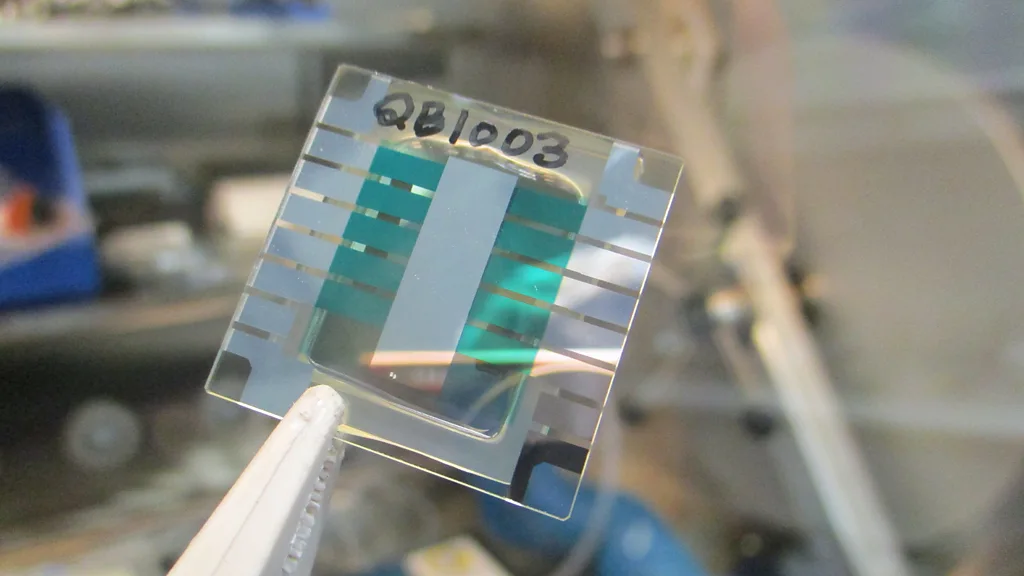
Scientists at Australia’s national science agency CSIRO have built a prototype of a quantum battery that charges faster as it gets larger — the opposite of what happens with conventional batteries. The researchers have also demonstrated that the device can produce an electrical current, bringing the concept a step closer to a functional energy-storage system.
The unusual battery was developed by quantum scientist James Quach and his team. Instead of relying on chemical reactions, it uses quantum effects to absorb and store energy. The prototype is based on an optical microcavity consisting of two tiny mirrors positioned about 100 nanometers apart — roughly a thousand times thinner than a human hair. The space between them is filled with organic dye molecules and illuminated with a laser.
The interaction between the light and molecules creates hybrid light-matter states known as polaritons. It also produces a phenomenon called superabsorption, in which the molecules begin acting collectively rather than absorbing energy independently. The more molecules there are, the faster they can absorb energy — meaning a larger quantum battery can charge faster than a smaller one.
The prototype charges in femtoseconds and can retain the stored energy for nanoseconds, roughly a million times longer than the charging process. The amount of energy it can store is still tiny, however, at only a few billion electron-volts, so using such a battery in a smartphone or electric vehicle is nowhere close to being within reach for now.
The latest breakthrough is that the researchers have added another layer that allows them to extract an electrical current from the quantum battery. The team is still analyzing the results and plans to publish the details in a scientific paper.
One major advantage of this approach is that it works at room temperature. Other quantum-battery designs based on superconducting materials require temperatures below about −150 °C, making them much less practical outside specialized environments.
The most likely early application for quantum batteries is therefore quantum computing. Quach believes the technology could eventually reduce the energy consumption of quantum computers while making them faster and less prone to errors, potentially helping scale up the technology.
The biggest challenge is still figuring out how to take the stored quantum energy out in a stable, controlled and useful form. Scientists also warn that quantum effects are fragile and can be disrupted by the environment. Researchers are also exploring hybrid designs that combine quantum components for rapid charging with conventional layers capable of storing energy for longer periods.
However, the latest experiment demonstrates something that sounds almost absurd from a conventional battery perspective: making the battery bigger can actually make it charge faster.
Source(s)
 Add as a preferred source on Google


