




Microsoft unveils Majorana 2, wants useful quantum computing by 2029
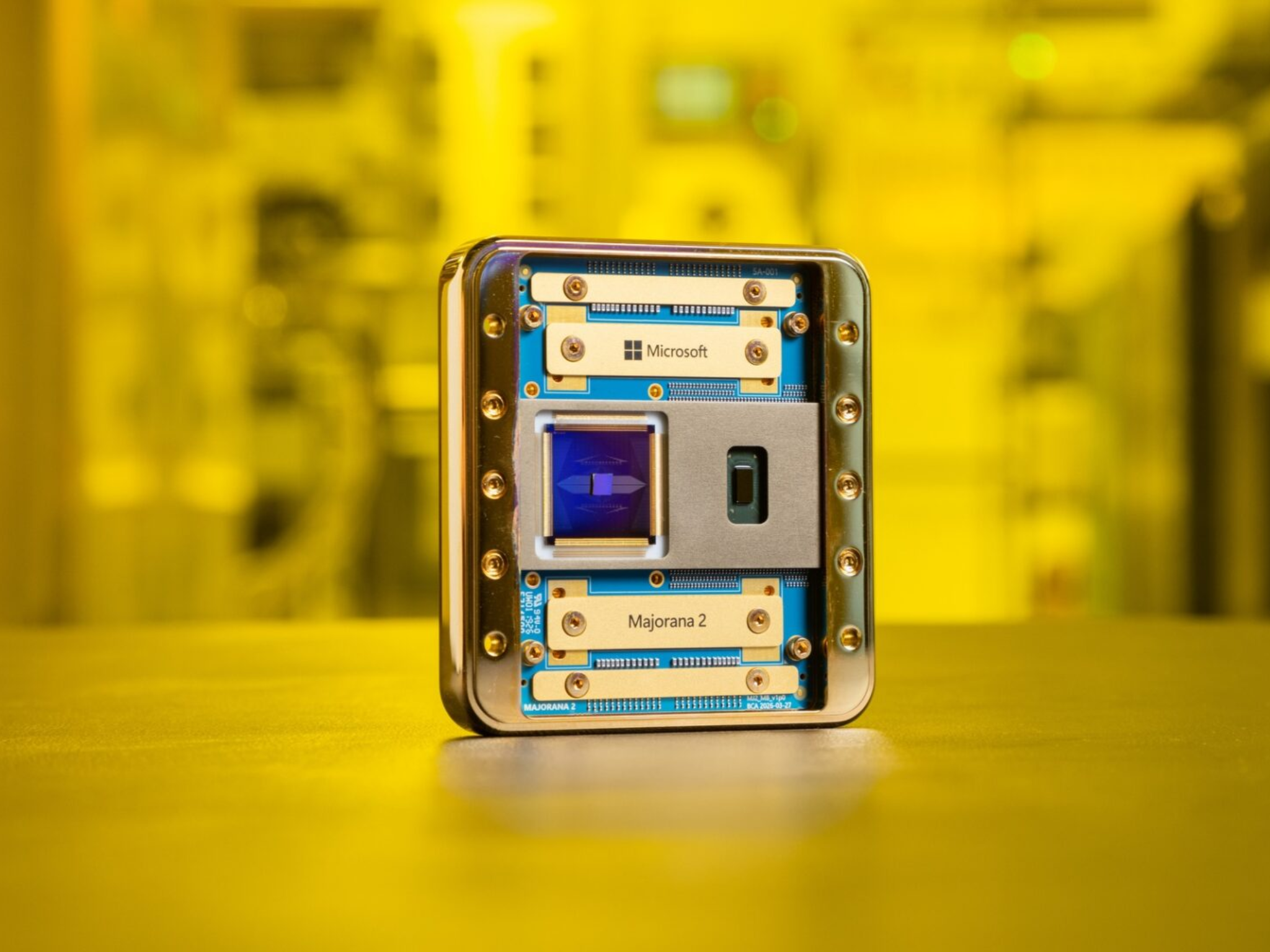
Microsoft has unveiled Majorana 2, the latest iteration of its topological quantum computing chip, claiming a dramatic leap in reliability that could accelerate its roadmap toward a commercially useful quantum computer by 2029. The company says the new chip's qubits are more reliable than those used previously, and maintain their quantum state for up to a minute in some cases, and operate at microsecond speeds while remaining small enough for large-scale deployment.
According to Microsoft, Majorana 2 delivers a mean qubit lifetime of 20 seconds, sometimes going up to a minute. This is a substantial improvement over conventional quantum systems that often measure qubit stability in microseconds. The company believes these gains in reliability, speed, and size put it on track to solve practical problems spanning healthcare, energy, sustainability, and food production within the decade.
For more context, a qubit, or quantum bit, is the quantum equivalent of a traditional computer bit. Unlike conventional bits that can only be either 0 or 1, qubits can exist in multiple states simultaneously, allowing quantum computers to tackle certain calculations far more efficiently. The challenge is that qubits are extremely fragile and can lose their quantum state almost instantly due to environmental interference. So, that remains the biggest hurdle in the way of corporations working with these sub-micro compute technologies.
No immediate return
Majorana 2 will not make smartphones or laptops faster anytime soon. Instead, it represents progress toward practical quantum computers that could help develop new medicines, discover advanced materials, improve battery technology, optimise logistics networks, and solve scientific problems beyond the reach of today's supercomputers.
The announcement arrives amid ongoing scrutiny surrounding Microsoft's topological quantum computing efforts. Previously, several researchers questioned the evidence behind Microsoft's claims surrounding Majorana 1 and its topological qubit architecture, arguing that published research lacked sufficient proof of the elusive Majorana particle.
Alongside the hardware announcement, Microsoft also launched the general availability of Microsoft Discovery, an AI-powered research platform that the company says is helping scientists analyse data, automate measurements, optimise fabrication processes, identify hidden faults, and accelerate scientific discovery.
 Add as a preferred source on Google


