Makera Z1 CNC enters pre-sale with optional laser module
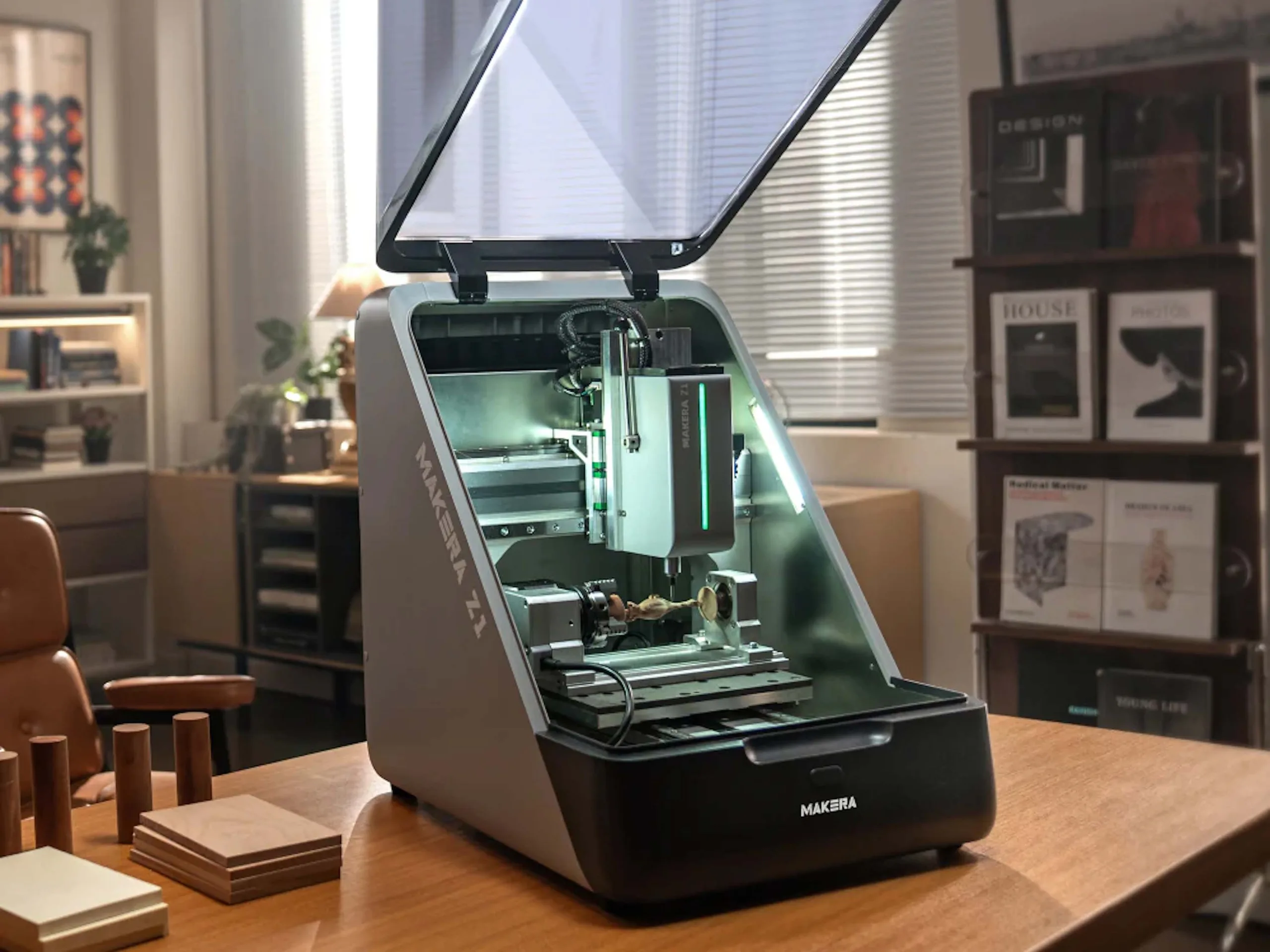
We've previously reported on the Makera Z1, which is now officially available for pre-order. The starting price is $1,099. Pre-orders placed by June 30 will also receive a few small gifts, and delivery is scheduled for July. For $1,099, pre-order customers will receive only the basic version, not the Pro version. The laser module and a dust extraction system are available for a surcharge. We are already testing the CNC machine and can at least say that the device exists, the build quality is quite decent, and the control system works in principle.
Speaking of controls, the Makera Studio software is intended to enable particularly simple control, but is currently still in the closed beta phase. At present, the use of CAM software and controller software is still required. Since Makera aims to make the Z1’s powerful features accessible to beginners, we cannot yet adequately evaluate the system. There will also be a platform for sharing projects via Makerables, a universal project-sharing platform and digital community where creators can collaborate, share design files and download ready-to-cut templates
The Makera Z1 offers a working area of 200 x 200 x 100 millimeters. Machining via a rotary axis is available as an option. The specified spindle power is 150 watts, with a maximum speed of 13,000 revolutions per minute. According to the manufacturer, the machine can process not only plastic, carbon fiber and wood, but also aluminum. A laser module is also available as an option. Compared to a 3D printer, a CNC machine can, in the best-case scenario, produce parts capable of withstanding very high loads. Compared to a laser cutter, the depth of a component is not quite as much of a limiting factor. On the other hand, the costs for consumables are likely to be higher compared to a 3D printer, since a 3D printer only extrudes approximately as much (inexpensive) filament as is required for the model. The processes of drilling, milling and turning performed on CNC machines are subtractive manufacturing processes, meaning that material is removed from a blank. When using semi-finished products, a considerable amount of metal waste can accumulate quite quickly, depending on the dimensions of the model and the semi-finished product.
Source(s)
 Add as a preferred source on Google