




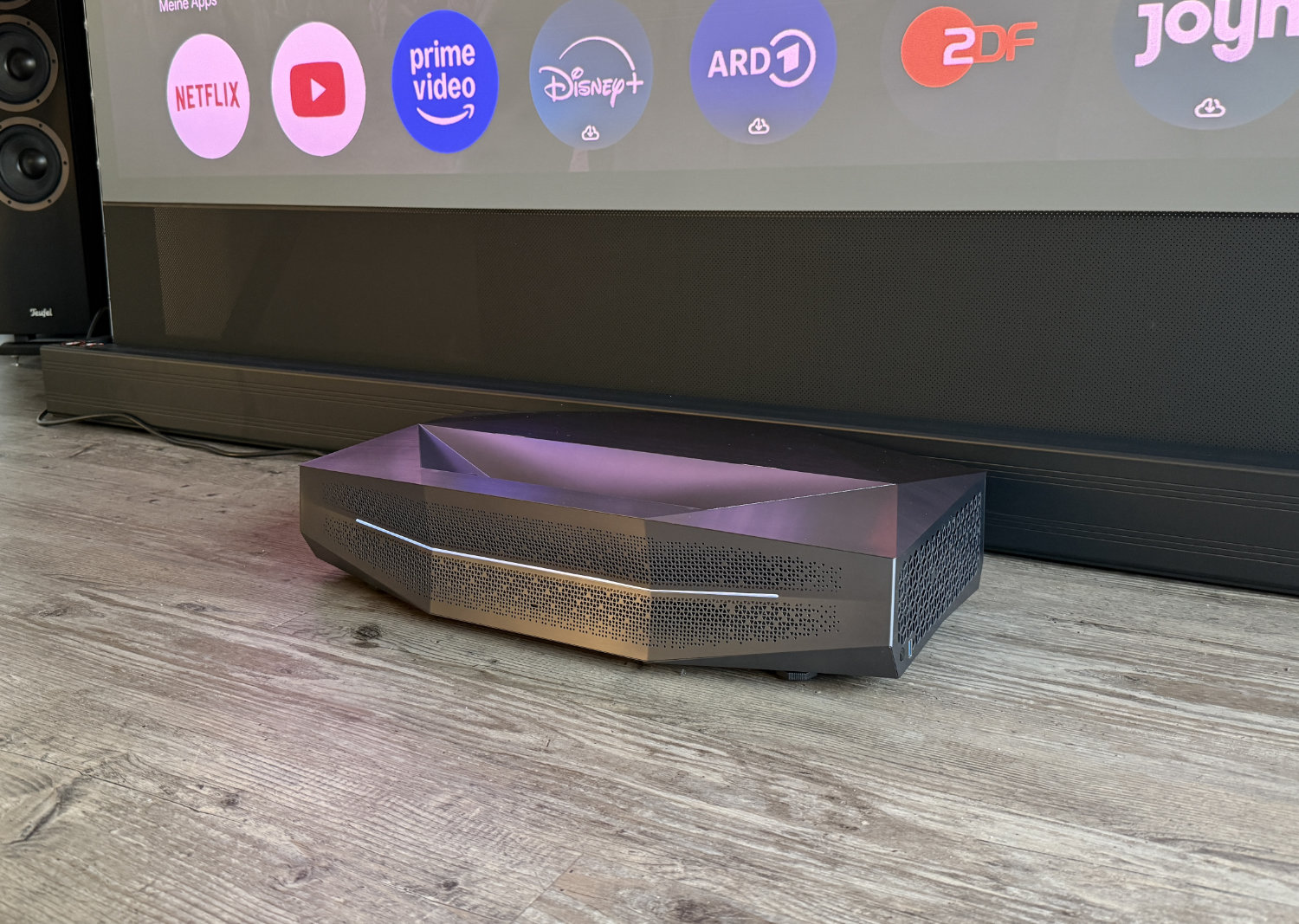
Laser TV as an XXL alternative to the TV: AWOL Vision Aetherion Max review
Stylish UST projector.
The Aetherion Max is a brand new 4K UST projector from AWOL Vision. We put the laser-TV through its paces. Our practical test of the Aetherion Max reveals what the alternative to a classic TV can do and who it is suitable for.Marcus Schwarten (translated by DeepL / Marcus Schwarten) Published 🇩🇪 🇳🇱 ...
Aetherion Max test conclusion: Brilliant picture, but also criticism
The AWOL Vision Aetherion Max impressed with its brilliant picture in the test - especially in darkened surroundings. Here it scored with its rich blacks, vibrant colors and high brightness as well as many settings. Another plus point is Google TV with its many options.
However, the stylish 4K UST projector also had to put up with a few minor points of criticism in the practical test. Among other things, the advertised automatic keystone correction has little to do with "automatic". The built-in sound system delivers a solid sound, but definitely requires external support for a real home cinema spectacle. But that's hardly surprising.
We tested the Aetherion Max with the manufacturer's 100-inch Cinematic+ ALR floor-rising screen. This provides excellent support for the projector, but is also not completely free of criticism.
Overall, the Aetherion Max delivered a good performance in the test with a few minor limitations. Depending on the application setting, the laser TV can replace a television, especially in the evening. However, it is even better in a home cinema setup as a replacement for a classic projector.
Pros
Cons
Price and availability
The Awol Vision Aetherion Max is not yet officially available in stores. It can currently be purchased (taking into account the usual risks) in a successful crowdfunding campaign on Kickstarter. There it starts at $2,199. The recommended retail price is planned to be $4,499.
Table of Contents
- Aetherion Max test conclusion: Brilliant picture, but also criticism
- Features & installation: 4K laser TV with stylish design
- Software: Google TV solves previous problems
- Picture: Impressive, but not problem-free
- Sound: Okay, but external solution advisable
- Energy & noise: No more energy-hungry than a TV
- Projector screen: sparring partner with high contrast
Ultra-short throw projectors (UST) or laser TVs are becoming increasingly popular as a replacement for traditional televisions. Various manufacturers are competing for the favor of prospective buyers.
One of them is AWOL Vision, from whom we already presented the LTV-3500 Pro in a detailed test report some time ago. At the CES 2026 the manufacturer presented its new generation of laser TVs with the Aetherion series. We reveal how the top model Aetherion Max fared in the test, what strengths buyers can look forward to and what weaknesses they will have to live with.
Important information in advance: We would like to point out that we had a pre-production model available for the test. It is possible that AWOL Vision will make selective improvements before the official launch and the start of shipping stated on Kickstarter in April 2026.
Data sheet AWOL Vision Aetherion Max
| Resolution | 4K / UHD (3,840 x 2,160 pixels) |
| Chip | DLP, 0.47 inch DMD with TI Display Controller DLPC8445 |
| Image size | 80 to 200 inch |
| Projection ratio | 0.2:1 |
| Light source (lifetime) | RGB Pure Triple Laser |
| Brightness | 3,300 ISO lumens |
| Native contrast | 6000:1 |
| Color rendering | 110% Rec.2020 |
| Sound system | 2 x 25W, 2 x 20 W |
| Operating system | Google TV |
| Connectivity | 3x HDMI 2.1, 1x DP, 1x USB 3.0, 1x USB 2.0, S/PDIF, jack, LAN, Wi-Fi 7, Bluetooth 5.4 |
| Dimensions/weight | 56.2 x 32.3 x 13.95 cm / 8.75 kg |
| MSRP | 4,499 US dollars |
Features & installation: 4K laser TV with stylish design
The Aetherion Max is the new high-end UST projector from AWOL Vision and is positioned above the less bright Aetherion Pro. If you look at the manufacturer's product page, it advertises countless features, including particularly high image clarity right into the corners, technology against rainbow effects and particularly deep blacks thanks to Noirscene System II.
At this point, we don't want to go into every single detail of the individual features. If you are interested, you can find more detailed information on the manufacturer's website. We are primarily concerned with the basic features and, ultimately, the result on the screen. More on this below.
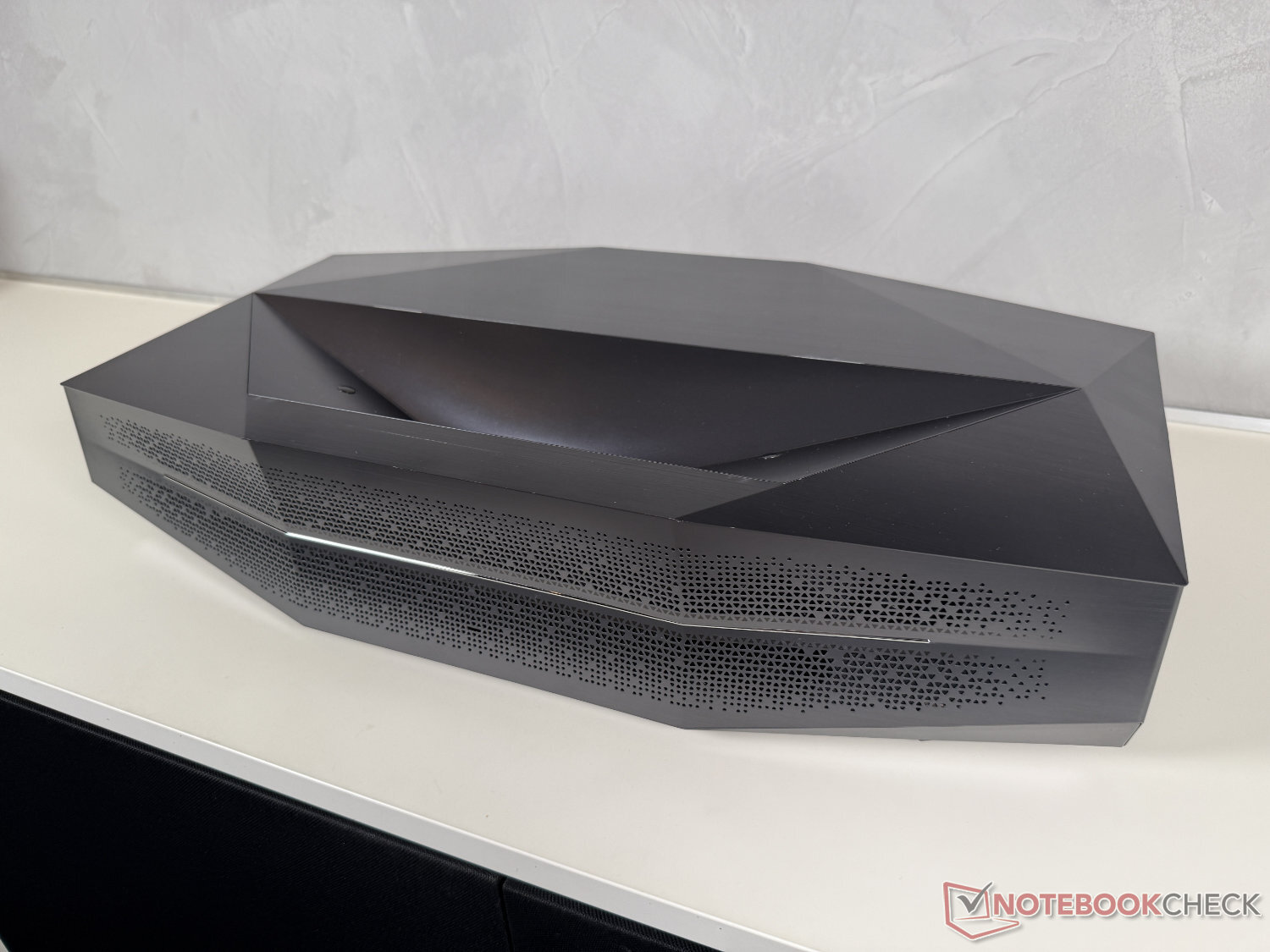
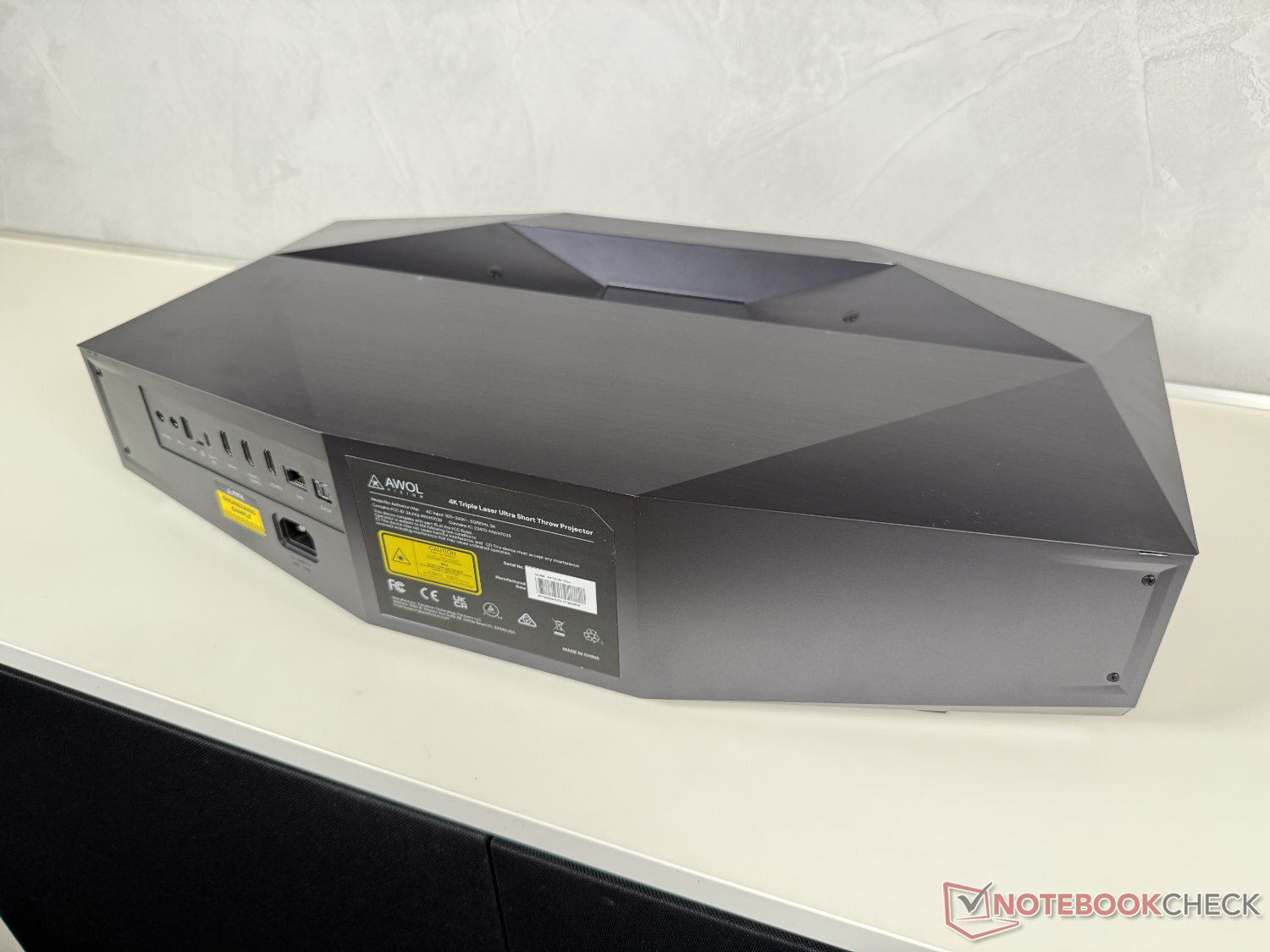
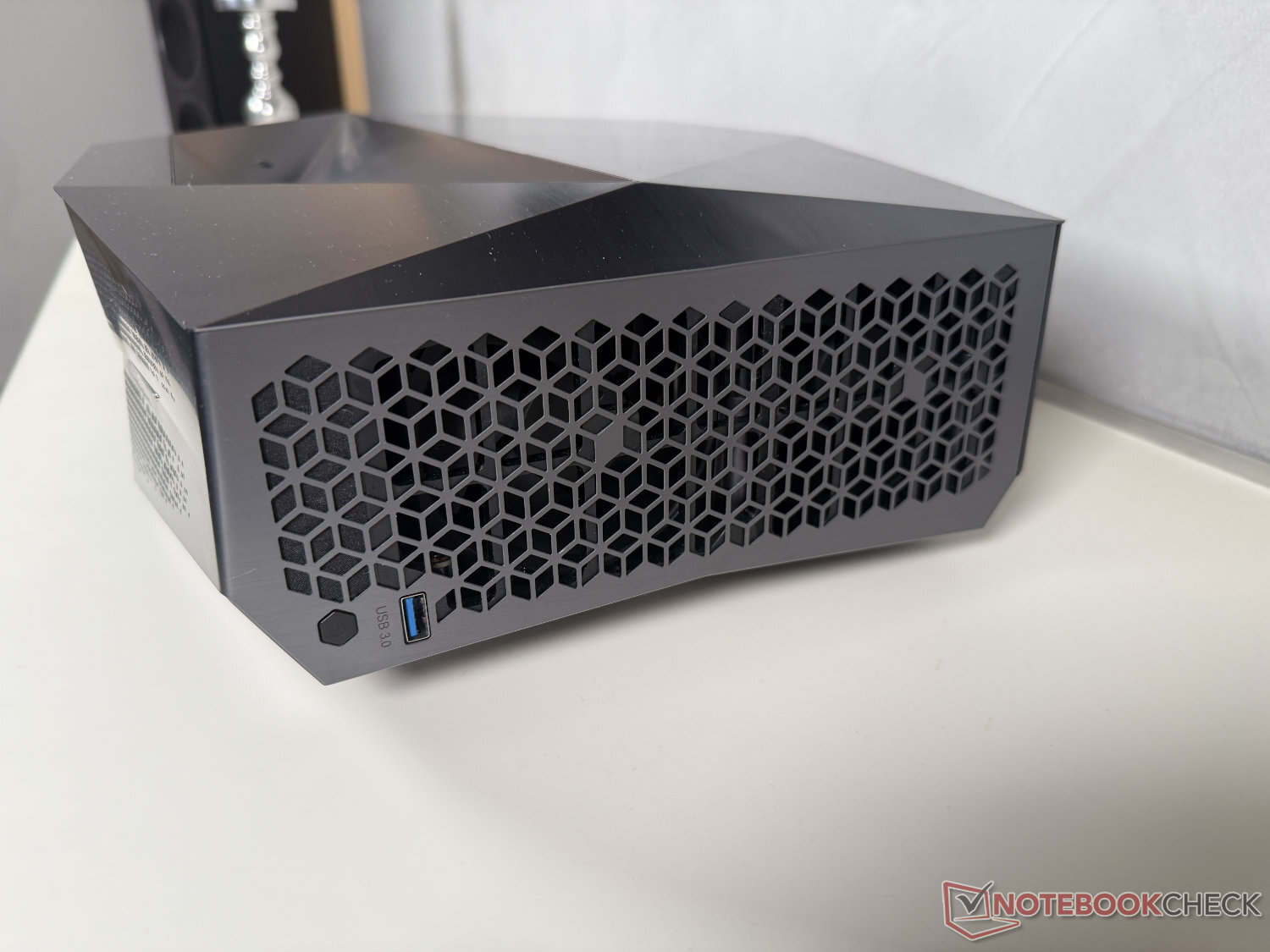
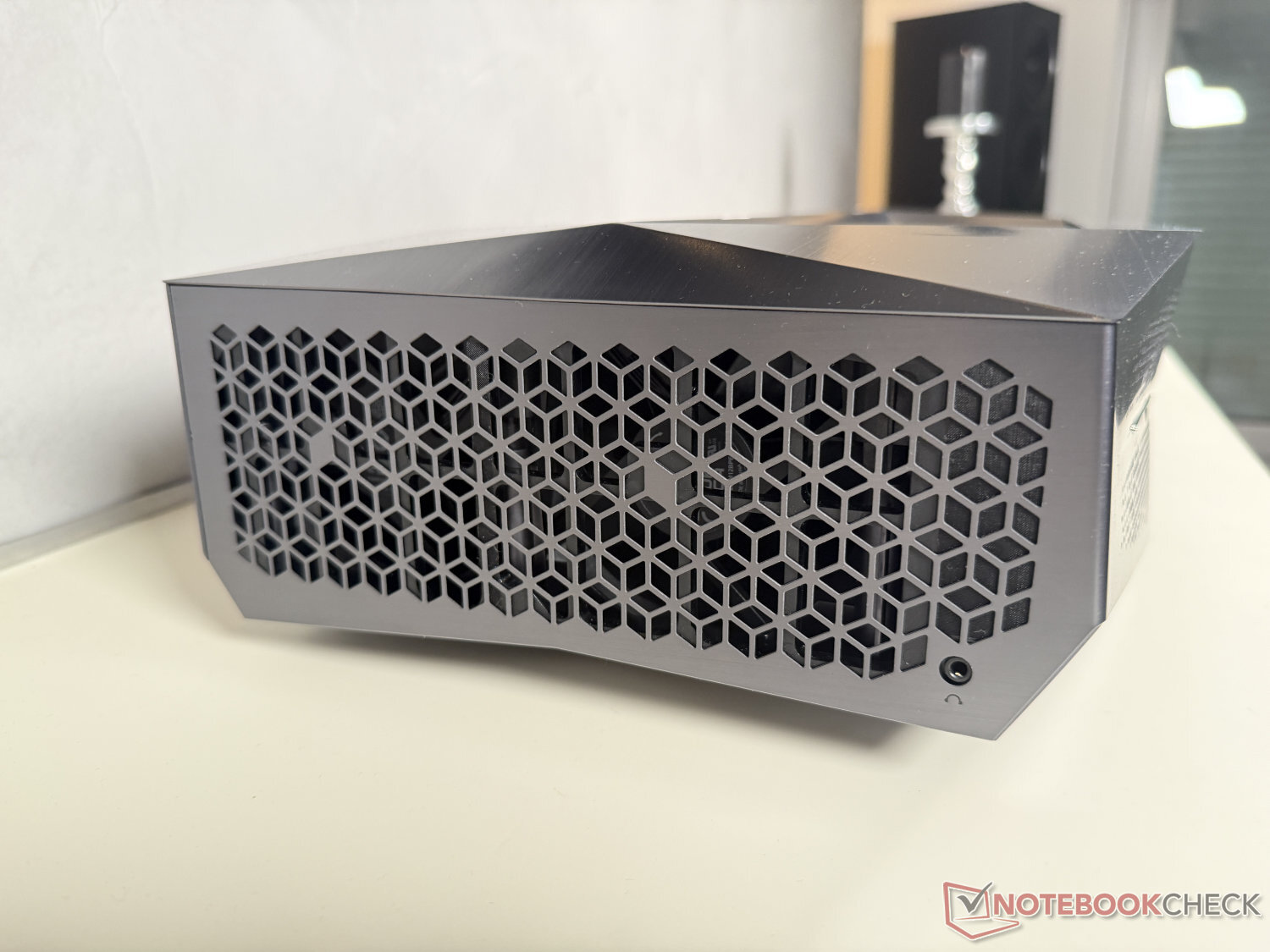
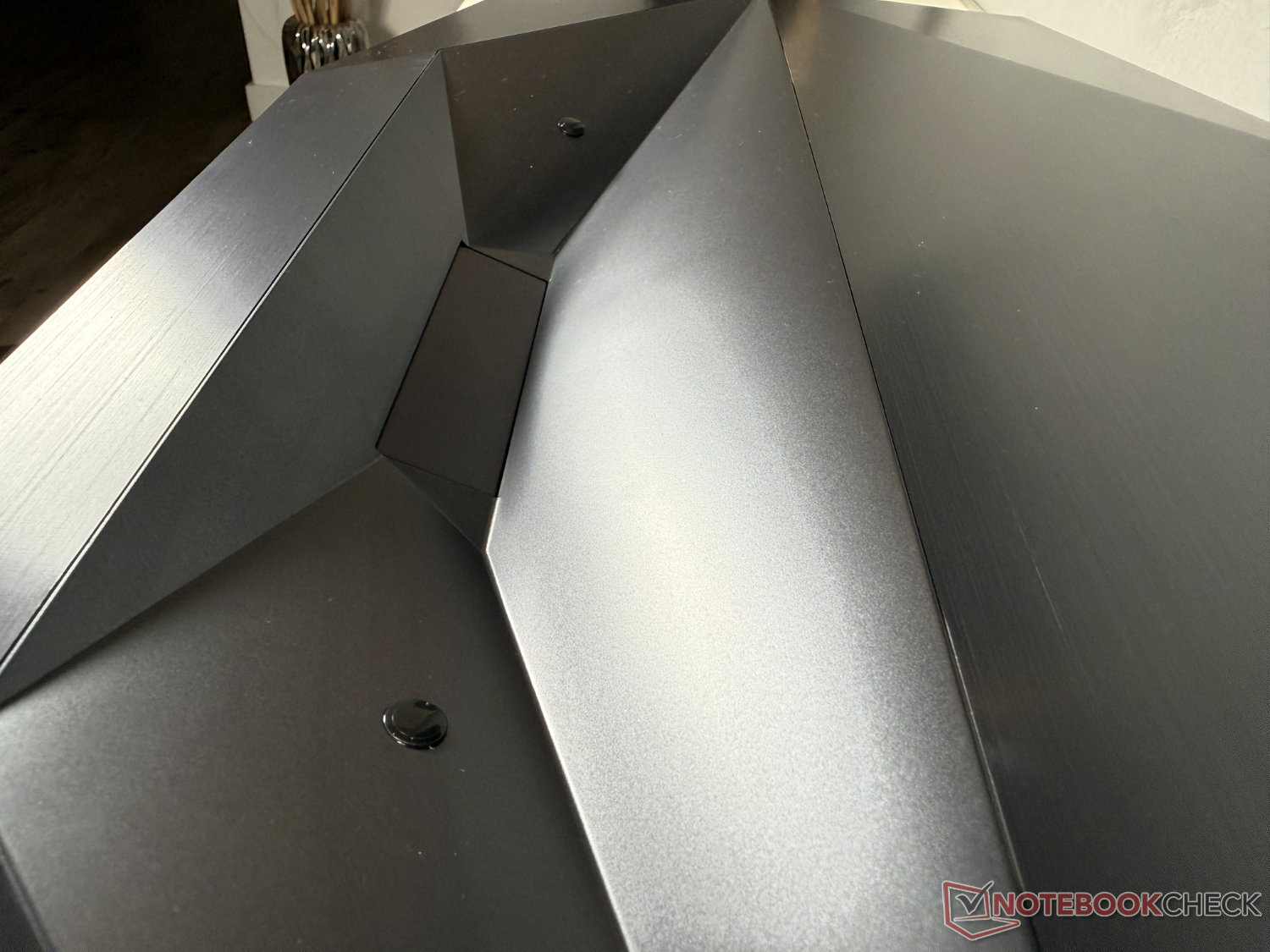
The Aetherion Max is based on DLP technology with a 0.47 inch DMD chip and Texas Instruments DLPC8445 display controller. According to the manufacturer, the image brightness of up to 3,300 ISO lumens is provided by an RGB Pure Triple Laser light source, which projects a 4K/UHD image of 80 (203 cm) to a remarkable 200 inches (508 cm) onto the projection surface. The projection ratio is 0.2:1, which means that a 100-inch (254 cm) image is possible with a distance of just under 16 cm between the back of the device and the screen, for example. At 80 inches it is only just under 7 cm, at 200 inches around 57 cm is required.
If we take our test setup with the 100-inch screen described below, a total depth of only around 56 cm is required from the front edge of the projector to the rear edge of the screen housing. This means that the UST home theater and screen can easily be set up on a 60 cm deep TV board, provided it is also the right width.
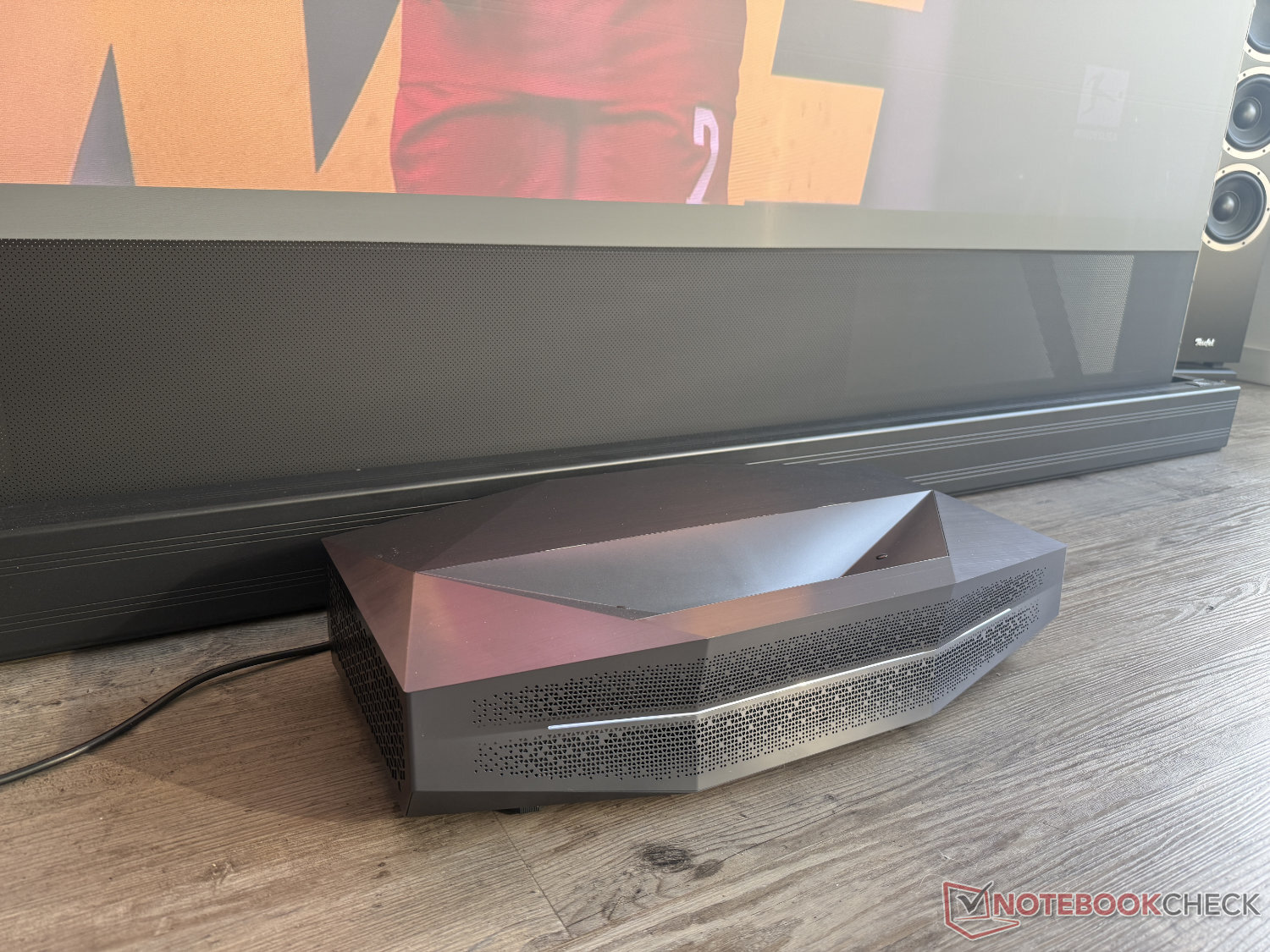
Alternatively, it can be installed on the floor, in which case the picture hovers less than 40 cm above the floor. This is quite low for comfortable lounging on a sofa, for example - especially if there is a coffee table with glasses and the like in between. This is just an estimate for anyone who is thinking about buying a laser TV and wondering where to place it. In any case, it requires significantly less room space than a classic projector, where a distance of several meters to the screen is required, depending on the desired picture diagonal and model.
But back to the features. The manufacturer specifies support for Dolby Vision, HDR10+, IMAX Enhanced, Filmmaker Mode and Active 3D as well as Dolby Atmos and DTS:X, among other things. This means that many common picture and sound standards are on board. The projection unit is protected by a motorized cover, which, however, moves to the side with a slight squeaking noise when switched on and off and therefore does not appear to be of particularly high quality. However, this may also be a problem with our test device.
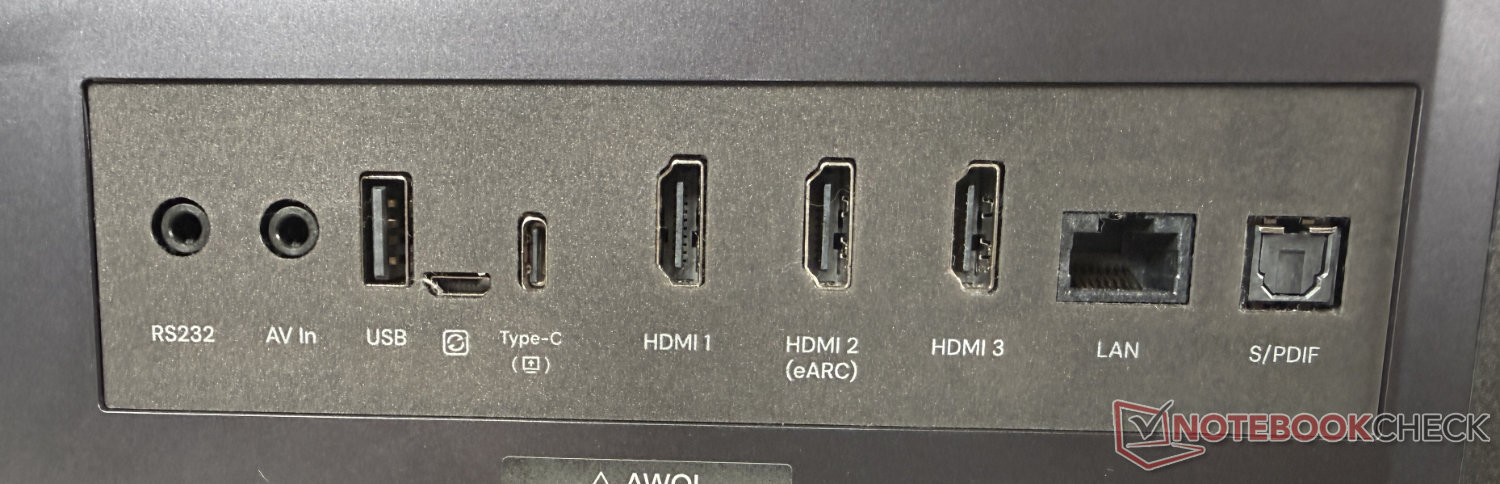
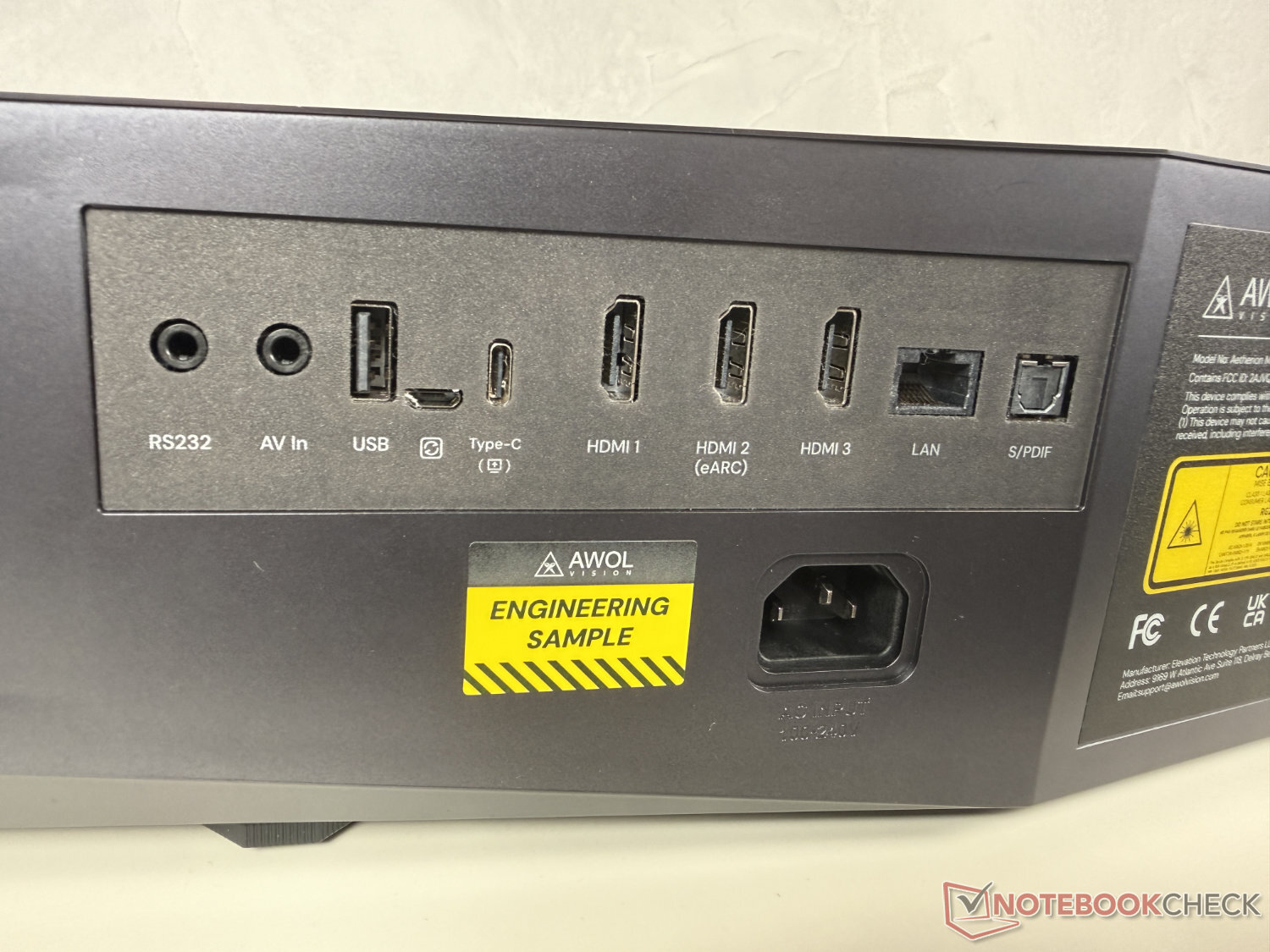
The connections of the Aetherion Max are mainly located on the rear. In addition to the power connection, there are three HDMI 2.1 (HDMI #2 with eARC), one DisplayPort, one USB 3.0 and one USB 2.0, Gigabit LAN as well as audio (3.5 mm jack) and S/PDIF. Wireless connectivity is provided by fast Wi-Fi 7 and Bluetooth 5.4 as well as AirPlay 2, Chromecast and Miracast.
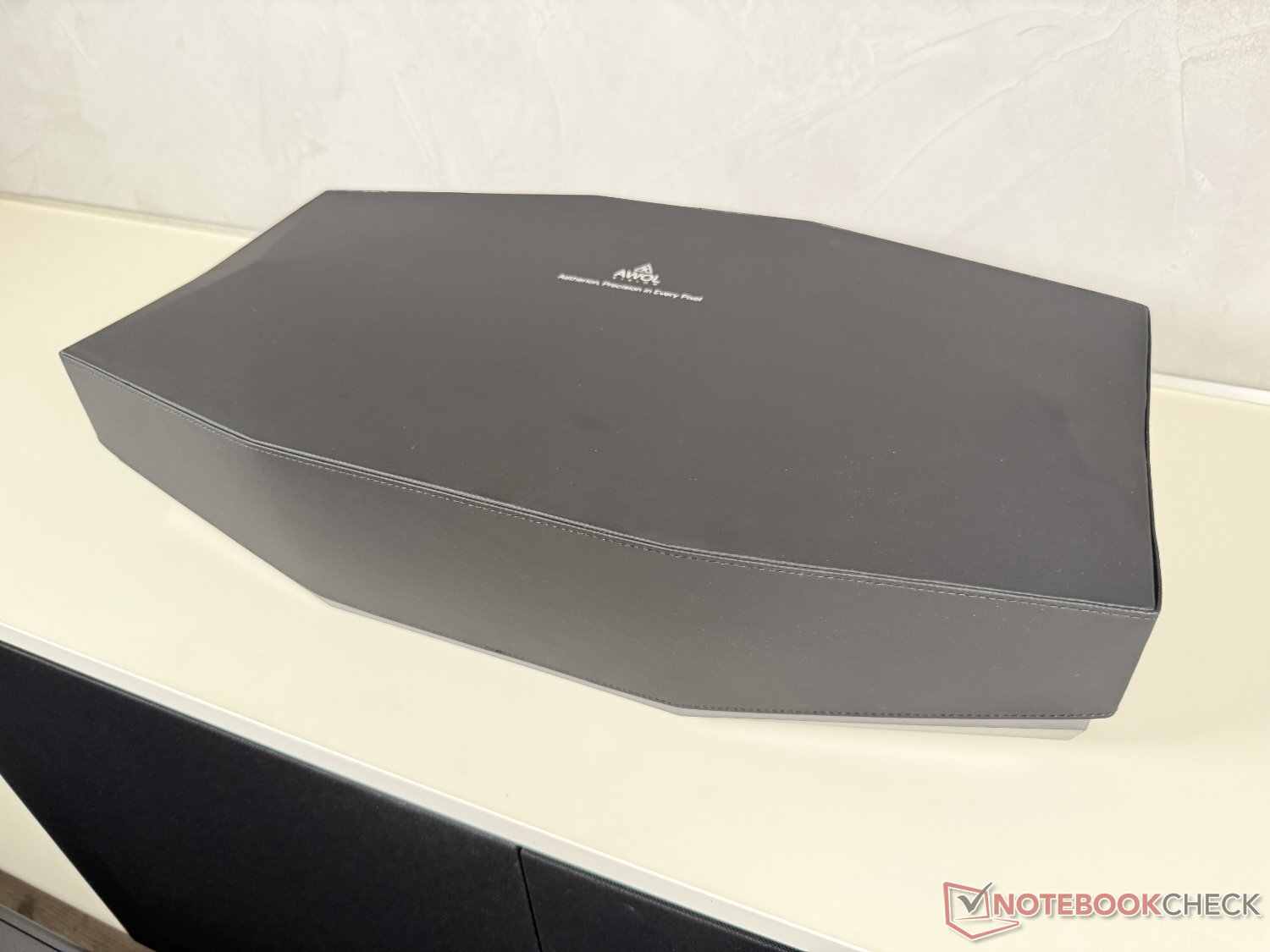
All of this is packaged in an angular design that is somewhat reminiscent of a high-end sports car or a stealth bomber. The front not only features a grid pattern, but also houses a wide LED strip. This lights up back and forth in K.I.T.T. style during use and in standby mode, but can also be deactivated in the settings. If you don't like the design, you can also cover the UST projector with the supplied leather cover when not in use to protect it.
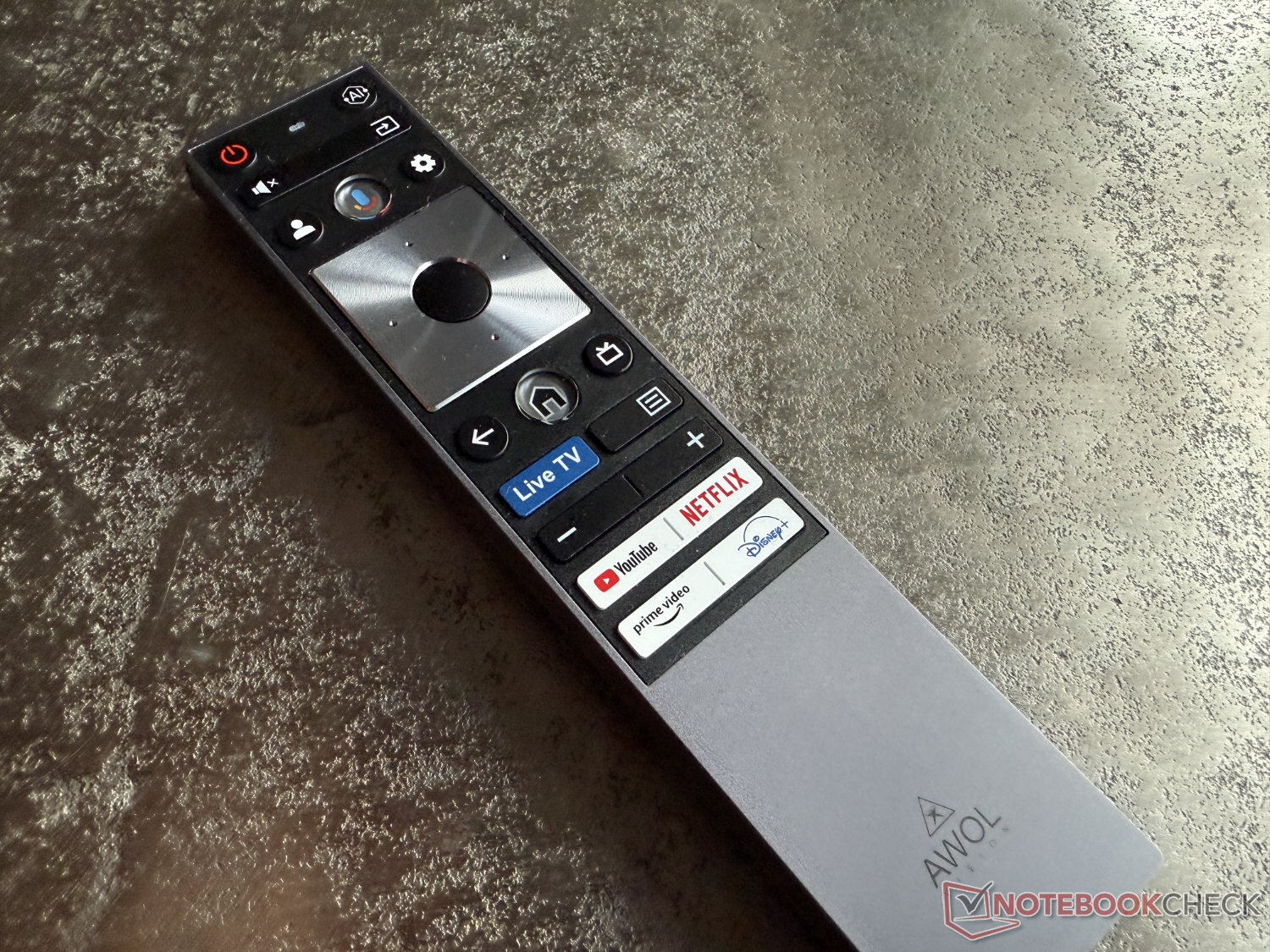
The partially illuminated remote control has an angular metal design with a rounded underside. The buttons do not fully live up to the high-quality impression. The four white shortcut buttons for YouTube, Netflix, Prime Video and Disney+ in particular look a little cheap and stand out visually. The large directional pad in square format makes a much better impression and guides you through the menus without any problems. Below this, there are two buttons for accessing live TV in addition to Back, Home and Menu. However, these only switch to HDMI port 1.
There is no integrated TV receiver. An external solution must therefore always be connected for classic TV reception without streaming. As is familiar from devices with Google TV, there is also a button for the Google Assistant, for example to search for content directly by voice. A positive feature is that the remote control can also be connected to the projector via Bluetooth in the settings. This does not require a direct line of sight to operate the device.
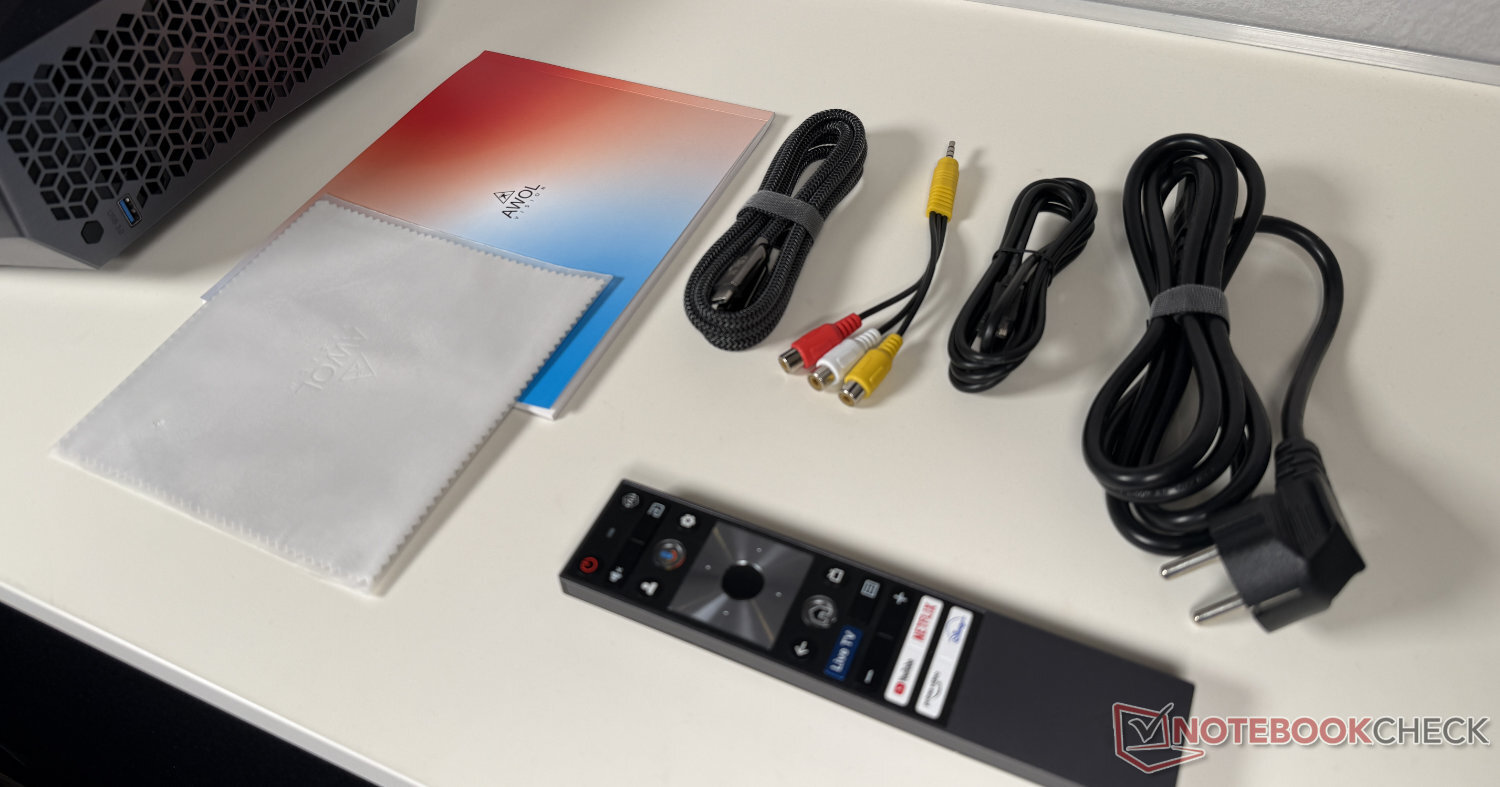
In addition to the remote control and two AAA batteries, the Aetherion Max comes with the aforementioned leather cover, the obligatory power cable (which is unfortunately not angled and therefore protrudes significantly from the back of the device), a USB-C cable (4K@60Hz, 20 Gbps, 240 W), a USB-A to micro-USB cable and a 3.5 mm jack to RCA adapter. Instructions and a cleaning cloth are also included. However, an HDMI cable is not included in the scope of delivery.
Software: Google TV solves previous problems
When testing the AWOL Vision LTV-3500 Pro the operating system was still a point of criticism. With the Aetherion Max, the manufacturer now relies on the familiar Google TV, which has various advantages, including the user interface that many people are familiar with from smart TVs or other projectors. It takes a few minutes to set up, but can be done conveniently using a smartphone instead of the complicated remote control. This is a great advantage when entering the Wi-Fi code or login details, for example.
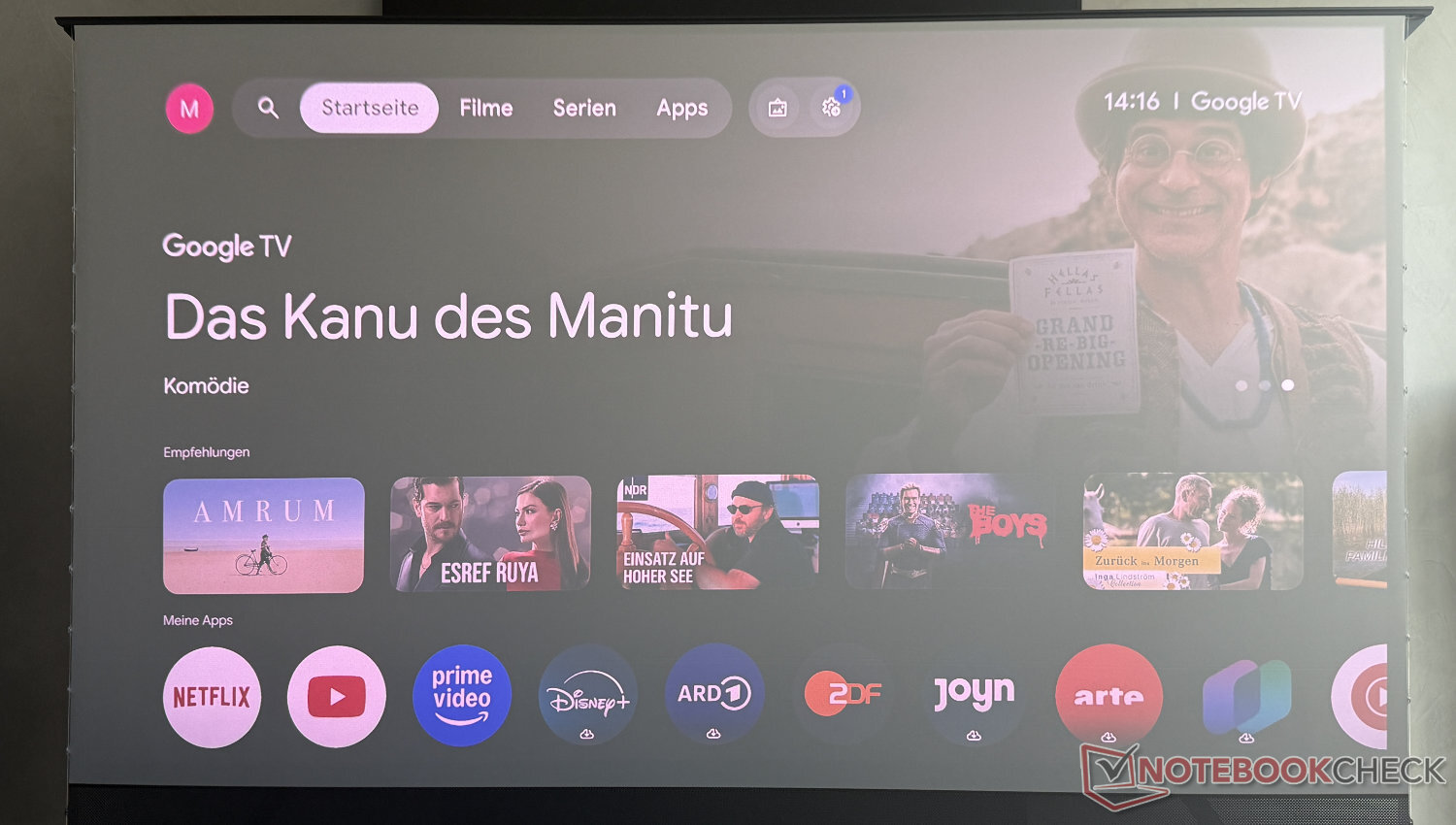
Google TV provides reliable, straightforward access to numerous apps, including all popular streaming services such as Netflix, Prime Video, Disney+ and more. The app store offers many different apps to expand the possibilities. The settings menu offers countless options to customize the picture, sound, network, system and more to your own wishes and needs.
AWOL Vision does not have its own app, but it does have its own menu bar, which is displayed at the bottom of the screen. This provides quick access to all kinds of picture settings, AI features and more. For example, the image can be individually optimized, if desired supported by the intelligent features of the projector.
Picture: Impressive, but not problem-free
Before the fun can begin, the image must be aligned with the screen. This is first done by positioning the device, which can also be aligned using height-adjustable feet. Fine-tuning is then carried out using the software.
AWOL Vision advertises automatic keystone correction. With an automatic solution, as we know from modern projectors such as the Nebula X1 Pro or the Valerion VisionMaster Max, this has little to do in practice. If the option is activated in the settings, the image is not aligned automatically. Instead, a QR code including a numerical code is displayed on the screen, which must be scanned with the smartphone camera.
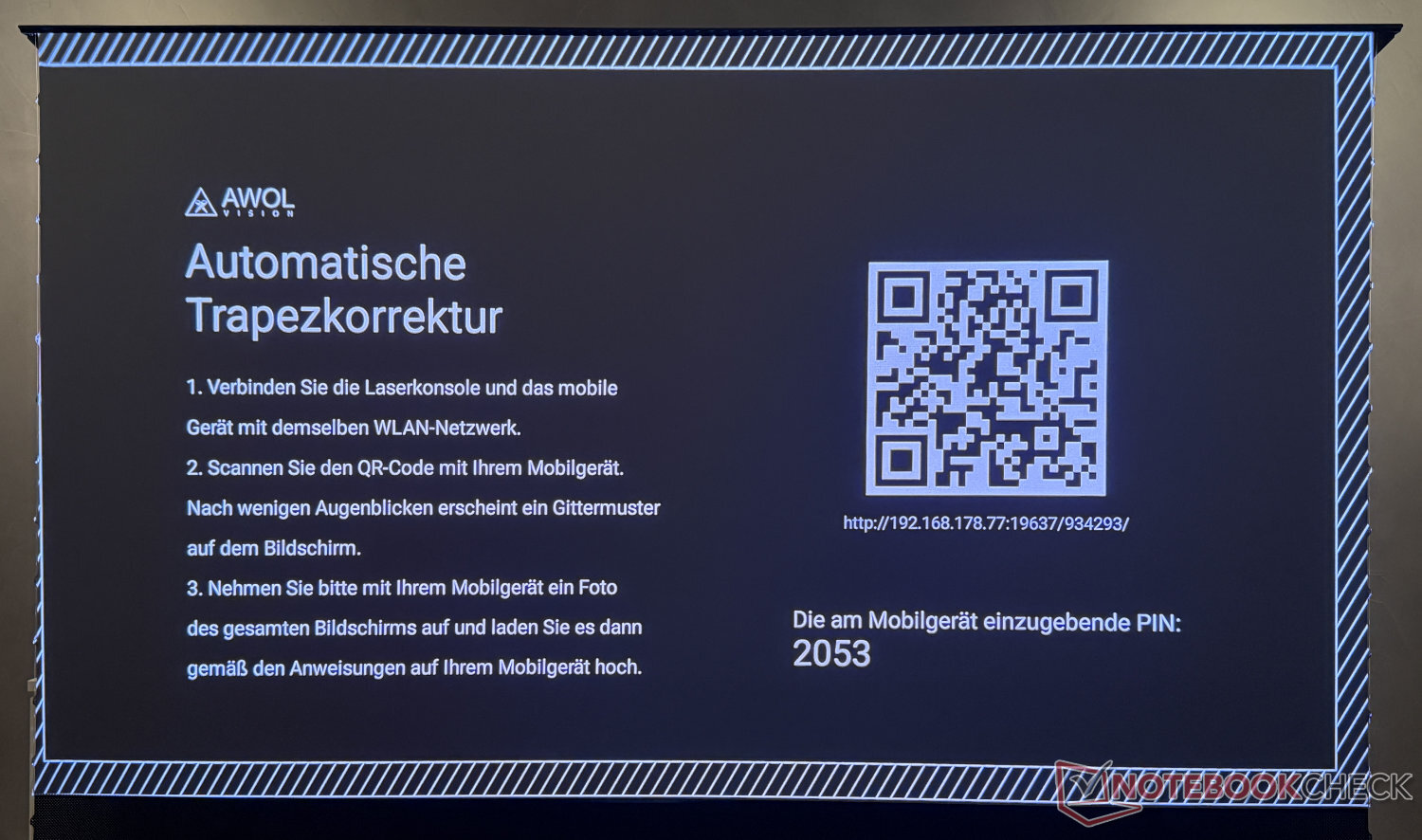
This calls up a website (via an insecure http connection, which initially led to an error message when "https-only" is activated on an iPhone) on which the numbers must be entered. The UST projector then displays a grid pattern that must be photographed with the smartphone and the photo then uploaded. This is then analyzed and the image is adjusted accordingly - at least in theory.
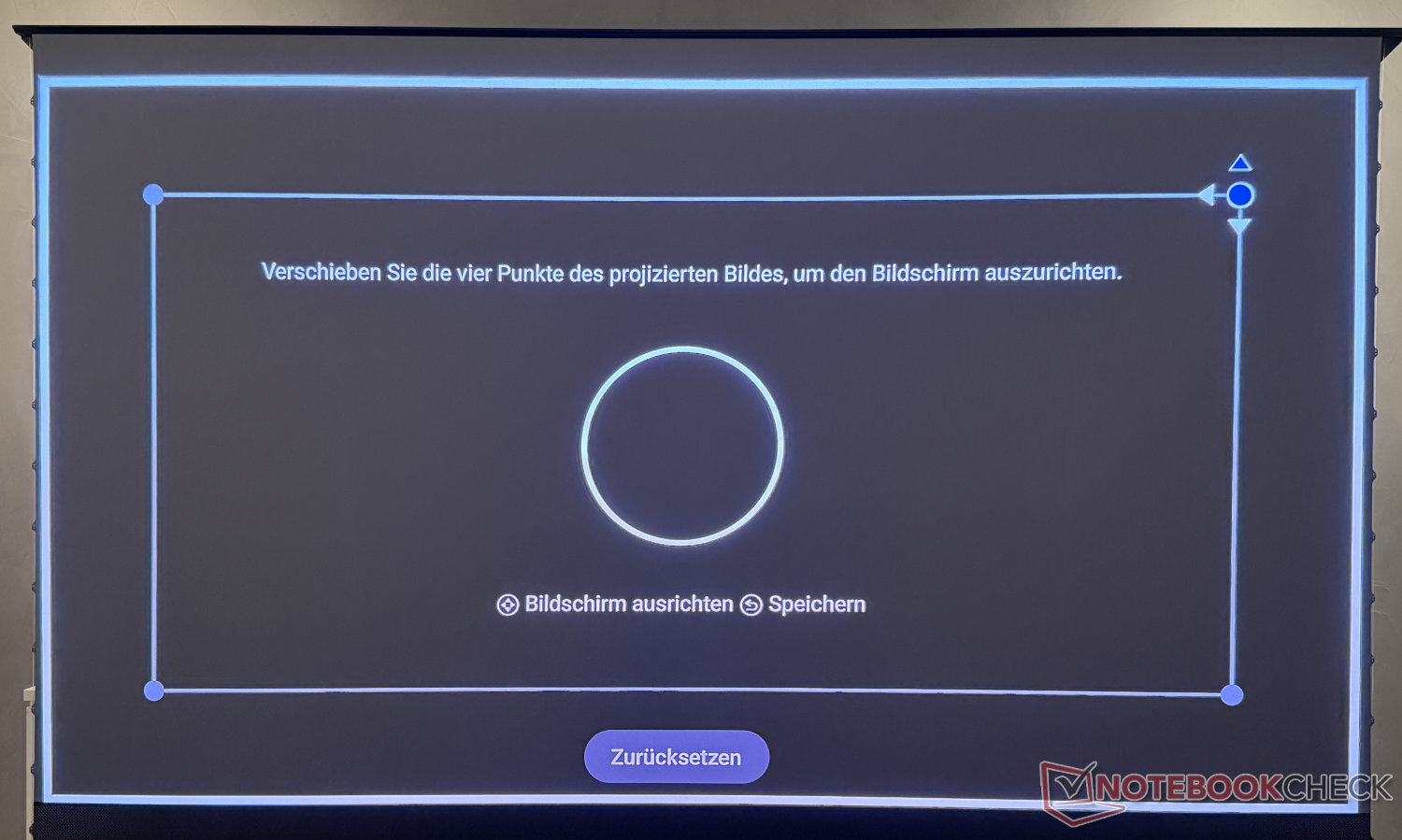
In our practical tests, the "automatic" keystone correction rarely achieved a really convincing result. Many alternatives do this better. Only a manual keystone correction afterwards, in which either the four corners or eight points are moved using arrows, was the image suitable for the screen. If the laser TV is not permanently in the same position or if it is moved even minimally when dusting, for example (just a few millimetres are enough for a completely distorted image), the game starts all over again before use. This is not really convenient.
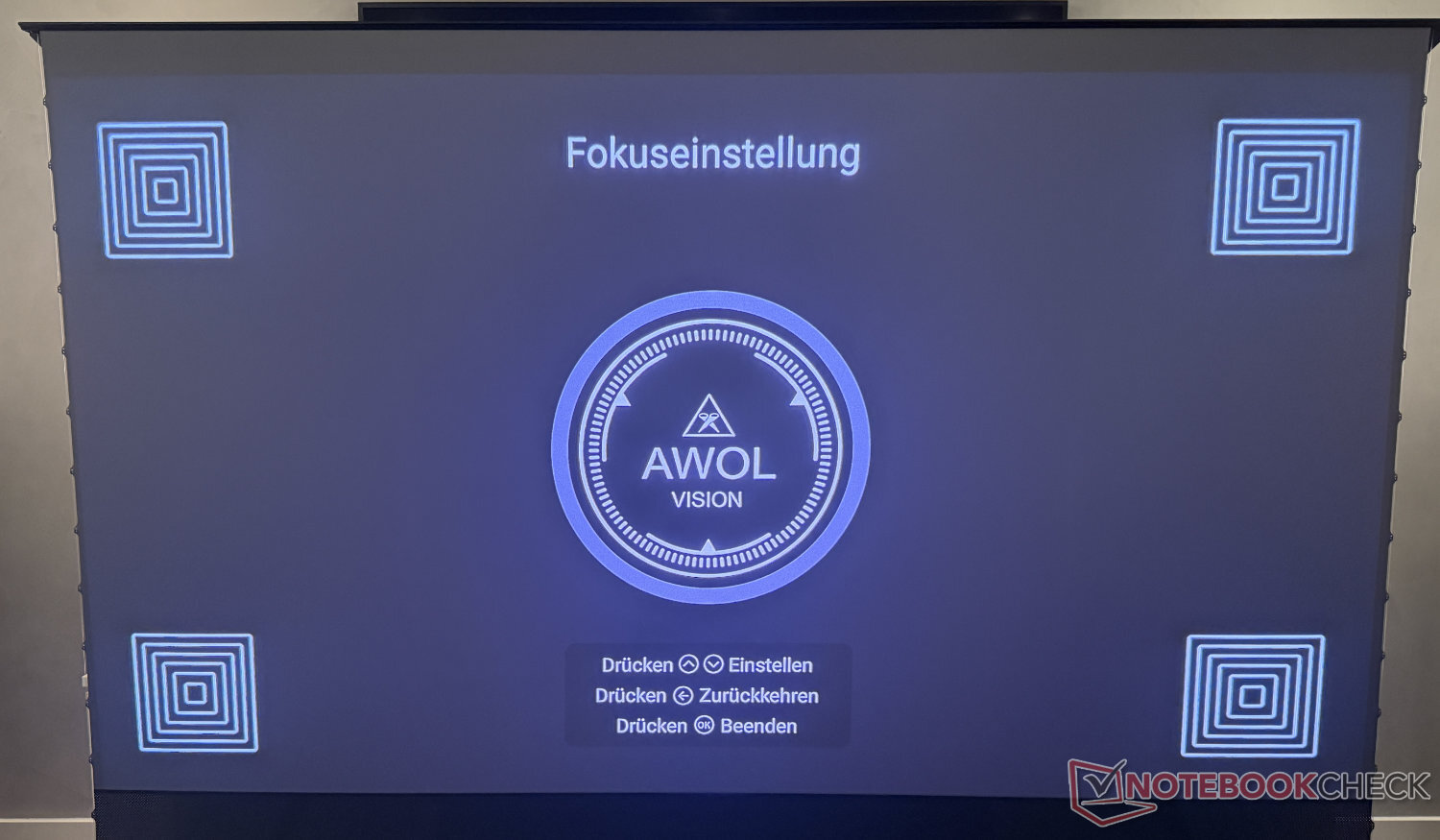
If the image is aligned with the screen, there is a clear blurring in the two upper corners. This is a common weakness of UST projectors, which is less important for movies, but is definitely an issue for gaming with displays in the corners, for example. And it contradicts the manufacturer's promise of a 4K-sharp image right to the edge. But the all-clear at this point: there is no auto focus. By manually adjusting the focus, the blurring in the corners can be quickly eliminated so that the manufacturer's promise is actually fulfilled.


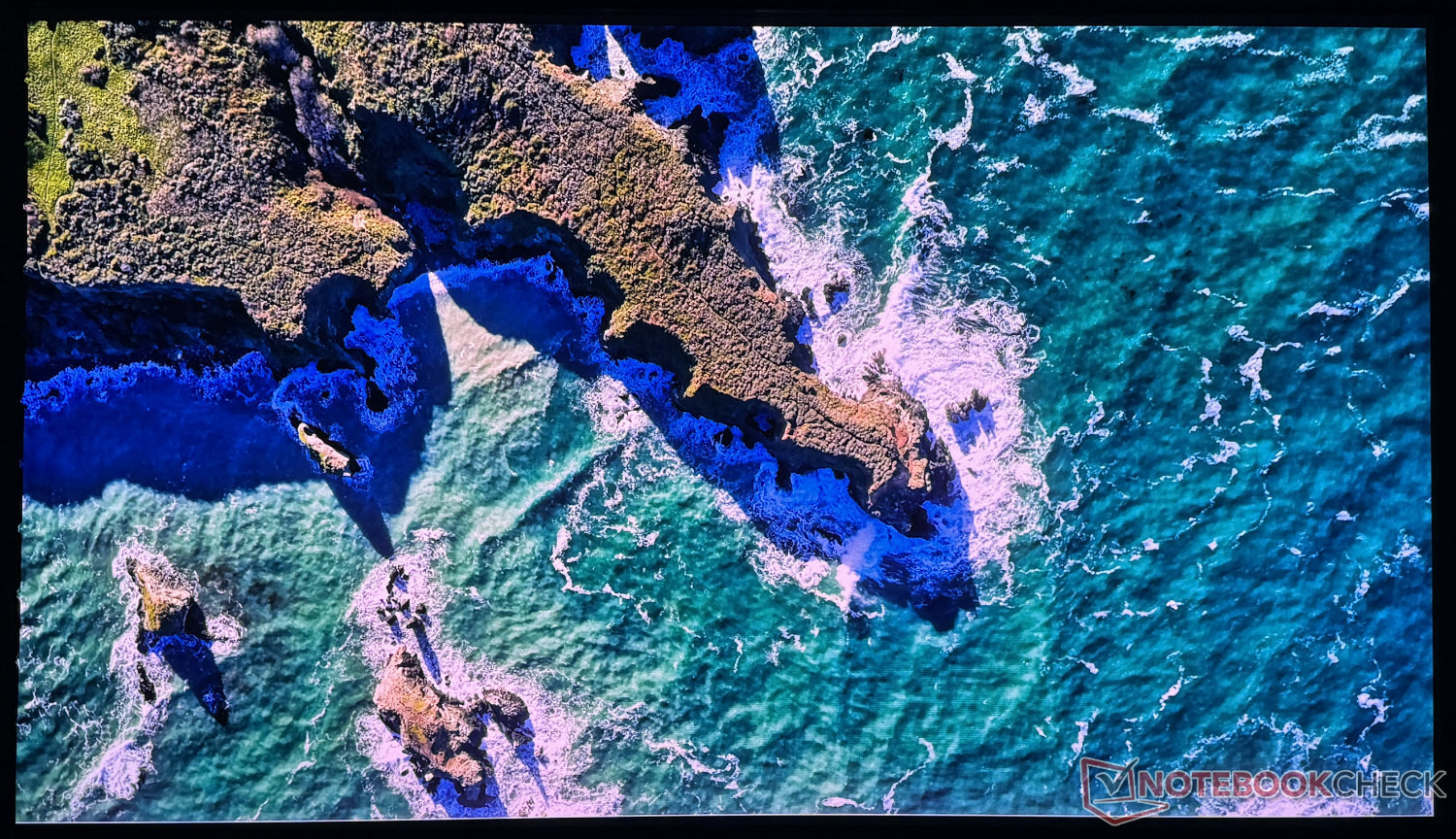

Once the alignment is complete, the Aetherion Max makes up for the previous effort. The picture quality for demo content is already excellent "out of the box". Especially in darkened surroundings, the Aetherion Max impresses in the test in the standard setting with a rich black, bright colors and high contrast. If desired, the countless setting options can be used to further optimize the result with or without AI, e.g. in terms of picture modes, black levels or colour calibration.
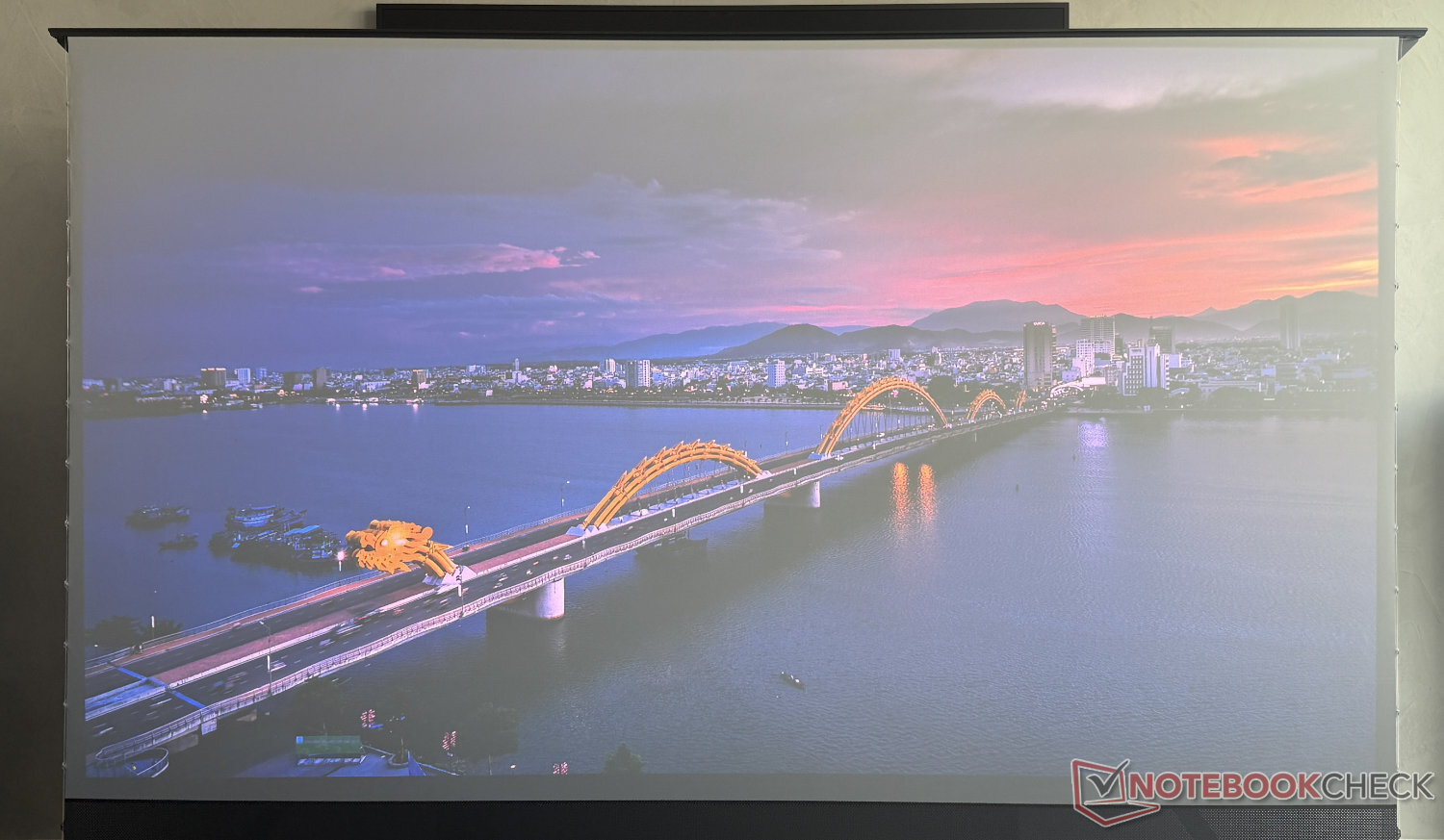
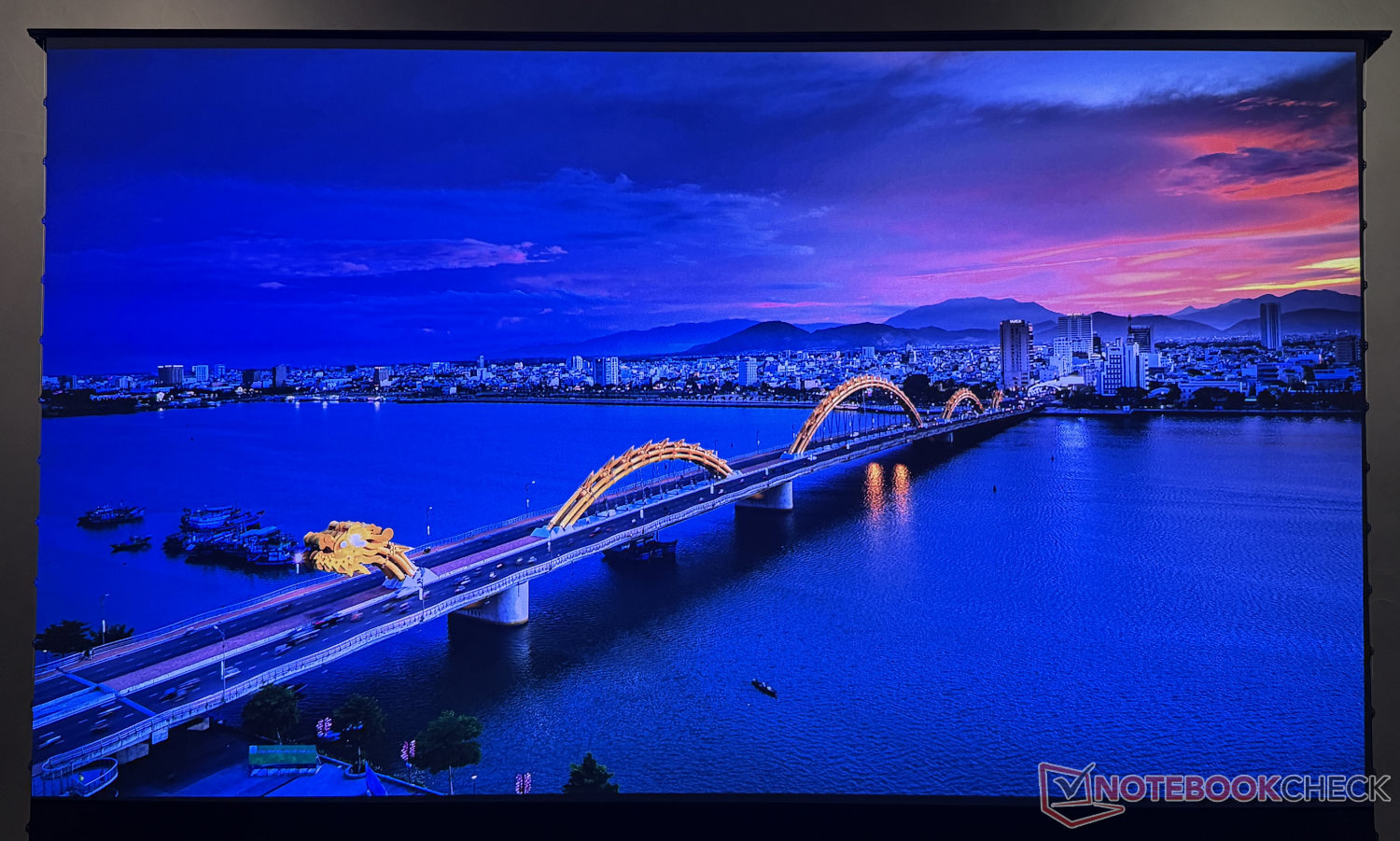

If the UST projector is to serve as a replacement for a classic television, it must not only score points in a darkened home cinema environment, but also in daylight. This is where the wheat is separated from the chaff. With its remarkable brightness, the Aetherion Max also achieves a decent result in a living room environment flooded with daylight and sunshine from a side window. The brilliance of the picture at night is of course nowhere near as good. Instead, the reproduction is significantly paler and the otherwise deep blacks degenerate into the dark gray of the screen.
To watch a soccer match or other sport on a Saturday afternoon, it is more or less sufficient at maximum brightness as long as the sun is not shining directly onto the screen. However, high expectations should not be placed on the picture quality. In this case, a classic TV, even with a simple LCD panel, provides a more consistent performance. However, laser TVs have the great advantage that light sources are not reflected, as is the case with many televisions.
When the light was switched on in the evening, the Aetherion Max worked much better as a TV replacement than in daylight. This makes it easy to enjoy a series or movie without the room having to be completely darkened. The UST projector is also well suited for gaming, thanks to minimal input lag, VRR (Variable Refresh Rate) and ALLM (Auto Low Latency Mode).
Sound: Okay, but external solution advisable
If the screen and laser TV are placed on a TV board or on the floor, they already take up a lot of space in the middle. It is difficult to place a soundbar there. The same applies to a center speaker in a surround sound system. It would therefore be very practical if the Aetherion Max already delivered good sound out of the box. In any case, the advantage is that the sound comes from the screen thanks to UST, not from another part of the room as with other projectors.
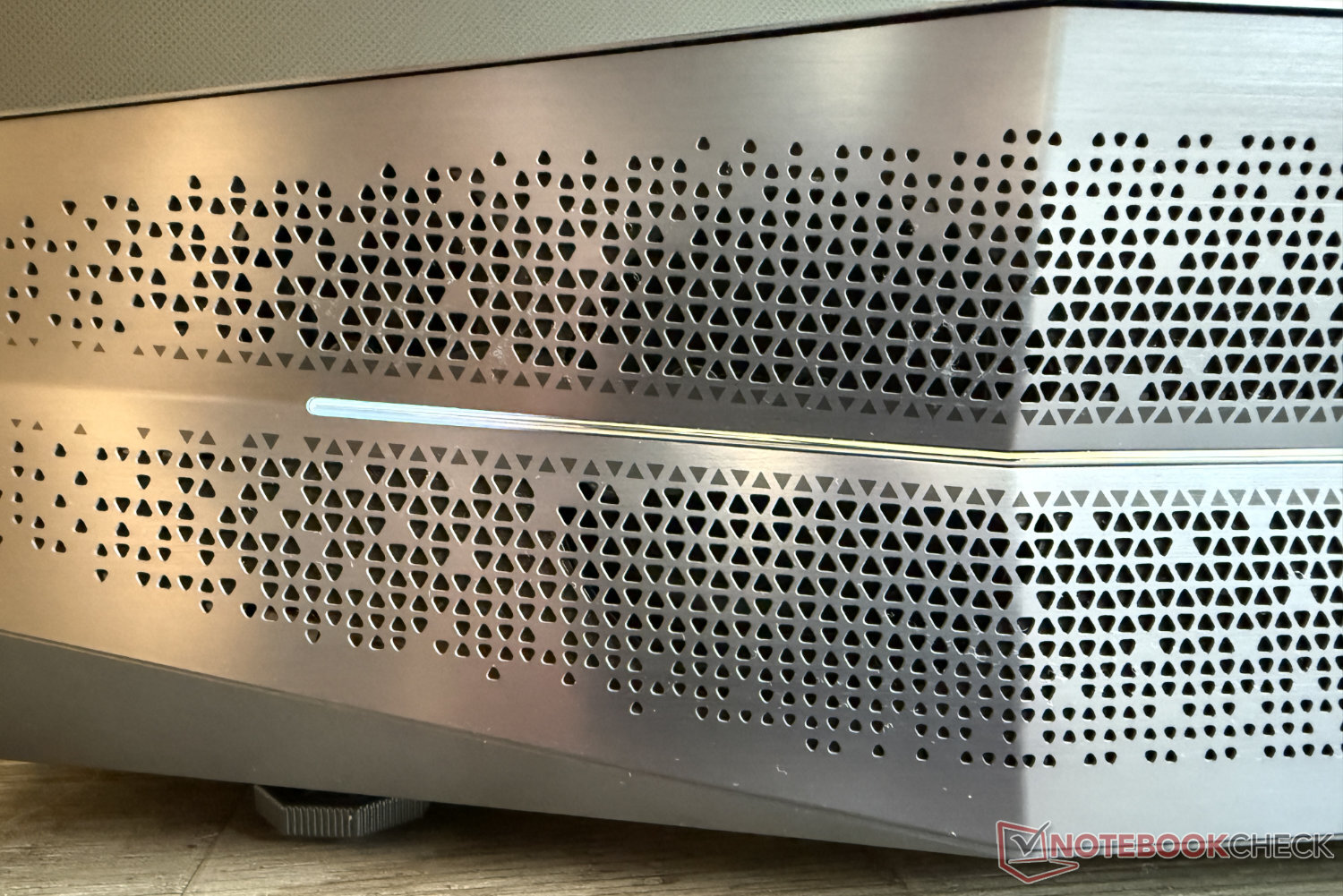
According to the data sheet, AWOL Vision installs four speakers: two full-range drivers with 25 W each and two tweeters with 20 W each. According to the manufacturer, the Aetherion Max also supports Dolby Atmos and DTS:X. The projector's built-in speakers deliver a solid sound with a high maximum volume for watching news or sports. However, our impression is that the sound is somewhat muffled and cannot keep up with the picture quality. We would have liked a little more in this price range.
An external solution should at least be used for movies. For example, Aetherion offers its own ThunderBeat wireless audio system with 4.1.2 channels (approx. 1,200 euros on Amazon), in which the UST projector serves as the center. Alternatively, a range of connections are available at the rear, including eARC via HDMI 2.1, S/PDIF, 3.5 mm jack and Bluetooth 5.4, allowing external sound solutions from headphones to surround systems to be connected.
Energy & noise: No more energy-hungry than a TV
We measured the power consumption of the Aetherion Max at maximum laser brightness (level 10) at around 130 Wh per hour. This puts the UST projector on a par with modern, but significantly smaller Smart TVs. This results in electricity costs of only a few cents for a two-hour movie. Home cinema in large format with a laser projector (whether UST or not) is therefore no longer as energy-hungry as it used to be with classic projectors without a laser light source.
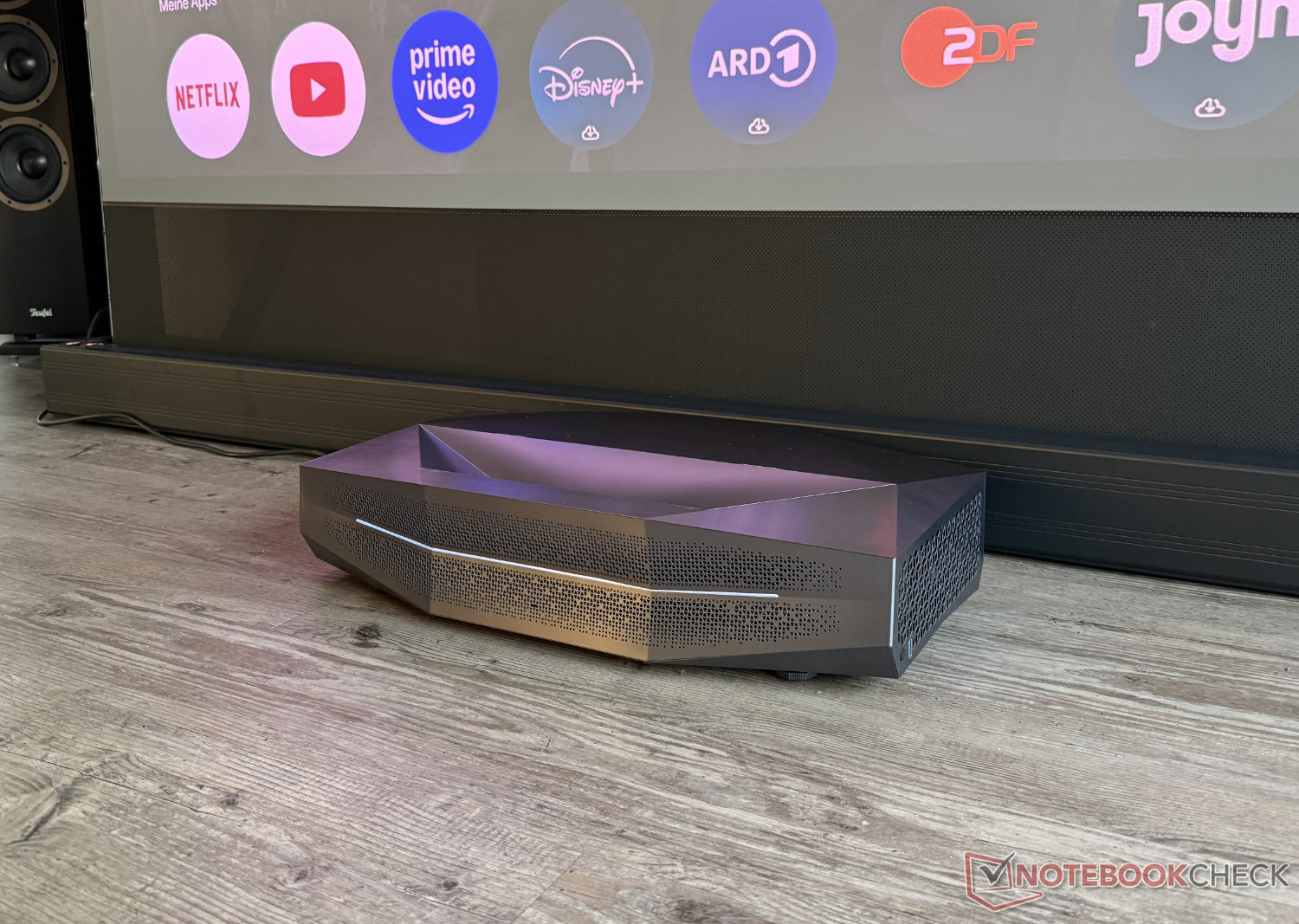
Another crucial point is the volume of the fans that cool the technology in the projector. After all, this generates a more or less loud noise, which can be perceived as disturbing, especially during quiet scenes during a movie. We measured the Aetherion Max (at a distance of one meter) at maximum brightness at around 35 dB. When the brightness is reduced, the integrated cooling system has less to do and the operation becomes quieter.
The advantage of a UST model, however, is that the device and therefore the noise source is located far away from the viewer's position, which is not usually the case with a classic long-throw projector. At a seating distance of over 3 m, however, the projector can still be heard with a clear noise. In the end, there is still clearly perceptible inherent noise that does not occur with a television.
Projector screen: sparring partner with high contrast
We tested the Aetherion Max with a motorized, floor-rise screen from AWOL Vision with a 100-inch diagonal. We were provided with the Cinematic+ version, a high-contrast screen (Floor Rise UST ALR Screen, available on Amazon). This is the perfect complement for a high-quality laser TV like this one, as it can improve black levels, contrast and color reproduction with its dark grey TPU material. It prevents most of the distracting light coming in from the side and directs the projector light towards the viewer.
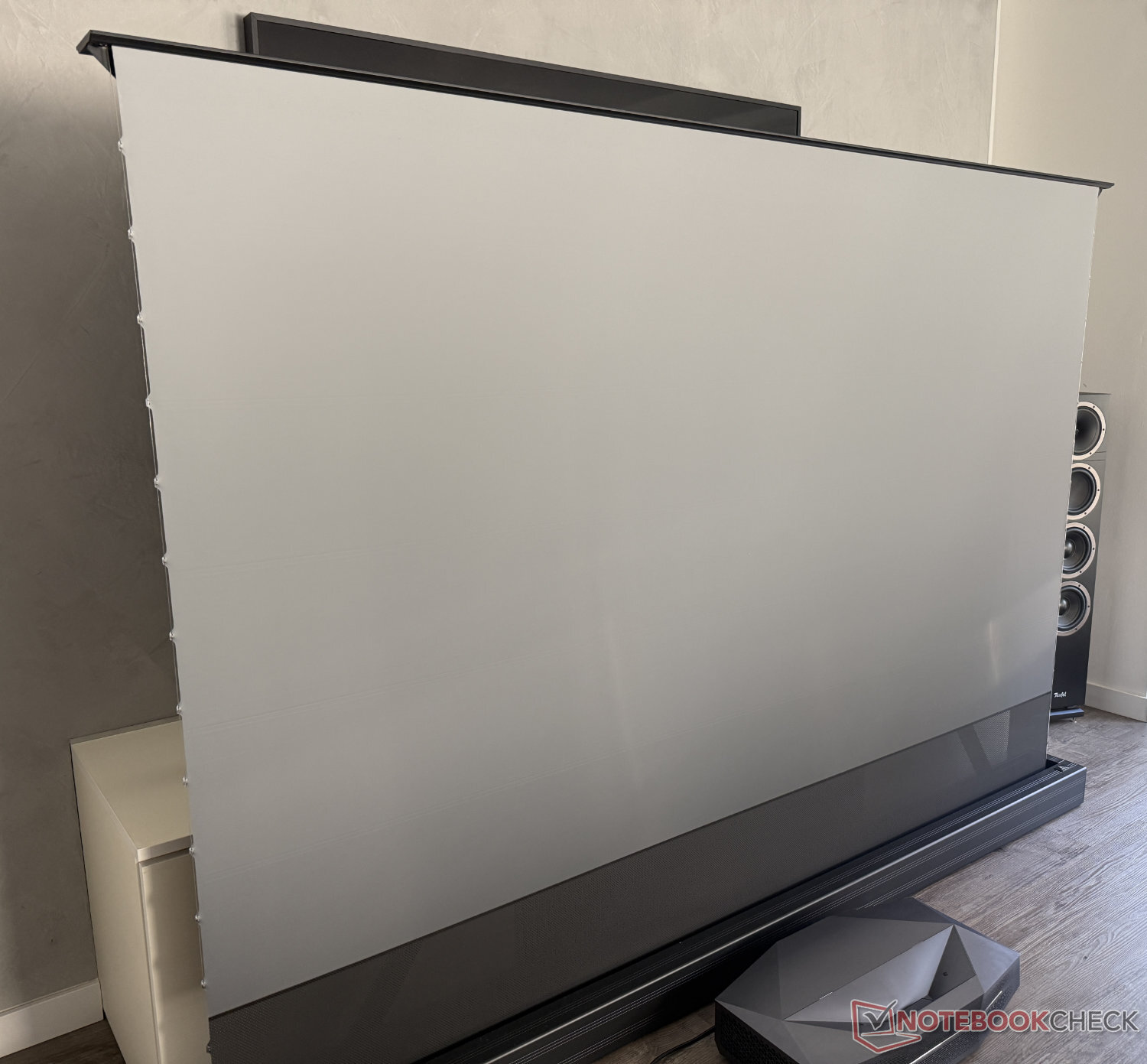
The 254 cm diagonal screen is installed in a 237 x 11 x 16 cm (width x height x depth) black metal box. It also weighs almost 30 kg and is therefore anything but handy. However, it is likely to be used in a fixed position in a home cinema room, for example.
However, if you want to use the screen and laser TV as a TV replacement in an everyday living environment, there may be a few negative visual aspects. Apart from the silver-colored screws on the two sides of the black housing, the area around the power cable connection could have been designed a little more attractively and inconspicuously. If the screen and projector are placed on a TV board in the living room, for example, there are definitely more visually appealing solutions - even from the manufacturer itself, which offers a comparable screen integrated into a piece of furniture with a compartment for the laser TV.
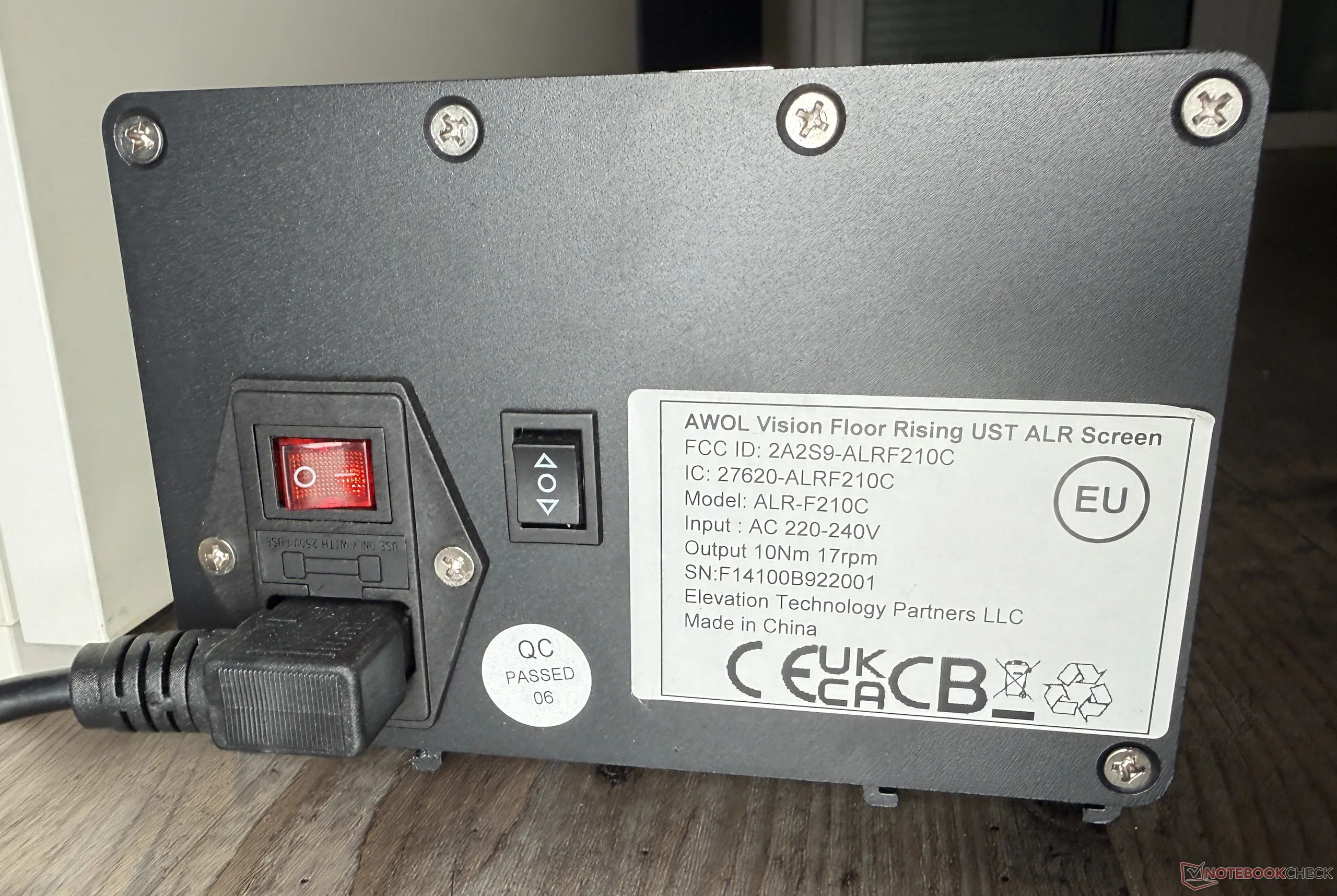
The image quality in combination with the Aetherion Max is outstanding. The lower section of the screen also features gray, slightly transparent fabric. This is permeable to audio waves if a sound system such as a center speaker is positioned behind the screen. Mechanically, there is nothing to criticize. During our limited test period, the screen was reliably extended and retracted several times and also makes a stable and high-quality impression.
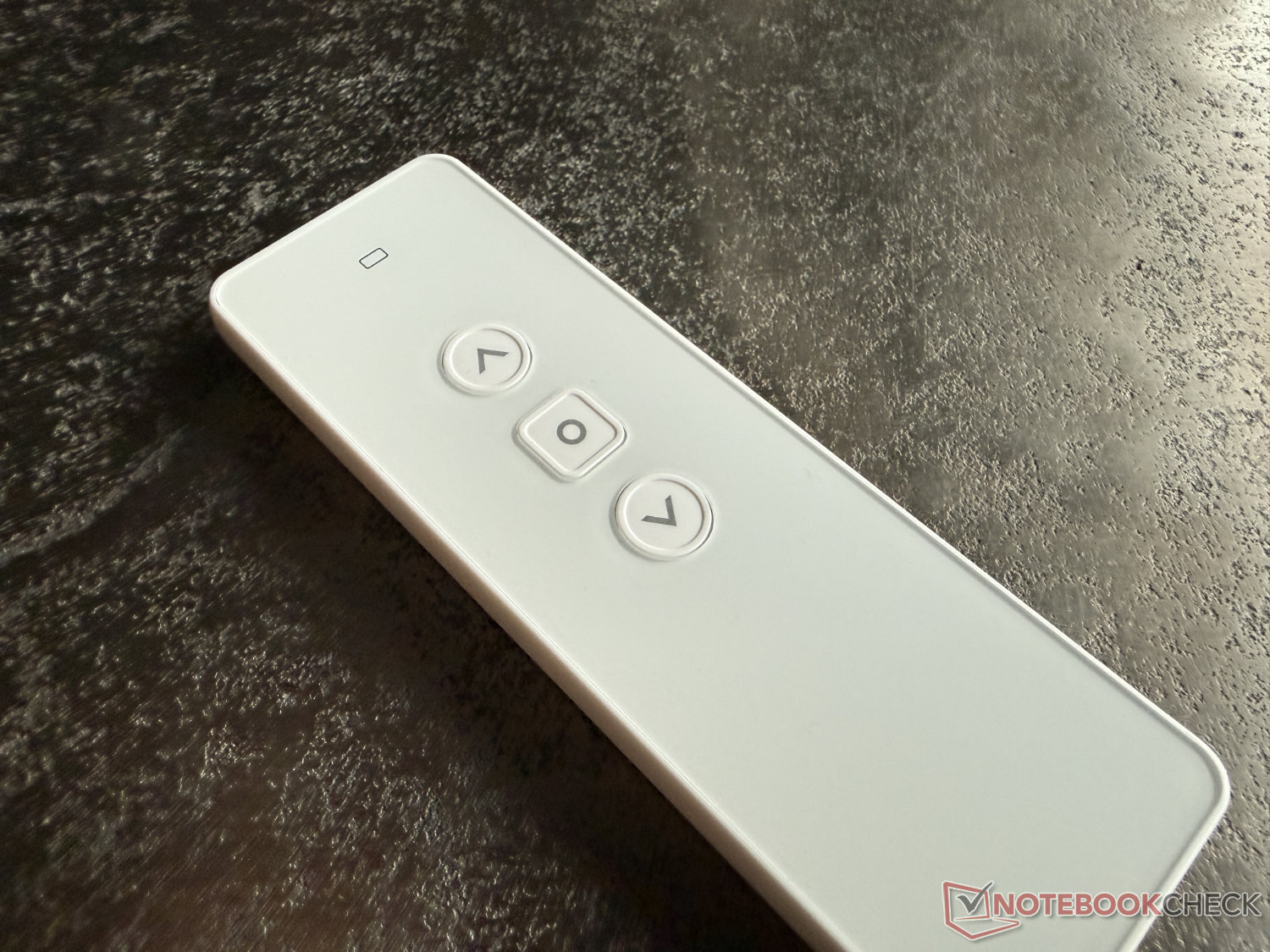
The ALR screen is operated using the supplied remote control with three buttons (up, down, stop). The remote control, which could have been a little more visually appealing, operates at 868.35 MHz. Alternatively, automatic control is also possible when the projector is switched on. A USB-A stick is included for this purpose, which must be plugged into one of the device's two USB-A ports. The screen then automatically rises when the UST projector is switched on, which unfortunately did not always work 100 percent reliably in the test. In the age of Matter, more smart home options would also be desirable. The Aetherion Max itself can be connected with Google Home, Amazon Alexa, Apple HomeKit and Control 4.
Ultimately, the motorized, floor-raising screen from AWOL Vision with a 100-inch diagonal (120-inch is also available as an alternative) is a good sparring partner for the Aetherion Max. It supports the image quality with its high-contrast fabric. However, there are also a few small points of criticism. Ultimately, everyone has to decide for themselves what kind of screen to combine with a UST projector. Models for fixed wall mounting or installation on the ceiling, for example, are also feasible.
Transparency
The selection of devices to be reviewed is made by our editorial team. The test sample was provided to the author as a loan by the manufacturer or retailer for the purpose of this review. The lender had no influence on this review, nor did the manufacturer receive a copy of this review before publication. There was no obligation to publish this review. As an independent media company, Notebookcheck is not subjected to the authority of manufacturers, retailers or publishers.
 Add as a preferred source on Google


