




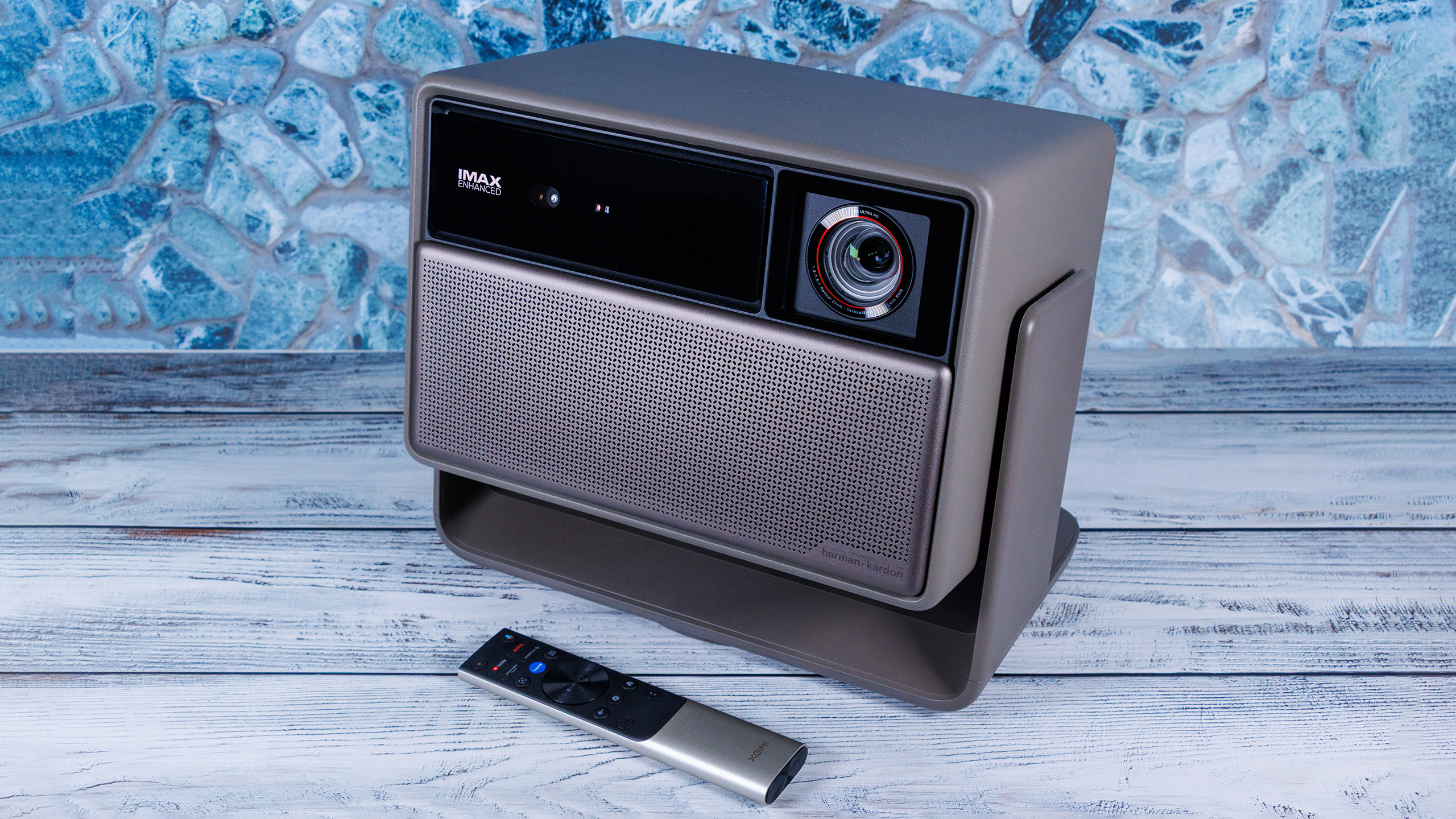
Extremely bright yet quiet - Xgimi Horizon 20 Max projector review
Home Cinema Primus.
The Xgimi Horizon 20 Max offers modern laser projection paired with enormous brightness, HDR and a refresh rate of up to 240 Hz. Although this is a successful projector, our review revealed that there is still room for improvement in some areas.Daniel Schmidt (translated by Daniel Schmidt) Published 🇩🇪 🇵🇱 ...
Verdict on the Xgimi Horizon 20 Max
The Xgimi Horizon 20 Max is an extremely bright 4K laser projector with triple RGB laser, Google TV and Harman Kardon sound, which scores highly in home cinema applications thanks to its high brightness and quiet fan control. With up to 5,700 ISO lumens, flexible lens shift function and reliable auto alignment, the image remains clearly visible even in bright rooms, but really comes into its own in a darkened home cinema.
Despite its premium price of around $2,999, Xgimi also has its weaknesses: 4K is only available at 60 Hz, high refresh rates are limited to Full HD, there is no LAN port, and the aggressively bright performance mode is practically unusable due to a green tint and a clearly audible fan. The bottom line is that the Horizon 20 Max is a very powerful but not perfect laser projector that delivers reference-level image quality and volume, but doesn't quite make it to the top class in terms of interfaces and fine tuning.
Pros
Cons
Price and availability
The Horizon 20 Max is available directly from the Xgimi online shop or on Amazon.

The Horizon 20 Max is the top model in Xgimi's Horizon 20 series, which also includes the Horizon 20 and Horizon 20 Pro.
With an RRP of $2,999, the laser projector is certainly not a bargain, but it has a lot to offer for its price and showed few shortcomings in our review.
Specifications: Xgimi Horizon 20 Max
| Resolution | 4K / UHD (3,840 x 2,160 pixels, not native) |
| Refresh rate | up to 240 Hz |
| Projection size | 40 to 300 inches |
| Projection ratio | 1.2-1.5:1 |
| Light source | RGB triple laser, 40x laser chips |
| Brightness | up to 5,700 ISO lumens |
| Native contrast | 10,000:1 |
| Standards | IMAX Enhanced, Dolby Vision, HDR10+ |
| Speakers | 2x 12 W Harman Kardon, DTS Virtual:X |
| SoC | MediaTek MT9679, 4 GB RAM, 128 GB ROM |
| Operating system | Google Android TV |
| Connectivity | 2x HDMI (1x eARC), 1x USB 3.2, 1x USB 2.0, optical audio, 3.5 mm audio, Wi-Fi 6, Bluetooth 5.2 |
| Dimensions | 249 x 298 x 190 mm (height x width x depth) |
| Weight | 5.4 kg |
| RRP | $2,999 |
Body and features – Stylish look with synthetic leather
The Xgimi Horizon 20 Max has a fixed stand with a ¼" thread on the underside for screwing the projector onto the optional floor stand. The base plate has an integrated turntable, allowing the projector to be rotated 360° and tilted a total of 135°. With its faux leather look, it blends in well with most living rooms and is also not particularly susceptible to dirt.
The connections and power button on the back are easily accessible. However, the features are not particularly extensive at this point. Of the two HDMI ports, the first is eARC-compatible but limited to 4k at 60 Hz. The higher refresh rate and gaming features such as VRR are limited to HDMI 2. There is also no Ethernet connection, and Wi-Fi is limited to the 2.4 and 5.0 GHz bands.
Gamers will also be interested to know that high refresh rates (120 / 240 Hz) are only available in Full HD. ALLM (Auto Low Latency Mode) enables latencies of 1 ms, and VRR (Variable Refresh Rate) is also supported.
Google TV is used as the user interface, including voice control. Easy access to all popular apps is therefore guaranteed, and Chromecast is also on board. The included remote control has a metal housing and leaves a high-quality and tidy impression. A modular power supply unit is also included in the scope of delivery.

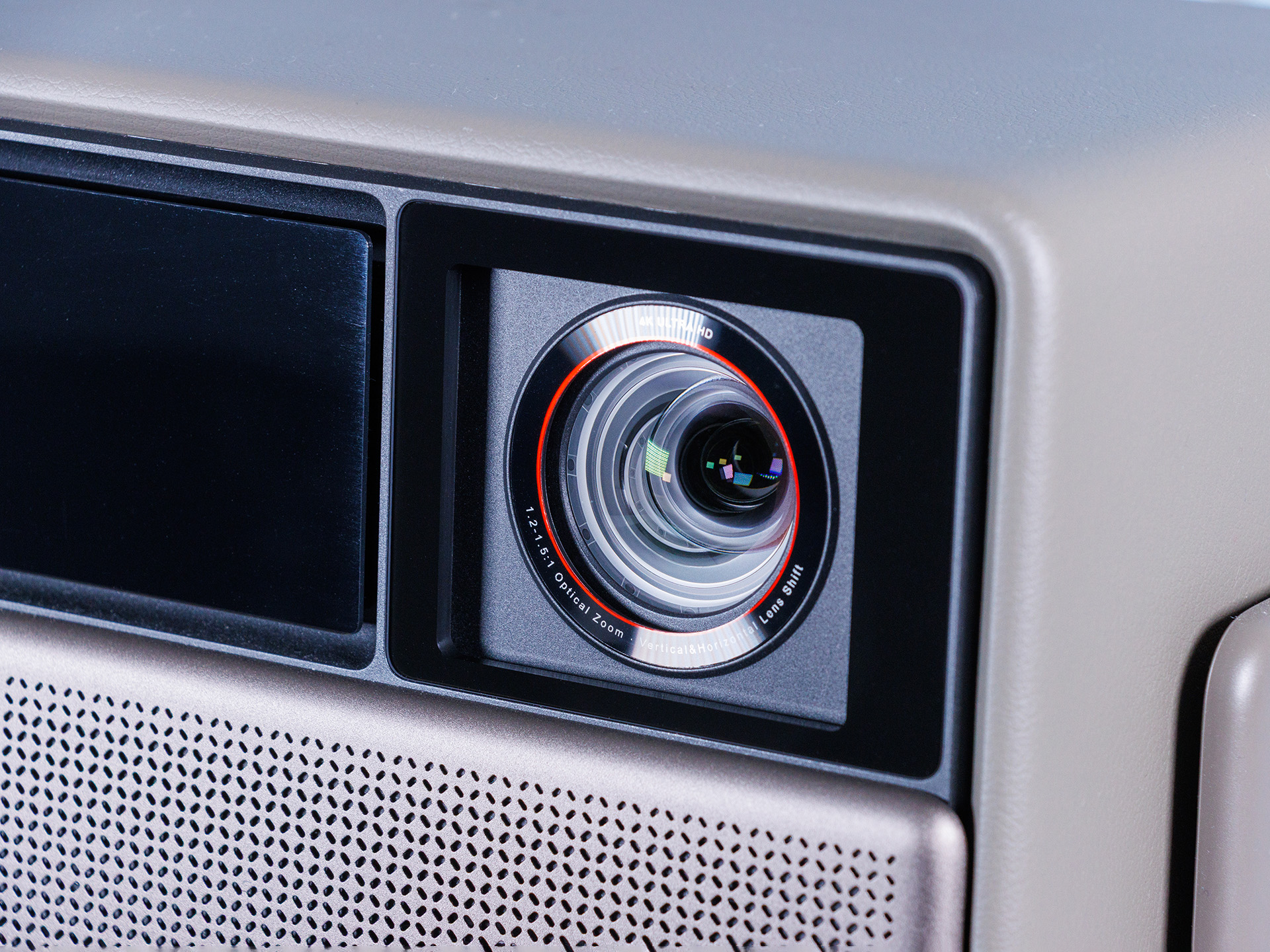
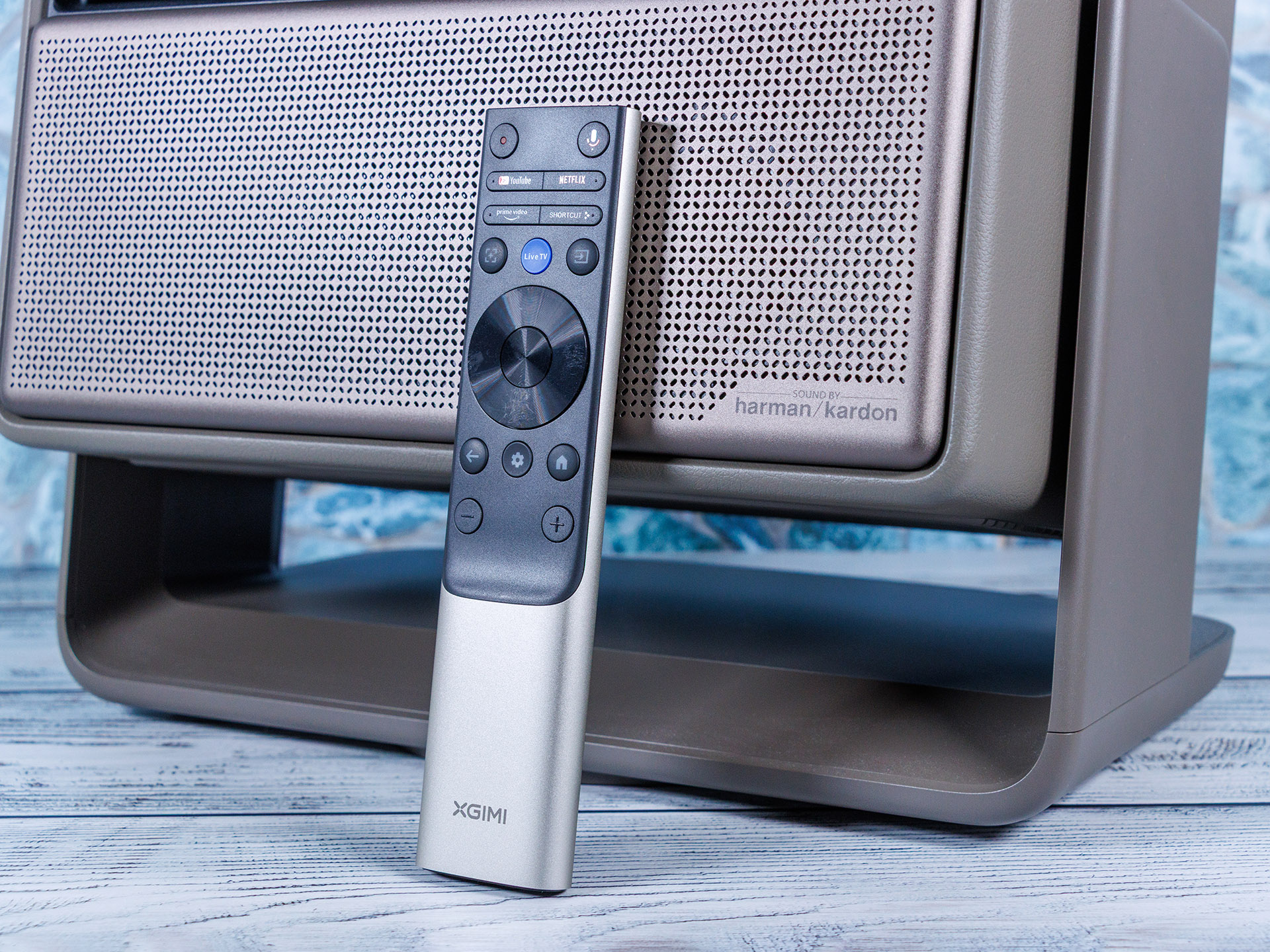
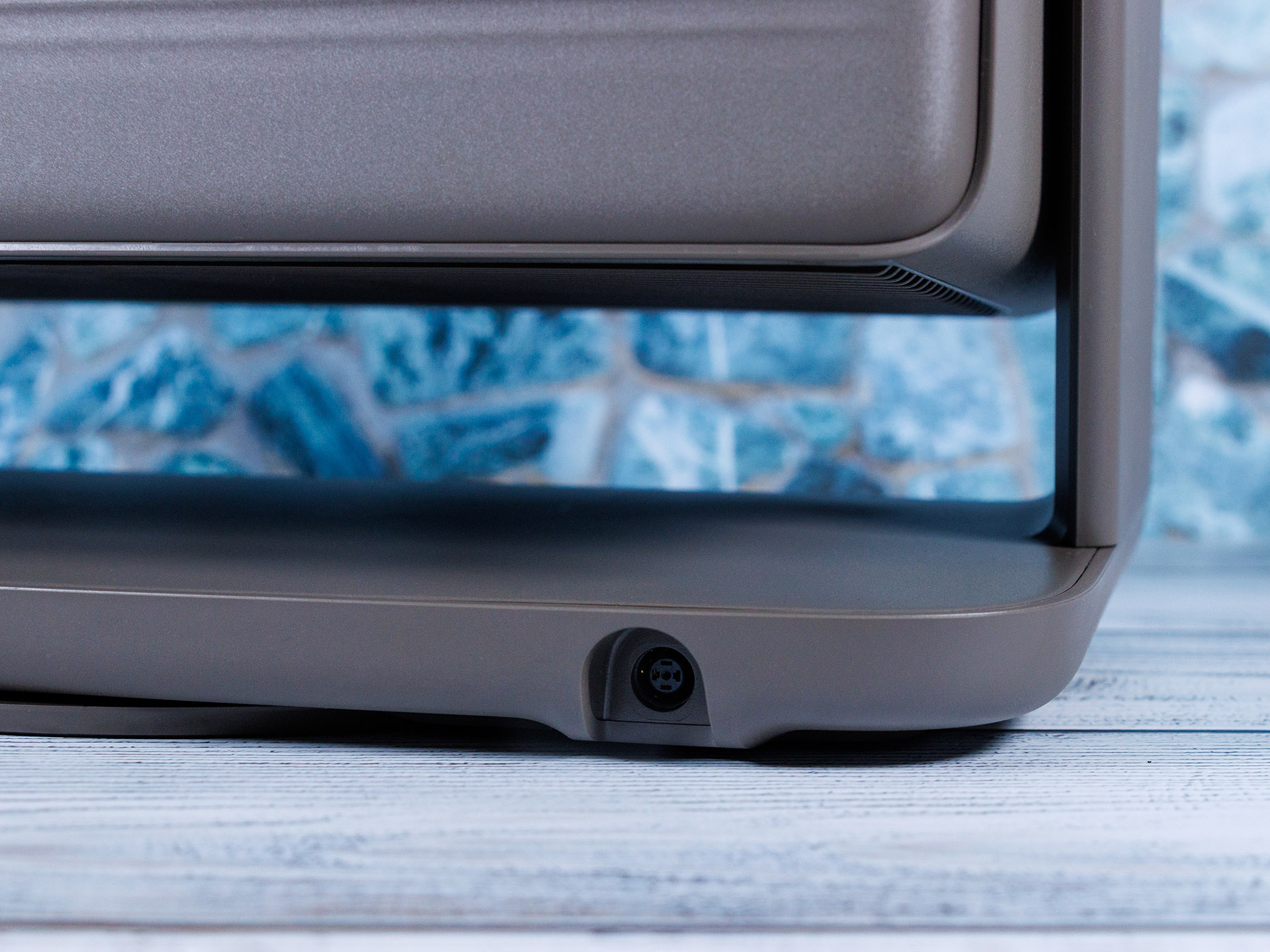
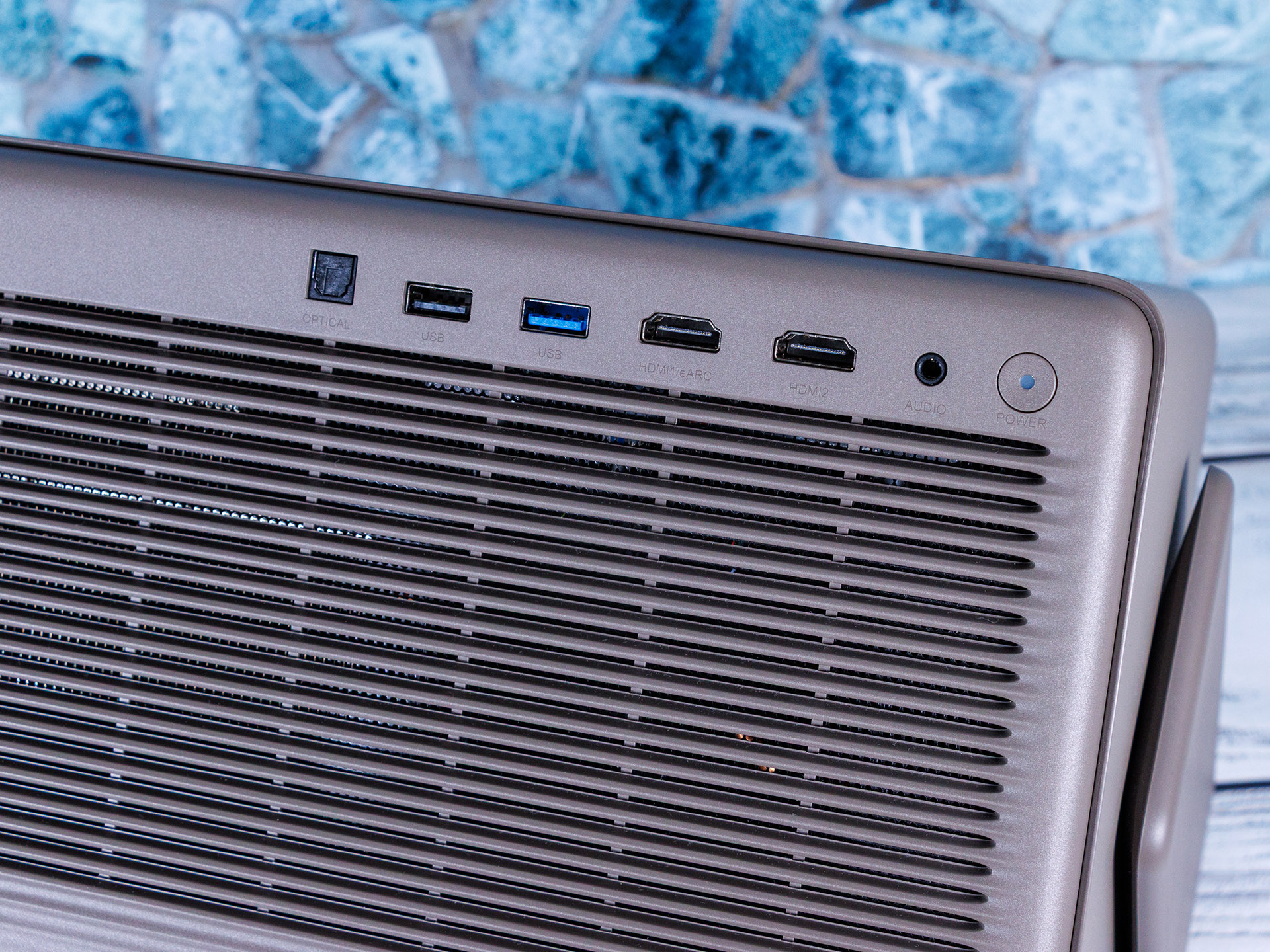
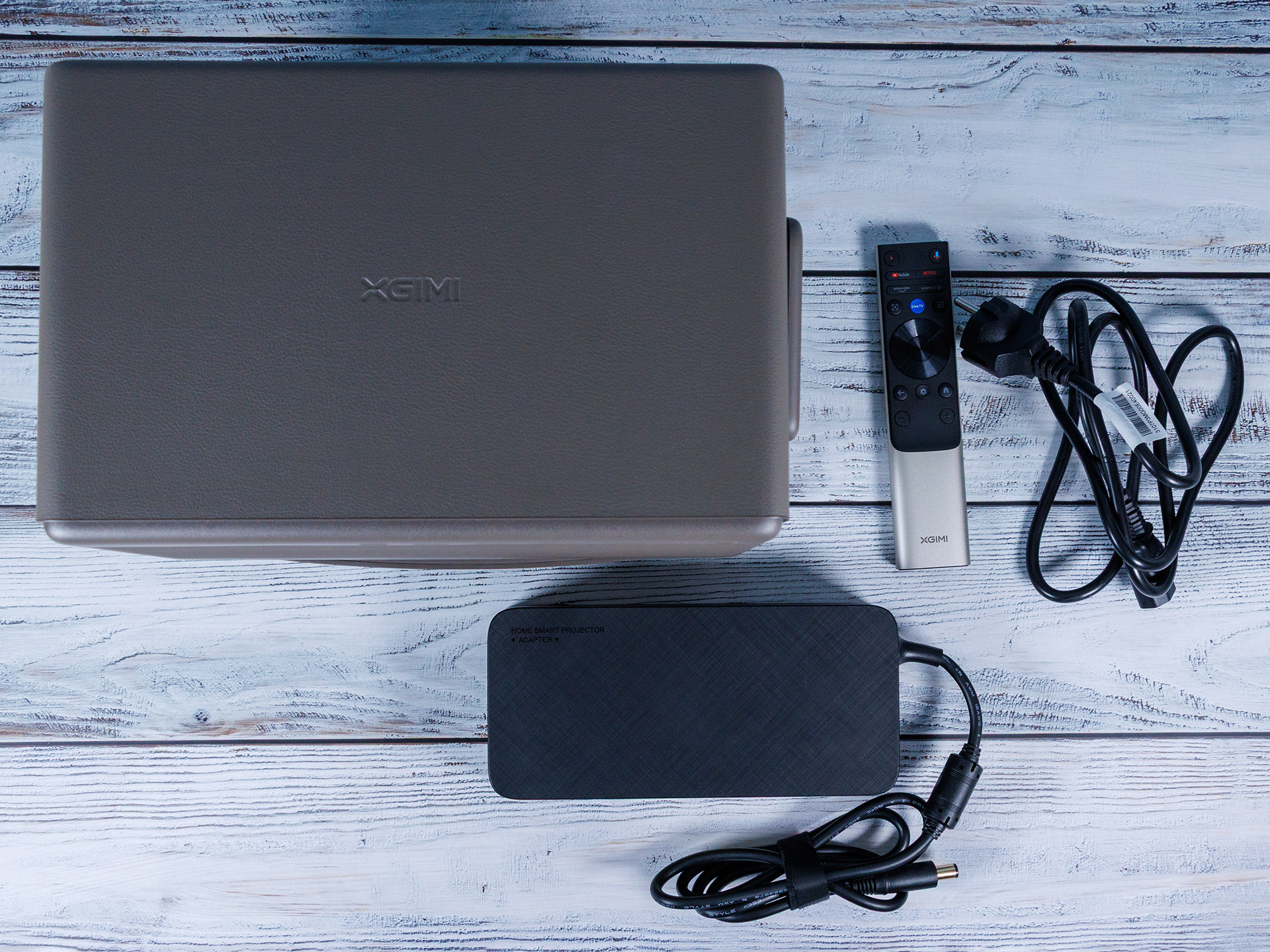
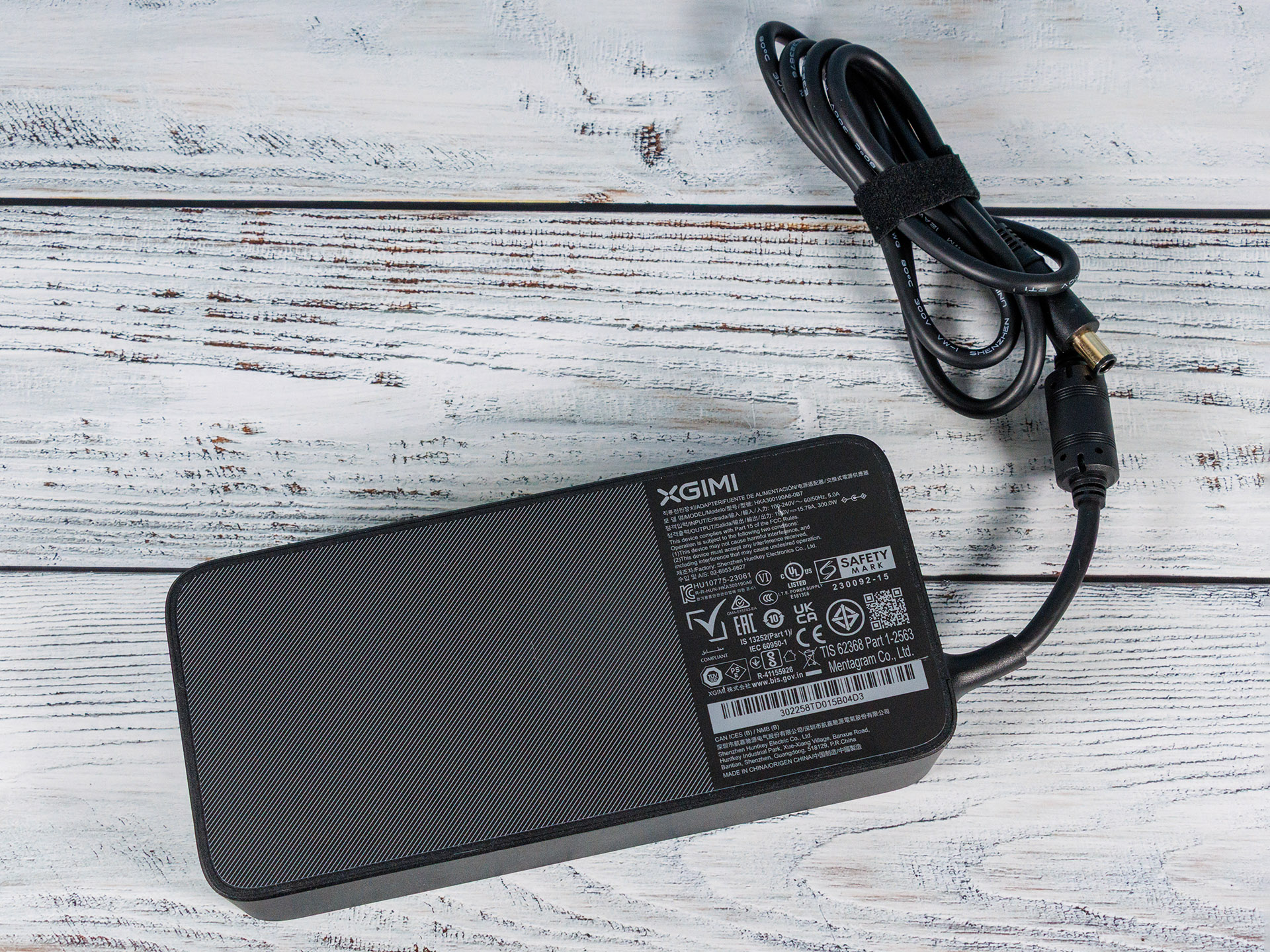
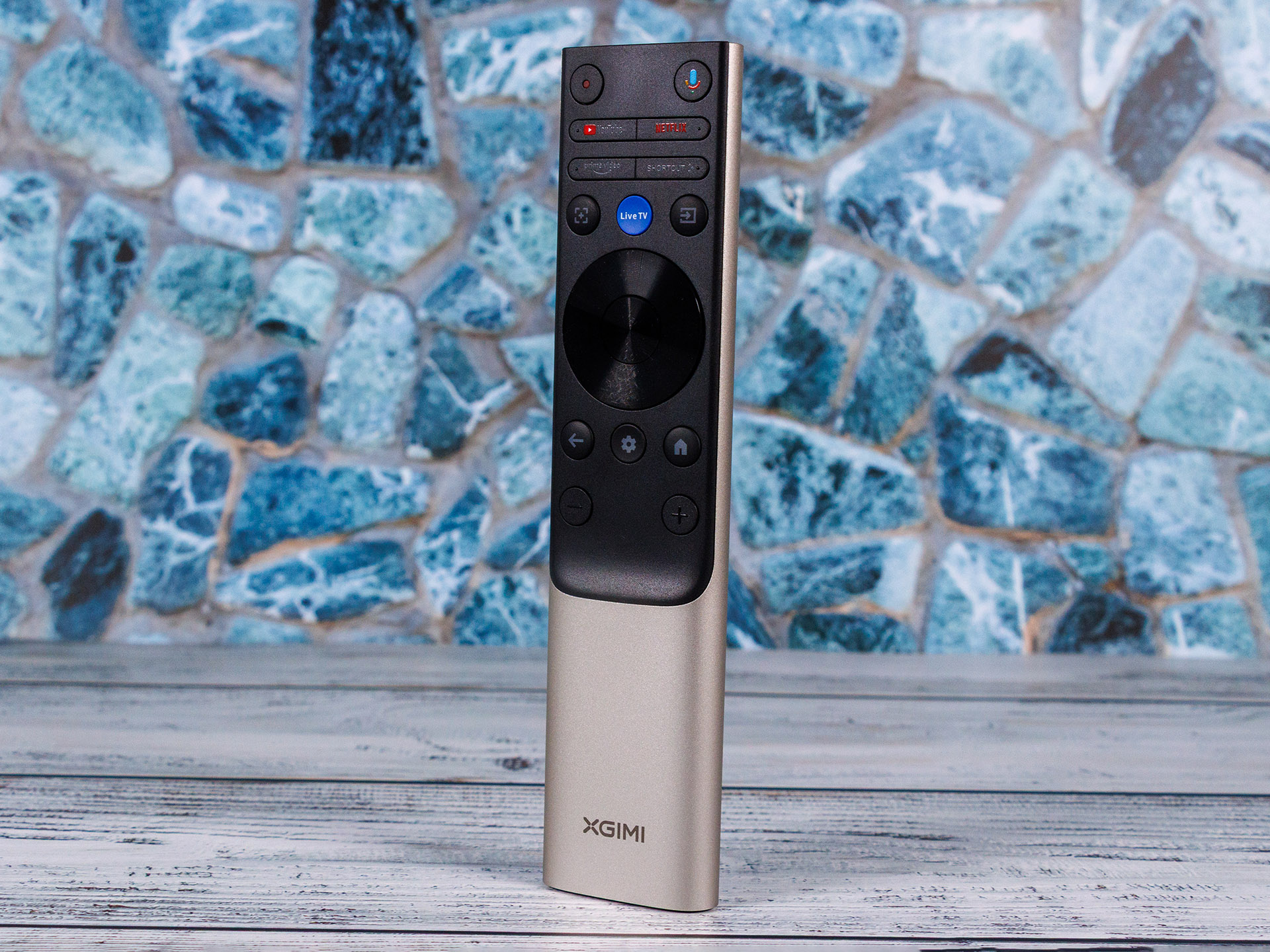
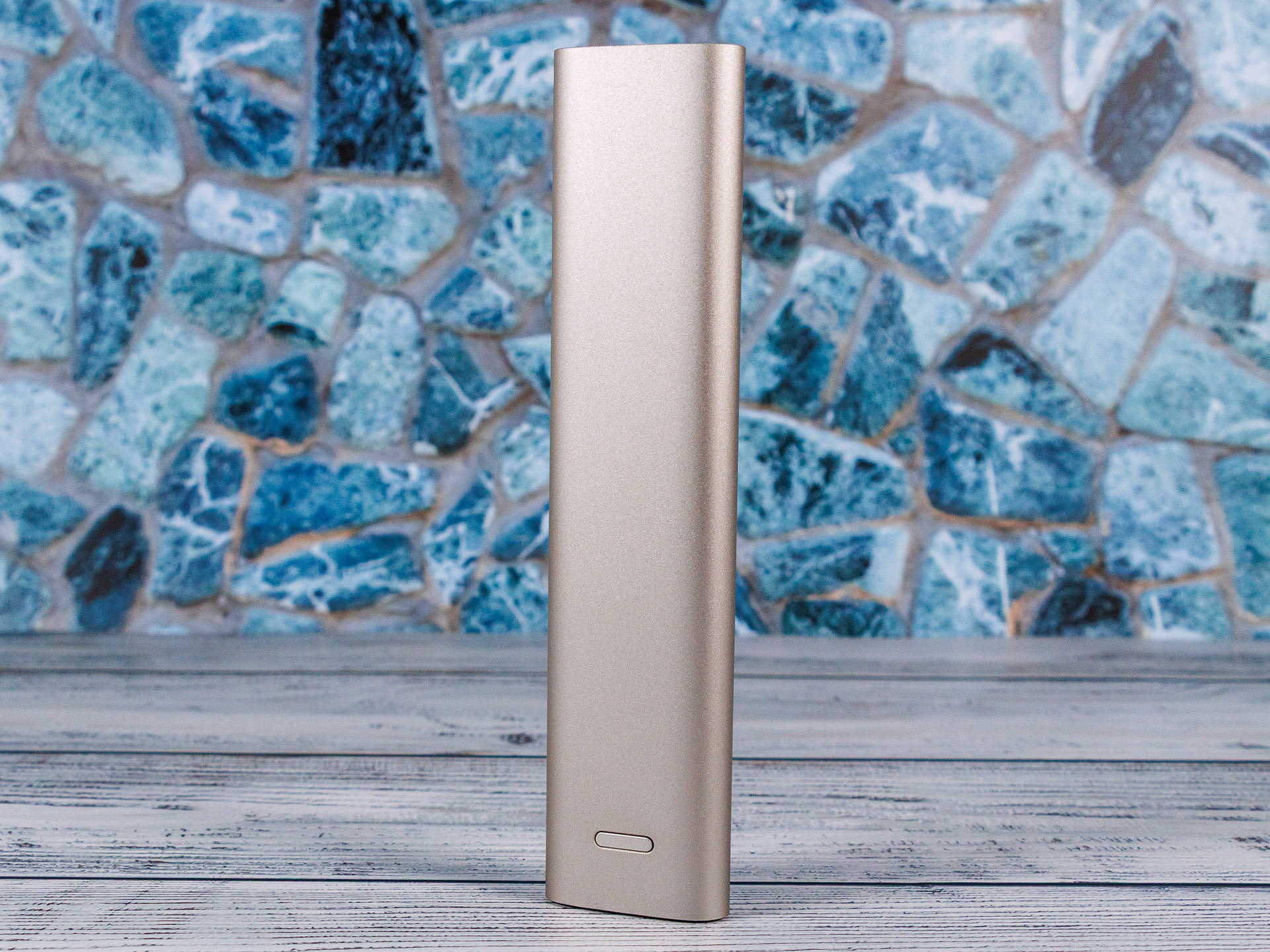
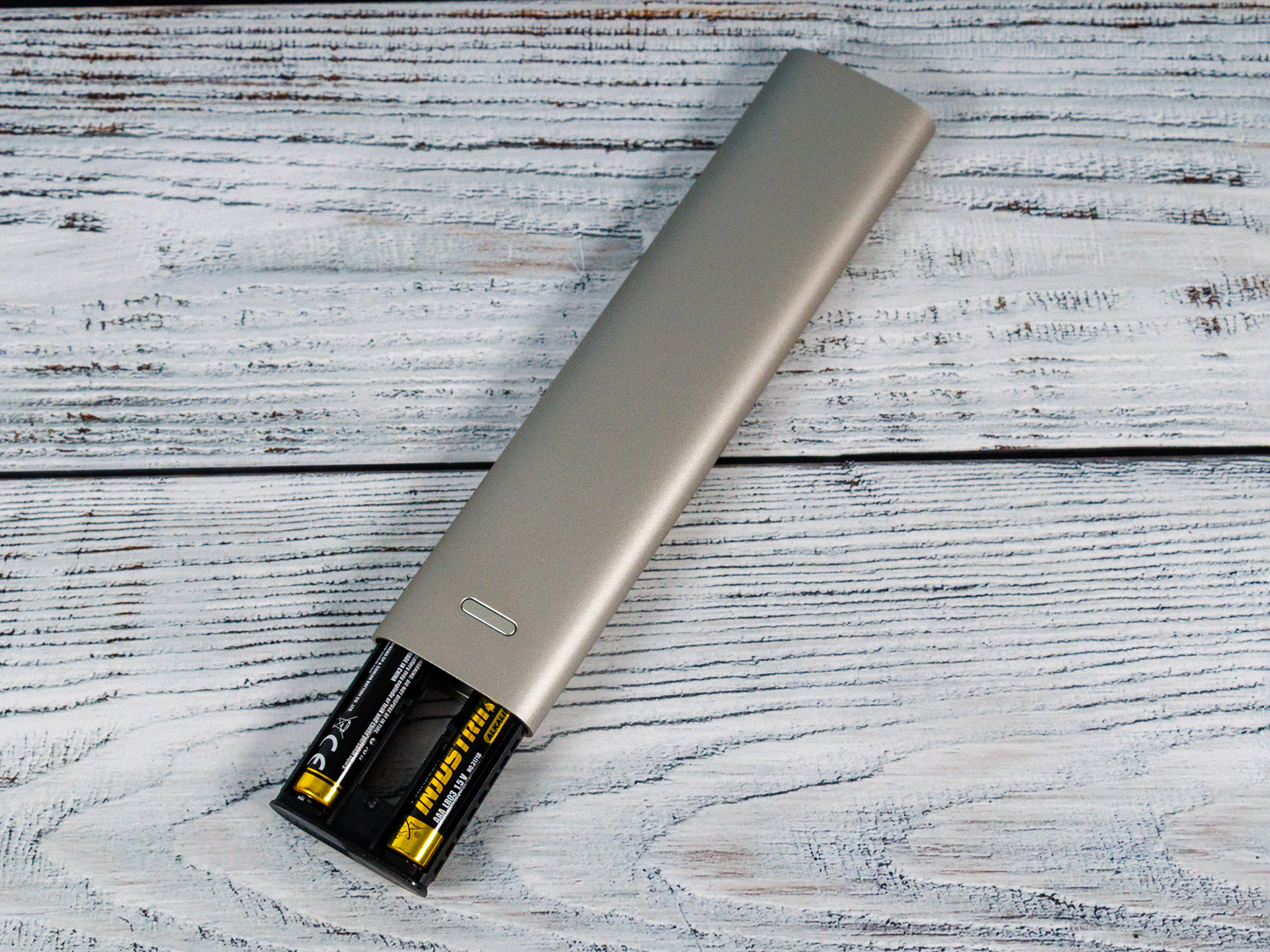
Image – Razor sharp and very bright
The Xgimi Horizon 20 Max already boasts impressive specifications on paper. It supports all common HDR standards, is IMAX Enhanced, offers a Filmmaker Mode and 3D support (optional glasses required). The lens shift supports +/- 120% vertically and +/- 45% horizontally. Autofocus and automatic keystone correction are also available. The automatic functions worked absolutely reliably in our test.
The Horizon 20 Max uses a 0.47" DMD display chip, which, as usual, does not support native 4K, but relies on 4K E-Shift. The Full HD image serves as the basis and the resolution is doubled by mirroring. This is not visible to the naked eye, enabling the Xgimi projector to deliver a razor-sharp image. This is also due to the fact that a triple RGB laser is used instead of LEDs.
This also enables the high luminosity, which Xgimi estimates at up to 5,700 ISO lumens. At full brightness with an additional luminance boost, we measure up to 3,150 cd/m² on the screen. Without the boost, however, it is only 100 cd/m² less. Even at minimum brightness, it is still over 1,300 cd/m². The colours are always brilliant and consistent. This is different in performance mode, where we measure over 5,000 cd/m², but which has such a strong green cast that it is practically unusable.


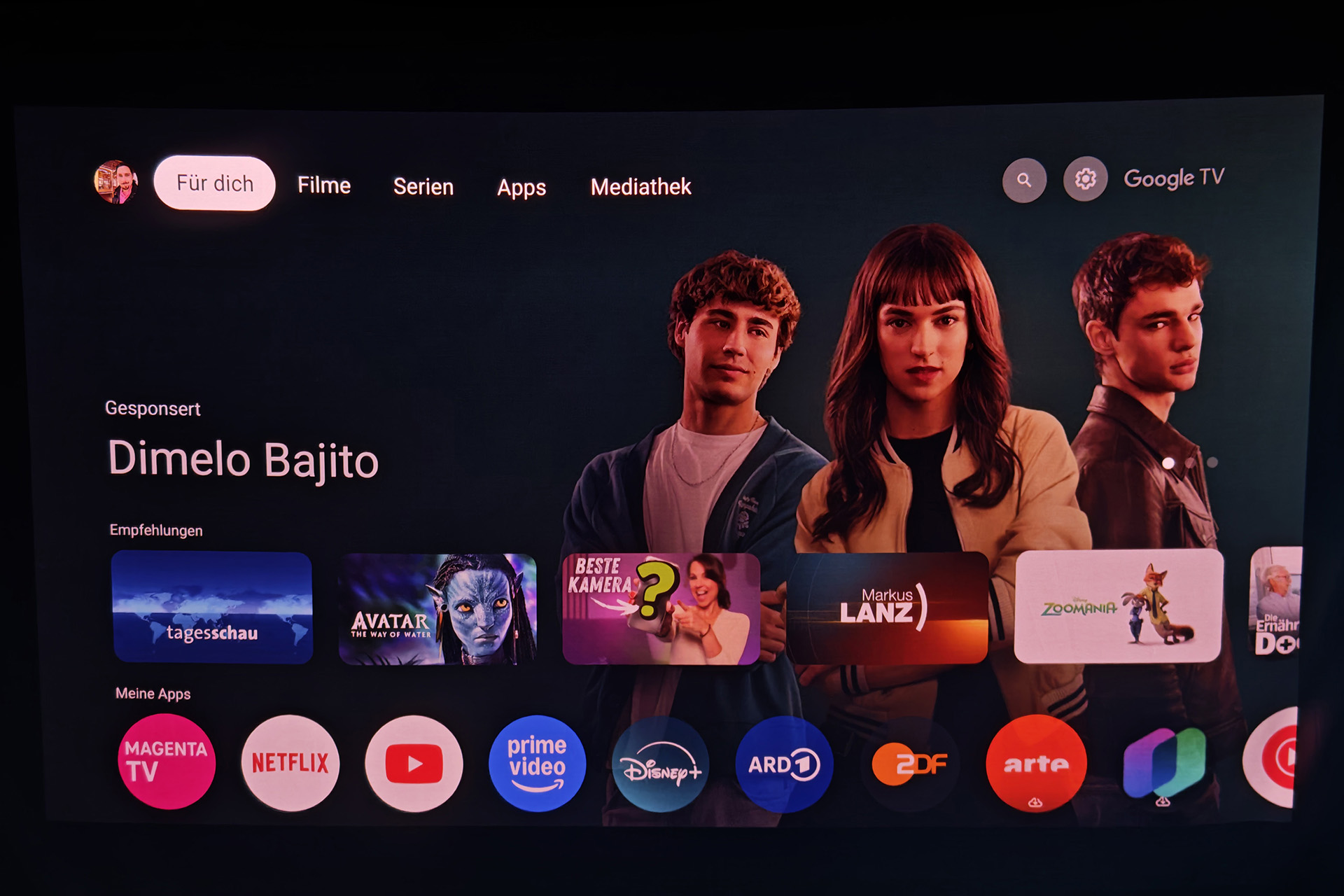
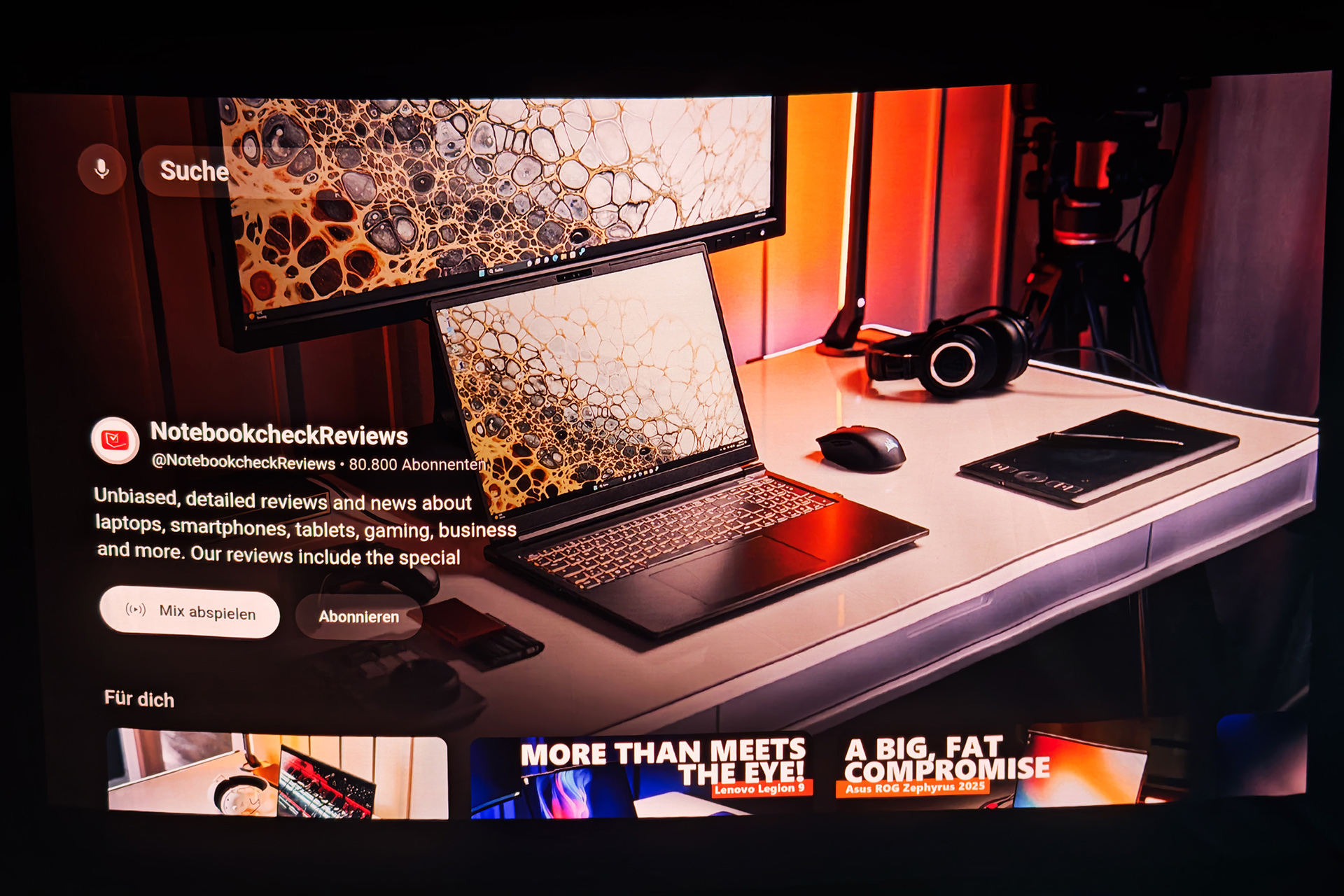
In everyday use, this means that the image remains clearly visible in a brightly lit room and there is no need for artificial dimming. However, it is still not sufficient for outdoor use on bright days.
The Horizon 20 Max is more impressive in the dark, where there is little cause for criticism. The black level is certainly not perfect, but it is deep and provides crisp contrasts. The display is generally quite cool.
If you set up the projector from the side, you can rely on the lens shift function. The automatic image alignment works very well and makes setup a breeze. However, this can also result in so-called ghost frames. These are limited in the Horizon 20 Max, but are still visible. Since looking directly into the laser is anything but healthy, the projector has eye protection that detects when someone steps into the projection area and then switches it off. This function can also be deactivated.
Noise and sound - Horizon 20 Max with Harman Kardon speakers
The two Harman Kardon speakers deliver really good sound for an internal system, which is also characterised by a certain depth. If you want to use surround sound, you can connect it via Toslink or HDMI. Bluetooth and a jack connection are also available for other external speakers.
The integrated fan runs continuously, but is quiet at idle with a measured 28 dB(A) (one metre away). Even during HDR video playback, the level does not rise above 34 dB(A), but the luminance boost must also be activated; without the boost, the projector does not get any louder than when idle.
Performance mode not only increases the brightness, but also causes the fan to work harder, reaching up to 59 dB(A). This is another reason why this mode will only be useful in very few situations.
Xgimi Horizon 20 Max audio analysis
(+) | speakers can play relatively loud (95.2 dB)
Bass 100 - 315 Hz
(+) | good bass - only 2.3% away from median
(+) | bass is linear (4.9% delta to prev. frequency)
Mids 400 - 2000 Hz
(+) | balanced mids - only 1.3% away from median
(+) | mids are linear (0.9% delta to prev. frequency)
Highs 2 - 16 kHz
(+) | balanced highs - only 1.5% away from median
(+) | highs are linear (2.2% delta to prev. frequency)
Overall 100 - 16.000 Hz
(+) | overall sound is linear (6.3% difference to median)
Compared to same class
» 0% of all tested devices in this class were better, 0% similar, 99% worse
» The best had a delta of 4%, average was 23%, worst was 136%
Compared to all devices tested
» 0% of all tested devices were better, 0% similar, 99% worse
» The best had a delta of 4%, average was 23%, worst was 136%
Power consumption – Horizon 20 Max requires up to 239 watts
The Xgimi laser projector has an average power consumption of 0.84 watts in standby mode. This could be a little lower.
It is quite economical in operation. When the home screen is displayed at minimum brightness, the Horizon 20 Max draws around 93 watts from the mains. At maximum brightness, it consumes up to 159 watts (172 watts with boost). When playing a 4K HDR video via YouTube, consumption ranges between 162.8 and 169.7 watts. In performance mode, consumption then rises to up to 239 watts.
Transparency
The selection of devices to be reviewed is made by our editorial team. The test sample was provided to the author as a loan by the manufacturer or retailer for the purpose of this review. The lender had no influence on this review, nor did the manufacturer receive a copy of this review before publication. There was no obligation to publish this review. As an independent media company, Notebookcheck is not subjected to the authority of manufacturers, retailers or publishers.
This is how Notebookcheck is testing
Every year, Notebookcheck independently reviews hundreds of laptops and smartphones using standardized procedures to ensure that all results are comparable. We have continuously developed our test methods for around 20 years and set industry standards in the process. In our test labs, high-quality measuring equipment is utilized by experienced technicians and editors. These tests involve a multi-stage validation process. Our complex rating system is based on hundreds of well-founded measurements and benchmarks, which maintains objectivity. Further information on our test methods can be found here.
 Add as a preferred source on Google


