




Intel Arc Pro B70 performance metrics: significantly faster than Nvidia's RTX 4000 Pro at half the price and 33% more VRAM
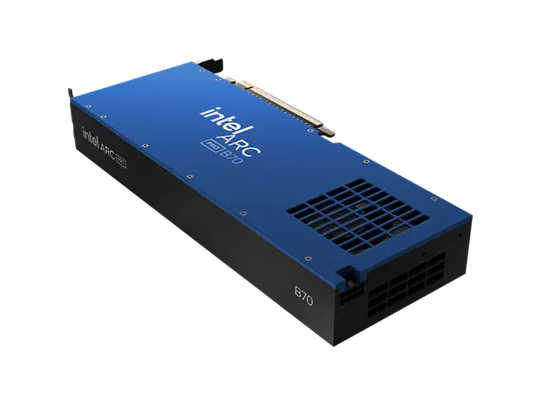
Intel launched yesterday the Arc Pro B65 and B70 high-performance workstation GPUs aimed at AI LLM training / inference without providing specific performance info in the initial press release. A few hours later, the company released performance charts that compare the B70 model to Nvidia’s RTX 4000 Pro GPUs, which are a few years old by now. Intel argues that the comparison remains valid given the sub-$1,000 price of the B70 card, and Team Blue backs things up with impressive claims regarding overall performance.
Even without looking at the performance charts, which may or may not be accurate in true Intel fashion, the Arc B70 GPU immediately rises above the Nvidia competition with its increased VRAM capacity (32 GB versus 24 GB) and the launch price that is starting at $949 (versus $1,800). Granted, the VRAM is only 19 Gbps GDDR6 with 256-bit bus and 608 GB/s bandwidth, but at least the increased capacity helps to train and infer on larger models.
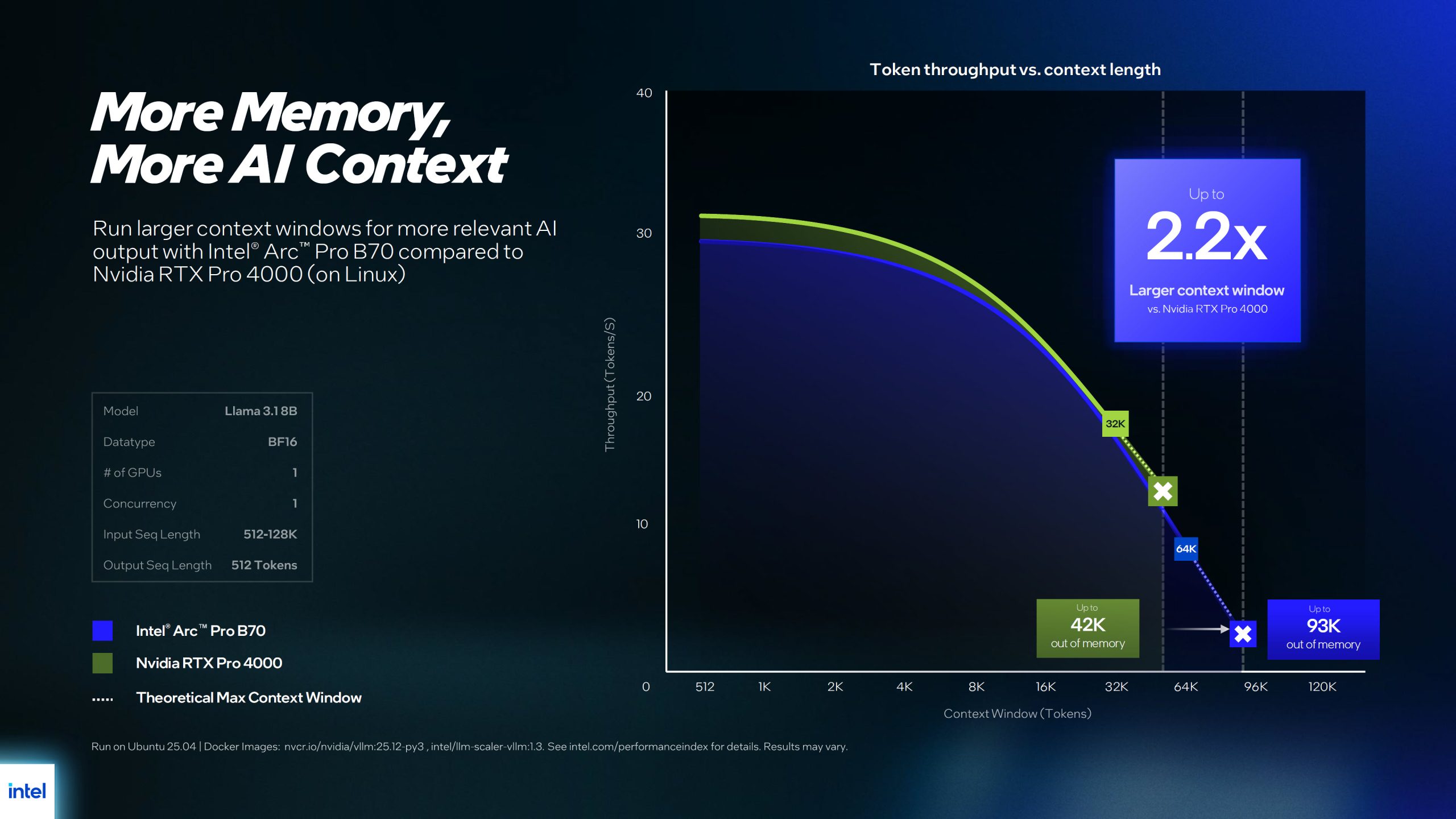
With the superior VRAM capacity, the B70 boasts a 2.2x larger context window over the RTX 4000 Pro card. Intel’s slide shows that the B70 supports context lengths of up to 93K tokens versus the RTX 4000 Pro that runs out of memory at up to 42K tokens when used with the Llama 3.1 8b BF16 model.
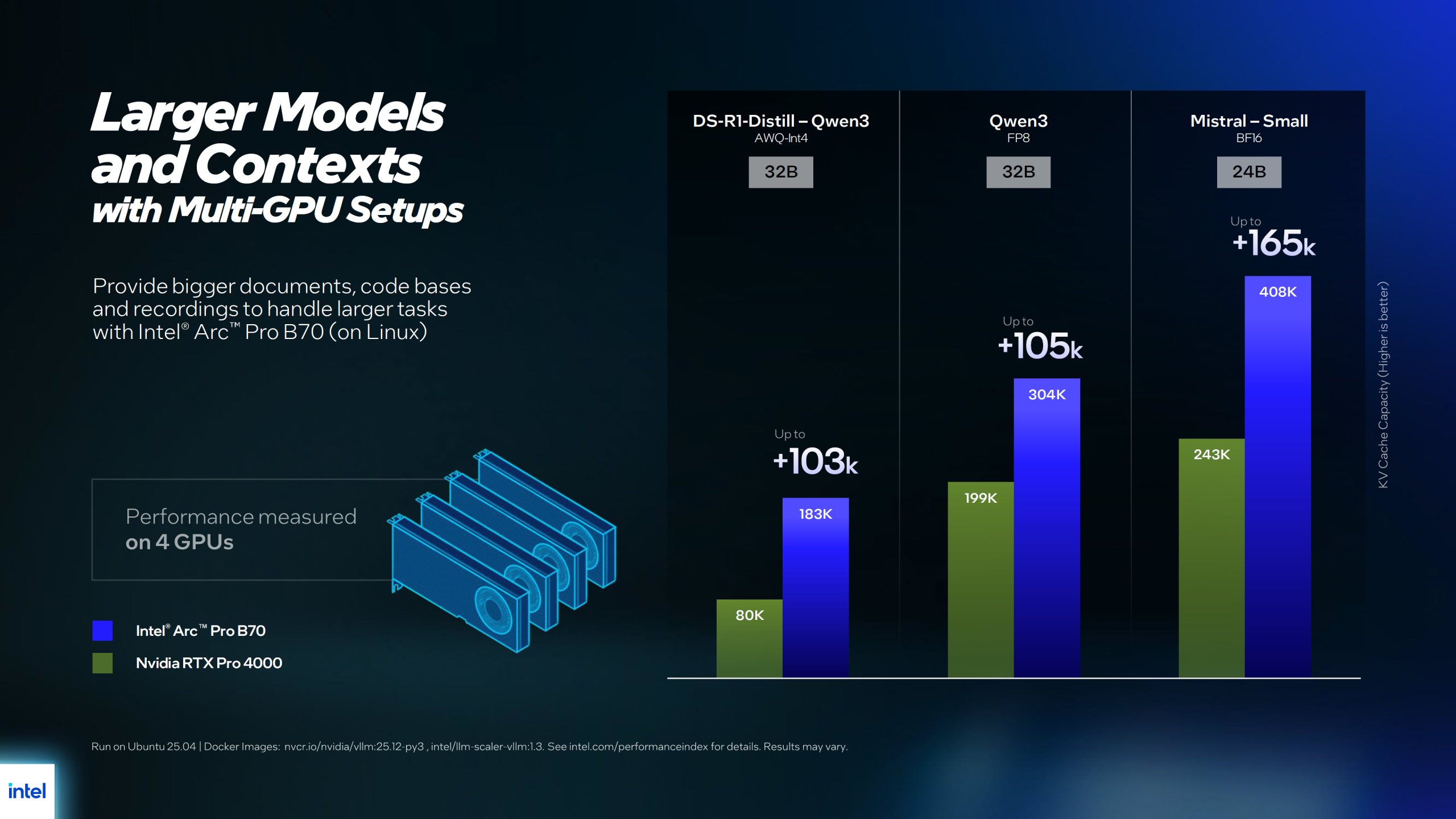
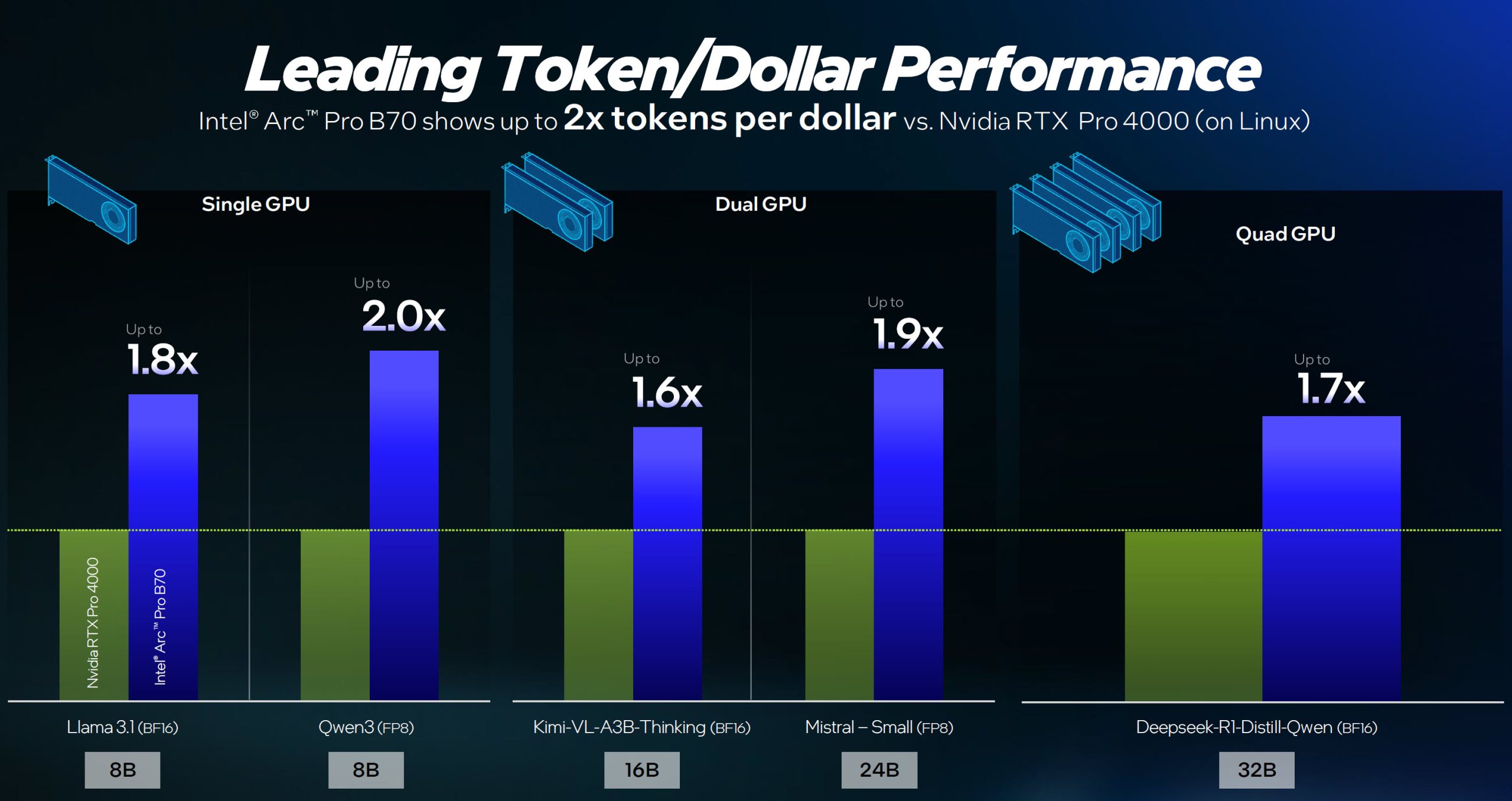
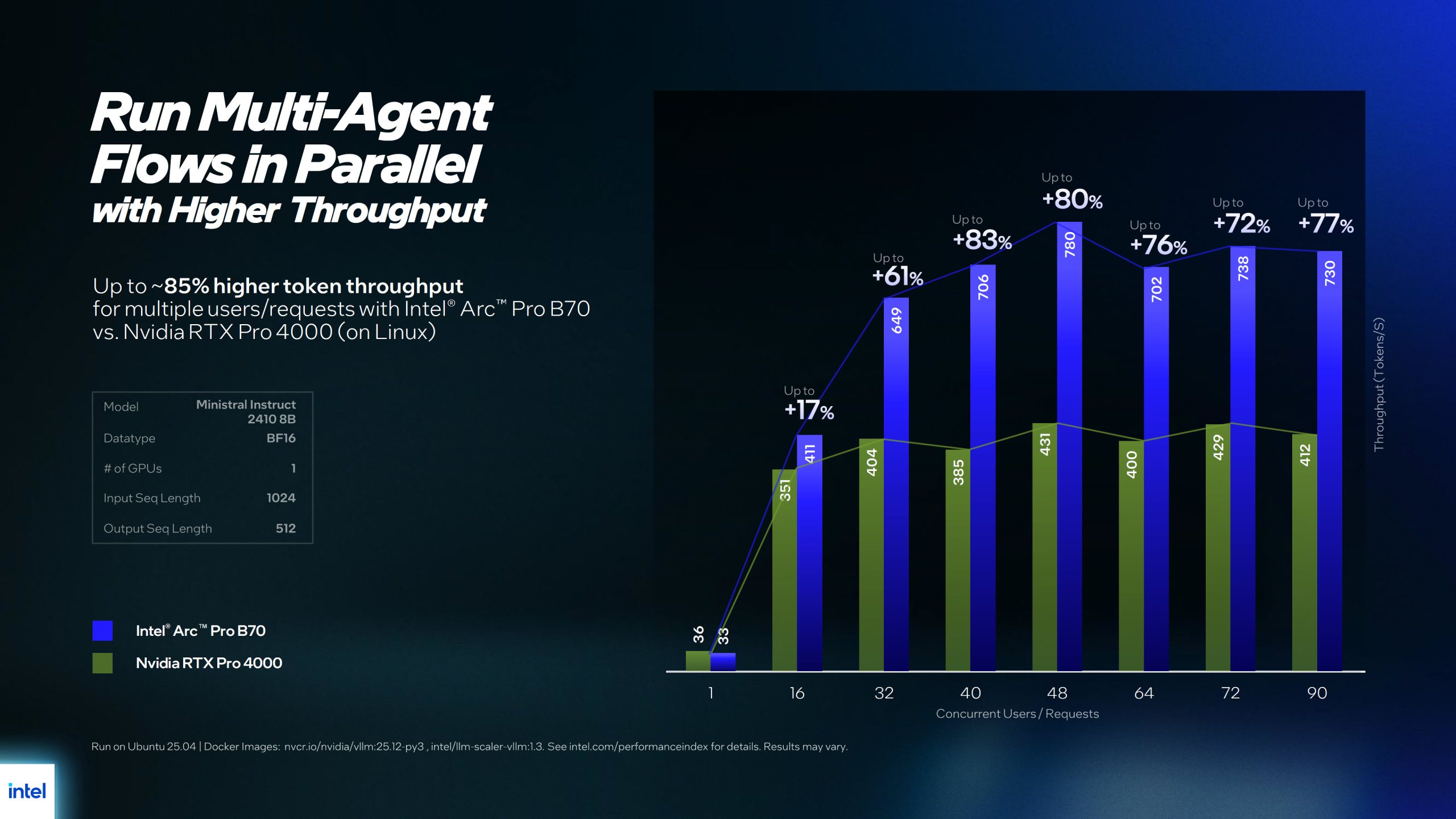
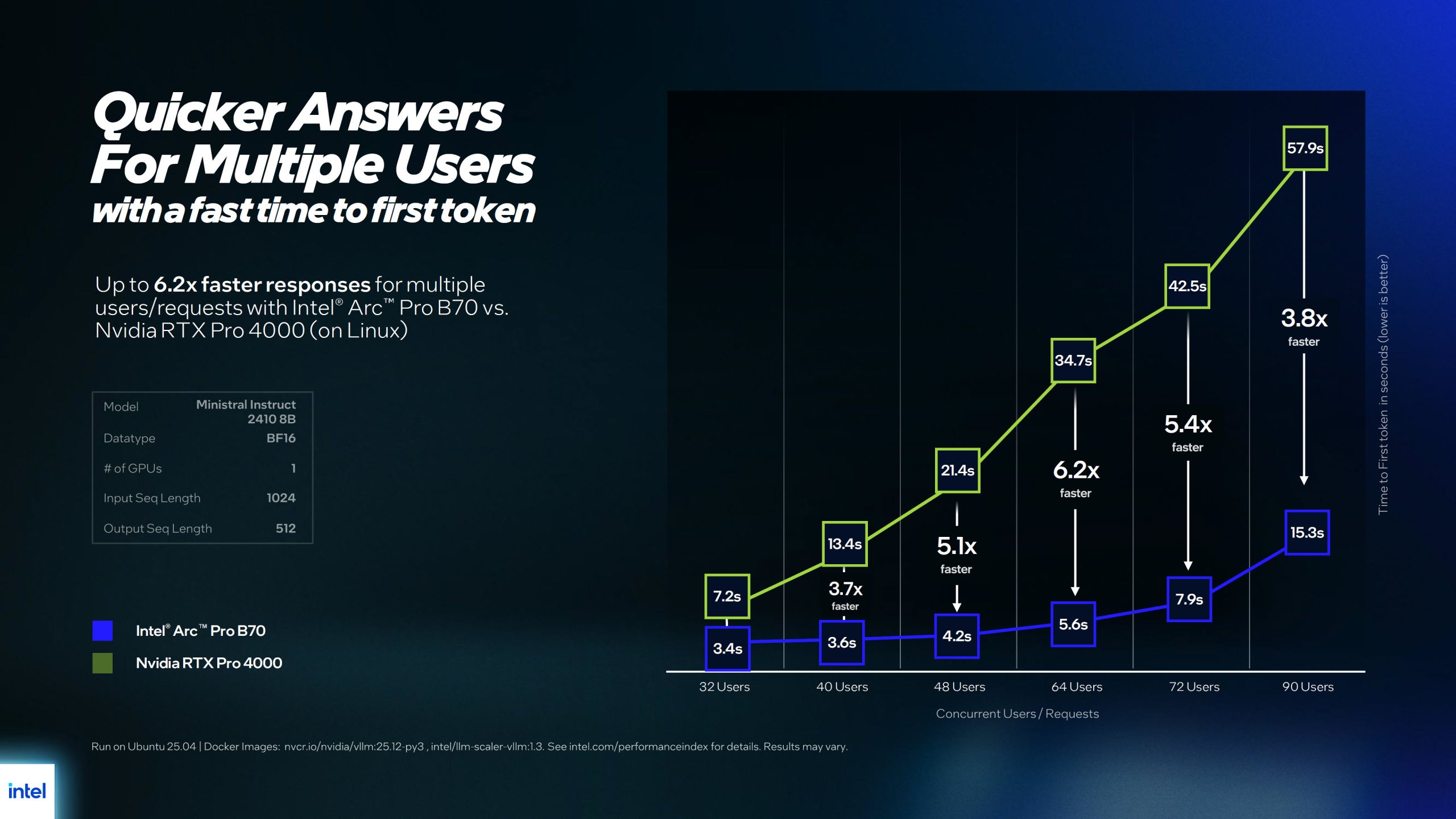
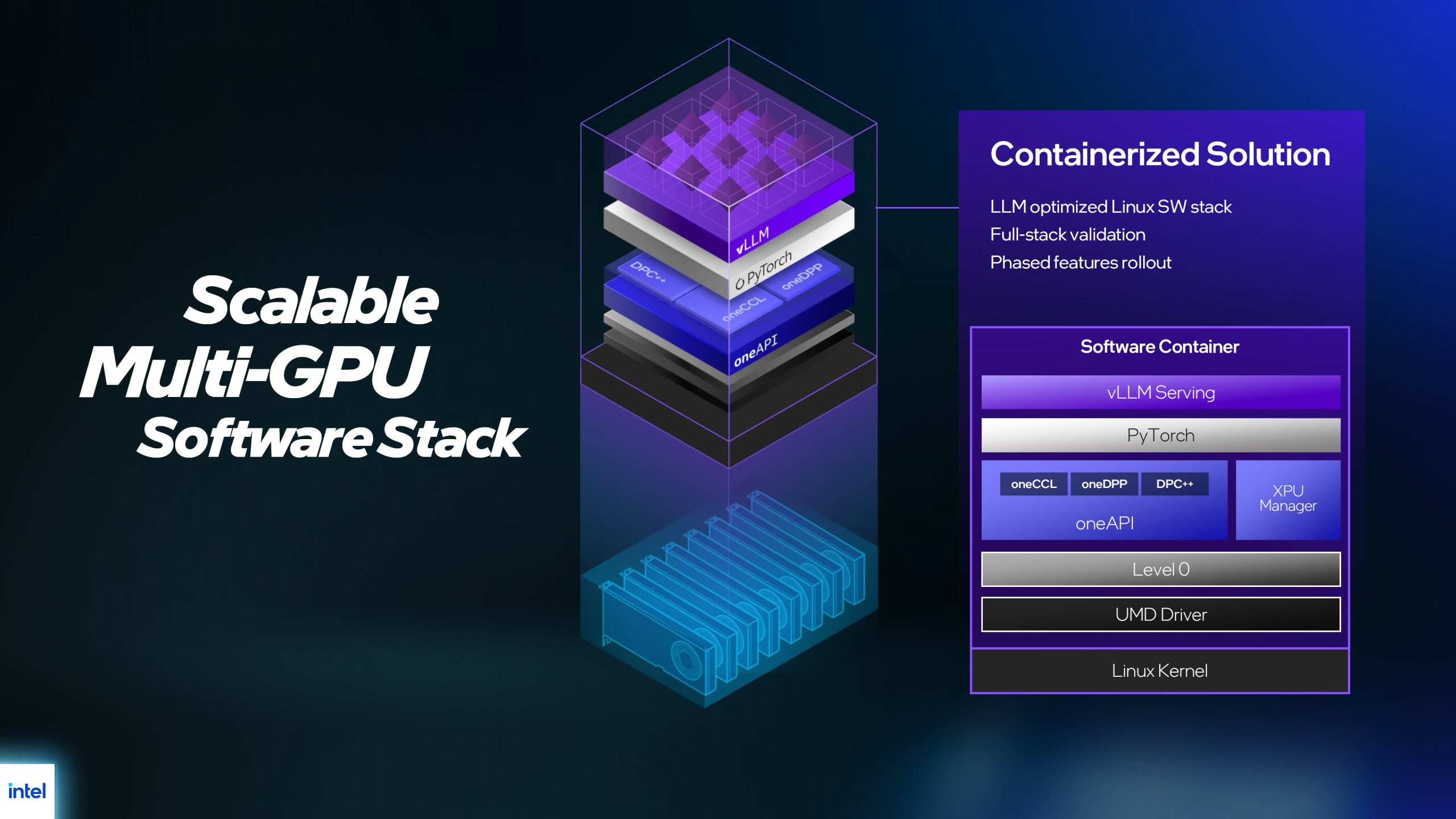
Parallel multi-agent flows running on the Ministral Instruct 2410 8B (BF16) model deliver 85% higher token throughput for multiple users or requests with the B70 in a Linux OS environment. Additionally, the B70 is able to output quicker answers for multiple users or requests with a 6.2x faster time to first token, and Intel mentions that these superior speeds are possible thanks to the company’s improved oneAPI and proprietary software stack. The performance boost over the Nvidia competition also scales with multi-GPU setups as Intel claims an increase of up to 2x tokens per dollar in single, dual and quad GPU configurations.
Unfortunately, the slides do not show any performance metrics or price information for the B65 GPU. It would be interesting to see if Intel allows AIB partners to release gaming-oriented versions of the B65 and B70 GPUs with slightly lower VRAM capacities. This would also mean that Intel has to provide improved graphics drivers.
 Add as a preferred source on Google


