




Historic crash: German car industry collapses as Chinese imports and US slump destroy market
A devastating wave of insolvencies is sweeping domestic suppliers. In federal states such as Saarland and North Rhine-Westphalia, tens of thousands of jobs in the German automotive industry are disappearing irretrievably at the same time. The structure of the European car market is currently undergoing a fundamental shift.
Competitors from Asia are now pursuing a targeted export strategy, effectively reversing the usual balance of trade. Meanwhile, sales of German cars on the US market are noticeably slumping. EY's industry indicators document this consistent decline in detail.
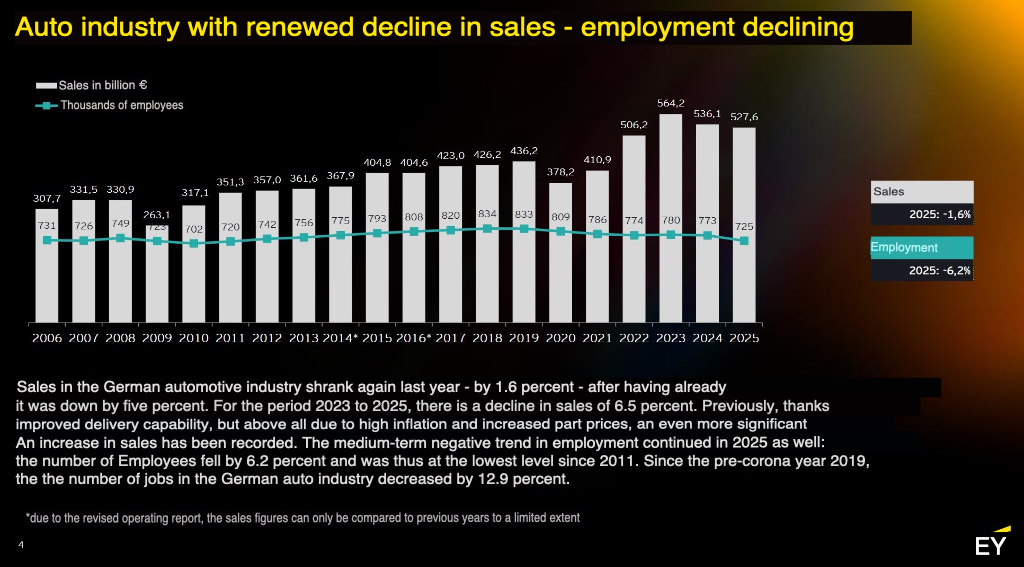
According to the analysis, this ongoing weakness in demand is directly affecting established car production locations in Germany. Vehicle manufacturers and their suppliers ended 2025 with sales down by a further 1.6 percent. However, the consequences for the workforce are even more serious. The automotive industry cut 6.2 percent of jobs, pushing total employment to its lowest level in 14 years at around 725,000 employees.
Last year alone, almost 50,000 jobs were cut across Germany. These job cuts are hitting individual federal states particularly hard. In Saarland, for example, where one in twenty jobs depends on the automotive industry, employment fell by almost eleven percent in 2025. Since the pre-coronavirus year of 2019, core states such as North Rhine-Westphalia, Hesse and Thuringia have each lost over 20 percent of their jobs in this sector. Brandenburg is the only state bucking this fatal trend, with a massive increase of over 200%.
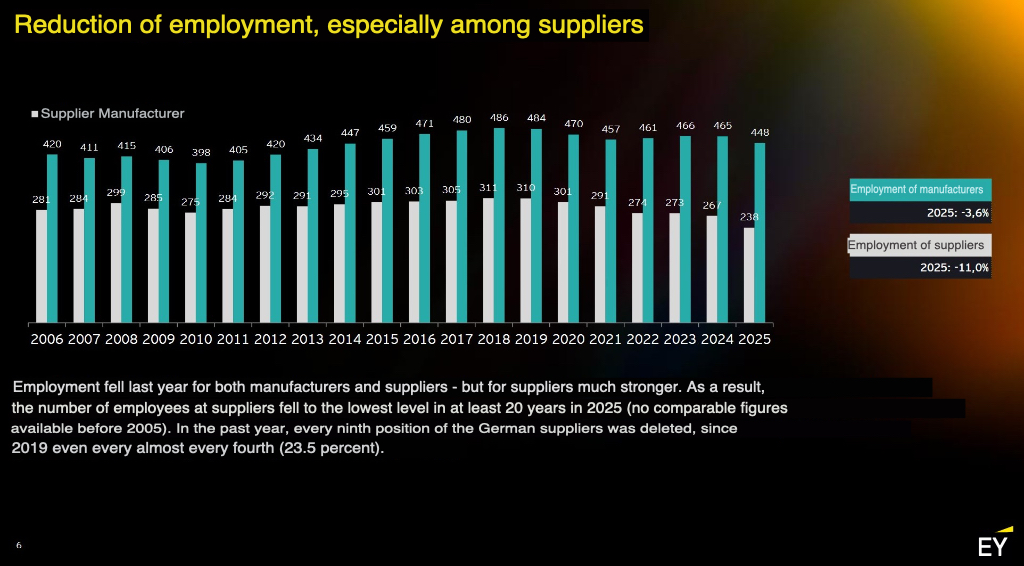
The epicentre of this economic earthquake is the domestic supply chain. The fight for survival here has long since become brutal. The number of company bankruptcies has reached a 14-year high. While large car manufacturers are still able to draw on their financial reserves, SMEs are simply running out of steam. Suppliers' turnover has plummeted four times more than that of manufacturers. The personnel consequences are devastating: since 2019, nearly a quarter of jobs in the German supplier industry have disappeared. Plant closures have become a sad part of everyday life.
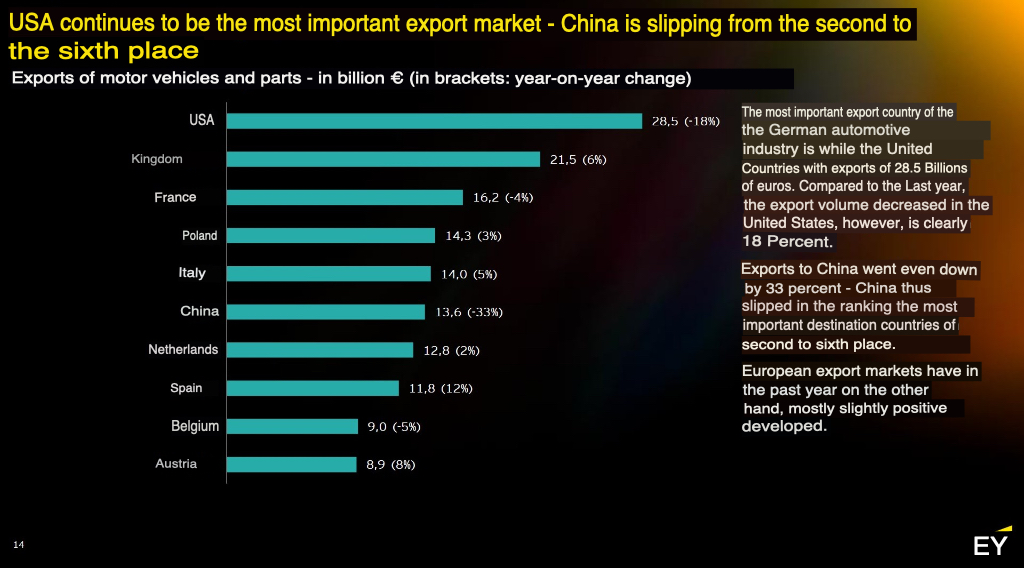
The global market is delivering the final, devastating blow to Europe’s struggling industry. Exports to the USA, which is still the most important customer for German vehicles with a turnover of €28.5 billion, slumped by a catastrophic 18 per cent last year. The crash in the Far East is even more dramatic. China has slipped from second to sixth place as an export market. Exports to the People's Republic have fallen to their lowest level since 2009.
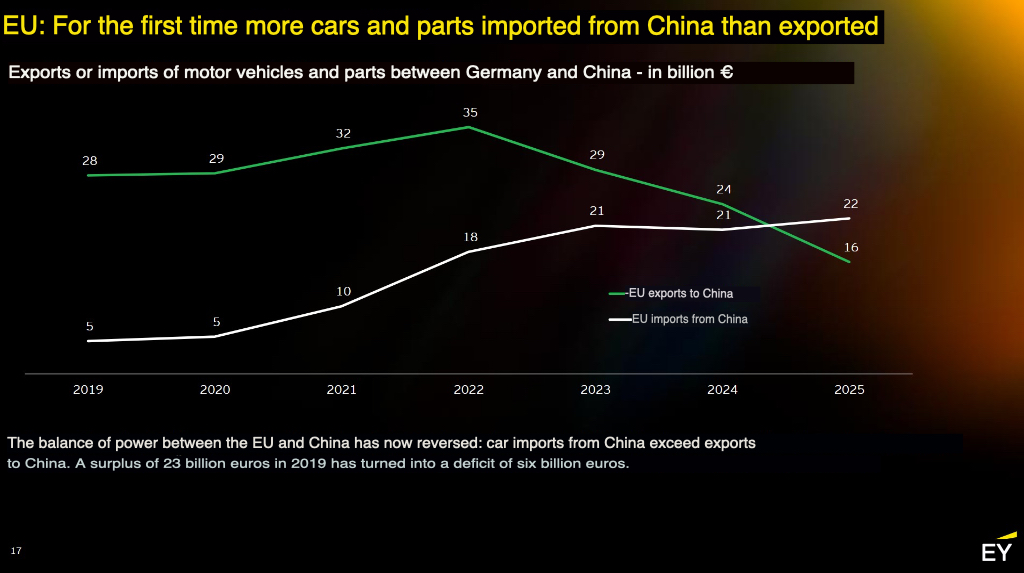
At the same time, the balance of trade with China has undergone a dramatic reversal, resembling a historic humiliation. Last year, car exports from the European Union to China plummeted by 34 percent to just 16 billion euros. By contrast, Asian manufacturers flooded the European market. Imports of new cars and car parts from China rose to a record 22 billion euros. This means that the unthinkable has happened: For the first time ever, the value of Chinese car imports has exceeded the value of European exports to China. The gigantic export surplus of 23 billion euros recorded in 2019 has now turned into a massive deficit of six billion euros.


 Add as a preferred
