




Conclusion on the Fairbuds XL (Gen. 2)
The Fairbuds XL 2 excel primarily in areas where most other headphones have little to offer: repairability and sustainability. The replaceable battery, cross-generation compatibility of spare parts, and robust construction are compelling arguments. The intuitive joystick controls and decent comfort despite the substantial weight are further strengths.
Less impressive are the lean sub-bass, merely average ANC, and mediocre transparency mode. Some competitors also offer more features and longer battery life. Still, anyone looking for durable, repairable over-ear headphones gets an unusually well-executed overall package.
Pros
Cons
Price and availability

Table of Contents
- Conclusion on the Fairbuds XL (Gen. 2)
- Specifications: Fairbuds XL (Gen. 2)
- Design and ergonomics – Fairbuds XL are IP-rated
- Sustainability - The Fairbuds XL's biggest strength
- Features and controls – Fairbuds XL without Auracast support
- Sound - Lean sound with clear mids
- Battery life - Up to 30 hours playback time
Specifications: Fairbuds XL (Gen. 2)
| Wearing Style | Over-Ear |
| Connectivity | Bluetooth 5.1 (Multipoint), USB-C |
| Speakers | 40 mm dynamic drivers, 20–20,000 Hz, 32 ohms |
| Audio Codecs | SBC, AAC, aptX, aptX HD |
| Battery Capacity | 800 mAh (removable) |
| Charging Port | USB-C |
| Wireless Charging | Not available |
| Weight | 330 g |
| Firmware Version | V208 |
| Package Contents | Headphones, carrying case |
| Price (MSRP) | $230 |
Design and ergonomics – Fairbuds XL are IP-rated
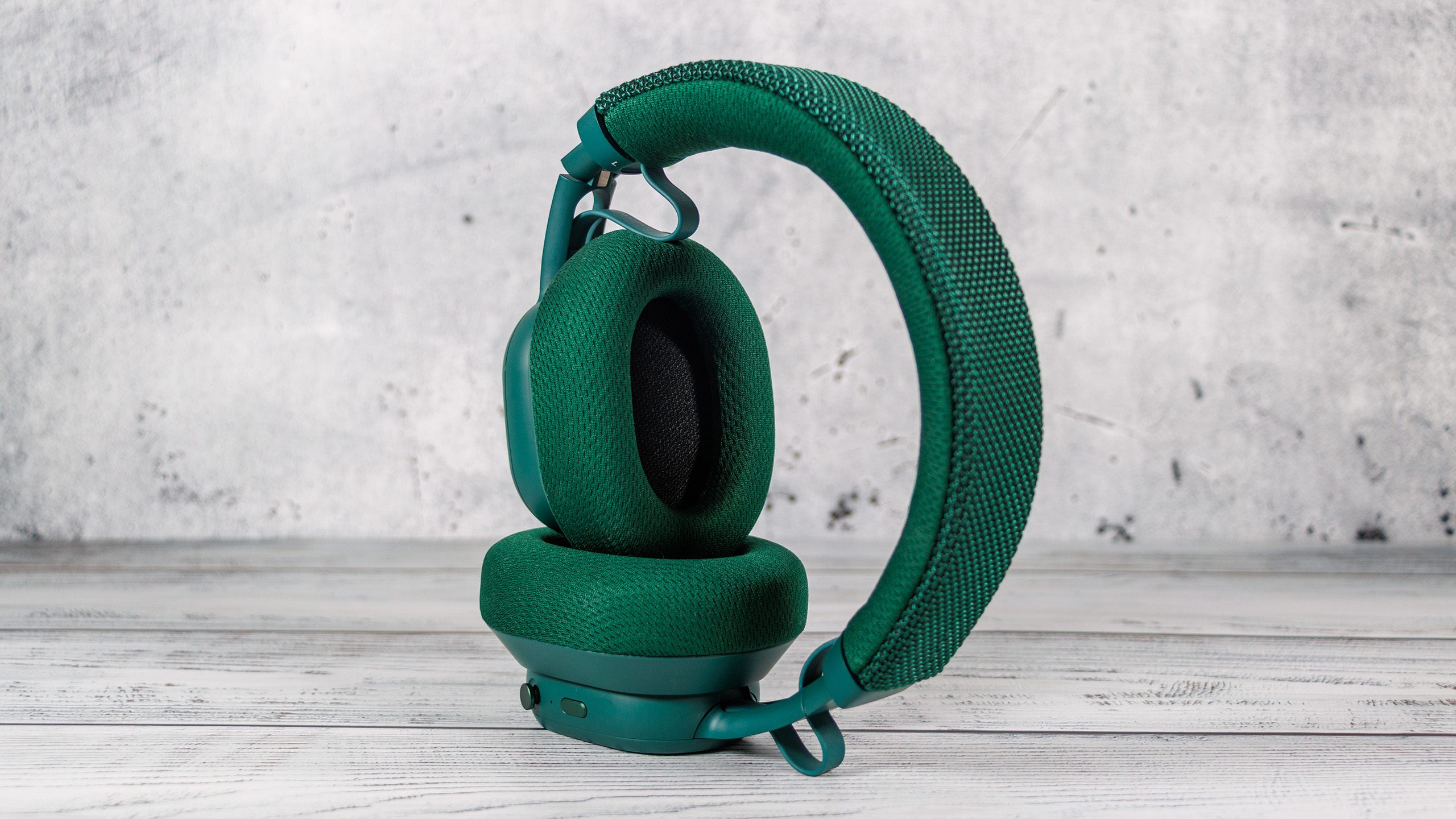
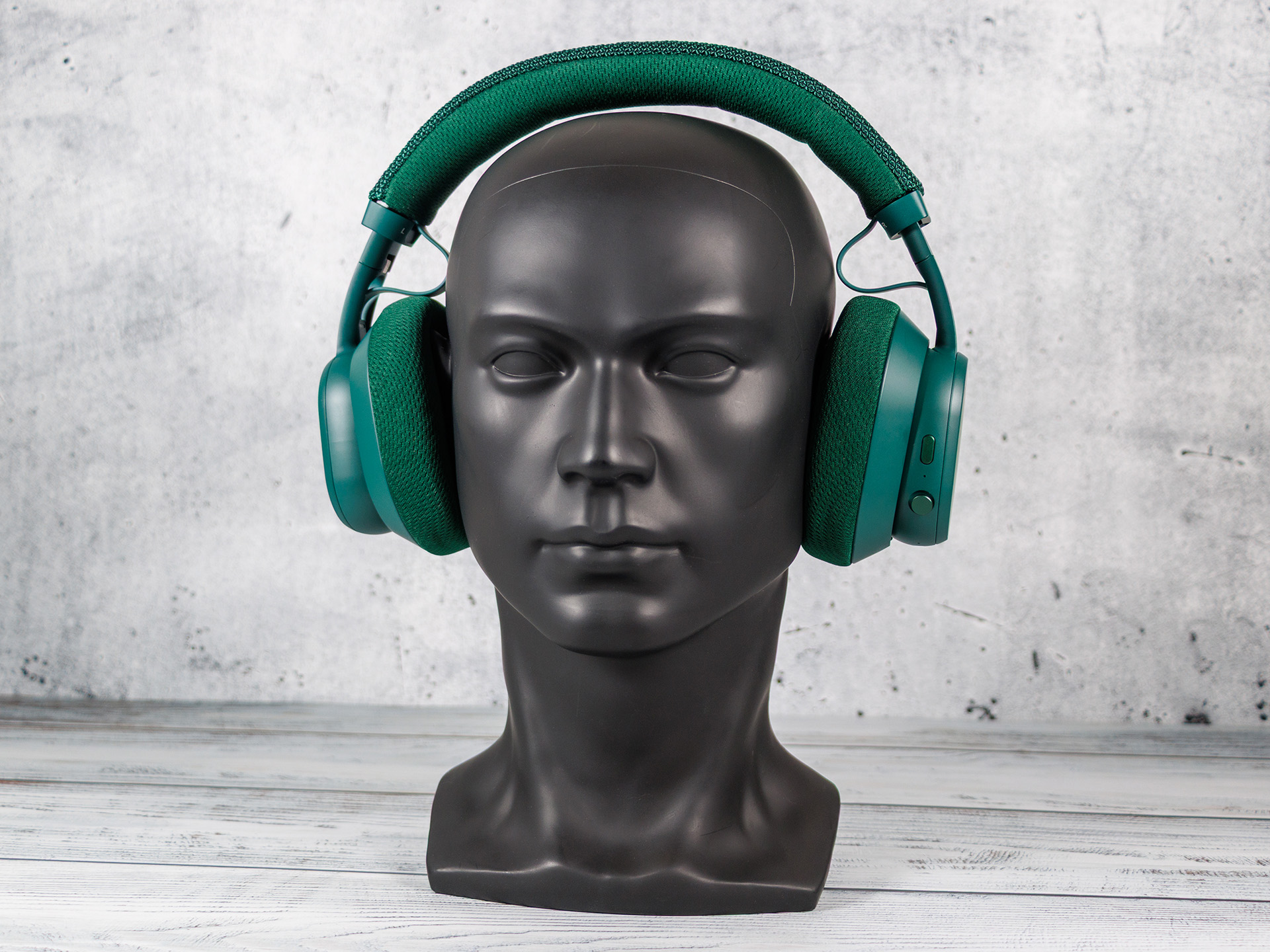
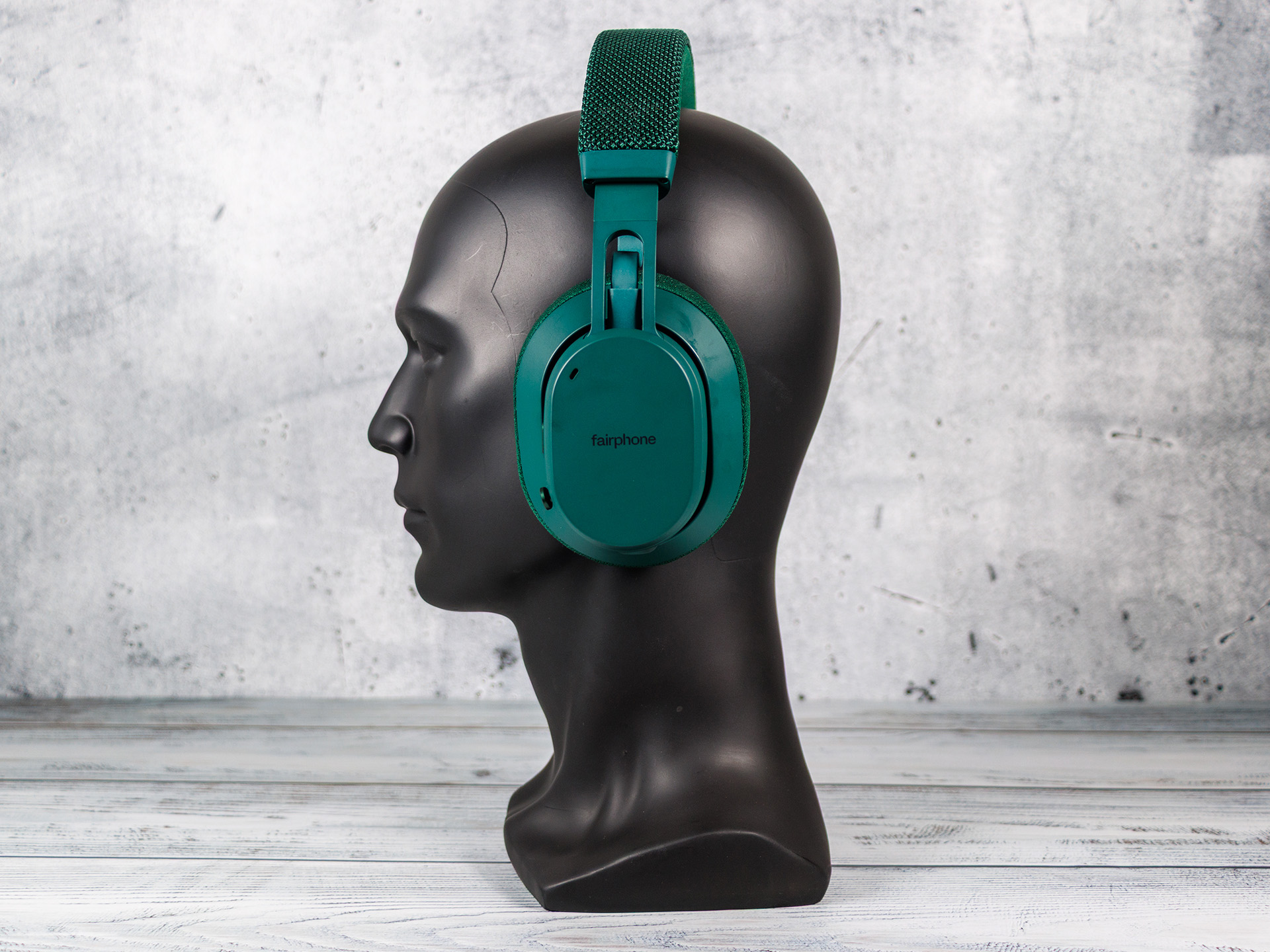
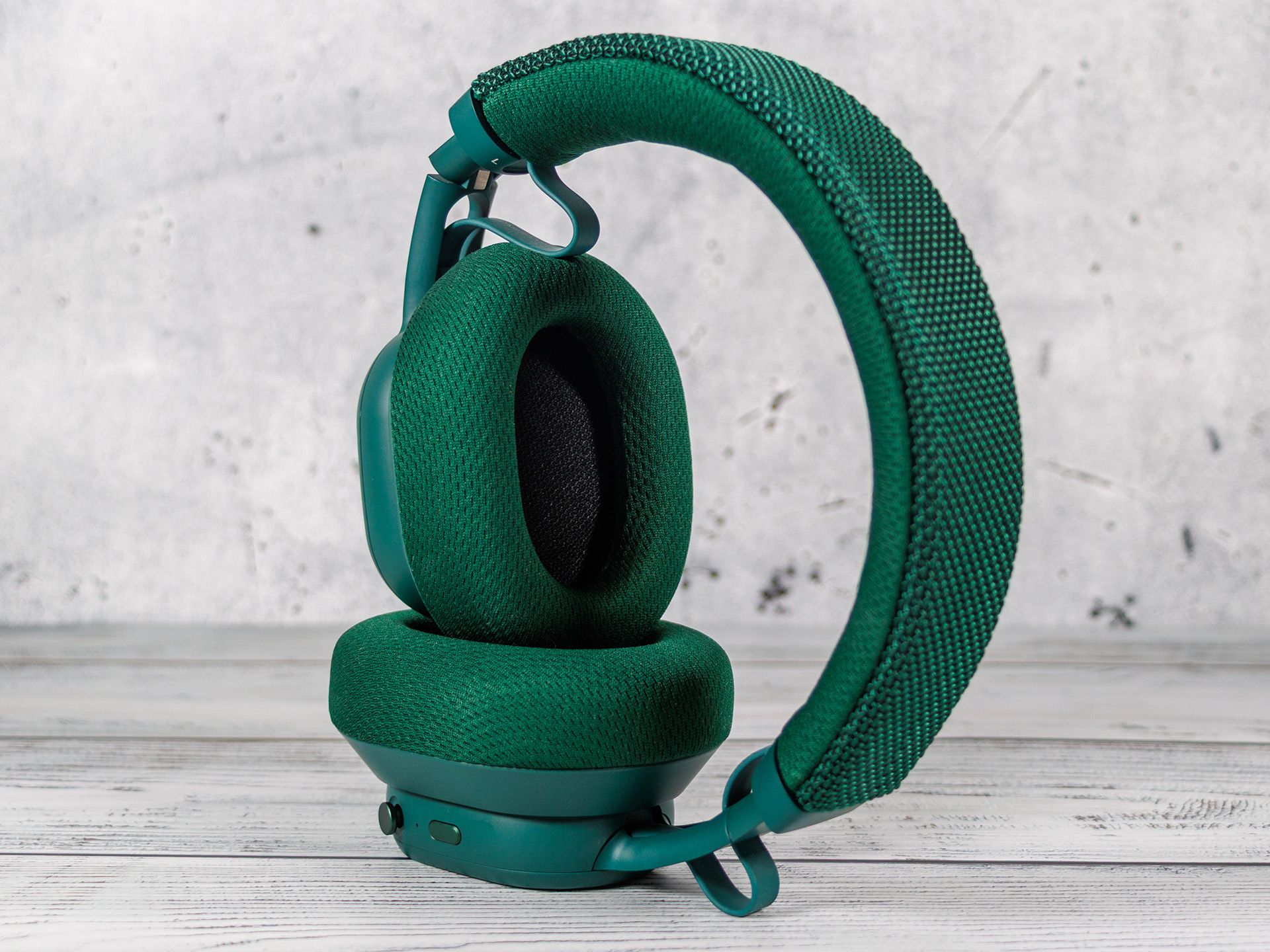
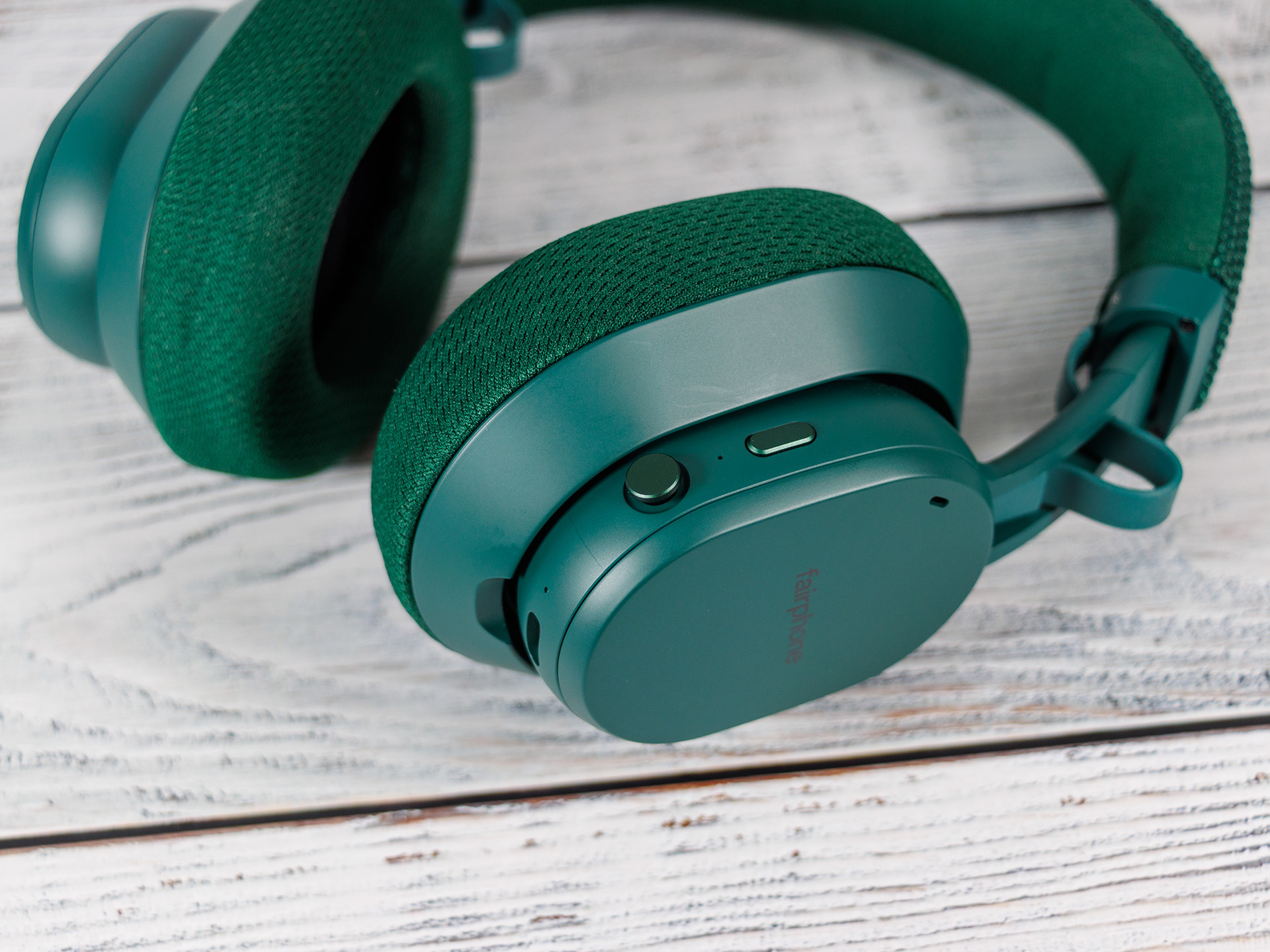
Visually, the second-generation Fairbuds XL stay true to the design language of their predecessor, but the updated materials give them a more modern appearance. They are available in Forest Green and Horizon Black. The green version in particular gives the otherwise rather bulky over-ear headphones a distinctive look. Instead of the faux leather used on the previous model, Fairphone now uses mesh fabric on the headband and a softer piqué fabric for the ear cushions.
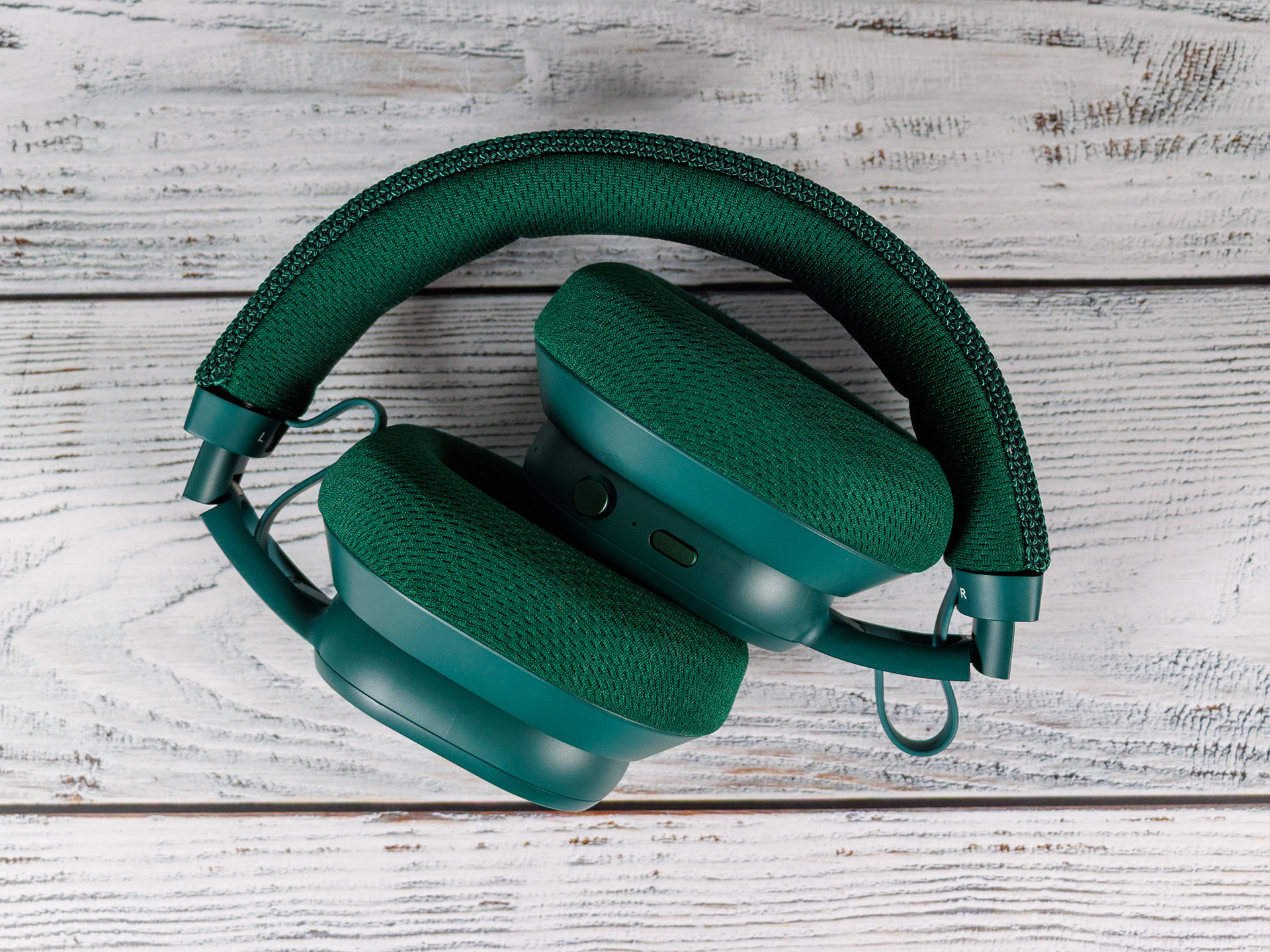
Build quality feels robust. The hinges and headband adjustment mechanism feel sturdy, and the individual components fit together cleanly. The ear cups can rotate 90 degrees, and the headphones fold up for transport. However, the overall construction is comparatively bulky. At around 330 grams (11.6 oz), the Fairbuds XL are among the heavier Bluetooth headphones on the market.
The new fabric cushions have a positive effect on comfort. They feel soft and are more breathable than the faux-leather cushions of the previous model. That does not make the considerable weight disappear, though. Combined with the relatively strong clamping force, the Fairbuds XL can become noticeable during longer listening sessions. On the upside, they sit securely on the head, and the adjustable headband offers plenty of range.
The IP54 rating is another advantage for everyday use. It means the Fairbuds XL are protected against dust and splashing water, including light rain. They are not fully waterproof, but a rain shower or sweaty workout should not pose a problem.
Sustainability - The Fairbuds XL's biggest strength
Sustainability is where the Fairbuds XL play their strongest hand. Rather than designing the headphones as a largely sealed unit, Fairphone uses a modular construction. A total of nine components can be replaced with spare parts: the battery, cable connecting the speakers, ear cup covers, headband, headband cover, ear cushions, both headband bases, and the left and right speaker modules. Even the circuit board and USB-C module can technically be repaired, although replacing those components is reserved for professionals. Particularly convenient: the battery can be removed without any tools.
It is also noteworthy that Fairphone has maintained this approach across generations. Second-generation replacement parts are backward-compatible with the 2023 Fairbuds XL. For example, the new speaker modules with their revised 40 mm drivers can be installed in the older headphones. Conversely, users can fit the first-generation PU leather ear cushions to the new model. This means damaged components can not only be replaced, but older Fairbuds XL can also be partially upgraded with components from the new generation.
Fairphone has also stepped up its efforts when it comes to materials. According to the manufacturer, more than 80 percent of the plastics used are recycled, while the figure for aluminum is 92 percent. The magnets contain 100 percent recycled rare earth elements, and the solder uses 100 percent recycled tin. Other materials include Fairtrade gold as well as fair cobalt, copper, and silver sourced through credits. According to Fairphone, final assembly is powered by renewable energy.
The warranty policy follows the same philosophy. Fairphone provides a two-year warranty on the current generation as standard. Customers who register their Fairbuds XL with the manufacturer free of charge receive an additional year, extending coverage to a total of 36 months. This extension applies to the Horizon Black and Forest Green versions introduced in 2025, but not to the 2023 Fairbuds XL. One important exception: the battery is not covered by the three-year warranty and instead has its own one-year warranty.
Features and controls – Fairbuds XL without Auracast support
When it comes to features, Fairphone focuses on the essentials. The Fairbuds XL still use Bluetooth 5.1 and support aptX HD in addition to SBC and AAC. LDAC and more recent Bluetooth LE features such as Auracast are absent. The latter cannot be added through a software update, as Auracast requires Bluetooth 5.2. Dual multipoint is a useful feature, allowing the headphones to remain connected to two devices simultaneously, such as a laptop and smartphone. Fairphone specifies a wireless range of up to 10 meters (33 feet).
Music playback is not limited to wireless connections. In addition to charging, the USB-C port supports wired audio playback, which even works with a depleted battery. However, a suitable USB-C cable is not included.
One of the Fairbuds XL's most enjoyable features is the control scheme. A small joystick on the right ear cup is considerably more intuitive than some combinations of touch gestures and multifunction buttons. Moving it up or down adjusts the volume, while moving it left or right skips between tracks. Pressing it plays or pauses the music. Calls and other functions can also be controlled this way. In our testing, the joystick responded reliably, while its mechanical movement provided clear tactile feedback.
There is also a separate, easy-to-locate button for noise control. It switches between ANC, Ambient mode, and noise cancellation off. However, the intensity of ANC and transparency mode cannot be adjusted. Voice assistants such as Google Assistant, Amazon Alexa, and Siri are supported as well.
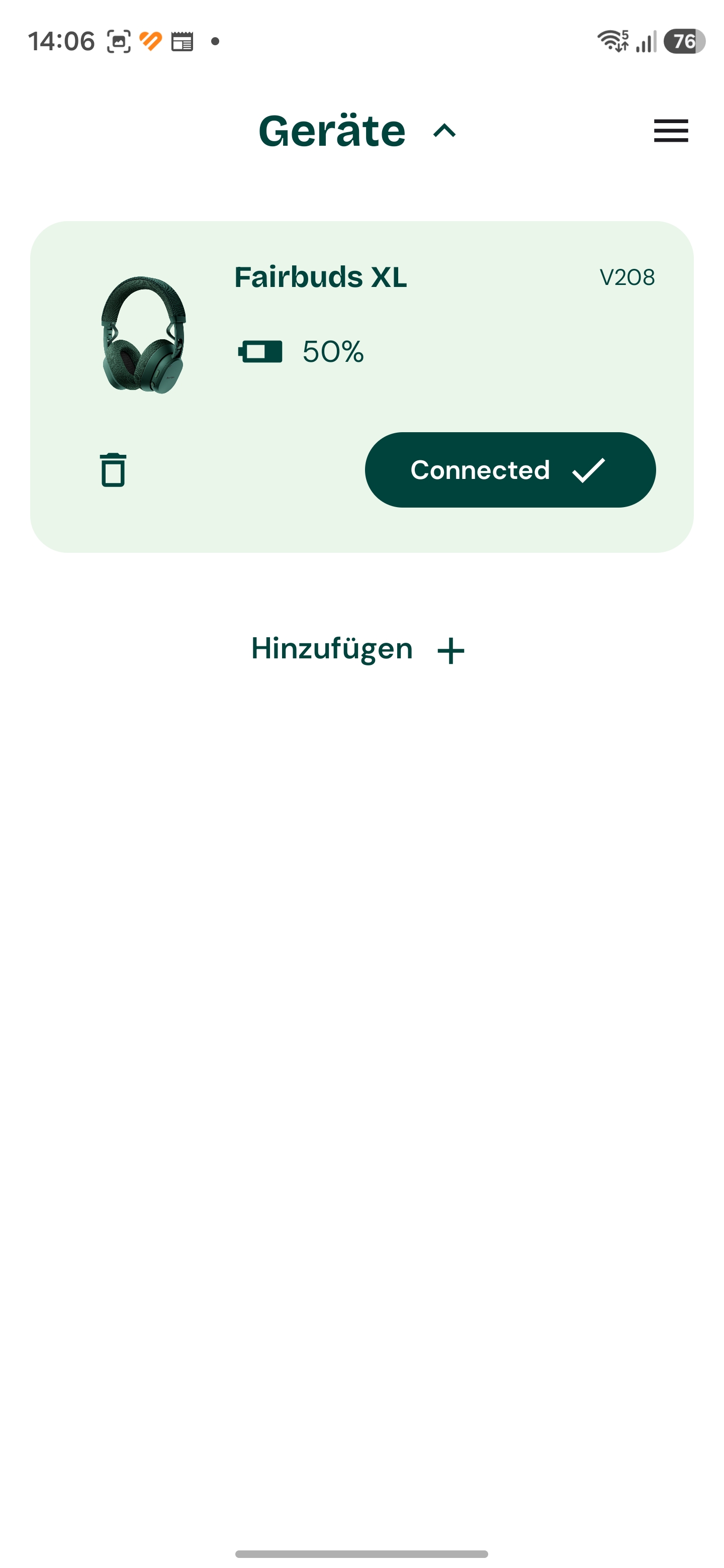
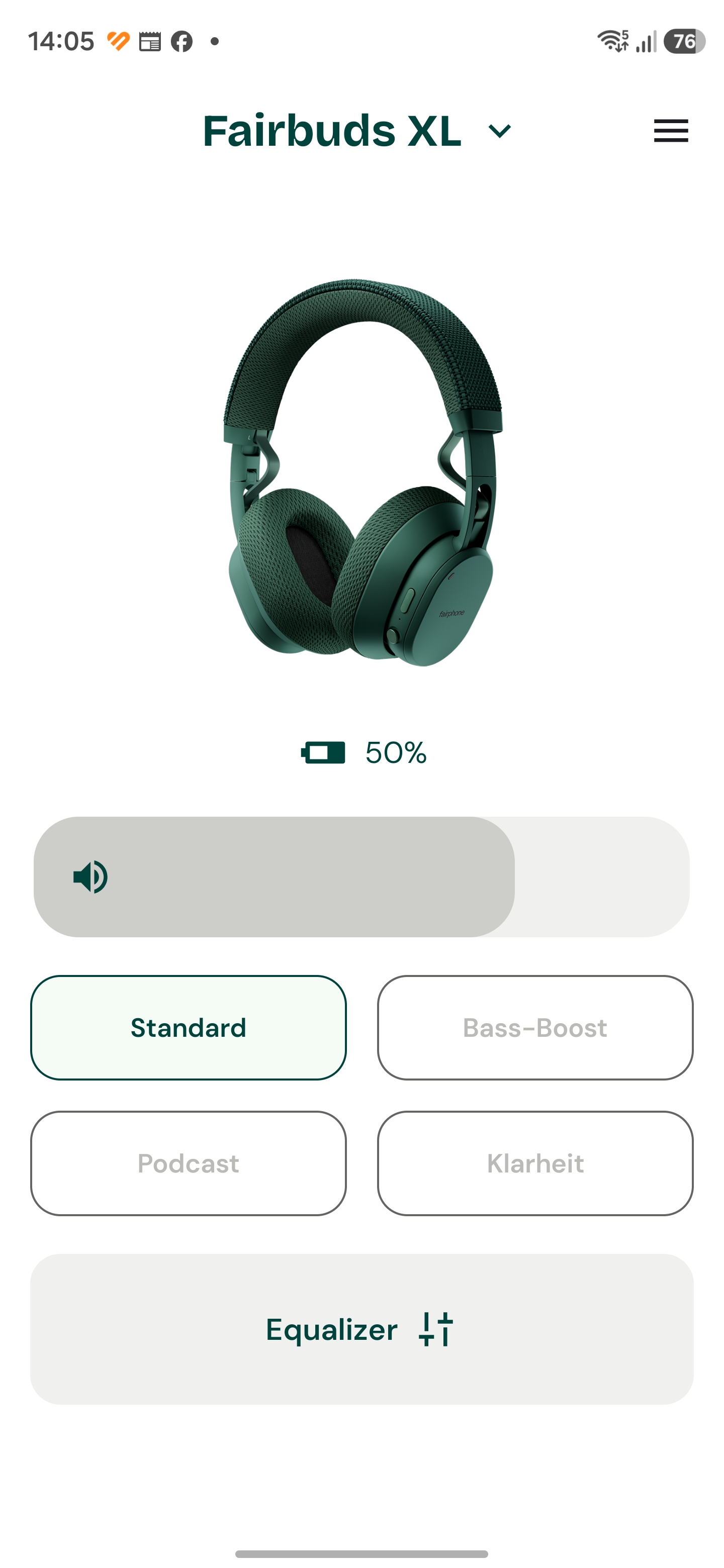
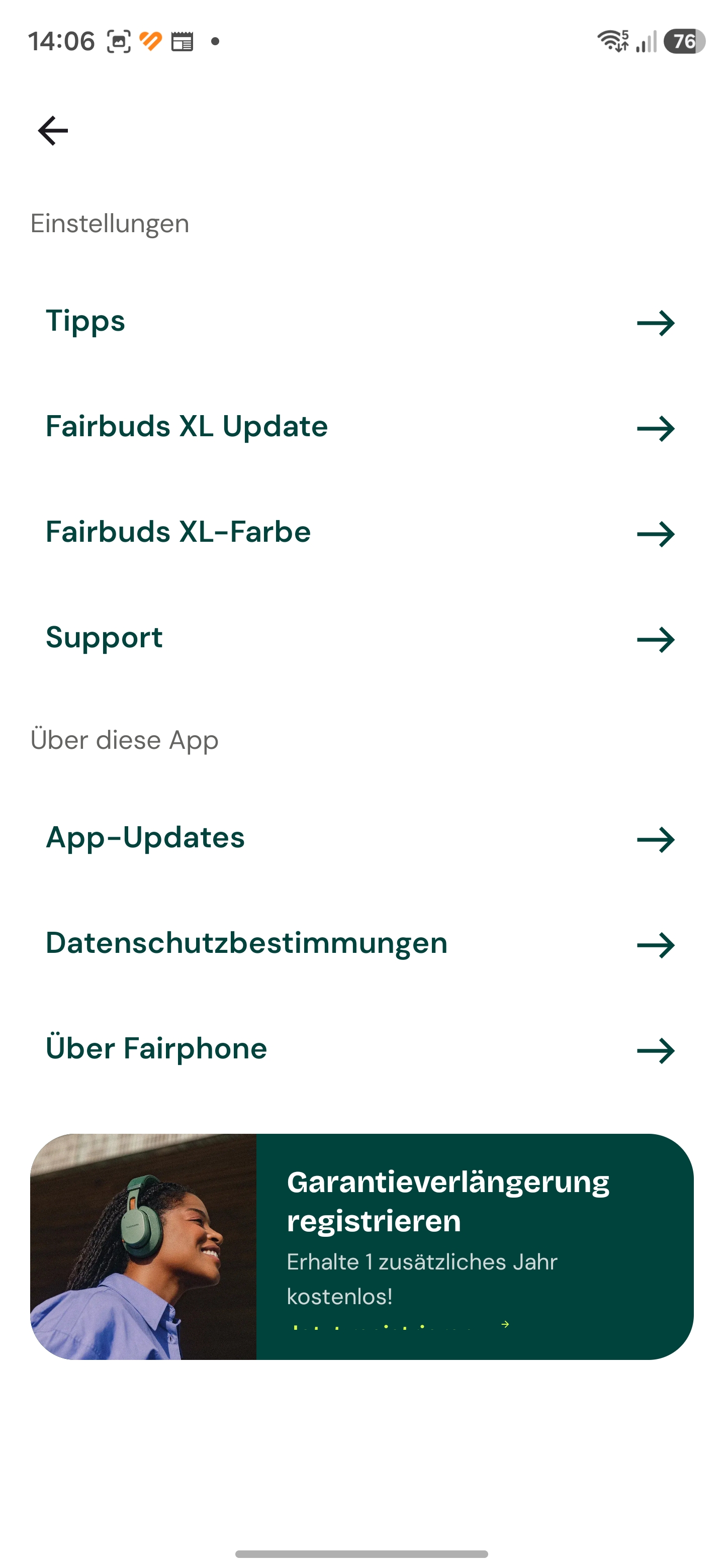
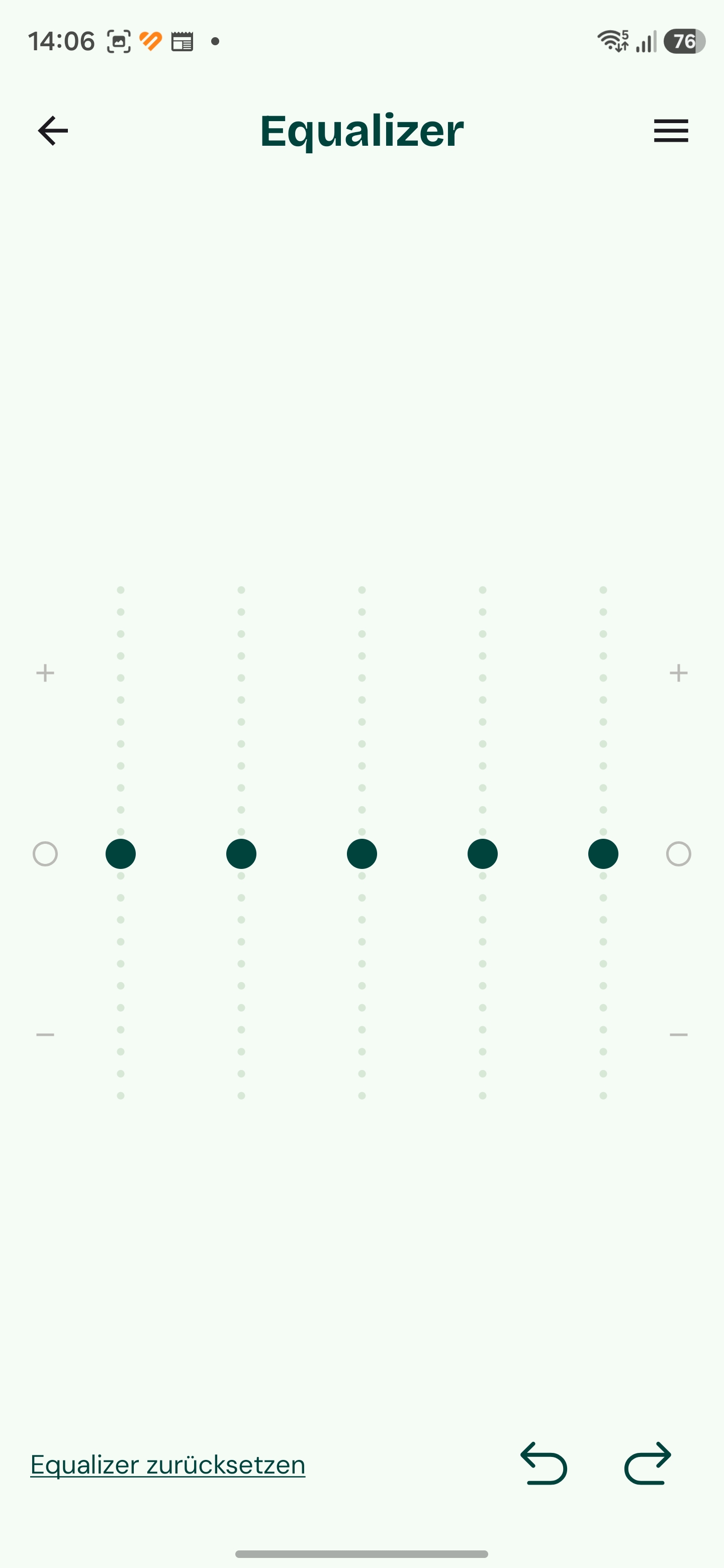
The Fairbuds app is less comprehensive. It offers several sound presets and an adjustable five-band equalizer, but many convenience features that have become common in this price range are missing. There is no wear detection, for example. At least the headphones automatically power off after 30 minutes of inactivity.
Sound - Lean sound with clear mids
Sonically, the Fairbuds XL sound lean rather than bass-heavy. The sub-bass in particular lacks punch and weight. As a result, kick drums and electronic bass lines have less impact than you might expect from a large pair of over-ear headphones. Our pink-noise measurement reflects this impression: levels drop noticeably toward the lower frequencies, while the midrange is more prominent.
This pushes vocals and many instruments further forward in the mix. The result is good intelligibility, but depending on the recording, the Fairbuds XL can also sound somewhat thin. Listeners looking for a warm, powerful, or distinctly bass-heavy sound are therefore less likely to be happy with the tuning.
With THD measuring just 0.053 percent, harmonic distortion remains low. The significantly higher THD+N figure of 0.76 percent is primarily attributable to the noise component of the measurement.
For video playback, audio and video remain in sync without any noticeable issues, and dialogue is easy to understand. During calls, the microphones deliver decent voice quality in quiet environments, but intelligibility deteriorates as background noise increases. ANC reduces steady ambient noise, but its performance is far from class-leading. Voices in particular remain clearly audible. Transparency mode does its job, but sounds somewhat muffled and unnatural.
| Loudspeakers | |
| THD | |
| Fairbuds XL (RMS: -0.4 dBFS) | |
| Nothing Headphone (a) (RMS: -2.3 dBFS) | |
| Teufel Real Blue TWS 3 (RMS: -0.9 dBFS) | |
| THD+N | |
| Fairbuds XL (RMS: -0.4 dBFS) | |
| Teufel Real Blue TWS 3 (RMS: -0.9 dBFS) | |
| Nothing Headphone (a) (RMS: -2.3 dBFS) | |
* ... smaller is better
THD (Total Harmonic Distortion): Harmonic distortion quantifies the magnitude of the components that arise from non-linear distortion (harmonic content) in relation to the original signal. THD refers only to the fundamental harmonic content. The distortion factor is often mentioned in the same breath, but refers to the overall signal.
THD+N (Total Harmonic Distortion + Noise): This value is comparable to THD, but in addition to the interference from harmonics, the interference from noise is also recorded as an effective value.
For the measurement, a low-harmonic sine wave signal (1 kHz, > 0 dB) is played through the headphones to be tested and recorded by a linear measuring microphone (measuring distance: approx. 1 cm) in an artificial head.
Fairbuds XL audio analysis
(+) | speakers can play relatively loud (85.4 dB)
Bass 100 - 315 Hz
(+) | good bass - only 3.2% away from median
(+) | bass is linear (4.9% delta to prev. frequency)
Mids 400 - 2000 Hz
(±) | higher mids - on average 7% higher than median
(+) | mids are linear (4.3% delta to prev. frequency)
Highs 2 - 16 kHz
(+) | balanced highs - only 4.3% away from median
(+) | highs are linear (4.4% delta to prev. frequency)
Overall 100 - 16.000 Hz
(+) | overall sound is linear (10.4% difference to median)
Compared to same class
» 5% of all tested devices in this class were better, 1% similar, 93% worse
» The best had a delta of 4%, average was 23%, worst was 136%
Compared to all devices tested
» 5% of all tested devices were better, 1% similar, 93% worse
» The best had a delta of 4%, average was 23%, worst was 136%
Nothing Headphone (a) audio analysis
(+) | speakers can play relatively loud (90.8 dB)
Bass 100 - 315 Hz
(+) | good bass - only 3.3% away from median
(+) | bass is linear (3.2% delta to prev. frequency)
Mids 400 - 2000 Hz
(+) | balanced mids - only 1.7% away from median
(+) | mids are linear (2.8% delta to prev. frequency)
Highs 2 - 16 kHz
(+) | balanced highs - only 4% away from median
(+) | highs are linear (4.1% delta to prev. frequency)
Overall 100 - 16.000 Hz
(+) | overall sound is linear (6.9% difference to median)
Compared to same class
» 1% of all tested devices in this class were better, 0% similar, 99% worse
» The best had a delta of 4%, average was 23%, worst was 136%
Compared to all devices tested
» 1% of all tested devices were better, 0% similar, 99% worse
» The best had a delta of 4%, average was 23%, worst was 136%
Battery life - Up to 30 hours playback time
Fairphone rates the Fairbuds XL for up to 30 hours of music playback without ANC and up to 26 hours with ANC enabled. That is easily enough to get through several workdays, although the headphones are not among the endurance leaders in their class.
Charging is handled via USB-C. Fast charging provides several additional hours of playback after a short time connected to a charger.
Transparency
The selection of devices to be reviewed is made by our editorial team. The test sample was given to the author by the manufacturer free of charge for the purposes of review. There was no third-party influence on this review, nor did the manufacturer receive a copy of this review before publication. There was no obligation to publish this review. As an independent media company, Notebookcheck is not subjected to the authority of manufacturers, retailers or publishers.
This is how Notebookcheck is testing
Every year, Notebookcheck independently reviews hundreds of laptops and smartphones using standardized procedures to ensure that all results are comparable. We have continuously developed our test methods for around 20 years and set industry standards in the process. In our test labs, high-quality measuring equipment is utilized by experienced technicians and editors. These tests involve a multi-stage validation process. Our complex rating system is based on hundreds of well-founded measurements and benchmarks, which maintains objectivity. Further information on our test methods can be found here.
No comments for this article
 Add as a preferred source on Google


