




GrapheneOS reveals full Motorola plans: 7-year updates, Razr support & more
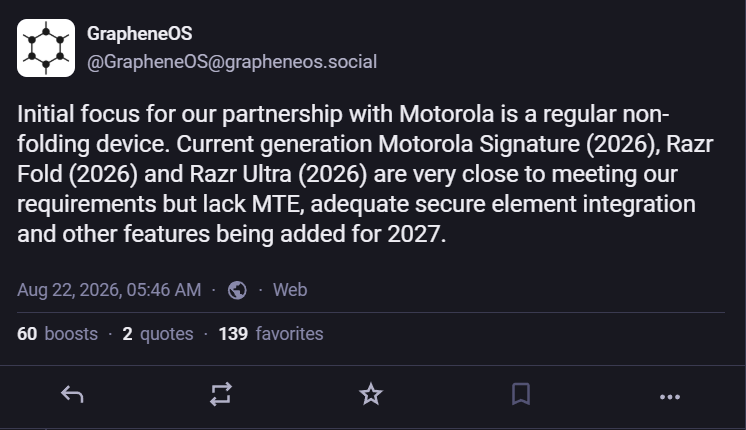
GrapheneOS, an open-source, privacy and security focused mobile operating system, has outlined its hardware roadmap for Motorola devices. Initial support will focus on 2027 regular flagship devices before expanding to the Razr Fold and Razr Ultra. Supporting a vertical flip phone will mark a brand new form factor for GrapheneOS, which the team highlighted as a convenient, tiny device for one-handed use when closed. The project explained that current generation flagships (the Motorola Signature 2026, Razr Fold 2026, and Razr Ultra 2026) are very close to meeting its requirements, but they lack MTE (Memory Tagging Extension), adequate secure element integration, and other features that are being added for 2027. While the Motorola Signature was not sold in the US unlike the 2026 Razr foldables, the addition of GrapheneOS support could prompt Motorola to release its successor in the US.
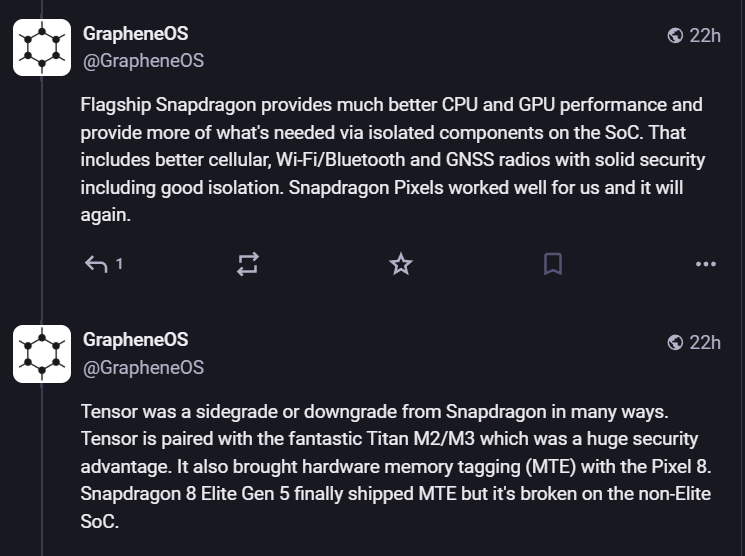
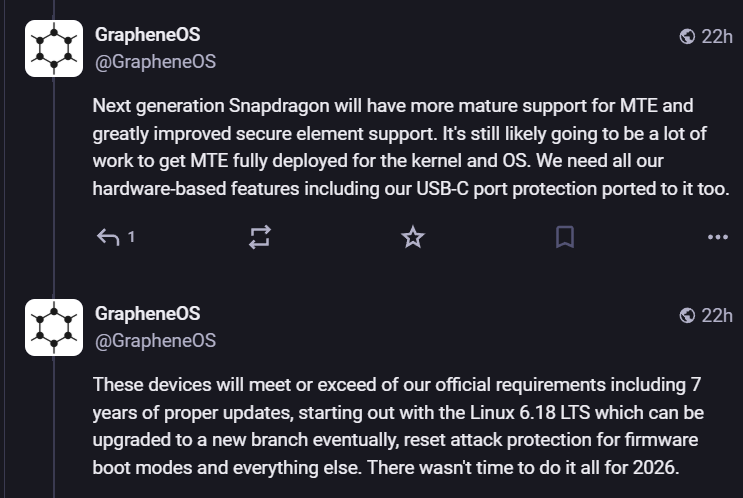
On the chipset front, GrapheneOS notes that Google's Tensor processors were a sidegrade or downgrade compared to Qualcomm's Snapdragon chips in multiple areas. Flagship Snapdragon processors offer superior CPU and GPU performance, as well as better component isolation on the system-on-chip for cellular, Wi-Fi, Bluetooth, and GPS/GNSS radios. At the same time, the project acknowledges that Tensor holds a major security advantage by pairing with Google's custom Titan M2 and M3 security modules, with MTE first introduced on the Pixel 8. While the Snapdragon 8 Elite Gen 5 introduced MTE, the feature is said to be broken on non-Elite chips, which next-generation Snapdragon processors will fix with mature MTE support and improved, quote, secure elements. GrapheneOS states it is very realistic for future Motorola flagships to deliver better protection against remote attacks than Pixels, even though matching the Titan M2 and M3 for physical hardware security remains far harder. Nevertheless, there will still be decent secure hardware giving the current generation features such as the Android 16 QPR2+ rate limiting.
The upcoming Motorola devices will meet or exceed official GrapheneOS requirements including 7 years of proper updates, starting out with the Linux 6.18 LTS kernel, which can be upgraded to newer branches over time. The hardware will also feature reset attack protection for firmware boot modes, alongside ported GrapheneOS features like USB-C port protection.
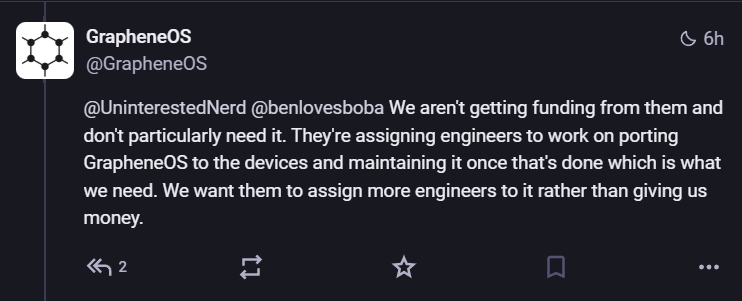
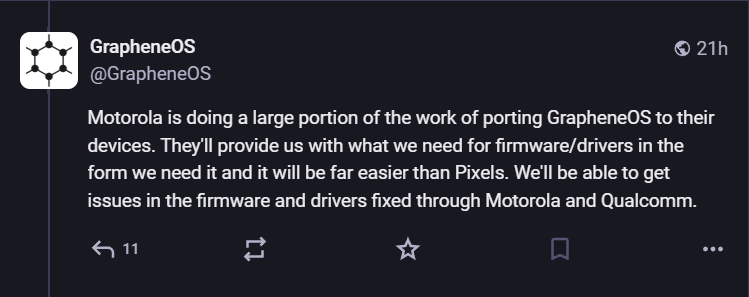
Addressing how the partnership works, GrapheneOS reveals that Motorola is assigning dedicated engineers to handle a major portion of the porting and maintenance work. The project emphasizes that it is not receiving financial funding from Motorola and does not need it, stating that they specifically requested engineering resources rather than cash. Both Motorola and Qualcomm will help fix driver and firmware bugs and assist in debugging MTE across the kernel and userspace. GrapheneOS adds that Google Pixels became much harder to support after AOSP 16 removed official Pixel support code, meaning ongoing maintenance and major OS upgrades for Motorola devices will be significantly easier once launched.
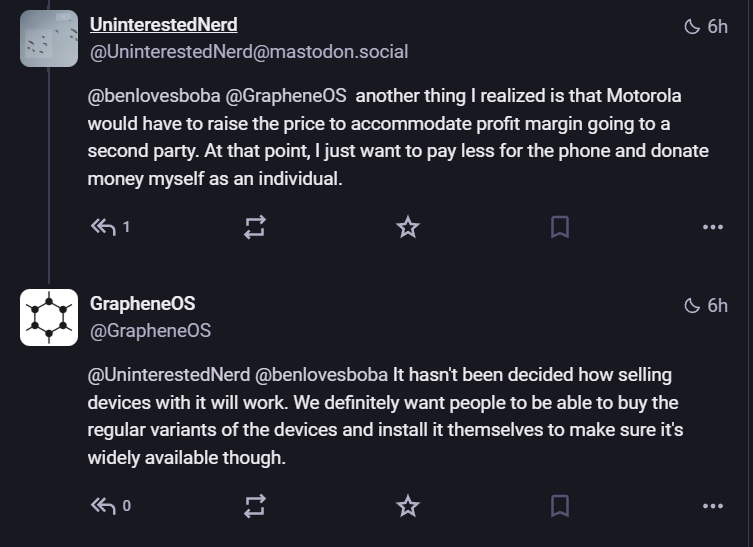
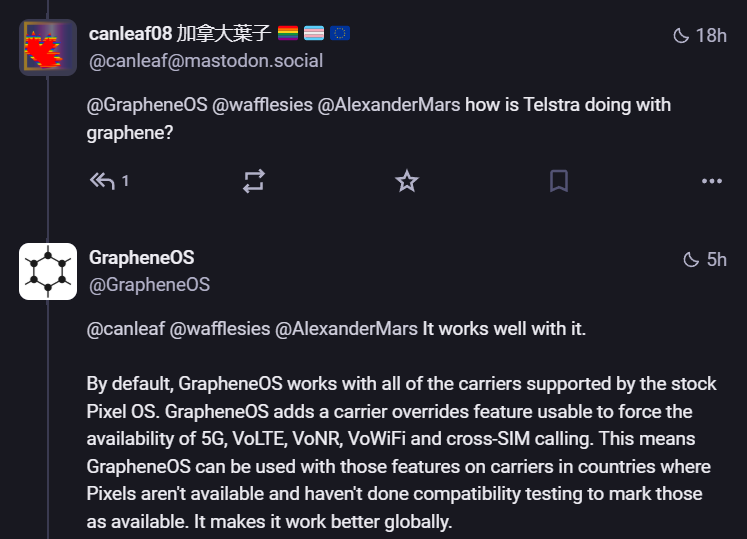
For end users, GrapheneOS devs clarify that they have not yet been decided how selling devices with the operating system pre-installed will work. The project rather wants customers to be able to buy regular off-the-shelf retail models and unlock the bootloader to install the software themselves, ensuring widespread availability rather than depending on special pre-installed editions. The team also addresses cellular connectivity concerns, noting that carriers like T-Mobile and Australia's Telstra should work well. GrapheneOS also includes a carrier override feature that allows users worldwide to force support for 5G, VoLTE, VoNR, VoWiFi, and cross-SIM calling, supposedly ensuring reliable mobile data and calling even on carriers that have not conducted official compatibility testing.
With initial support targeted for 2027, the collaboration marks a major milestone as GrapheneOS prepares to expand its hardened operating system beyond the Google Pixel ecosystem.
Source(s)
 Add as a preferred source on Google


