




SK hynix's 54.3 trillion won fab plan is not near-term RAM price relief
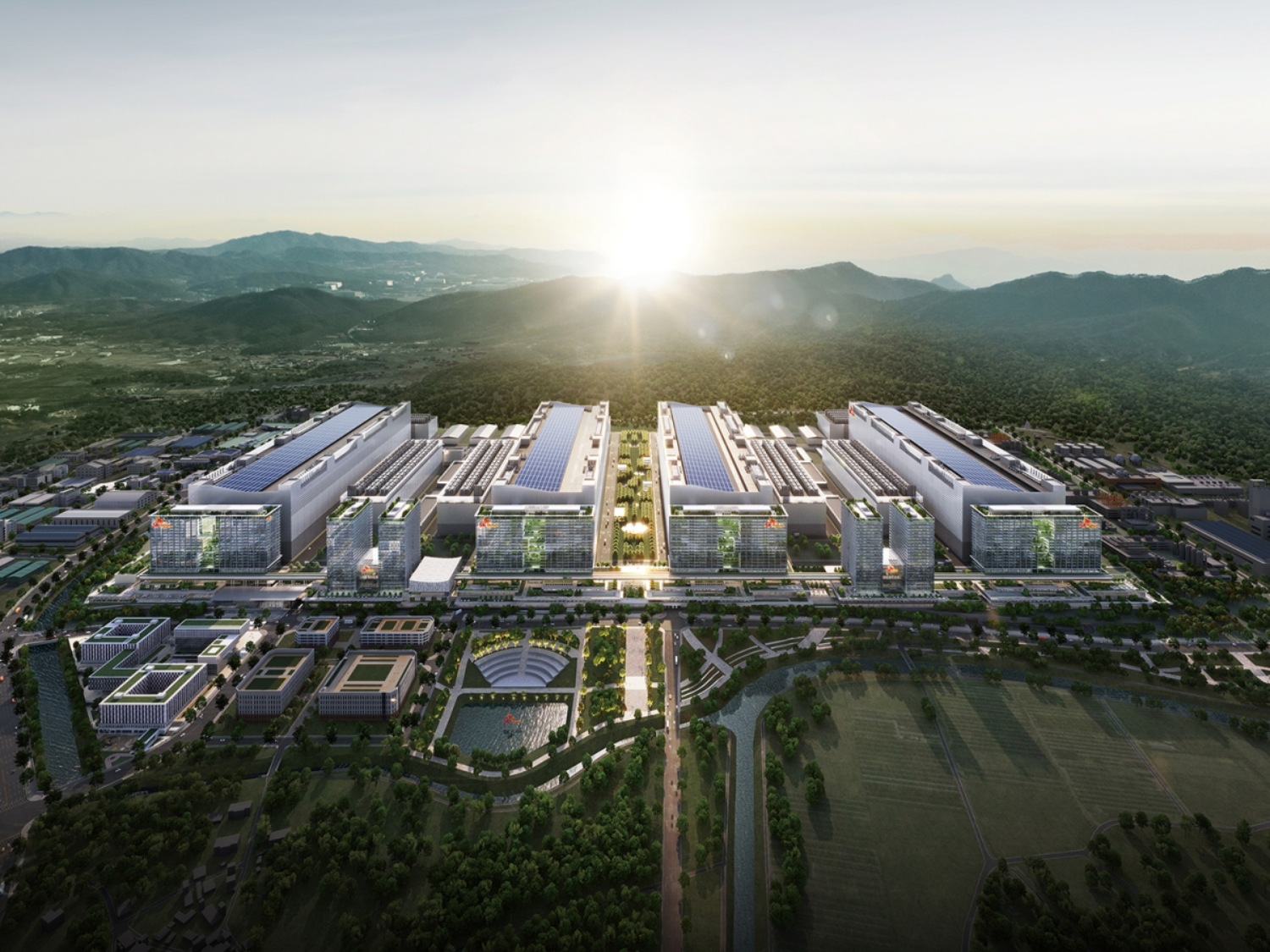
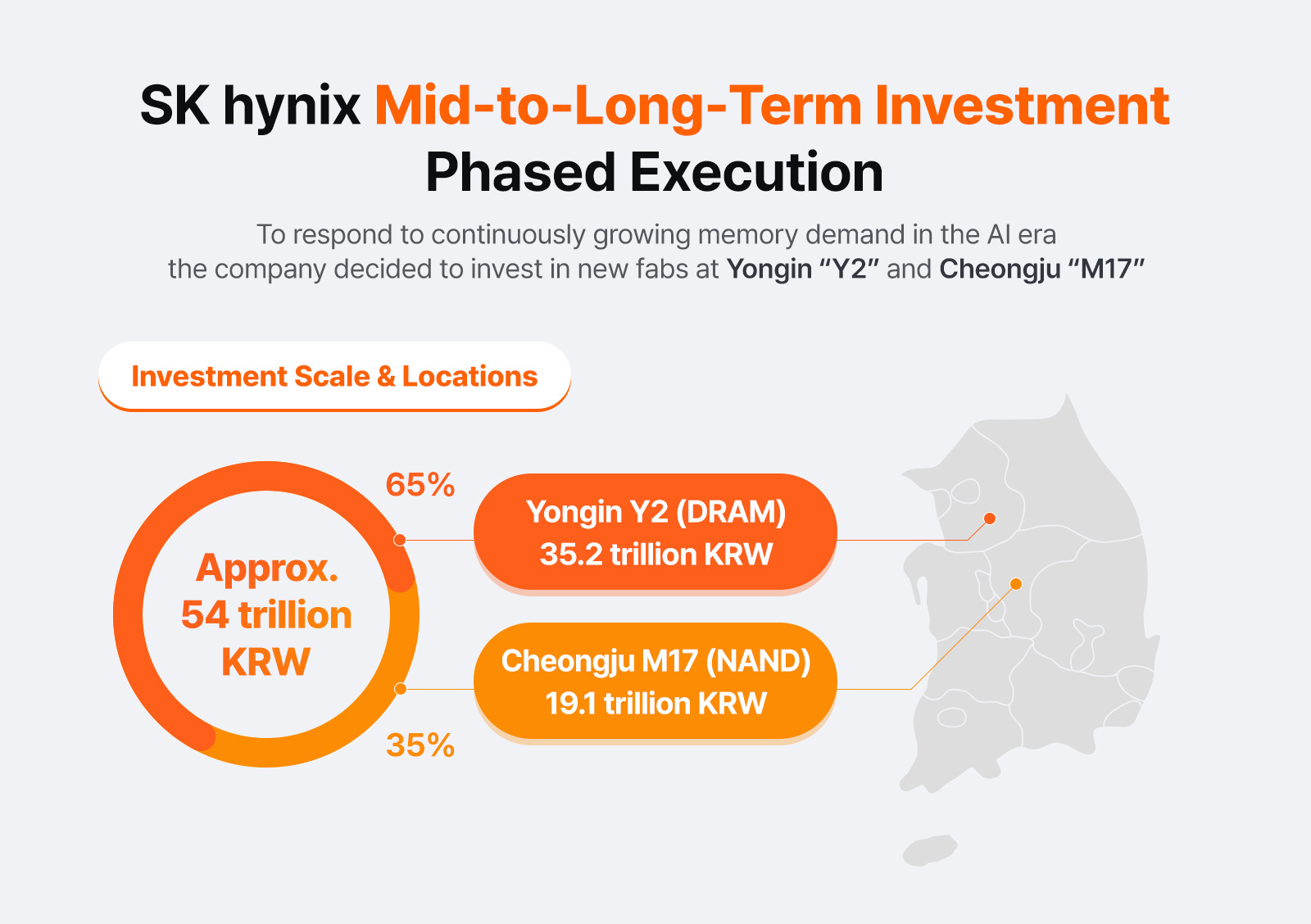
SK hynix's board approved roughly 54.3 trillion won (~$38.6 billion) on August 7 for two new fabs: 35.2 trillion won (~$25 billion) for Yongin "Y2" and 19.1 trillion won (~$13.6 billion) for Cheongju "M17." Y2 is a DRAM base, M17 a NAND base, and both figures cover construction alone; equipment for Y2 could add up to 120 trillion won (~$85.2 billion), which can push its total past 150 trillion won (~$106.5 billion).
For anyone who has looked up prices for a 32 GB DDR5 kit lately — roughly $600 this month, against $100 for the same kit not long ago — the natural instinct would be to read this as the end in sight. However, the dates tell a whole different story. M17 will open its first cleanroom in December 2028 and Y2 in June 2029, while Y2 does not even break ground until July 2027. A cleanroom opening starts equipment installation and qualification; it is not the start of shipping. The much-closer milestone is Y1, which is due for completion around February 2027, with equipment installation following in the second quarter.
One specific line in SK hynix's release matters even more than the headline figure. The semiconductor giant says it will construct fabs to the master schedule but expand cleanrooms and install equipment sequentially, moving in line with demand trends, so as to maximize capital efficiency.
In other words, the company is putting up buildings early and holding the far larger tooling spend until demand is confirmed. Y1 is being divided into six cleanrooms and is expected to reach 360,000 DRAM wafers per month by the first half of 2030.
The product mix is not in consumers' favor either. Y2 will produce high-bandwidth memory and other next-generation DRAM, and HBM allocation is what pushed commodity DDR5 out of fabs to begin with. SK hynix currently runs roughly 30% of its DRAM wafer capacity as HBM, and analysts expect this share to approach 40% by 2027.
SK hynix's own framing is the clearest piece of info here. The company calls this a "structural transformation," and not a temporary supercycle. It citied Omdia projections of 19% annual growth for DRAM and NAND through 2030. What that means is, the supplier is treating today's prices as the baseline, and building accordingly.
Source(s)
SK hynix Newsroom, Trendforce (1) (2)
 Add as a preferred source on Google


