




Chinese aerospace giant tests eVTOL with modular flying car design
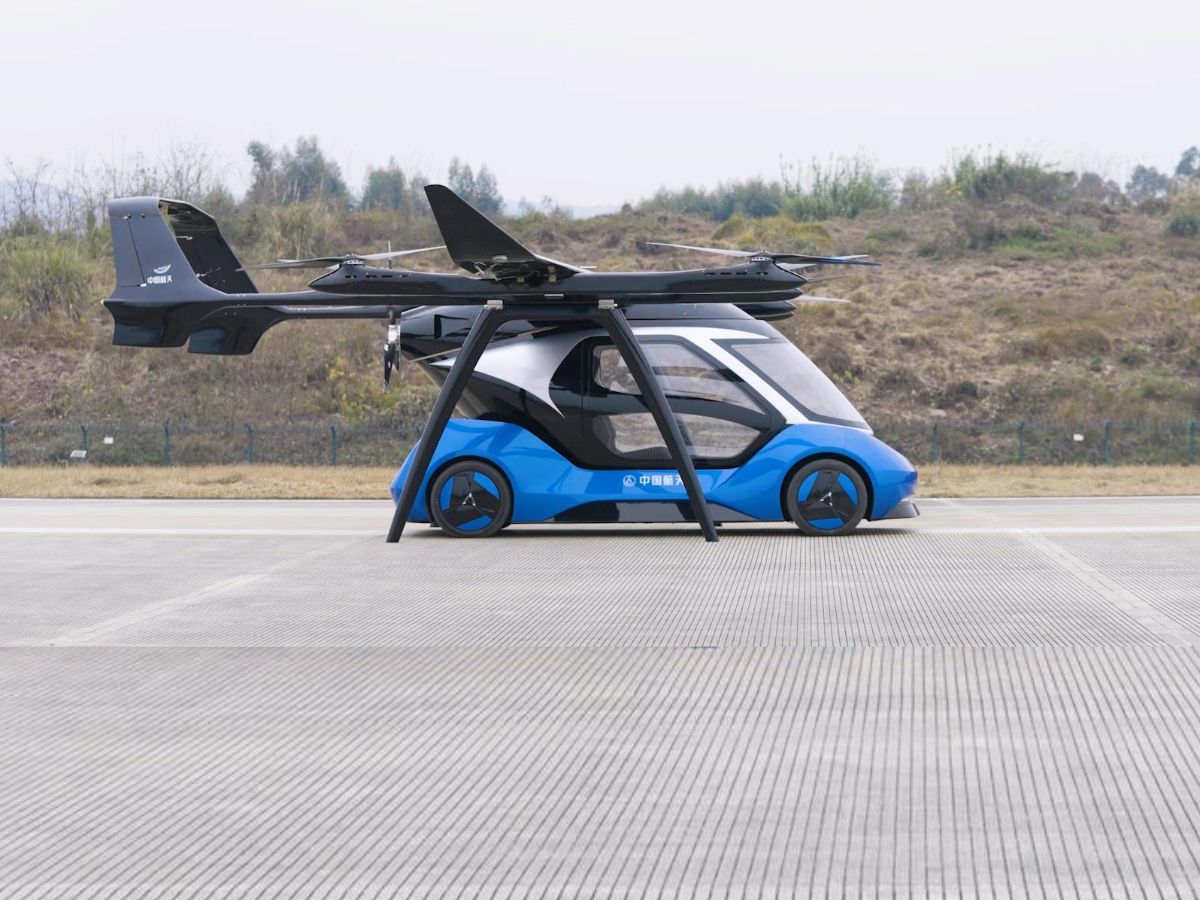
The Ninth Academy of the China Aerospace Science and Technology Corporation (CASC) has successfully completed the maiden flight of its domestically developed electric vertical takeoff and landing (eVTOL) aircraft. The test, which took place on February 6 at Yongchuan Da’an Airport in Chongqing, verified the performance of a unique flying car design that integrates aerospace and automotive engineering.
The aircraft utilizes a modular, split-type architecture consisting of three primary parts: wings, a cabin, and a chassis. This design allows for a seamless transition between transport modes via a self-developed automatic alignment and coupling system, which enables the modules to connect or detach independently under programmed control.
The airborne module is capable of transporting two passengers at speeds of up to 150 km/h at altitudes below 3,000 meters. On the ground, the vehicle make use of a fully electric, intelligent by-wire chassis with an operational range of 300+ kilometers. By incorporating industrial capabilities from leading automakers and utilizing tiltrotor control and intelligent driving systems, the developers aim to create a highly flexible platform that meets diverse travel needs.
According to CASC, the aircraft was developed in accordance with strict airworthiness standards. Its modular nature allows for customized cabins and various chassis types to be swapped in depending on the mission. Looking ahead, the company expects this multifunctional low-altitude equipment to be deployed in sectors such as personalized transportation, logistics, and emergency response operations.
Source(s)
 Add as a preferred source on Google


