




China's CXMT makes important breakthrough to produce HBM3E memory chips
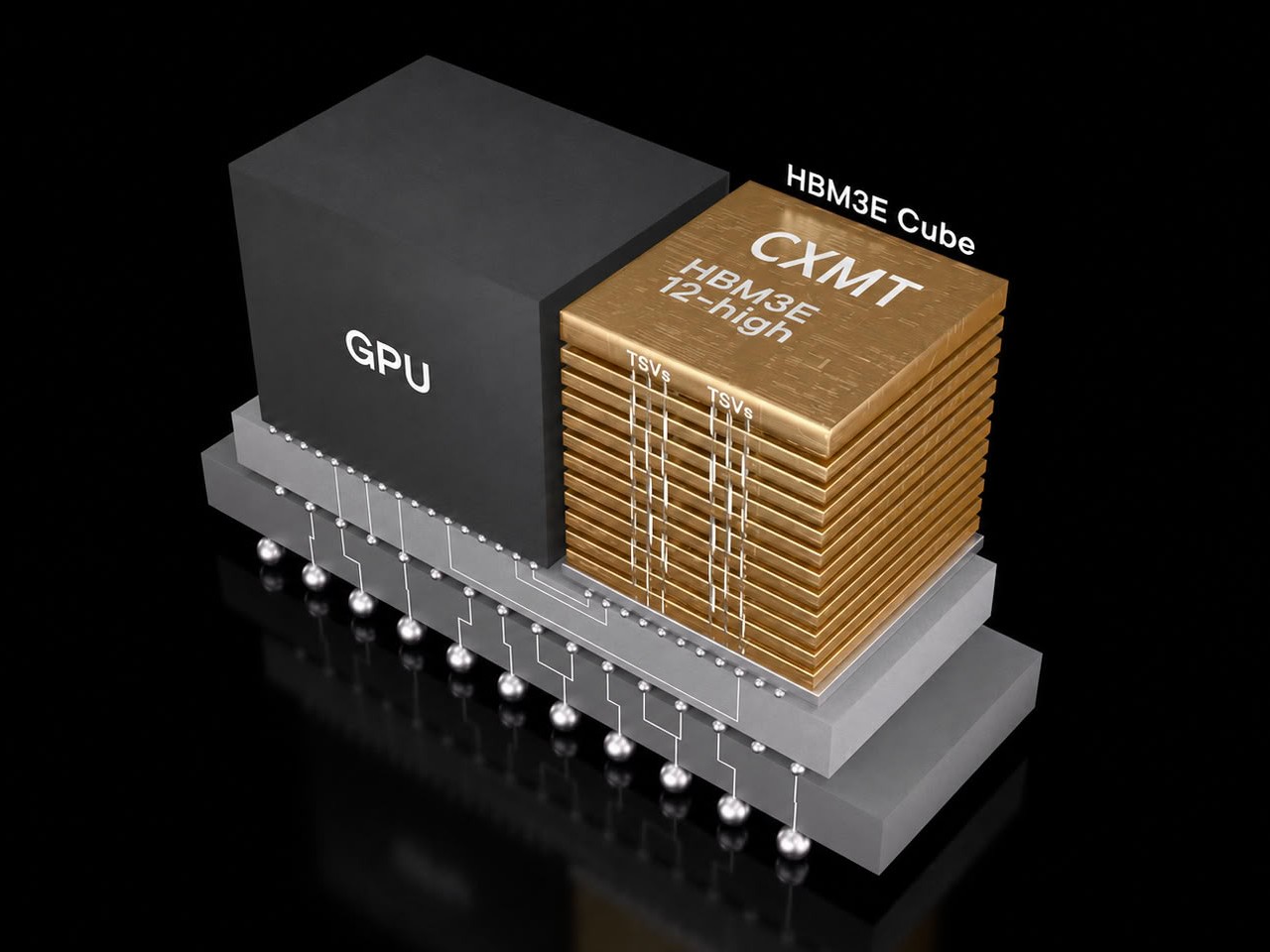
According to a new report from The Information, China’s premier semiconductor manufacturer CXMT has officially kicked off risk production for HBM3E memory. While this achievement technically leaves Chinese foundries about two generations behind their South Korean rivals that are already gearing up for the transition to HBM4E, it is still a massive leap forward for China’s domestic chip supply chain and a very important landmark in the efforts to cut reliance on Western technologies.
While CXMT is keeping its exact HBM3E silicon specs under wraps for now, standard JEDEC guidelines reveal a solid picture of what to expect under the hood. We are looking at a 1,024-bit interface pushing speeds between 9.2 and 12.4 Gbps per pin, with most standard configurations targeting the 9.6 Gbps sweet spot. That translates to a blistering 1.2 TB/s of total bandwidth, with capacities landing at either 24 GB (using 8-high stacks) or 36 GB (via 12-high stacks). Right now, "risk production" means chip yields are negligible, but CXMT is notorious for skipping from early testing straight into mass production in a relatively short timespan. It wouldn't be a shock to see high-volume manufacturing spin up in a matter of weeks.
That aggressive pacing extends to their physical footprint, as well. CXMT has been hastily building fab cleanrooms in just 12 months, around half the time it usually takes the rest of the semiconductor industry. Currently, the company operates two major 12-inch fabs in Hefei and Beijing, churning out roughly 200,000 wafers a month combined. By the end of this year, these are on track to hit 350,000, with a roadmap to eventually triple their current output to a staggering 600,000 wafers per month once new facilities in Shanghai and Hefei come online.
Getting a domestic HBM source surely sounds great for China’s plans to dominate the AI race, but what about consumer DRAM production capacities? CXMT recently started supplying DDR5 chips for consumer RAM modules so there were hopes that prices for this type of memory could finally see a much needed deflation. However, because High Bandwidth Memory requires stacking multiple DRAM dies into a single package, it is incredibly resource-heavy to manufacture. If the AI-driven appetite for HBM continues to skyrocket, CXMT’s sprawling new wafer capacity might just get swallowed up by the high-bandwidth boom. thus prices for the standard DRAM could plateau or even continue to rise at least for the rest of the current year.
Source(s)
 Add as a preferred source on Google


