




CPU fraud, next round: Chuwi CoreBook Plus with supposed AMD Ryzen 5 7430U also affected
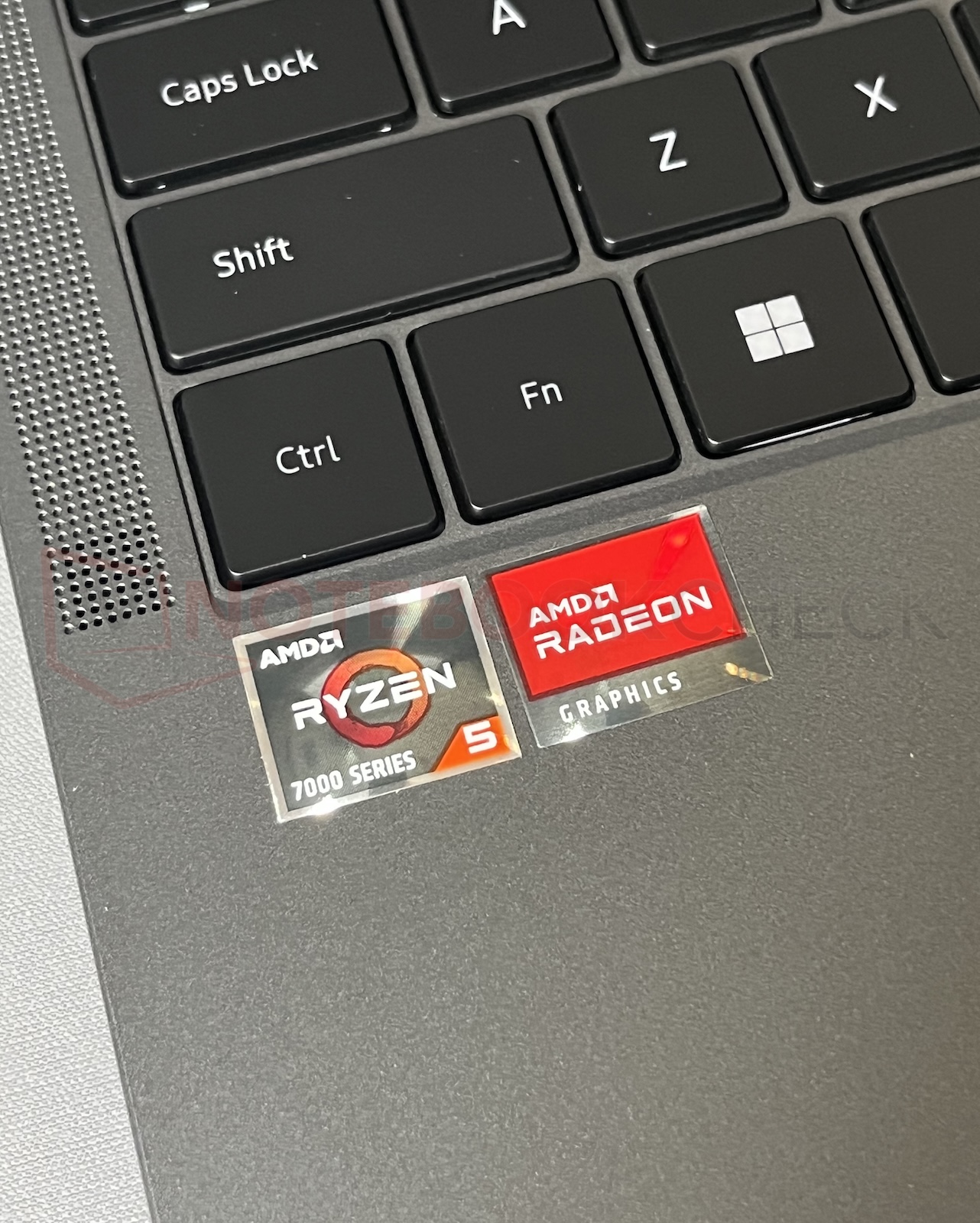
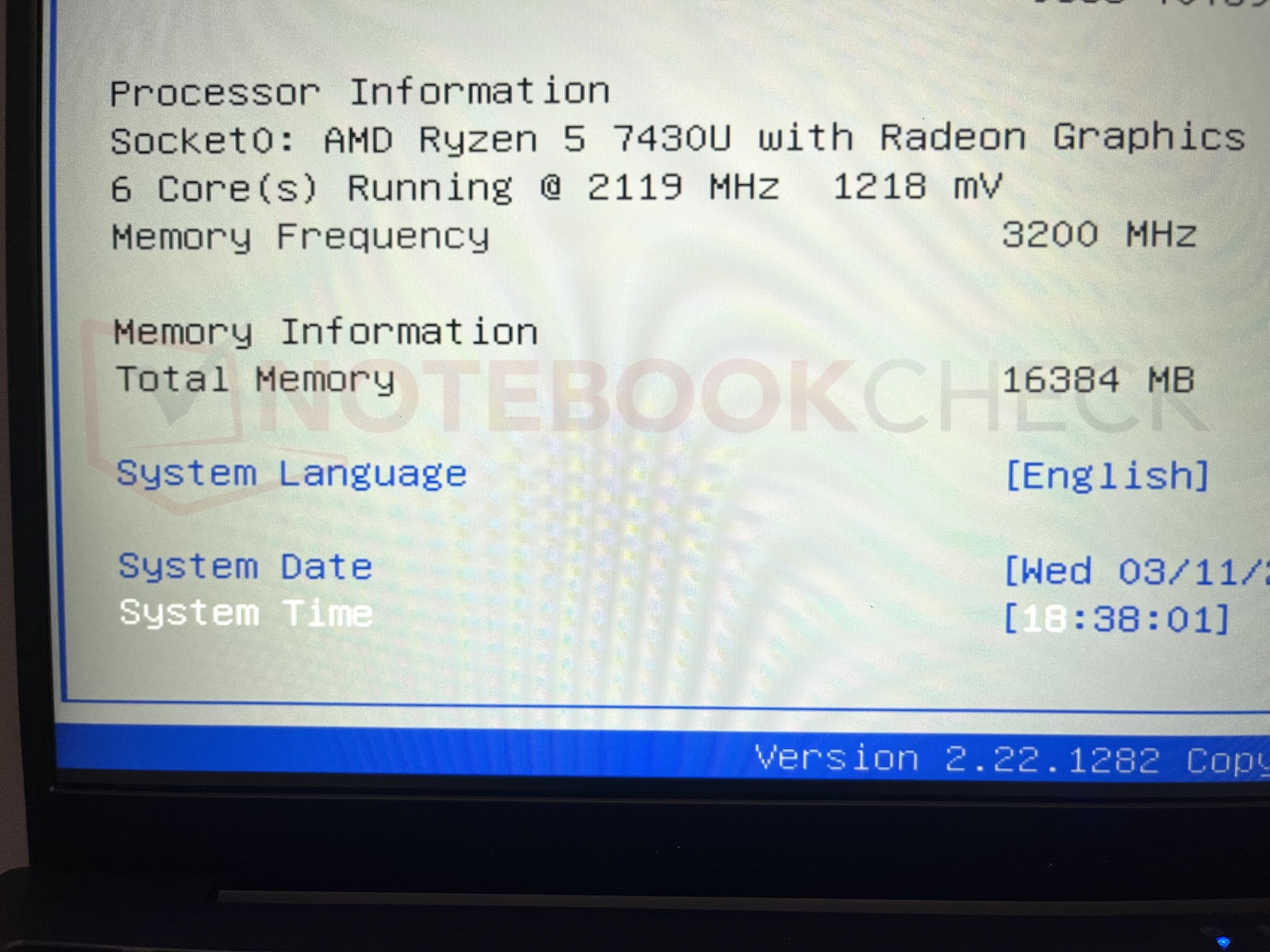
Having only recently confirmed that the Chuwi CoreBook X, contrary to all indications - including information on official Chuwi websites, product data sheets, store websites, the packaging of the device, stickers on the laptop, the Windows system tools and analysis software as well as in the BIOS of the device itself - only has a Ryzen 5 5500U CPU instead of the advertised AMD Ryzen 5 7430U (the exact differences later), this case is now developing into a mid-scale disaster for the manufacturer.
Repeated requests from Chuwi to take our related articles offline - under threat of legal action due to the reputational damage caused, mind you - have prompted us to investigate further. In addition to the CoreBook X in question, we also found the CoreBook Plus in Chuwi's range, which is advertised with a Ryzen 5 7430U processor. For this reason, we bought a spot-check unit from a German retailer and also examined this notebook.
The first results of our test are now available and are disappointing: The Chuwi CoreBook Plus also only has a Ryzen 5 5500U installed, although here - as with the CoreBook X - the use of the Ryzen 5 7430U is actively advertised. Once again, all the information provided by the manufacturer and on the device conceals this fact and makes the CPU appear to the user as a modern 7430U.
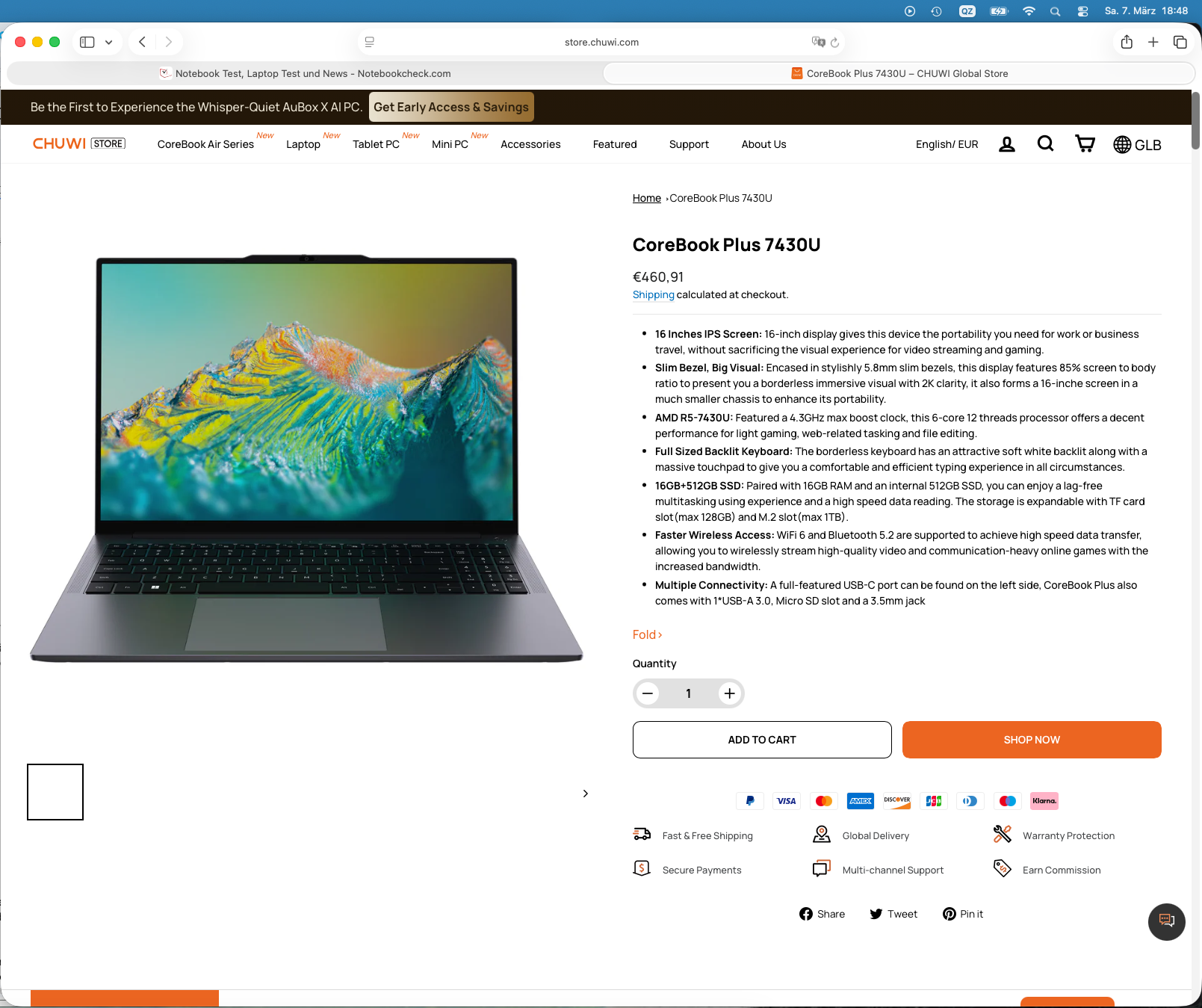
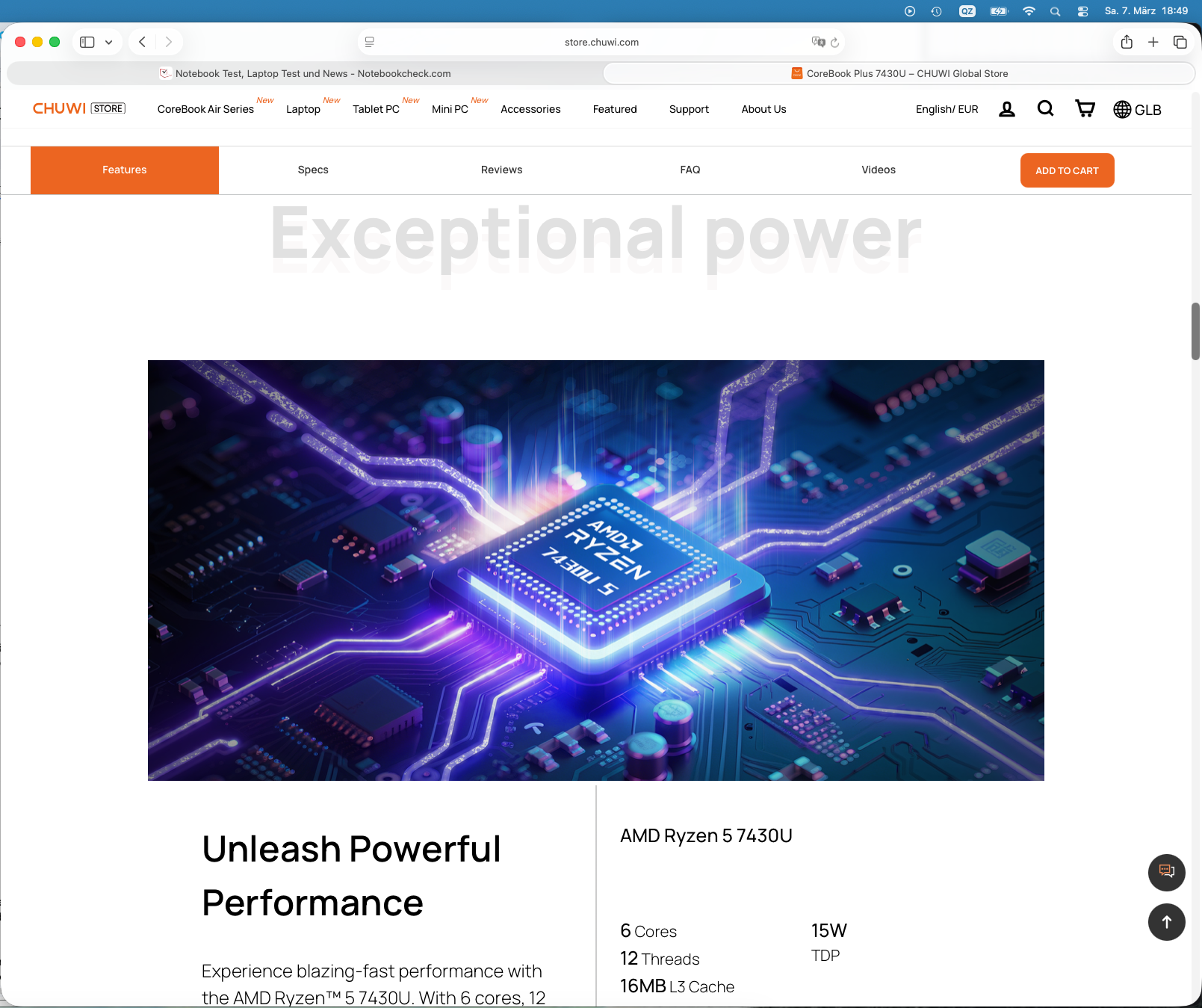
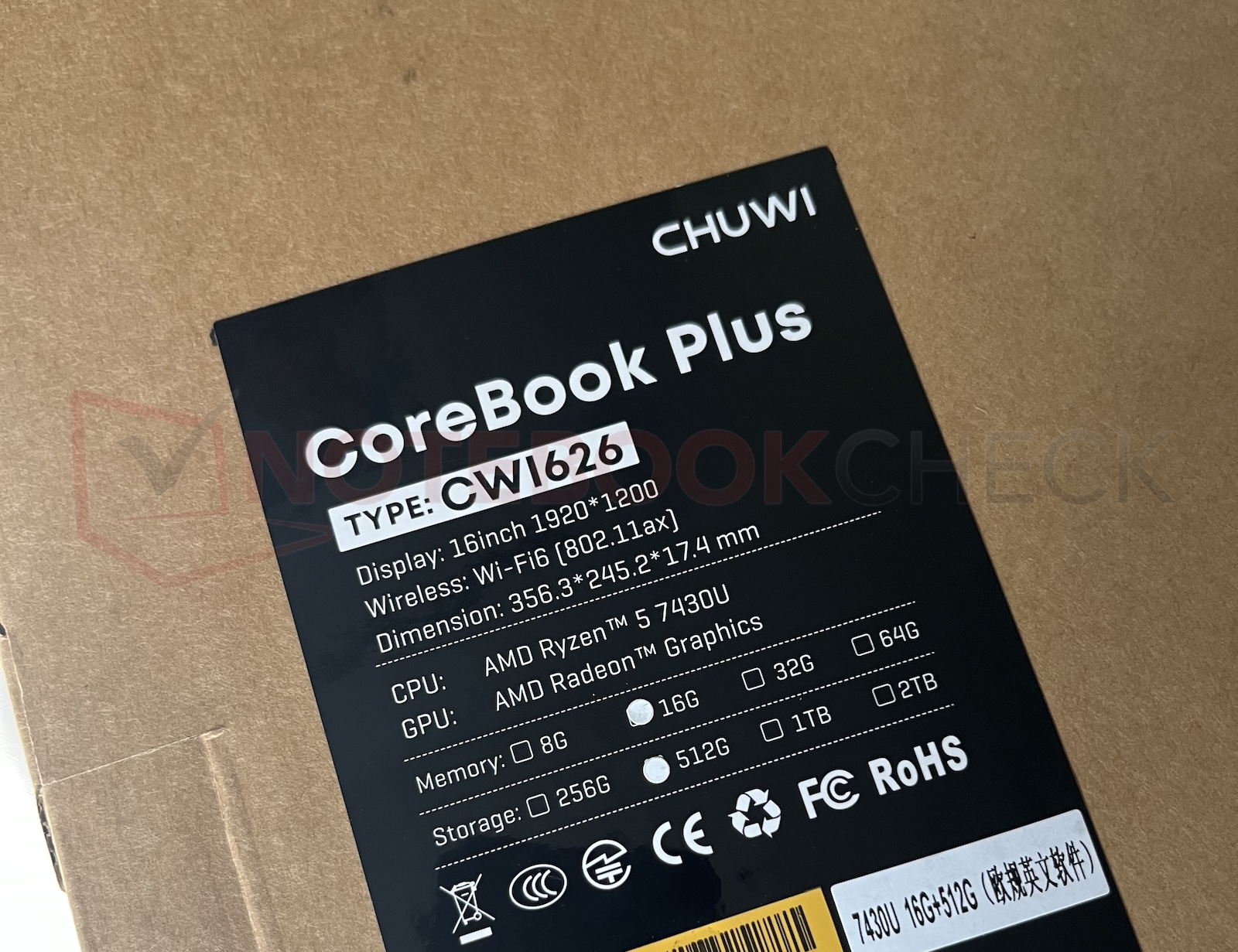
How do I recognize the use of the fake processor?
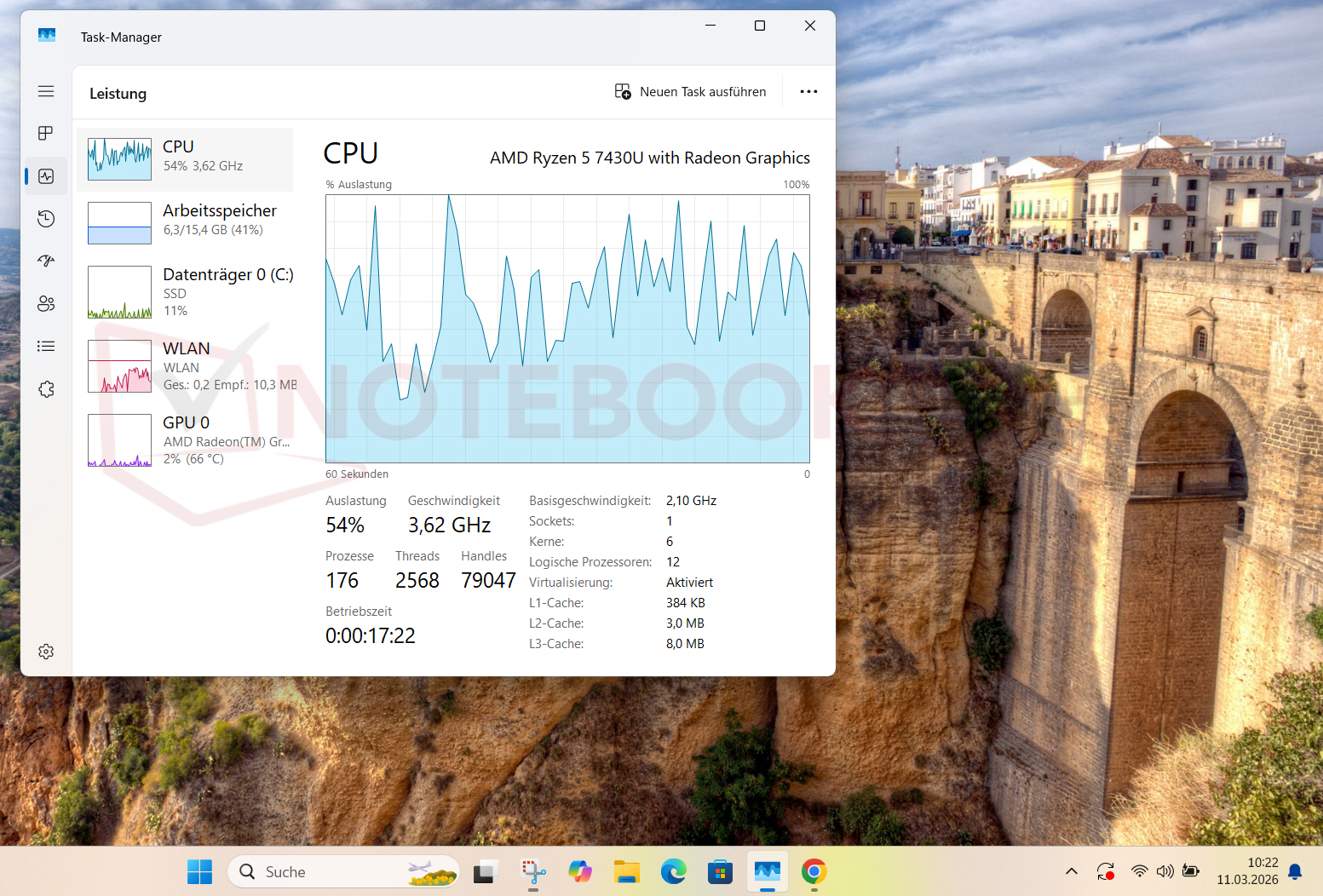
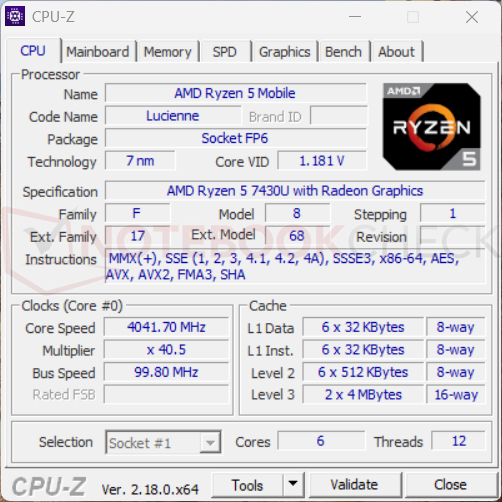
The Windows Task Manager provides an initial indication. Both the clock rates and the CPU caches can be viewed here. The Ryzen 5 7430U has a maximum boost clock of 4,300 MHz and 16 MB L3 cache and comes from the Zen 3 processor series, codenamed "Barcelo-U". In the task manager of our sample, however, the information differs. Although the CPU name is given as Ryzen 5 7430U, the codename "Lucienne-U" (Zen 2 architecture), the L3 cache of 2x 4MB and the observable turbo clock of max. just over 4,000 MHz indicate inconsistencies. These specifications correspond to the Ryzen 5 5500U chip.
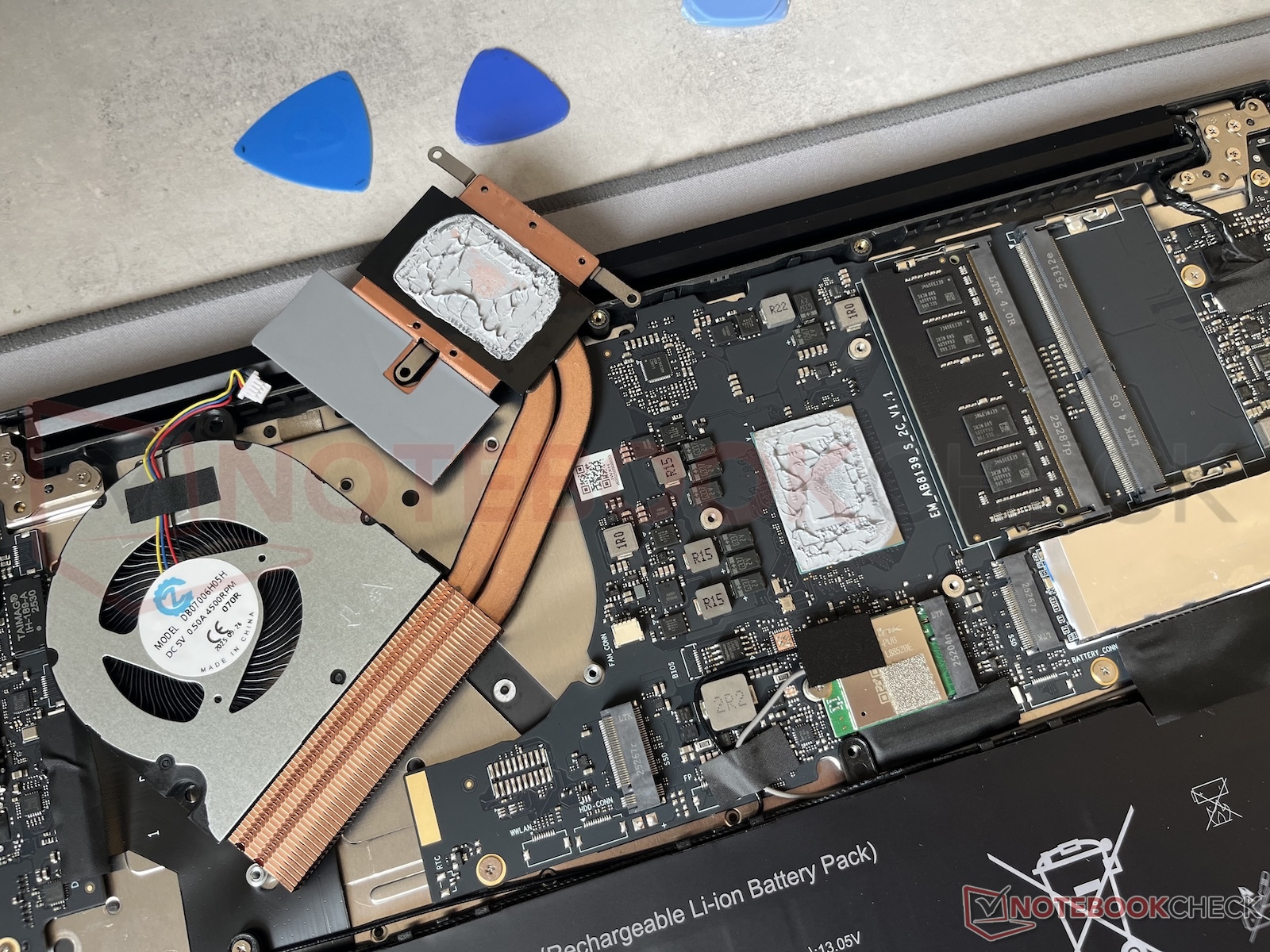
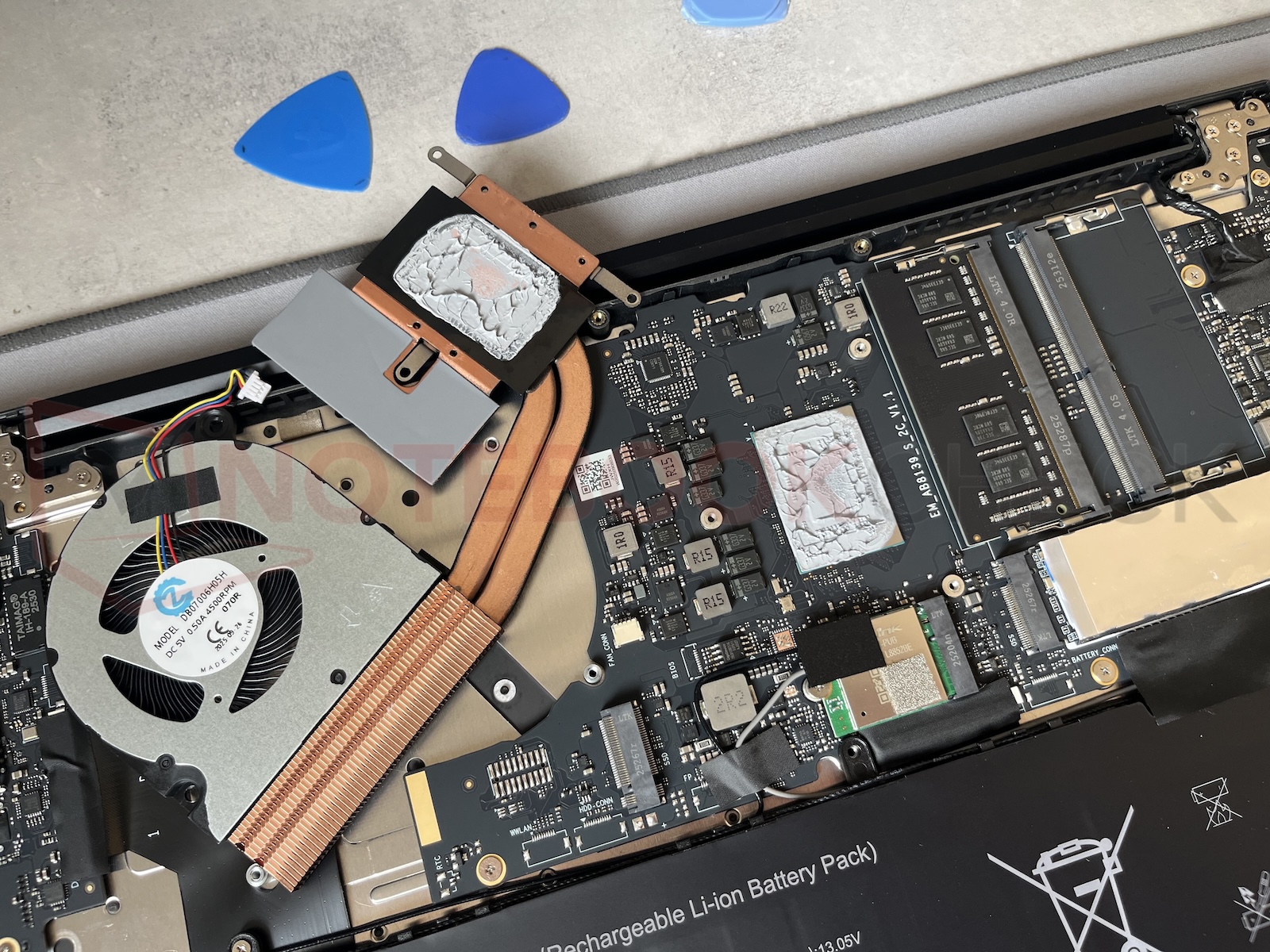
It is well known that problems occasionally occur when reading out CPU specs using software tools, which is why ultimately only disassembly of the laptop provides 100% certainty. And so we did: After removing a few screws, the laptop is open and the fan and CPU cooler are exposed. These components must also be removed in order to gain access to the processor. Once you have overcome this last hurdle and removed the generous amount of thermal paste, you can read the OPN number directly on the soldered chip, which clearly identifies the processor: 100-000000375
This corresponds to the number on the processor as it is also used in the CoreBook X and which AMD clearly identifies on the official product page for the chip as Ryzen 5 5500U. For comparison: 100-000001471 would be the correct OPN number for the advertised Ryzen 5 7430U.

Ryzen 5 5500U vs. Ryzen 5 7430U - This is the difference
As we also showed in our review of the Chuwi CoreBook X the "incognito" installed 5500U processor is perfectly suited for everyday tasks such as office applications, web browsing and media playback. Nevertheless, the advertised 7430U chip is around 2 years younger (launched in 2023 vs. 2021), has a significantly higher turbo clock (4.3 GHz vs. 4.0 GHz) and, at 16 MB, twice as large a level 3 cache. All of this leads to a performance difference of up to 20% in the test, depending on the benchmark under consideration.
In view of the price bracket (399 euros for the CoreBook Plus), such performance differences seem manageable. However, the decisive factor is how the device compares to the competition. From this point of view, Chuwi draws a great advantage from the established facts: Laptops with 7430U processors are currently found in the price range between 500 and 600 euros, i.e. around 100-200 euros more expensive than this supposed bargain. This creates a decisive incentive to buy based on misleading information.
Accident, mislabeling or even fraud - what to do?
The fact is that we have now found that two fundamentally different models from the manufacturer - the Chuwi CoreBook X and the CoreBook Plus - do not have the CPU that is advertised, but an older, less powerful model. It is also a fact that on both laptops tested, all system tools including the BIOS lead the user to believe that the supposedly purchased CPU is also in the device. The possibility of this happening by chance can be ruled out. This requires modifications at firmware level, which in turn suggests a considerable amount of effort.
For consumers in the EU (if purchased here), the legal guarantee/conformity rights of at least 2 years undoubtedly applies here, which assures the buyer of receiving a device in the contractually guaranteed condition. Possible solutions would be an exchange for a correctly equipped model, a withdrawal from the purchase contract including a refund or the assertion of a price reduction.
We also consider it extremely interesting to see how other, possibly competing companies deal with this incident, keyword "unfair competition". AMD should also have a great interest in preventing the advertising of deviating hardware ("Ryzen 5 7000 Series" sticker on the device), as this raises user expectations that ultimately cannot be fulfilled by the CPU installed.
More articles in this series
04.03.2026: Warning: Chuwi CoreBook X uses AMD Ryzen 5 5500U...
12.03.2026: CPU fraud, next round: Chuwi CoreBook Plus with supposed...
14.03.2026: The 7430U CPU scandal could spread: Another manufacturer...
21.03.2026: Another laptop brand affected by CPU fraud: Manufacturer promises...
Source(s)
 Add as a preferred source on Google


