




Blizzard, this is the Diablo 5 I want
Diablo 5 is real, Diablo has won, Sanctuary has fallen, and Blizzard has until spring 2029 to figure out what comes next. More importantly, Blizzard has given itself something it rarely gets with Diablo: time.
The fifth mainline game was revealed extraordinarily early, with development still far enough out that its systems remain works in progress. What we know so far is encouraging. Procedurally generated dungeons are coming back. Items can once again occupy multiple inventory squares depending on size. Sets and belts are returning, item tiers are being reconsidered, and Blizzard is experimenting with stat requirements reminiscent of Diablo 2. Demon Hunter and Monk are returning alongside the new Plague Knight. Good, because if Blizzard is genuinely interested in player feedback this early, I have a metric ton of it.
I have enjoyed every numbered Diablo for different reasons. The original was the first game that terrorised (yeah, yeah) nine-year-old me. It was what got me into ARPGs and gaming in general. Diablo 2 had loot. Tons of it. Diablo 3…existed. Diablo 4 is also half-decent if you own both DLCs. Still hot garbage if you don’t. The problem is that every new Diablo seems determined to forget half of what the previous ones learned. Then Blizzard spends several years adding it back. Diablo 4 kept (and still keeps) trying to reinvent itself with every season. And it’s not working.
Diablo 5 does not need to repeat that cycle.
Nor does Blizzard need to pretend every good ARPG idea has to originate inside Blizzard Entertainment. Grinding Gear Games, and more recently Eleventh Hour Games, have spent more than a dozens of hours solving problems Blizzard is still oddly reluctant to engage with. Path of Exile has flaws of its own, and I absolutely do not want Diablo 5 to become Path of Exile 3. But some homework is sitting right there on the next desk. Copy it. Shamelessly.
Give me a skill tree that makes me gasp
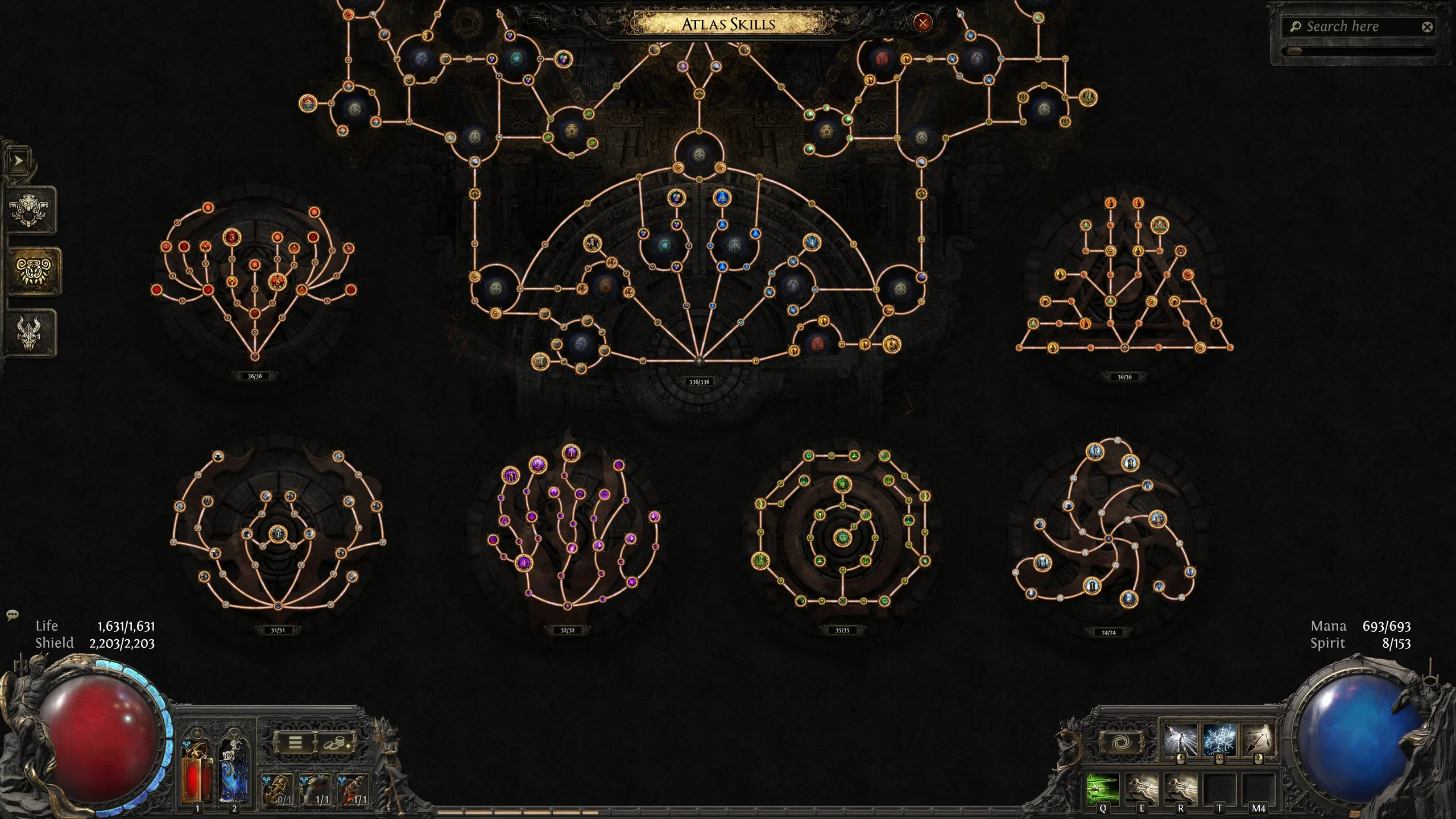
I am tired of skill twigs. I do not want to open Diablo 5’s character screen, see three branches radiating from six large icons, and immediately understand 70% of the character-building system. I want that initial Path of Exile moment where the game presents what looks less like a skill tree and more like the wiring diagram for a nuclear submarine.
And no, the Paragon board does not count. Do away with it entirely. It was a bad idea in Diablo 3, remains a bad idea in Diablo 4, and I see little reason to drag it into Diablo 5. The prospect of seeing what the game has to offer only after you hit a certain level is stupid. Let me see everything from level 1.
Let me make mistakes. Let me spend twenty minutes plotting a route across a passive tree because a distant cluster enables some idiotic build I have convinced myself will work. Let me create something that makes a build-guide author ask what the hell I was thinking.
Complexity for its own sake is not good either. Filling a gigantic tree with “+3% damage” nodes merely creates a larger version of the same problem. Interesting choices need to change how characters work. Two Barbarians should be able to start in roughly the same place and end up looking like they belong in different games.
Not every player needs to understand every node. Blizzard can provide suggested paths, starter templates and highlighted recommendations for people who simply want to bash demons after work. But the depth needs to exist underneath.
Decouple skills from classes
Classes should define where a character starts. They should not define where that character is allowed to end. If I want a Barbarian who fires ice arrows, let me. If I want a Sorcerer carrying an enormous two-handed axe, let me. If I want a Monk raising undead creatures while punching people, let me.
I paid for the game. I should be allowed to make bad decisions.
Class identity can coexist with skill freedom. A class can naturally gravitate towards certain attributes, weapons and mechanics because of its starting position and specialisation systems. None of that requires somebody at Blizzard to physically prevent a Barbarian from picking up a wand.
Diablo has historically treated classes more like sealed containers. That makes balancing easier, but it destroys enormous amounts of emergent character-building potential.
A Barbarian can begin near strength, weapon mastery and rage-related passives. A Demon Hunter can start near dexterity, projectiles and mobility. A Plague Knight can naturally favour poison and disease. That is enough. Everything beyond that should become my problem.
If I spend forty passive points dragging my Druid across the tree so he can become a staff-wielding abomination, I have already paid the opportunity cost.
That is half the fun of an ARPG.
Make Diablo approachable, then make it almost impossible to exhaust
There is one important caveat to all of this: I do not want Diablo 5 to become hostile to casual players. One of Diablo 4’s greatest strengths is that it has become the approachable ARPG. Path of Exile and Path of Exile 2 are games for certified sweats, and nobody really wants that to change.
Diablo can occupy a more interesting position. It can be both.
The dad gamer with four jobs, eight wives and sixteen children should be able to roll a Barbarian, follow a recommended path, finish the campaign, put together a competent build, kill the major bosses and meaningfully experience most of what the game offers. But the basement dweller playing sixteen hours a day needs something too. The mistake is assuming these players require two different games. They do not. They need the same game with a much higher ceiling. Make the floor understandable. Make the ceiling ridiculous.
My current Path of Exile 2 Deadeye is the perfect example. I nearly skipped patch 0.5.5 because it felt too similar to 0.5. Then I made one of the most cookie-cutter Deadeyes possible, and found a Headhunter on day four. That one drop changed the entire league. I am now blasting heavily juiced Tier 16 maps. All pinnacle bosses, including both Arbiters, are dead. Every skill tree is unlocked. Technically, I have beaten the game. I could stop. I am not going to. My bow is good enough to trivialise anything the game throws at me, but its IPD roll could be better. Its crit roll could be better. The whole thing could be better. Therefore, it needs to become better.
Will the next map give me what I need? Will the next fifty? Maybe not. The game is no longer telling me what to do. I have invented an arbitrary goal for myself: min-max this Deadeye. That is one of the purest forms of ARPG motivation there is. Diablo 4 struggles with this. Eventually, I have the important uniques. My glyphs are done. My build functions. I kill the bosses in seconds. Then what? Diablo 5 needs enough systemic depth that the answer can simply be: keep going because I want to.
The casual player needs a satisfying endpoint. The obsessive player should be able to look at the exact same “finished” character and see another six weeks of work. The casual gets the unique. The sweat spends three months finding the version with the right rolls, sockets, corruption and whatever other nonsense Blizzard invents. Everybody wins.
Stop curating my loot
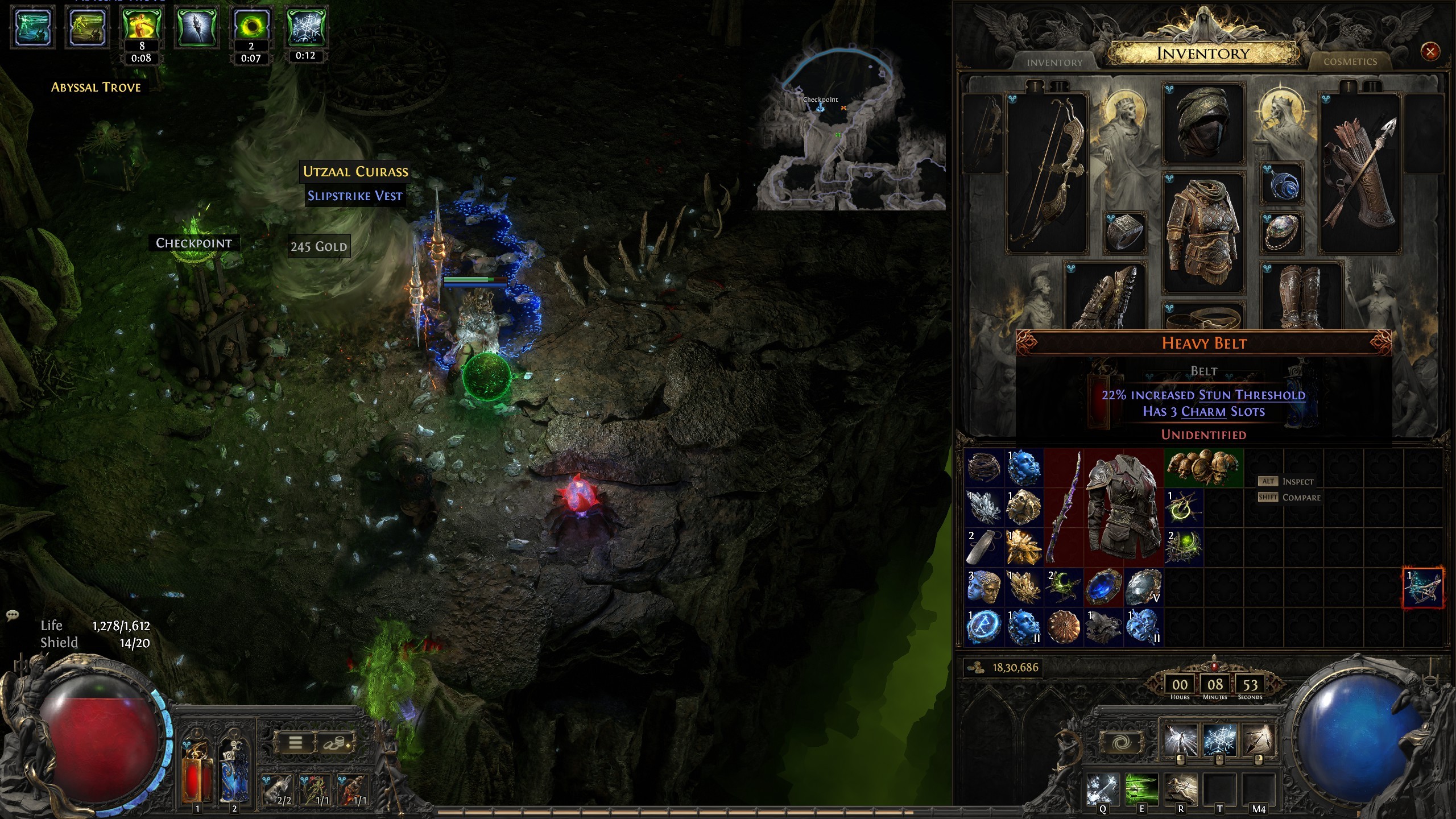
Get rid of heavily class-filtered drops. I want my Amazon to find a ridiculous wand. Not because I necessarily need it, but because I might. Maybe its stats make me wonder whether there is some completely unreasonable way to build around it. Maybe I trade it. Maybe it becomes the reason I roll another character.
That is what loot is supposed to do.
One of Diablo 2’s greatest strengths was that loot existed independently of you. Sanctuary did not particularly care what class you had selected. An Immortal King set item dropping on a Necromancer was still exciting because you knew what you found. The item existed as an object in the world, not as a personalised recommendation from a drop table. I do not want Sanctuary curating my feed. I want Sanctuary dropping loot.
Make crafting a game of its own
Ground loot should matter, but it should not be the only route to absurd power. Lord of Hatred has already moved Diablo 4 in a better direction with crafting. Take that much further.
Crafting should be a metagame. I want somebody who spends six hours killing demons to have a viable path towards incredible gear. I also want some complete degenerate sitting in town at 4 am, surrounded by spreadsheets and crafting calculators, to manufacture the best pair of boots Sanctuary has ever seen.
Reward that guy too. Path of Exile understands that crafting can practically become a profession. Some players have memorised the entirety of Craft of Exile. They understand item bases, affix pools, probabilities, currencies and crafting sequences better than they understand most aspects of real life.
Let crafting involve risk. Give me deterministic methods that are expensive but reliable and gambling methods with absurd ceilings. Let rare recipes come from exploration. Let bosses unlock crafting techniques. If trading exists, let people specialise economically around making gear.
Gold should not automatically be the only currency either. And if it is, make it matter. Make every meaningful pile feel like progress towards something instead of another number that caps out and disappears into the UI.
But deep crafting does not mean every dropped item should arrive as unfinished raw material. Sometimes I want a sword to be good because a demon dropped a good sword. Crafting should improve great items, rescue nearly great ones and let lunatics pursue theoretical perfection. Drops and crafting should coexist. The monster can drop the best item I have ever seen. The base goblin can make an even better one.
Bring back real runewords
While we are on the topic of crafting, give me proper runewords. Not vaguely rune-adjacent item modification. Not two-symbol trigger-effect combinations.
Runewords. The real thing.
The kind that makes individual runes objects of obsession because you know exactly what they can eventually become. I still remember assembling Vex, Hel, El, Eld, Zod and Eth for Breath of the Dying. Finding the Zod was an event.
I had spent months looking for that stupid rune. Suddenly the base mattered. The sockets mattered. The order mattered. The completed weapon felt like something I had assembled rather than something the loot generator spat out.
That is a chase.
Bring them back, then go further. Give me expensive runewords, cheap levelling ones, bizarre niche ones and recipes nobody solves immediately. Let some combinations be discovered through lore, item descriptions or actual experimentation.
Imagine the community losing its collective mind because someone accidentally discovers a new runeword three weeks into a season. That is what online ARPG communities are built for.
Give me chase items that remain chase items
Diablo technically has always had chase items. Mythic Uniques were rare and powerful. But eventually the mystique disappears. I now have a stash tab full of Shakos. What next? That elusive four-GA Shako that improves my existing one by 10%? A chase item needs more than rarity. It needs possibility.
That is what made the Headhunter on my Deadeye so transformative. Rare monsters with additional modifiers suddenly became buffs instead of hindrances. I could sacrifice some raw DPS for movement speed because zooming around the map and maintaining stolen modifiers became part of the build. The item changed how I played.
That is the difference between “own Item X” and “find my Item X”. Give Diablo 5 enormous roll ranges, rare combinations and variable effects. Let the best versions of certain items become genuinely famous. Do not create rarity solely by giving something a 0.000001% drop rate. Create possibility spaces large enough that the hunt continues after the base item drops. The casual gets the unique. The psychopath spends three months finding their unique.
If inventory Tetris is back, give me the warehouse to match
Blizzard has confirmed that Diablo 5 is returning to an inventory where larger items occupy more squares, much like Diablo II. I actually like that. A polearm should feel physically larger than a ring. But there is a condition. Give me more stash space. A lot more. This is not 2002. The technology exists. Last Epoch figured it out.
I do not care what bizarre legacy implementation once required the game to load the inventory of every player in town, every Blizzard employee, their extended families and three generations of Overwatch Rule 34 artists whenever somebody opened a stash.
Whatever technical limitation created microscopic storage twenty-five years ago does not get to become sacred game design. An ARPG is about acquiring loot. Do not punish me for acquiring loot. Give me dozens of tabs and let me name them, colour them, search them, filter them and group them. Give me dedicated storage for runes, gems, keys, materials and whatever seventeen currencies Blizzard invents. If a two-handed weapon once again occupies half my backpack, storage becomes more important, not less.
Give me a real offline mode
Let me play the campaign offline. Properly offline. No periodic connection. No fake offline mode that still talks to a server. No Battle.net deciding I may not kill demons because my internet disappeared. Last Epoch can do it. So can Blizzard.
Keep offline characters local. No trading. No leaderboards. No seasons. No multiplayer. No transferring seventeen-million-Strength save edits into the online economy. Keep the post-campaign service game server-authoritative. Require authentication for multiplayer, trading, seasons and anything whose integrity depends on Blizzard’s servers.
But if I am sitting in the middle of nowhere with a laptop and nothing but the voices in my head for company, let me finish Act IV. Will somebody crack it? Of course. Somebody will probably spend thousands of hours reverse-engineering half the game to avoid paying for it.
Congratulations to that person.
I do not believe inconveniencing millions of paying customers is worth designing the entire game around that person. People like me will probably pay an obscene amount of money for the edition that lets us enter Sanctuary three days early and comes with a horse covered in fire. You already have us. Let the campaign work offline.
Put the RPG back into ARPG
Diablo 5 is an action role-playing game. I would like the role-playing part to actually matter. Historically, Diablo gives players very little ownership over who their character actually is. You are the hero. Demons are bad. You kill them. Everyone agrees this was broadly correct.
But Diablo 5 has the perfect setup for something more interesting. Diablo won. Sanctuary fell. The heroes failed. Now let me decide what that means.
Maybe I think Diablo winning is preferable to whatever the High Heavens had planned. Maybe a cult wants to resurrect Lilith to oppose him and I want to right my wrongs from Diablo 4. Maybe I side with a Lesser Evil that wants the throne for itself. Maybe I sacrifice one NPC to get a significant boost in power, only for them to show up later as a boss. Maybe I become exactly the sort of person previous Diablo protagonists would have killed.
And yes, perhaps aiding the Lord of Terror sounds badass. Will Diablo eventually shaft me? Probably. He is Diablo. I am not expecting a pension plan. But let that be the consequence of my decision. Imagine two players reaching the final act having made genuinely incompatible choices. Companions leave. Factions remember you. Settlements survive or disappear. Bosses another player killed might become your allies. You know.
Role-playing.
Microsoft happens to own some people who are very good at this. Obsidian has spent decades designing reactive quests and factions. Bethesda has spent decades building worlds where players ignore the apocalypse because they have become emotionally invested in collecting cheese. I am not asking Todd Howard to design Diablo 5. But there is no prize for Blizzard refusing to borrow expertise from the people down the corporate hallway. Use them.
And build a campaign worth replaying.
Some of Diablo’s most enduring memories come from campaign progression: descending beneath Tristram, entering the Monastery, reaching Lut Gholein, Travincal, Hell and Mount Arreat. I want to finish Diablo 5 and immediately wonder what would happen if I made different choices. That is a much better reason to replay a campaign than another checkbox saying “Skip Campaign”.
Bring back actual support characters
If Blizzard wants Diablo to keep borrowing MMO ideas, let us play it like a damn MMO. Not everybody needs to be another differently coloured damage dealer. Bring back real support characters.
Let me build an aurabot. Let me play a Paladin whose primary purpose is keeping three lunatics alive. Give me healing, barriers, resource generation, debuffs, crowd control, movement tools and meaningful offensive and defensive auras.
Diablo 4 finally brought Paladin back, but that still does not recreate the dedicated support fantasy from Diablo 2. I want to be tethered to my Barbarian like Io enabling Tiny in Dota 2. He gets to become a homicidal one-shot machine. I make sure the machine comes back in one piece.
Support builds also make loot more interesting. A shield that massively extends aura radius while reducing personal damage. A wand that turns critical strike chance into critical healing. And because skills and gear are no longer locked into sealed class boxes, perhaps someone discovers a support Necromancer instead.
That is where these systems start multiplying each other.
Let bad builds exist, but stop pretending everyone needs to beat everything
Let bad builds exist. Actual bad builds. One of Path of Exile’s greatest strengths can also become one of its biggest traps. It lets you concoct practically anything, but that does not mean the resulting abomination will function. You can lovingly assemble some deranged ED/Contagion Chieftain only to watch it collapse in a Tier 5 blue map.
Diablo 5 can be more forgiving without making every build equally good. If my ice-arrow Barbarian sucks, let him suck somewhere useful. Maybe he clears the campaign and reaches the early endgame. He farms lower difficulty regions forever because I enjoy playing him. Different difficulties should provide ecosystems for different levels of optimisation. A mediocre homebrew gets content. A strong build gets more. A min-maxed build gets everything.
And at the very top, Blizzard should stop being afraid of telling players no. Not everyone needs to kill everything. The dad gamer with four jobs, eight wives and sixteen children should be able to see the campaign, enter the endgame and fight the major bosses. That does not mean he needs to defeat every encounter Blizzard ever creates.
Keep something for the lunatics. If somebody has spent 400 hours perfecting a character and learning an encounter, give them something the rest of us cannot steamroll after watching a ten-minute YouTube video. Reward mastery with cosmetics, titles, chase items or strange crafting materials. Casual players need enough content to feel satisfied. The tryhard needs something that can still tell them no.
There is a common thread underneath almost everything I want. Stop protecting me from myself. I am an adult.
If I make a terrible build, let it be terrible. If I spend forty passive points reaching a useless node, let me regret it. If I equip a hammer on a Sorceress because I have convinced myself my frost-bonk concept is genius, that is between Diablo and me.
Failure is part of experimentation. Somebody at Blizzard will worry that players might become confused. Many will. That is what tutorials, starter builds, and recommended paths are for.
Accessibility and depth are not opposites. The casual player should be able to follow the road signs. The tryhard should be able to climb over the guardrail, disappear into the forest and re-emerge three months later carrying a bow worth more than most people’s accounts.
Do not cut down the forest because somebody might get lost.
Stop using items as replacement skill trees
Gear should modify builds. It should not finish designing them. If I heavily invest in a skill, that skill should work because I invested in it. An item can then transform it.
Fireball becomes frost. Whirlwind pulls enemies inward. Teleport leaves a clone. Skeletons inherit properties from my weapon. Great.
What I do not want is a skill that remains mechanically incomplete until I equip the mandatory legendary whose effect effectively reads: “This ability is now allowed to be good.”
My stupid build should fail because I made a stupid build, not because Blizzard hid half of the skill on an item. There is a meaningful difference between an item turning a mediocre build into something brilliant and an item turning an incomplete skill into a functioning one.
Give me enough tools that I can stubbornly drag a terrible homebrew build further than it has any business going. Maybe it never kills the hardest boss. Cool. Maybe somebody smarter eventually figures out how. Even better.
Let Diablo be frightening again
The darker art direction of Diablo 4 was one of Blizzard’s better decisions. But horror does not come from turning up the corpse-density slider. Silence is horror. Uncertainty is horror. Not knowing what is around the corner is horror.
The original Diablo understood this remarkably well. Sometimes almost nothing happened. You heard something, opened a door, and two dozen skeleton archers turned you into a pincushion before you could react. Five floors of progress gone. Now you think thrice before opening every door.
Modern ARPGs are about big numbers, screen-wide clears and colourful explosions. That is fine. But Diablo still needs to invoke terror. It is literally in the name. Leave rooms empty. Kill the music occasionally. Hide enemies. Make me hear things before I see them. Give me genuinely rare encounters. And no, another random Butcher encounter does not count.
Put Diablo in Diablo
This should not even need to be on the wishlist, but after three hundred-odd hours of what effectively became Lilith 1 followed by two Mephisto DLCs, I would very much like Diablo to be present in a Diablo game. Crazy, I know.
Do not hide him for three expansions while I fight his lieutenants. He does not need to be the final boss. Hell, perhaps helping him can be one of those terrible RPG decisions. But his presence should shape everything: cities, religion, politics, magic, angels, surviving humans and the landscape itself. Evil won. I want to see what winning looks like.
Above everything else, trust me
Trust me to get lost, misunderstand something, to find an item useless for my current build and keep it anyway, to make a terrible passive decision. Trust me to spend weeks crafting instead of killing monsters. Trust me to make a support character. Trust me to side with somebody obviously evil because I think they are cool. Trust me to regret it. Trust me to play inefficiently and decide what fun looks like. And trust different players to want completely different things from the same game.
Let the person who can spare five hours a week experience Sanctuary, kill the major bosses and feel as though they got their money’s worth. Then let the person who can spare five hours before breakfast look at that exact same game and conclude they have barely started. Those experiences are not mutually exclusive.
Modern game design often seems terrified that somebody might miss something, misunderstand something or make a decision the designer did not anticipate. So every edge gets sanded down. Every reward gets targeted. Every class gets its appropriate items. Every build gets its approved equipment. Every quest reaches roughly the same conclusion.
Diablo 5 has an opportunity to be different. Not merely a larger Diablo 4. Not Diablo 2 rebuilt with better lighting. Not Path of Exile wearing a Blizzard skin. And definitely not another carefully controlled character-building system designed to ensure I never make the wrong decision.
Make Diablo approachable enough for almost anyone to finish. Then make it deep enough that finishing it means absolutely nothing to people who don't want to stop. Give me a giant box of demonic Lego and take the instructions away. I will figure it out.
Or not.
If I don’t, I know RageGamingVideos will have my back with a “S PLUS PLUS TIER BUILD CLEARS EVERYTHING IN DIABLO 5 WITH ZERO BUTTONS, ZERO GEAR, ZERO KEYBOARD, ZERO MOUSE” guide.
Source(s)
Own
 Add as a preferred source on Google


