




Battery-free watches: New tech uses thin films to generate electricity from body heat
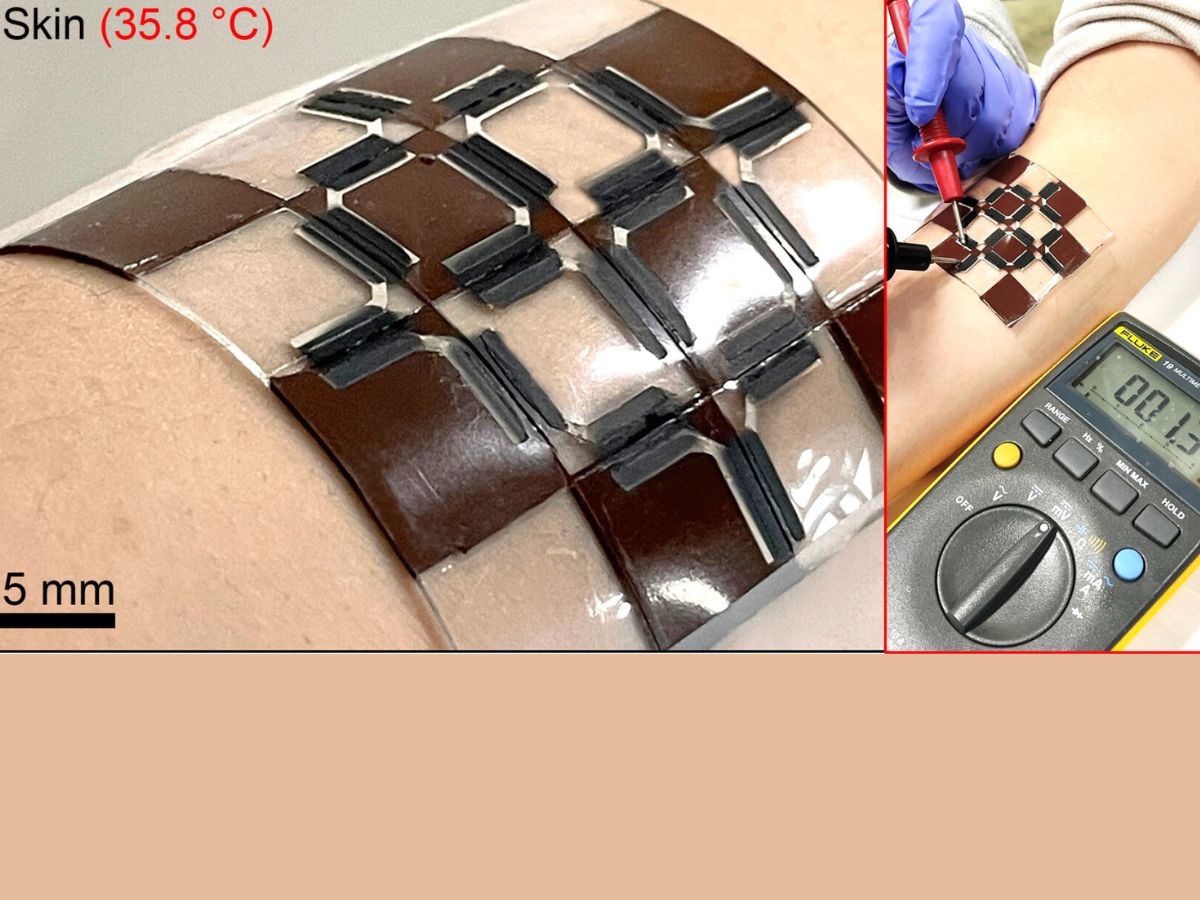
Thermoelectric generators produce power by capturing the temperature difference between a warm surface and a cooler environment. While these devices hold immense promise for continuously powering wearable electronics using human body heat, manufacturing them as thin, comfortable films has posed a significant scientific challenge. Because these films are exceptionally thin, body heat passes vertically straight through them into the surrounding air — much like heat escaping through a single sheet of paper, without distinct hot and cold sections, limiting electricity generation.
Historically, engineers bypassed this issue by folding the materials or building bulky, three-dimensional pillar structures, which unfortunately sacrificed the lightweight, flexible nature of the films. To solve this, a research team from Seoul National University engineered a breakthrough solution that keeps the device completely flat. Detailed in the journal Science Advances, their new "pseudo-transverse thermoelectric generator" fundamentally redirects how thermal energy travels.
Instead of allowing heat to escape straight up and out, the researchers designed a specialized, stretchy silicone base. By embedding heat-conducting copper nanoparticles into only specific sections of this base, they force the body heat to flow sideways along the material. This lateral movement successfully creates adjacent warm and cool zones across the flat surface. It mimics a complex physical effect where heat and electrical currents move at right angles, achieving a usable temperature gradient purely through structural design.
Because the entire device is fabricated using a simple ink-based printing process, it remains highly flexible and scalable. The components can be assembled modularly, much like building blocks, to fit various shapes and sizes. This new platform paves the way for a new generation of self-powered smart wearables that sit comfortably against the skin.
Source(s)
Image source: Juhyung Park et al, All-solution-processed scalable and wearable organic thermoelectrics by structurally mimicking transverse thermoelectric effects, Science Advances (2026
 Add as a preferred source on Google


