




Analysis shows asteroid Ryugu's sample contains complete set of DNA and RNA ingredients
One of the biggest scientific questions is how life began on Earth. It is widely accepted that life started through chemical evolution. Scientists have also proposed that asteroids and comets may have delivered organic molecules such as nucleobases to Earth. This implies that raw materials for genetics can form naturally in space.
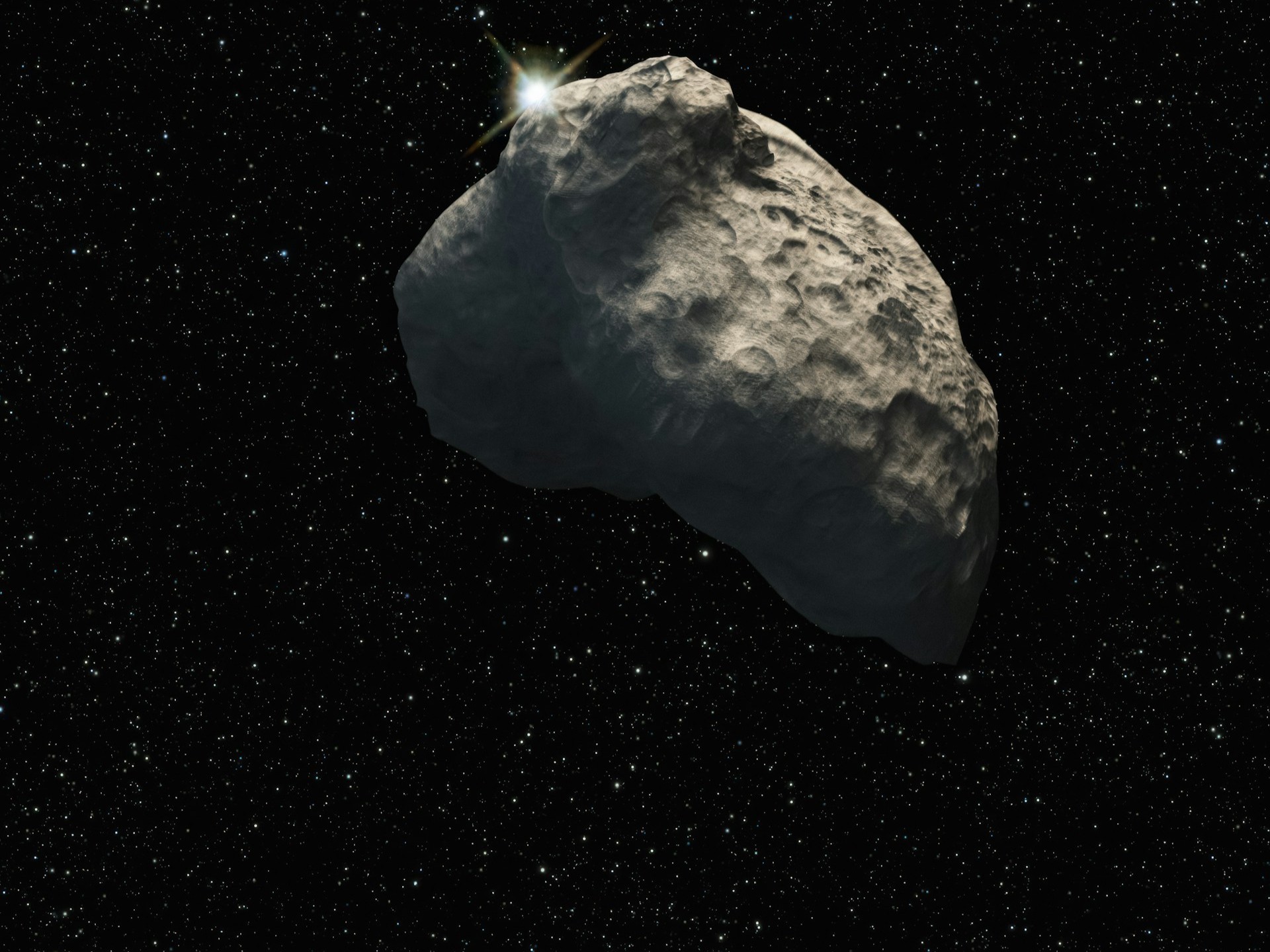
162173 Ryugu is a carbonaceous asteroid, rich in carbon, water-bearing minerals, and organic compounds. It is primitive, shaped like a spinning top, and scientists think it was formed from the debris of a larger asteroid. To investigate this asteroid, Japanese spacecraft Hayabusa2 was launched in 2014 to collect samples from the asteroid and return them to Earth. Analysis showed that samples from the asteroid contained uracil.
A new study went further to find all the nucleobases used in DNA and RNA in the asteroid. Similar findings were observed on the asteroid 101955 Bennu, which suggests that the molecules are not rare. Another intriguing discovery was the presence of ammonia.
This discovery does not mean life began in space. Instead, it means that the ingredients for life can form in space.
Source(s)
 Add as a preferred source on Google


