




Apple M3 Pro 12-Core vs Apple M1 Pro vs Apple M3
Apple M3 Pro 12-Core
► remove from comparison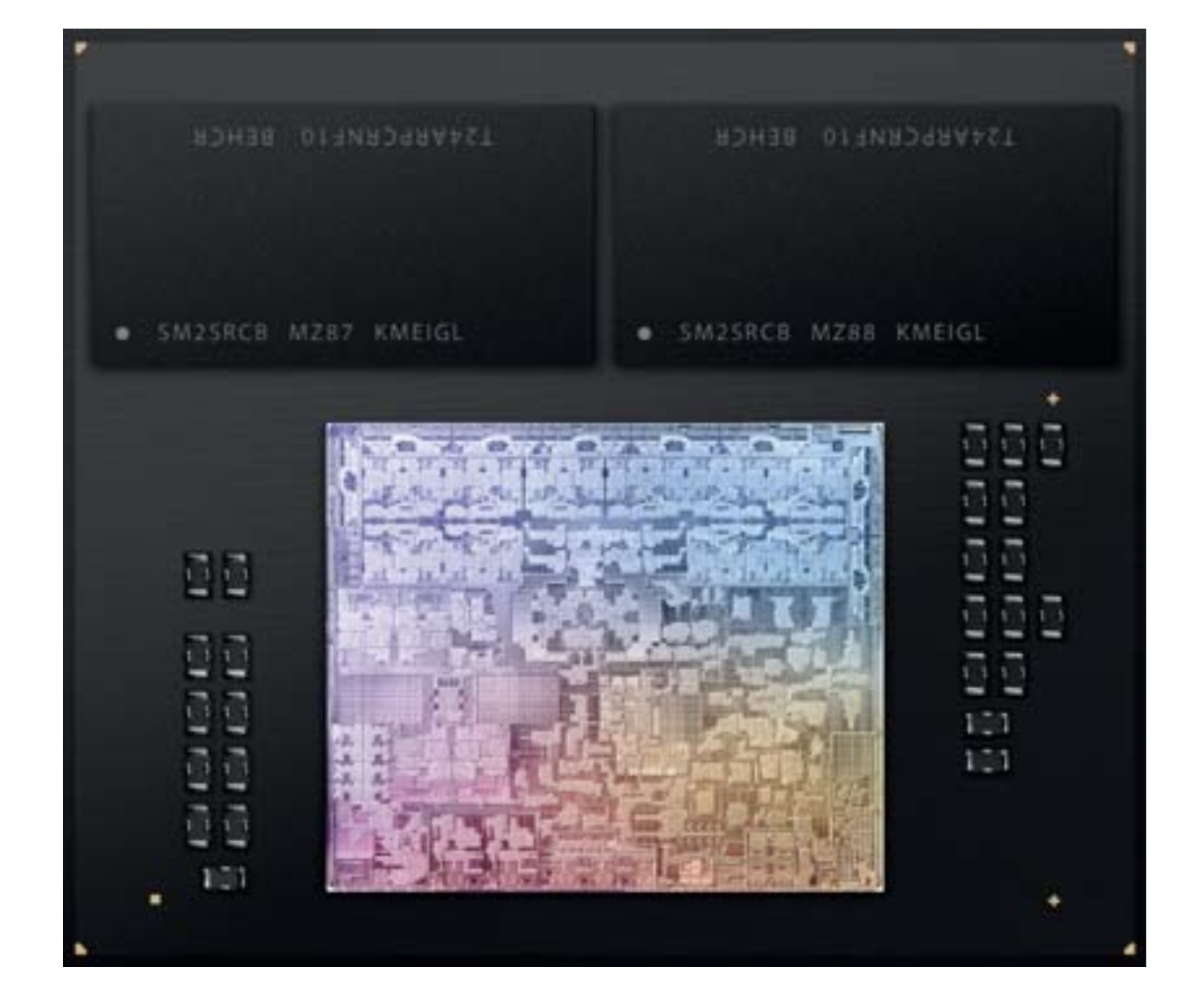
The Apple M3 Pro (12 Core) is a system on a chip (SoC) from Apple for notebooks that was launched in late 2023. It integrates a new 12-core CPU with 6 performance cores with up to 4.06 GHz and 6 efficiency cores with 2.8 GHz. There is also a slimmed-down 11-core variant with a 14-core GPU.
Compared to the M2 Pro the M3 Pro has been slimmed down somewhat and swaps two performance cores for efficiency cores. This is due to the changed core configuration, as 6 cores are now used per cluster (the M2 Pro and M3 still have 4 cores per cluster). Furthermore, the memory bus has been reduced from 256 bits to 192 bits (150 GB/s vs. 200 GB/s). However, thanks to the new architecture and higher clock rates, the new M3 Pro is still slightly faster.
The M3 Pro also integrates a new graphics card with dynamic caching, mesh shading and ray tracing acceleration via hardware. In the top model, all 18 cores of the chip are used and support up to 3 displays simultaneously (internal and 2 external).
GPU and CPU can jointly access the shared memory on the package (unified memory). This is available in 18 or 36 GB variants and offers 150 GB/s maximum bandwidth (192 bit bus).
The integrated 16-core Neural Engine has also been revised and now offers 18 TOPS peak performance (compared to 15.8 TOPS in the M2 but 35 TOPS in the new A17 Pro). The video engine now also supports AV1 decoding in hardware. H.264, HEVC and ProRes (RAW) can still be decoded and encoded.
Unfortunately, the integrated WLAN only continues to support WiFi 6E (no WiFi 7), unlike the small M3 SoC thunderbolt 4 is also supported (max 40 Gbit/s).
The chip is manufactured in the current 3nm process (N3B) at TSMC and contains 37 billion transistors (-7.5% vs. Apple M2 Pro).
Apple M1 Pro
► remove from comparison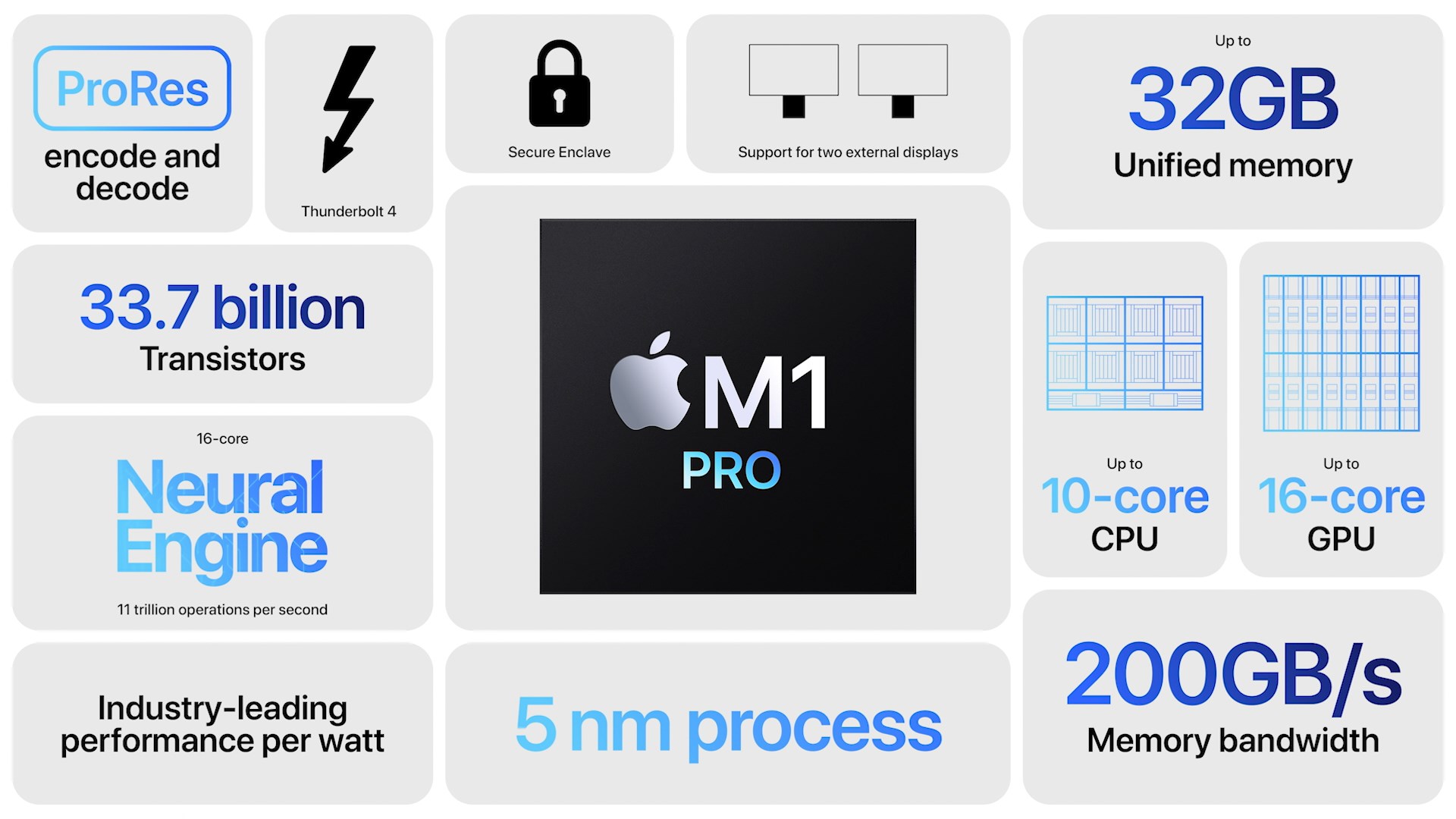
The Apple M1 Pro is a System on a Chip (SoC) from Apple that is found in the late 2021 MacBook Pro 14 and 16-inch models. It offers all 10 cores available in the chip divided in eight performance cores (P-cores with 600 - 3220 MHz) and two power-efficiency cores (E-cores with 600 - 2064 MHz). There is no Turbo Boost for single cores or short burst periods. The cores are similar to the cores in the Apple M1. The entry level model offers only 8 cores.
The big cores (codename Firestorm) offer 192 KB instruction cache, 128 KB data cache, and 24 MB shared L2 cache (up from 12 MB in the M1). The four efficiency cores (codename Icestorm) are a lot smaller and offer only 128 KB instruction cache, 64 KB data cache, and 4 MB shared cache. CPU and GPU can both use the 24 MB SLC (System Level Cache). The efficiency cores (E cluster) clock with 600 - 2064 MHz, the performance cores (P cluster) with 600 - 3228 MHz.
The unified memory (16 or 32 GB LPDDR5-6400) next to the chip is connected by a 256 bit memory controller (200 GB/s bandwidth) and can be used by the GPU and CPU.
The integrated graphics card in the M1 Pro offers all 16 cores.
Furthermore, the SoC integrates a fast 16 core neural engine, a secure enclave (e.g., for encryption), a unified memory architecture, Thunderbolt 4 controller, an ISP, and media de- and encoders (including ProRes).
The M1 Pro is manufactured in 5 nm at TSMC and integrates 33.7 billion transistors. The peak power consumption of the chip was advertised around 30W for CPU intensive tasks. In the Prime95 benchmark the chip uses in our tests (with a MBP16) 33.6W package power and 31W for the CPU part. In idle the SoC only reports 1W package power.
Apple M3
► remove from comparison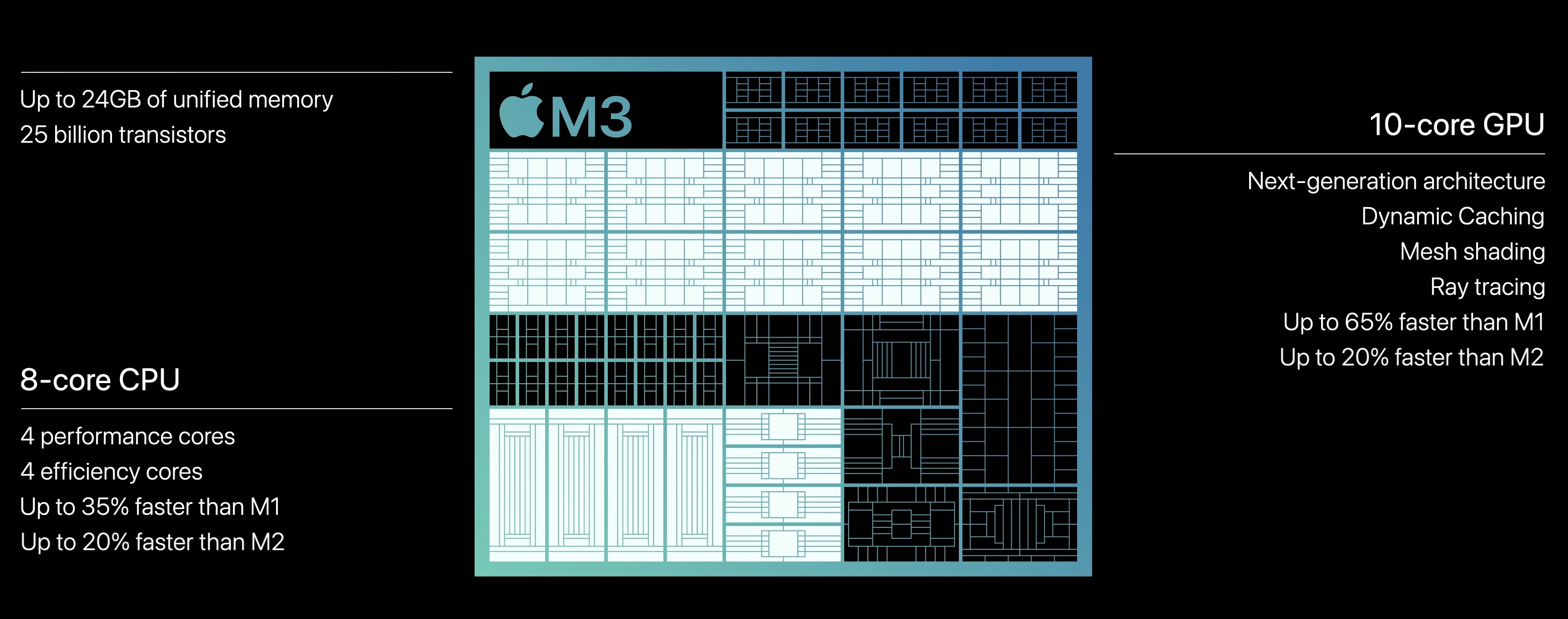
The Apple M3 is a system on a chip (SoC) from Apple for notebooks that was introduced in late 2023. It integrates a new 8-core CPU with 4 performance cores with up to 4.06 GHz and 4 efficiency cores running at up to 2.75 GHz. Apple claims that the CPU is up to 20% faster than in the old Apple M2 (3.5 GHz).
Due to the higher clock speeds and architecture improvements, the processor performance is also significantly better than the M2 in benchmarks (see e.g. Geekbench below) and can keep up with the fastest CPUs in short single-core tests (like the Raptor Lake i9-13950HX).
The M3 also integrates a new graphics adapter with dynamic caching, mesh shading and ray tracing acceleration called Apple M3 10-Core GPU. According to Apple, it is 20% faster than the GPU in the M2. The chip integrates again 10 GPU cores, but the cheaper variant only offers 8 cores (e.g. in the entry iMac). Later in early 2025 Apple also introduced a 9-core variant in the new iPad Air models. Furthermore, the GPU only supports 2 displays (an additional 6K60 display to the internal one).
Both GPU and CPU can access the unified memory on the package together. It is still available in 8, 16 and 24 GB variants and offers the same 100 GB/s maximum bandwidth (unlike the Pro models that feature a reduced memory bandwidth).
The integrated 16-core Neural Engine has also been revised and now offers 18 TOPS peak performance (versus 15.8 TOPS in the M2 but 35 TOPS in the new A17 Pro). The video engine now supports AV1 decoding in hardware. H.264, HEVC and ProRes (RAW) can still be decoded and encoded.
Unfortunately, the integrated wireless network module only supports Wi-Fi 6E (no Wi-Fi 7) and due to the support of only a single external monitor, the chip also has to make do with no Thunderbolt 4 (Thunderbolt 3 / USB 4 support only for up to 40 Gbit/s).
The chip is manufactured on the current 3nm TSMC process (N3B most likely) and contains 25 billion transistors (+25% vs. Apple M2). The 3nm process should also contribute to the excellent efficiency of the chip. Under load, the M3 CPU consumes approximately 20 Watt.
| Model | Apple M3 Pro 12-Core | Apple M1 Pro | Apple M3 | ||||||||||||||||||||||||||||||||||||||||||||||||||||||||
| Series | Apple M3 | Apple M1 | Apple M3 | ||||||||||||||||||||||||||||||||||||||||||||||||||||||||
| Series: M3 |
|
|
| ||||||||||||||||||||||||||||||||||||||||||||||||||||||||
| Clock | 2748 - 4056 MHz | 2064 - 3220 MHz | 2748 - 4056 MHz | ||||||||||||||||||||||||||||||||||||||||||||||||||||||||
| Cores / Threads | 12 / 12 6 x 4.1 GHz Apple M3 P-Core 6 x 2.7 GHz Apple M3 E-Core | 10 / 10 | 8 / 8 4 x 4.1 GHz Apple M3 P-Core 4 x 2.7 GHz Apple M3 E-Core | ||||||||||||||||||||||||||||||||||||||||||||||||||||||||
| TDP | 27 Watt | ||||||||||||||||||||||||||||||||||||||||||||||||||||||||||
| Transistors | 37000 Million | 33700 Million | 25000 Million | ||||||||||||||||||||||||||||||||||||||||||||||||||||||||
| Technology | 3 nm | 5 nm | 3 nm | ||||||||||||||||||||||||||||||||||||||||||||||||||||||||
| Features | ARMv8 Instruction Set | ARMv8 Instruction Set | ARMv8 Instruction Set | ||||||||||||||||||||||||||||||||||||||||||||||||||||||||
| iGPU | Apple M3 Pro 18-Core GPU | Apple M1 Pro 16-Core GPU | Apple M3 10-Core GPU | ||||||||||||||||||||||||||||||||||||||||||||||||||||||||
| NPU / AI | 18 TOPS INT8 | 18 TOPS INT8 | |||||||||||||||||||||||||||||||||||||||||||||||||||||||||
| Architecture | ARM | ARM | ARM | ||||||||||||||||||||||||||||||||||||||||||||||||||||||||
| Announced | |||||||||||||||||||||||||||||||||||||||||||||||||||||||||||
| Manufacturer | www.apple.com | www.apple.com | |||||||||||||||||||||||||||||||||||||||||||||||||||||||||
| L1 Cache | 2.9 MB | ||||||||||||||||||||||||||||||||||||||||||||||||||||||||||
| L2 Cache | 28 MB | 4 MB | |||||||||||||||||||||||||||||||||||||||||||||||||||||||||
| L3 Cache | 24 MB | ||||||||||||||||||||||||||||||||||||||||||||||||||||||||||
| Chip AI | 11 TOPS INT8 |
Benchmarks
Average Benchmarks Apple M3 Pro 12-Core → 100% n=14
Average Benchmarks Apple M1 Pro → 86% n=14
Average Benchmarks Apple M3 → 86% n=14
 - Average benchmark values for this graphics card
* Smaller numbers mean a higher performance
1 This benchmark is not used for the average calculation


 Add as a preferred