




AMD ROCm 7.2 brings AI training and inferencing to all with Ryzen AI 400 support and ComfyUI, Adrenalin integrations
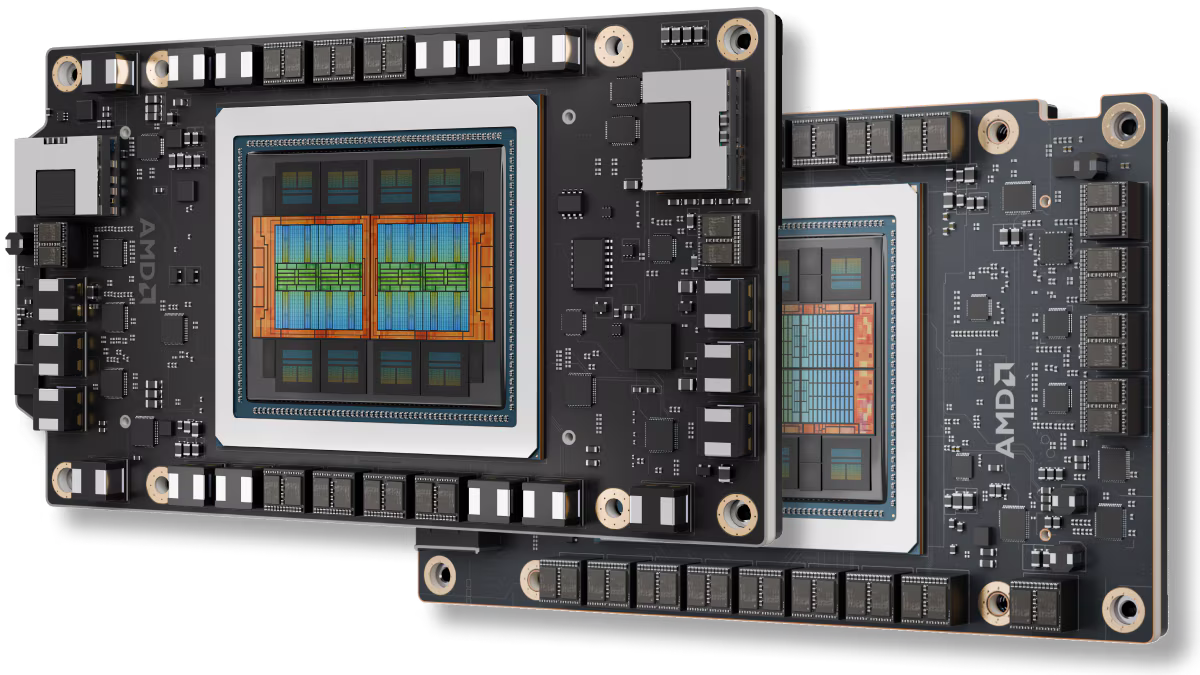
 CES 2026
AMD is announcing a few new updates to its ROCm software stack at CES 2026. For those not aware, ROCm, which originally stood for Radeon Open Compute Platform but is now no longer an acronym, is the AMD open source equivalent of Nvidia’s proprietary CUDA and has often been the staple of HPC and datacenter GPUs like the Instinct accelerators and Radeon Pro.
ROCm is essentially a set of runtimes, compilers, tools, and libraries that enable a host of functions ranging from GPU kernel-level programming to high-level end-user applications. ROCm finds application in AI model training and inference, HPC workloads like scientific simulations and data analysis, and other general purpose GPU (GPGPU) tasks using AMD hardware that don't involve graphics.
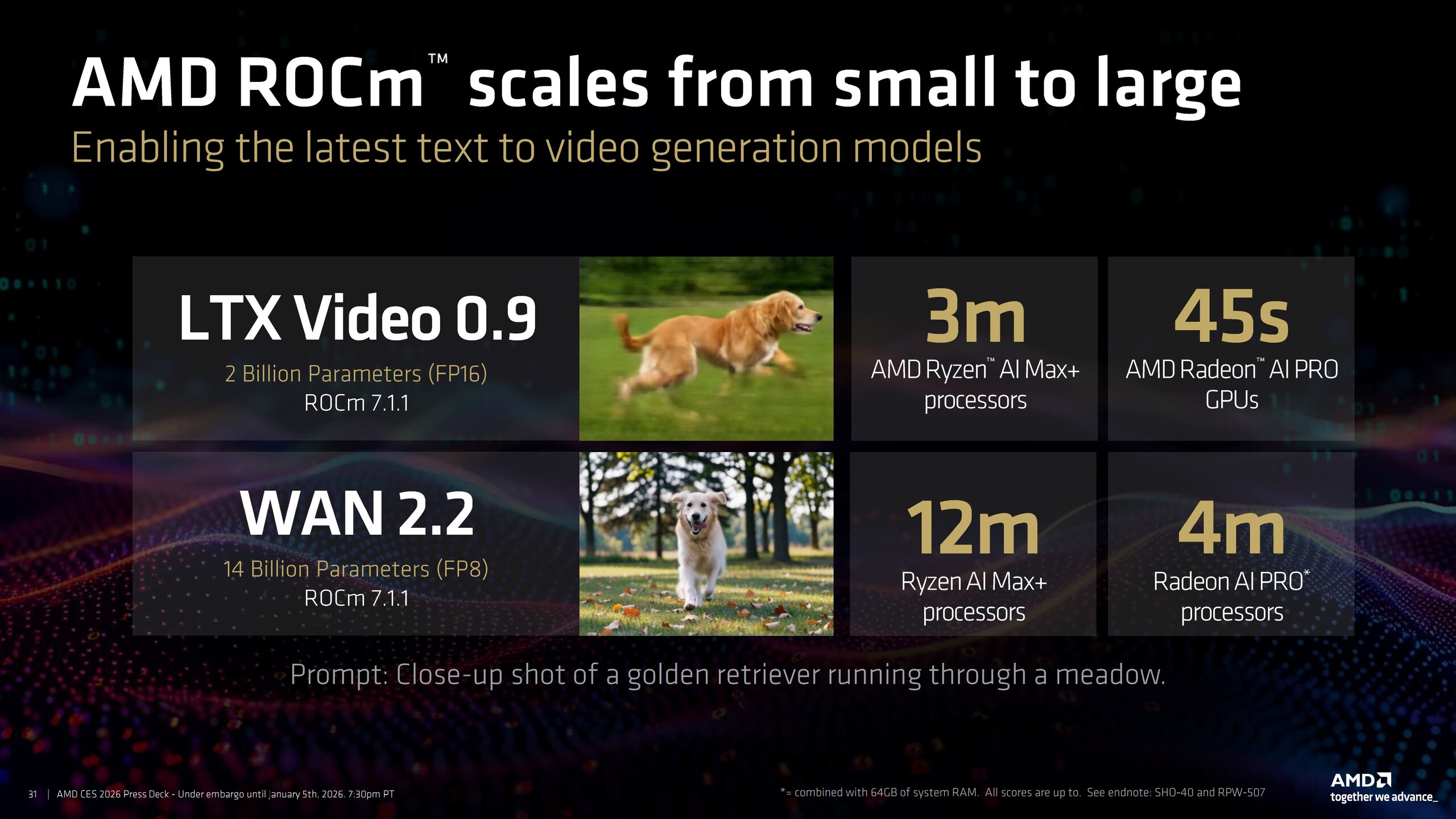
AMD said that ROCm 7.1 demonstrated impressive performance in text-to-video generation models such as LTX Video 0.9 and Wan 2.2, completing the prompt's requirement in as little as 3 minutes on the Ryzen AI Max+ APUs and in 45 seconds on Radeon AI Pro GPUs.
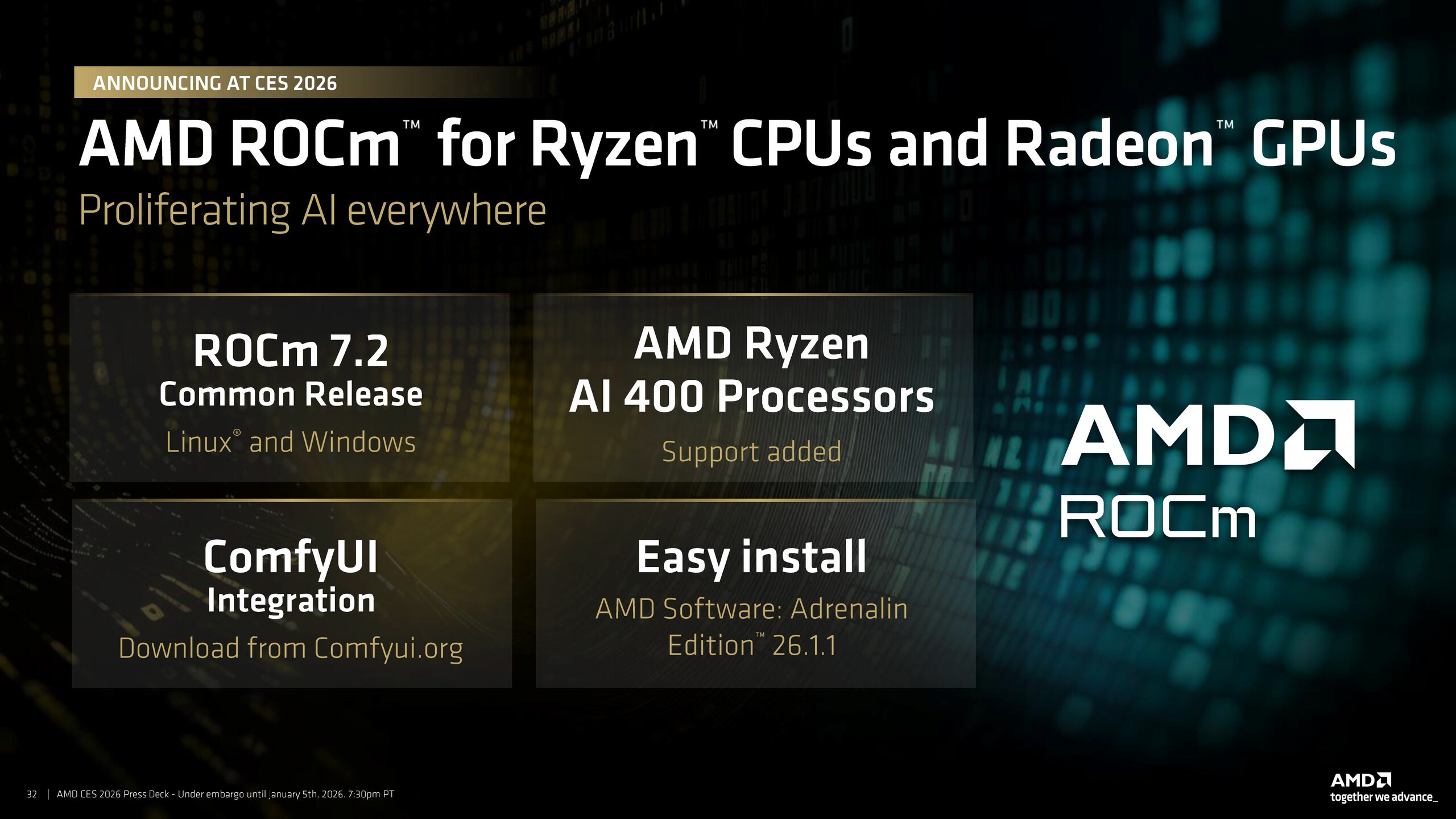
Now, with version 7.2, ROCm adds support for the latest Ryzen AI 400 APUs across Windows and Linux. A ComfyUI build with integrated ROCm 7.2 will be available from ComfyUI.org, and the software stack can also be installed alongside Adrenalin 26.1.1.
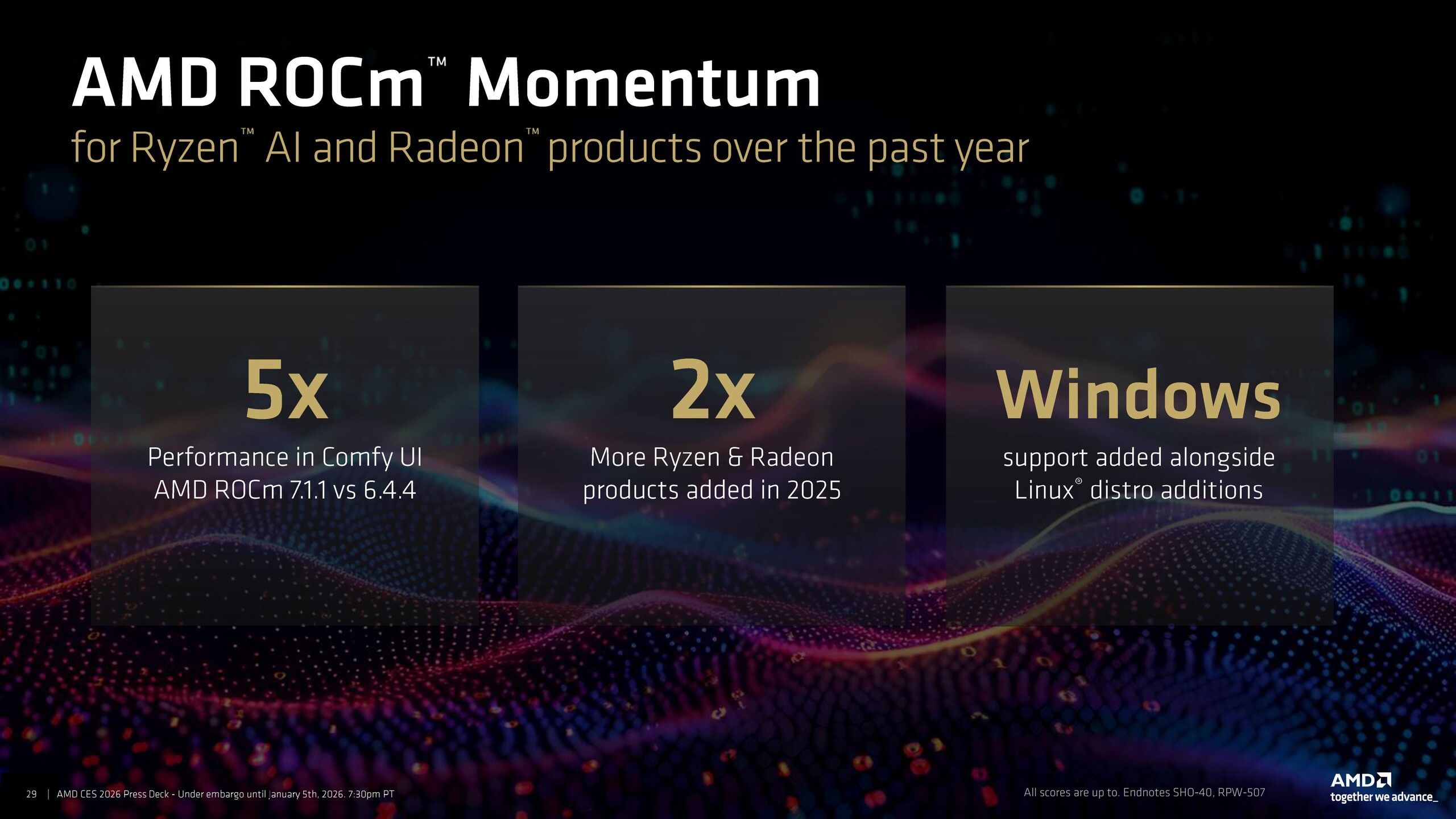
ROCm originally added support for Windows with version 7.1, which also brought about a significant 5x performance uplift from version 6.4.4. On Ryzen Max APUs, AMD claims 2.6x faster Stable Diffusion XL (SDXL) and 5.2x faster Flux S performance with v7 compared to the previous version.
ROCm 7 is also able to leverage the power of Radeon AI Pro R9700 GPUs with a 5.4x faster performance in the Wan 14b video generation model.


Source(s)
AMD CES 2026 Keynote
 Add as a preferred source on Google


