


A star swallowed another star in the Andromeda galaxy
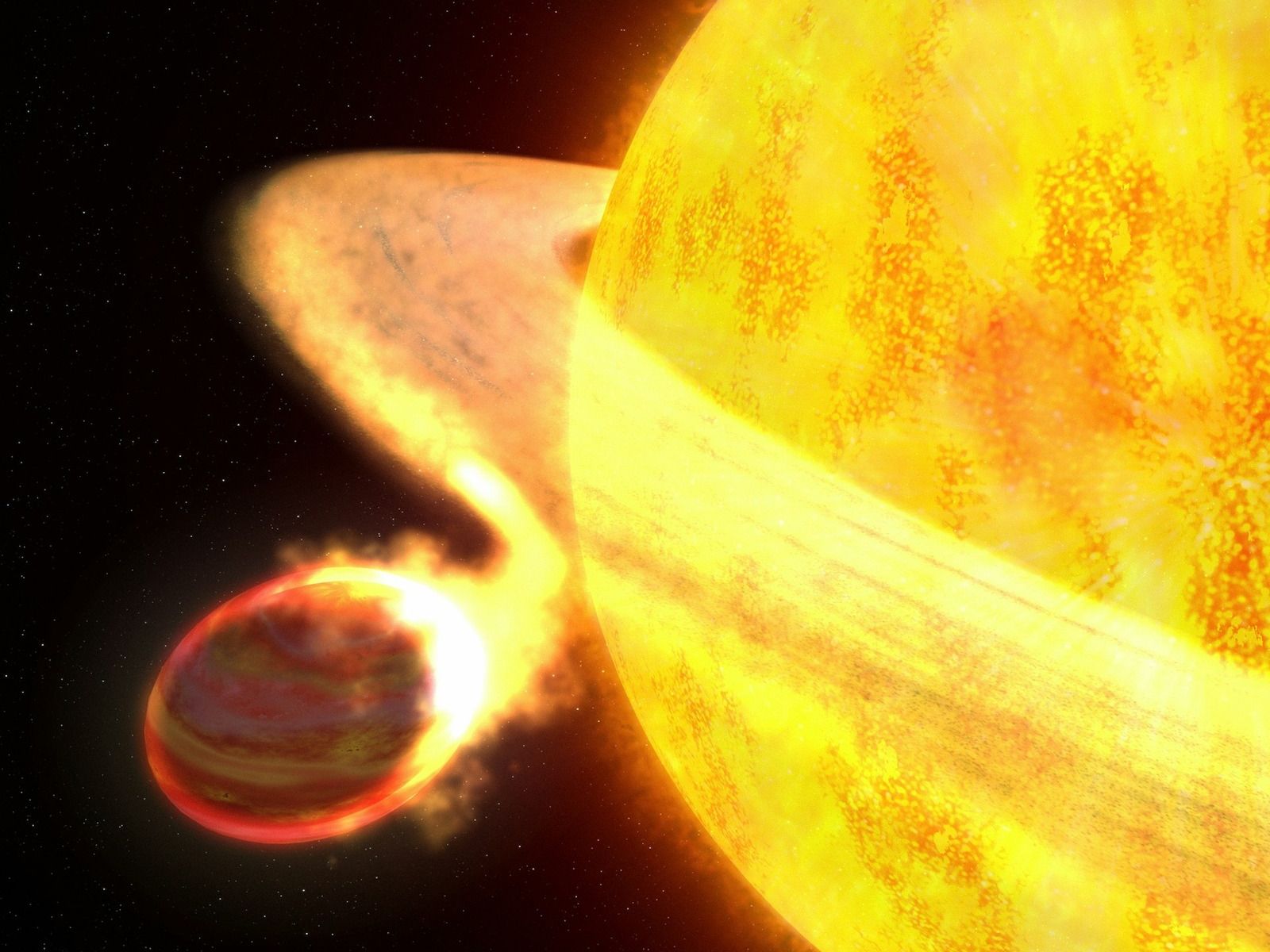
Located about 2.53 million light-years from the Milky Way, the Andromeda Galaxy holds many surprises for astronomers. But for several years, a strange phenomenon has caught their attention: the merger of two different stars.
This discovery was published on November 18, 2026, in the journal Nature. According to the researchers, one of the stars in the system was swallowed up by another, triggering a transient event known as AT 2025abao.
Previously, this system consisted of an evolved giant star with seven times the mass and 18,000 times the luminosity of the Sun. Another star, with a mass of about 70% of the Sun's mass, orbited around it.
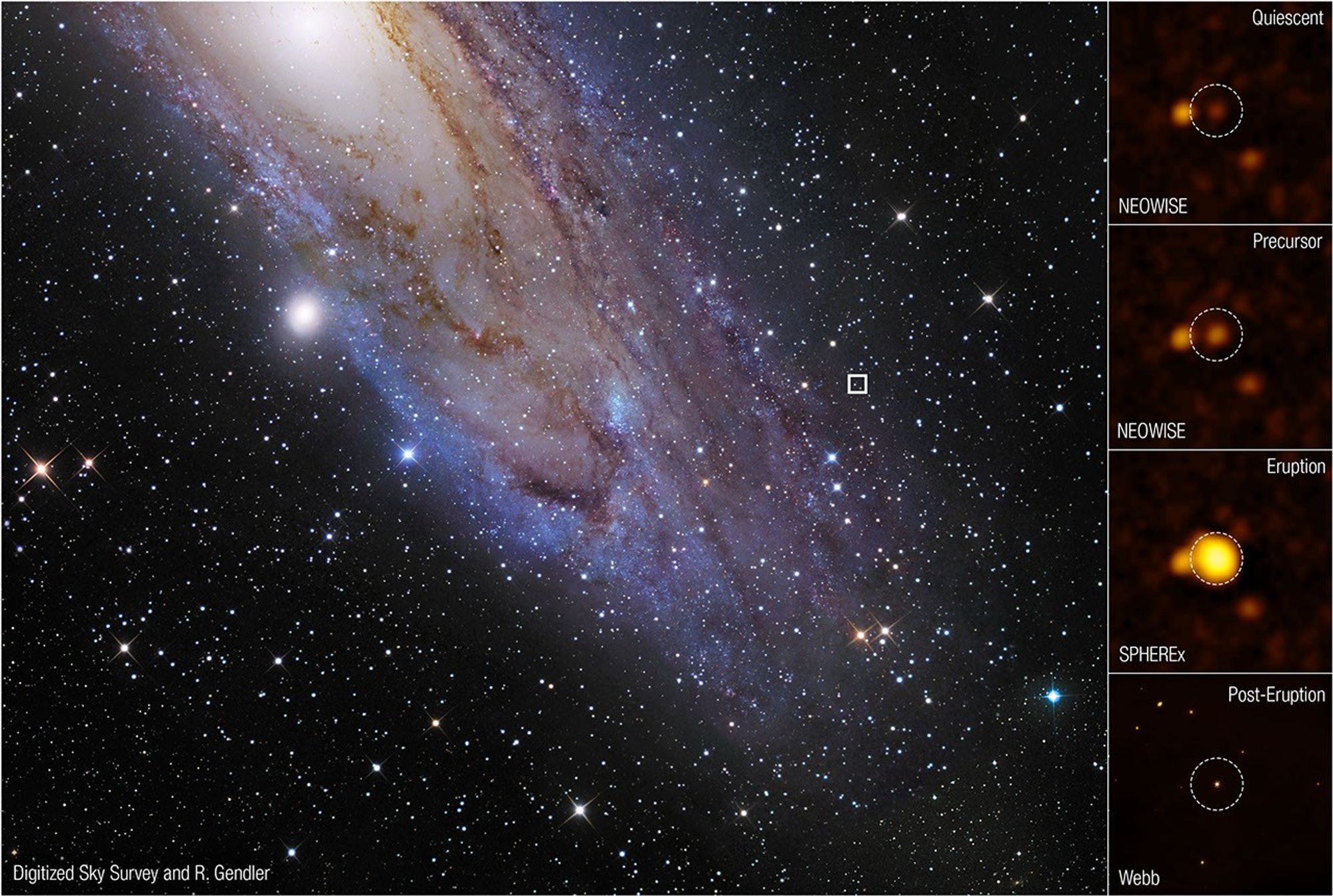
Thanks to several telescopes and instruments, such as the Wide-field Infrared Transient Explorer (Winter), the Neowise space telescope, and the James Webb Space Telescope, astronomers have been able to study the various stages of this merger. Thus, as the process unfolded, the smaller star gradually became trapped within the giant’s outer layers.
But as it orbited within the giant star's atmosphere, it lost orbital energy, which sealed its fate. Indeed, it continued to move closer to the core of the larger star. In total, astronomers believe that only seven orbits were needed for this merger to take place.
Source(s)
Image source: NASA, ESA, CSA, STScI, Viraj Karambelkar (Columbia), Kishalay De (Columbia); Image Processing: Alyssa Pagan (STScI); Acknowledgment: DSS, Robert Gendler / NASA Hubble Space Telescope - Unsplash
 Add as a preferred source on Google


