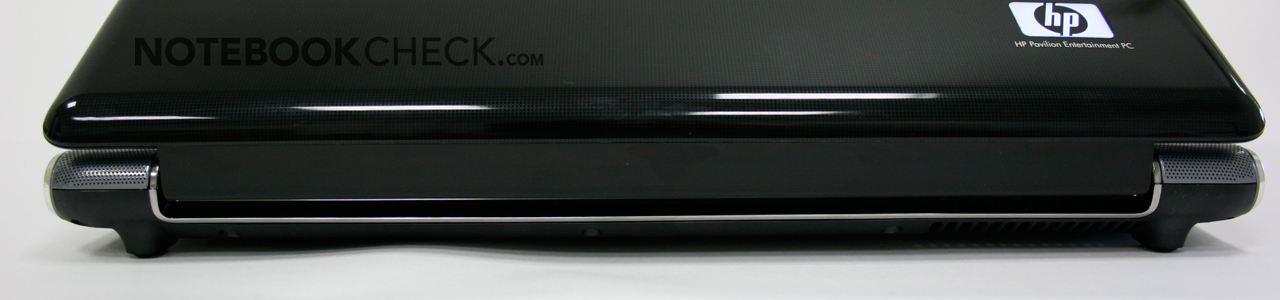
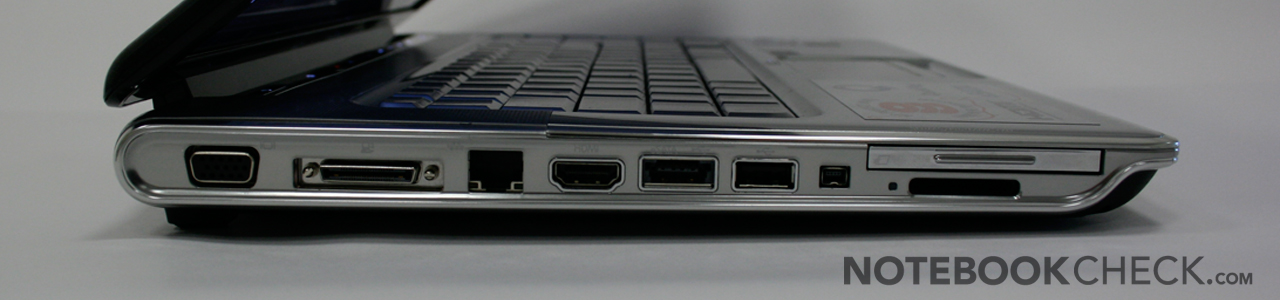
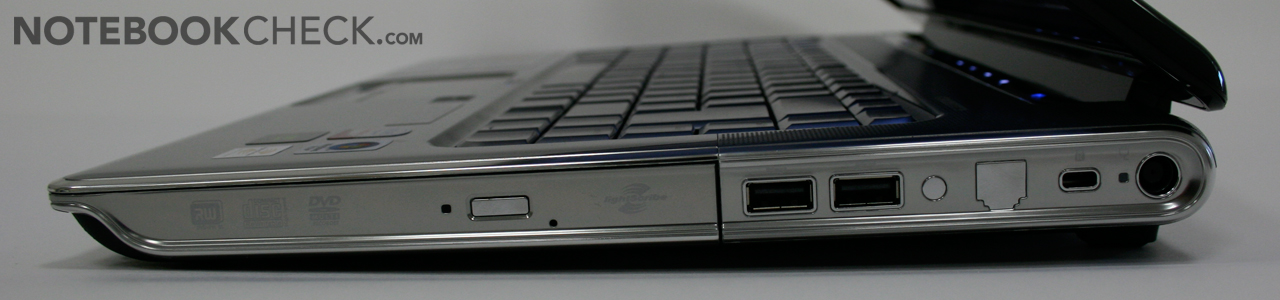
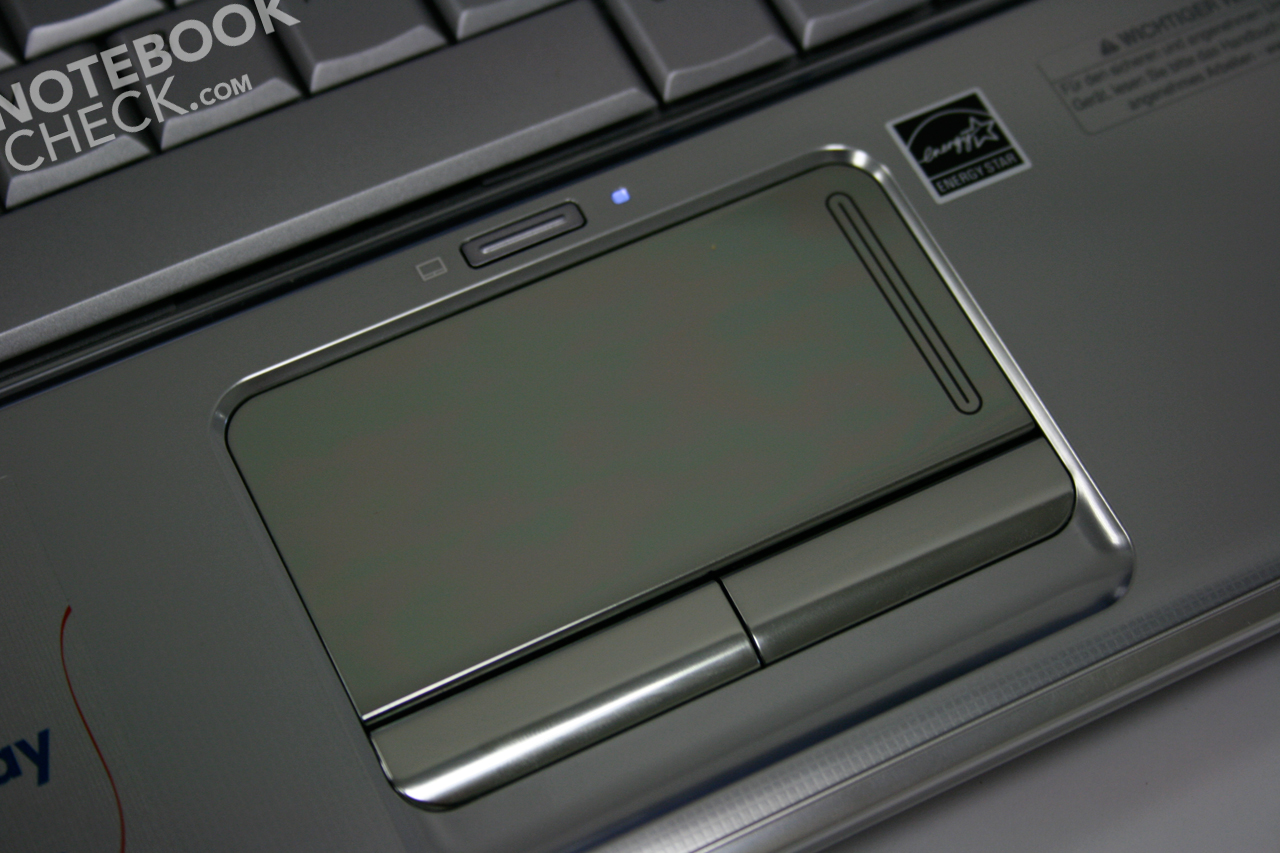
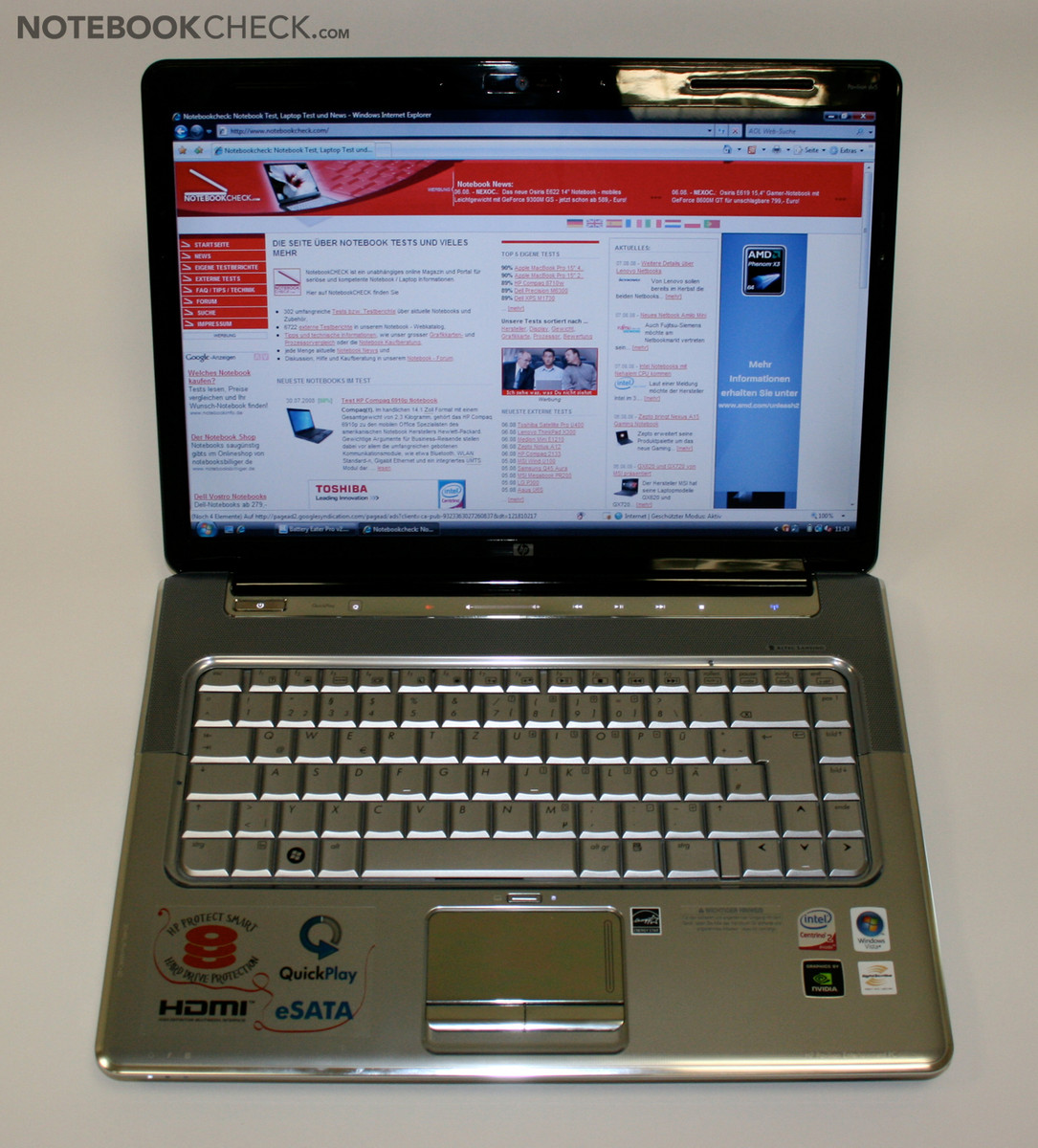
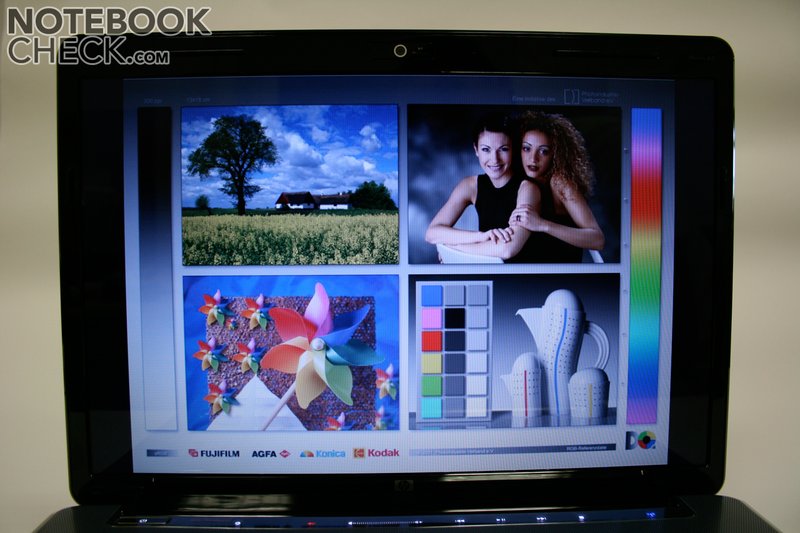
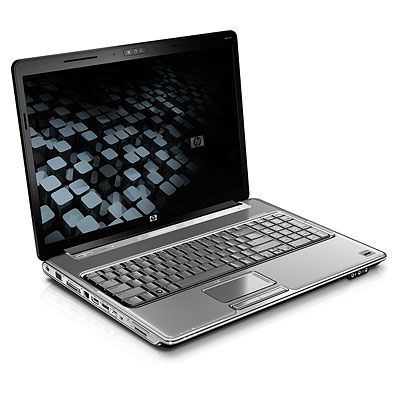
HP Pavilion dv5-1032eg
Specifications
Price comparison
Average of 3 scores (from 3 reviews)
Reviews for the HP Pavilion dv5-1032eg
Reasonable General-Purpose Computer. The HP Pavilion dv5-1032eg manages to combine low price and good equipment. An nVIDIA GeForce 9600M GT combined with a Core 2 Duo processor by Intel, even promises playable performance. The following article covers whether this multimedia notebook is able to meet the expectations arisen by the notebook specifications.
Source: Notebookjournal
 DE→EN Archive.org version
Single Review, online available, Long, Date: 10/08/2008
Rating: Total score: 80% price: 90% performance: 60% features: 70% display: 30% mobility: 50% workmanship: 90% ergonomy: 70% emissions: 80%
Source: e-media - 17/08
Single Review, , Short, Date: 08/15/2008
Rating: performance: 60% workmanship: 80% emissions: 50%
Source: Notebookcheck
DE→EN Archive.org versionSingle Review, online available, Long, Date: 08/09/2008
Rating: Total score: 82% price: 80% performance: 87% display: 70% mobility: 77% workmanship: 87% ergonomy: 76% emissions: 81%
Comment
NVIDIA GeForce 9600M GT: Successor of the 8600M GT and because of the smaller 65nm production process the card is higher clocked (and therefore faster) with the same current consumption.Furthermore, it features an improved video processor (VP3) and HybridPower to save current (in conjunction with the 9100M G).
Non demanding games should be playable with these graphics cards.
» Further information can be found in our Comparison of Mobile Graphics Cards and the corresponding Benchmark List.
Intel Core 2 Duo: This is the Core Duo and Core Solo successor with a longer pipeline and 5-20% more speed without more power consumption. As an addition to the Core Duo design there exists a fourth decoder, an amplified SSE-unit and an additional arithmetical logical unit (ALU).
The Core 2 Duo for laptops is identical to the desktop Core 2 Duo processors but the notebook-processors work with lower voltages (0.95 to 1188 Volt) and a lower Frontside bus clock (1066 vs 667 MHz). The performance of equally clocked notebooks is 20-25% lower than Desktop PCs because of the lower Frontside bus clock and the slower hard disks.
P7350:
Entry level Core 2 Duo processor with 3 MB Level 2 Cache and due to the 25 Watt TDP also suited for 13" laptops.
» Further information can be found in our Comparison of Mobile Processsors.


 Add as a preferred