




Asus UL50VF
Specifications
Price comparison
Average of 6 scores (from 10 reviews)
Reviews for the Asus UL50VF
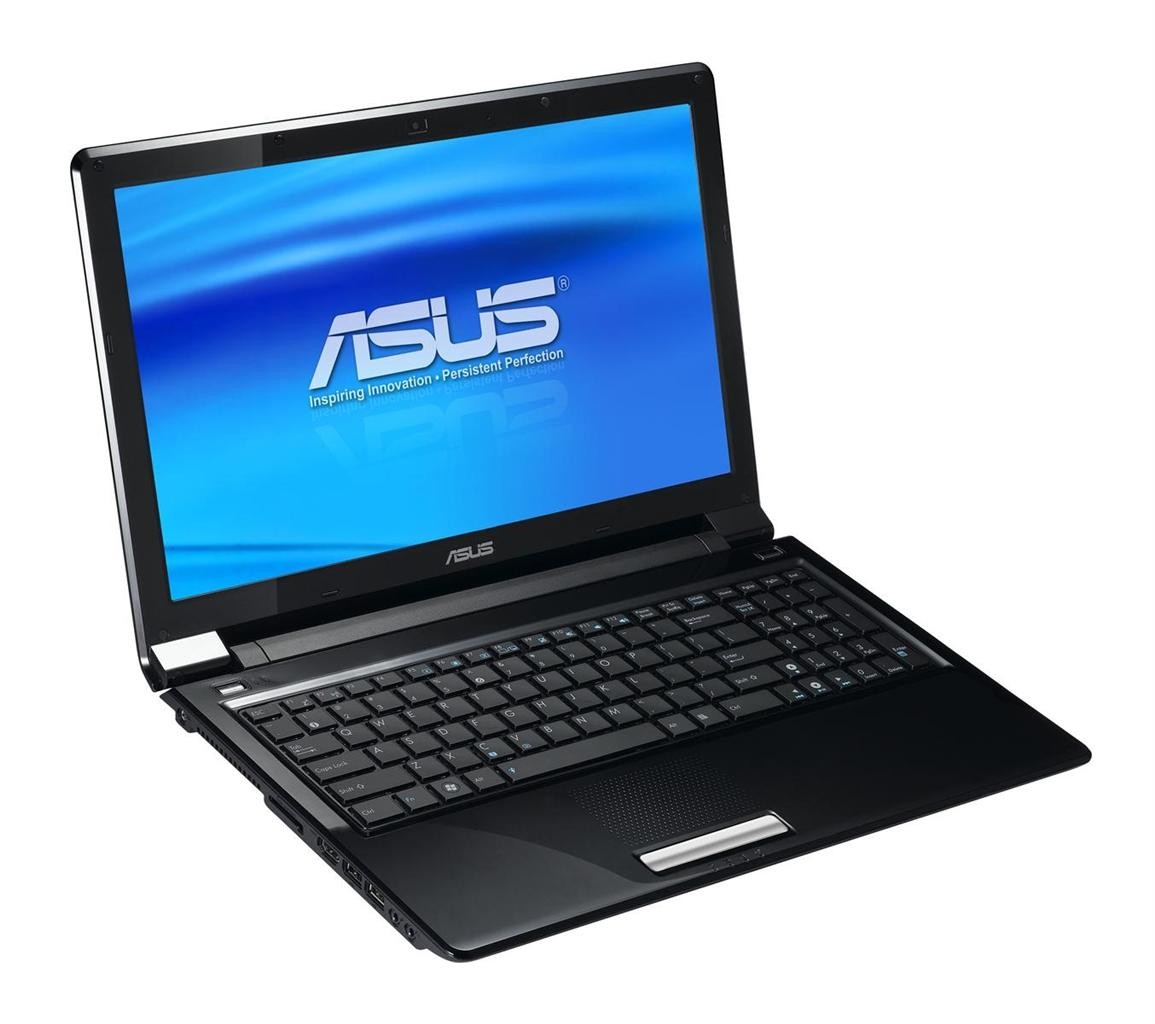
Optim{us/al?} The UL50VF is a 15.6" version of the slim Asus CULV laptops, and is equipped with NVidias "Optimus" which is able to switch graphics cards in the notebooks as needed. The notebook has a long list of great features: long battery life, low system noice, and is very light for a 15 inch laptop. You will find out more about how the UL50VF performed in our tests and what it has to offer in the following in-depth review.
Source: Inside HW
 Archive.org version
The specific category that this notebook falls into makes it more difficult to compare it to other models on the market, especially as far as pricing goes. You’re likely to find faster notebooks than this one with a similar price tag, but the advantages offered by this model are currently unique. NVIDIA certainly deserves all possible commendations for its Optimus technology, making it the main contributor to the award bestowed upon this notebook.
Single Review, online available, Medium, Date: 04/13/2010
Rating: price: 70% performance: 70%
Source: Legit Reviews
Archive.org versionFor the seamless use of discrete NVIDIA graphics, the integration of NVIDIA Optimus in the ASUS UL50Vf creates a perfect match for a notebook and users by only using discrete graphics performance when they need it.
Single Review, online available, Medium, Date: 03/30/2010
performance: 80%
Source: Computer Shopper
Archive.org versionIf you value graphics performance (for photo editing, games, and like) as much as you do battery life, Nvidia, in concert with Asus, finally has a solution. The $849 UL50Vf offers solid graphics performance for midrange gamers. The standout part of this laptop, though: Nvidia's Optimus technology, which automatically balances graphics speed and battery life.
Single Review, online available, Long, Date: 03/01/2010
Rating: Total score: 83%
Source: Notebookreview.com
Archive.org versionThe ASUS UL50Vf is an unremarkable 15-inch notebook with some remarkable technology inside. Nine hours of battery life and the best switchable graphics solution currently on the market make this notebook a very compelling laptop. Unfortunately, the flexible plastic construction, low-resolution display, and a price tag above $800 make this a less than exciting purchase.
Single Review, online available, Long, Date: 02/09/2010
Rating: price: 40% performance: 80% display: 40% mobility: 90% workmanship: 40%
Source: PC Mag
Archive.org versionIntel's consumer ultra-low voltage (CULV) processors were initially used primarily in 13-inch systems like the Asus UL30A-A1 and Toshiba Satellite T135-S1305WH, but they are finding their way into larger laptops now. CULV processors require less cooling, so manufacturers are able to pare down the cooling methods that make other, more powerful laptops bulky and heavy. The Asus UL50VF-A1 is a gorgeous 15-inch laptop runs on a slower-than-average processor, but it can harness the strengths of two graphics cards and a new Nvidia technology.
Single Review, online available, Length Unknown, Date: 02/09/2010
Rating: Total score: 80%
Source: Laptop Mag
Archive.org versionThanks to Nvidia’s smart Optimus technology, the $849 UL50VF-A1 offers both long battery life and graphics muscle. Best of all, this notebook is smart enough switch between integrated and discrete graphics mode based on what you’re doing. We wish ASUS wrapped this technology in a less glossy chassis, but overall the UL50VF-A1 is a strong 15.6-inch notebook.
Single Review, online available, Long, Date: 02/08/2010
Rating: Total score: 70%
Foreign Reviews
Source: Notebookcheck
 DE→EN Archive.org version
Single Review, online available, Long, Date: 02/25/2010
Rating: Total score: 83%
Source: Jambitz
 ES→EN Archive.org version
Single Review, online available, Short, Date: 02/25/2010
Rating: Total score: 80%
Source: Mobilport
 HU→EN Archive.org version
Single Review, online available, Medium, Date: 10/29/2009
Rating: mobility: 80% ergonomy: 50%
Source: Notebook.cz
 CZ→EN Archive.org version
Single Review, online available, Medium, Date: 02/18/2010
Rating: mobility: 80% workmanship: 80% emissions: 80%
Comment
NVIDIA GeForce G210M: The GeForce G210M is the successor of the G110M and also possesses 16 shader cores. Because of the 40nm process, the chip is clocked much higher but is still staying in the same power envelope.
Only some 3D games with very low demands are playable with these cards.
» Further information can be found in our Comparison of Mobile Graphics Cards and the corresponding Benchmark List.
Intel Core 2 Duo: This is the Core Duo and Core Solo successor with a longer pipeline and 5-20% more speed without more power consumption. As an addition to the Core Duo design there exists a fourth decoder, an amplified SSE-unit and an additional arithmetical logical unit (ALU).
The Core 2 Duo for laptops is identical to the desktop Core 2 Duo processors but the notebook-processors work with lower voltages (0.95 to 1188 Volt) and a lower Frontside bus clock (1066 vs 667 MHz). The performance of equally clocked notebooks is 20-25% lower than Desktop PCs because of the lower Frontside bus clock and the slower hard disks.
SU7300: Slow clocked dual core processor with a low TDP of 10 Watt.» Further information can be found in our Comparison of Mobile Processsors.
 Add as a preferred source on Google


