




Wireless truck charging at 65 mph tested on interstate concrete just as DHL praises Tesla Semi range

An electric Cummins truck equipped with induction capabilities has successfully validated a wireless charging test at highway speeds done through concrete.
This type of pavement takes the heaviest transportation traffic loads in the US, so Purdue University researchers designed the system's transmitter coils to work while enveloped by concrete.
The Cummins semi travelled over an adapted highway section in West Lafayette at 65 miles per hour, or a pretty regular heavy-duty truck cruising speed on an interstate. The team from Purdue’s Elmore Family School of Electrical and Computer Engineering managed to develop a pioneer inductive charging system that can top up a truck with 190 kilowatts of power transmitted to its coils while cruising at highway speeds.
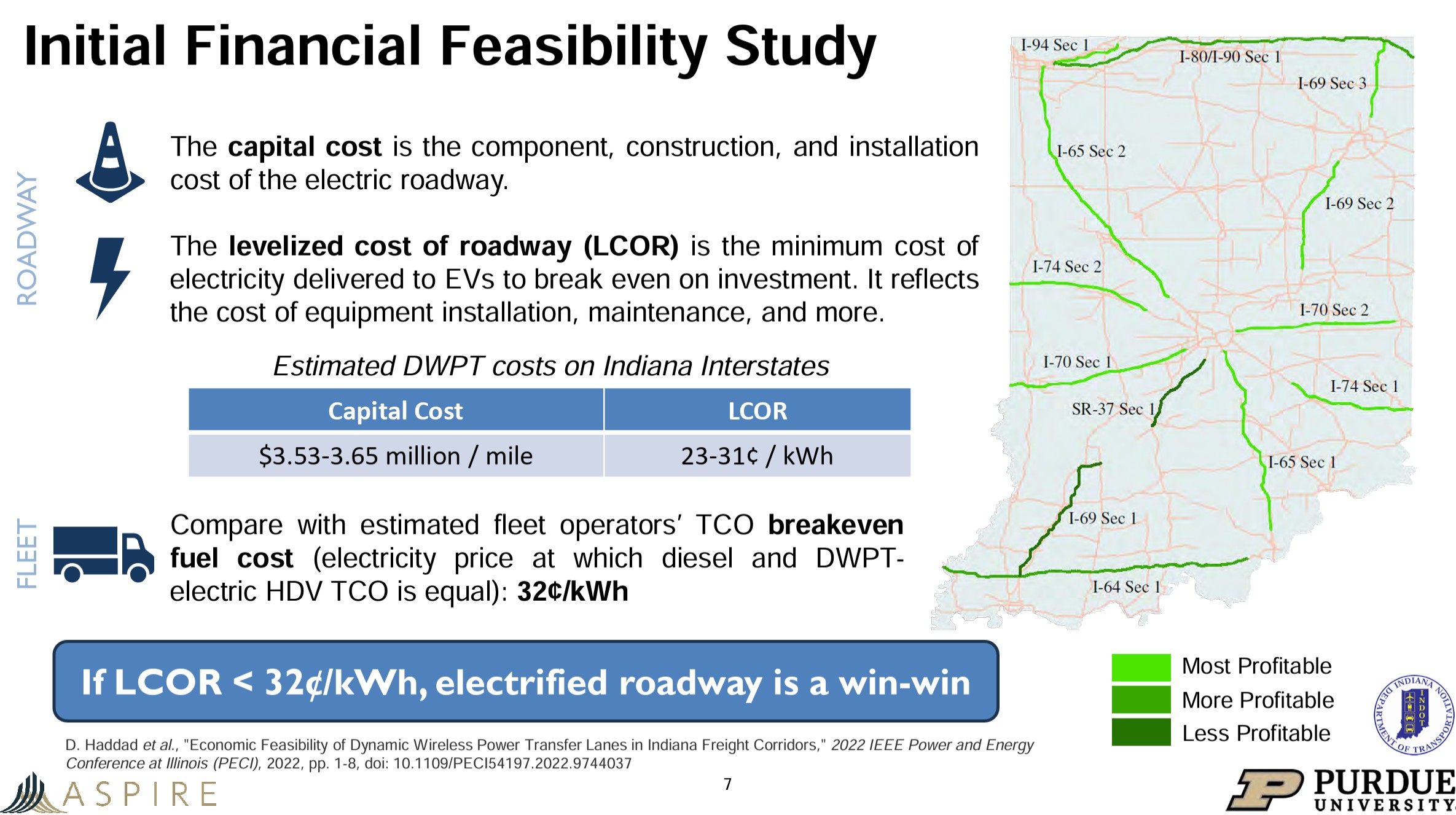
The successful test showed that charging electric trucks like the Tesla Semi while in motion is a feasible endeavor that would allow automakers to reduce the size of the battery pack, the most expensive part of an electric vehicle. According to the Indiana Department of Transportation, the breakeven diesel fuel and electricity price cost for the dynamically charging road is 32¢/kWh, while the operating costs of their test system are 23-31¢/ kWh, so they call the inductive highway a win-win scenario, at least in Indiana.
Currently, heavy-duty electric trucks like the Tesla Semi have to be equipped with giant 900 kWh packs so that they can cover a 500-mile range between sessions at massive 1.2 MW V4 Superchargers. DHL, for instance, recently took delivery of its Tesla Semi test vehicles and praised them for being capable of running a full load for the advertised range over challenging terrain.
While the Tesla Semi achieved an impressive efficiency of 1.72 kWh per mile in real-world usage tests, charging the truck continuously while driving would reduce not only range anxiety but manufacturing costs, too. DHL said that it charged the Tesla Semi once a week, though, as it only had to cover a 100-mile stretch per day.
Get the Tesla Universal Wall Connector with 24' Cable on Amazon

 Add as a preferred source on Google


