




Whoop’s patent points to needle-free blood sugar tracking in a wearable
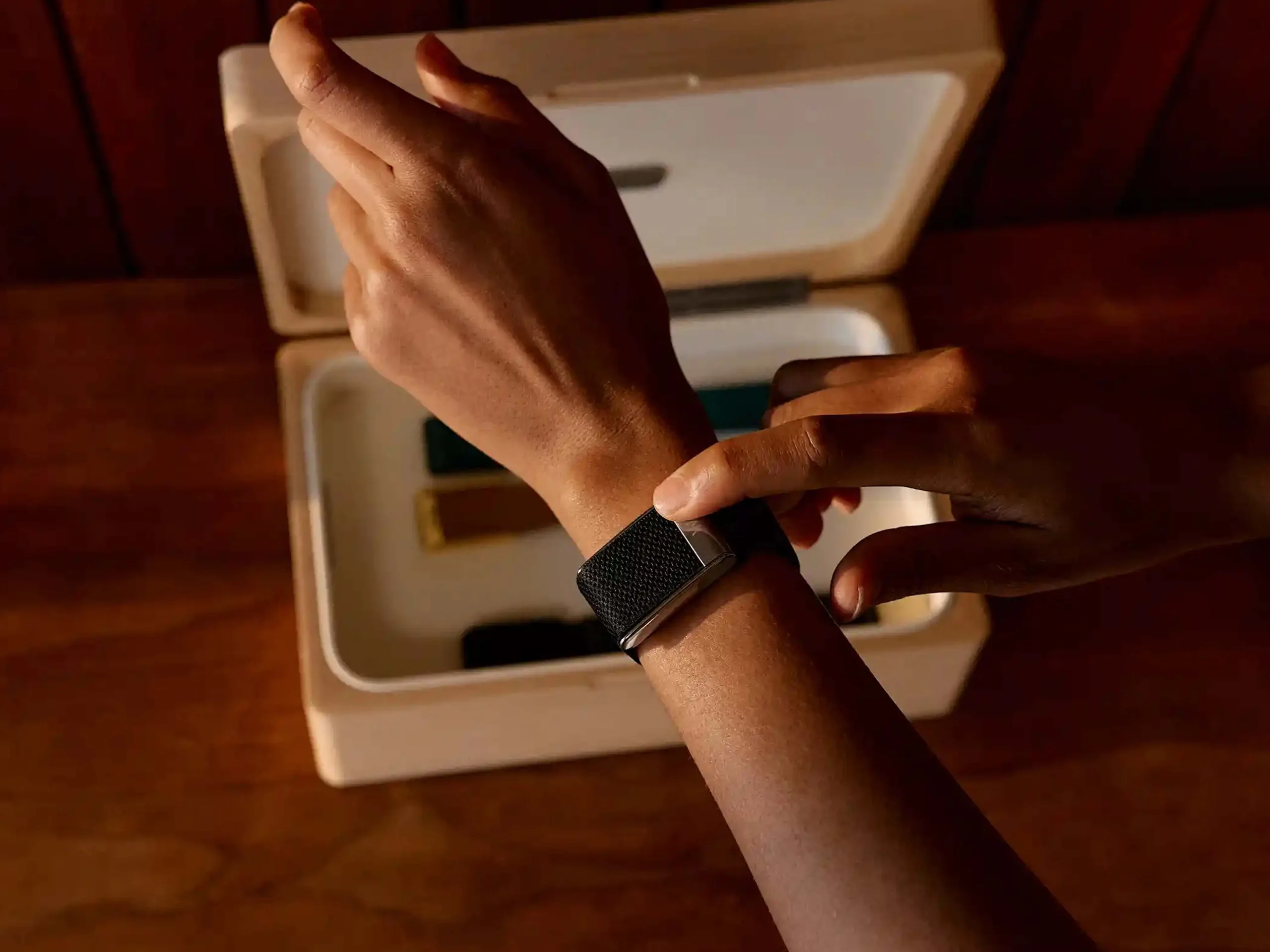
We have reported here several times on efforts by various manufacturers to develop non-invasive blood glucose monitoring, and have also described the technical limitations in detail. A recently published patent shows that Whoop is also working on such a technology. Patent US 2026/0198807 A1 describes a technique for measuring glucose concentration using optical sensors. For readers familiar with the measurement principle behind pulse oximetry, the basic concept should sound familiar.
In essence, electromagnetic radiation is emitted at a wavelength that is specifically absorbed by a substance — in this case, glucose. Whoop also describes a second optical path that is intended to be less affected by glucose and is used as a reference. In principle, a second optical path could help compensate for disturbances caused, for example, by a wearable device slipping out of position. The patent also goes into the technical implementation in more detail, including the use of quantum dots to tune a specific wavelength.
In the background article, we already pointed out the technical challenges: dissolved glucose apparently absorbs virtually no light in the visible spectrum, so a sugar solution remains clear and colorless. The patent specifies a wavelength of around 2,100 nm for glucose measurement and 1,900 nm for the reference channel. Those wavelengths still have to be generated and analyzed in a very small wearable device. At least parts of such an optical setup do exist in a compact form factor, though not necessarily in a wearable-sized version, especially since power consumption becomes a factor in a smartwatch or tracker. According to reports, Apple has also faced significant difficulties in this area.
So it remains questionable whether Whoop can actually build such a compact system. We cannot reliably assess whether Whoop’s patent would withstand a post grant review or an inter partes review — and thus a challenge to the patent. Many elements of the patent have already been discussed in research or correspond to prior art. The question of inventive step could therefore become highly relevant.
Source(s)
U.S. Patent 2026/0198807 A1 (accessible via the search), via Gadgets & Wearables, Image source: Whoop
 Add as a preferred source on Google


