US firm develops floating, zero-emissions vessel that can provide power, water and AI compute
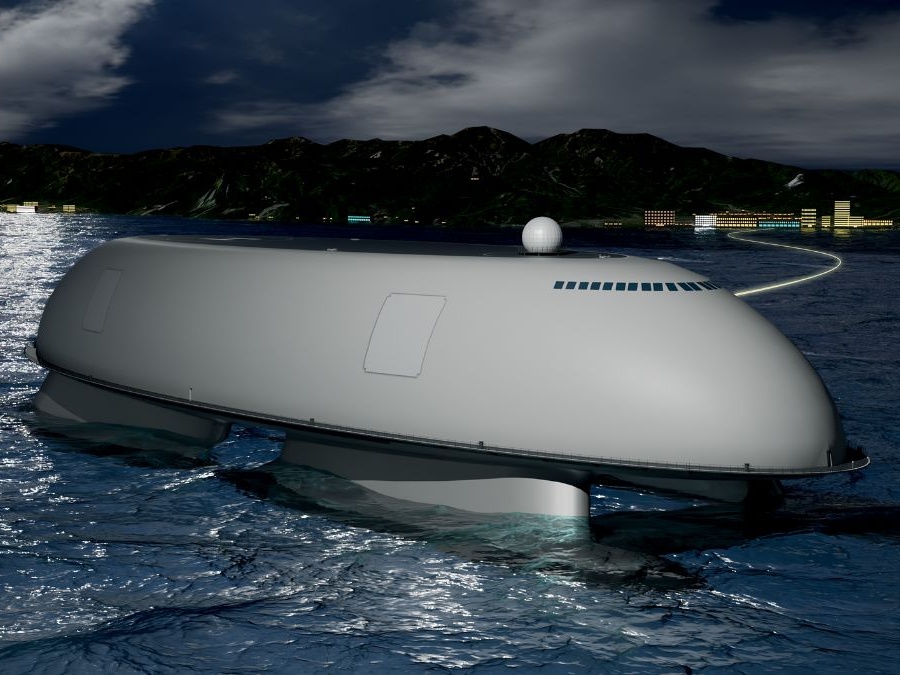
US firm Optimal Transit has unveiled a multi-purpose vessel that can reportedly deliver electricity, fresh water and computing power to coastal communities without touching land or requiring fuel. Built on a small waterplane area twin hull (SWATH) design with a flexible mooring system, the Blue Economy VITAL 100 MW Kraaken — a second configuration of its Kraaken platform unveiled in July — is said to provide enough clean power for roughly 32,000 homes and produce nearly 8 million gallons of vacuum-flash desalinated water daily for about 150,000 people while generating 60 MW for AI compute workloads.
Central to this is the vessel's proprietary Digital Ocean Thermal (DOT) system, which combines ocean heat with computing waste heat to generate continuous electricity, while cold seawater helps manage temperatures. Power, water and data all reach shore via a quick-disconnect umbilical system, allowing the vessel to unplug and relocate within hours in cases of severe weather. This mobility also positions the Kraaken as a disaster-response tool that could restore services in storm-damaged coastal areas within days. Multiple units can even be clustered into an offshore "Sovereign Power Park," collectively powering an entire metropolitan area
Optimal Transit estimates that replicating the vessel's capabilities on land would cost between $750 million and $1.33 billion and take six to ten years due to permitting and zoning issues. A 100 MW Kraaken, on the other hand, reportedly costs less than $500 million to build, excluding computing hardware, while projected annual operating expenses are $10 million to $20 million. This could make the technology especially attractive in regions such as sub-Saharan Africa, the Pacific Islands and parts of Asia, where diesel generation often costs far more per kilowatt-hour than the Kraaken's offshore alternative
Optimal Transit is planning multiple configurations, ranging from 10 MW and 20 MW platforms for smaller workloads to 50 MW and 100 MW versions aimed at hyperscale computing. The larger vessels would measure roughly 90 meters, while the smaller variants would be around 76 meters long. The company is currently developing engineering designs and aims to pursue larger-scale production once additional financing is secured.
Source(s)
 Add as a preferred source on Google