




Tesla Model Y getting more advanced AI5 chip
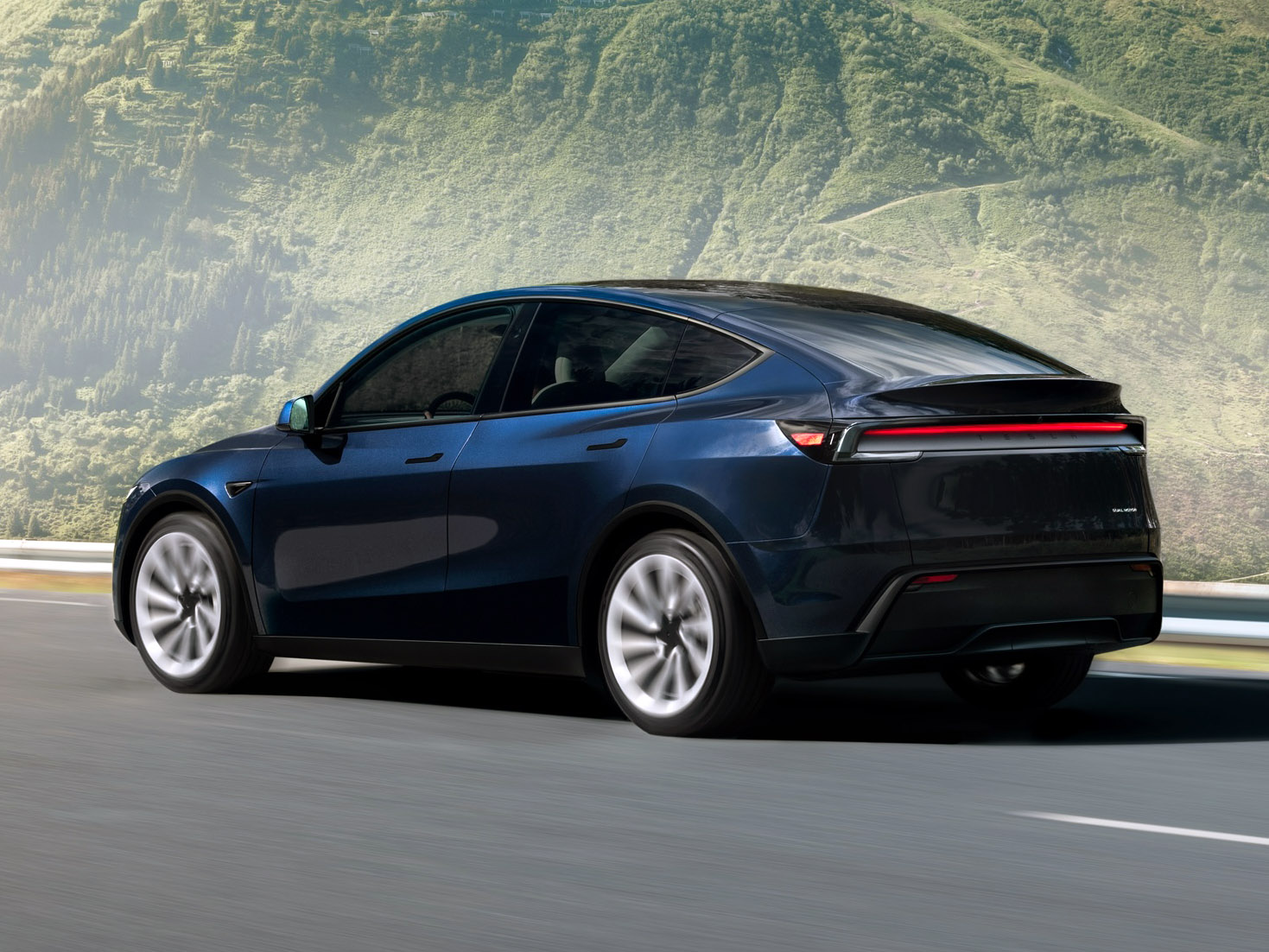
Tesla may soon start to outfit the new batches of its popular vehicles like the Model Y or the Model 3 with its latest AI5 Full Self-Driving computer generation that runs inference many times faster than the current AI4 crop that is in the 2026 Juniper facelift.
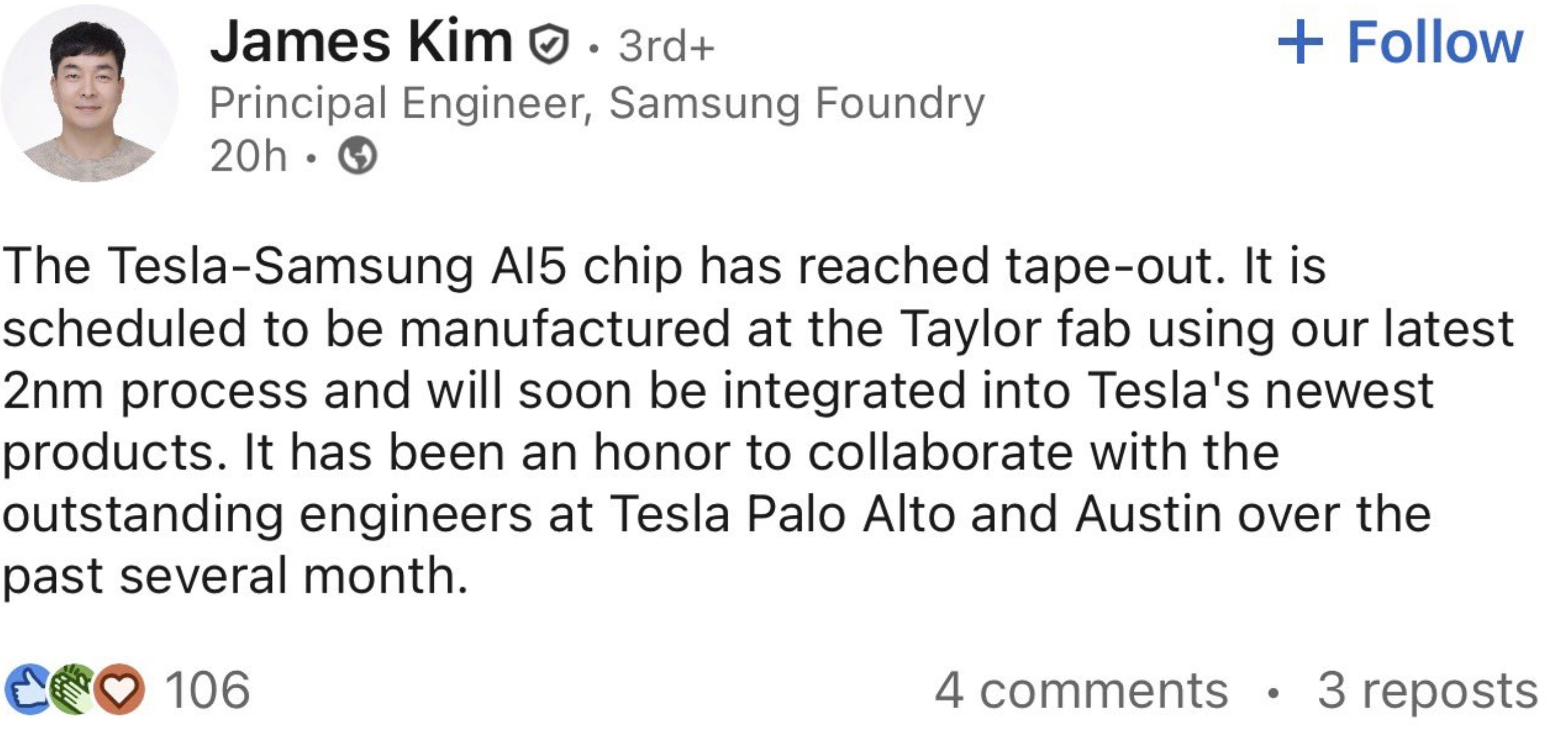
According to a foundry engineer, Samsung has finished taping out the production version of the AI5 chip and is ready to churn it out on its cutting-edge 2 nm node for "Tesla's newest vehicles." This could very well mean the Cybercab robotaxis, as newcomers to Tesla's portfolio, despite the fact that they are still being road-tested without human drivers with the AI4 FSD chip on board.
Model Y AI5 chip
Given Tesla's propensity to introduce new technologies on a rolling basis, however, it won't wait for the next Model Y or Model 3 facelift to start putting AI5 computers in those vehicles, too. While the Cybercab would benefit most from all the advanced inference that the AI5 chip will bring, the current fleet of Tesla robotaxis consists entirely of Model Y vehicles.
That is why the Model Y could get the 2 nm AI5 silicon ahead of any other Tesla vehicle, as the Cybercab will have a harder time getting a robotaxi permit given its driverless concept that eschews brake and acceleration pedals, or even a steering wheel.
The current AI4 chip in the 2026 Model Y is fabricated on a 5 nm process, so the claim that AI5 has been taped out on Samsung's 2 nm node when it was expected to come with the 3 nm production method raises some eyebrows.
The AI6 processor was the one rumored to use a 2 nm Samsung production process first, but it is not entering Tesla vehicles or robots before 2028. Moreover, Samsung may not be ready with its Taylor fab this year as previously planned, so its engineer who broke the news that Tesla vehicles will soon start coming out of the factory with AI5 FSD computers may have meant only a limited batch of chips will be available.
Elon Musk previously confirmed that Samsung will have samples for Tesla and even "a small number of units" ready in 2026, but actual volume production will only start next year when talking about the AI5 chip specs.
Those include 5x the useful computing power of the current AI4 processor with a ninefold increase in memory capacity. For specific Full Self-Driving (FSD) and neural network workloads, AI5 will be up to 40x faster than AI5, with a power draw for standard tasks averaging between 150 W and 250 W per chip.
In any case, the engineer's post has since been taken down, so Samsung and Tesla might not want to reveal which vehicle will be getting the AI5 FSD goods first just yet.
Get the Tesla Universal Wall Connector with 24' Cable on Amazon
 Add as a preferred source on Google


