




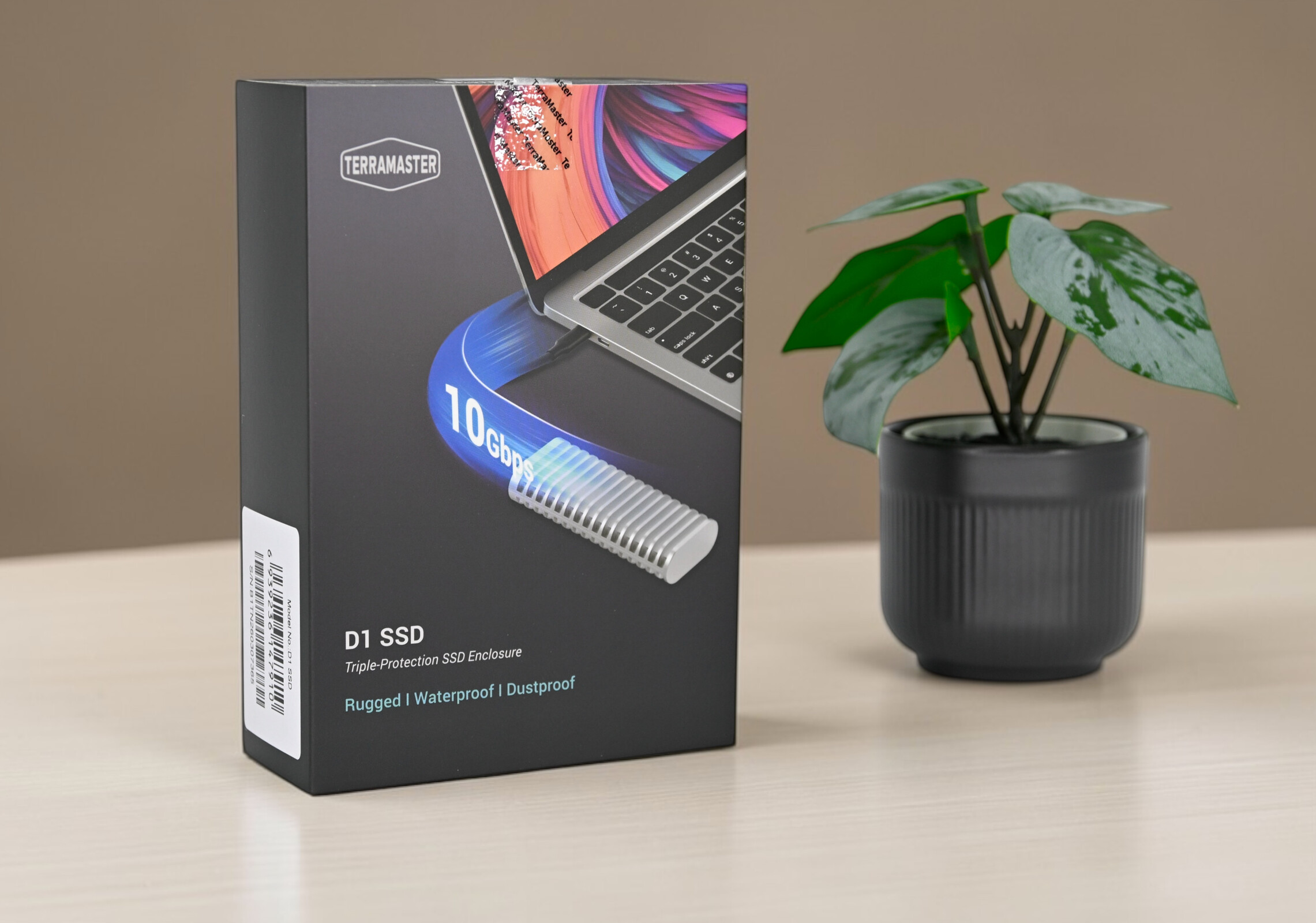
TerraMaster D1 SSD Review: Rugged NVMe enclosure with IP67 protection and stable performance
Sebastian Bade, 👁 Sebastian Bade, ✓ Ninh Duy (translated by DeepL / Ninh Duy) Published 🇩🇪 🇳🇱 ...
Verdict: Rugged NVMe enclosure with a clear interface limitation
In testing, the TerraMaster D1 SSD proves to be a well-designed, high-quality NVMe enclosure that stands out above all for its rugged construction, IP67 protection, and silent cooling. Paired with a fast SSD, it delivers consistent and reliable transfer rates in everyday use, without thermal issues or performance drops. Although the USB 3.2 Gen 2 interface limits maximum speed, performance remains more than sufficient for typical applications. The D1 SSD is a particularly solid option for mobile users who value durability, protection, and ease of use.
Pros
Cons
Price and availability
The TerraMaster D1 SSD is a compact, rugged external enclosure for fast NVMe SSDs. High data rates, a durable aluminum enclosure, and straightforward operation make it a good fit for mobile work with large files. It also offers a competitive price and silent cooling that helps maintain consistent performance.
In addition to the D1, TerraMaster also offers the D1 Plus and D1 Pro in its lineup of passively cooled SSD enclosures. The Pro version in particular stands out with transfer rates of up to 80 Gbit/s, putting it in Thunderbolt 5 territory.
Specifications
| Connection | USB 3.2 Gen 2 (10 Gbit/s) |
| Data transfer rates | up to 1,020 MB/s |
| Dimensions | 113.6 x 45 x 21 mm |
| Weight | 146 g without protective cover |
| Warranty | 2 years |
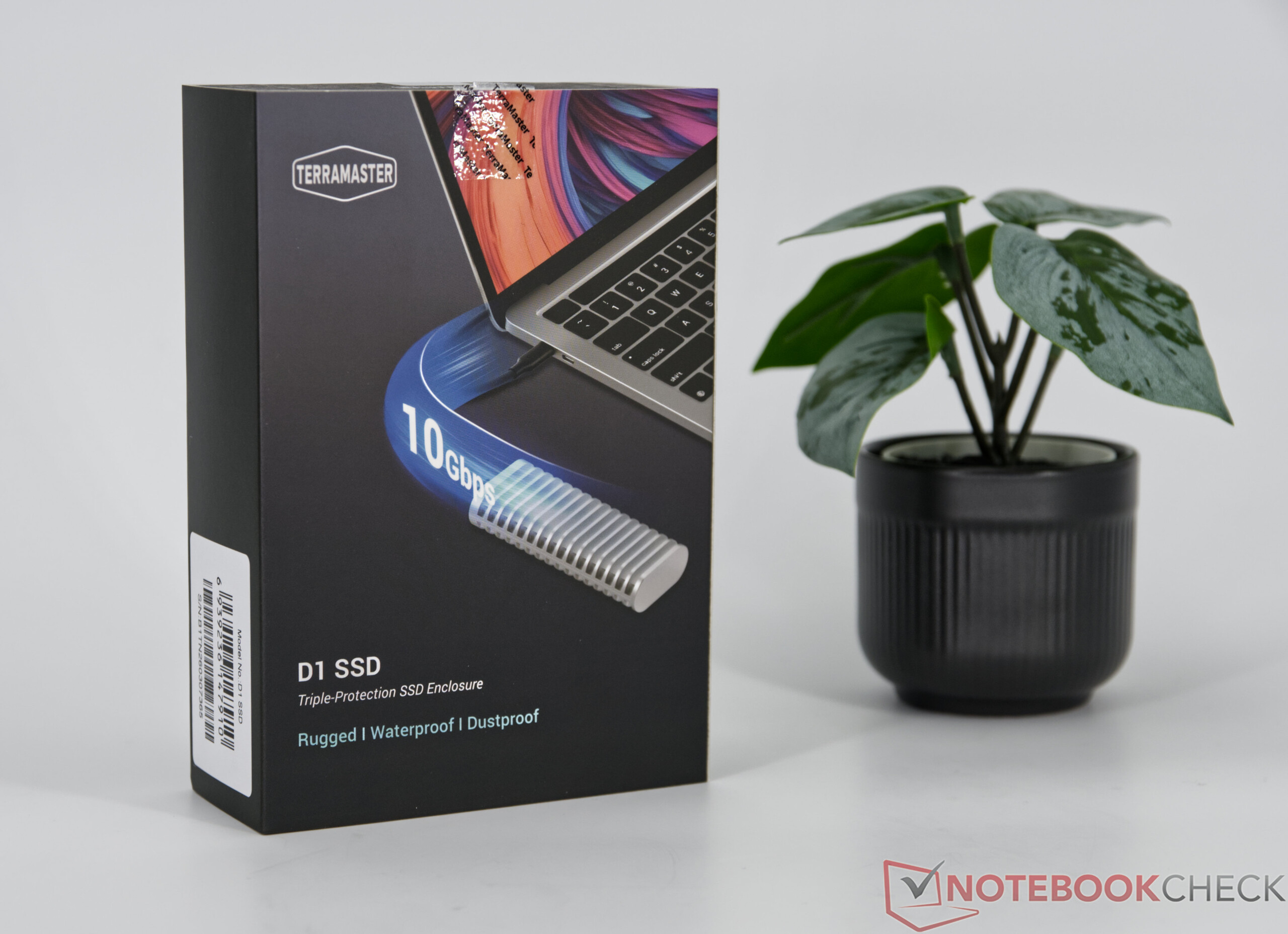
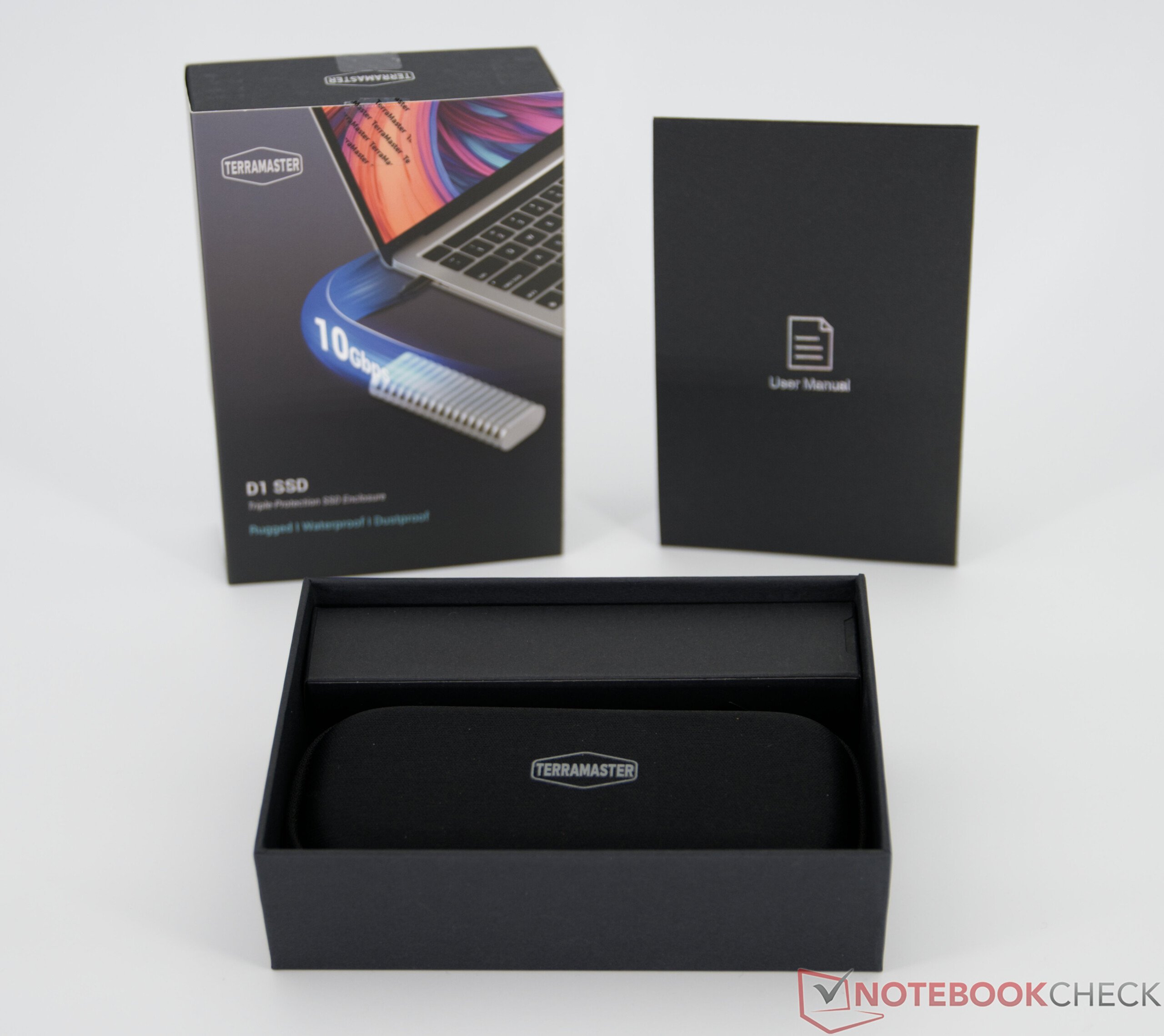
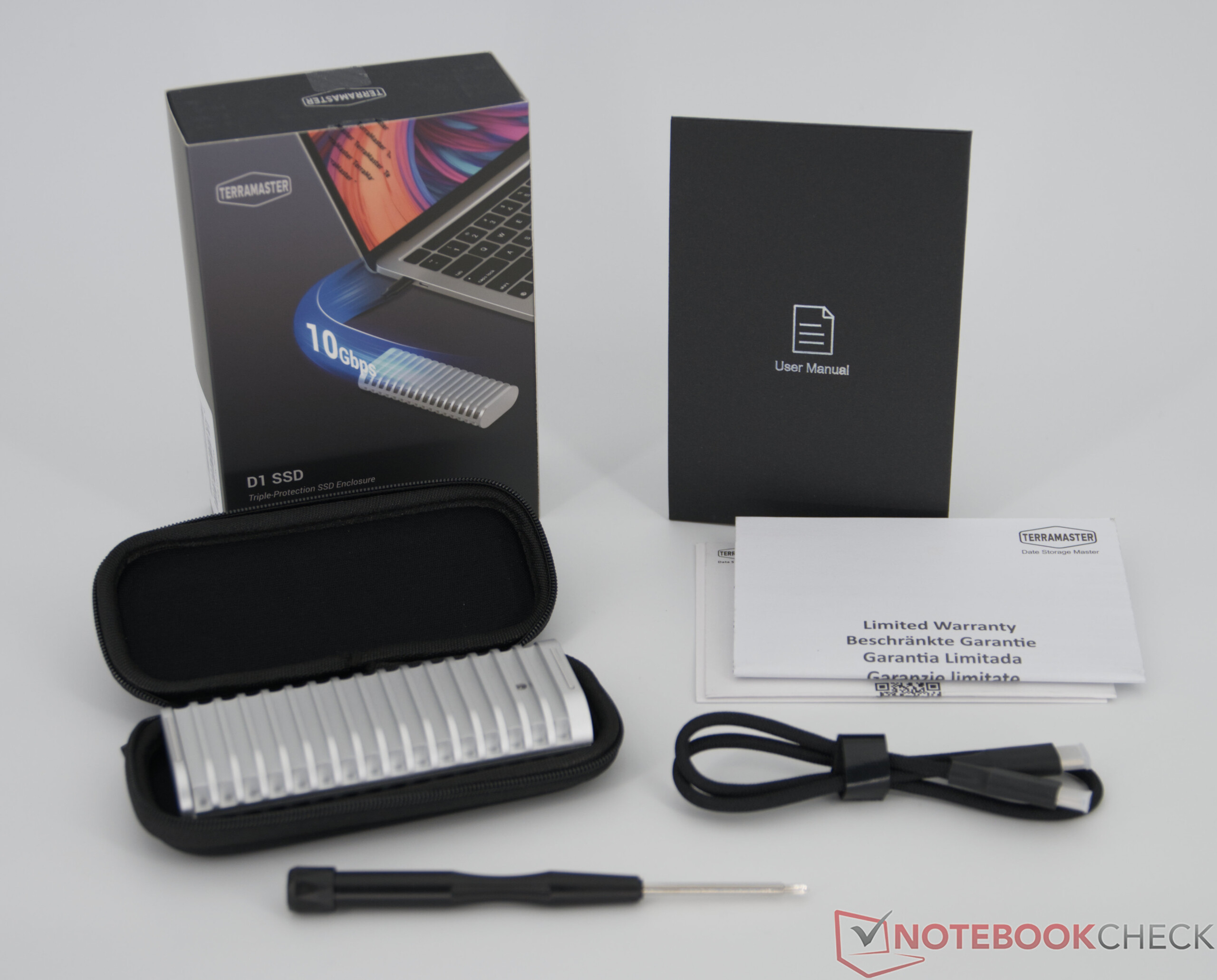
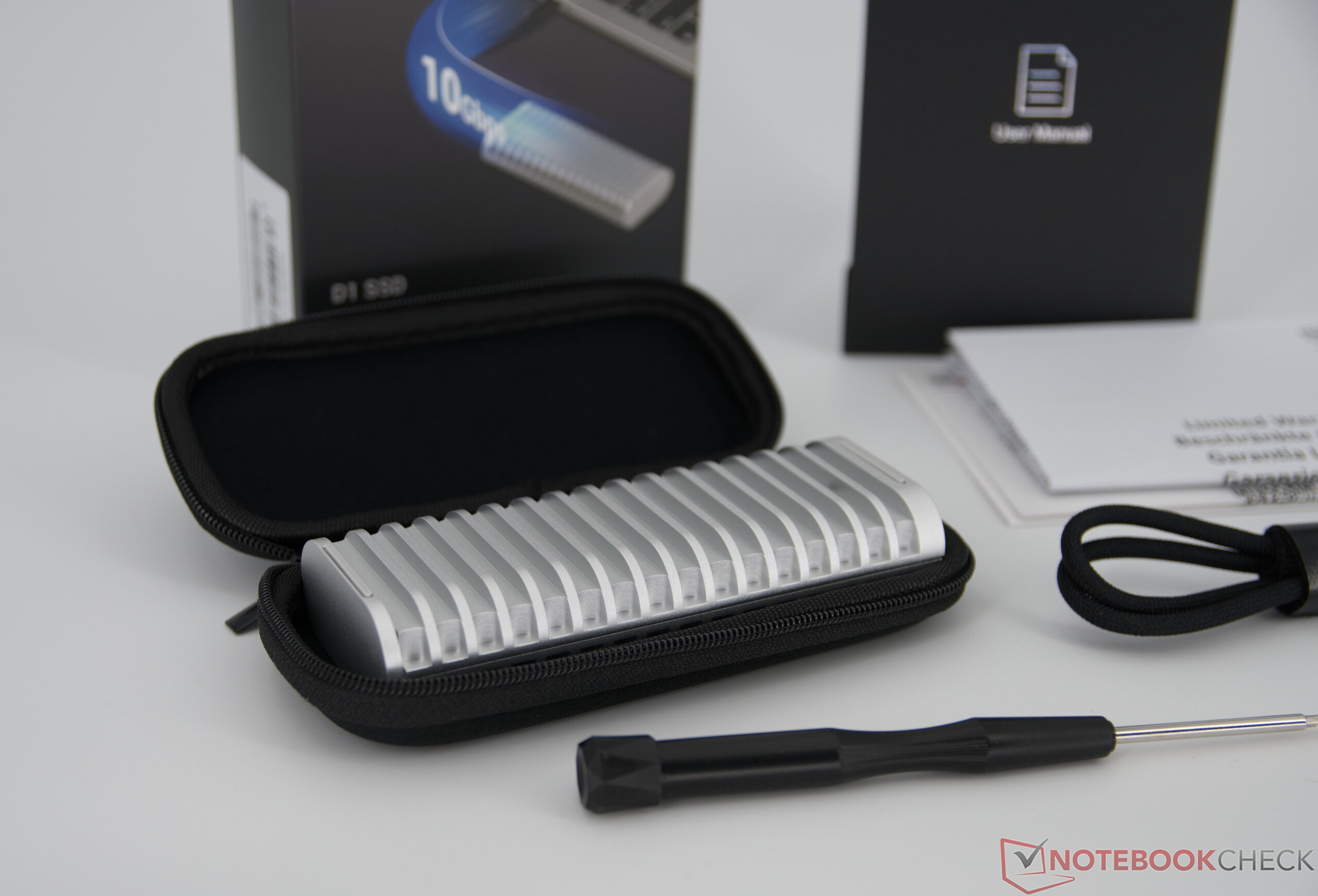
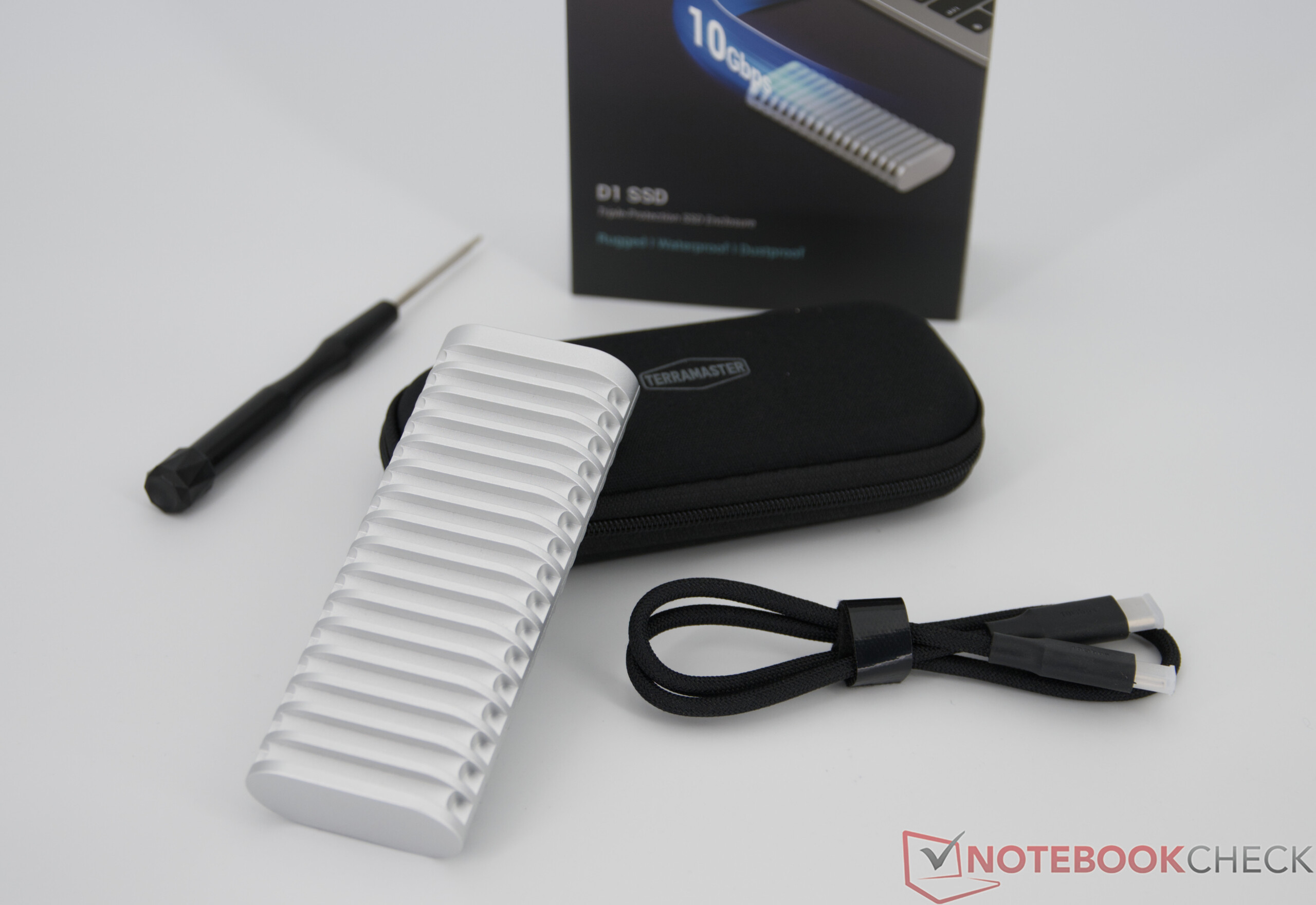
| Box contents | D1 SSD, USB-C cable (Type-C to Type-C, 0.5 m), carrying pouch, screwdriver |
Housing and features: Metal enclosure and passive cooling
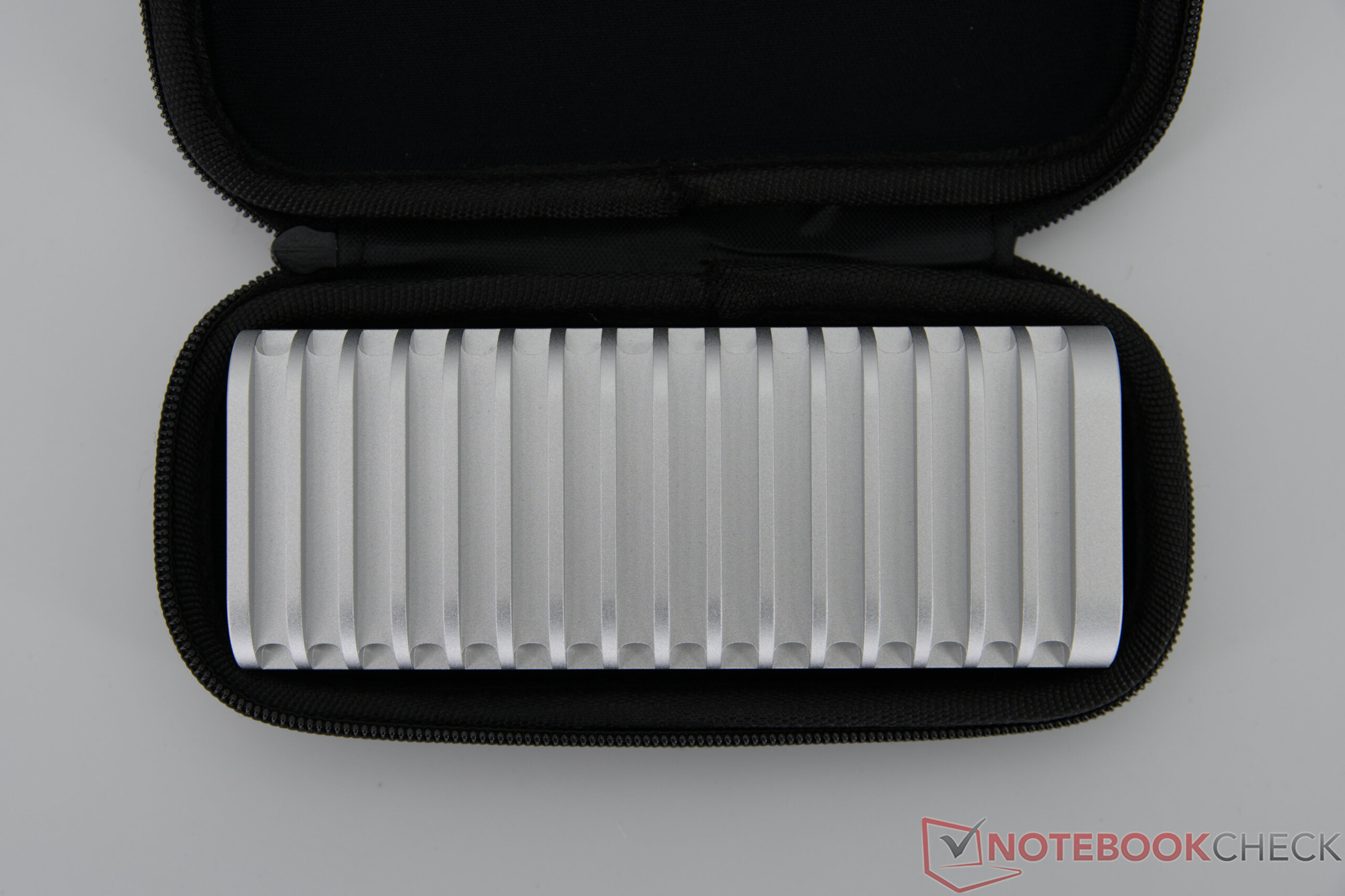
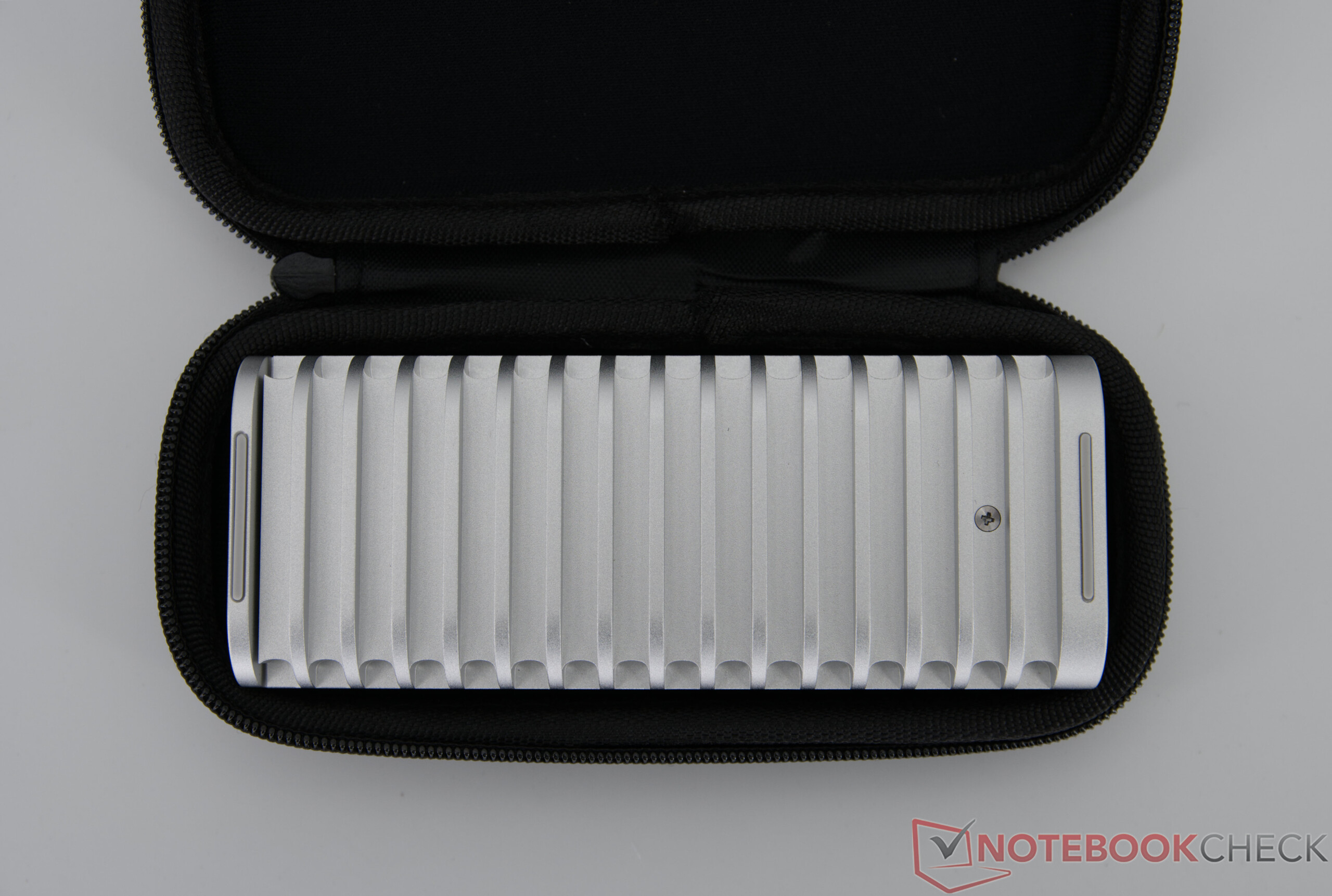
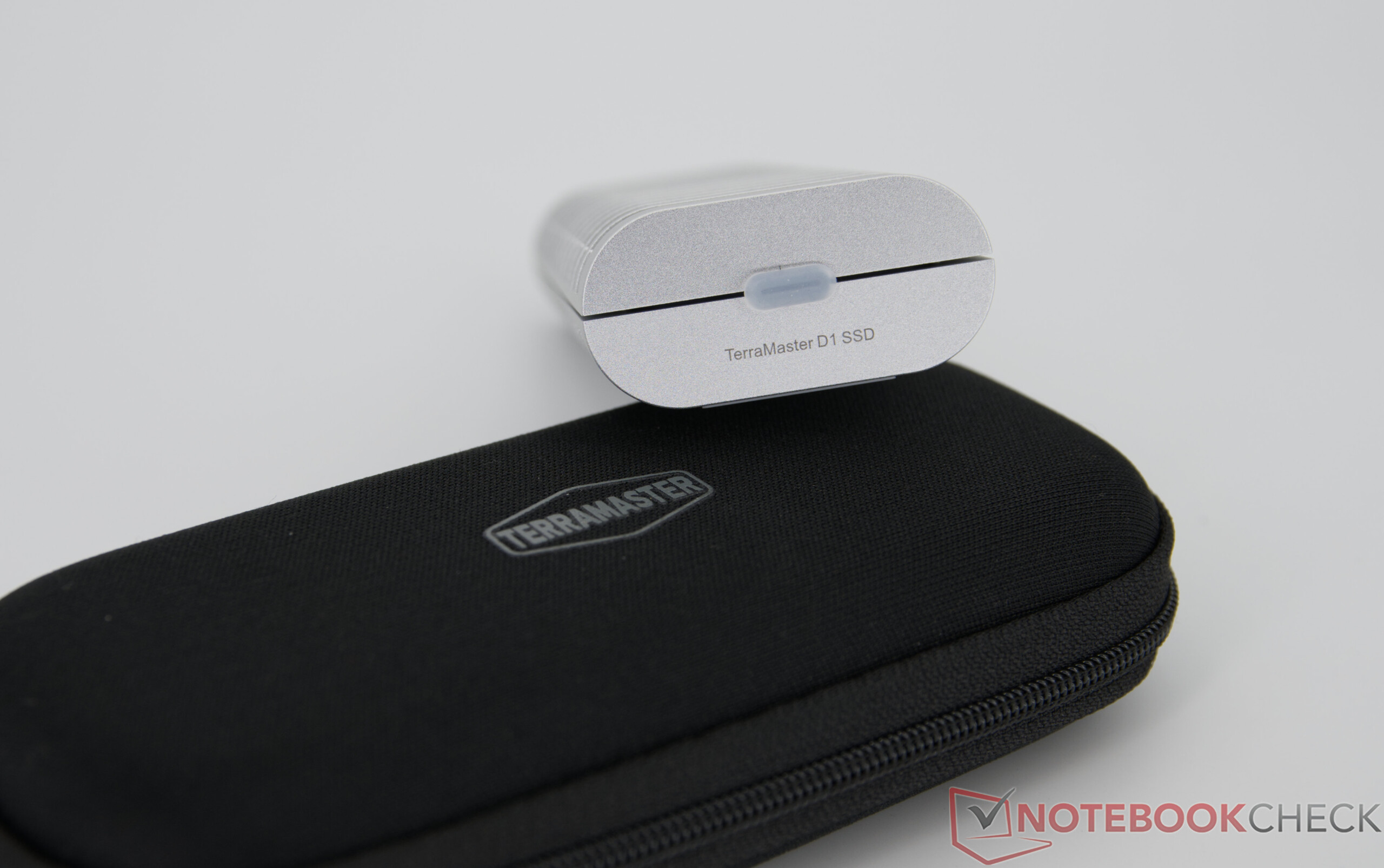
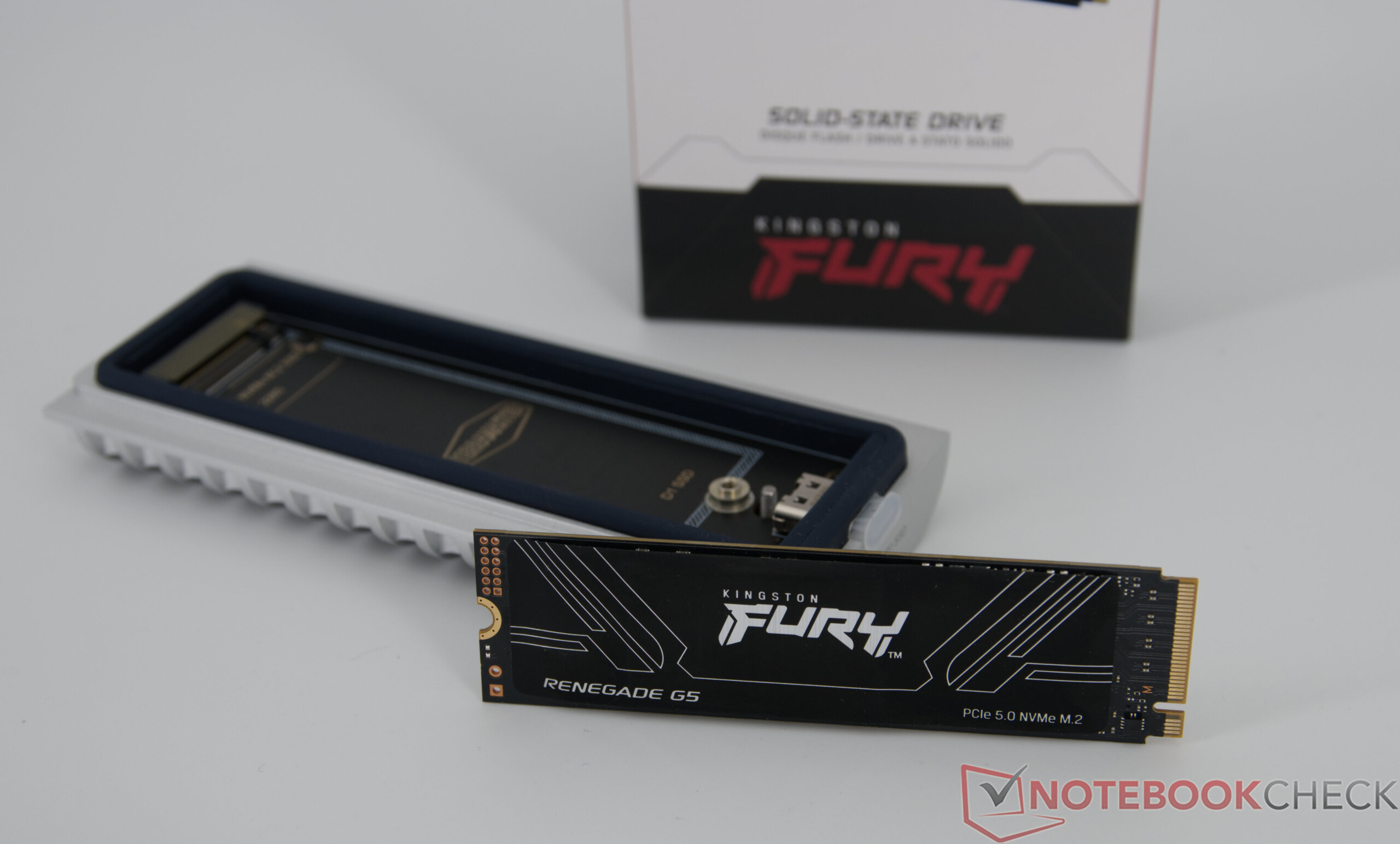
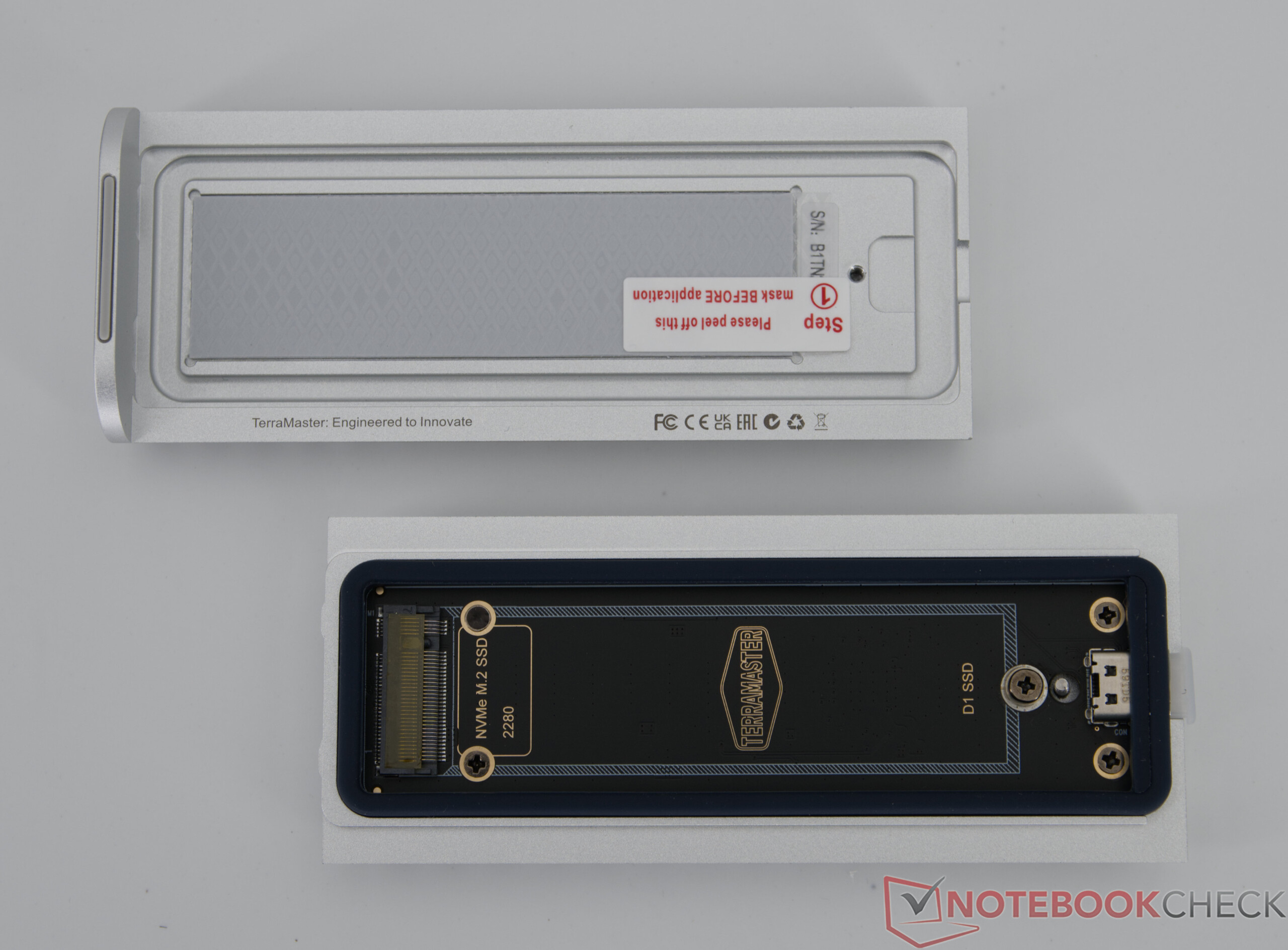
The TerraMaster D1 SSD enclosure uses a sturdy unibody aluminum design that dissipates the heat generated directly. Textured cooling surfaces improve heat dissipation efficiency, helping maintain consistent temperatures even under heavy use. This is complemented by a dust-tight design with IP67 protection, including a cover cap for the USB-C port that also seals the enclosure reliably against water. With no fan, the enclosure operates completely silently while maintaining stable performance.
Test system
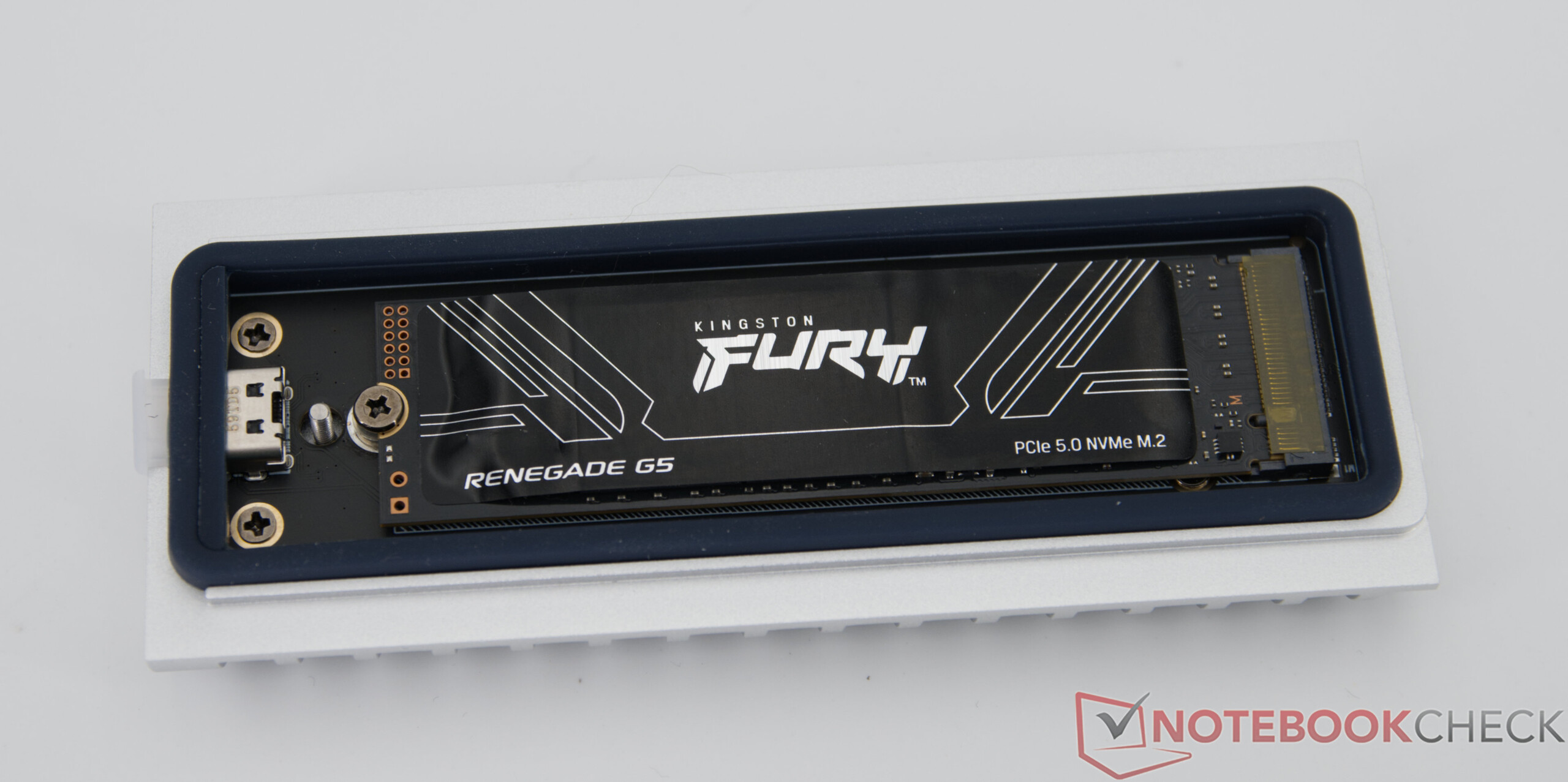
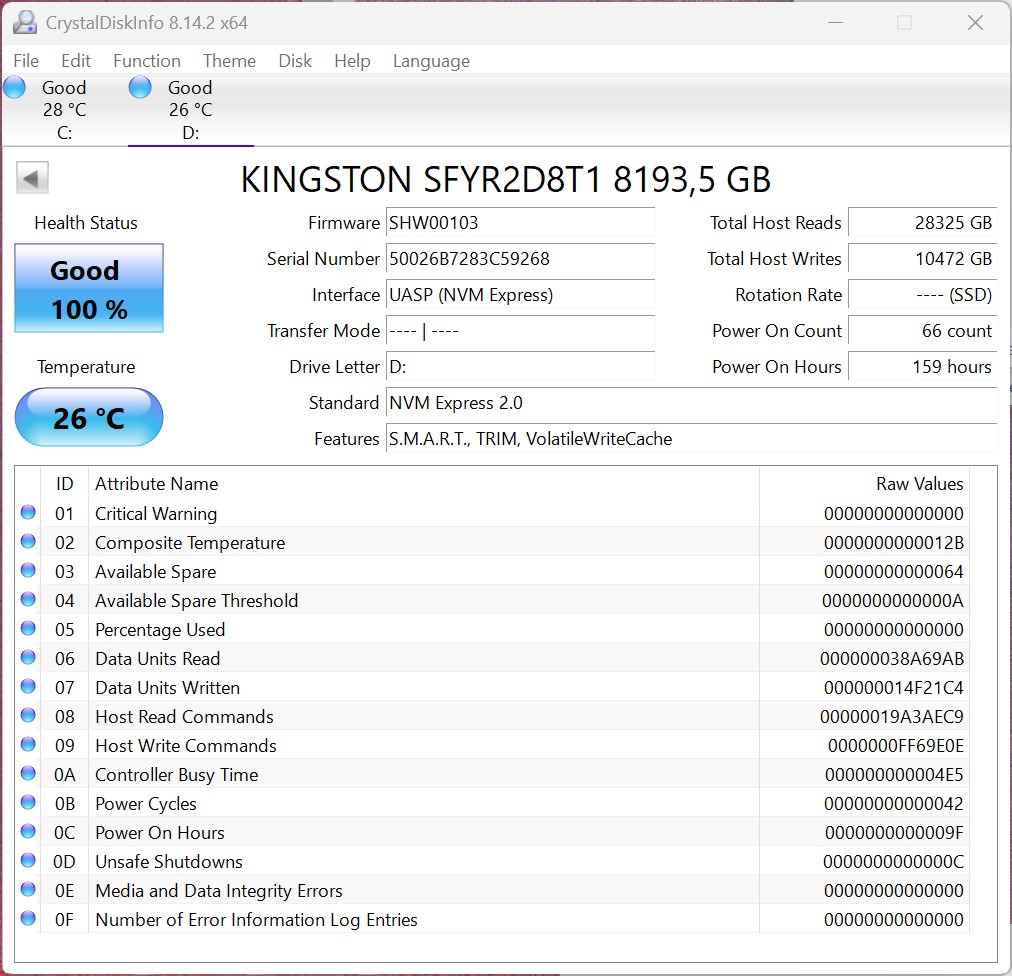
The test platform is the Minisforum MS-02 Ultra, which offers ideal conditions for connecting fast external storage solutions thanks to its modern interface standards. For this review, the external enclosure is equipped with the Kingston Fury Renegade G5 8 TB, currently one of the most powerful consumer SSDs on the market.
Performance - Limited by USB 3.2 Gen 2
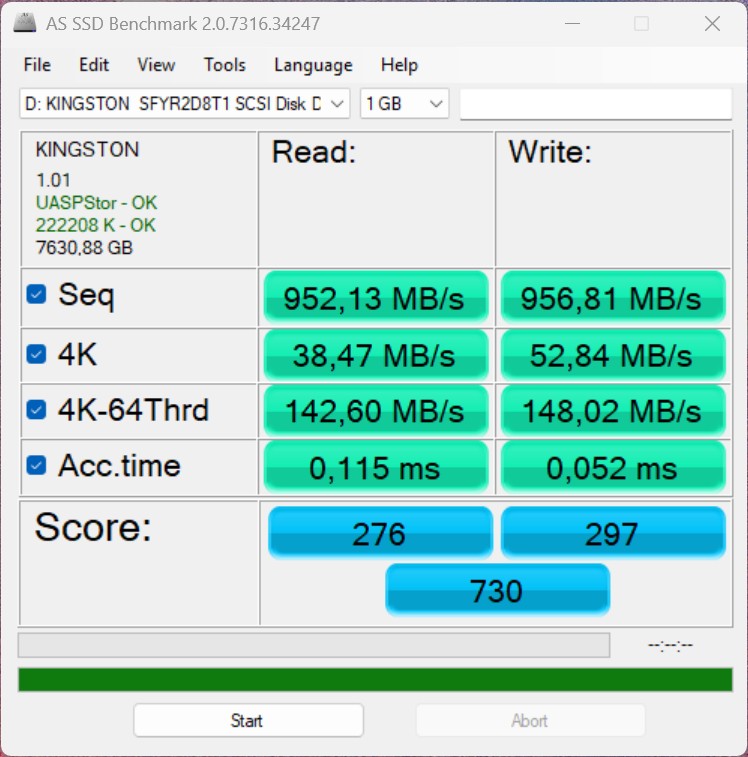
The TerraMaster D1 SSD can only make limited use of the potential of fast NVMe SSDs, as the USB 3.2 Gen 2 interface is technically capped at 10 Gbit/s. As a result, the possible peak transfer rates of modern SSDs are significantly constrained. In practice, this leads to solid but clearly limited transfer rates that are determined primarily by the interface rather than the installed SSD.
Temperature and stress test
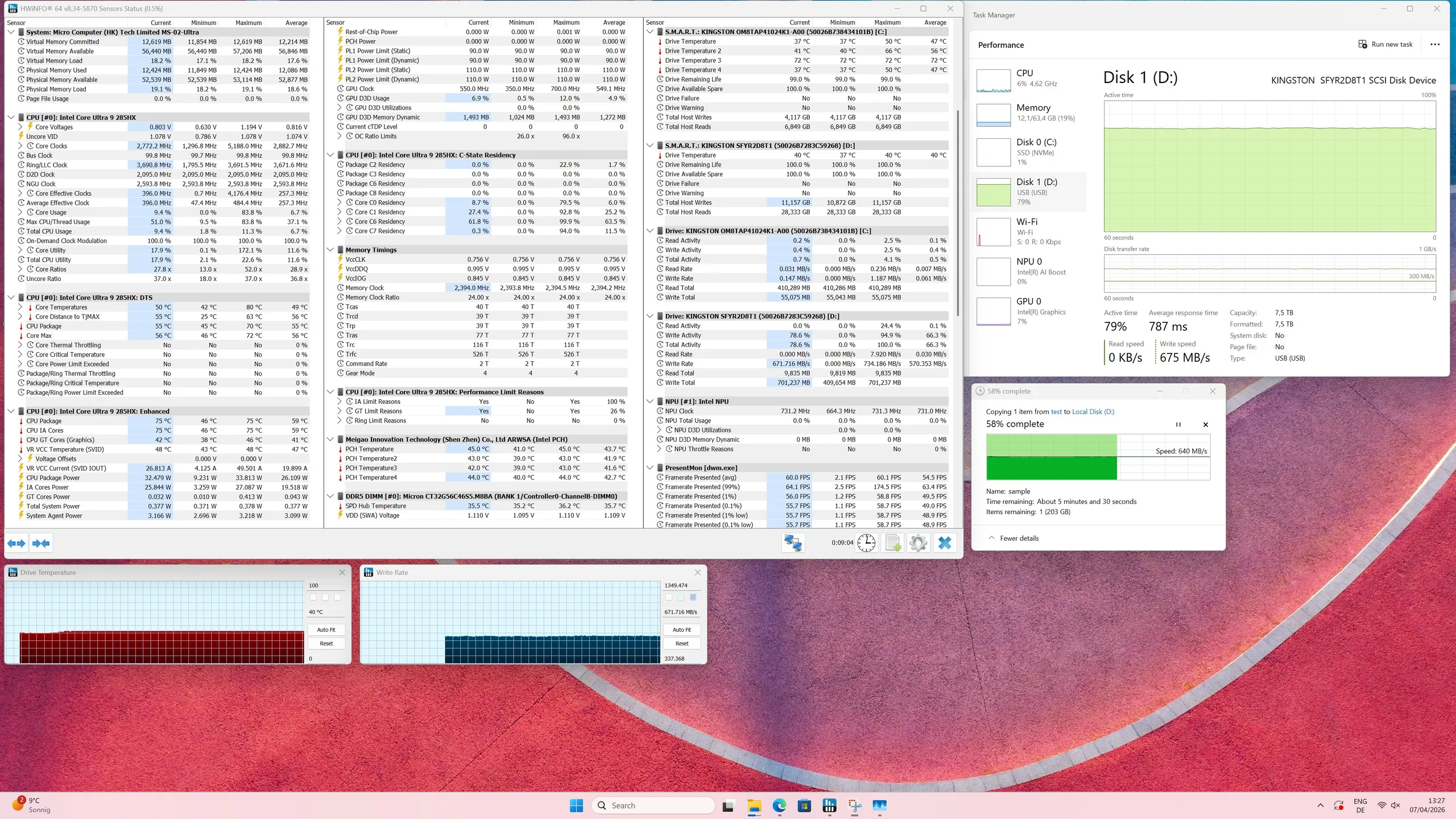
In the temperature and stress test, the TerraMaster D1 SSD paired with the Kingston Fury Renegade G5 8 TB delivers convincing results. Even under sustained load, temperatures remain within a safe range thanks to the aluminum enclosure and effective cooling. There are no performance drops or signs of throttling, ensuring consistent transfer rates.
In practice, real-world transfer rates of around 600 MB/s are lower than the synthetic benchmark results, but a 500 GB test file can still be transferred quickly and without any slowdowns. The enclosure becomes noticeably warm, but does not reach critical temperatures. The SSD itself also stays pleasantly cool at around 40 °C. It should be noted, however, that only one side of the double-sided SSD is in direct contact with the D1 SSD’s thermal pad.


Notebookcheck overall rating
The TerraMaster D1 SSD is a sturdy, reliable NVMe enclosure that delivers effective, silent cooling and consistent performance at a competitive price.
Transparency
The selection of devices to be reviewed is made by our editorial team. The test sample was given to the author by the manufacturer free of charge for the purposes of review. There was no third-party influence on this review, nor did the manufacturer receive a copy of this review before publication. There was no obligation to publish this review. As an independent media company, Notebookcheck is not subjected to the authority of manufacturers, retailers or publishers.
This is how Notebookcheck is testing
Every year, Notebookcheck independently reviews hundreds of laptops and smartphones using standardized procedures to ensure that all results are comparable. We have continuously developed our test methods for around 20 years and set industry standards in the process. In our test labs, high-quality measuring equipment is utilized by experienced technicians and editors. These tests involve a multi-stage validation process. Our complex rating system is based on hundreds of well-founded measurements and benchmarks, which maintains objectivity. Further information on our test methods can be found here.
 Add as a preferred source on Google


