




Solid-state battery density of 500 Wh/kg achieved by low-cost hybrid Li-Mn pack in FAW EV with 500-mile range
As China is prioritizing solid-state electrolytes as the new frontier in EV battery development in its new 5-year plan, it has come up with the first solid-state battery standardization and classification system, set to go official in July.
There, the solid-state batteries are categorized by the amount of liquid in their electrolyte, and those with 95% solid electrolyte are now called hybrid solid-liquid batteries. CATL and others consider the hybrid technology a perfect stopgap solution on the way to all-solid-state batteries that are expensive and have a shorter lifespan, as the hybrids can be produced on existing production lines for liquid electrolyte.
Hybrid electrolyte battery hits solid-state energy density
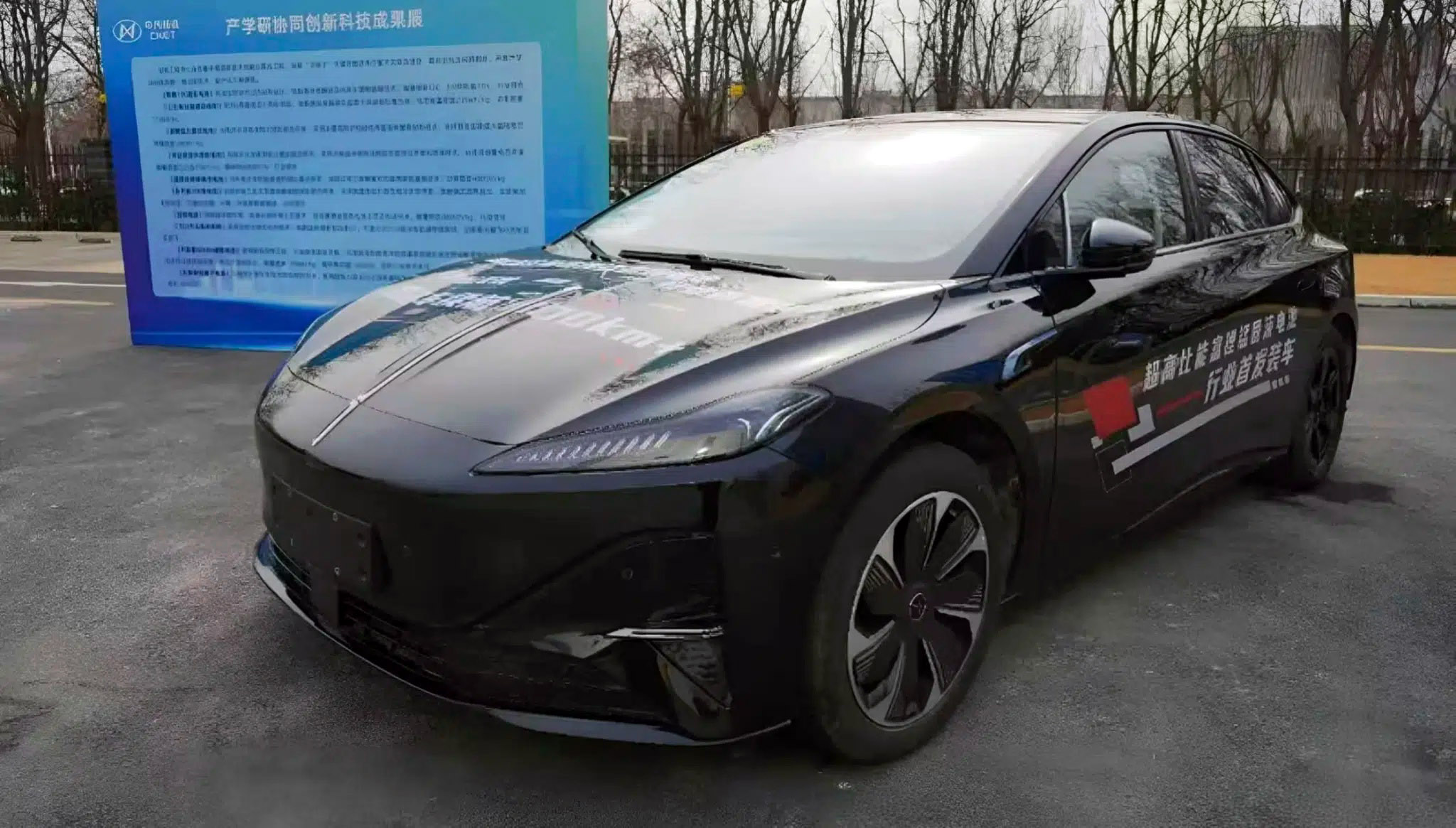
The newest development in hybrid solid-liquid batteries is now vindicating CATL's claims. A 142 kWh battery pack has been fitted on an FAW Group sedan in the space previously occupied by an LFP battery with roughly half the capacity.
The new hybrid solid-liquid battery uses manganese for the cathode instead of the expensive nickel and offers 500 Wh/kg energy density. As a reminder, this is double what modern LFP batteries offer and is at the theoretical limit of the first-generation all-solid-state batteries that Toyota announced will go into its vehicles by 2028 to great fanfare.
The lithium-manganese battery with solid-liquid electrolyte has been co-developed by FAW, VW's partner in China, and scientists from Nankai University. They took a different research route compared to existing batteries with semi-solid electrolyte, like the 150 kWh pack that NIO rents for longer trips, as it is too expensive to sell with the car. NIO pioneered the technology in its sedans, which now cover more than 650 miles on a charge of the hybrid liquid-solid battery.
By swapping the expensive nickel for manganese, the researchers managed to lower the cost of the hybrid pack and at the same time offer energy density commensurate with that of a solid-state battery. "The battery uses in-situ-cured composite electrolyte technology, which provides high ionic conductivity, a wide electrochemical window, strong interfacial compatibility, flame retardancy, and cost advantages," tips the report. The anode has also been formed in situ to increase the battery lifespan and safety profile, while the lithium-manganese cathode offers an energy density of 300 mAh/g, exceeding even the best LFP cells by a factor of two.
The range tests in the prototype FAW vehicles are expected to return more than 1,000 km on a charge. This would be on the more generous local CLTC standard, though, so at the average EV efficiency of about 30 kWh per 100 miles, the hybrid battery is expected to hit a 500-mile range in EPA estimates. The next iteration that the team readies is a 200 kWh pack that will offer close to 700 miles on a charge, again in a compact footprint.
Get the 5000 mAh XIU solid-state iPhone magnetic charger on Amazon
 Add as a preferred source on Google


