




Neuralink brain implant brings back the voice of ALS patient with thought-to-speech BCI
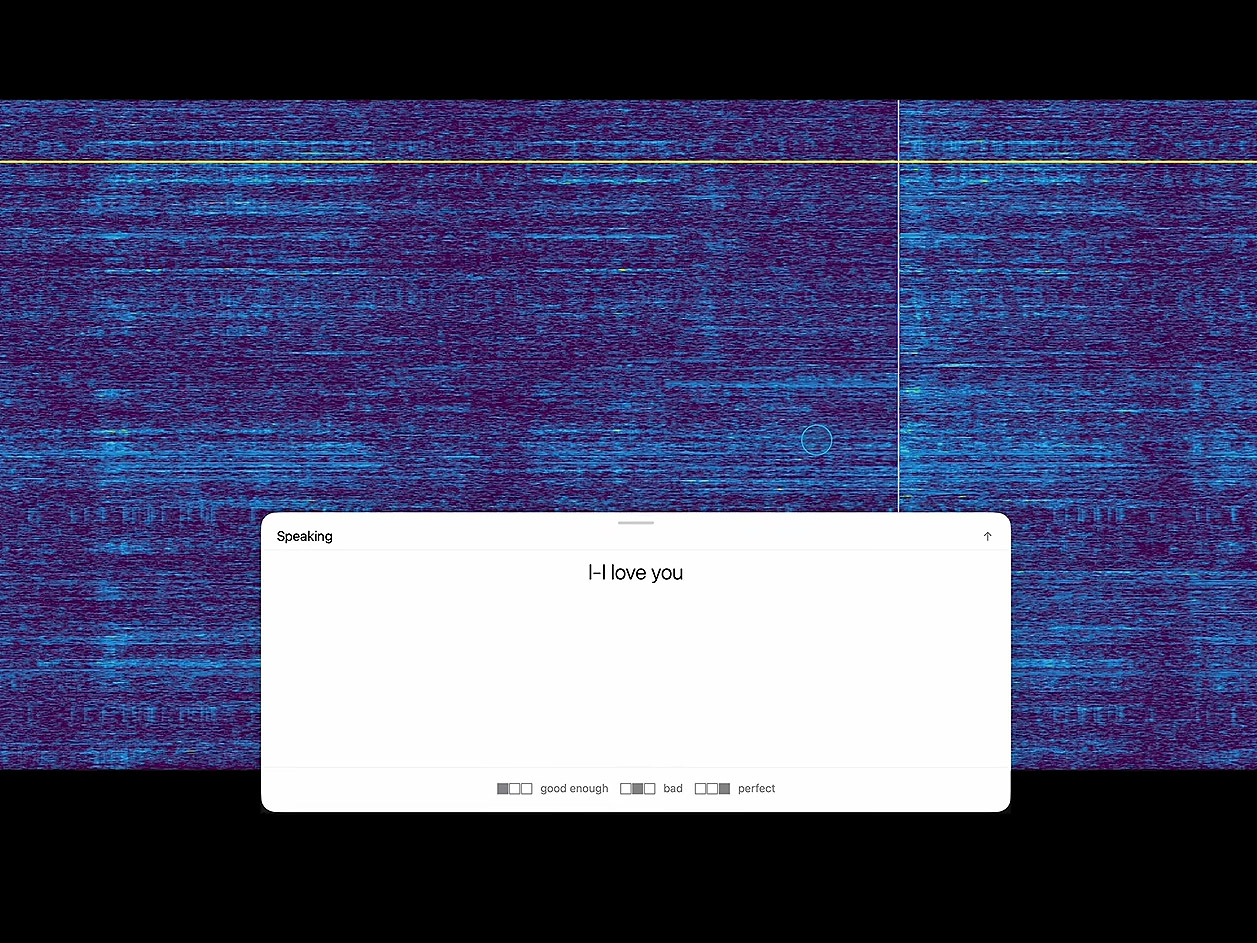
The brain implant startup Neuralink has managed to translate the thoughts in the head of a patient with neurodegenerative disease into talk with his family, friends, and clients. The Neuralink electrodes were implanted in the speech region of the brain, and then the waves that his thoughts form were transliterated by the brain-computer interface (BCI) into speech.
Neuralink's VOICE trial handed the paralyzed man the ability to say "I love you" in his own voice, reconstructed entirely from brainwaves. No lips moving, no throat sounds, just neural signals turned into speech through an AI model trained on his pre-illness recordings. The Neuralink clip, captioned "A beautiful surprise," circulated widely, and the N1 implant behind it reads intended speech directly from the brain before rebuilding it as audible words in the participant's original voice.
The VOICE study is registered on ClinicalTrials.gov and is recruiting patients with ALS, primary lateral sclerosis, stroke, and spinal cord injury, with plenty of people on the waiting list. It has received FDA Breakthrough Device Designation, which speeds up review but is not yet counted as approval, so Neuralink still attaches an investigational disclaimer to every participant video. The company had implanted more than 20 patients worldwide, two of them specifically in VOICE. One of those, Kenneth Shock, a former medical professional living with ALS, put bluntly during his own demo that he's finally able to flip the disease the finger.
What makes this different from earlier BCI communication tools is the target. Older systems, including Neuralink's own PRIME study, decode intended hand or finger movements to drive a cursor or use an on-screen keyboard. VOICE instead taps the speech motor cortex directly, bypassing the keyboard step entirely, and the mechanism is explained in accessible books like "Brain-Computer Interfaces in Plain English: How Electrodes, Software, and Neurons Are Learning to Talk to Each Other" on Amazon.
Neuralink isn't alone here, as Synchron takes the opposite approach, threading its Stentrode through blood vessels instead of opening the skull, which is gentler but limits it mostly to simple clicks rather than full speech decoding. Precision Neuroscience uses a thin electrode film laid on the cortex's surface. Academic teams have their own achievements in the thoughts-to-speech field, too, as a UCSF system led by Edward Chang reached up to 18 words per minute with as much as 93 percent accuracy. Neuralink's own target for VOICE is a much more ambitious 140 words per minute, closer to natural conversation speed.
For patients who've lost their voice to ALS or a stroke, the practical difference between these approaches (wireless versus wired, invasive versus vascular, keyboard mediated versus direct speech) matters less than the outcome of getting a version of their own voice back. While this is still a research result and not a commercial product, it's the rare kind of tech demo that increases quality of life exponentially and might become an indispensable tool for the millions affected by diseases that rob them of motor skills and human interaction.
Source(s)
 Add as a preferred source on Google


