"Nano Banana Pro" experiment: How to recognize AI with the naked eye
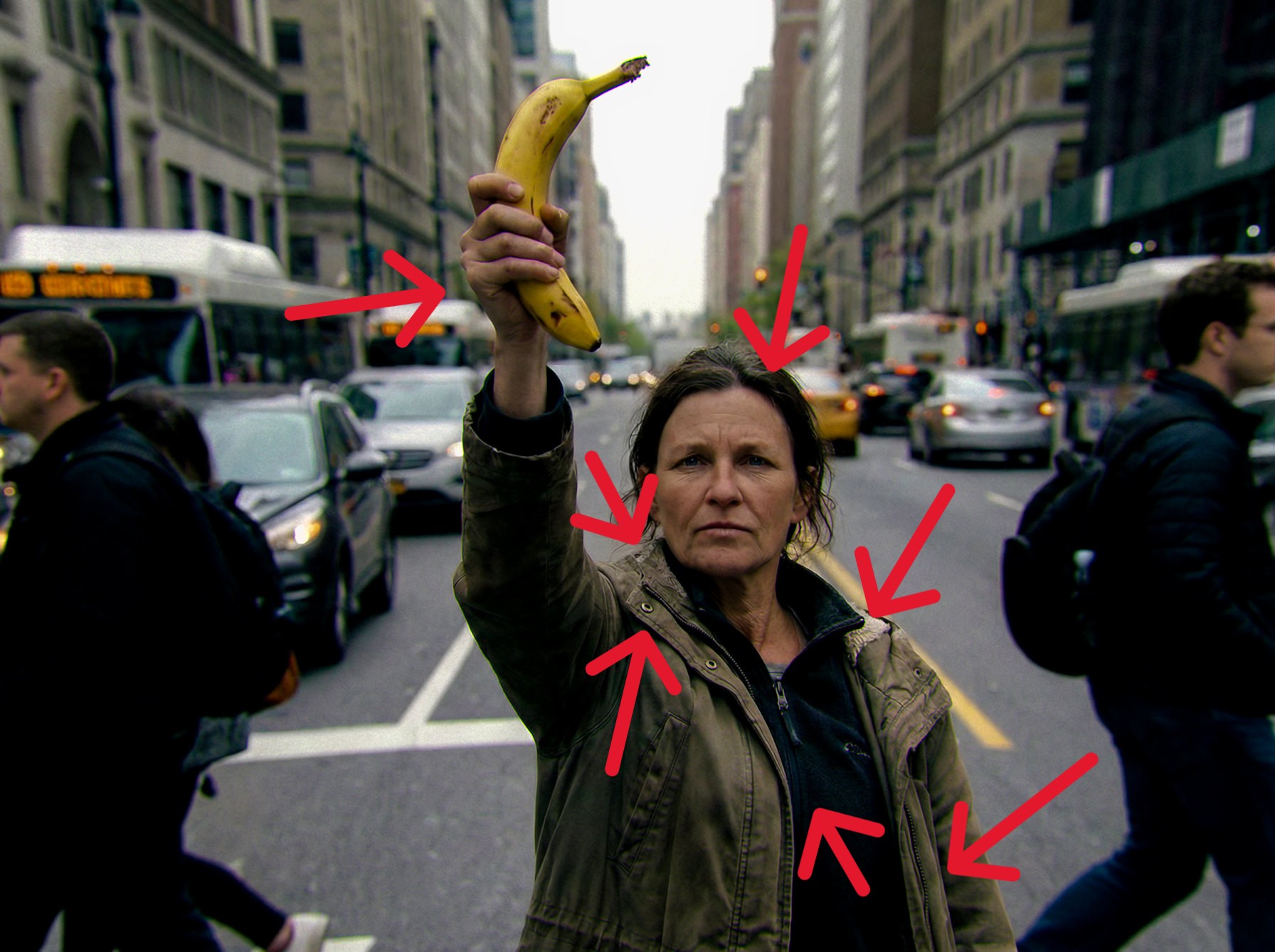
Nano Banana Pro is an excellent tool for generating high-quality images with minimal effort. At first glance, the images from Google's AI usually appear flawless. Hands with four fingers and a thumb, correct anatomy and proportions. The perspectives are consistent and the proportions are also generally accurate. The image generator is so good that, at least after slight post-processing, many tools for the automatic detection of AI images fail, as our first experiment demonstrated.
Nevertheless, even Nano Banana Pro sometimes falters in the details. A little zooming is enough to reveal several errors in the image. Let's go through these step by step.
Zippers and buttons: Small details are often inconsistent
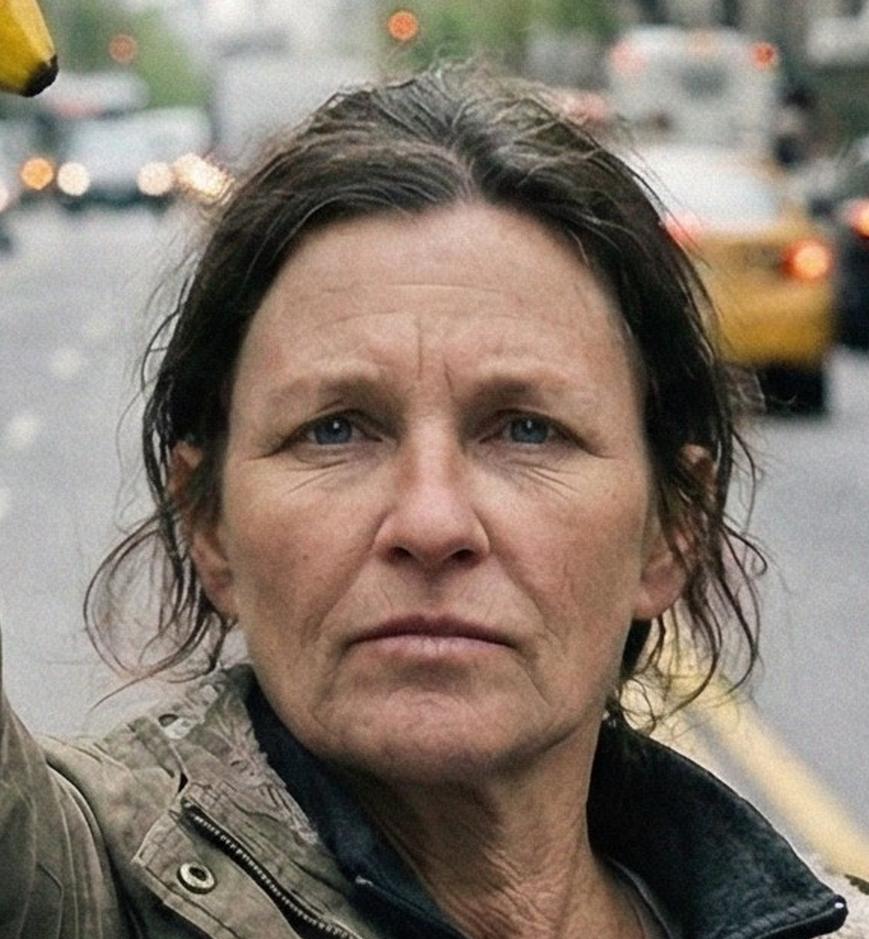
The woman in our image is wearing an olive-green jacket. The style of the garment falls somewhere between a field jacket and a parka. Nano Banana Pro renders the folds and fabric exceptionally well, but not other parts of the jacket. Upon closer inspection, inconsistencies quickly become apparent.
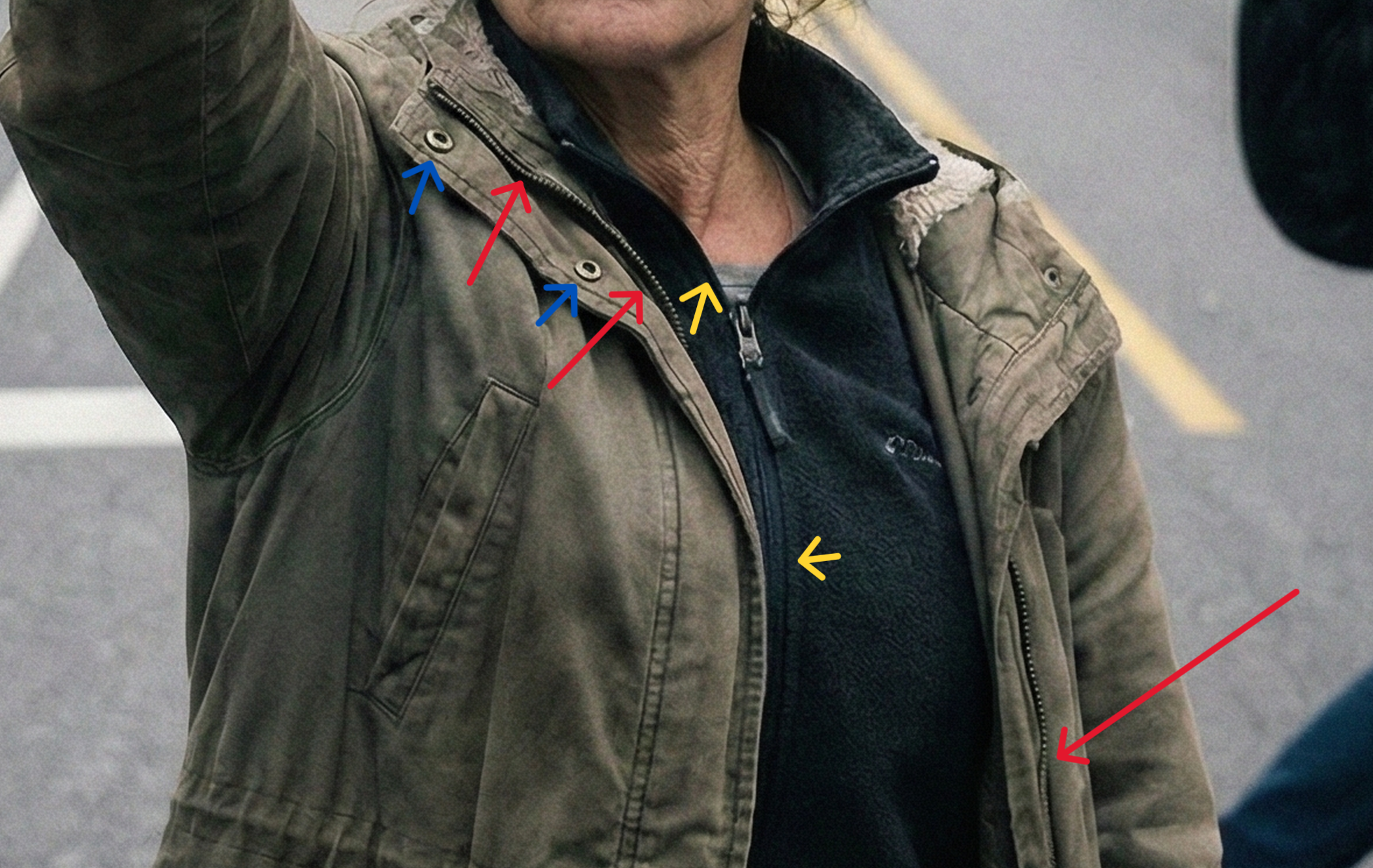
Let's start with the zipper. On the right side of the image, the zipper teeth disappear halfway through. On the left, the length and spacing of the individual zipper teeth change. The snap fasteners also indicate that the image was generated by AI. Instead of round holes, we see a D-shape. Last but not least, there's the jacket's collar. On the right side, we see a white fur trim, which is completely missing on the left. Instead, the collar fabric blends seamlessly with the shoulder pieces on the left. Furthermore, the cut of the part of the collar shown is illogical.
It is also clear that something is wrong with the zipper on the black fleece jacket. It has no teeth, the pull tab is more or less completely bent, and underneath, the actual zipper turns into fabric.
Vanishing point of perspective
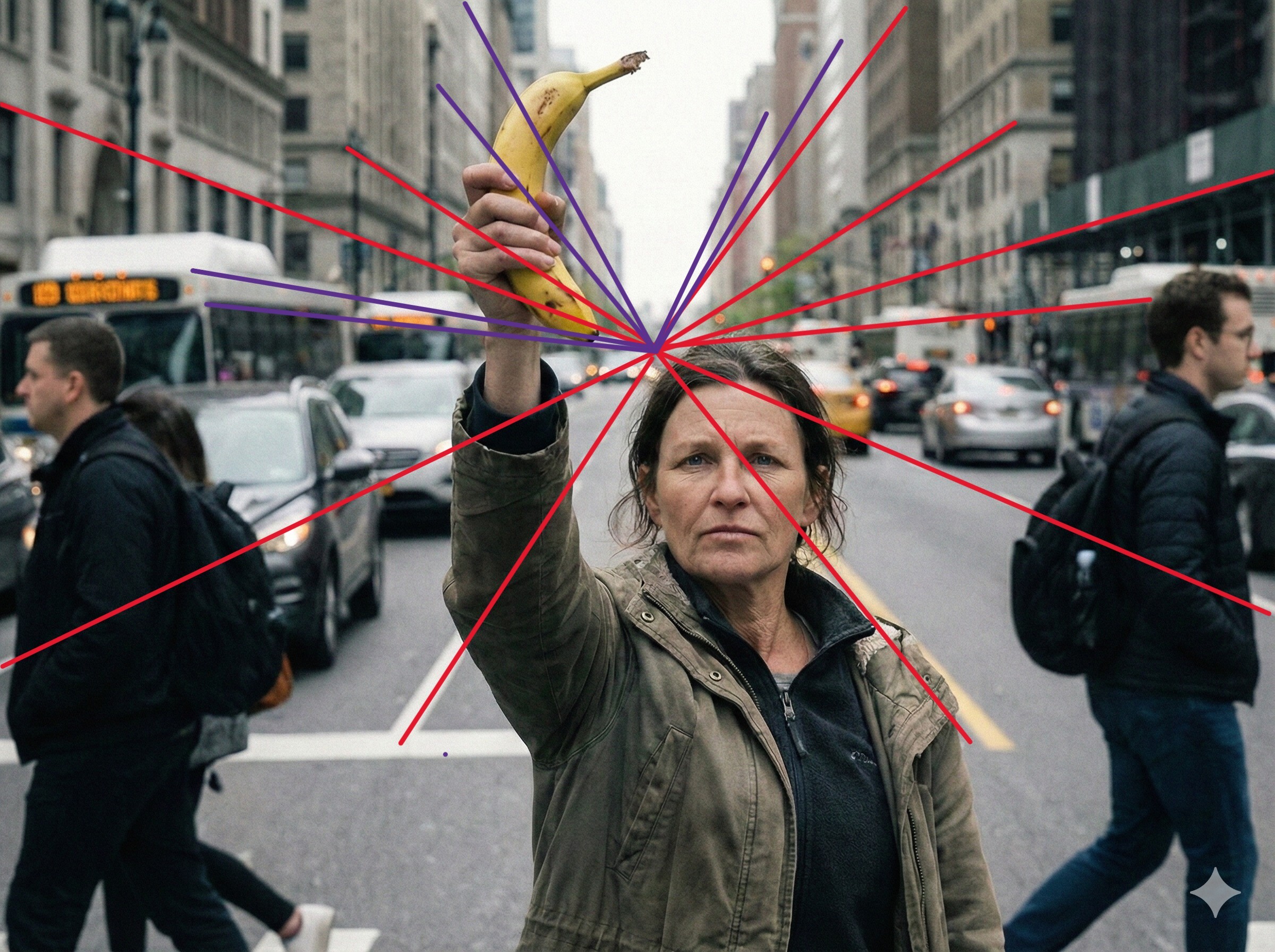
The devil is also in the details here. Gemini, or rather Nano Banana Pro, does a good job of rendering perspective. At first glance, only one vanishing point is apparent. However, a closer look reveals that, despite the blurring, some vanishing point lines cross storeys or, in the case of the two buses on the left, simply disappear into thin air. We colored the lines that we considered inconsistent purple in the image after determining the vanishing point of perspective.
Hairline and hands
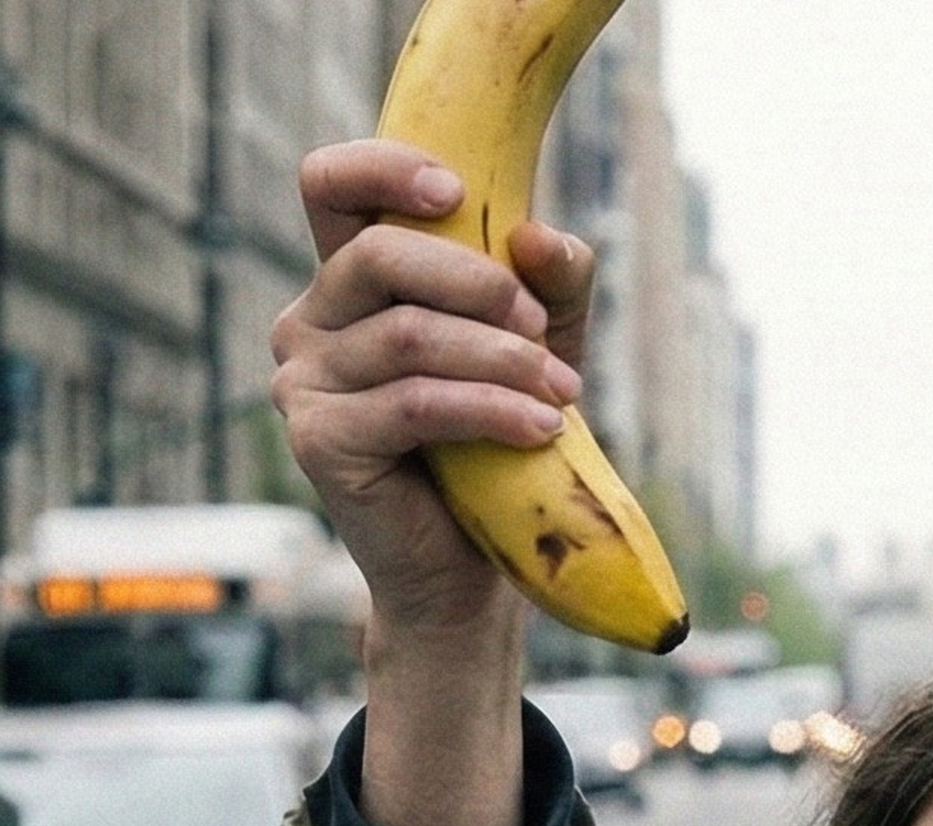
When it comes to hands, even the most advanced Google AI is still not immune to slight inconsistencies. Looking at the details, the fingers and hand of the woman holding the banana are not entirely anatomically correct. Several inconsistencies are particularly noticeable on the middle finger. The finger and fingernail are too wide, the front joint of the finger has no articulation, and somehow the connection to the hand is also inconclusive. Added to this are the skin folds between the fingers, which extend down to the knuckles.
At the hairline, it is particularly noticeable that almost all of the hair—even the gray hair—starts with a brown layer. This is especially evident at the front of the head.
Conclusion: Pixel peeping and common sense will help
In the first part of our series, we ran the image of the woman with the banana through various AI image recognition tools. After some image editing, six online platforms unfortunately gave up on the image and stated that it was not an AI-generated image. The human eye and a little common sense are much more helpful in this case. The image reveals a whole series of points that indicate AI. Anyone who remain skeptical should be aware of the problems inherent in generative image generation. Small details are often not rendered correctly. These include the textures of fabrics, jewelry, knitwear, zippers and other regular objects. Tire treads and rims on cars and airplanes, wood surfaces and skin wrinkles often indicate AI processing.
Source(s)
 Add as a preferred source on Google