




Apple M2 vs Apple M4 Pro (12 cores) vs Apple M4 (8 cores)
Apple M2
► remove from comparison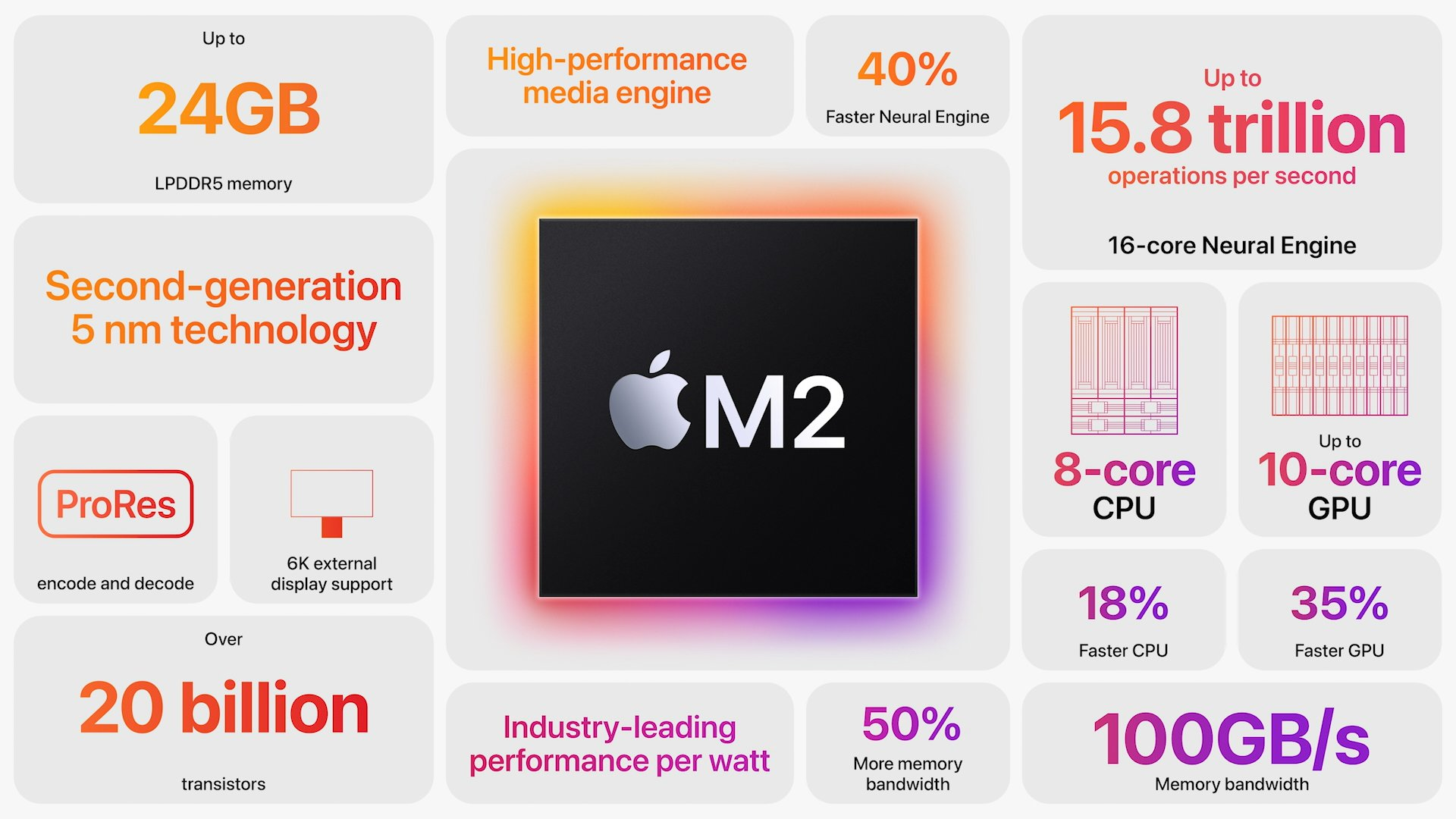
The Apple M2 is a System on a Chip (SoC) from Apple that is found in the late 2022 MacBook Air and, MacBook Pro 13. It offers 8 cores divided in four performance cores and four power-efficiency cores. The big cores offer 192 KB instruction cache, 128 KB data cache, and 16 MB shared L2 cache (up from 12 MB). The four efficiency cores are a lot smaller and offer only 128 KB instruction cache, 64 KB data cache, and 4 MB shared cache. The efficiency cores (E cluster) clock with up to 2,4 GHz, the performance cores (P cluster) with up to 3,5 GHz and therefore higher than the M1 cores. The architecture should be similar to the A15 (iPhone 13) with Avalanche and Blizzard cores.
The chip features a unified memory architecture for the CPU and GPU cores and supports up to 24 GB LPDDR5-6400 for a bandwidth of up to 100GB/s.
According to Apple, the M2 offers a 18% higher CPU performance at the same power consumption level compared to the Apple M1. In our tests, the MacBook Pro 13 with active cooling was able to reach the 18% in Geekbench Multi. In other benchmarks we measured 12 to 15% gains compared to the M1. Therefore, the performance is now near the M1 Pro with 8 cores. The passively cooled MacBook Air may however suffer from throttling in longer load scenarios.
The integrated graphics card in the M2 offers 8 or 10 cores and a peak performance of 3.6 TFLOPs.
Furthermore, the SoC integrates a fast 16 core neural engine with a peak performance of 16 TOPS (for AI hardware acceleration), a secure enclave (e.g., for encryption), Thunderbolt / USB 4 controller, an ISP, and media de- and encoders.
The Apple M2 includes 20 billion transistors (up from the 16 billion of the M1) and is manufactured in the second generation 5nm process at TSMC (most likely N5P). The power consumption is rated at 20W what we also measured under CPU load.
Apple M4 Pro (12 cores)
► remove from comparison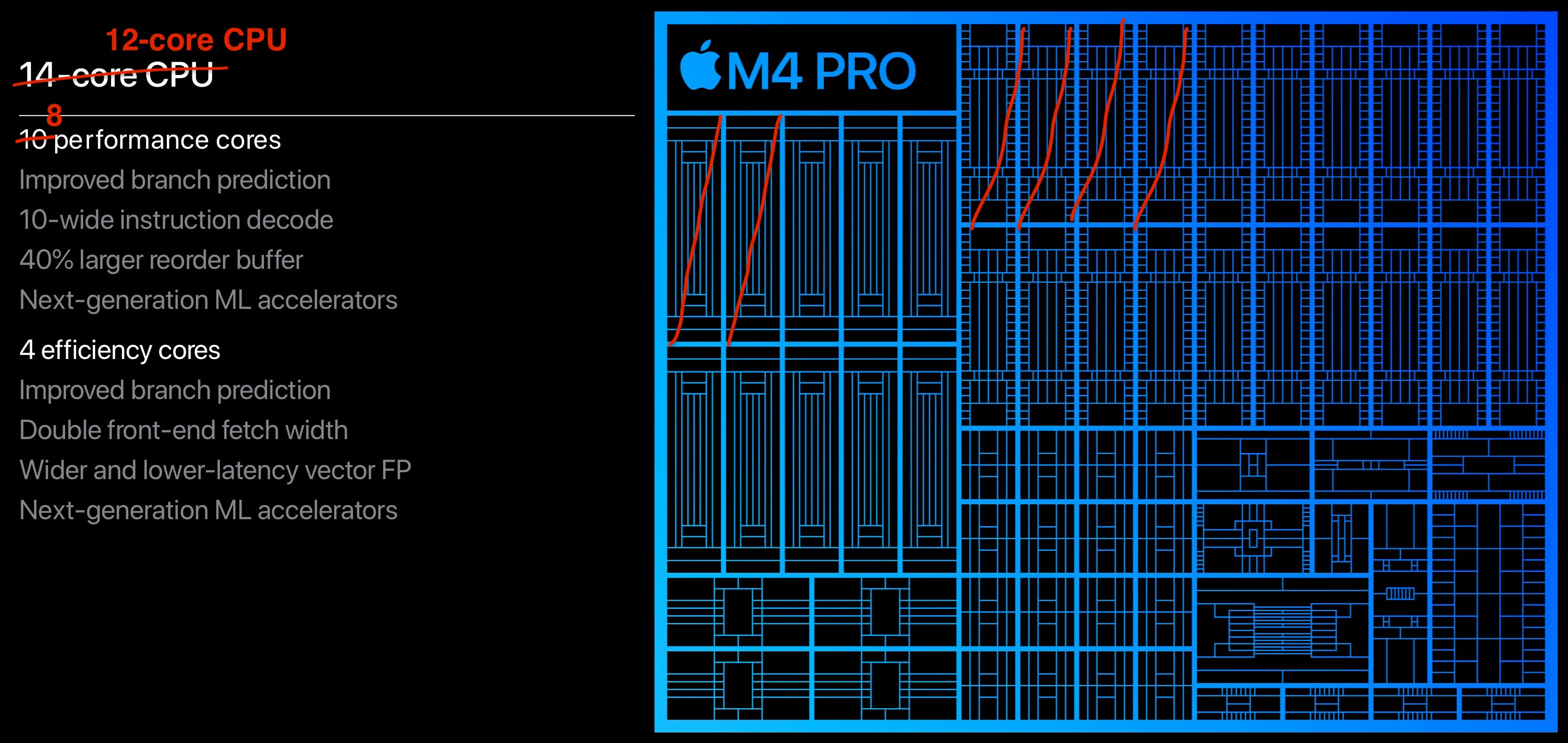
The Apple M4 Pro 12-Core CPU is a high-end SoC for laptops and mini PCs that was introduced in September 2024. It has 8 of the 10 powerful CPU cores running at up to 4.5 GHz and 4 efficient cores running at up to 2.6 GHz. The integrated 16-core GPU and at least 24 GB of fast LPDDR5x memory at 273 GB/s (depending on configuration) are included, as well as USB 4 and Thunderbolt 5 support.
The integrated neural engine with 16 cores (up to 38 TOPS) can be found in the entire M4 chip family. In addition, all M4 processors are assumed to be based on the ARM v9.4-A architecture to some degree.
The CPU performance when using all cores is similar to a AMD Ryzen AI 9 HX 370 (Cinebench R23 slightly faster on average). The modern Core Ultra 9 288V can be clearly outperformed. In terms of single-core performance, the M4 Pro scores very well and is on a par with the fastest Intel chips, such as the Core i9-14900HX. Interestingly enough, the M4 and the faster M4 Pro variant with 14 cores were 4-5% faster than the slimmed-down entry-level M4 Pro in Cinebench (Geekbench at the same level).
The power consumption during Cinebench 2024 Multi is around 40 Watt at the beginning (according to powermetrics) and then goes down to around 32 Watt (sustained). Combined with the GPU (Cinebench + Valley) the SoC can hit 47,5 Watt peak at the beginning, but then reduces its power draw to 31 Watt combined (22 W CPU + 9 W GPU).
The 3 nm TSMC process of the 2nd generation, with which the M4 Pro is manufactured, offers good energy efficiency.
Apple M4 (8 cores)
► remove from comparison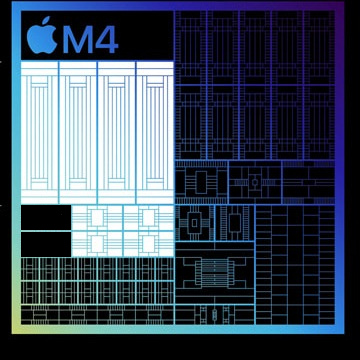
The 8-core Apple M4 is an ARM architecture processor (SoC) that sports 8 CPU cores along with an 8-core GPU with hardware RT support and other modern features. A 16-core neural engine, USB 4 and Thunderbolt 4 are onboard, too.
The processor debuted in October 2024; it cuts down on the number of efficient cores but thankfully has the same 4 performance cores that its more powerful M4 brothers (non-Pro, non-Max) have. The P-cores probably run at 4.1 GHz or more; we don't have exact figures as of yet. The E-cores probably run at sub-3 GHz clock speeds.
This is the third member of the M4 (non-Pro, non-Max) family. It joins the 10-core M4 and the 9-core M4 that were unveiled several months before it.
The chip is believed to be based on the ARM v9.4-A microarchitecture to a certain extent. It comes with 16 GB or 24 GB of fast on-package LPDDR5x-7500 RAM; M3 processors had to be content with 6400 MT/s, for reference, while higher end M4 Pro and M4 Max processors get LPDDR5x-8533. It is not yet clear if this new chip is a 10-core M4 with several modules disabled, or if it's actually a new die that has fewer CPU and GPU cores by design.
Its performance is set to be very close to what Intel Lunar Lake processors such as the 256V deliver.
As far as power consumption is concerned, the SoC probably eats about 10 W when under long-term workloads. We'll update this section once we have one of the new Macs in for testing.
| Model | Apple M2 | Apple M4 Pro (12 cores) | Apple M4 (8 cores) | ||||||||||||||||||||||||||||||||||||||||||||||||||||||||||||||||||||||||
| Series | Apple M2 | Apple M4 | Apple M4 | ||||||||||||||||||||||||||||||||||||||||||||||||||||||||||||||||||||||||
| Series: M4 |
|
|
| ||||||||||||||||||||||||||||||||||||||||||||||||||||||||||||||||||||||||
| Clock | 2424 - 3480 MHz | 2592 - 4512 MHz | 2900 - 4000 MHz | ||||||||||||||||||||||||||||||||||||||||||||||||||||||||||||||||||||||||
| L1 Cache | 2 MB | ||||||||||||||||||||||||||||||||||||||||||||||||||||||||||||||||||||||||||
| L2 Cache | 20 MB | 4 MB | 4 MB | ||||||||||||||||||||||||||||||||||||||||||||||||||||||||||||||||||||||||
| L3 Cache | 8 MB | ||||||||||||||||||||||||||||||||||||||||||||||||||||||||||||||||||||||||||
| Cores / Threads | 8 / 8 | 12 / 12 8 x 4.5 GHz Apple M4 P-Core 4 x 2.6 GHz Apple M4 E-Core | 8 / 8 4 x 4.4 GHz Apple M4 P-Core 2.9 GHz Apple M4 E-Core | ||||||||||||||||||||||||||||||||||||||||||||||||||||||||||||||||||||||||
| TDP | 20 Watt | 32 Watt | 5 Watt | ||||||||||||||||||||||||||||||||||||||||||||||||||||||||||||||||||||||||
| Transistors | 20000 Million | ||||||||||||||||||||||||||||||||||||||||||||||||||||||||||||||||||||||||||
| Technology | 5 nm | 3 nm | 3 nm | ||||||||||||||||||||||||||||||||||||||||||||||||||||||||||||||||||||||||
| Features | ARMv8 Instruction Set | Unified Memory LPDDR5X-8533 (273 GB/s), 16-Core Neural Engine, Media Engine (Encoding / Decoding: H.264, HEVC, ProRes, ProRes RAW, AV1 Decoding only) | Unified Memory LPDDR5X-7500 (120 GB/s), 16-Core Neural Engine, Media Engine (Encoding / Decoding: H.264, HEVC, ProRes, ProRes RAW, AV1 Decoding only) | ||||||||||||||||||||||||||||||||||||||||||||||||||||||||||||||||||||||||
| iGPU | Apple M2 10-Core GPU ( - 1398 MHz) | Apple M4 Pro 16-Core GPU | Apple M4 8-core GPU | ||||||||||||||||||||||||||||||||||||||||||||||||||||||||||||||||||||||||
| Chip AI | 15.8 TOPS INT8 | ||||||||||||||||||||||||||||||||||||||||||||||||||||||||||||||||||||||||||
| Architecture | ARM | ARM | ARM | ||||||||||||||||||||||||||||||||||||||||||||||||||||||||||||||||||||||||
| Announced | |||||||||||||||||||||||||||||||||||||||||||||||||||||||||||||||||||||||||||
| Manufacturer | www.apple.com | www.apple.com | |||||||||||||||||||||||||||||||||||||||||||||||||||||||||||||||||||||||||
| TDP Turbo PL2 | 40 Watt | 15 Watt | |||||||||||||||||||||||||||||||||||||||||||||||||||||||||||||||||||||||||
| NPU / AI | 38 TOPS INT8 | 38 TOPS INT8 |
Benchmarks

Average Benchmarks Apple M2 → 100% n=2
Average Benchmarks Apple M4 Pro (12 cores) → 175% n=2
Average Benchmarks Apple M4 (8 cores) → 140% n=2
 - Average benchmark values for this graphics card
* Smaller numbers mean a higher performance
1 This benchmark is not used for the average calculation


