




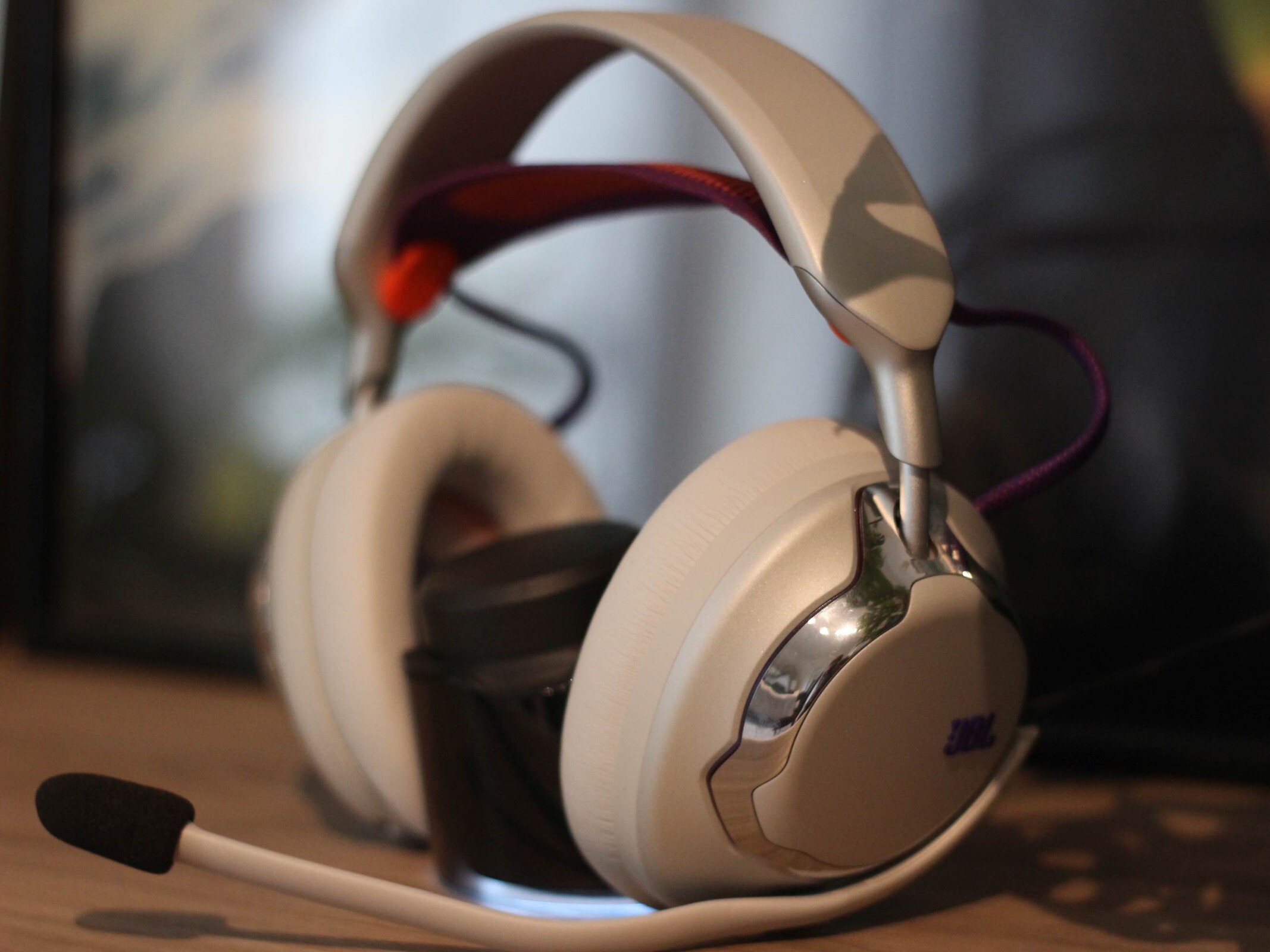
JBL Quantum 950 review: Versatile headset impresses in the test with build quality and features
Silvio Werner, 👁 Daniel Schmidt, ✓ Ninh Duy (translated by DeepL / Ninh Duy) Published 🇩🇪 🇳🇱 ...
Strong features, good sound: The JBL Quantum 950 Wireless
The JBL Quantum 950 Wireless is a fairly expensive wireless gaming headset. Its audio quality is convincing, as is its excellent build quality. The easily replaceable battery allows for uninterrupted use and also benefits sustainability. The base station is generally useful and makes volume control easy, though whether the RGB lighting was really necessary is open to question. The spatial presentation of audio is quite impressive, with head tracking in particular creating an immersive sound experience. The headset itself is very well made and comes with useful controls. Overall, the JBL Quantum 950 Wireless is definitely worth recommending.
Pros
Cons
Price and availability
The JBL Quantum headset is available from Amazon (Germany), for example, in black and white for €300. JBL sells it at the same price and also offers refurbished units.
Specifications
| Wearing style | Over-ear |
| Connectivity | 2.4 GHz, Bluetooth, USB Type C |
| Speaker | 50 mm carbon driver |
| Audio codecs | A2DP V1.4, HFP V1.8, AVRCP V1.6.2 |
| Battery capacity | 2.56 Wh |
| Charging port | USB-C |
| wireless charging | no |
| Weight | 398 grams |
| Scope of delivery | Headset, boom microphone, calibration microphone, base station, 2 rechargeable batteries, windscreen, USB cable, jack-to-USB cable, carrying bag |
| Price (RRP) | 350 euros |
The JBL Quantum 950 Wireless is a wireless headset with a microphone aimed primarily at gamers. It comes with a base and charging station and supports multiple connection options.
Scope of delivery and hardware
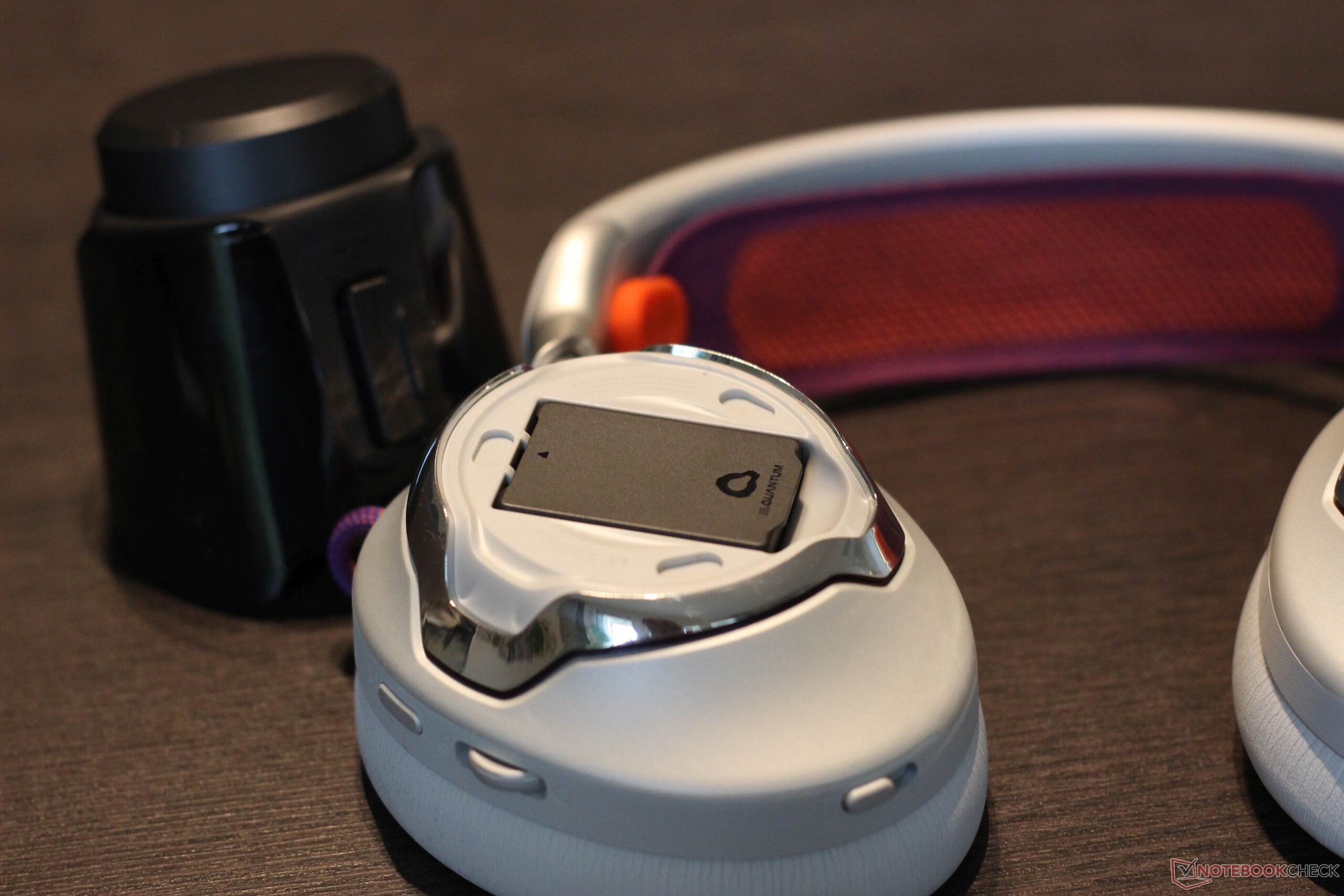
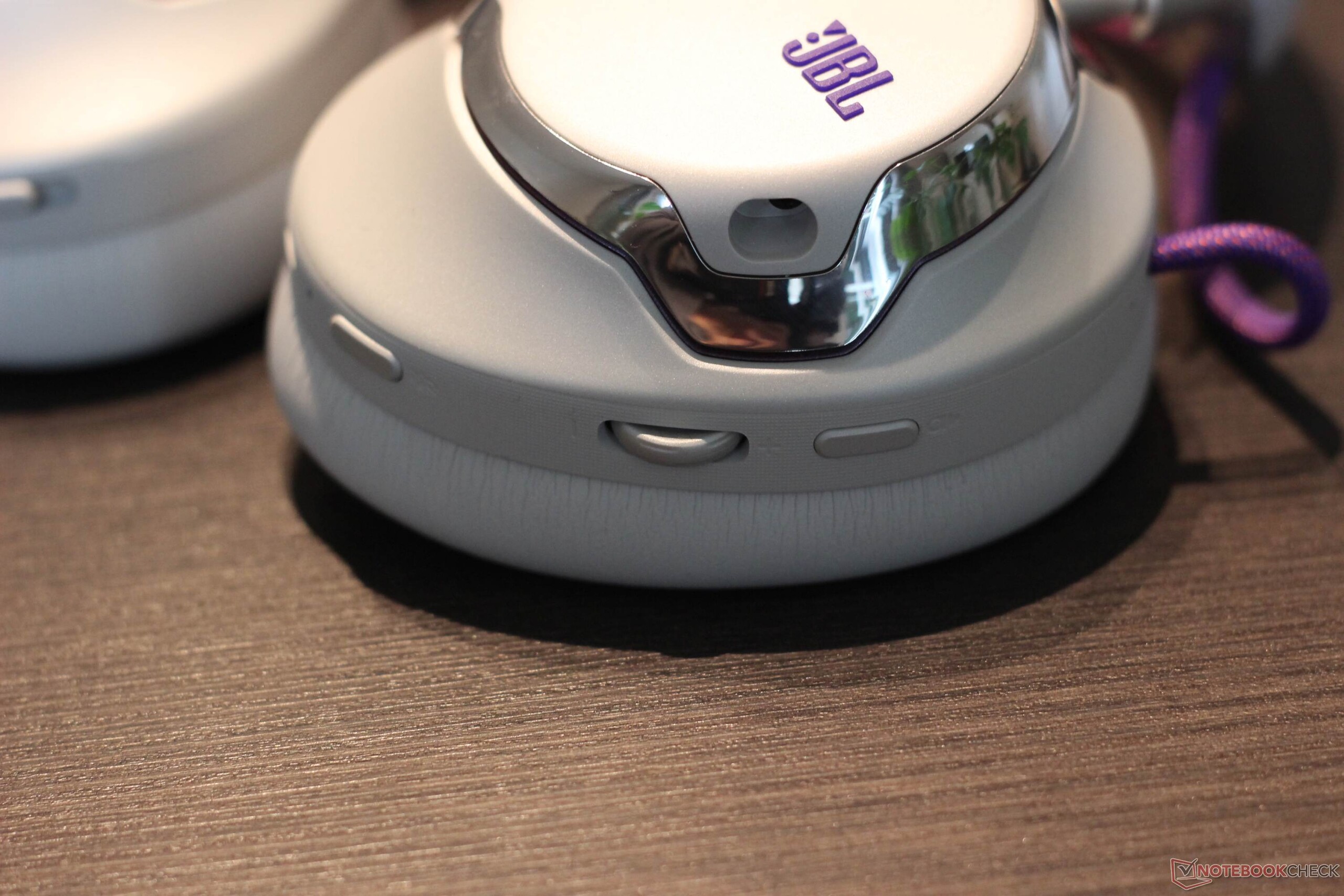
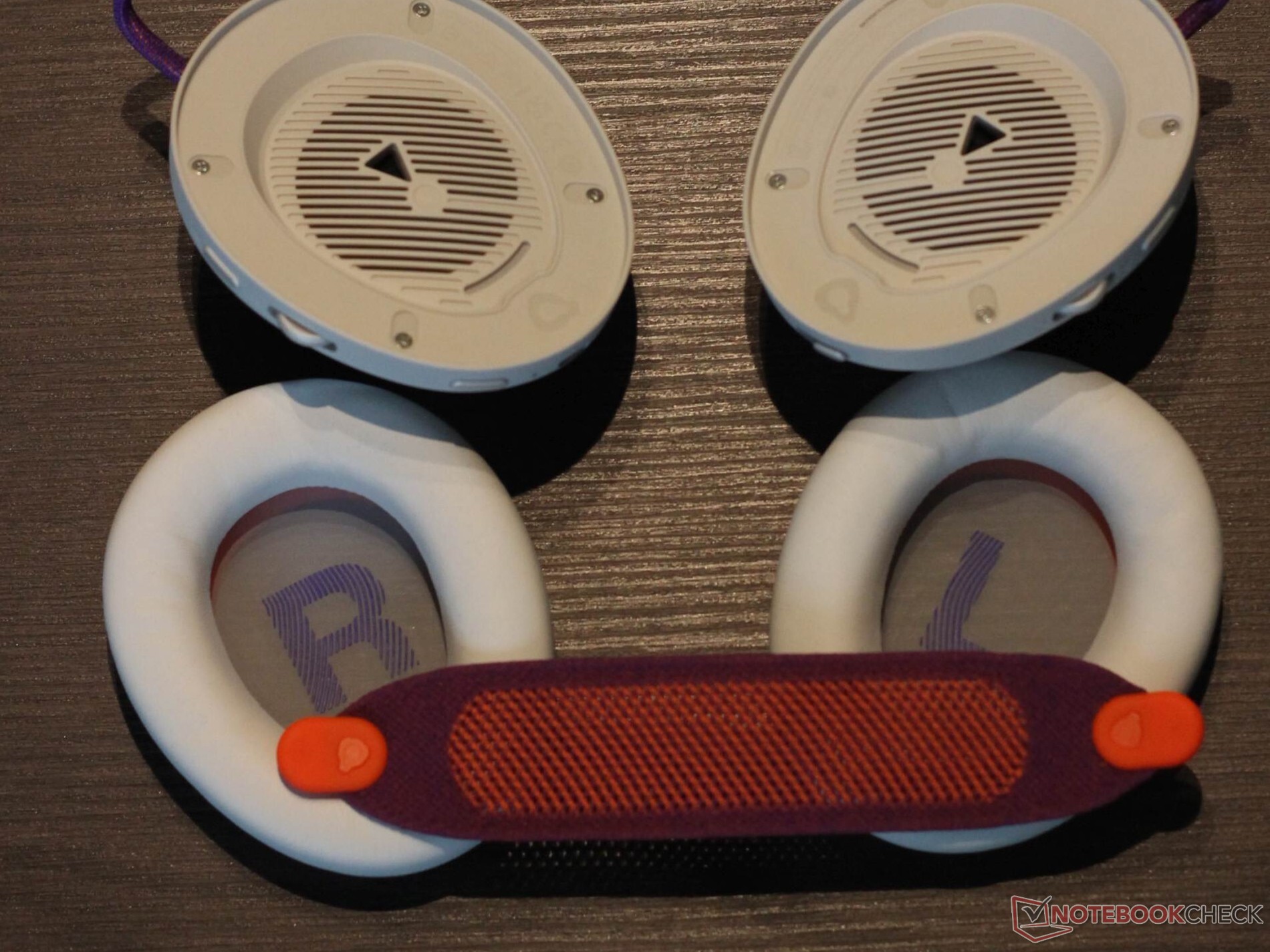
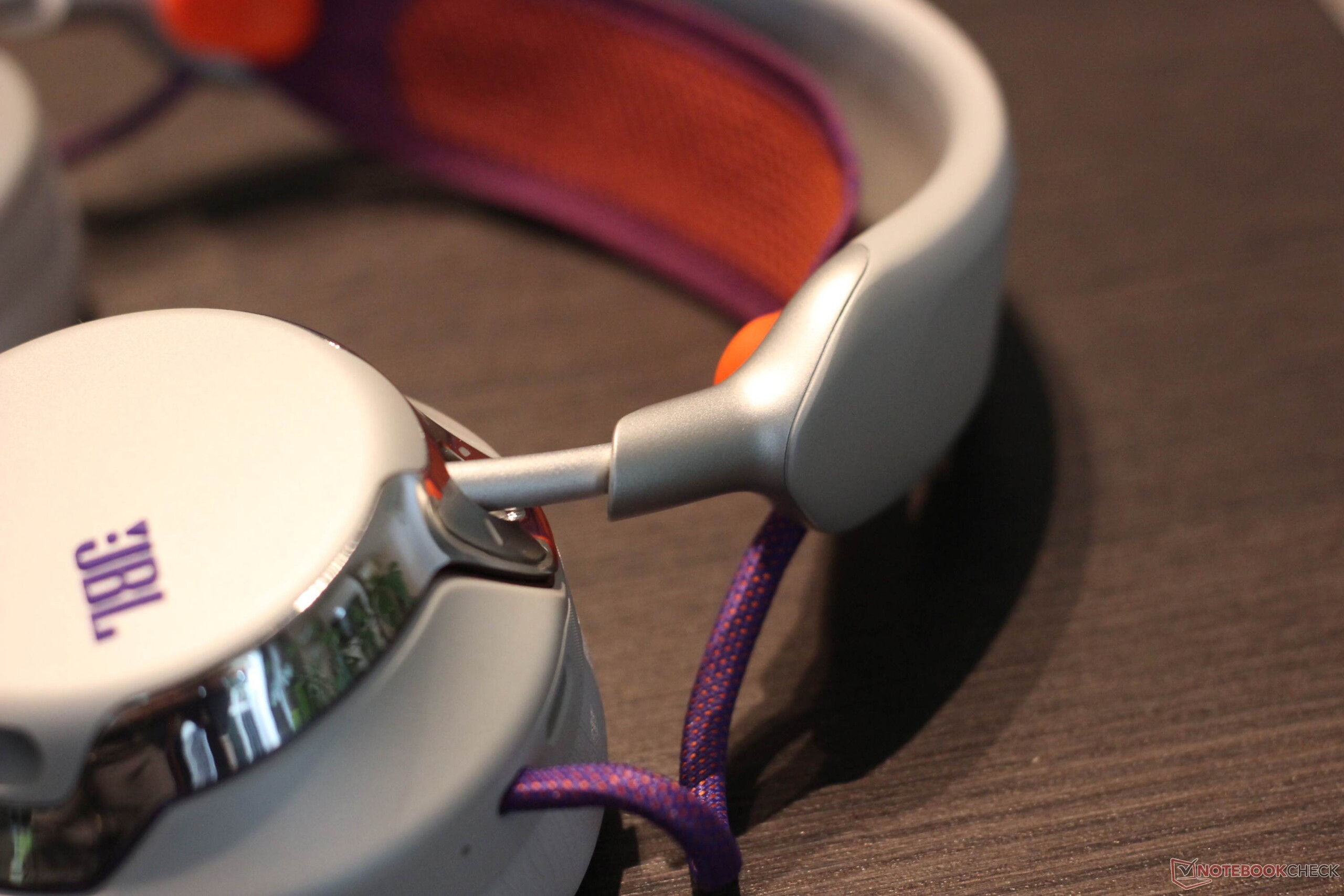
The JBL Quantum 950 Wireless comes with a comprehensive range of accessories. A base station that can be connected via USB type C is included. This offers several functions: It not only acts as a 2.4 GHz dongle, but also as a control unit and charging station for one of the two rechargeable batteries supplied. A boom microphone and a microphone specifically for calibration are also included. A very useful cloth bag is also included. The headset itself comes with metal accents and three buttons, two rotary controls and a slider. The buttons offer a pleasant pressure point. The headset itself has a striking design with metal-colored accents and metal is also used as a material. The ear pads are held in place magnetically and are easy to replace. The headband itself is made of a mesh fabric, which can also be replaced - this is generally a very positive feature. The same applies to the battery, which can also be easily replaced. As expected, the metal-colored surfaces are a little susceptible to fingerprints. The white model version does not skimp on contrasts. The headband is purple and orange, as are the very visible cables and the JBL logo.
Easy installation, good software
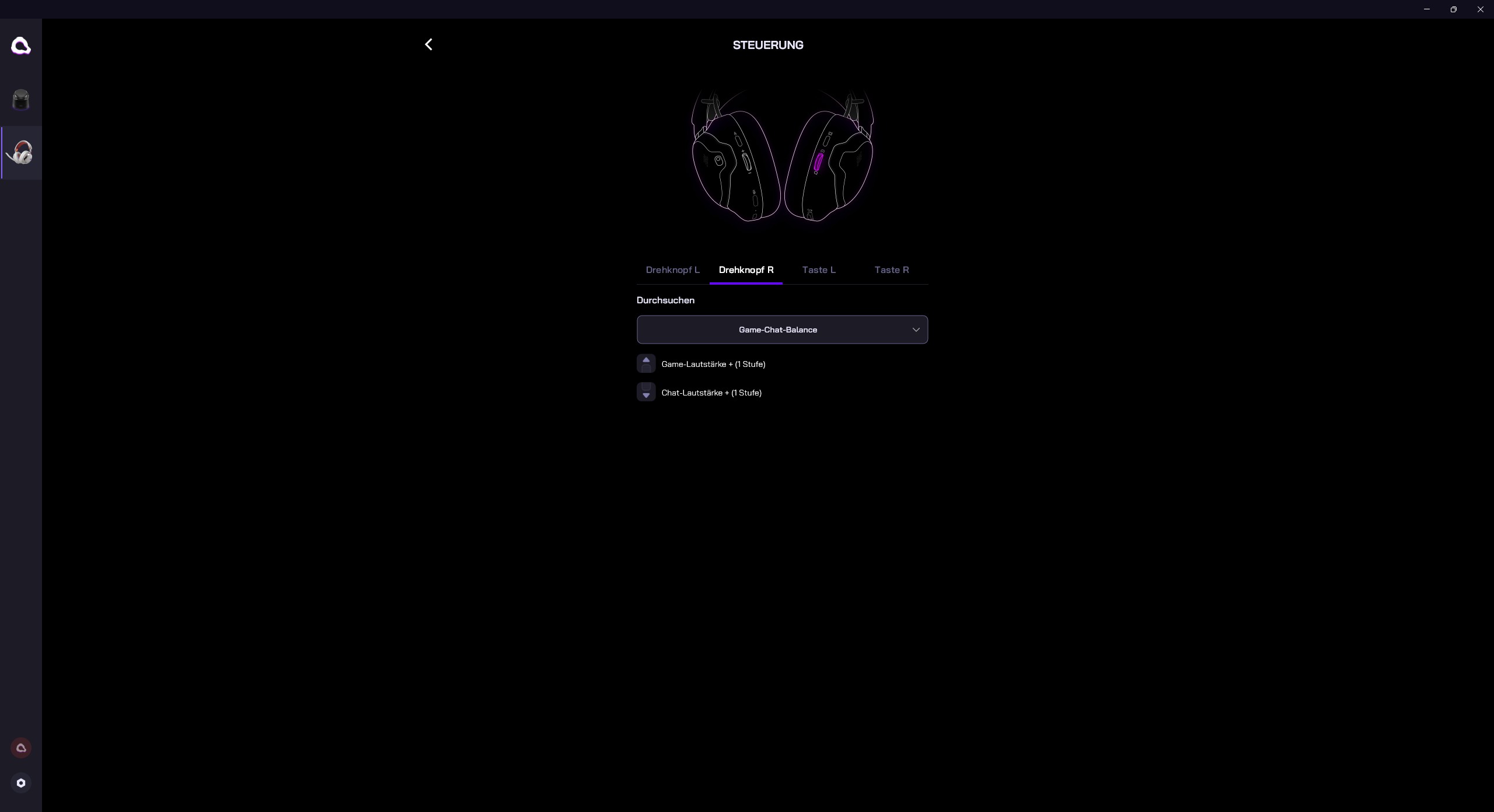
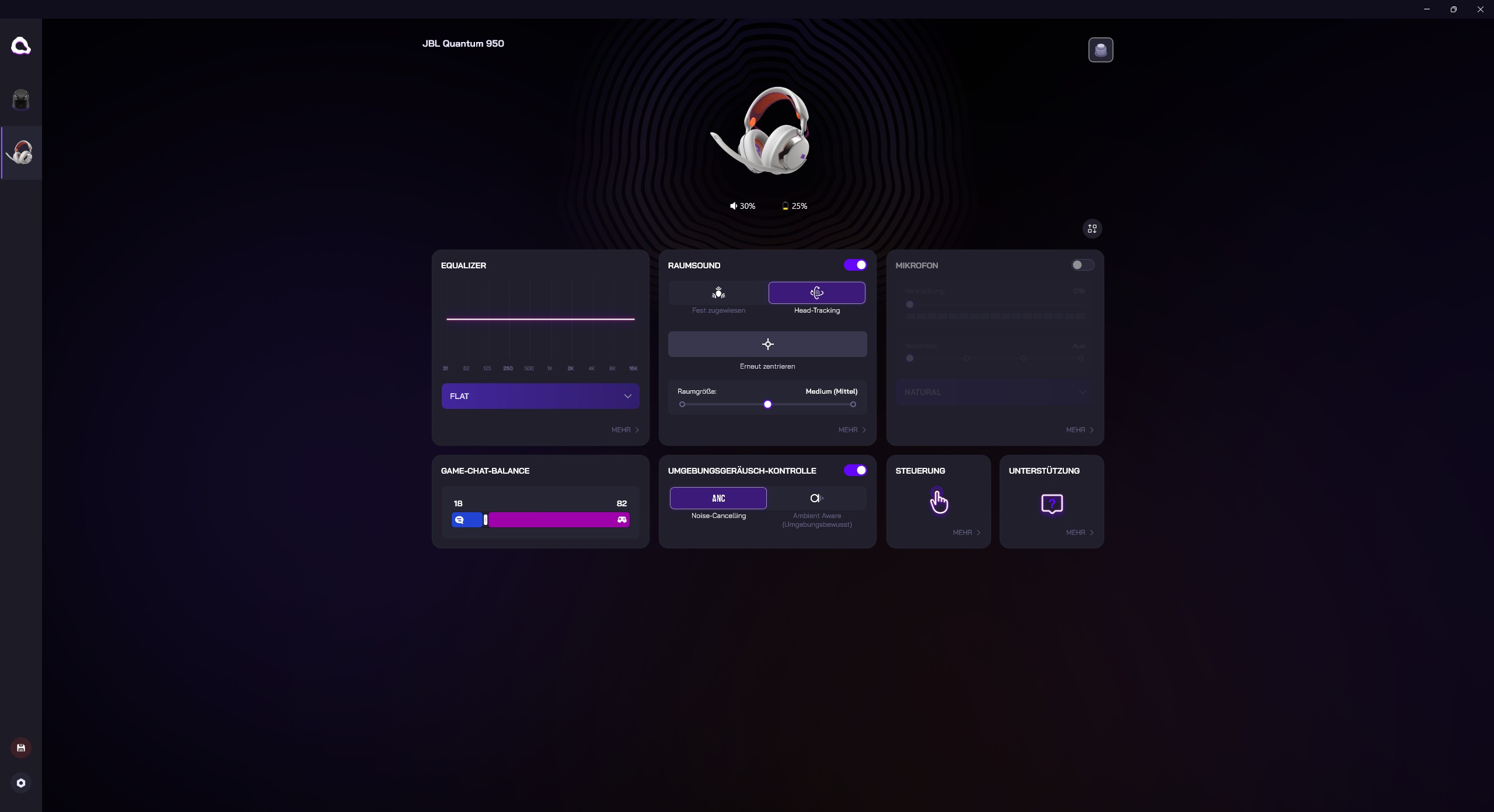
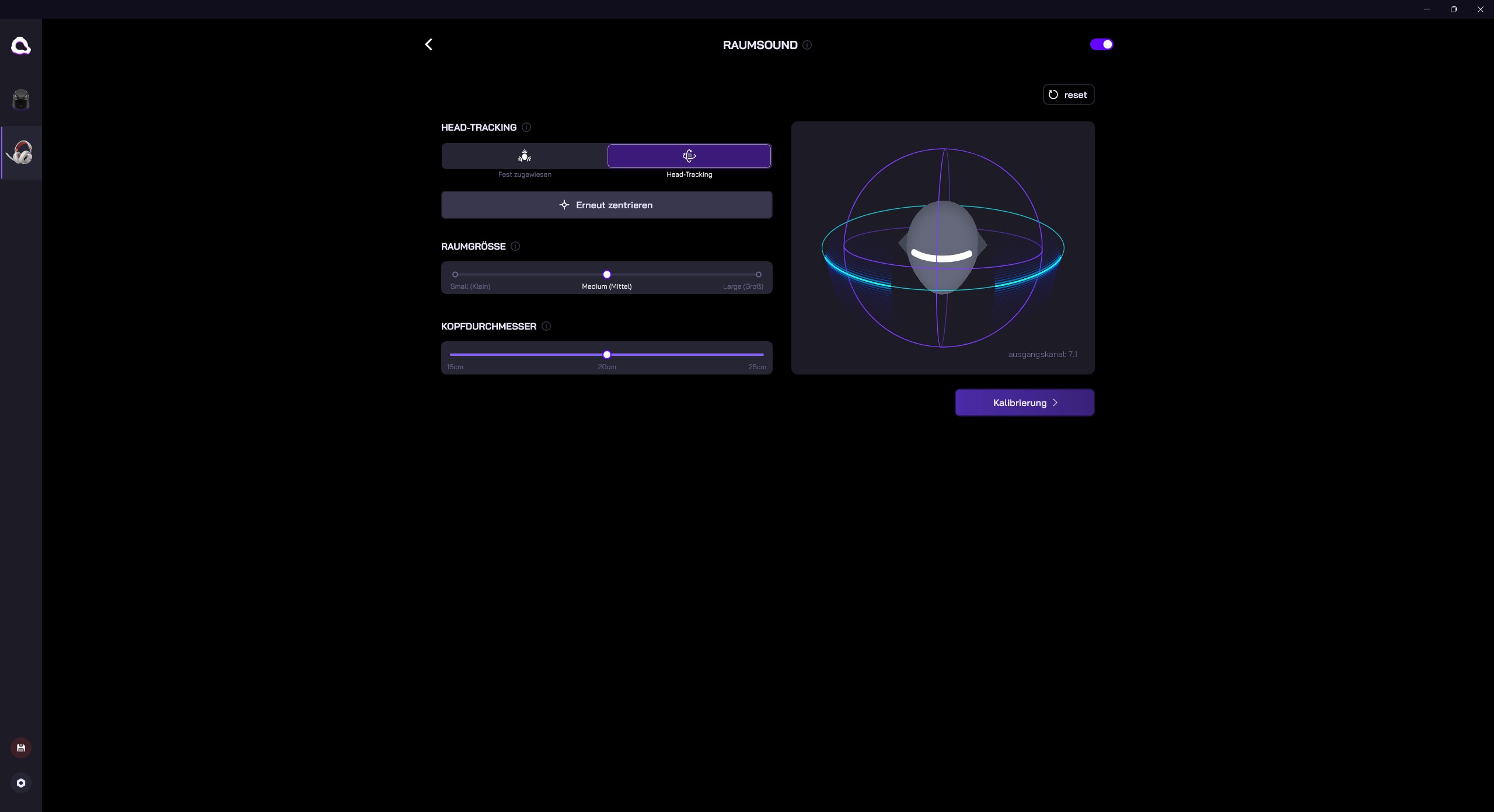
Setup on a PC is very simple: connect the base station via USB Type-C and charge the battery if needed. Installing JBL QuantumENGINE is recommended. It is not strictly necessary, but it is advisable. The software offers extensive configuration options for both the base station and the headset itself. In the app, users can not only adjust settings such as the equalizer, but also configure the functions of the individual input options. The headset can be used via USB Type-C, Bluetooth, and a 2.4 GHz connection. Pairing with a smartphone is also completely straightforward. It is also compatible with game consoles. Using the included cable, audio sources can also be connected via a 3.5 mm jack.
Wearing comfort
At just under 400 grams, the JBL Quantum 950 Wireless is one of the heavier headsets in its class. That is noticeable, especially during longer sessions. Ultimately, though, whether you are comfortable wearing a headset this heavy depends largely on personal preference. In our experience, comfort remained acceptable even during extended use of up to eight hours with only occasional breaks. The ear pads are comfortable, and we did not notice any significant heat buildup or severely overheated ears. Some warming is unavoidable, however. At least part of the weight is due to the robust construction. In particular, the connection between the headband and the two ear cups that house the drivers is quite substantial. The ear cups can be folded down, but the headset does not fold down particularly compactly.
Good sound in many situations
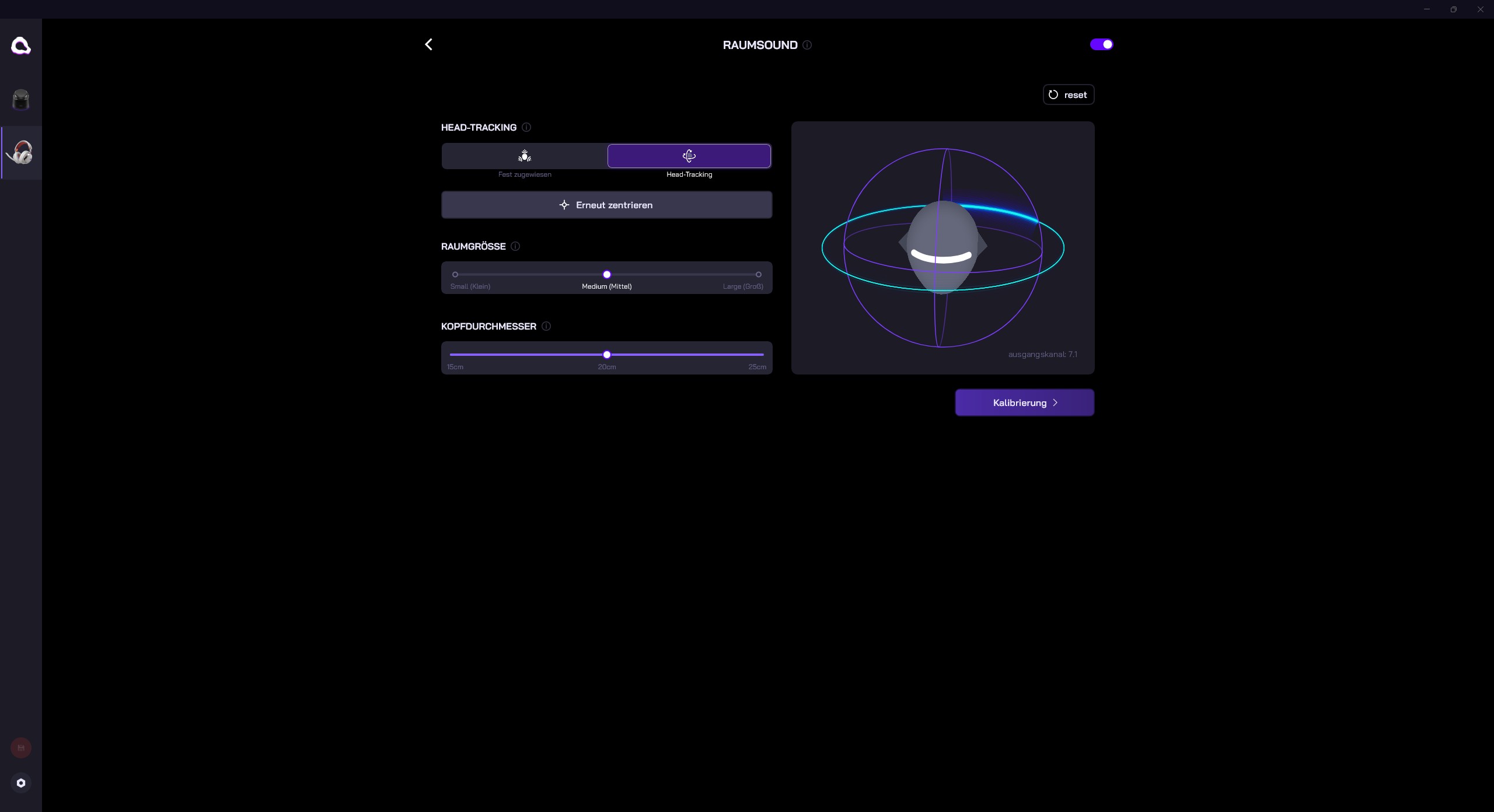
In our standardized sound measurements, the JBL Quantum 950 Wireless delivers good, linear sound quality. It reaches relatively high volumes, and playback remains balanced across the frequency range. This was largely confirmed by our subjective listening impressions. Subjectively, we did not find any real limitations in terms of usability, whether for music or gaming. The surround sound is particularly impressive. It supports 7.1 audio both with fixed channel assignment and with head tracking. Sound localization is already good with the fixed assignment. Head tracking makes it even easier, though it does require at least slight head movement. You do not need to swing your head back and forth.
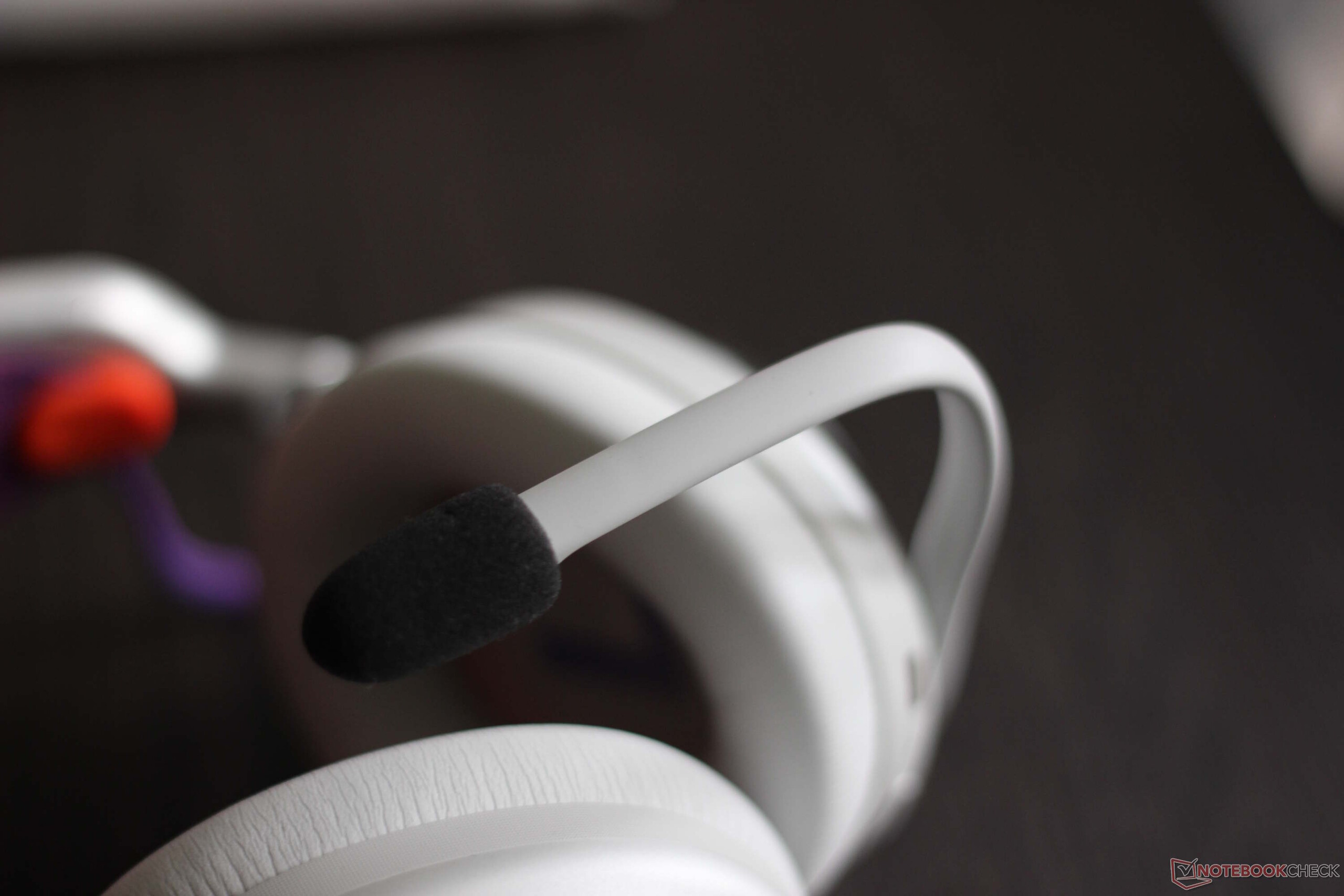
There is little to criticize about the microphone quality. Voice quality is faultless, and a windscreen is included. The microphone itself cannot be tilted or otherwise repositioned on the headset. However, the microphone arm, or more precisely the connection between the microphone itself and the JBL Quantum 950 Wireless, is flexible. This allows the microphone to be moved closer to the mouth, though not directly below it. The JBL Quantum 950 Wireless does not have a built-in microphone, which is understandable given its focus as a gaming headset. If you forget to bring the boom mic, there is no fallback option. For that reason, everyday use with a smartphone is somewhat limited. That said, we would not really wear the JBL Quantum 950 Wireless in daily life anyway; its fairly conspicuous design is simply not intended for that kind of use.
| Loudspeakers | |
| THD | |
| Teufel ZOLA (RMS: -3.0 dBFS) | |
| JBL Quantum 950 (RMS: -2.3 dBFS) | |
| THD+N | |
| Teufel ZOLA (RMS: -3.0 dBFS) | |
| JBL Quantum 950 (RMS: -2.3 dBFS) | |
* ... smaller is better
THD (Total Harmonic Distortion): Harmonic distortion quantifies the amount of distortion caused by non-linear distortion (harmonic content) in relation to the original signal. THD only refers to the fundamental component. The distortion factor is often mentioned in the same breath, but refers to the overall signal.
THD+N (Total Harmonic Distortion + Noise): This value is comparable to THD, but in addition to the interference power of the harmonics, that of the noise is recorded as an effective value.
For the measurement, a low harmonic sinusoidal signal (1 kHz, > 0 dB) is played back via the headphones to be tested, which is recorded by a linear measuring microphone (measuring distance: approx. 1 cm) in an artificial head.
Both values are given as a percentage. The lower the value, the better the signal fidelity.
JBL Quantum 950 audio analysis
(+) | speakers can play relatively loud (92.7 dB)
Bass 100 - 315 Hz
(+) | good bass - only 4.7% away from median
(+) | bass is linear (3.5% delta to prev. frequency)
Mids 400 - 2000 Hz
(+) | balanced mids - only 1.6% away from median
(+) | mids are linear (1.2% delta to prev. frequency)
Highs 2 - 16 kHz
(+) | balanced highs - only 3.6% away from median
(+) | highs are linear (4.7% delta to prev. frequency)
Overall 100 - 16.000 Hz
(+) | overall sound is linear (7.8% difference to median)
Compared to same class
» 1% of all tested devices in this class were better, 0% similar, 98% worse
» The best had a delta of 4%, average was 23%, worst was 136%
Compared to all devices tested
» 1% of all tested devices were better, 0% similar, 98% worse
» The best had a delta of 4%, average was 23%, worst was 136%
Teufel ZOLA audio analysis
(+) | speakers can play relatively loud (87.4 dB)
Bass 100 - 315 Hz
(+) | good bass - only 1.6% away from median
(+) | bass is linear (2.8% delta to prev. frequency)
Mids 400 - 2000 Hz
(+) | balanced mids - only 1.1% away from median
(+) | mids are linear (1.1% delta to prev. frequency)
Highs 2 - 16 kHz
(±) | reduced highs - on average 7.7% lower than median
(+) | highs are linear (6.2% delta to prev. frequency)
Overall 100 - 16.000 Hz
(+) | overall sound is linear (8.5% difference to median)
Compared to same class
» 2% of all tested devices in this class were better, 1% similar, 97% worse
» The best had a delta of 4%, average was 23%, worst was 136%
Compared to all devices tested
» 2% of all tested devices were better, 1% similar, 97% worse
» The best had a delta of 4%, average was 23%, worst was 136%
Sustainability
JBL relies mostly on cardboard for the packaging. Only the presentation slipcase visible to buyers in retail stores is elaborately printed and laminated. As with the JBL Quantum 950 Wireless, an easily replaceable battery is not standard and is a positive feature from a sustainability standpoint. The same applies to the easily replaceable ear pads.
Transparency
The selection of devices to be reviewed is made by our editorial team. The test sample was given to the author by the manufacturer free of charge for the purposes of review. There was no third-party influence on this review, nor did the manufacturer receive a copy of this review before publication. There was no obligation to publish this review. As an independent media company, Notebookcheck is not subjected to the authority of manufacturers, retailers or publishers.
This is how Notebookcheck is testing
Every year, Notebookcheck independently reviews hundreds of laptops and smartphones using standardized procedures to ensure that all results are comparable. We have continuously developed our test methods for around 20 years and set industry standards in the process. In our test labs, high-quality measuring equipment is utilized by experienced technicians and editors. These tests involve a multi-stage validation process. Our complex rating system is based on hundreds of well-founded measurements and benchmarks, which maintains objectivity. Further information on our test methods can be found here.
 Add as a preferred source on Google


