




Update | Intel's phantom flagship: the i9-14901KE, an unlocked, all-P-core embedded chip that never made it past validation
July 28, 2026 02:19 PM GMT update
Intel listed this chip in July 2024 with an official ARK page, but has since taken it down.
The original article follows below.
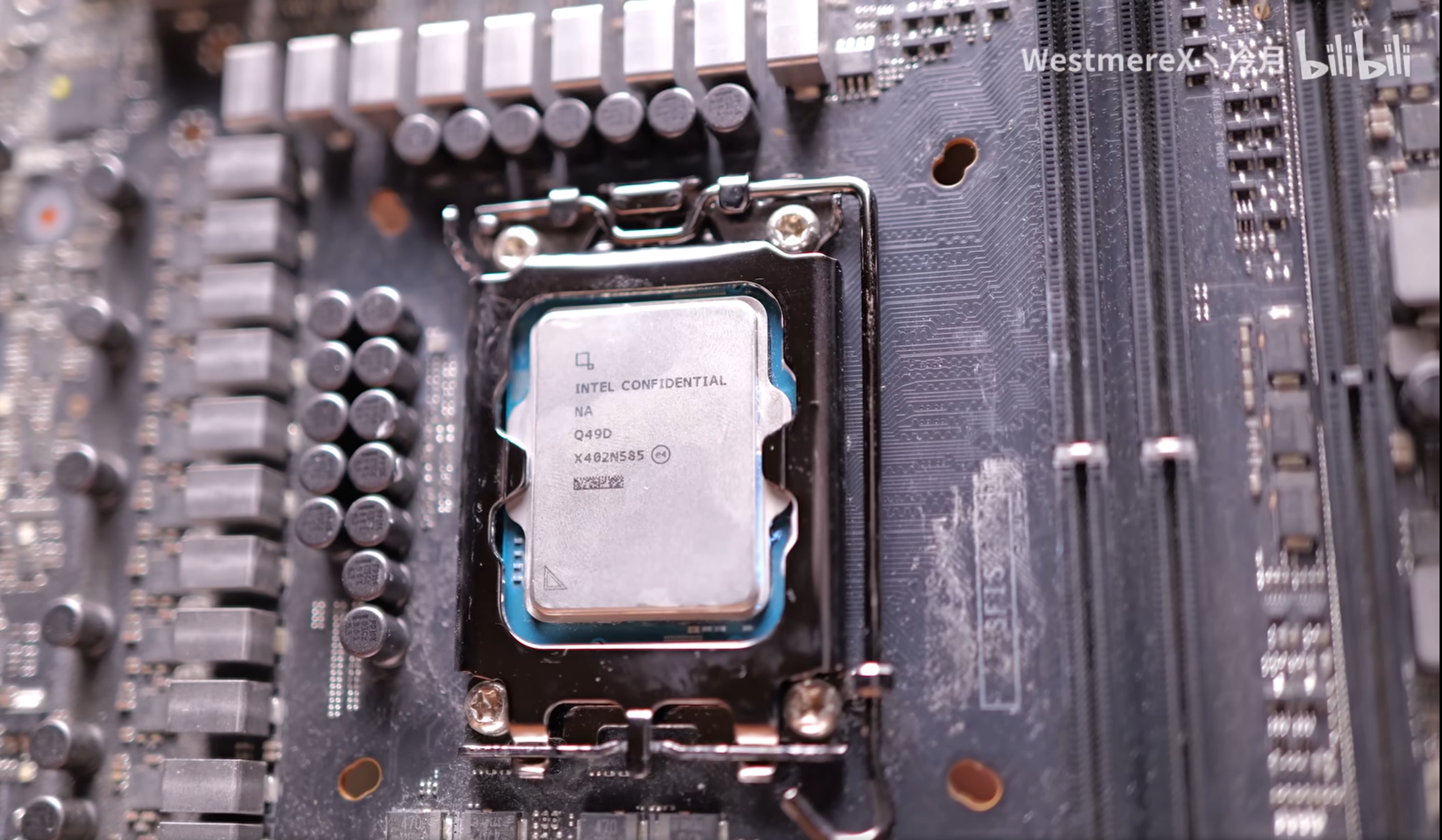
The Intel Core i9-14901KE is easy to mistake for vaporware, and largely for good reason: it was never actually released. That is the starting point of a recent review video from Bilibili creator WestmereX, titled "World's first review + extreme overclocking! Hunt for novelty Intel pure big-core CPU: i9-14901KE" (published July 26, 2026; title machine-translated), which tracked down a QS-stage sample of the chip. The part has no retail listing, no consumer reviews, and no ARK product page, unlike most of the family it belongs to.
That family is real and was covered back in July 2024: nine E-suffix and T-suffix parts built without any Efficiency cores as part of the wider 14th Gen Raptor Lake Refresh rollout. All of them are locked chips with standard multipliers, aimed at embedded and industrial use. The 14901KE was the lone exception on the spec sheet: eight Performance cores, 16 threads, a 125 W TDP, and an unlocked multiplier. However, it was also the one part in the family that never made it past internal validation. It showed up in early press listings of the lineup, then quietly disappeared before anything resembling a retail launch.
An all-P-core family, not a one-off
The 14901KE was never really alone, at least among the i9 SKUs. The 14901E and 14901TE are binned 14900 dies with the Efficiency cores disabled rather than a separate design. The i5 variants below them use smaller, non-flagship dies. All of them are differentiated mainly by power limits and clock speeds.
Intel's own product page lists the i9-14901E as officially launched in Q3 2024 with a $557 recommended customer price. The 14901KE never got that treatment: no ARK page, no confirmed launch date, and no RCP, consistent with the hands-on review's finding that the tested sample remained at the QS (qualification sample) validation stage.
It did reach buyers, just not through normal channels
Despite being pitched strictly at industrial and embedded customers, some of the KE's locked siblings did turn up for sale on Chinese secondary marketplaces such as Goofish in late 2024. The 14901KE itself is a different story: there is no confirmed retail or gray-market sale of the part, and the sample behind this piece is a QS unit rather than anything that changed hands through a normal channel. Such unofficial channels likely explain how a sample of a chip Intel never intended to sell ended up in an enthusiast's hands at all.
Benchmark results
Hands-on testing of a QS-stage sample (revision Q49D) gives the clearest picture yet of how this die actually performs at stock settings, when overclocked, and under subzero cooling.
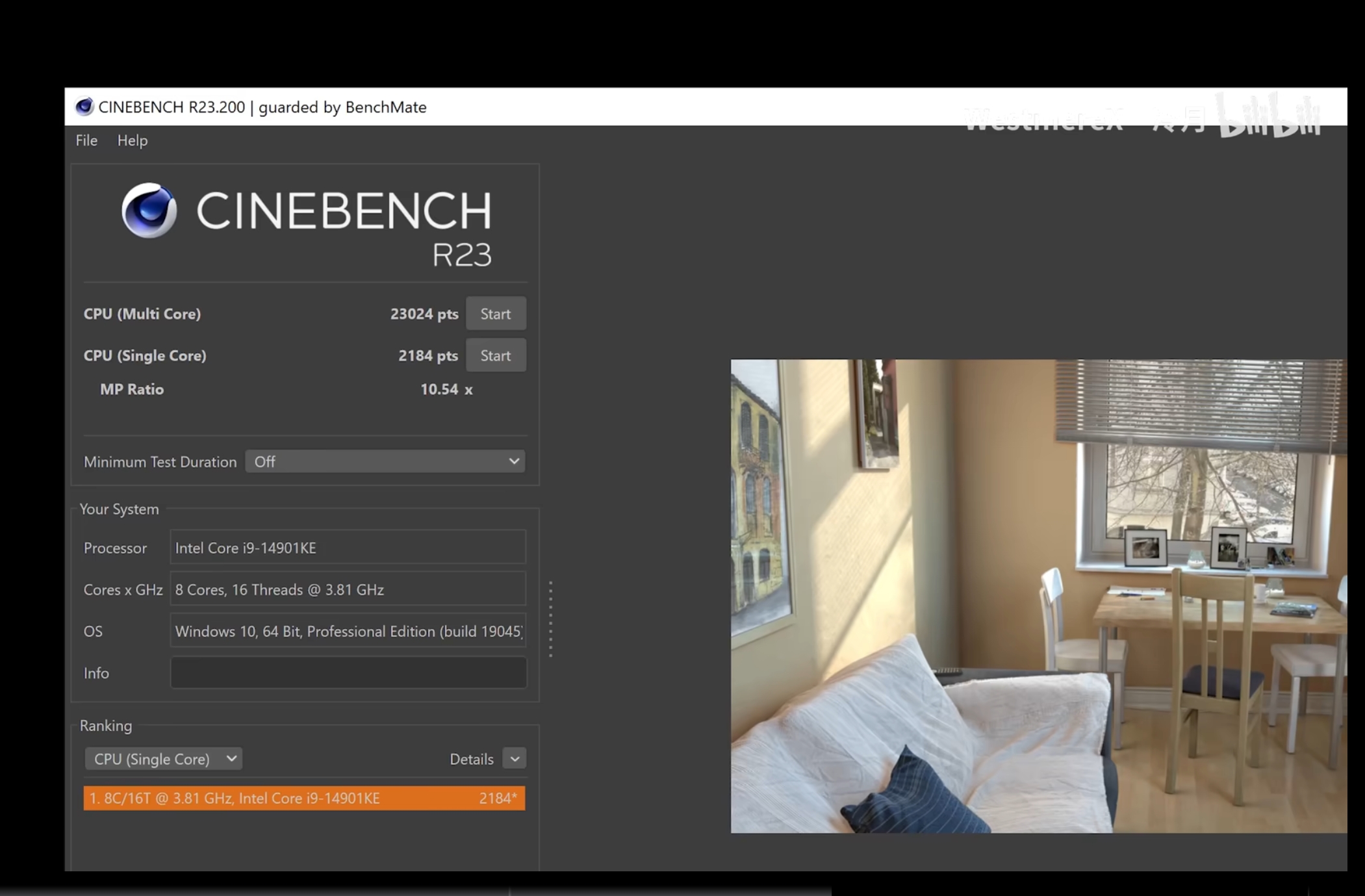
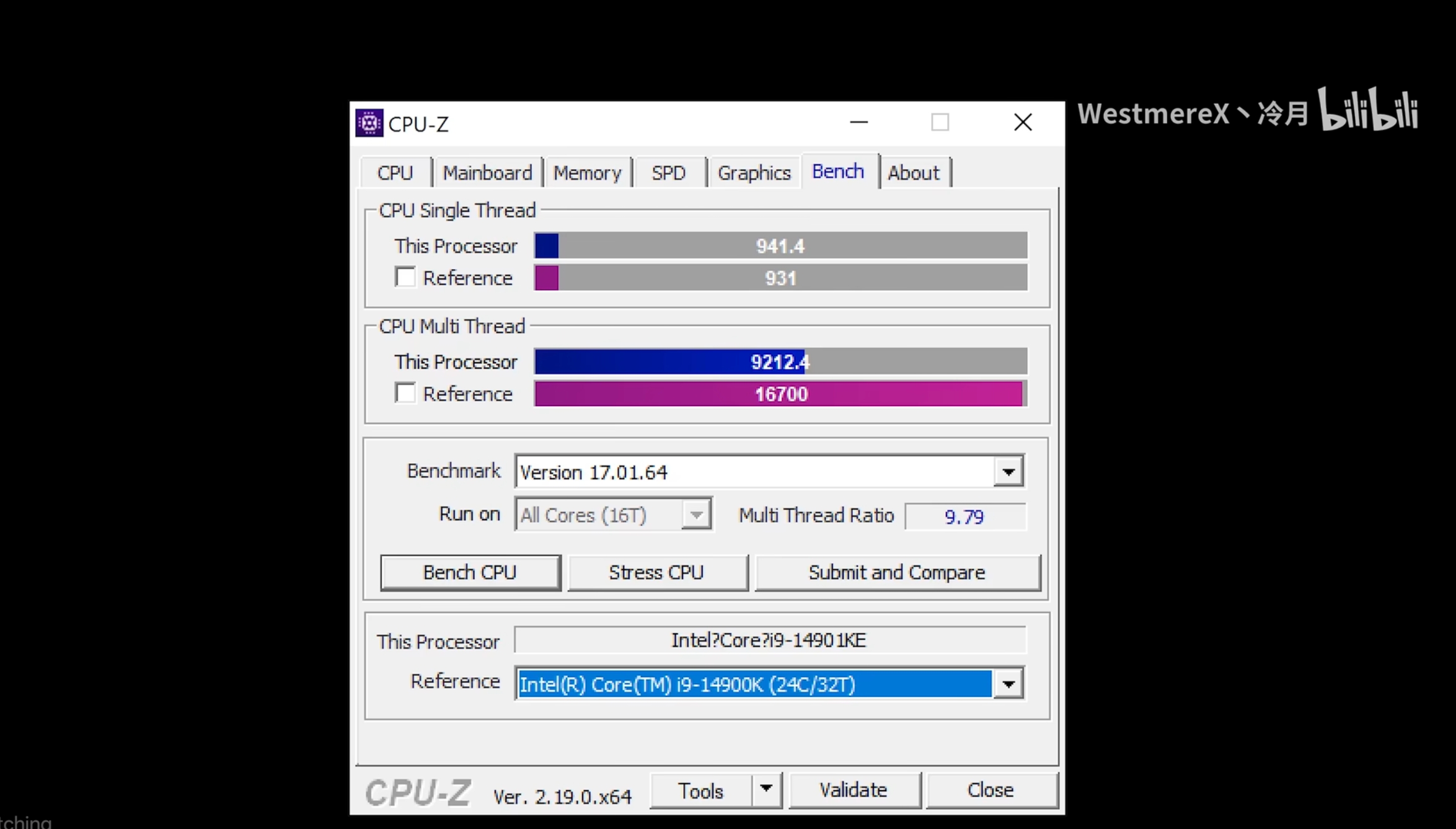
At stock settings, the chip ran at 5.5 GHz, and the results landed almost exactly where those of an i9-14900K with its E-cores manually disabled would, which makes sense given that the two chips share the same stepping and revision. The Cinebench R23 run held a flat 5.5 GHz across all eight cores at 1.225 V and 190 W. Nothing about the numbers suggests special binning.
Manual overclocking to the chip's rated 5.8 GHz boost frequency as an all-core clock required around 1.35 V, again in line with a bog-standard 14900K sample rather than anything hand-picked for an embedded SKU. The resulting gains—roughly 1% in CPU-Z single-core performance and under 6% in multi-core performance and Cinebench are modest for the extra voltage and 269 W of power being fed to the CPU during the Cinebench run.
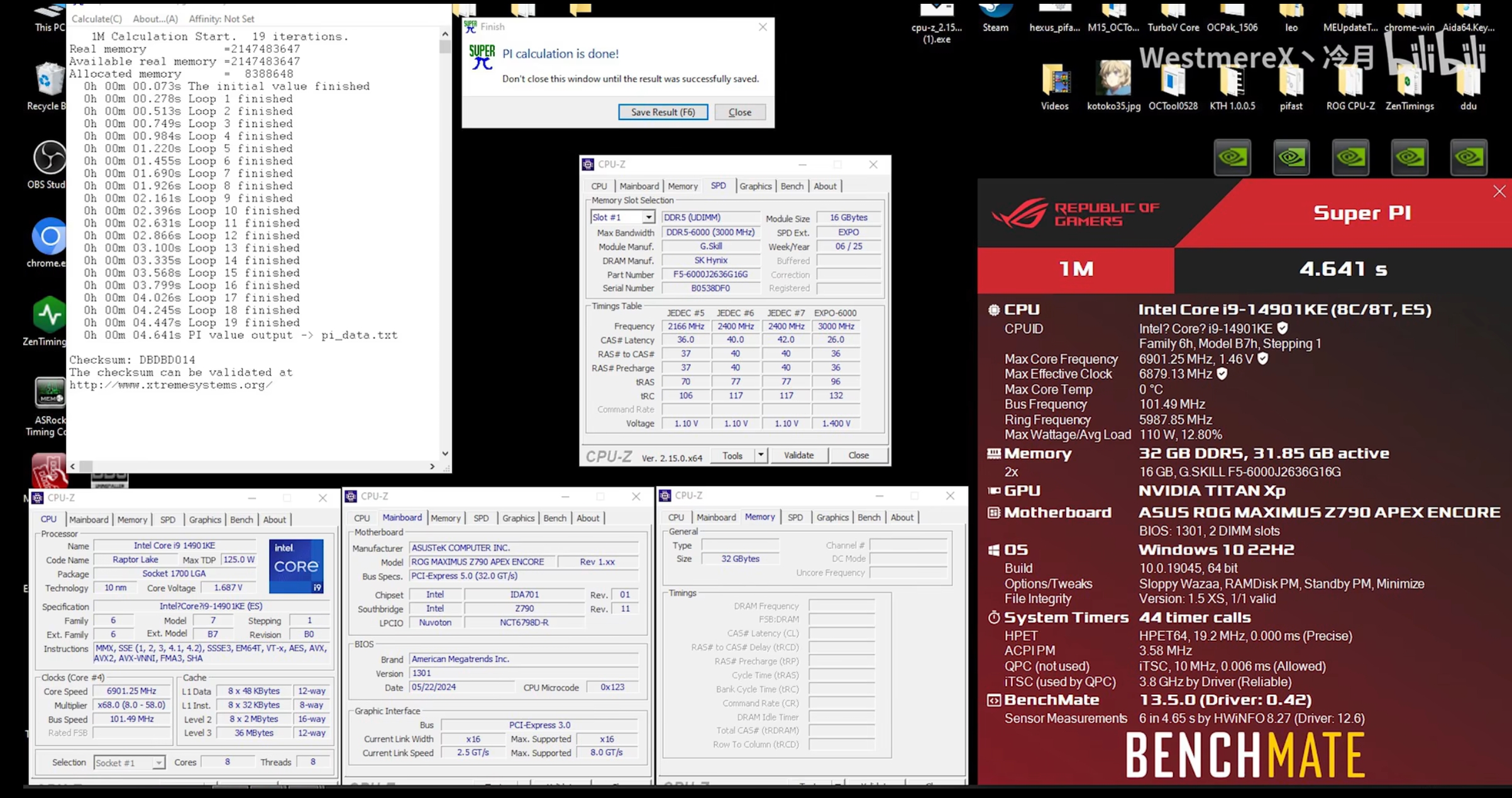
The most interesting numbers came under a cascade compressor pushing the die to −100 °C, where it topped out at a stable 7.4 GHz and completed a SuperPI 1M run at 6.9 GHz, paired with DDR5-8120 CL30 memory. That ceiling is consistent with what a well-cooled Raptor Lake P-core die can typically reach under extreme cooling, again offering no evidence that the all-P-core layout unlocks any extra clock headroom over standard retail dies.
Why pair "embedded" with "unlocked"?
The unlocked multiplier remains the strangest part of the spec sheet. Embedded and industrial deployments rarely need overclocking headroom, and dropping the Efficiency cores looks more like a fix for scheduler compatibility in industrial control software than a performance play. The benchmark numbers above back that up: no meaningful binning advantage at stock, unremarkable overclocking headroom, and an extreme-cooling ceiling in line with that of any well-cooled Raptor Lake die.
Takeaway
The 14901KE is less a hidden gem than a case study in how far a chip can travel without ever officially launching. It was named alongside its siblings in a single press cycle back in mid-2024, never received an ARK page or a retail channel of its own, and nevertheless surfaced through unofficial channels before Intel let it die quietly at the validation stage. It never got the die-quality advantage that its all-P-core design might have implied, either. Its interest today is almost entirely archaeological: a footnote showing how far Intel was willing to stretch the 14th Gen Raptor Lake Refresh die before shelving the idea for good.
Source(s)
 Add as a preferred source on Google


