




Garmin Forerunner 70: Lack of ideas or robust confidence?

The Garmin Forerunner 70 is official and, as Garmin itself is actively advertising, it is the new entry point for running. Compared with the Garmin Forerunner 55, the Forerunner 70 is a bigger update than it may appear at first glance: the Forerunner 70 is equipped with an AMOLED display, making it further evidence of Garmin's move away from MIP screens. From a technology perspective, that can be seen as an upgrade, though it also touches on a sore point. Garmin products are comparatively expensive and are catching up with the competition at least in terms of display technology. Whether MIP or AMOLED technology is better or worse is not something I want to judge conclusively here. What is clear, however, is that AMOLED displays can also achieve long battery life in always-on mode with adjusted watch faces. For more ambitious athletes, the increased power consumption from GNSS use also carries more weight. At the same time, according to a completely unrepresentative survey, MIP technology remains fairly popular at least among Garmin fans, while the fitness segment has grown significantly according to the latest quarterly figures despite the increasing move away from MIP displays. In sunlight, MIP displays can ultimately only be matched with very high display brightness but are difficult to beat.
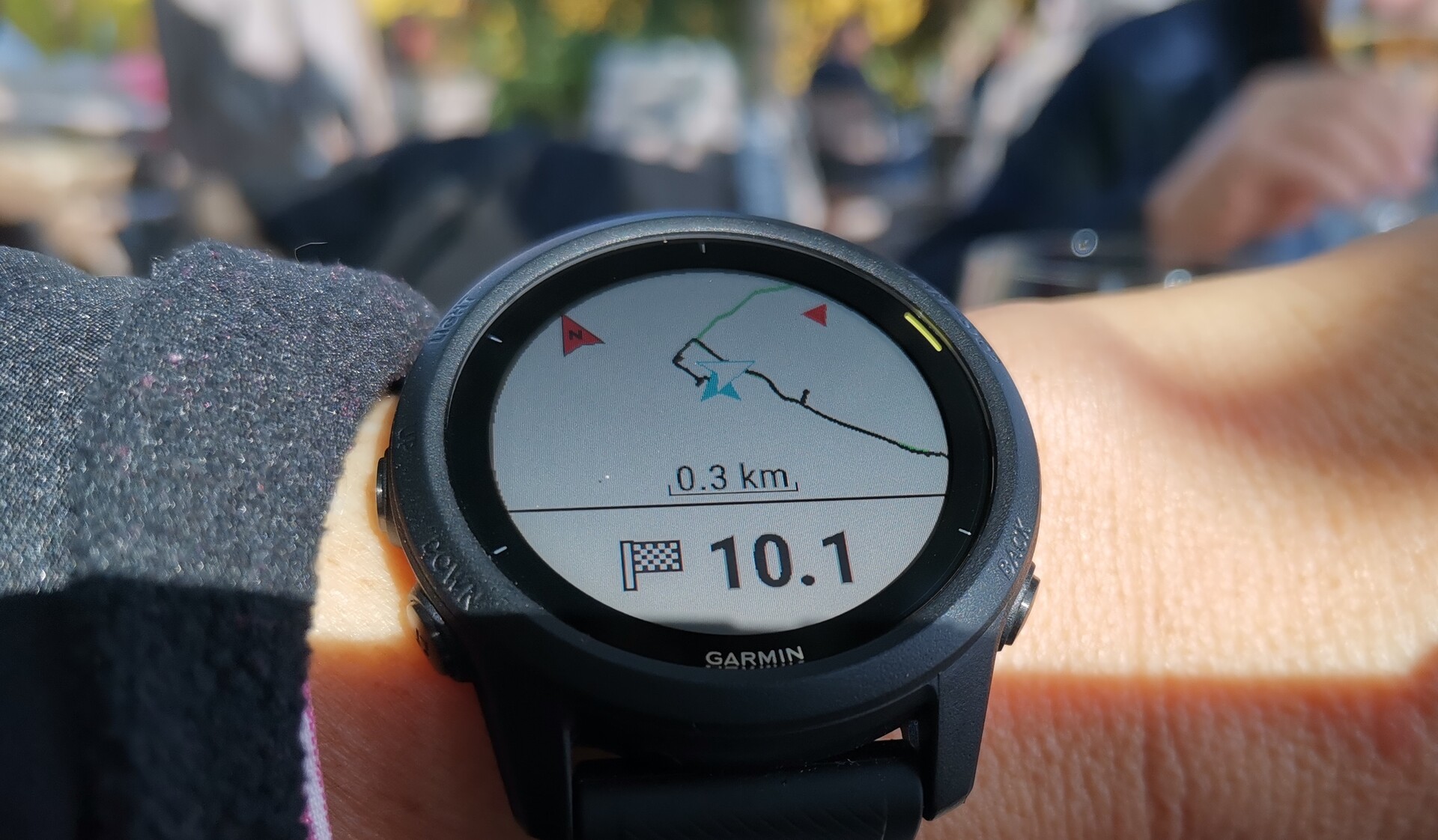
The fact that Garmin is losing this differentiator, possibly more emotional than truly technical, could certainly be risky, because the competition has done anything but stand still in recent years. One of the best examples is likely the Amazfit Active 2, which we even named a value-for-money king about a year ago. It costs less than half as much as the Garmin Forerunner 70 and offers features such as maps, which Garmin only offers at much higher prices, for example on the Forerunner 955 and Forerunner 965. Importantly, Garmin has adjusted the price from the Forerunner 55 in 2021 to the Forerunner 70 quite closely in line with inflation and has therefore not implemented a real price increase.
At the time of the Forerunner 55's release in 2021, however, the wearable world was still quite different. Strong features such as displaying maps on the wrist, not only on entry-level smartwatches from Amazfit but also from other manufacturers, were generally less common back then. This extremely broad feature set, at the time especially in the Fenix series, was a unique selling point for Garmin that justified high prices, and at least for now it still does. There is also pressure on the ecosystem. As their own devices become more widespread, other wearable manufacturers can naturally rely more on third parties and hobbyists as app developers.
At the same time, however, it is probably not that easy for Garmin to offer a true budget model, because the feature tiers are already fairly dense, and an additional device could cannibalize the existing entry-level models. The greatest potential to further limit the feature set for an even cheaper Forerunner is probably in wrist-based running efficiency data, although this likely would not significantly affect manufacturing costs. I doubt whether a new entry-level Forerunner with MIP instead of AMOLED would make sense, since AMOLED displays are likely now simply more efficient to manufacture or procure, keyword economies of scale, than the MIP panels that have become rather rare. In my opinion, however, Garmin remains unbeaten in one respect: the Garmin Connect web interface, which in this form can only be used with competing devices at best through third-party providers such as Strava. Ultimately, the fact that Garmin remains firmly in the saddle despite strong competition is probably also a sign of a successful marketing mix.
Source(s)
Garmin, Image: Isaac Smith on Unsplash
 Add as a preferred source on Google


