




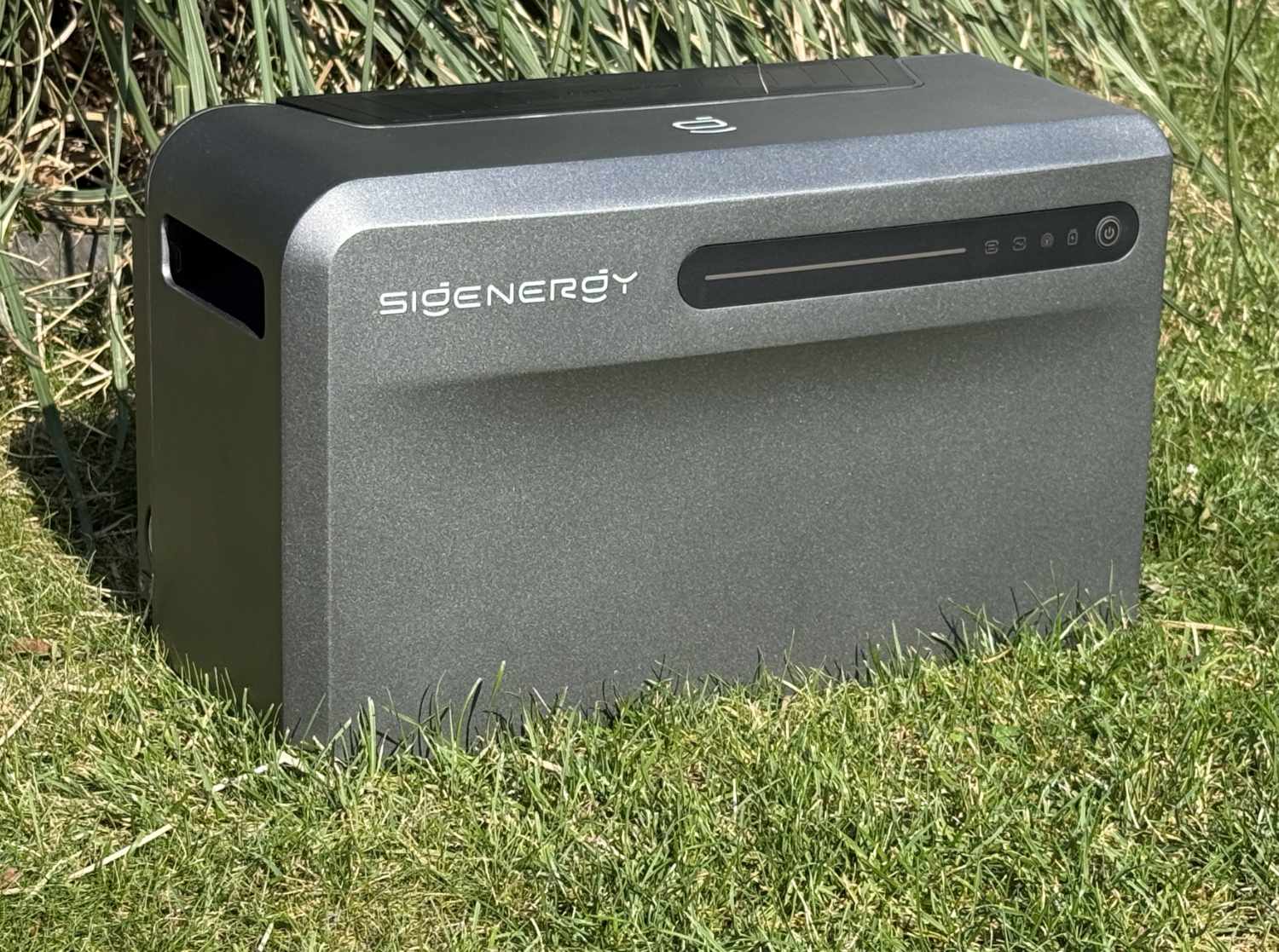
Balcony solar storage system with two backup power outlets: SigenMate 2700 Ultra review
Complex balcony and home storage system.
The SigenMate 2700 Ultra is an all-in-one storage system for balcony solar installations, offering up to 18.8 kWh and 4,000 Wp. Our review reveals how well the system performed in practice and where problems arose.Marcus Schwarten (translated by Marcus Schwarten (translation supported by DeepL)) Published 🇩🇪
SigenMate 2700 Ultra test verdict: Fast control, but also problems
Based on our testing, Sigenergy's SigenMate 2700 Ultra offers an exciting all-in-one solution for balcony solar systems. In our test, we particularly liked the high PV input power across four MPPTs, the high-quality build, and the AI assistant in the comprehensive app. The feed-in control is also responsive and accurate - when the connection to the smart meter works.

We also encountered a few other minor issues, but these should be fixable with a software update. Overall, a more than solid all-in-one storage system for balcony solar systems that can grow to a capacity of up to 18.8 kWh over time, but offers no headroom beyond its 800 W feed-in power.
Pros
Cons
Price and availability
In Germany, the recommended retail price for the SigenMate 2700 Ultra is 1,199 euros (with 0% VAT in Germany). The MSRP for the SigenMate BAT 2700 expansion battery is 899 euros. The products are available directly from the manufacturer, but can also be ordered from retailers such as Amazon or Tepto.
Table of Contents
With the boom in balcony solar systems and small PV systems, more and more manufacturers are bringing all-in-one solutions combining inverters, MPPTs, and storage to market. Alongside the usual suspects such as Anker Solix, EcoFlow, and Zendure, there are also solutions from manufacturers that are less widely known.
These include the SigenMate 2700 Ultra, which has been available for a few months now. The company behind it, Sigenergy, is no newcomer, but until now it has primarily operated in the field of larger PV systems. Our SigenMate 2700 Ultra review reveals how its compact energy storage system for everyone performs in practice and compares with the competition.
Specifications
| Capacity | 2,688 Wh |
| expandable up to | 18.8 kWh |
| Battery type | LiFePO₄ |
| Number of MPPTs | 4 |
| PV input power | 4,000 W |
| AC discharge power | 800 W |
| AC charging power | 1,400 W |
| AC socket power | 2 units (1,400 W) |
| Dimensions | 46.0 x 27.5 x 22.5 cm |
| Weight | 29 kg |
| Ingress protection rating | IP66 |
| MSRP | 1,199 euros |
Equipment & installation: Storage system for balcony solar systems
A look at the specifications listed above shows that the SigenMate 2700 Ultra has a lot in common with last year's Anker Solix Solarbank 3 Pro. It also offers just under 2.7 kWh of LiFePO₄ battery capacity (6,000 charge cycles, 10-year warranty). If needed, this can be expanded to up to 18.8 kWh with six BAT2700 expansion batteries. That should be more than enough for the vast majority of households - not just for balcony solar systems, but also for home energy storage.
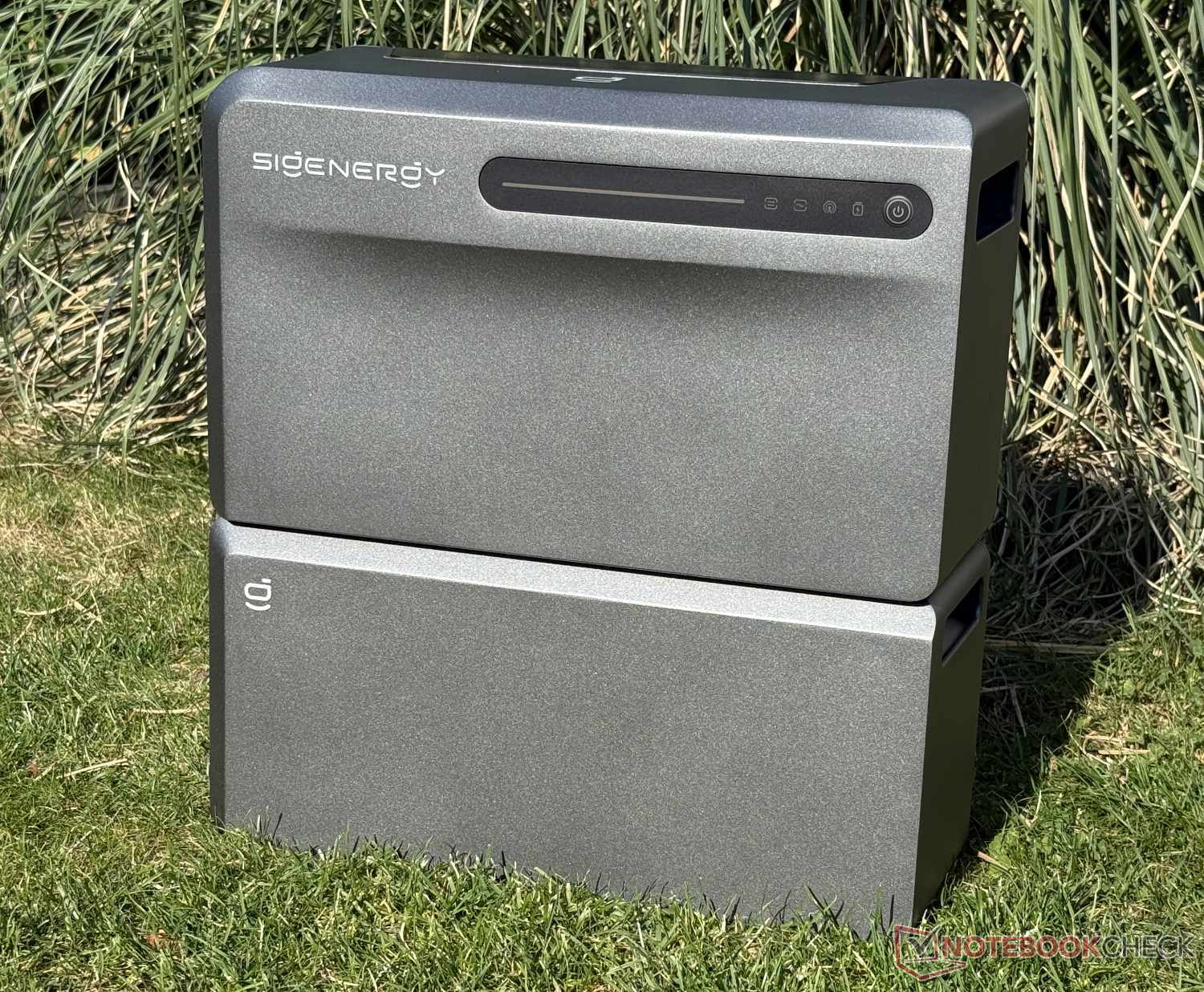
With a PV input power of 4,000 W, the SigenMate 2700 Ultra even slightly surpasses the Solarbank 3 Pro, while also offering 4 MPPTs. This is advantageous, as it not only allows up to eight solar panels to be connected without any issues, but also provides ideal conditions for panels with different orientations and shading.
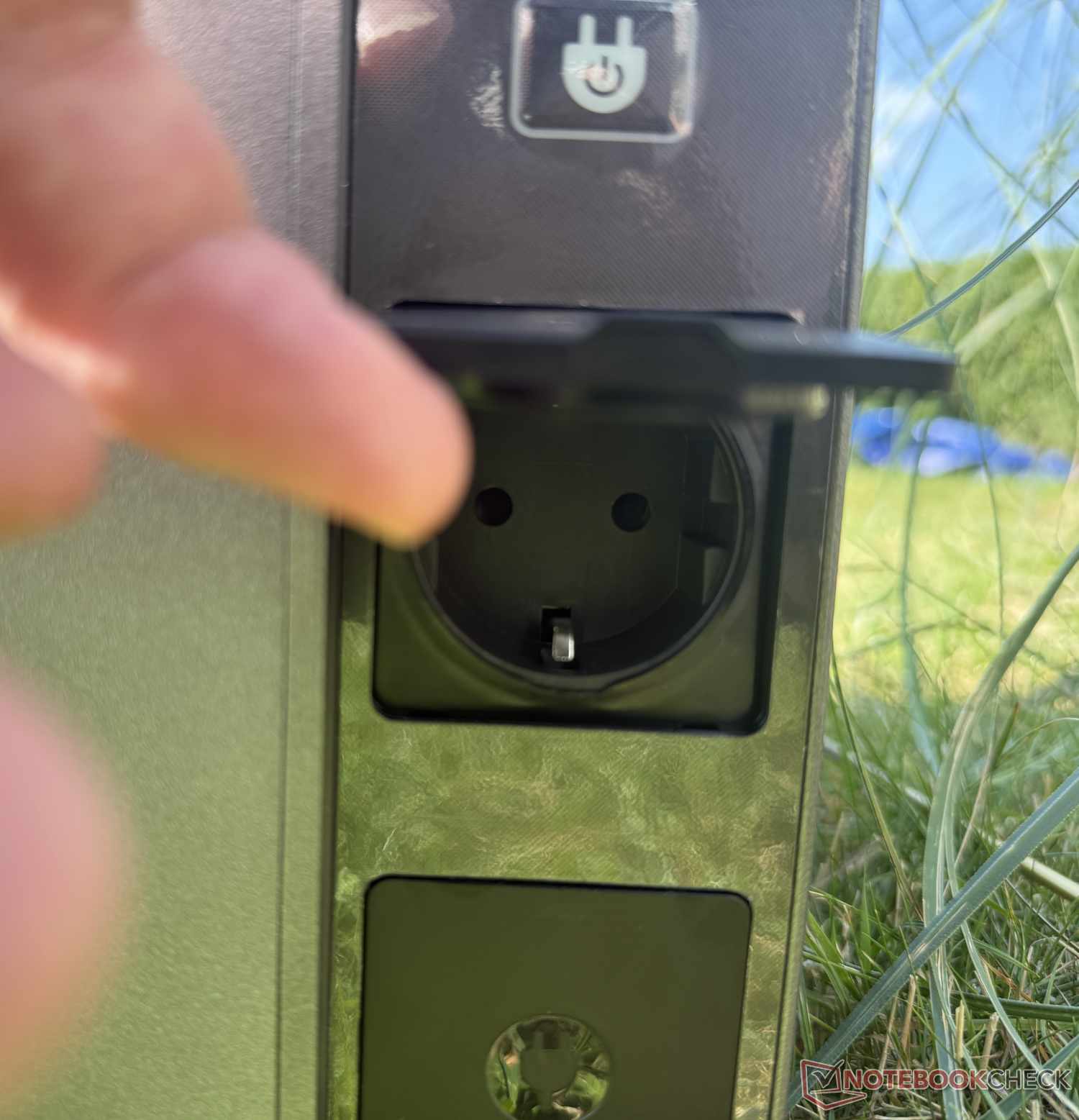
The output power is limited to 800 watts, as is typical for a balcony solar system. In addition, two backup power sockets with 1,400 W continuous and 1,800 W peak output are available directly on the device. These operate independently of the grid and therefore also work during a power outage (if the battery is charged). When connected to the grid, up to 3,600 W is possible (bypass).
In addition to the solar input, the SigenMate 2700 Ultra can also be charged from the grid at up to 1,400 W. Some other systems on the market offer higher maximum output and input power. However, these capabilities are sufficient for a balcony solar system.
All of this is housed in a robust metal enclosure. The build quality of our review sample is excellent and gives a premium impression, including in terms of design. Thanks to IP66 and C5-M corrosion protection the system is well equipped for outdoor use. It is designed to withstand temperatures from -20 °C to 55 °C and can be heated via a heating mat on a schedule or automatically if needed. However, it already generates considerable heat of its own under load.
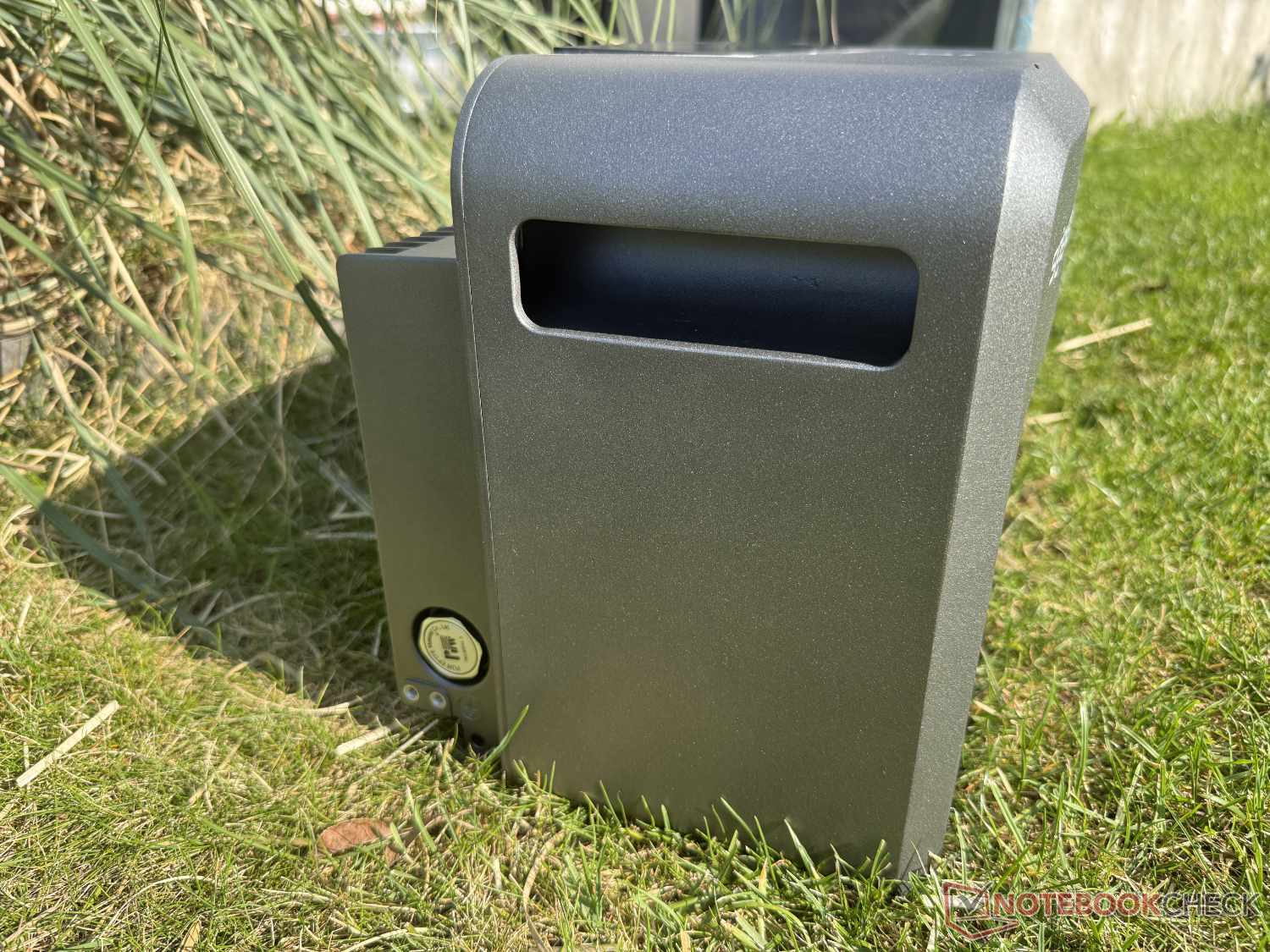
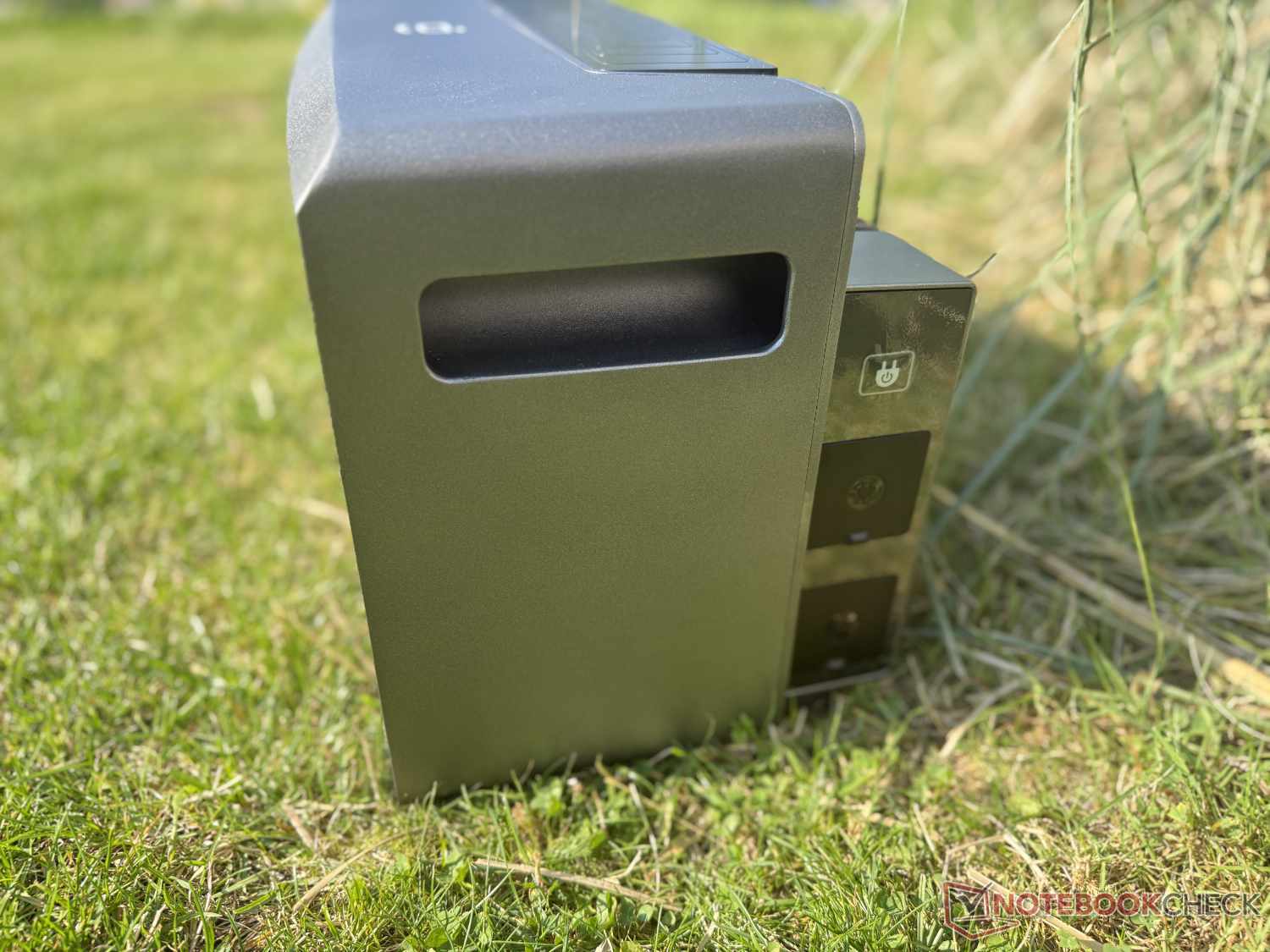
The device weighs around 29 kg and requires some strength to move it to its installation location. The two recessed handles on the left and right make it easier to transport. The dimensions of 46.0 x 27.5 x 22.5 cm are quite compact for a system with around 2.7 kWh. When combined with one or more additional batteries, the tower becomes correspondingly taller. Mounting hardware for securing it to a wall is not included. Only a power cable with a Schuko plug, a wrench for disconnecting the solar panels, and a manual are included in the package.
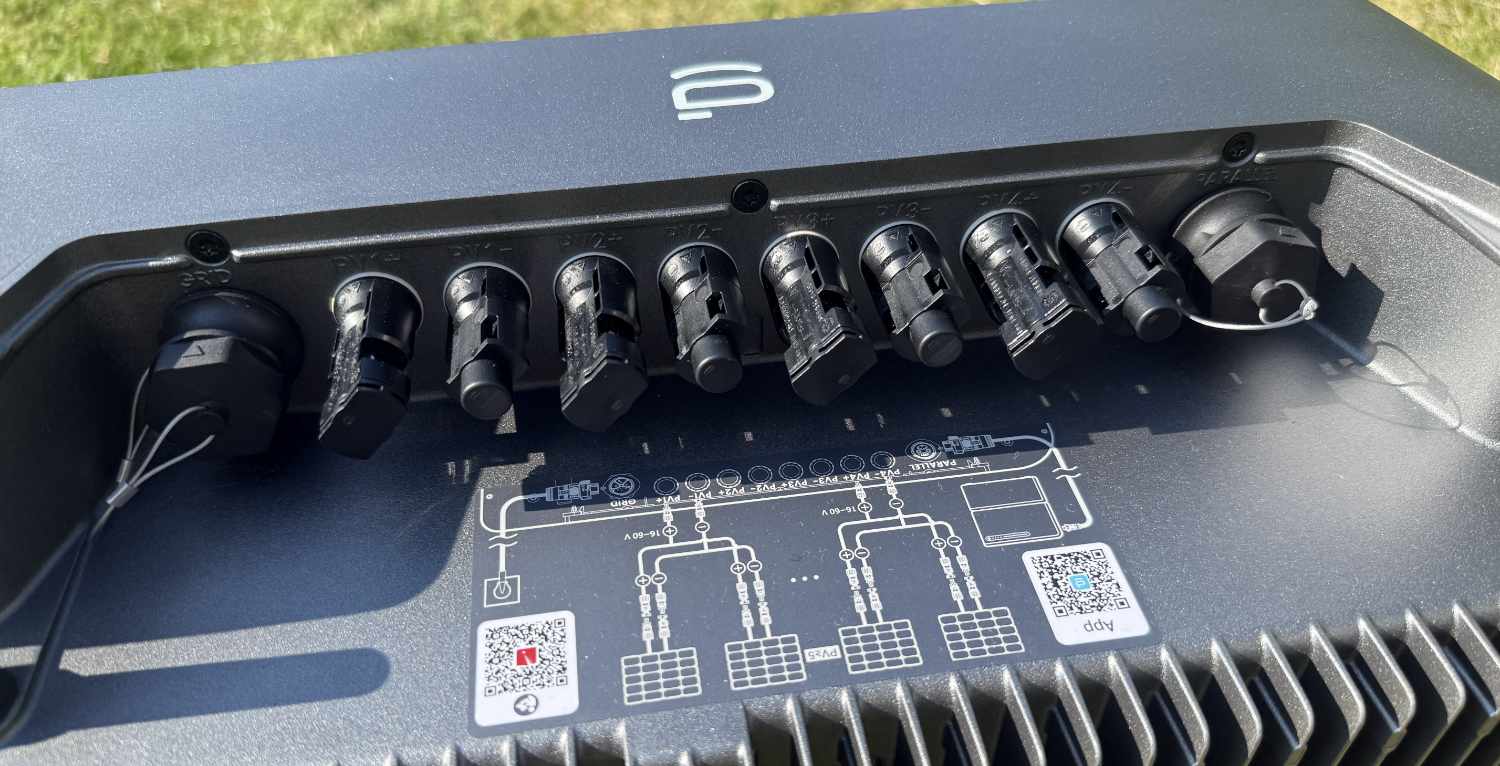
To get started, simply connect the power cable to the corresponding port on the side of the SigenMate 2700 Ultra and to a power outlet. The system can then be switched on.
To generate your own solar power, at least one solar panel must also be connected to the four inputs (MC4 sockets). These are located on the top under a somewhat cheap-looking plastic cover, rather than on the side (as with many competitors). This makes access and cable management easier (the cables run out toward the back). However, the spacing between the individual connectors is quite tight.
App & operation: AI assistant helps in many situations
Commissioning then continues on the smartphone. The mySigen app is required to set up, configure and control the SigenMate 2700 Ultra and is available free of charge for iOS (which we used for the test) and Android. An account is required. Connecting the app, Wi-Fi and system worked without any problems in our test. Bluetooth is used initially, before the Wi-Fi connection is set up. SigenMate 2700 Ultra supports Wi-Fi 6 and operates on the 2.4 and 5 GHz bands. There is no LAN port.
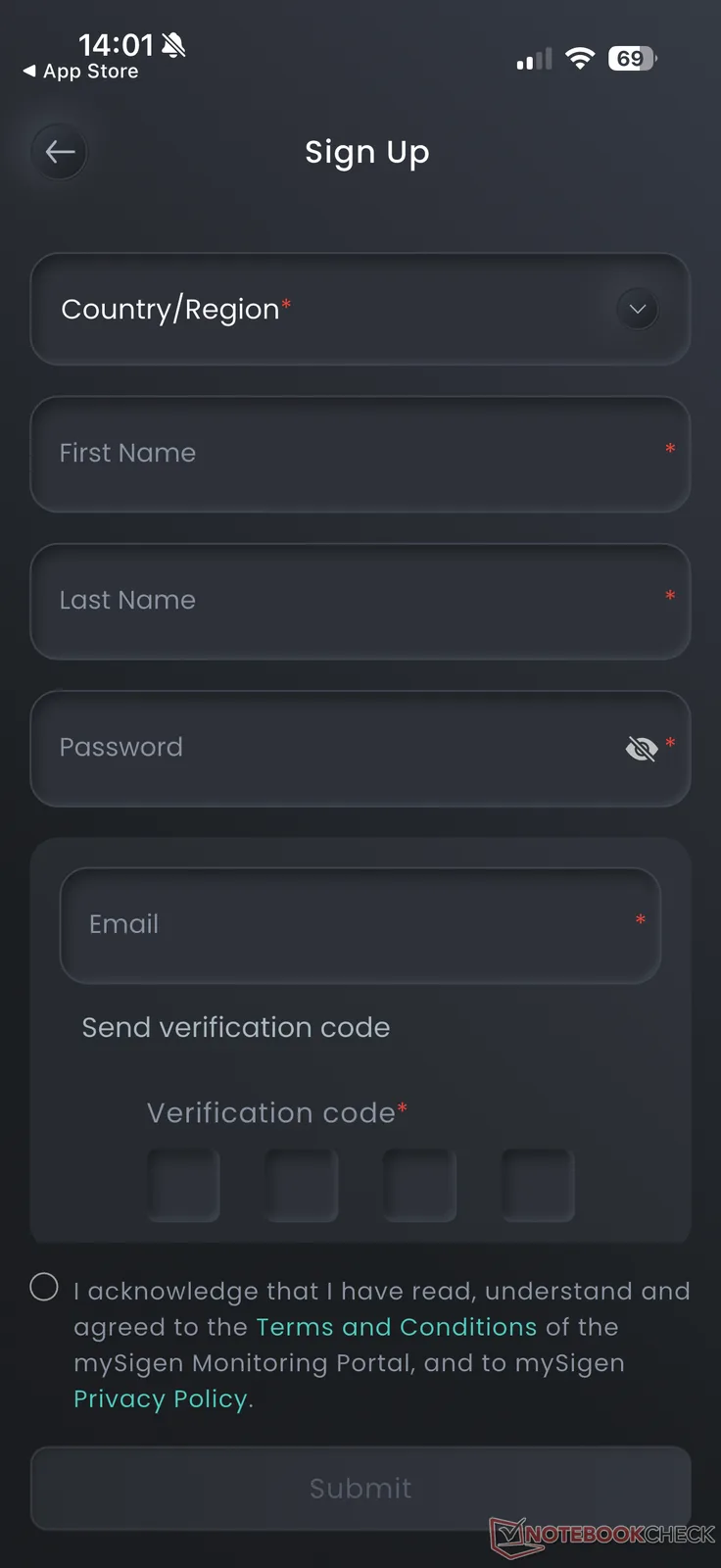
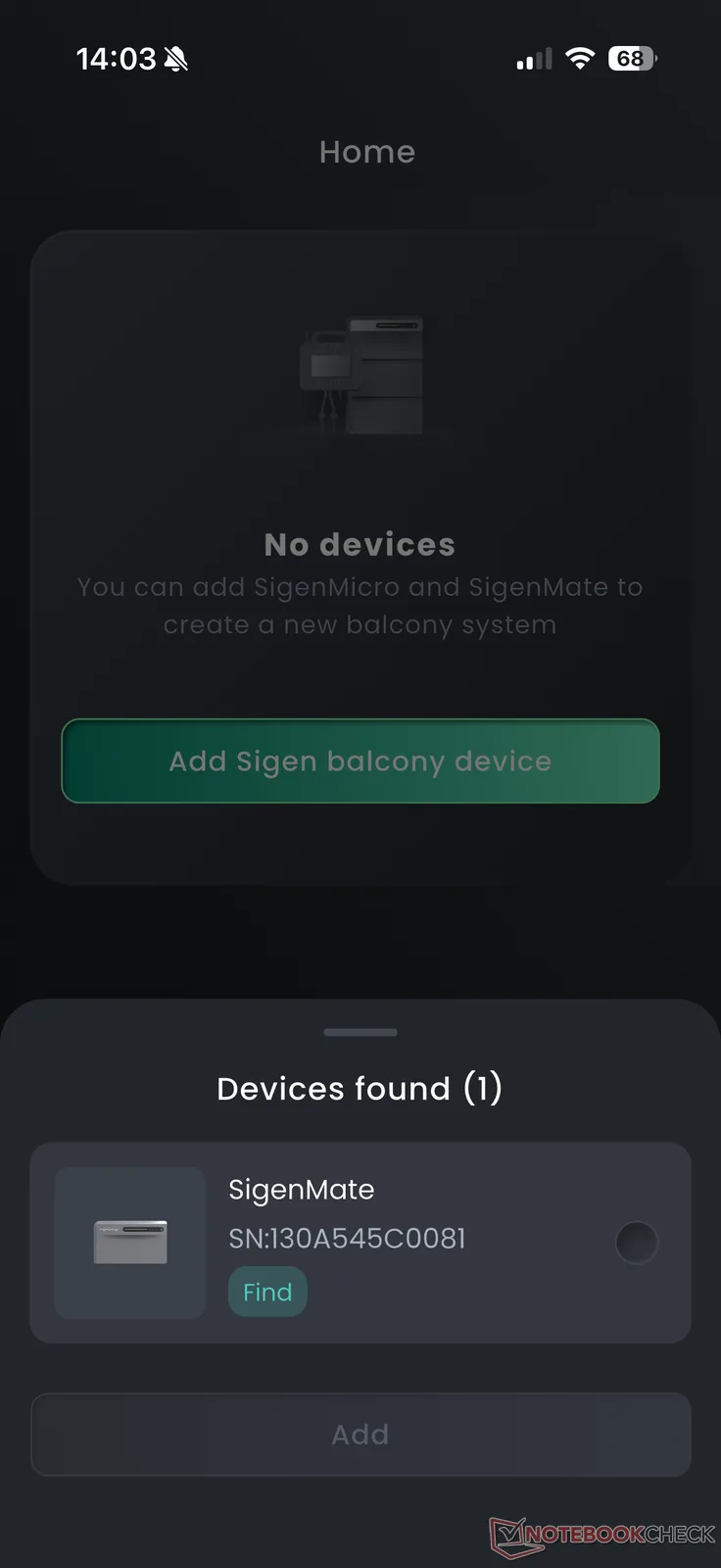
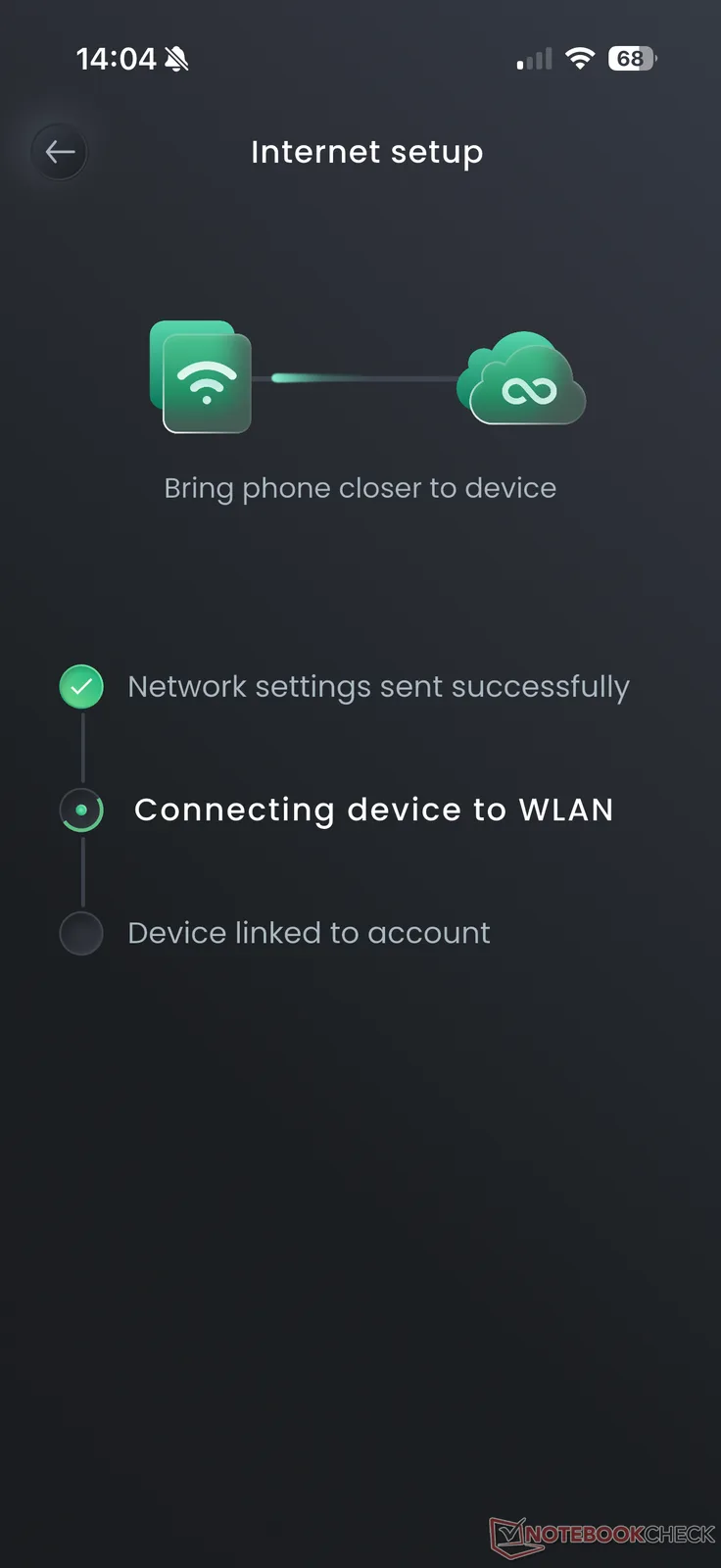
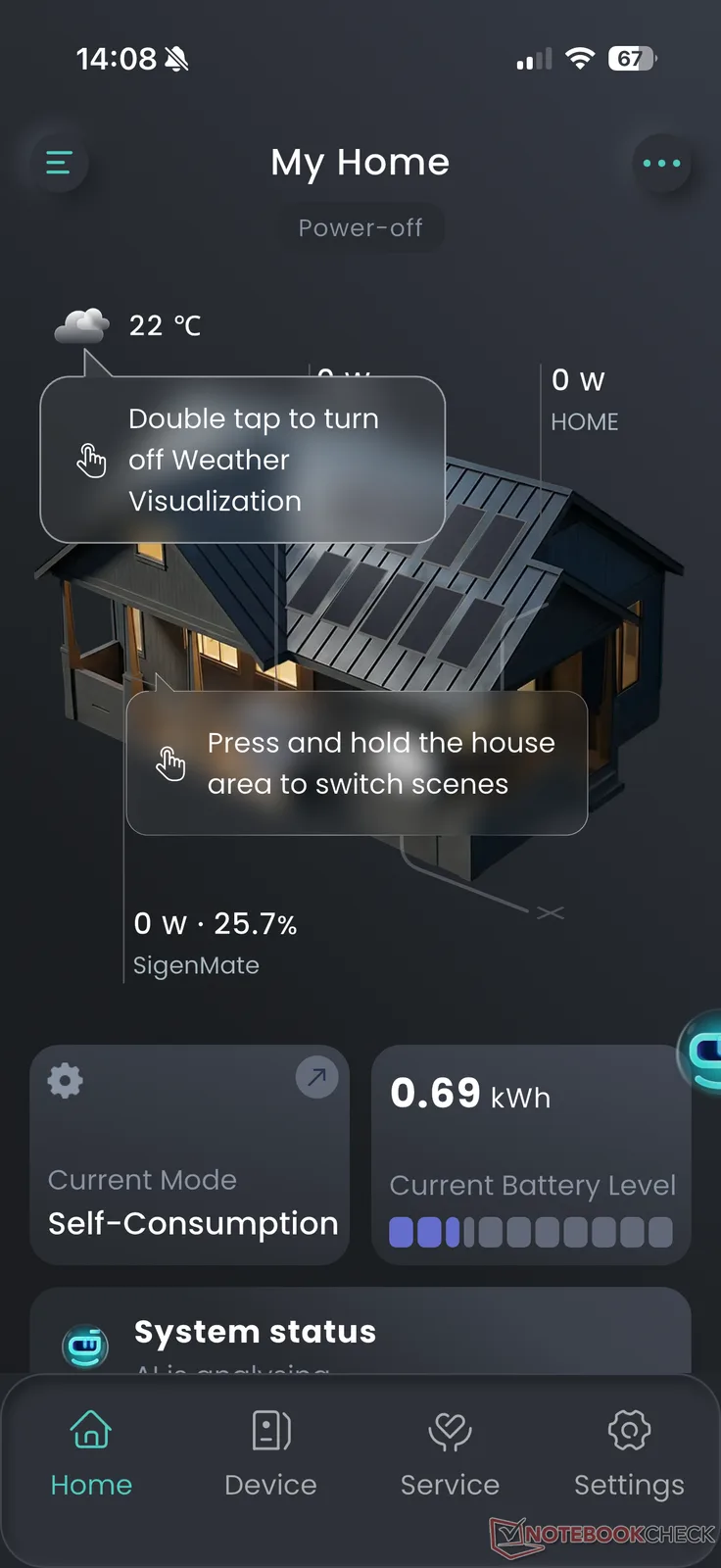
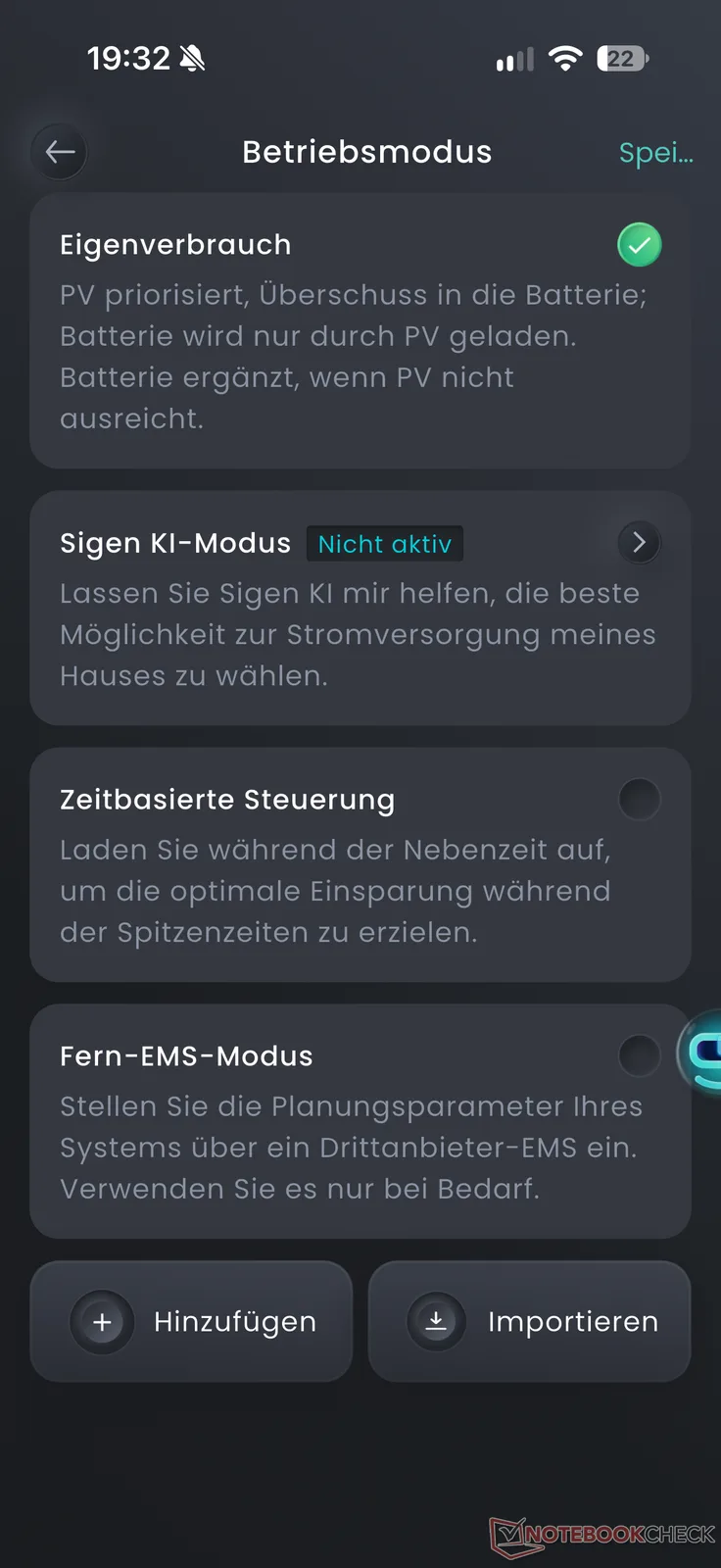
After the initial setup of your system, during which the app guides you through the process clearly, but initially only in English (German can be enabled later in the settings), it is time to configure the system. In addition to the usual options, such as limiting the maximum feed-in power (between 0 and 800 W), firmware updates, and battery level settings, the mySigen app offers various operating modes:
- Self-consumption: Feed-in based on current consumption (measuring device at the electricity meter required)
- Sigen AI Mode: Automatic optimization based on generation, consumption, weather, and electricity tariff
- Time-based control: Manual setting of discharge and charging power based on time of day (selectable in 15-minute increments) and day of the week
- Remote EMS Mode: Control of the system via a third-party EMS (energy management system)
Handy: "Immediate manual control" is also available, allowing a specific action, such as charging or discharging at a set power level, to be configured for a defined period of up to 24 hours.
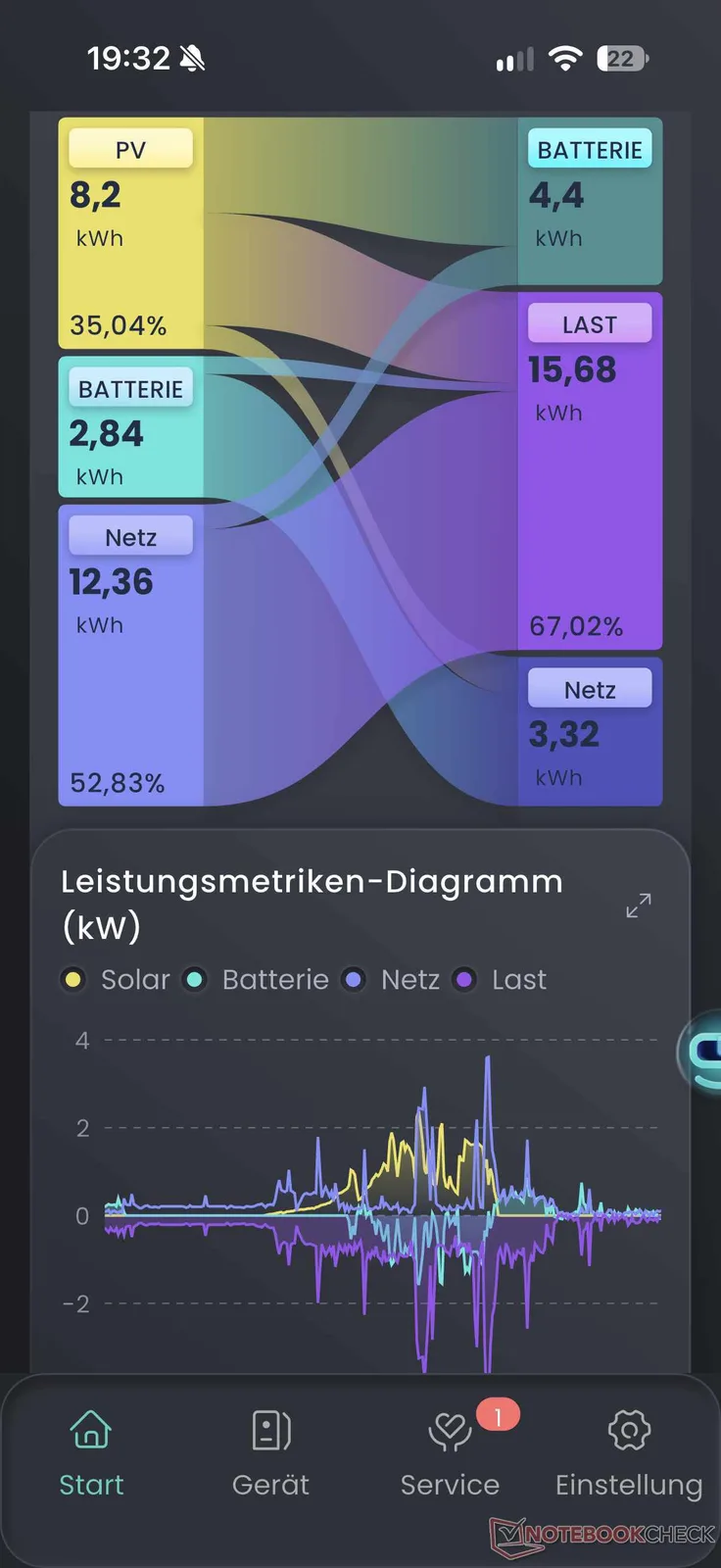
The home screen of the mySigen App features the usual illustration of a house, showing PV production, feed-in and grid consumption as well as the battery level in real time. Below it is a whole range of statistics. The navigation bar at the bottom with "Device", "Service" and "Settings" also provides access to other sections.
Overall, the app offers many options and very extensive data on how much energy has flowed when and where. Visually, the mySigen App looks stylish, but its extensive features sometimes make it a little harder to navigate than competing apps when exploring in depth.
The Sigen AI Assistant is handy. Tapping the round icon, which can optionally remain visible in the app at all times, makes it available for questions and settings. It generally responded satisfactorily to questions and tasks submitted both by text and by voice, providing the appropriate assistance. Settings can also be changed after separate confirmation, so there is no need to navigate through the app's menus to do so.
Praactical performance & efficiency: Responsive, but not trouble-free
The power fed into the home grid is limited to the 800 W legally permitted for plug-in solar systems in Germany. The SigenMate 2700 Ultra does not supply more than that. This sets it apart from some competitors that optionally allow higher feed-in power, enabling them to grow beyond a balcony solar system. Anyone choosing this system should be aware of this. Gradually expanding into a small PV system, as is possible with the Anker Solix Solarbank 4 Pro, for example, is not an option here.
Nevertheless, it is already possible to get more than 800 W out of the SigenMate 2700 Ultra. Like many competitors, Sigenergy includes a backup power solution. However, rather than providing the usual single socket, the manufacturer integrates two. This is convenient for powering multiple devices simultaneously directly from the battery, even without a power strip. However, the maximum output of 1,400 W available in backup power mode is also relatively modest compared to some competitors. That is not enough for all appliances, such as a hair dryer.
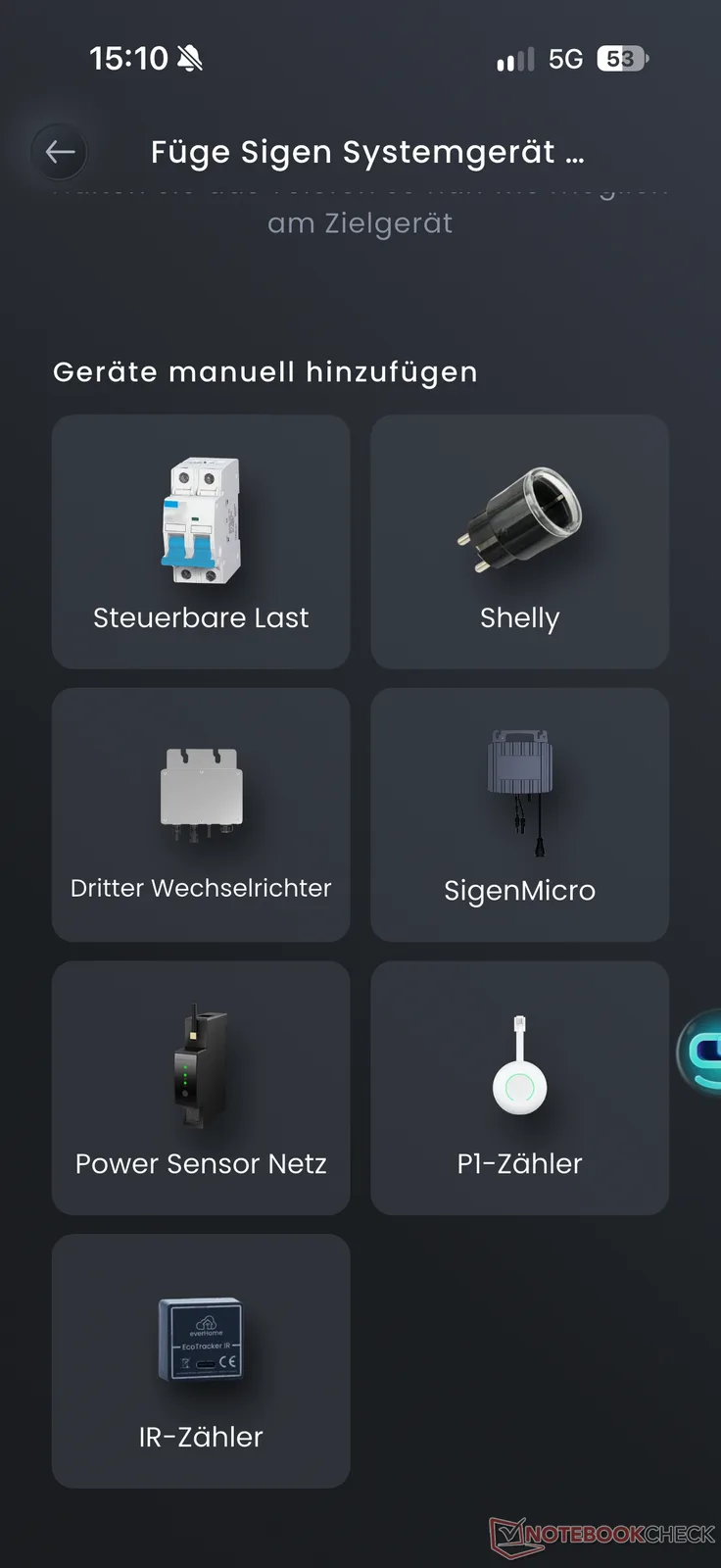
If the power fed into the home is to be matched to its current electricity consumption, that consumption must be read in real time and transmitted to the SigenMate. There are various ways to do this. In addition to smart meters from Shelly, supported devices include the P1 meters from HomeWizard and EcoTracker, as well as the IR meter from EcoTracker. That is a decent selection.
As with all the balcony solar systems I have tested so far, most recently the Anker Solix Solarbank 4 Pro, an already installed Shelly Smart Meter Pro 3EM was used to test the SigenMate 2700 Ultra. It is compatible and should therefore work without any problems. The connection is established locally rather than via the cloud.
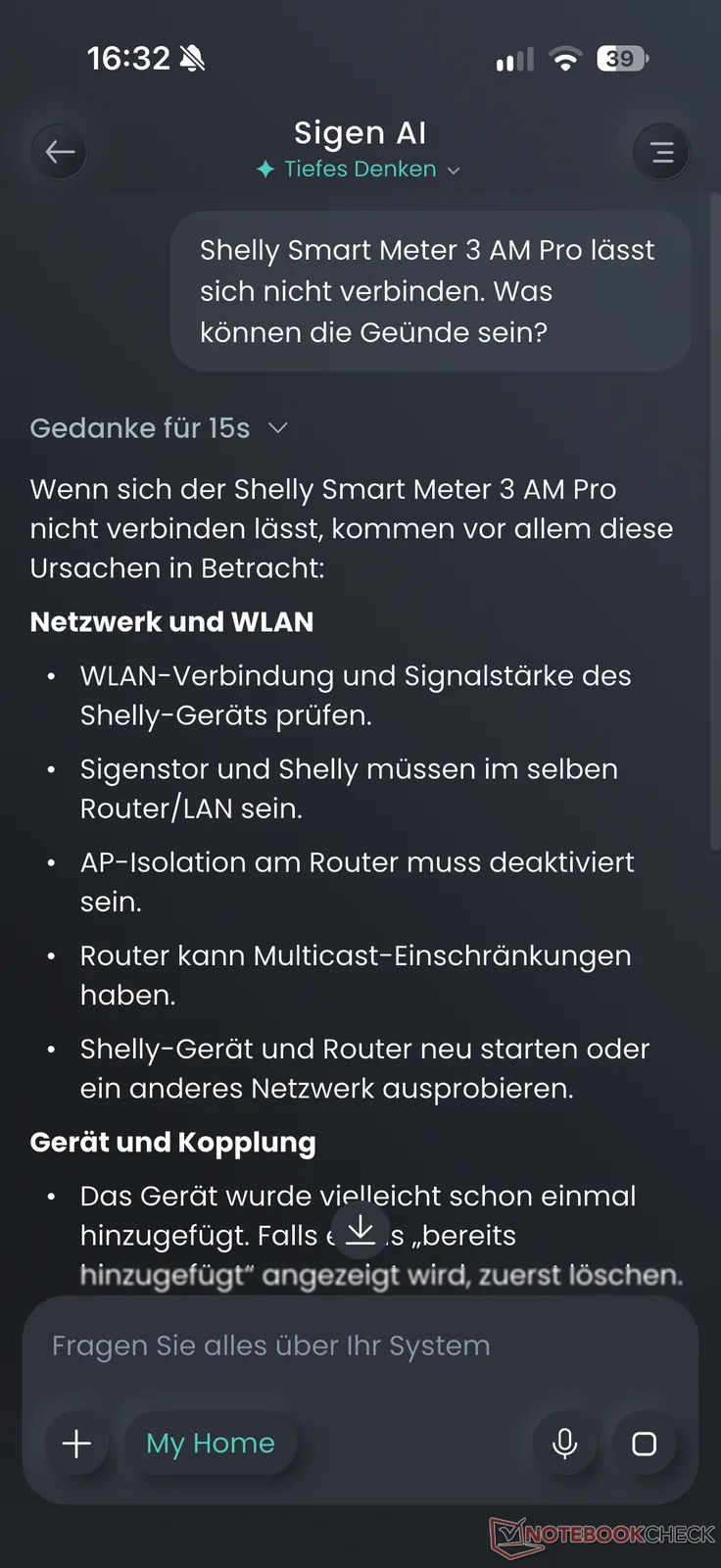
When adding it for the first time, the connection was successfully established after some trial and error and helpful tips in the mySigen App. After that, the power fed into the home adjusted reliably and quickly to the current electricity consumption, making it possible to achieve almost zero feed-in to the grid. However, after we later deleted the smart meter from the app as a test, we were unable to re-establish the connection. We cannot conclusively determine whether this was due to the device or our test environment.
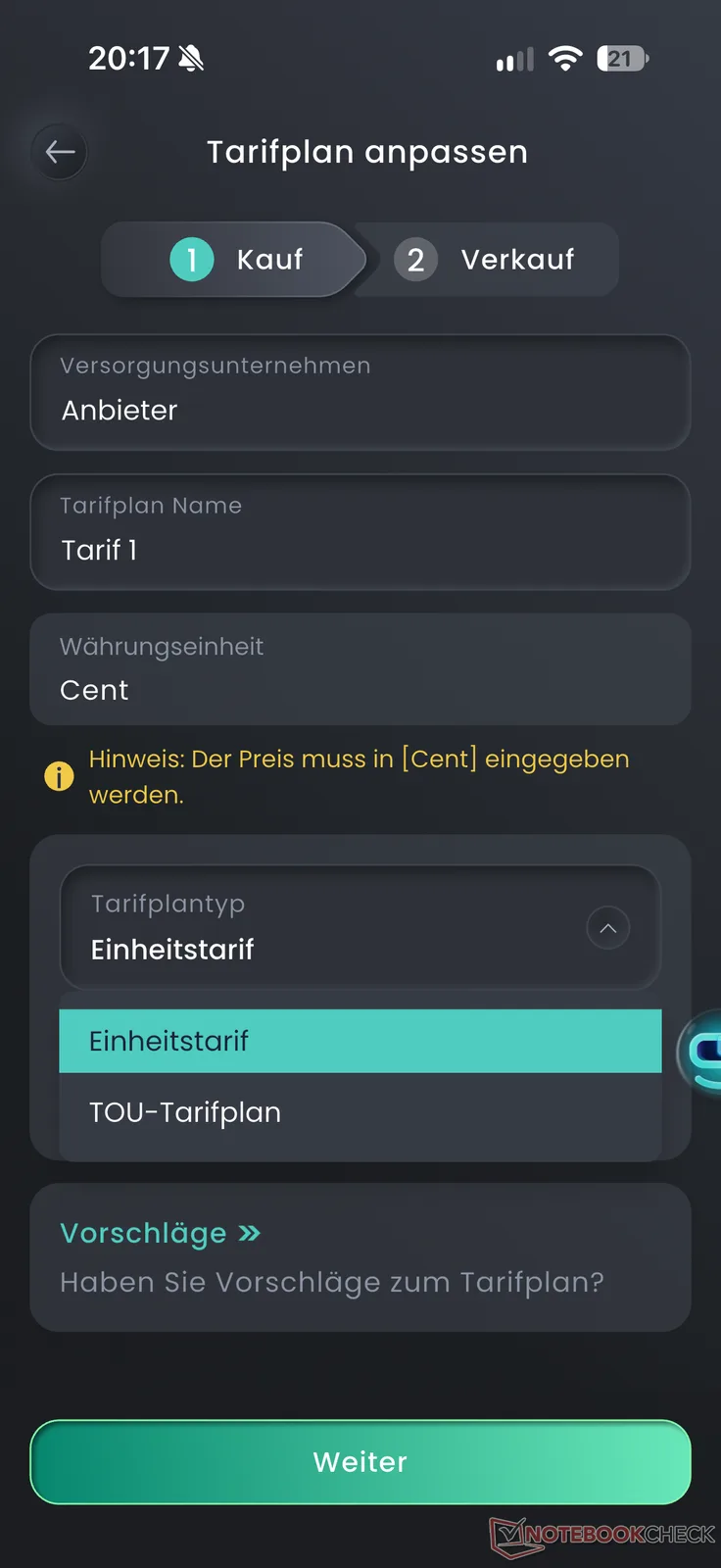
We were also unable to connect to a dynamic electricity tariff - despite help from the AI assistant. Under "Tariff Plan" in the iOS app, only a single-rate tariff or a TOU tariff plan could be configured. With the latter option, different electricity prices can be entered manually for different times. However, we were unable to establish an automatic connection to Tibber and the like. Testing the Sigen AI mode was therefore only possible to a limited extent and with manually configured electricity price tiers. The aim of this mode is to intelligently coordinate PV generation, weather, expected electricity consumption and dynamic electricity tariffs to maximize savings, for example by charging the battery when electricity prices are low and discharging it again when prices are high, as needed.
Another negative aspect we noticed during testing was the use of residual daylight or the first rays of sunshine in the morning. While competing systems operating at the same time, such as the Solarbank 4 Pro, were already showing at least a few watts of PV input, the mySigen app prominently displayed a "0".
Efficiency: Up to 93 percent usable
One key factor in an energy storage system is efficiency. Every system experiences losses during charging and discharging. The extent of these losses determines how much energy is usable and how much is lost. In our tests, the SigenMate 2700 Ultra delivered solid, but not outstanding, results in this respect. When discharging the storage system at a constant 400 W, we were able to draw a good 2,500 Wh from the stated 2,688 Wh capacity. That translates to a respectable 93 percent.
When AC-charging the storage system from 0 to 100 percent at up to 1.4 kW, however, approximately 3.1 kWh passed through the meter. This means a somewhat less optimal figure of around 86 percent of the energy reaching the battery. Anyone charging the storage system using a dynamic electricity tariff, for example, and discharging it later can therefore recover a good 80 percent of the energy put in. That is solid, but not outstanding.
Transparency
The selection of devices to be reviewed is made by our editorial team. The test sample was given to the author by the manufacturer free of charge for the purposes of review. There was no third-party influence on this review, nor did the manufacturer receive a copy of this review before publication. There was no obligation to publish this review. As an independent media company, Notebookcheck is not subjected to the authority of manufacturers, retailers or publishers.
 Add as a preferred source on Google


