




Another laptop brand affected by CPU fraud: Manufacturer promises clarification
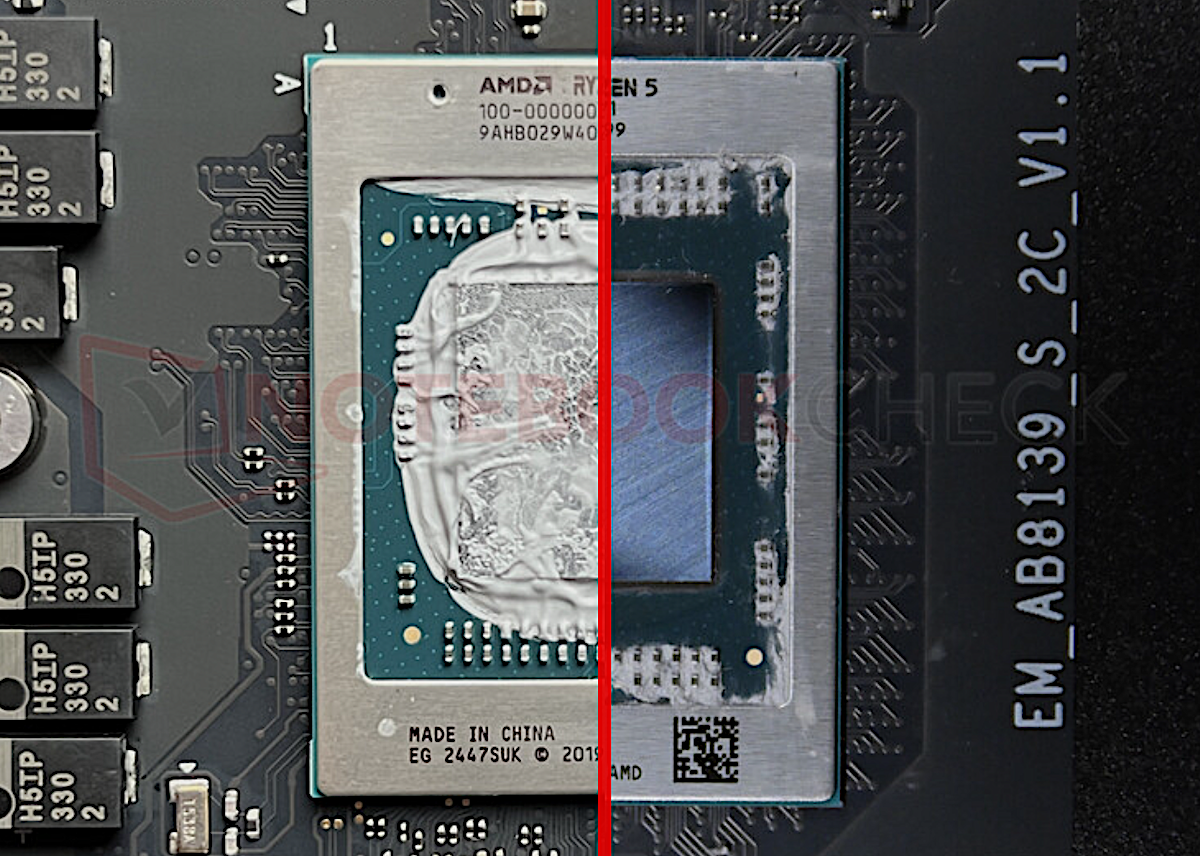
A short summary for all newcomers to this exciting case: After discovering that two laptops (CoreBook X and CoreBook Plus) from the Chinese manufacturer Chuwi were equipped with an older, less powerful Ryzen 5 5500U—instead of the newer 7430U advertised—we were recently able to confirm the presence of the 7430U in our review unit of the Ninkear A15 Pro from the summer of 2025. Nonetheless, information from readers continued to give reason to believe that the manufacturer's currently delivered models in particular do not have the CPU installed that is advertised.
The observations made so far with all the systems that have been found are noteworthy in that this cannot be a supposed error. Not only did manufacturer information promise a more up-to-date and more powerful CPU than was actually installed, there must also have been modifications to the BIOS that disguised the hardware actually installed and led the buyer to believe a better CPU than was actually installed in the device.
Ninkear A15 Pro caught: Fake CPU or 7430U - anything can happen
We had already tested the Ninkear A15 Pro in summer 2025 (sample provided by the manufacturer) and could neither in the review at that time nor in the recent re-check confirm a 5500U in the laptop. Nevertheless, based on previous observations, the suspicion of individual affected batches was already in the air, which was substantiated by evidence provided to us by affected users. Once again, we decided to take a random sample check by purchasing from a well-known online retailer.
The procedure is familiar from our previous tests: While the BIOS or Task Manager may list a 7430U as the processor, the OPN number stamped on the processor reveals the identity of the actual processor: 100-000000375—clearly the Ryzen 5 5500U—as in the previously reviewed Chuwi models—contrary to the advertised and more powerful Ryzen 5 7430U.
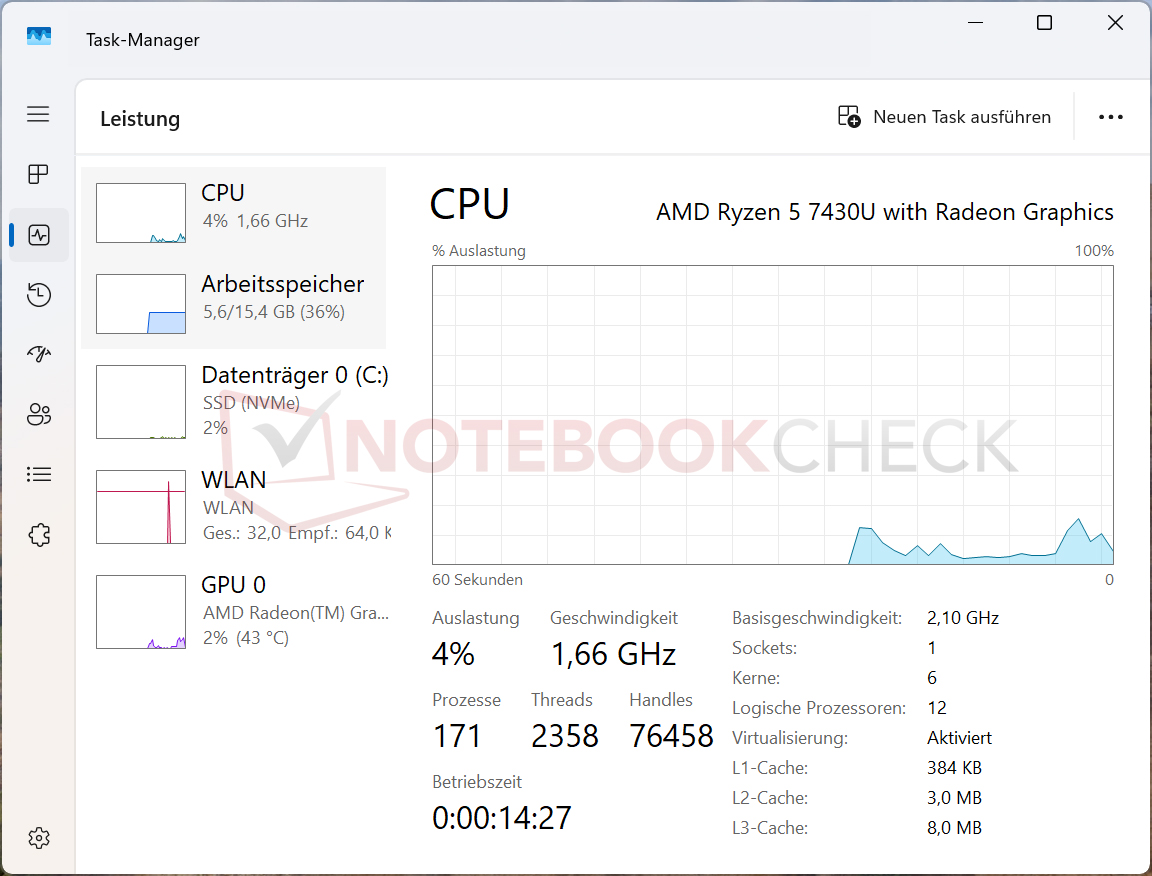
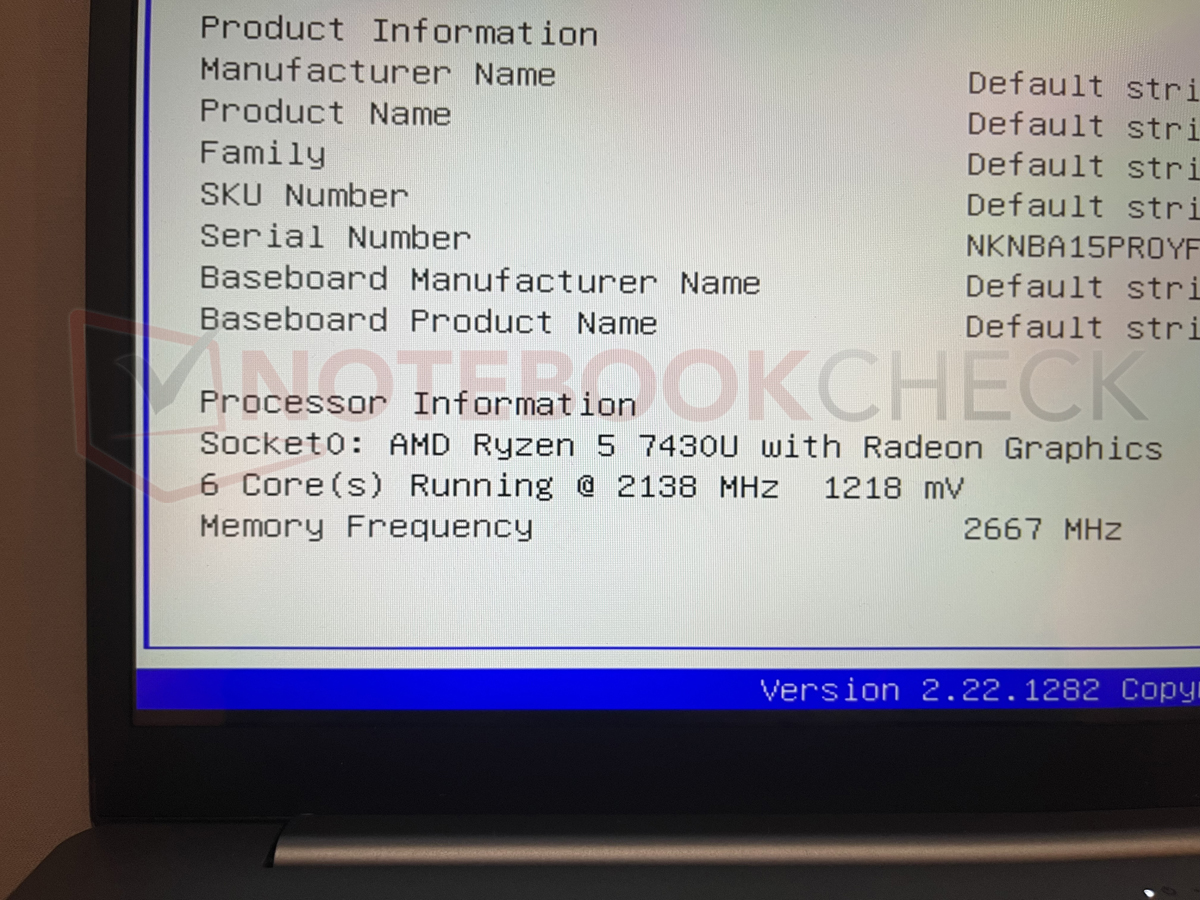
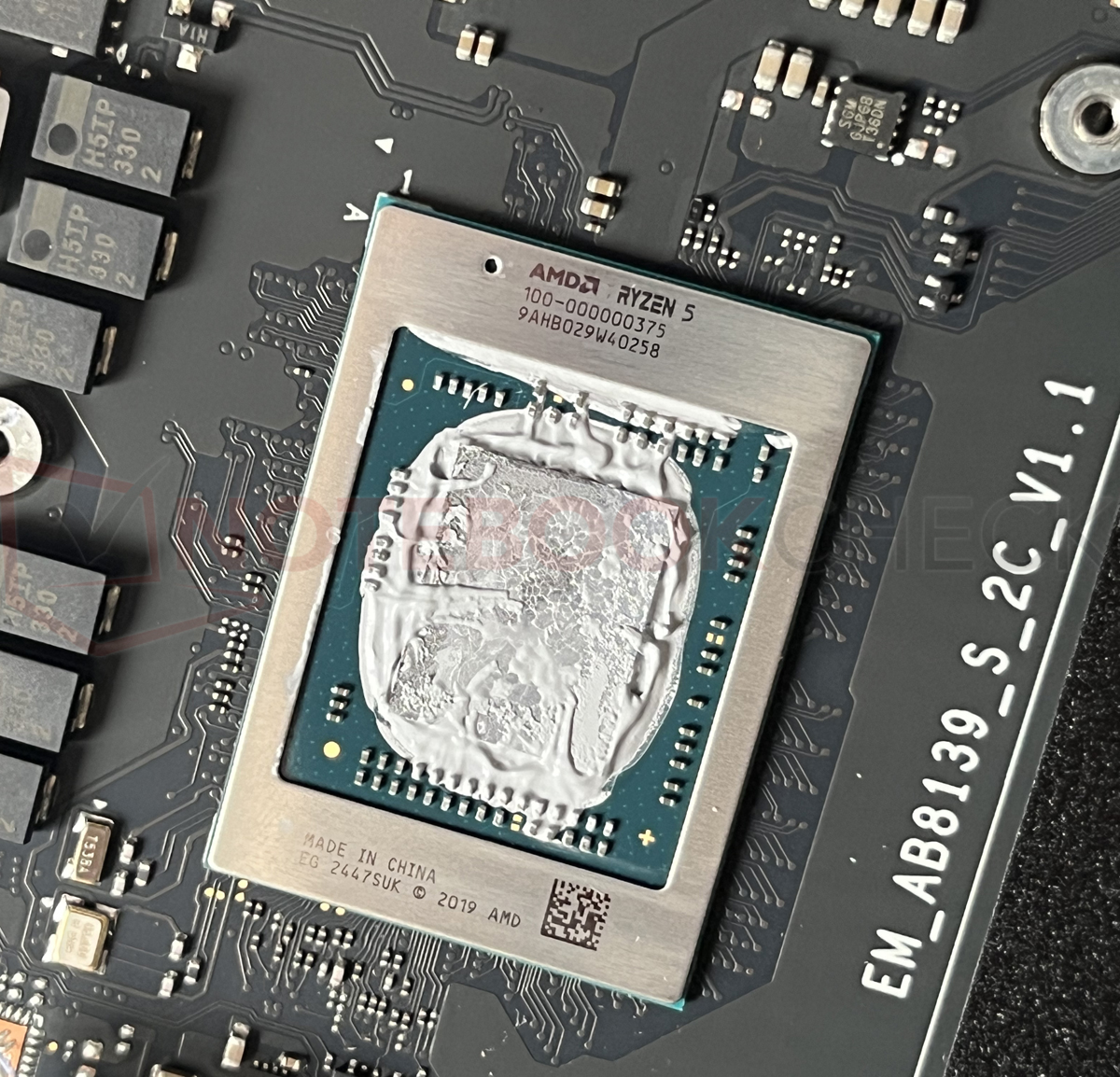
After Chuwi in particular has been at the center of reporting so far, the circle of affected manufacturers is now demonstrably expanding and raises questions about the manufacturer active for both brands: All of the affected laptops or mainboards uncovered so far were manufactured by Emdoor Digital, an original design manufacturer (ODM) based in Shenzhen.
The evidence provided of an unaffected Ninkear A15 Pro from summer 2025 (sample provided by the manufacturer) and an affected identical model from March 2026 (spot check sample purchase) - both notebooks use the same mainboard from Emdoor Digital - also proves the existence of different batches. Some of these may have the correct CPU, some may have been delivered with the 5500U and modified BIOS. Since reports from affected users tend to be from the last quarter of 2025 and our unaffected sample is from June 2025, a change in CPU configuration at the manufacturer from the 7430U to the 5500U in the summer/fall of 2025 seems conceivable.


One laptop/motherboard, two CPUs: We have now tested the Ninkear A15 Pro with both the advertised 7430U (*1471) and the camouflaged 5500U (*0375)
CPU-Z 2.19 puts an end to trickery and confirms suspicion of deliberate manipulation
It is now very easy to prove an incorrectly installed CPU without having to dismantle the cooling assembly. As part of an update to the well-known CPU-Z analysis software (version 2.19) released a few days ago, the development team was able to partially resolve the tool’s previous misinformation and now displays the correct installed CPU.
As we have now learned from the specialists at CPU-Z, an AMD processor-exclusive interface via the MSR registers (Model Specific Registers) allows the BIOS to both read and overwrite the Processor Name String (PNS), i.e. the name of the installed processor. As the Windows system information and most analysis tools rely on the stored PNS, it was possible to effectively conceal the CPU actually installed in this way. In the case of the two affected CPUs, the Ryzen 5 5500U and the Ryzen 5 7430U, this deception was facilitated by other information that was partly congruent for both chips, such as the installed graphics solution "Radeon Graphics". Only in detailed aspects such as clock rate, code name and L3 cache were inconsistencies apparent to CPU specialists.
The overwriting of the MSR is carried out by the BIOS, which must be configured accordingly. The fact that the hardware ID, i.e. the name of the processor, is changed to a chip that is not installed (but advertised) cannot be a coincidence.
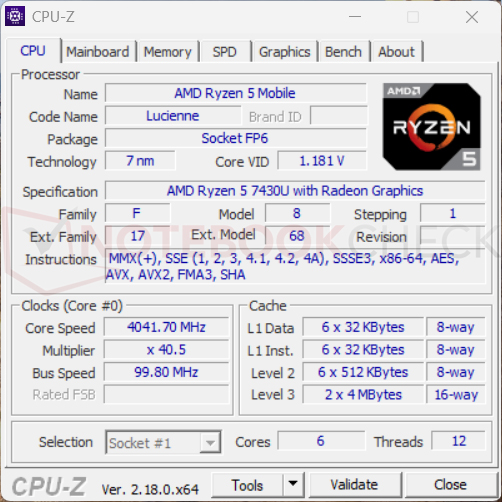
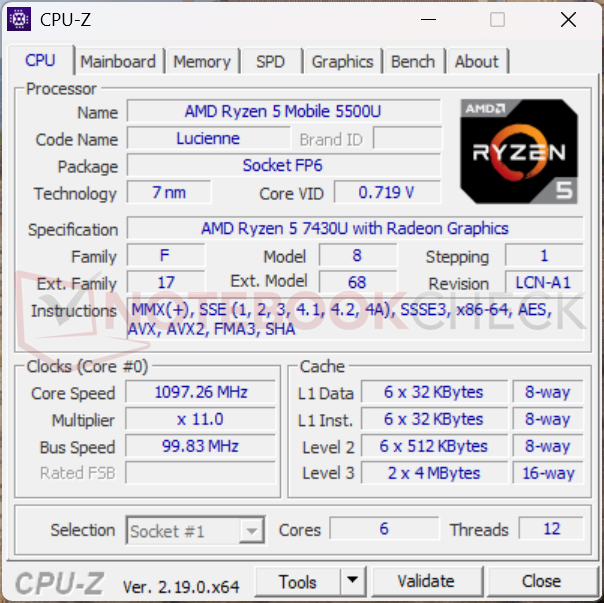
AMD denies any involvement in the uncovered CPU fraud
Just a few days ago (we reported), AMD issued an official statement via the HKEPC (Hong Kong Electronics Project Community) platform in which the CPU manufacturer states that it neither authorized nor approved the misleading CPU labeling practices that have now been uncovered and that it had no knowledge of these facts. The company further states that mislabeling is strictly against AMD's trademark and licensing policies. In addition, AMD reserves the right to take legal action against those responsible for this incident.
As a first reaction, the Hong Kong distributor Hornington announced to withdraw and refund the previously identified Chuwi product lines CoreBook X 7430U, CoreBook Plus 7430U and UBOX 7430U. Our proof here that Ninkear is also affected with the A15 Pro is likely to add to this list.
Numerous shops and manufacturers remove references to the 7430U, Ninkear wants to clear things up
Parallel to our reporting on the CPU fraud scandal, we are observing a progressive disappearance of references to the supposedly installed Ryzen 5 7430U from various manufacturers and retail platforms. In some cases, product descriptions are being changed, in others, products are disappearing completely from the range. This process is likely to continue for some time. It remains to be seen which devices with 7430U will remain on the market at all, especially as products with this chip have suffered a massive loss of confidence due to the incidents to date and will probably find it difficult to find buyers.
Following our last report about our unaffected A15 Pro sample - in contradiction to information from affected buyers of the A15 Pro - Ninkear has reacted and provided us with the following official statement:
To friends who care about Ninkear,
Recently, the issue regarding the misrepresentation of the AMD Ryzen 5 5500U product as an AMD Ryzen 5 7430U, as reported by notebookcheck, has garnered significant attention. Although the report published by the website on March 14th has tested and clarified that Ninkear products are not affected by this related issue. (https://www.notebookcheck.net/The-7430U-CPU-scandal-could-spread-Another-manufacturer-under-suspicion-ODM-comes-into-the-spotlight.1249671.0.html ) adhering to our commitment to responsibility towards Ninkear distributors and users, Ninkear has initiated an investigation with the relevant ODM manufacturer into the affected product batches.
We have also issued an advisory to Ninkear distributors and users. If you encounter any related issues, please contact your Ninkear distributor/sales representative immediately, or reach out to us directly via our official email at [support@ninkear.com].
A dedicated service task force has been established to oversee our "Quality Service Month" campaign, which addresses this and other quality-related matters. We also welcome our friends in the media to contact us at any time, as we work together to safeguard the legitimate rights and interests of consumers who love Ninkear.
Ninkear therefore notes that, in the course of our reporting, it has initiated an investigation into the affected product batches and ODM manufacturers and has informed dealers and users. Those affected should contact the manufacturer at support@ninkear.com.
More articles in this series
04.03.2026: Attention: Chuwi CoreBook X installs AMD Ryzen 5 5500U...
12.03.2026: CPU fraud, next round: Chuwi CoreBook Plus also affected
14.03.2026: The 7430U CPU scandal could spread: Another manufacturer...
21.03.2026: Another laptop brand affected by CPU fraud: Manufacturer promises...
Source(s)
 Add as a preferred source on Google


