




Acer Swift 16 stays cool even under stress
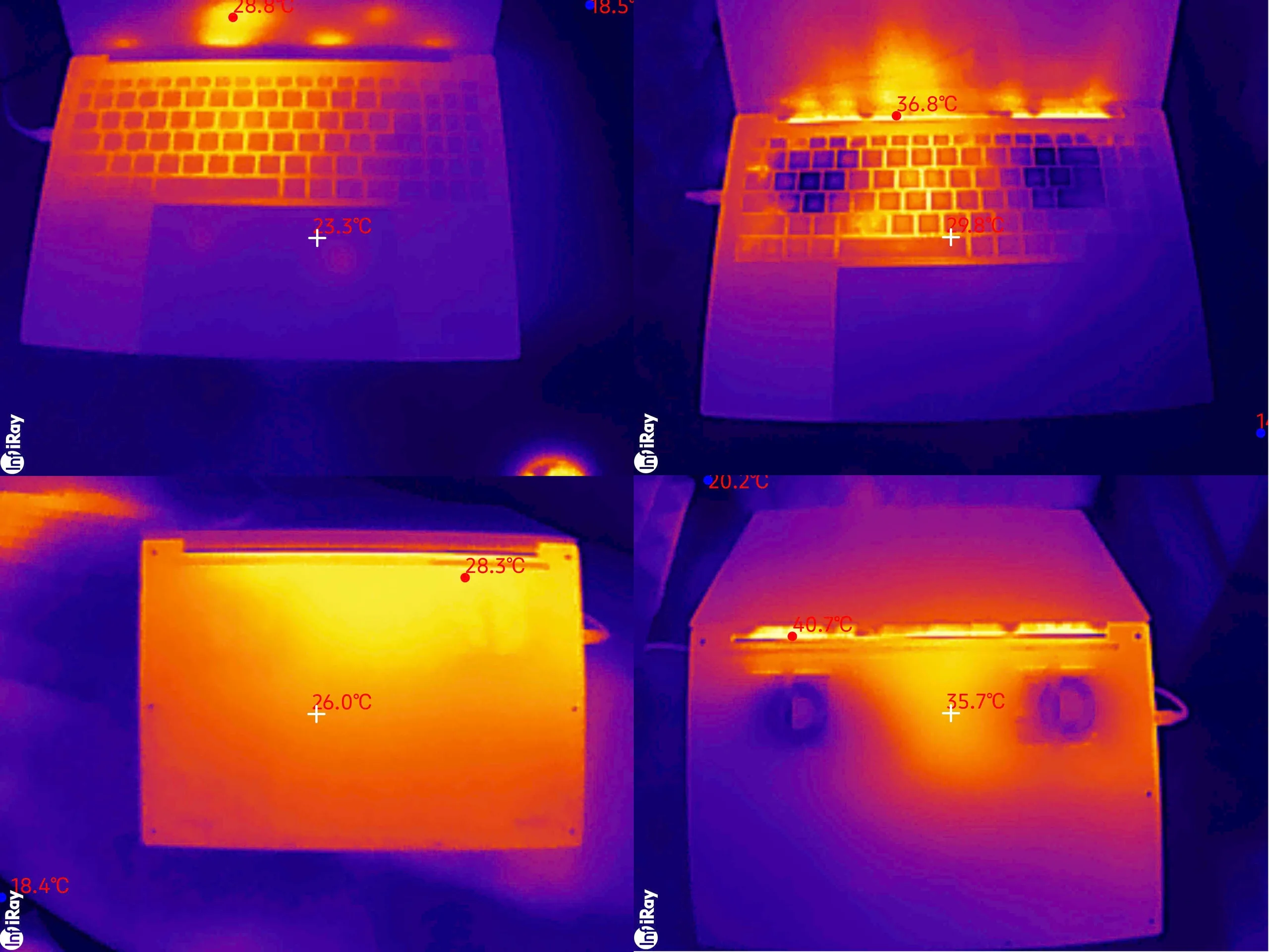
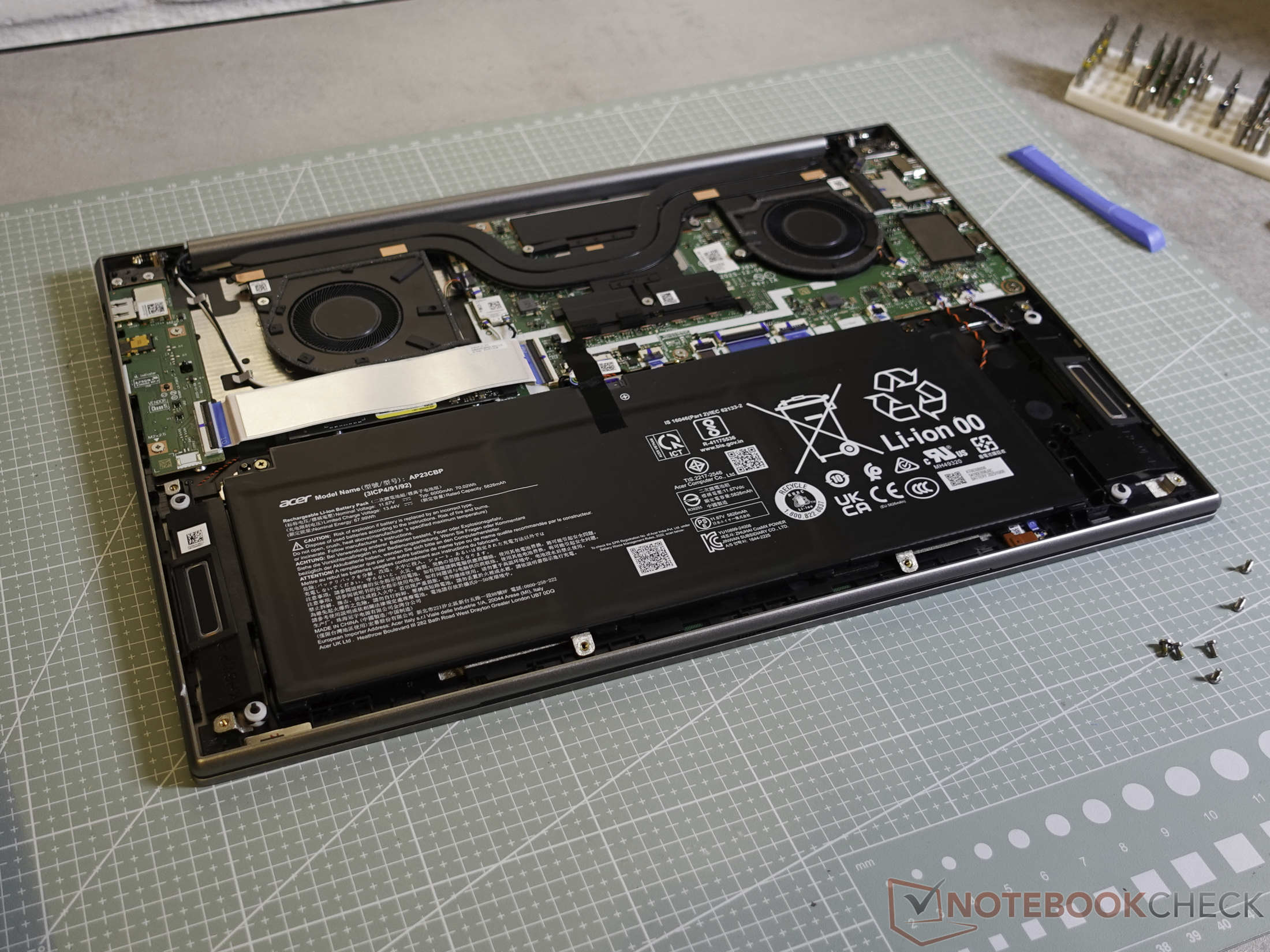
In our review, the new Acer Swift 16 demonstrated its ability to draw strong performance from its Panther Lake processor. Despite the power, it remains relatively cool thanks to a dual-fan cooling system inside the slim aluminum chassis that efficiently dissipates component heat. A notable feature is the air intake, which occurs not only through the bottom but also through the gaps in the keyboard on the top. This dual fresh-air supply is typically seen in high-end gaming laptops and ensures that the palm rests and contact surfaces remain almost entirely cold during use.
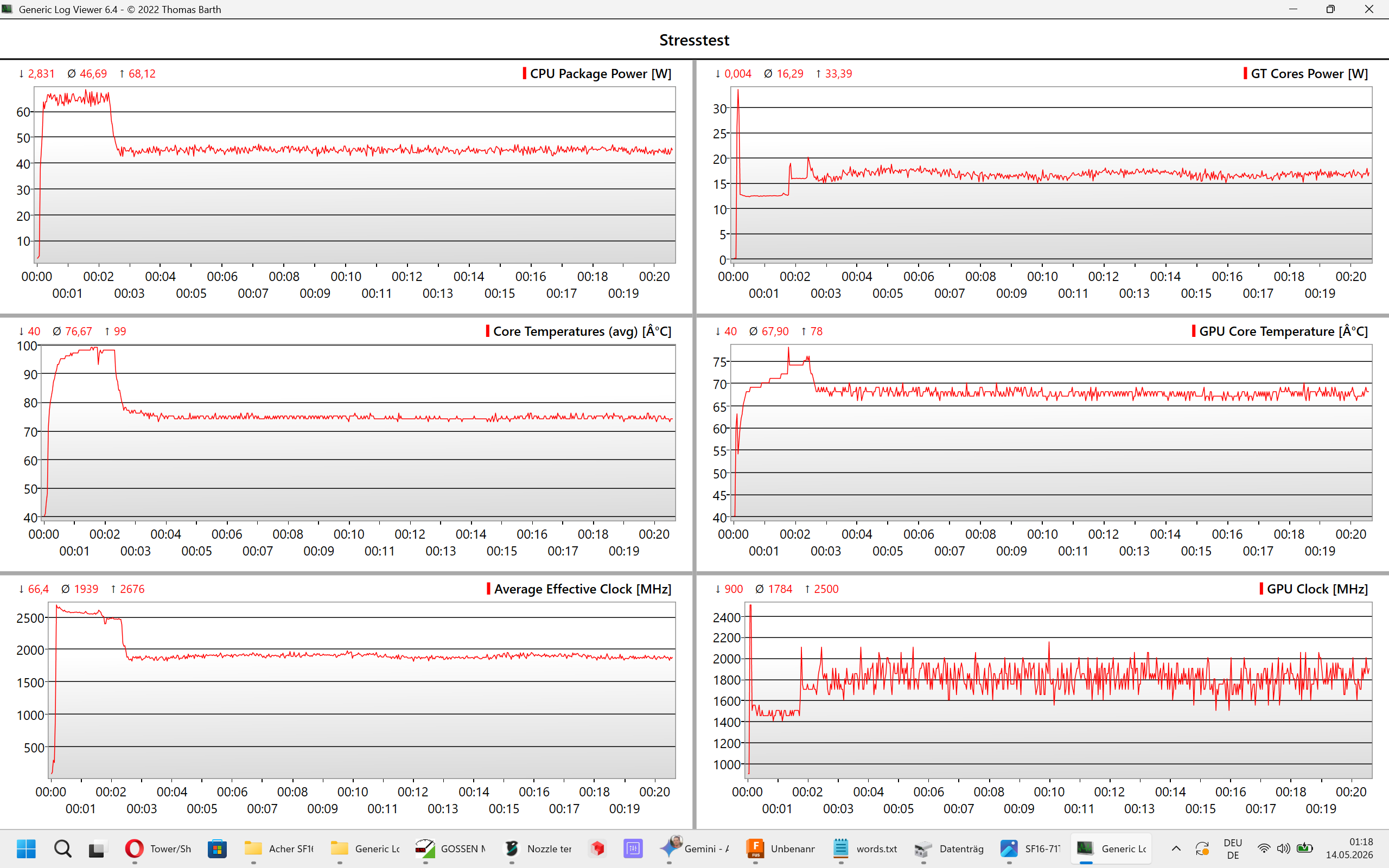
Our stress test evaluation highlights the dynamics of the power management. The processor in the Swift 16 can briefly draw a peak of around 68 watts, causing core temperatures to spike up to 99 °C. After this initial phase, the system stabilizes at a sustained power draw of 45 watts, bringing temperatures down to a non-critical 75 °C. Meanwhile, the integrated graphics unit consistently operates between 68 and 70 °C. Remarkably little of this internal heat reaches the exterior. One design aspect to note is the position of the exhaust vents, which direct hot air toward the lower section of the OLED panel. While the measured display temperatures remain within acceptable limits, heat is generally a factor that can impact the long-term lifespan of organic light-emitting diodes.
The active cooling system becomes audible under full load but stays within the usual range for this performance class. Under maximum stress, the device reaches a sound pressure level of 48.4 dB(A), measured at a distance of 15 cm from the chassis. The fan noise is concentrated in the lower frequencies between 2,000 Hz and 6,000 Hz, meaning the Swift 16 avoids annoying high-pitched whistling. Those preferring a quieter environment can switch to the normal cooling mode at 39 dB(A) or the silent mode at just 27 dB(A). These modes significantly reduce noise for office work or less demanding tasks.
 Add as a preferred source on Google


