Review Asus A7Jc
Case
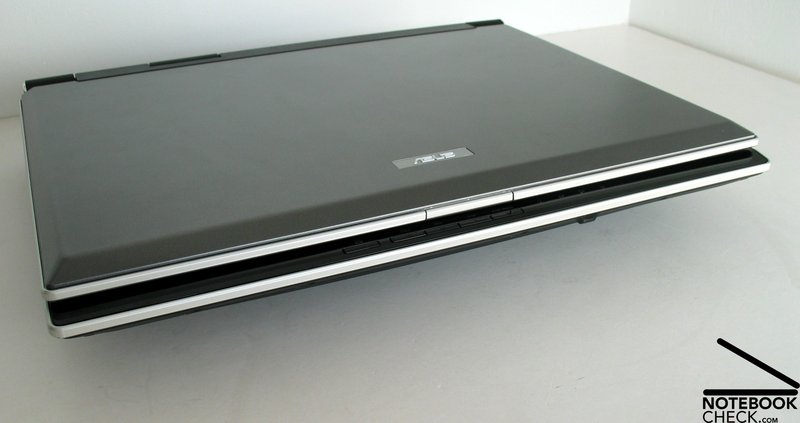
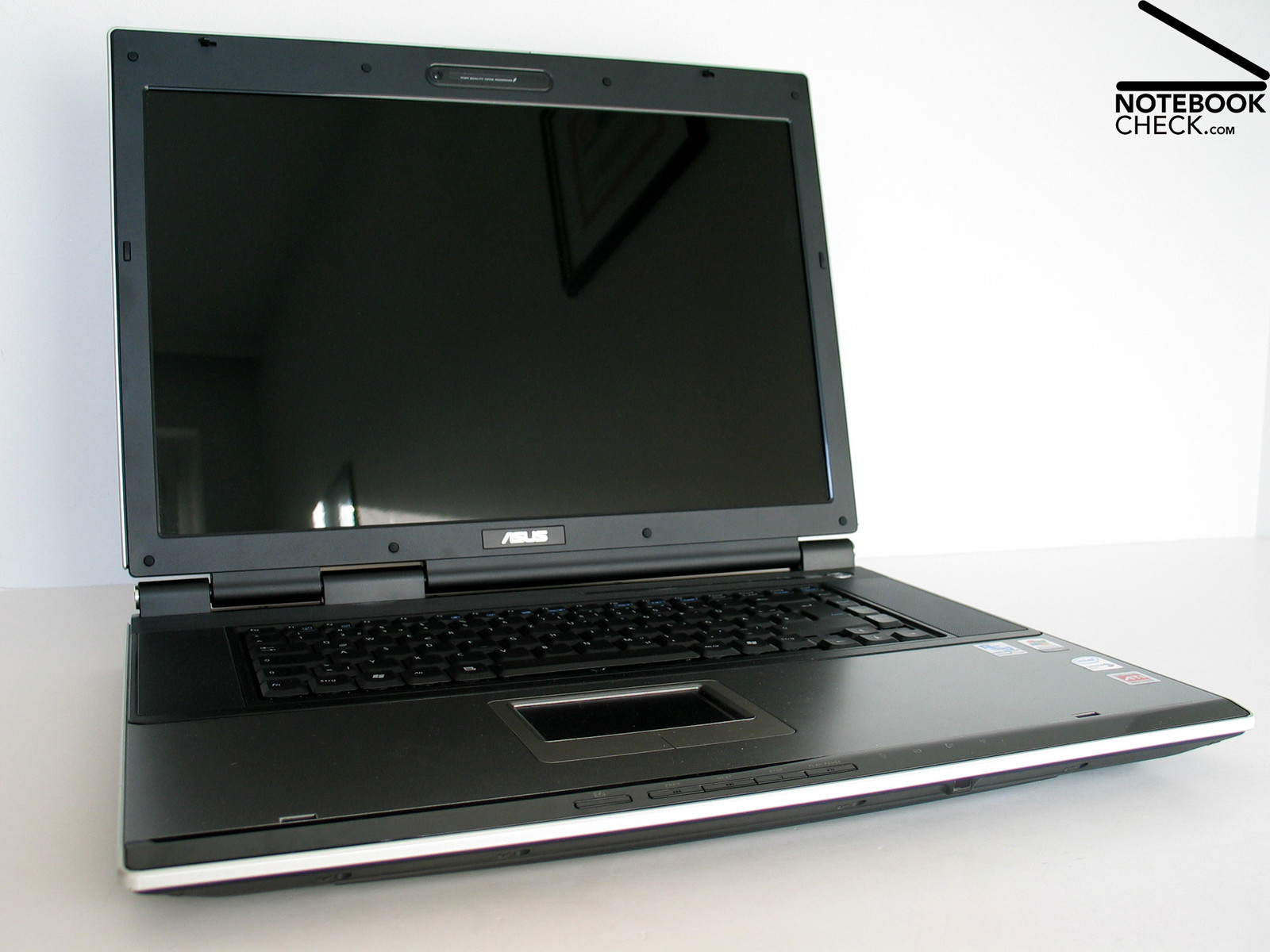
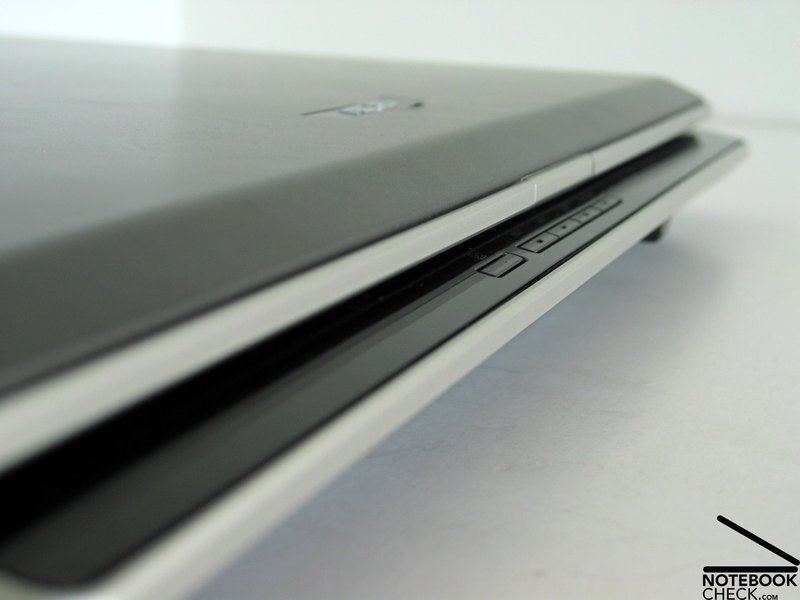
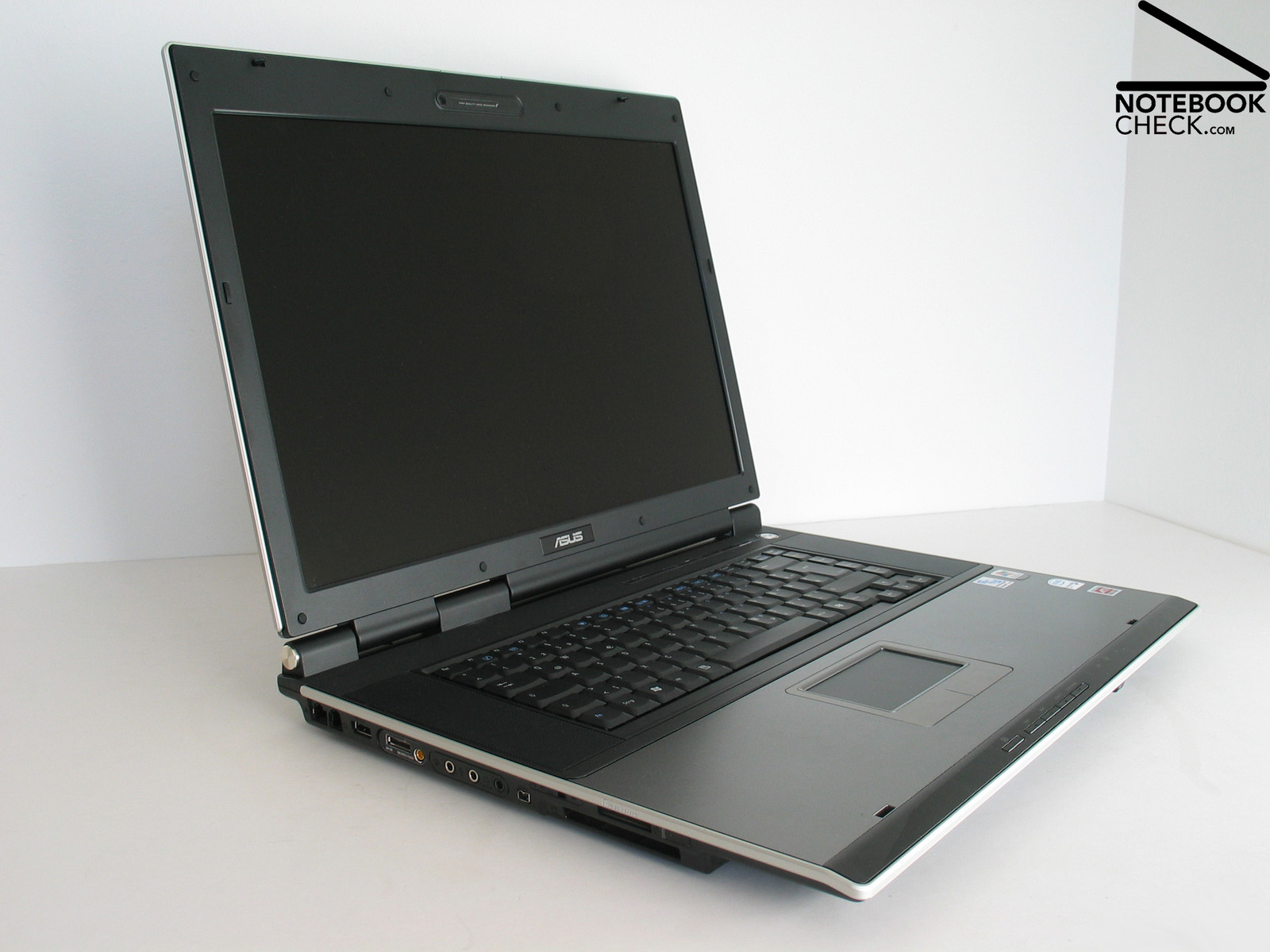
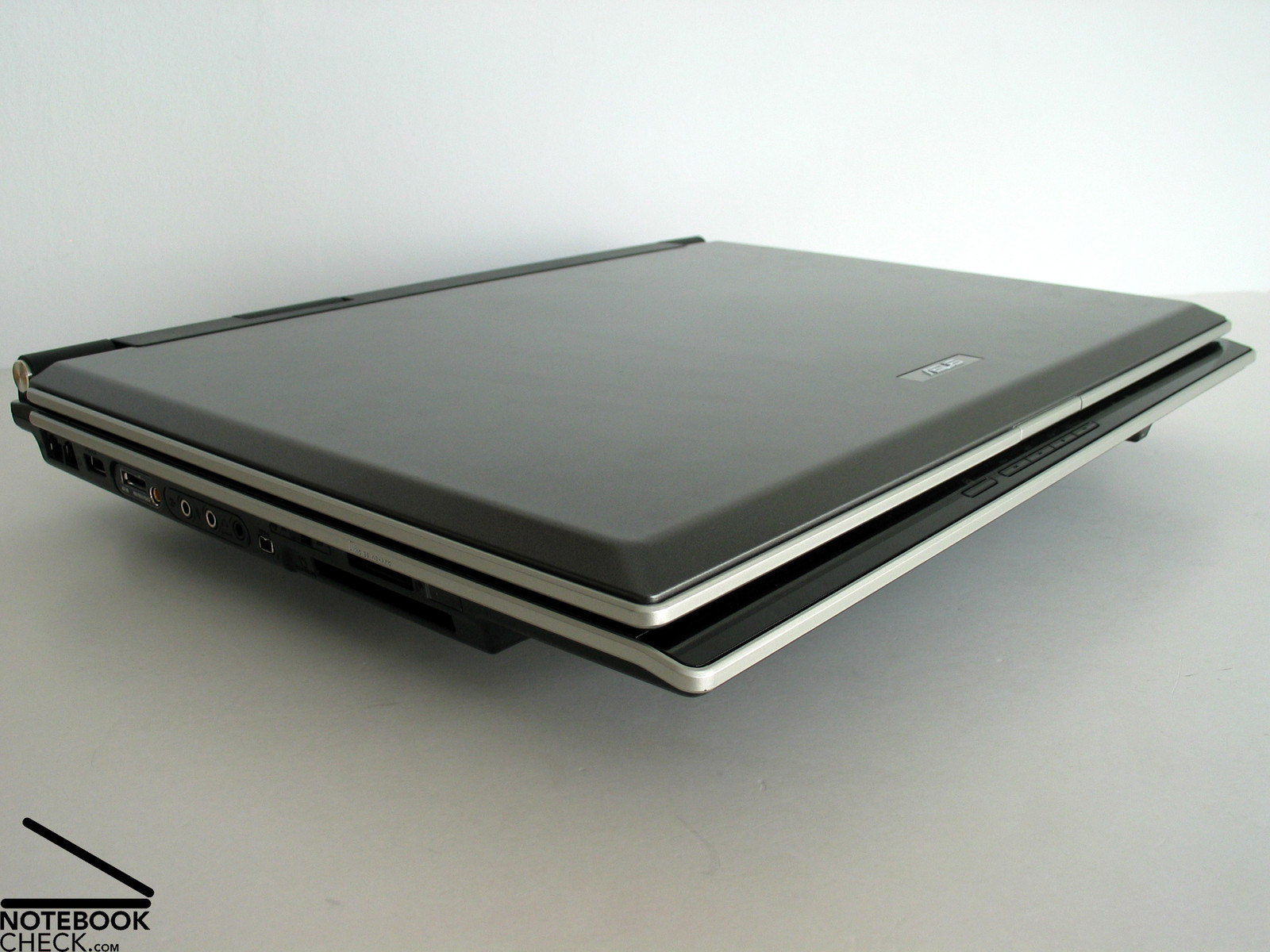
Similar to the F3Jm the Asus A7Jc is designed sophisticated and decent. It impresses through the use of linear forms and the rather dark colors. Especially the small front edge makes it look light and mobile, although having big dimensions.
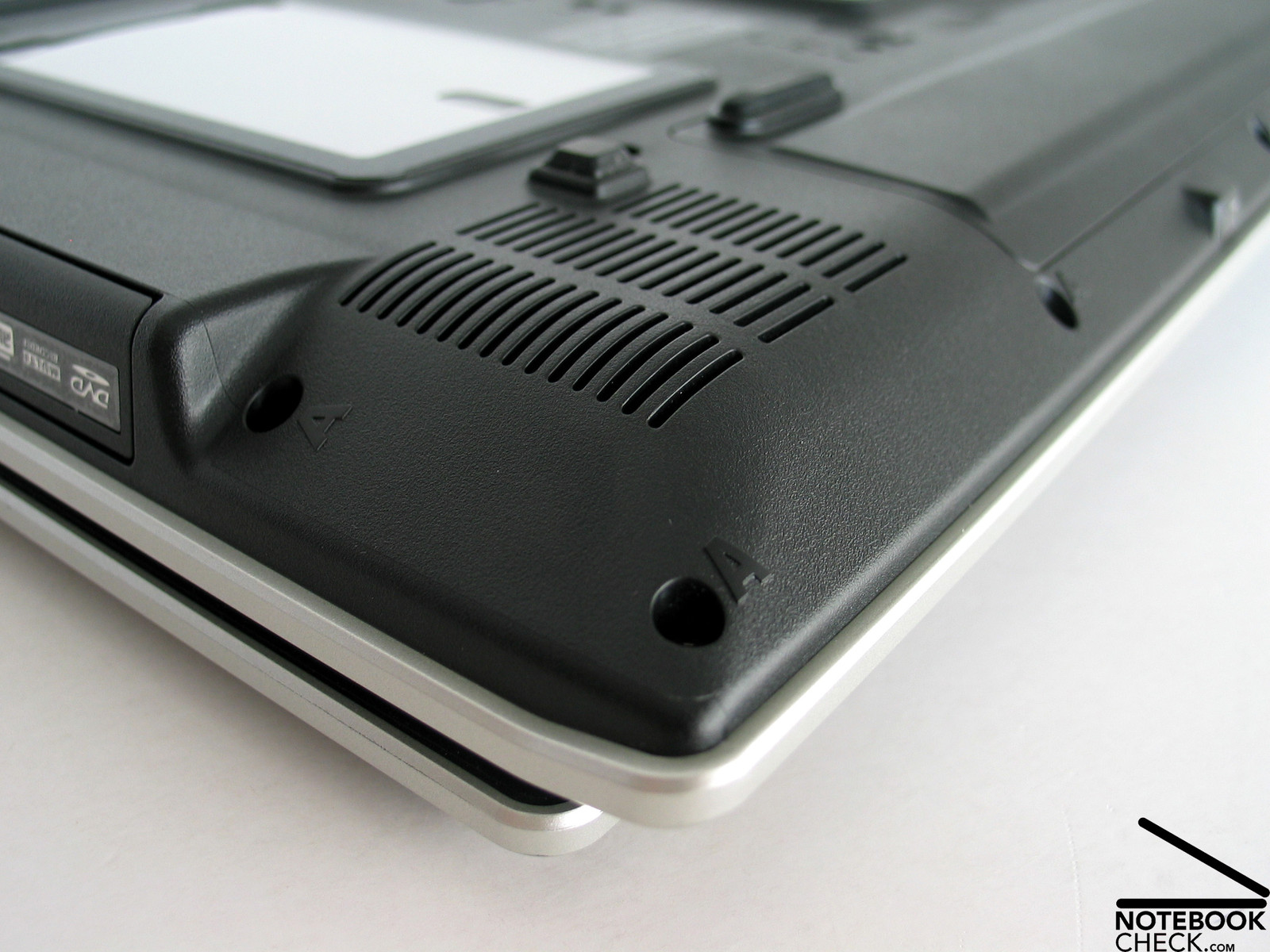
Furthermore, the A7Jc is of good workmanship and quality. The case is very stable and flexural rigid, even if it is picked up. One should consider here that the notebook weights 4.2 kg.
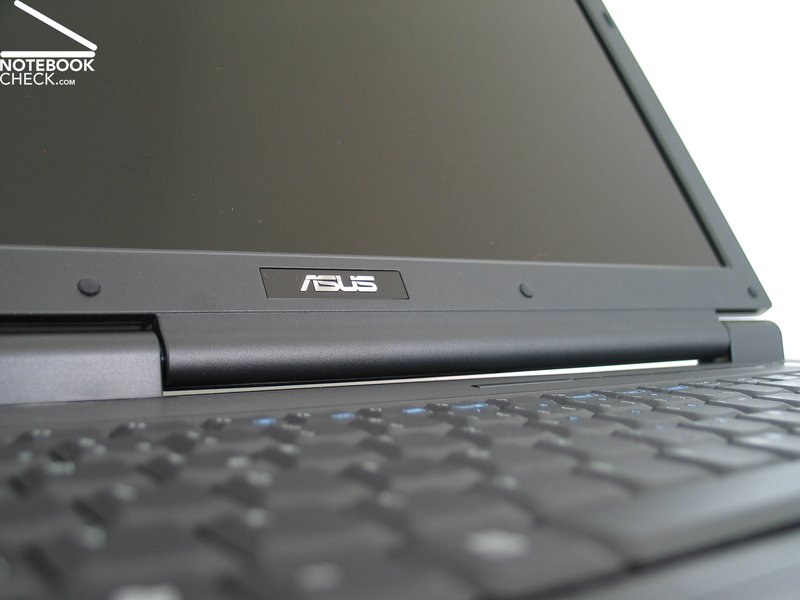
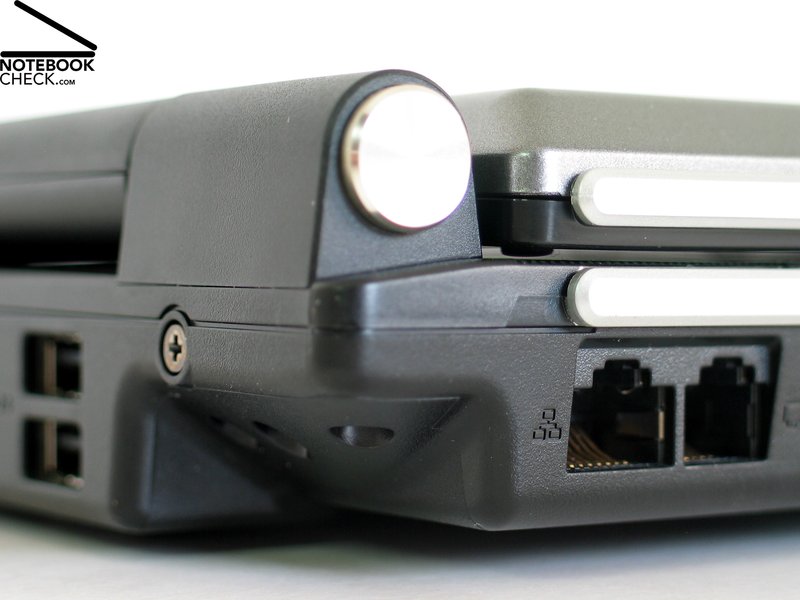
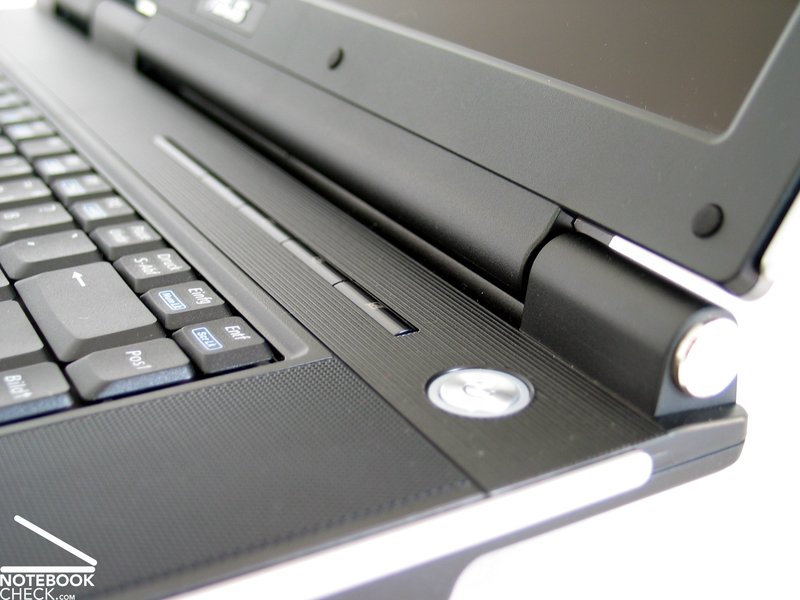
The 17 inch display is mounted with 3 very robust hinges, which nevertheless allow the display to see-saw a little bit. Like other more mobile notebooks, the A7Jc is equipped with a ramshorn hook, which steadies the display, if closed. The hook can be unlocked easily by pressing a button, but one must look closely to open the display, because the base unit protrudes the display, which make it difficult to grab.
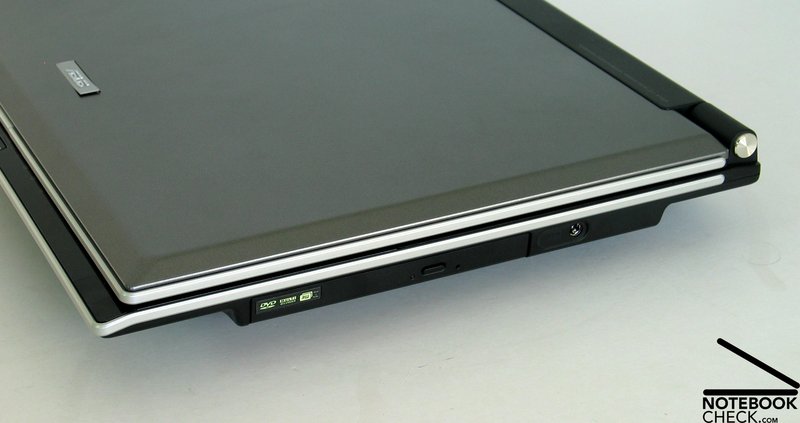
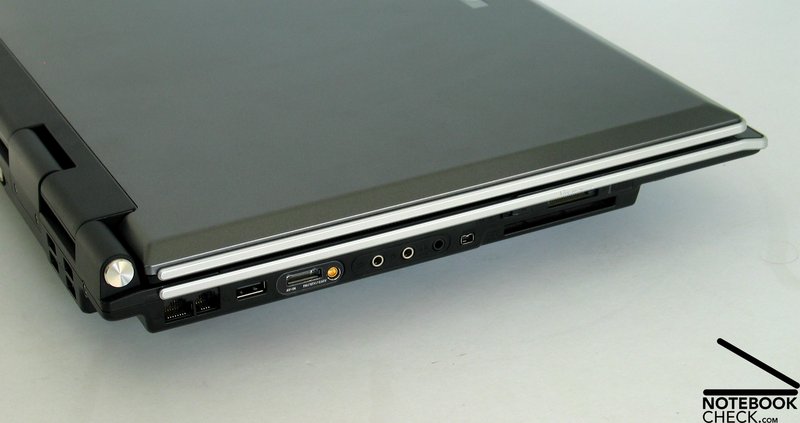
The ports are sensibly placed at the back regions of the notebook. At the front edge there aren't any ports besides the infrared port (CIR - remote control). At the right side there are only the DVD drive and the network adapter, which is ideally for right-hander, because the work area of the mouse is not essentially limited.
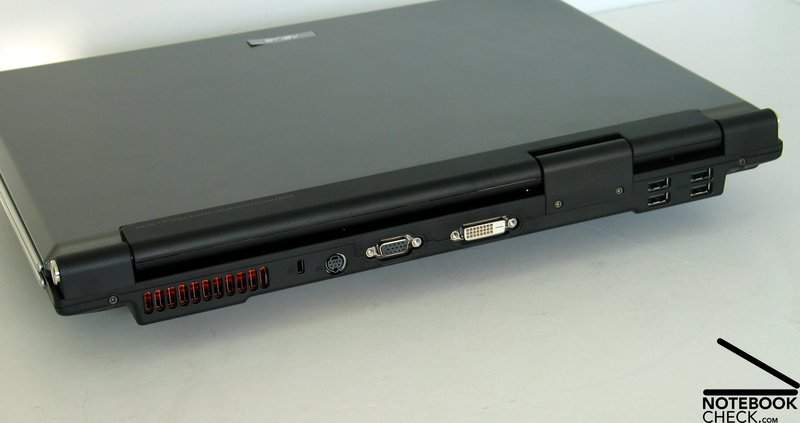
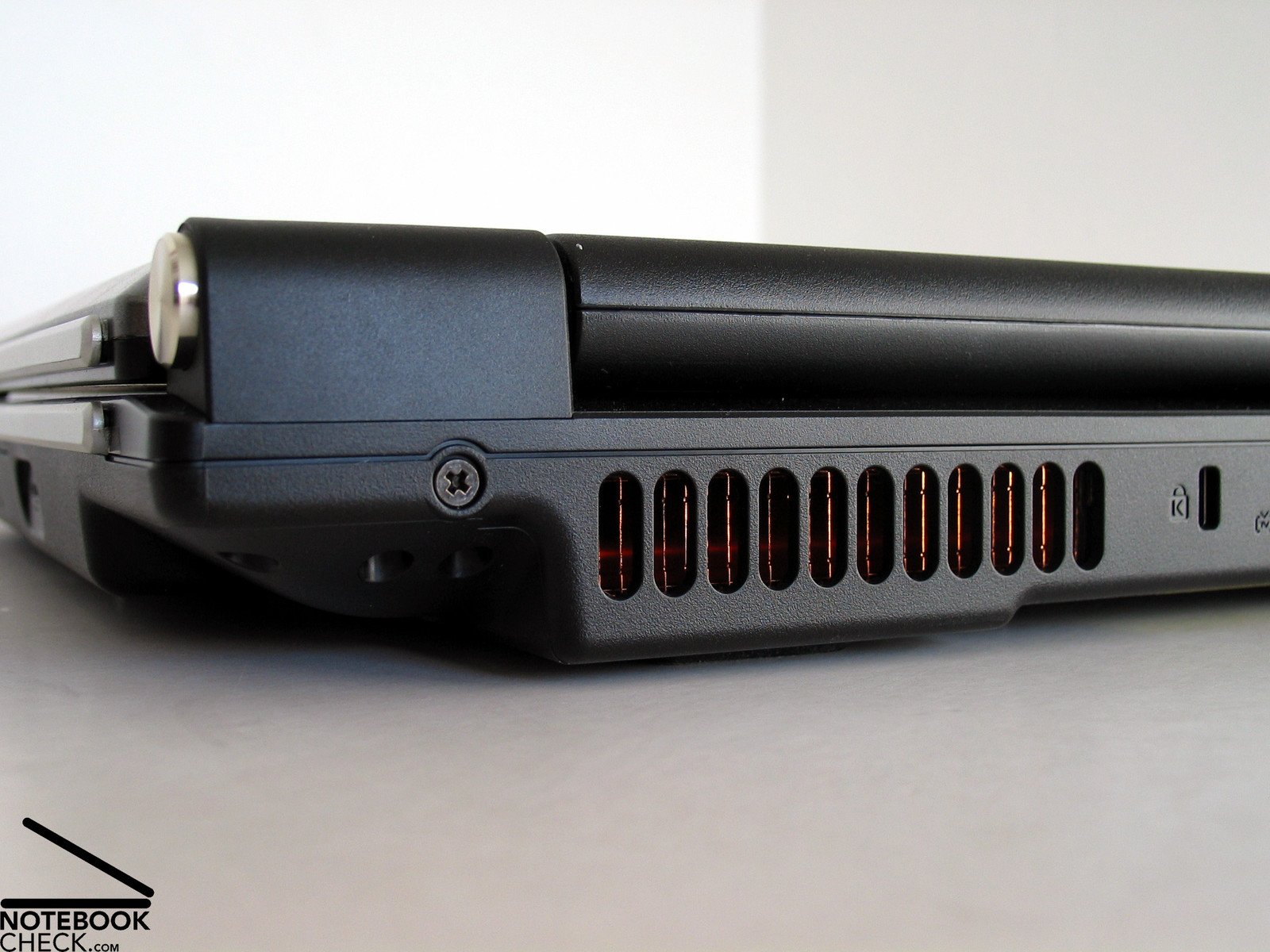
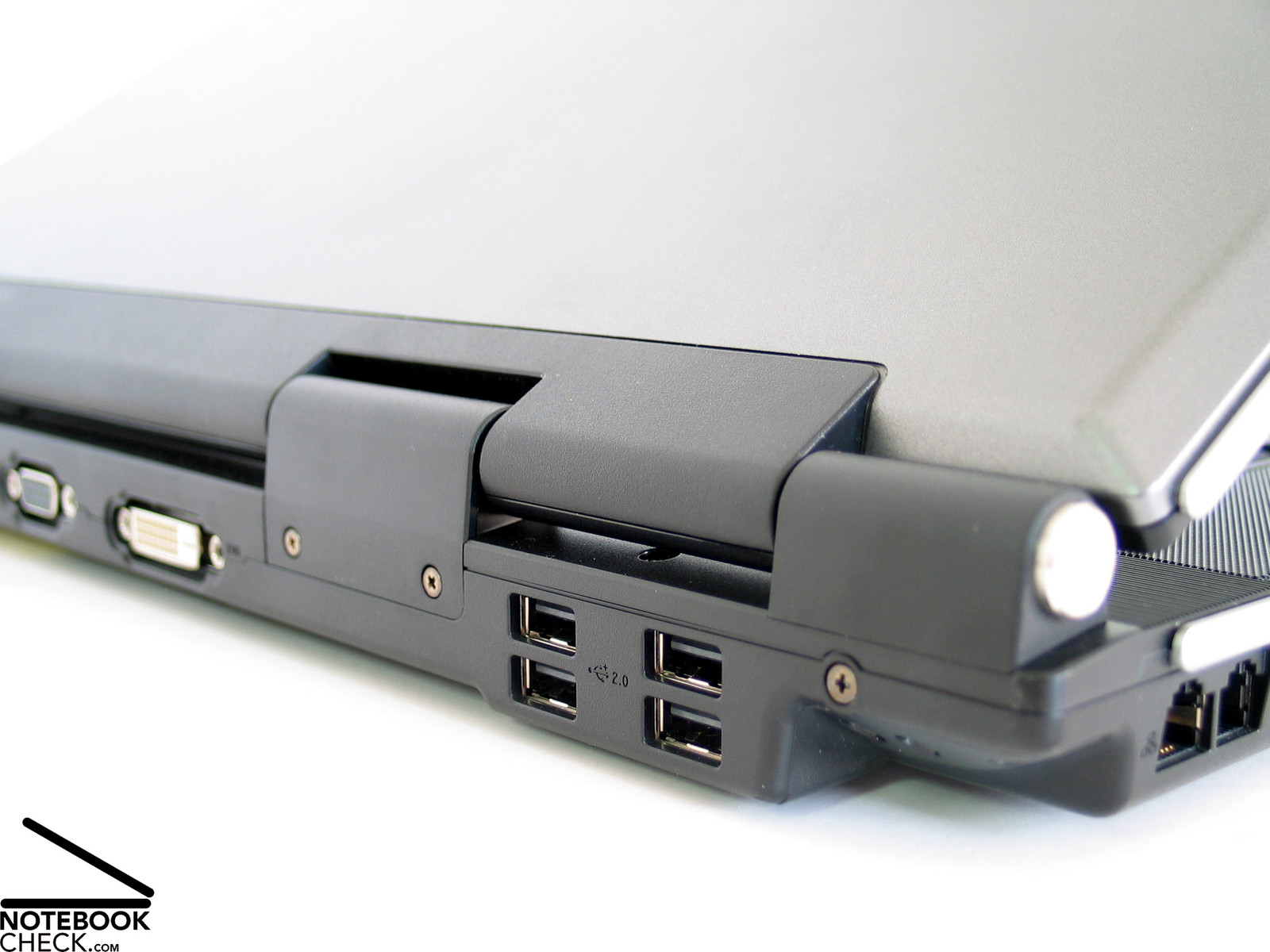
At the back side there are the following ports: 4x USB 2.0, DVI-D, VGA-Out, S-Video Out and a Kensington lock. In the right region there are the vent holes of the fans.
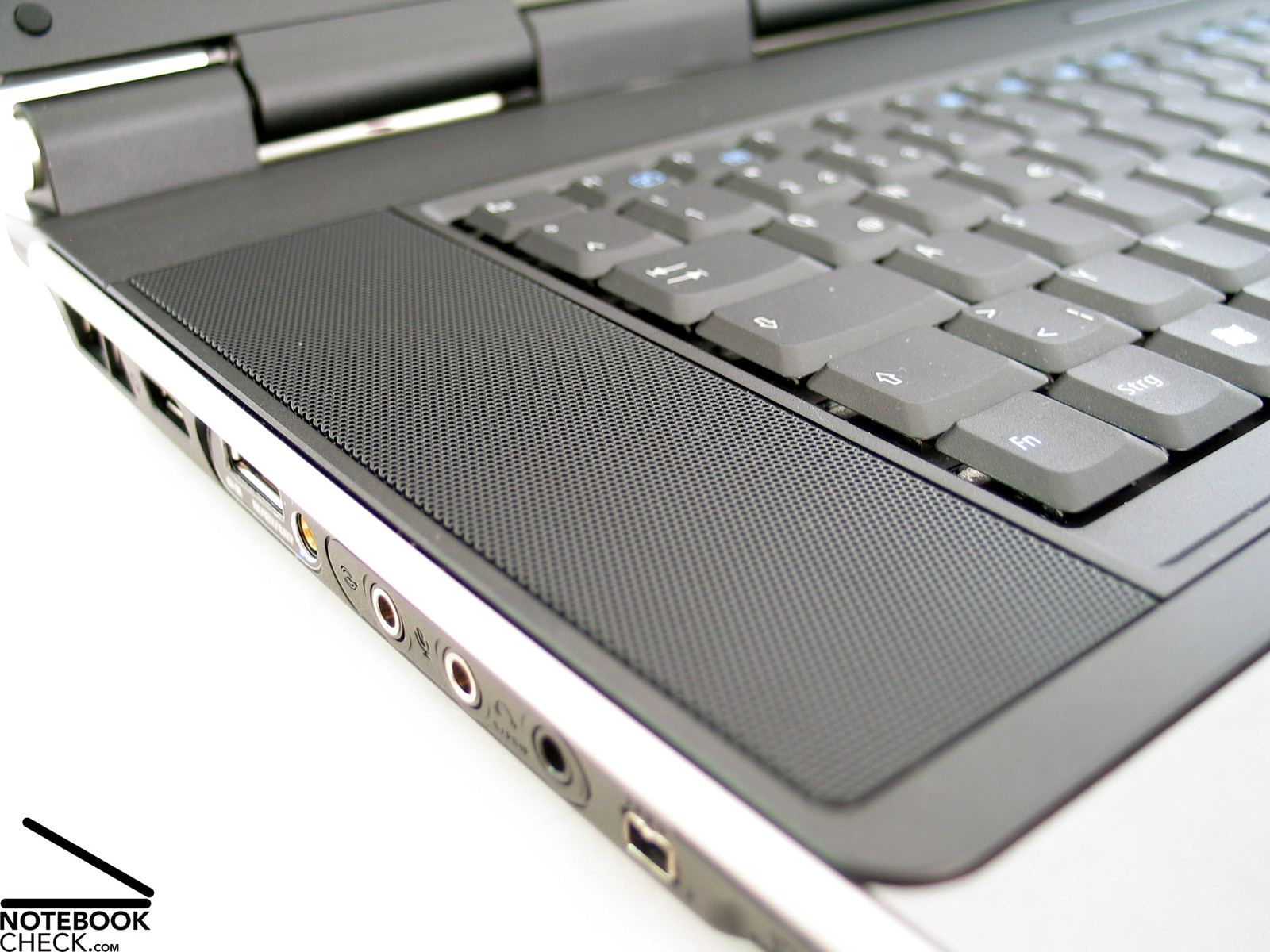
At the left side there are a LAN and a modem connector in the back region. Furthermore, there is another USB 2.0 Port, a AV/S-Video In (the notebook comes with an adapter), a connector for an aerial, the audio ports (Mic-In, Line-In, Headphones-Out /S/PDIF), a fire wire port, a card reader, an express card slot and a IrDA infrared port.
Input Devices
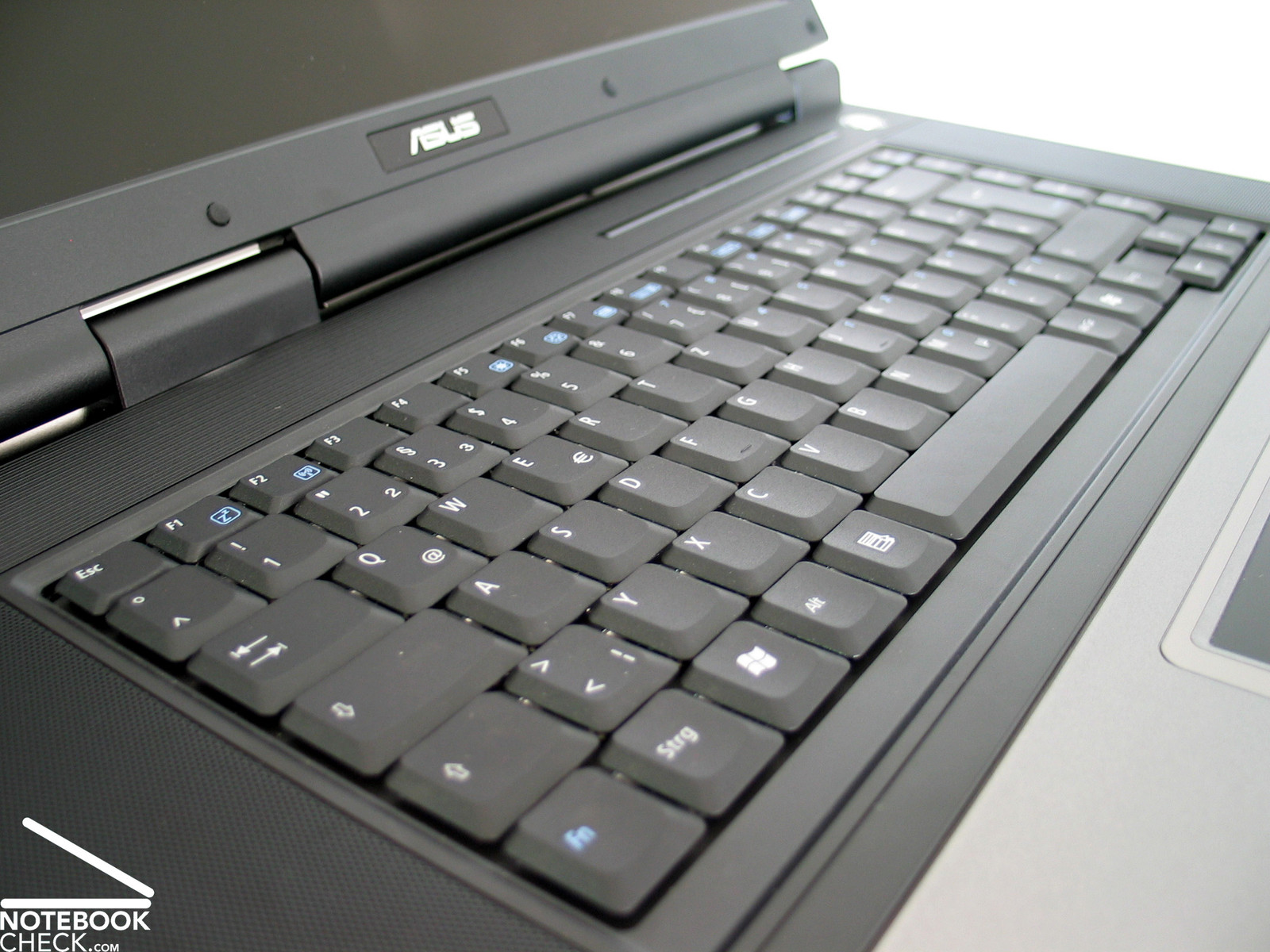
The A7Jc's keyboard feels similar to the keyboard of the F3Jm. Still there are some obvious differences. At the first glance the layout seems to be the same than the layout of the F3Jm. But at a closer look, one realizes that the Fn key and the Ctrl key are inverted. The Fn key is placed marginal.
The keys seem to wobble a little more and the typing noise is louder than the noise of the F3Jm. Sill it is comfortable to type.
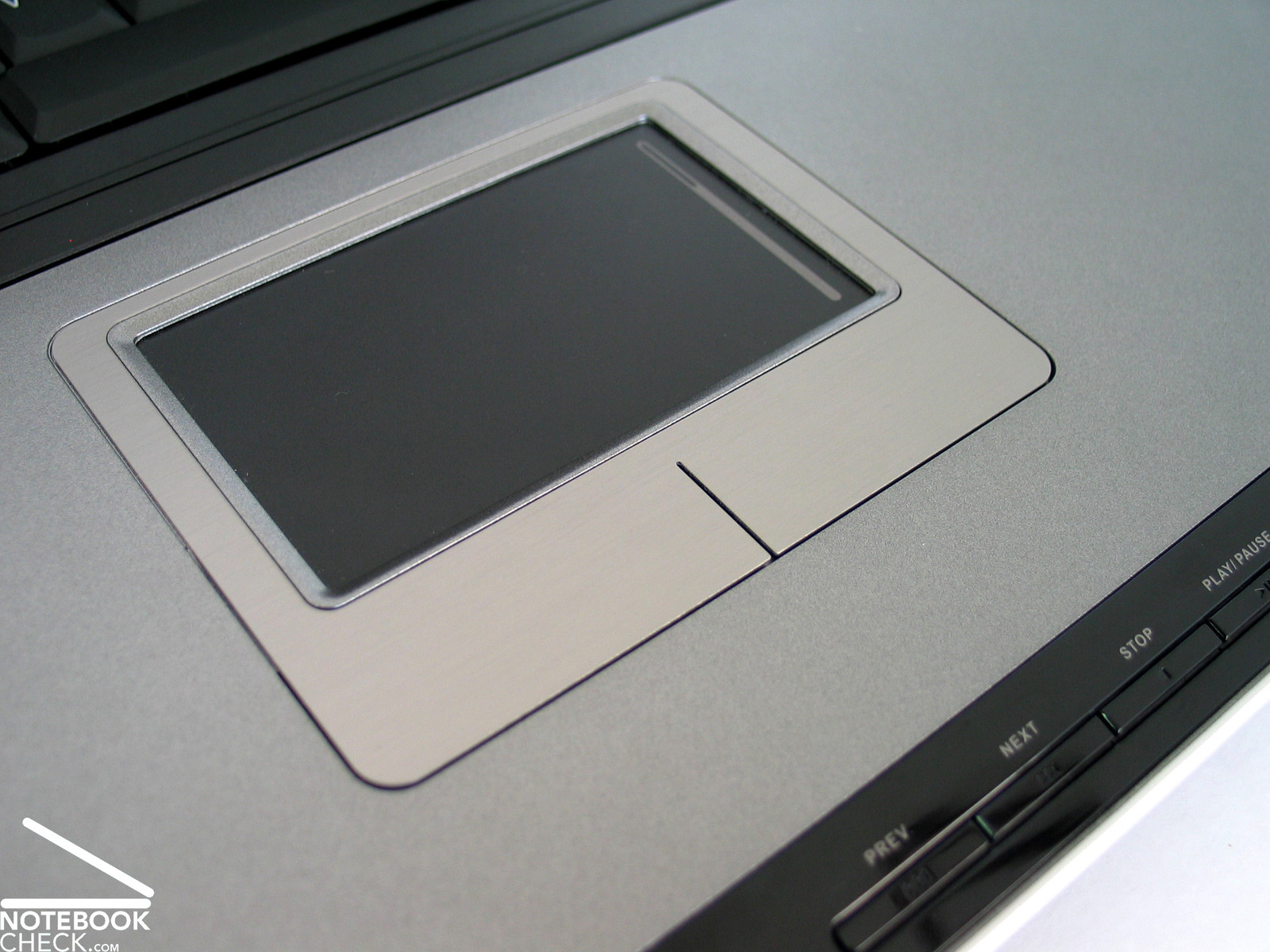
The touch pad is precise and of good response. The comfort is not as good as of F3Jm, but still the pad and its buttons are alright for a DTR notebook.
Display
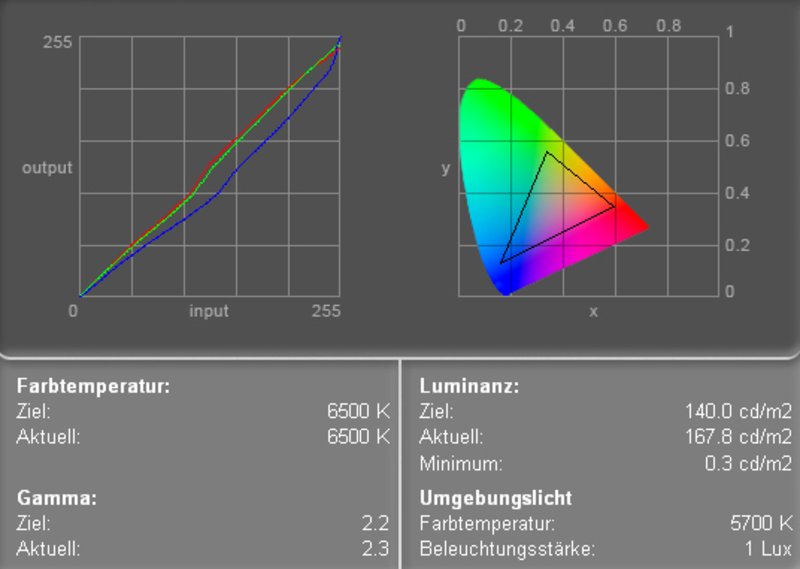
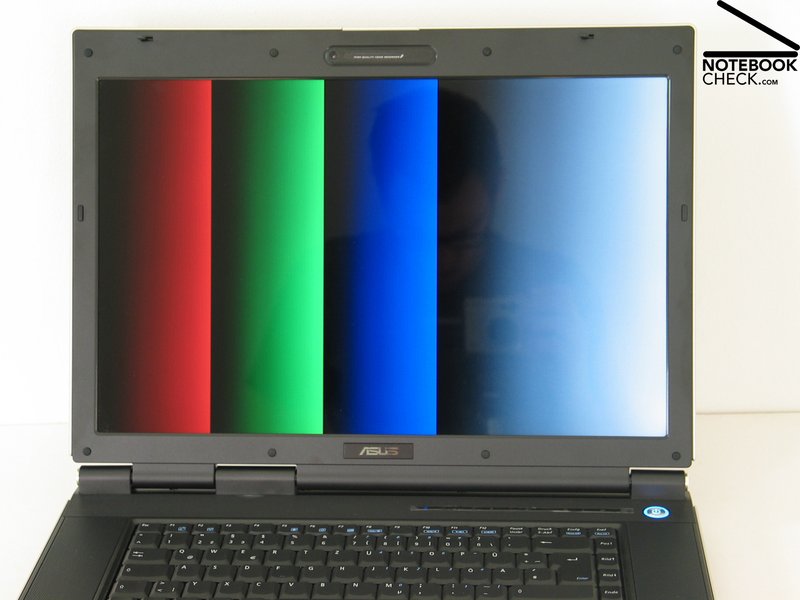
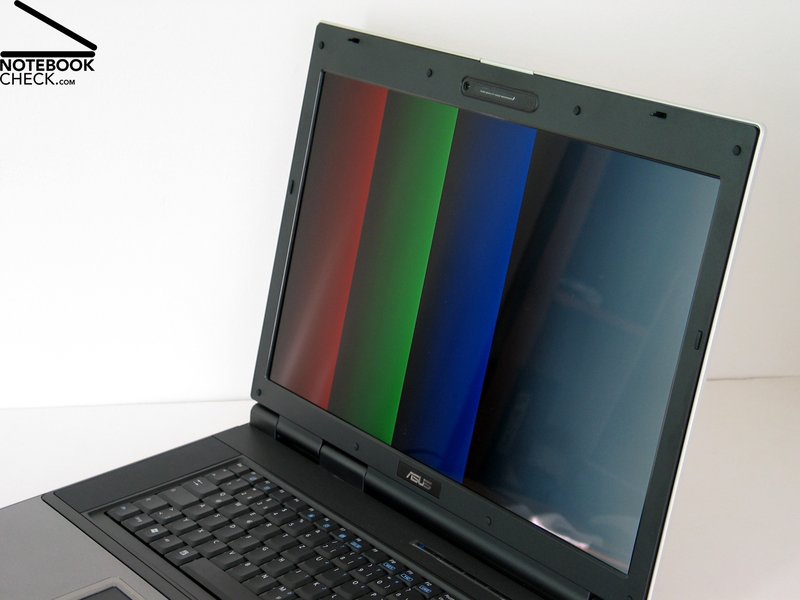
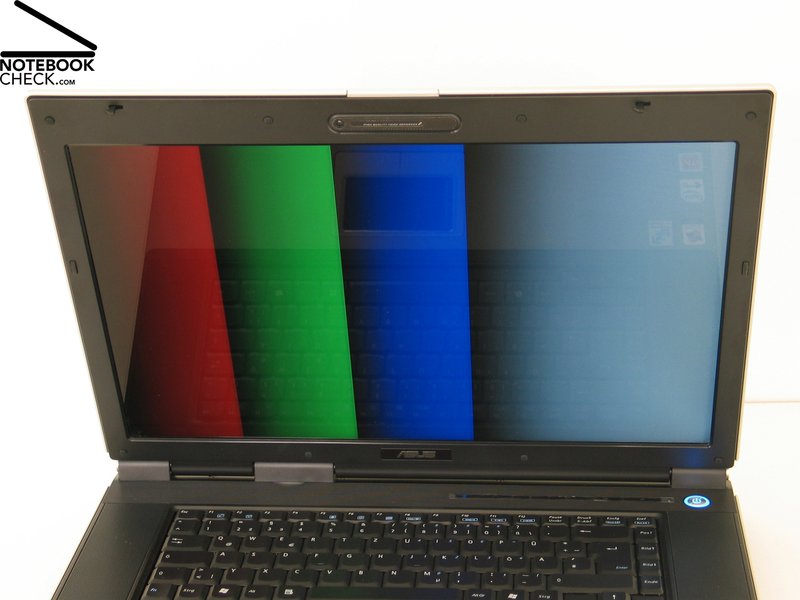
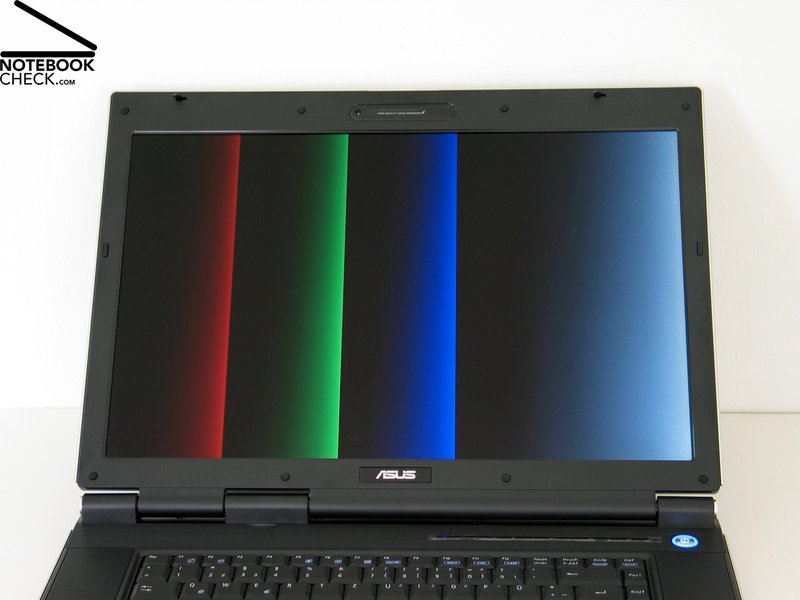
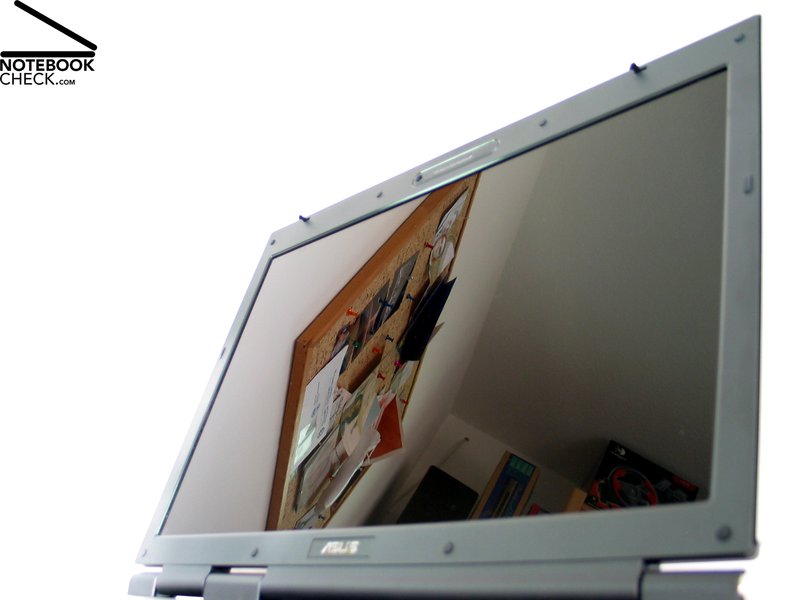
Asus A7Jc's 17 inch display has a reflecting surface. The maximum resolution is 1440x900 pixels of format 16:10. The measured maximum brightness is 168.1 cd/m² at an average illumination of 77.8%.
The diagram shows a nearly ideal red and green tone curve, but the blue curve deviates clearly from the ideal. The red tones dominate, which leads to too warm colors.
Because of the low black values of 0.3 cd/m² and a good maximum brightness, the contrast review measured a very good ratio of 560:1. The notebook is rated grade 6 at the Pixperan test of legibility, which is average.
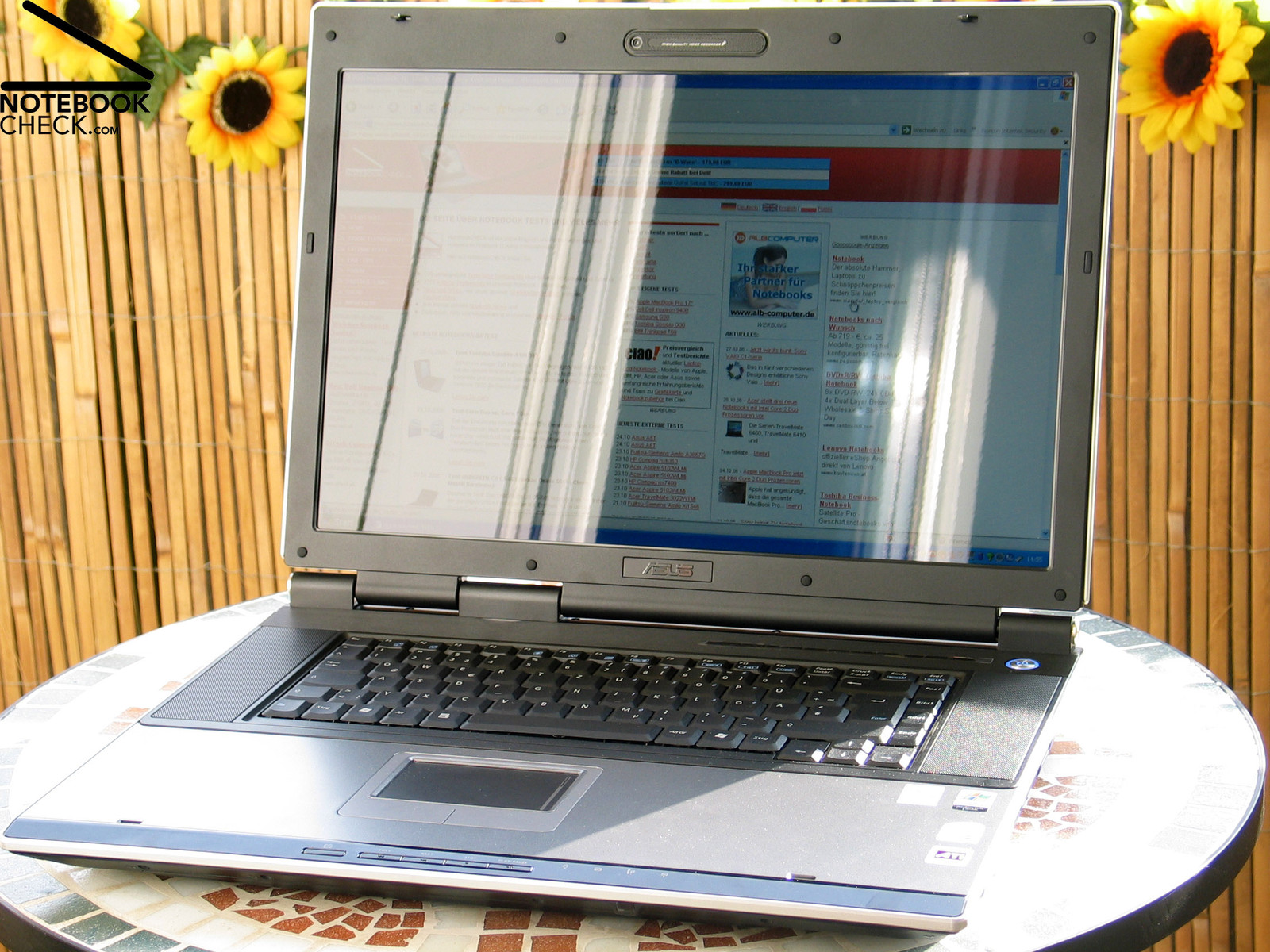
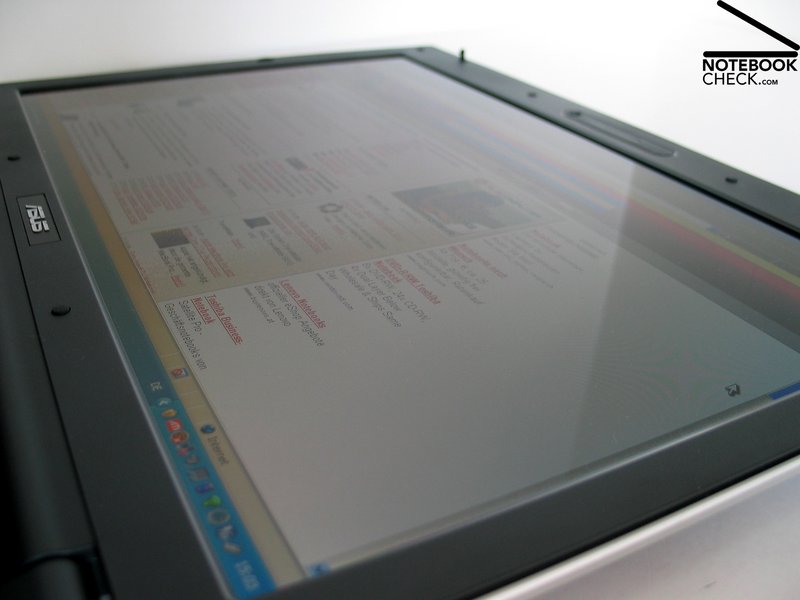
Outdoors the Asus A7Jc's display reflects heavily. The brightness is sufficient for perceiving the contents, but still the panel is not suitable for working outdoors.
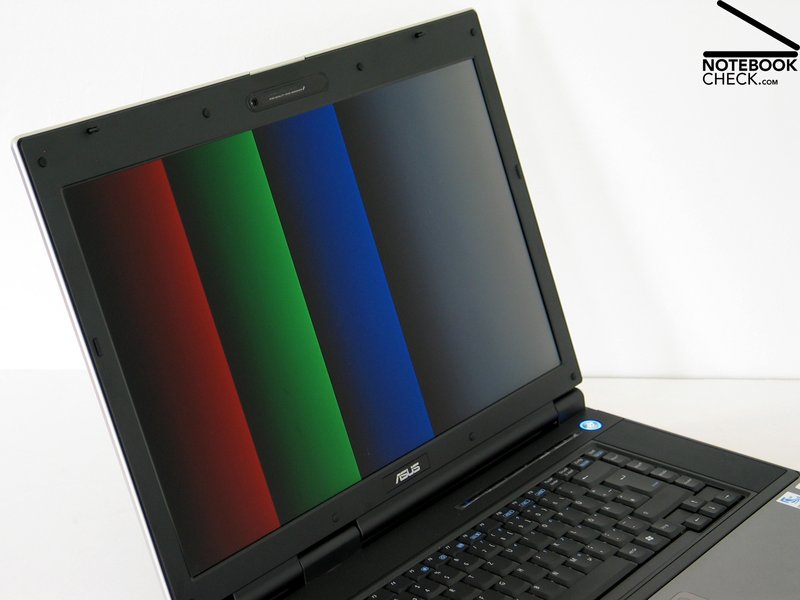
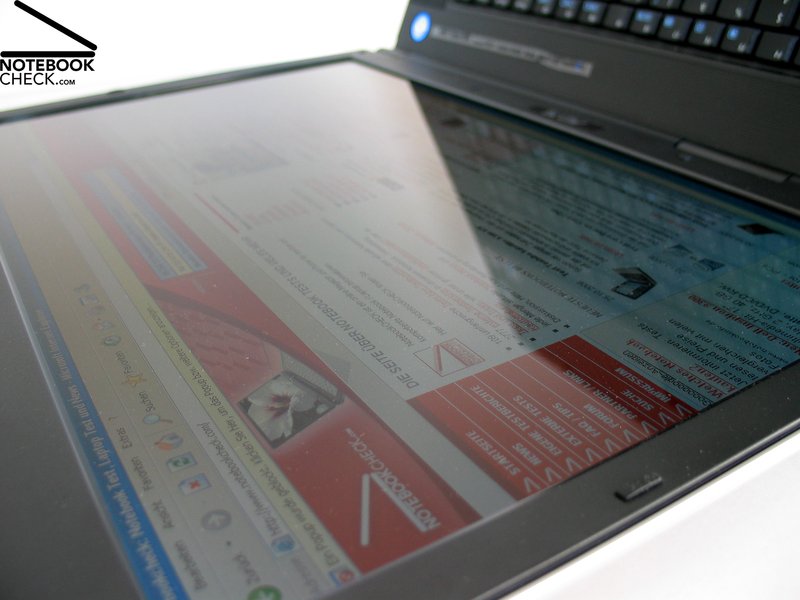
Horizontally the stability to the vantage point is good and is only limited by reflections and bad lightening conditions. Vertically, one can observe the usual dimouts, if looking from bottom to top and the usual brightening, if looking from top to bottom. Still, the usual area of operation is stable regarding the vantage point.
|
Information Maximum: 168.1 cd/m²Average: 146.4 cd/m² Brightness Distribution: 78 % Black: 0.3 cd/m² Contrast: 560:1 | |||||||||||||||||||||||||
Performance
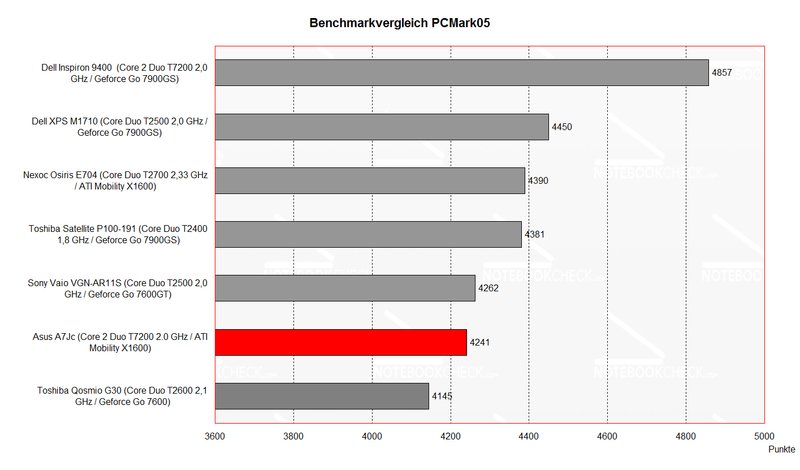
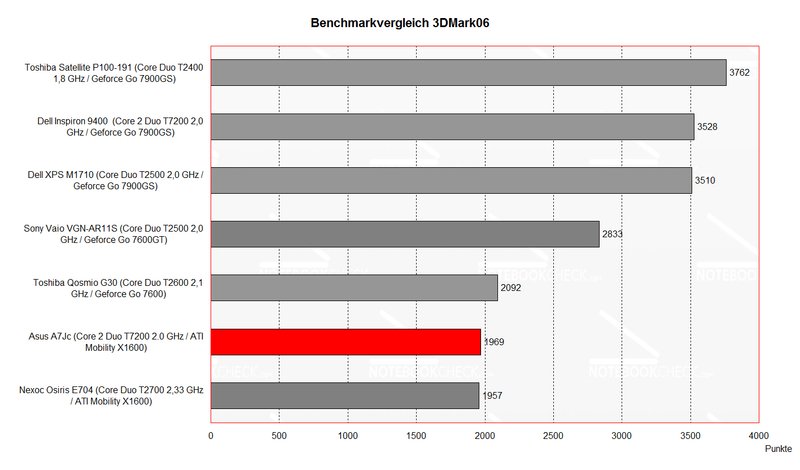
The A7Jc rated good in the fields of applications as well as at benchmarks. Still it is not top. The T7200 Core 2 Duo CPU with 2,0 GHz still has unused reserve capacities.
Especially the ATI X1600 video card with 512 MB, leads to lower rates than better equipped DTRs.
Further information to the video card can be found here. Further informations about video cards can be found in our Comparison of mobile video cards. Detailed information to Core 2 Duo T7200 CPU can be found here.
Please also look at our benchmark list of mobile processors and our benchmark list of mobile video cards, to compare the notebook to different configurations.
![]() |
Help |
| 3DMark 06 in comparison | |
| Sony Vaio VGN-FS485B (min)
740, Graphics Media Accelerator (GMA) 900 | 54 |
| ... | |
| Lenovo IdeaPad S205-M632HGE E-350, Radeon HD 6310 | 1963 |
| Asus Eee PC 1201PN N450, ION 2 | 1963 |
| Asus A7JC
T7200, Mobility Radeon X1600 | 1969 |
| HP 635 LH416EA_ABD E-240, Radeon HD 6310 | 1971 |
| Sony Vaio VPC-YB1S1E/S E-350, Radeon HD 6310 | 1980 |
| ... | |
| Alienware M18x R2 (max)
3920XM, Radeon HD 7970M Crossfire | 29496 |
![]() |
Help |
| PCMark 04 in comparison | |
| Dialogue Flybook A33i (min)
TM-5800, Mobility Radeon M6 | 963 |
| ... | |
| Toshiba Qosmio F30-147 T7200, GeForce Go 7600 | 6606 |
| Asus A8Jp T7200, Mobility Radeon X1700 | 6880 |
| Asus A7JC
T7200, Mobility Radeon X1600 | 6903 |
| Samsung X60 Pro Boxxer T7400, Mobility Radeon X1700 | 7376 |
| ... | |
| Samsung X60 Pro Boxxer (max)
T7400, Mobility Radeon X1700 | 7376 |


Emissions
Loudness
A7Jc is compared to other desktop replacements surprisingly quiet, at least, when idle. The pre-installed Power4Gear Software tools allow controlling the performance and therewith also the loudness. Without load the notebook runs at 32.0 dB, which is very quiet. Under load the noise reaches 40.1 dB.
Noise Level
| Idle |
![]() ![]() ![]() ![]() ![]() ![]() ![]() ![]() ![]() ![]() ![]() ![]() ![]() ![]() ![]() ![]() ![]() ![]() ![]() ![]() ![]() ![]() ![]() ![]() ![]() ![]() ![]() ![]() ![]() ![]() ![]() ![]() ![]() ![]() ![]() ![]() ![]() ![]() ![]() ![]() ![]() ![]() ![]() ![]() ![]() ![]() ![]() ![]() ![]() ![]() ![]() ![]() ![]() ![]() ![]() ![]() ![]() ![]() ![]() ![]() ![]() ![]() ![]() ![]() ![]() ![]() ![]() ![]() ![]() ![]() ![]() ![]() ![]() ![]() ![]() ![]() ![]() ![]() ![]() ![]() ![]() ![]() ![]() ![]() ![]() ![]() ![]() ![]() ![]() ![]() ![]() ![]() ![]() ![]() ![]() ![]() ![]() ![]() ![]() ![]() ![]() ![]() ![]() ![]() ![]() ![]() ![]() ![]() ![]() ![]() ![]() ![]() ![]() ![]() ![]() ![]() ![]() ![]() ![]() ![]() ![]() ![]() ![]() ![]() ![]() ![]() ![]() ![]() ![]() ![]() ![]() ![]() ![]() ![]() ![]() ![]() ![]() ![]() ![]() ![]() ![]() ![]() ![]() ![]() ![]() ![]() ![]() ![]() ![]() ![]() ![]() ![]() ![]() ![]() ![]() ![]() ![]() ![]() ![]() ![]() ![]() ![]() ![]() ![]() ![]() ![]() ![]() ![]() ![]() ![]() ![]() ![]() ![]() ![]() ![]() ![]() ![]() ![]() ![]() ![]() ![]() ![]() ![]() ![]() ![]() ![]() ![]() ![]() ![]() ![]() ![]() ![]() ![]() ![]() ![]() ![]() ![]() ![]() ![]() ![]() ![]() ![]() ![]() ![]() ![]() ![]() ![]() ![]() ![]() ![]() ![]() ![]() ![]() ![]() ![]() ![]() ![]() ![]() ![]() ![]() ![]() ![]() ![]() ![]() ![]() ![]() ![]() ![]() ![]() ![]() ![]() ![]() ![]() ![]() ![]() ![]() ![]() ![]() ![]() ![]() ![]() ![]() ![]() ![]() ![]() ![]() ![]() ![]() ![]() ![]() ![]() ![]() ![]() ![]() ![]() ![]() ![]() ![]() ![]() ![]() ![]() ![]() ![]() ![]() ![]() ![]() ![]() ![]() ![]() ![]() ![]() ![]() ![]() ![]() ![]() ![]() ![]() ![]() ![]() ![]() ![]() ![]() ![]() ![]() ![]() ![]() ![]() ![]() ![]() ![]() ![]() ![]() ![]() ![]() ![]() ![]() ![]() ![]() ![]() ![]() ![]() ![]() ![]() ![]() ![]() ![]() ![]() ![]() ![]() ![]() ![]() ![]() ![]() ![]() ![]() ![]() ![]() ![]() ![]() ![]() ![]() ![]() ![]() ![]() ![]() ![]() ![]() ![]() ![]() ![]() ![]() ![]() ![]() ![]() ![]() ![]() ![]() ![]() ![]() ![]() ![]() ![]() ![]() ![]() ![]() ![]() ![]() ![]() ![]() ![]() ![]() ![]() ![]() ![]() ![]() ![]() ![]() ![]() ![]() ![]() ![]() ![]() ![]() ![]() ![]() ![]() ![]() ![]() ![]() ![]() ![]() ![]() ![]() ![]() ![]() ![]() ![]() ![]() ![]() ![]() ![]() ![]() ![]() ![]() ![]() ![]() ![]() ![]() ![]() ![]() ![]() ![]() ![]() ![]() ![]() ![]() ![]() ![]() ![]() ![]() ![]() ![]() | ||||
| DVD |
![]() ![]() ![]() ![]() ![]() ![]() ![]() ![]() ![]() ![]() ![]() ![]() ![]() ![]() ![]() ![]() ![]() ![]() ![]() ![]() ![]() ![]() ![]() ![]() ![]() ![]() ![]() ![]() ![]() ![]() ![]() ![]() ![]() ![]() ![]() ![]() ![]() ![]() ![]() ![]() ![]() ![]() ![]() ![]() ![]() ![]() ![]() ![]() ![]() ![]() ![]() ![]() ![]() ![]() ![]() ![]() ![]() ![]() ![]() ![]() ![]() ![]() ![]() ![]() ![]() ![]() ![]() ![]() ![]() ![]() ![]() ![]() ![]() ![]() ![]() ![]() ![]() ![]() ![]() ![]() ![]() ![]() ![]() ![]() ![]() ![]() ![]() ![]() ![]() ![]() ![]() ![]() ![]() ![]() ![]() ![]() ![]() ![]() ![]() ![]() ![]() ![]() ![]() ![]() ![]() ![]() ![]() ![]() ![]() ![]() ![]() ![]() ![]() ![]() ![]() ![]() ![]() ![]() ![]() ![]() ![]() ![]() ![]() ![]() ![]() ![]() ![]() ![]() ![]() ![]() ![]() ![]() ![]() ![]() ![]() ![]() ![]() ![]() ![]() ![]() ![]() ![]() ![]() ![]() ![]() ![]() ![]() ![]() ![]() ![]() ![]() ![]() ![]() ![]() ![]() ![]() ![]() ![]() ![]() ![]() ![]() ![]() ![]() ![]() ![]() ![]() ![]() ![]() ![]() ![]() ![]() ![]() ![]() ![]() ![]() ![]() ![]() ![]() ![]() ![]() ![]() ![]() ![]() ![]() ![]() ![]() ![]() ![]() ![]() ![]() ![]() ![]() ![]() ![]() ![]() ![]() ![]() ![]() ![]() ![]() ![]() ![]() ![]() ![]() ![]() ![]() ![]() ![]() ![]() ![]() ![]() ![]() ![]() ![]() ![]() ![]() ![]() ![]() ![]() ![]() ![]() ![]() ![]() ![]() ![]() ![]() ![]() ![]() ![]() ![]() ![]() ![]() ![]() ![]() ![]() ![]() ![]() ![]() ![]() ![]() ![]() ![]() ![]() ![]() ![]() ![]() ![]() ![]() ![]() ![]() ![]() ![]() ![]() ![]() ![]() ![]() ![]() ![]() ![]() ![]() ![]() ![]() ![]() ![]() ![]() ![]() ![]() ![]() | ||||
| Load |
![]() ![]() ![]() ![]() ![]() ![]() ![]() ![]() ![]() ![]() ![]() ![]() ![]() ![]() ![]() ![]() ![]() ![]() ![]() ![]() ![]() ![]() ![]() ![]() ![]() ![]() ![]() ![]() ![]() ![]() ![]() ![]() ![]() ![]() ![]() ![]() ![]() ![]() ![]() ![]() ![]() ![]() ![]() ![]() ![]() ![]() ![]() ![]() ![]() ![]() ![]() ![]() ![]() ![]() ![]() ![]() ![]() ![]() ![]() ![]() ![]() ![]() ![]() ![]() ![]() ![]() ![]() ![]() ![]() ![]() ![]() ![]() ![]() ![]() ![]() ![]() ![]() ![]() ![]() ![]() ![]() ![]() ![]() ![]() ![]() ![]() ![]() ![]() ![]() ![]() ![]() ![]() ![]() ![]() ![]() ![]() ![]() ![]() ![]() ![]() ![]() ![]() ![]() ![]() ![]() ![]() ![]() ![]() ![]() ![]() ![]() ![]() ![]() ![]() ![]() ![]() ![]() ![]() ![]() ![]() ![]() ![]() ![]() ![]() ![]() ![]() ![]() ![]() ![]() ![]() ![]() ![]() ![]() ![]() ![]() ![]() ![]() ![]() ![]() ![]() ![]() ![]() ![]() ![]() ![]() ![]() ![]() ![]() ![]() ![]() ![]() ![]() ![]() ![]() ![]() ![]() ![]() ![]() ![]() ![]() ![]() ![]() ![]() ![]() ![]() ![]() ![]() ![]() ![]() ![]() ![]() ![]() ![]() ![]() ![]() ![]() ![]() ![]() ![]() ![]() ![]() ![]() ![]() ![]() ![]() ![]() ![]() ![]() ![]() ![]() ![]() ![]() ![]() ![]() ![]() ![]() ![]() ![]() ![]() ![]() ![]() ![]() ![]() ![]() ![]() ![]() ![]() ![]() ![]() ![]() ![]() ![]() ![]() ![]() ![]() ![]() ![]() ![]() ![]() ![]() ![]() ![]() ![]() ![]() ![]() ![]() ![]() ![]() ![]() ![]() ![]() ![]() ![]() ![]() ![]() ![]() ![]() ![]() ![]() ![]() ![]() ![]() ![]() ![]() ![]() ![]() ![]() ![]() ![]() ![]() ![]() ![]() ![]() ![]() ![]() ![]() ![]() ![]() ![]() ![]() ![]() ![]() ![]() ![]() ![]() ![]() ![]() ![]() | ||||
![]() ![]() ![]() ![]() | |||||
| 30 dB silent |
40 dB audible |
50 dB loud |
|||
min: | |||||
Temperature
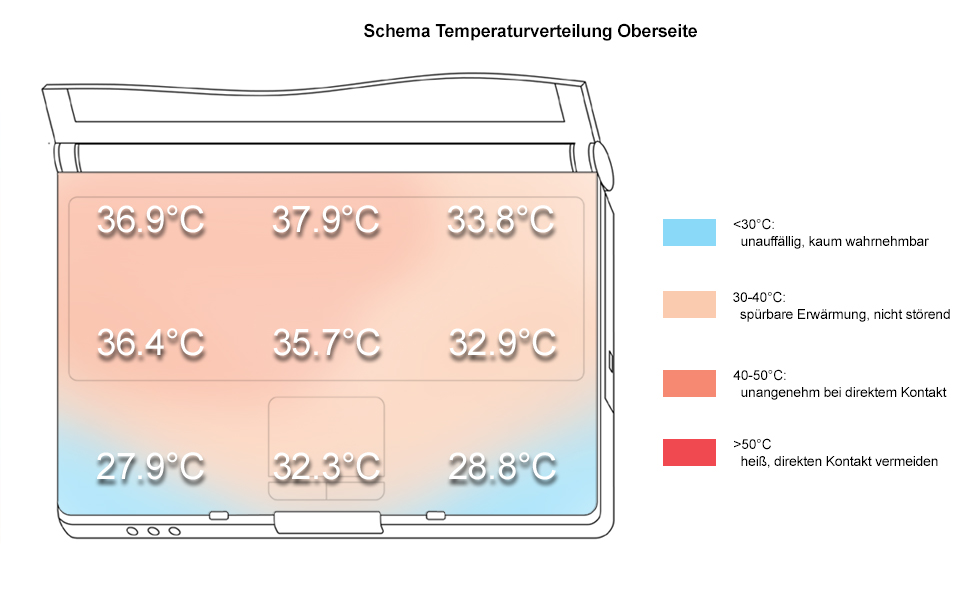
The region of the hand balls never got remarkably warmer, even if under load and used for a longer duration. Nevertheless, the region of the keyboard and at the top side reached maximum temperatures of 37.9°C.
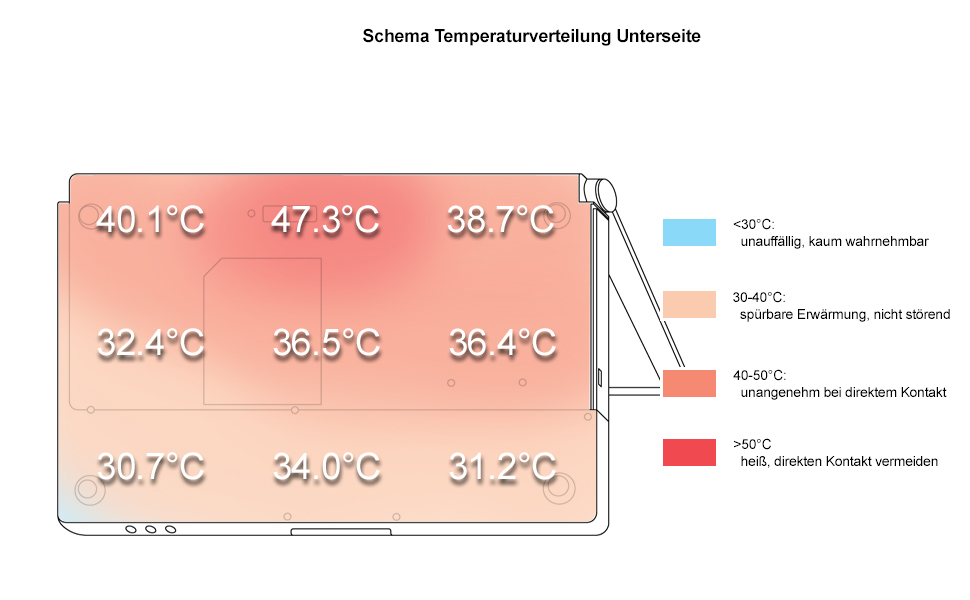
At the center the back edge on the bottom side we measured a maximum temperature of 47.3°C. This should not be a problem, because a DTR is seldom used on the lap.
Upper side
palmwrist: 28.8°C max: 37.9°C avg: 33.6°C hotspot: In the center of the back region
Bottom side
max: 47.3°C avg: 36.4°C hotspot: In the center of the back regaion
environment: 22.5
Speakers
Speakers
The Asus A7Jc is equipped with a total of 4 speakers, one left, one right beside the keyboard, the others left and right at the bottom side near the front.
This layout could convince through a good sound and a good maximum loudness during the review. One can observe vibrations near the hand balls at maximum loudness.
Battery Runtime
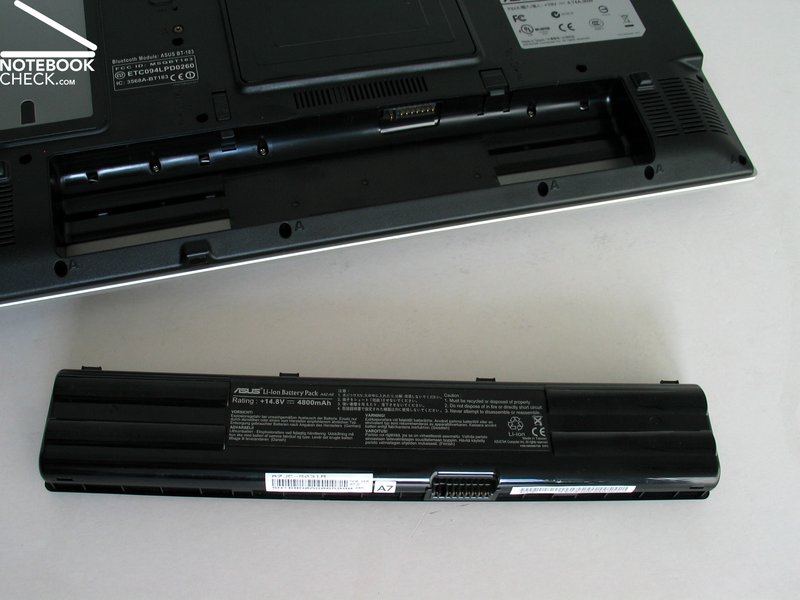
The measured values for battery runtime are moderate. This is acceptable for a DTR, which is considered to be used plugged at a desk most of its lifetime.
Energy demand
Without load (Idle), min. brightness, without WLAN: 39.5 Watt
+ max. brightness: 46.1 Watt
+ WLAN: 47.4 Watt
full load (+WLAN, max brightness): max. 83.8 Watt
| Idle (without WLAN, min brightness) | ![]() ![]() ![]() ![]() ![]() ![]() ![]() ![]() ![]() ![]() ![]() ![]() ![]() ![]() ![]() ![]() ![]() ![]() ![]() ![]() ![]() ![]() ![]() ![]() ![]() ![]() ![]() ![]() ![]() ![]() ![]() ![]() ![]() ![]() ![]() ![]() ![]() ![]() ![]() ![]() ![]() ![]() ![]() ![]() ![]() ![]() ![]() ![]() ![]() ![]() ![]() ![]() ![]() ![]() ![]() ![]() ![]() ![]() ![]() ![]() ![]() ![]() ![]() ![]() ![]() ![]() ![]() ![]() ![]() ![]() ![]() ![]() ![]() ![]() ![]() ![]() ![]() ![]() ![]() ![]() ![]() ![]() ![]() ![]() | 2h 23min |
| DVD | ![]() ![]() ![]() ![]() ![]() ![]() ![]() ![]() ![]() ![]() ![]() ![]() ![]() ![]() ![]() ![]() ![]() ![]() ![]() ![]() ![]() ![]() ![]() ![]() ![]() ![]() ![]() ![]() ![]() ![]() ![]() ![]() ![]() ![]() ![]() ![]() ![]() ![]() ![]() ![]() ![]() ![]() ![]() ![]() ![]() ![]() ![]() ![]() ![]() ![]() ![]() ![]() ![]() ![]() ![]() ![]() ![]() ![]() ![]() ![]() ![]() ![]() ![]() ![]() ![]() ![]() ![]() ![]() ![]() ![]() ![]() ![]() ![]() ![]() ![]() ![]() ![]() ![]() ![]() ![]() ![]() ![]() ![]() ![]() | 1h 48min |
| Load (maximum brightness) | ![]() ![]() ![]() ![]() ![]() ![]() ![]() ![]() ![]() ![]() ![]() ![]() ![]() ![]() ![]() ![]() ![]() ![]() ![]() ![]() ![]() ![]() ![]() ![]() ![]() ![]() ![]() ![]() ![]() ![]() ![]() ![]() ![]() ![]() ![]() ![]() ![]() ![]() ![]() ![]() ![]() ![]() ![]() ![]() ![]() ![]() ![]() ![]() ![]() ![]() ![]() ![]() ![]() ![]() ![]() ![]() ![]() ![]() ![]() ![]() ![]() ![]() ![]() ![]() ![]() ![]() ![]() ![]() ![]() ![]() ![]() ![]() ![]() ![]() ![]() ![]() ![]() ![]() ![]() ![]() ![]() ![]() ![]() ![]() | 1h 13min |
Verdict
Asus A7Jc is a DTR of good workmanship. It is an entertainment handyman with comprehensive equipment and a variety of available ports.
The keyboard is comfortable in use, but also the display convinced us through its brightness and very good contrast ratio. Unfortunately the 17 inch display reflects, which makes it difficult to use under bad lightening conditions.
The performance is average and could be better at 3D applications.
The strength of the A7Jc are its low noise emissions in idle mode. Under load it can become louder.
The battery runtime is moderate, but this is only a secondary criterion for DTRs.