Review Asus F3Jm
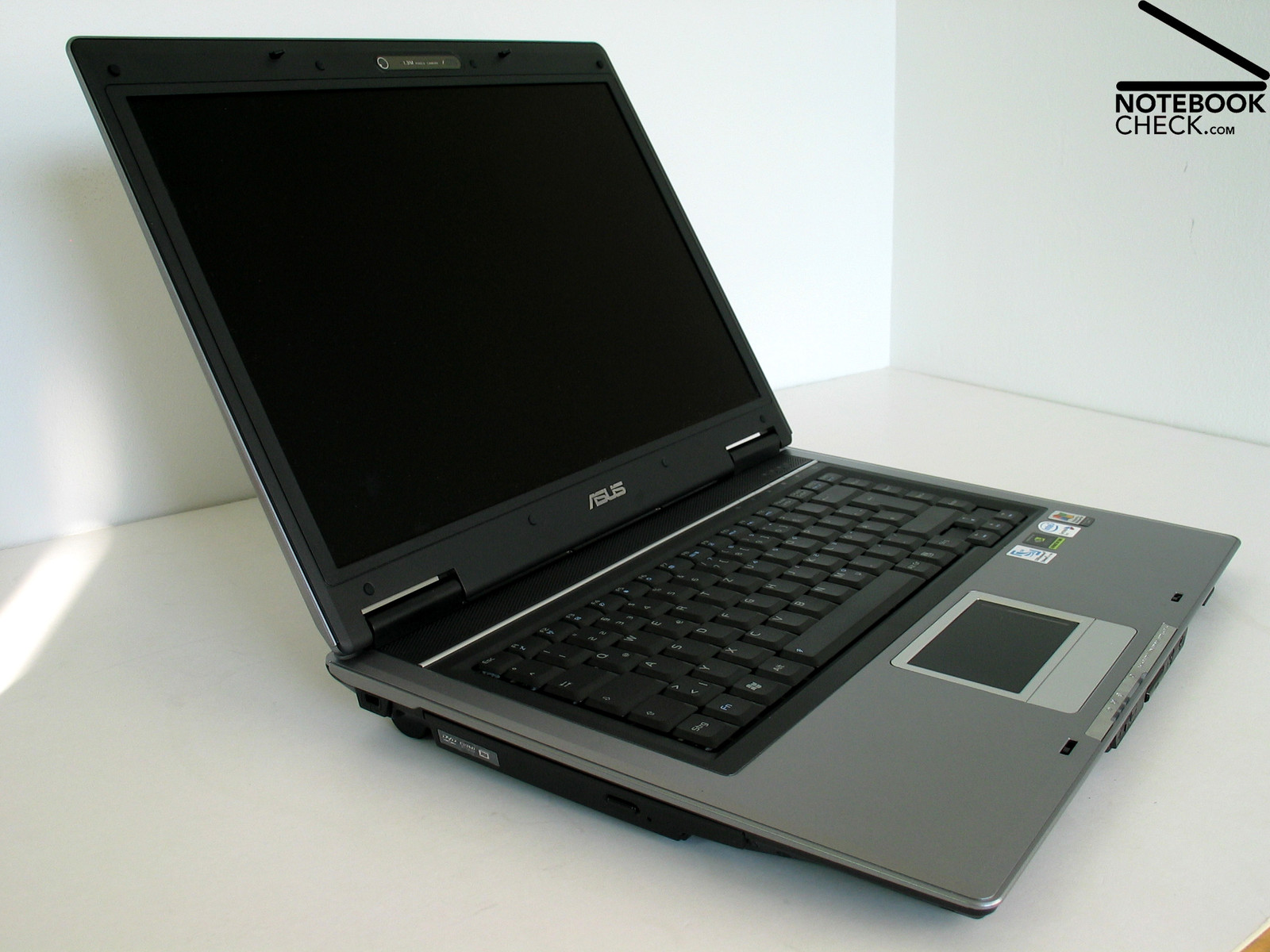
Asus F3Jm is a further model of the 15.4" multimedia class, a direct competitor of Toshiba A100-979. The laptop is featured with a Core 2 Duo CPU and a Geforce 7600 with 512MB video memory.

Case
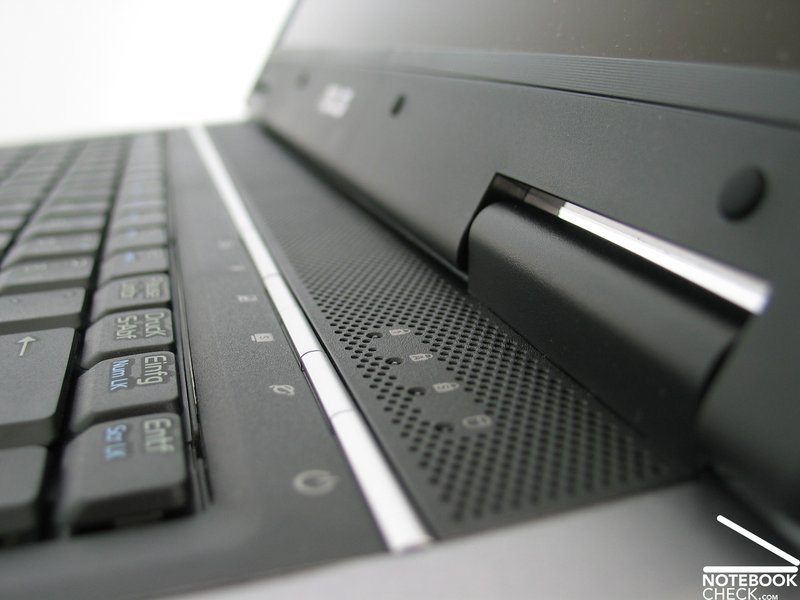
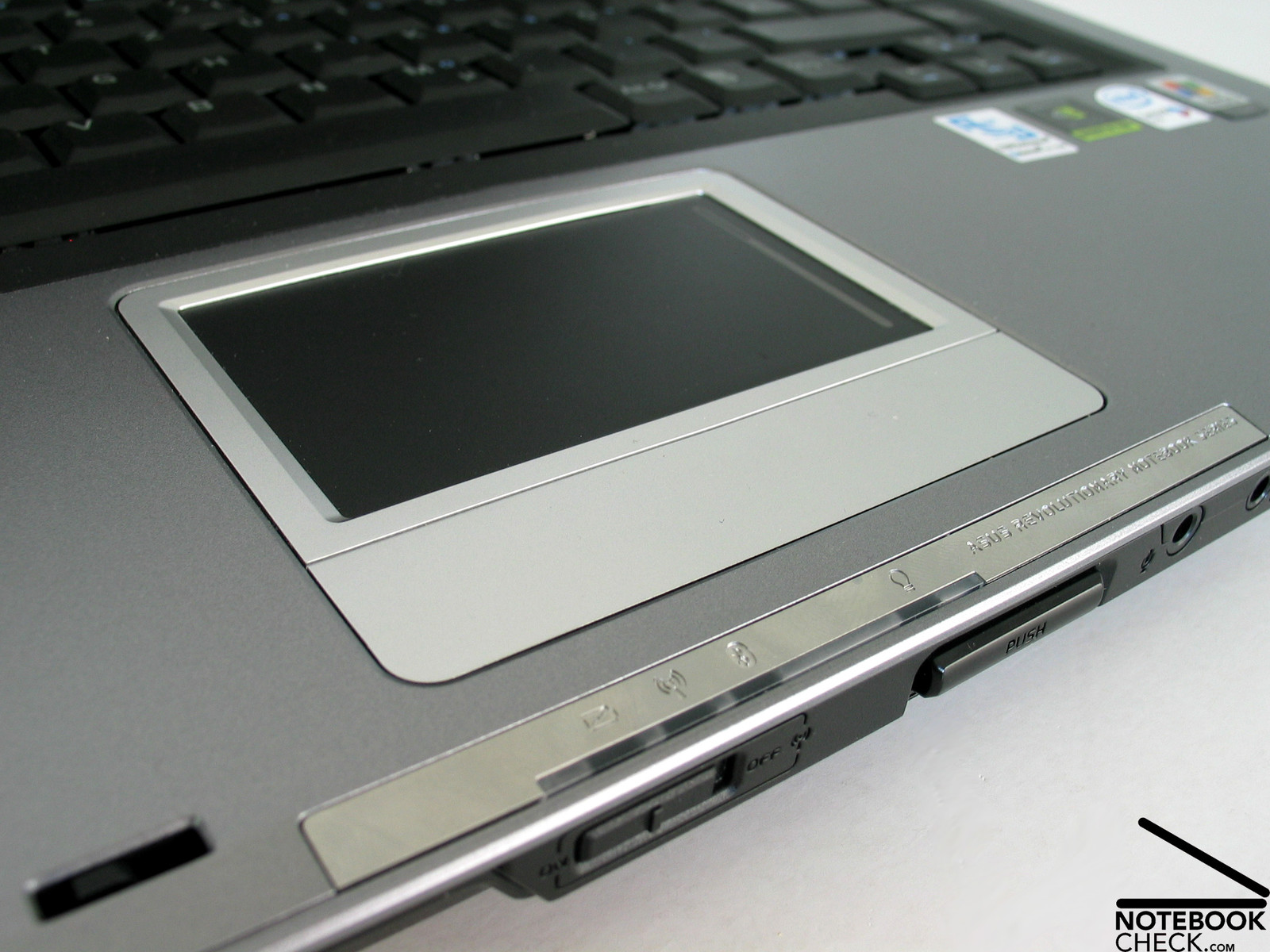
The Asus F3Jm's design is pleasant - mostly it is blue-gray. The bottom through and the bezel of the keyboard are black. Above the keyboard there is a small chrome molding. At the right side it merges into small, linearly ordered additional keys, which are typical for Asus notebooks.
The notebook is basically of very good workmanship. Furthermore, it seems very robust. Even the region of the hand balls, where the notebook has got its ExpressCard slot, does not allow any torsions and does not creak, if the notebook is picked up.
F3Jm's hinges keep the display relatively firm at its position. Although the folding mechanism seems relatively robust, the plastic cover at the right hinge is somewhat loose. But this should not influence the usability.
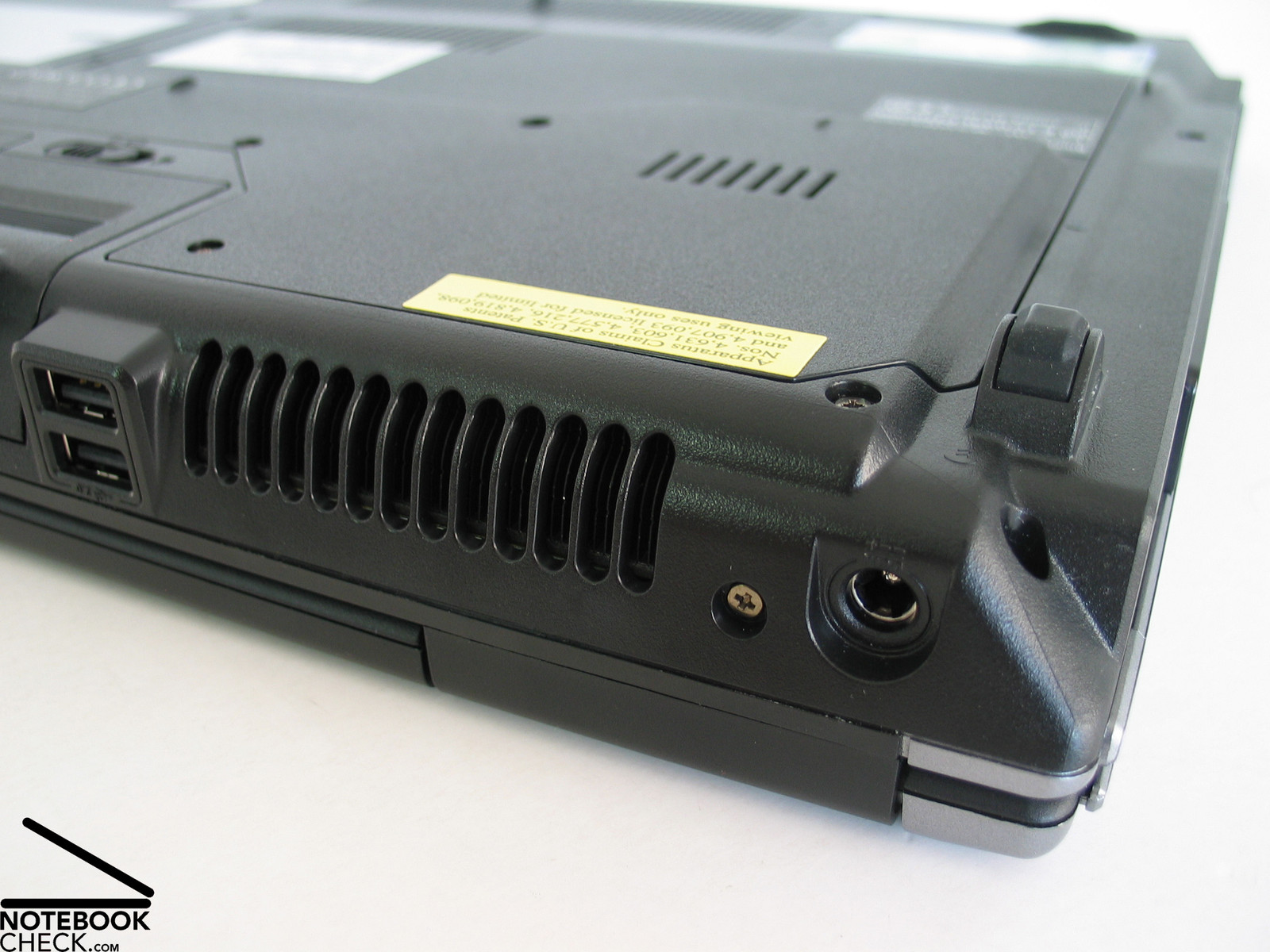
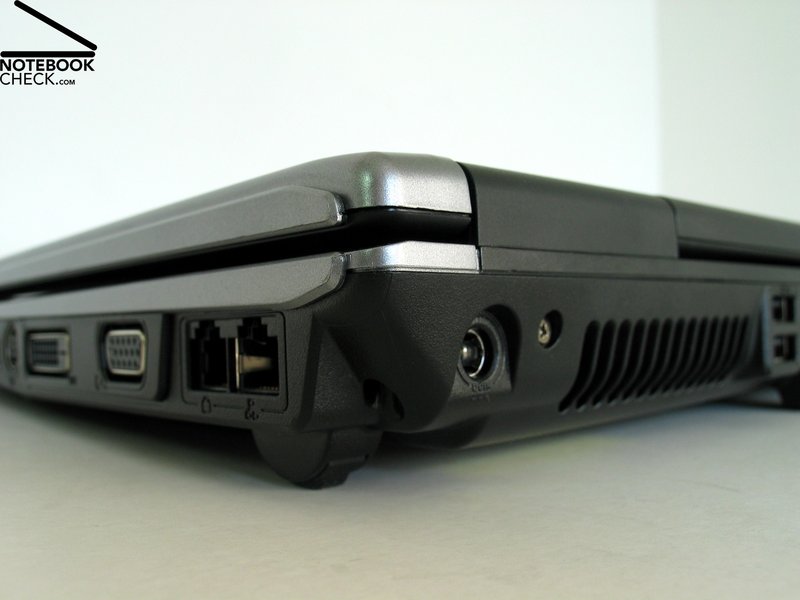
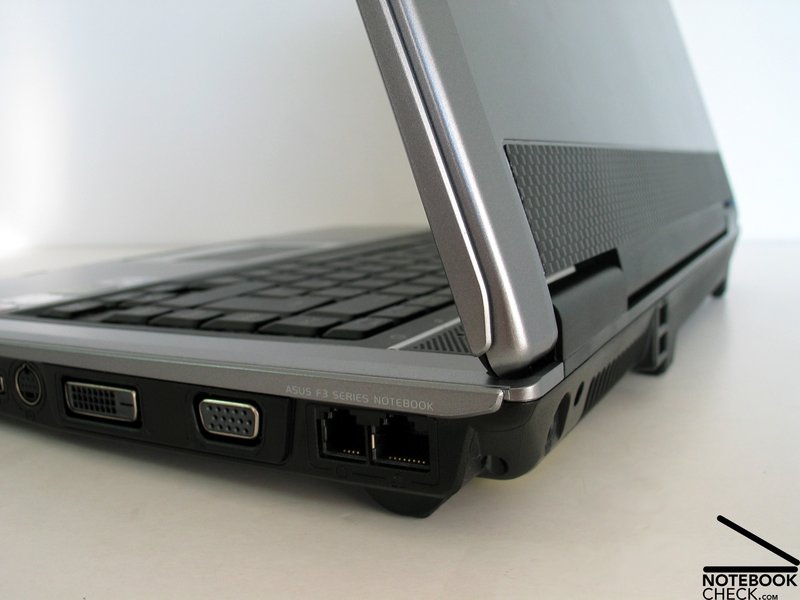
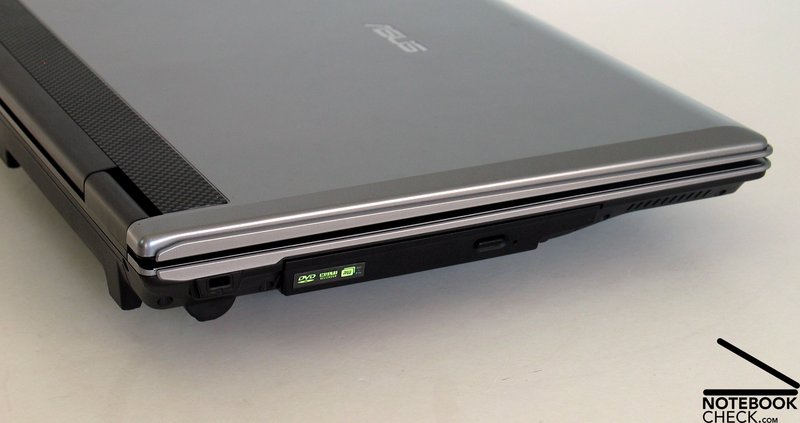
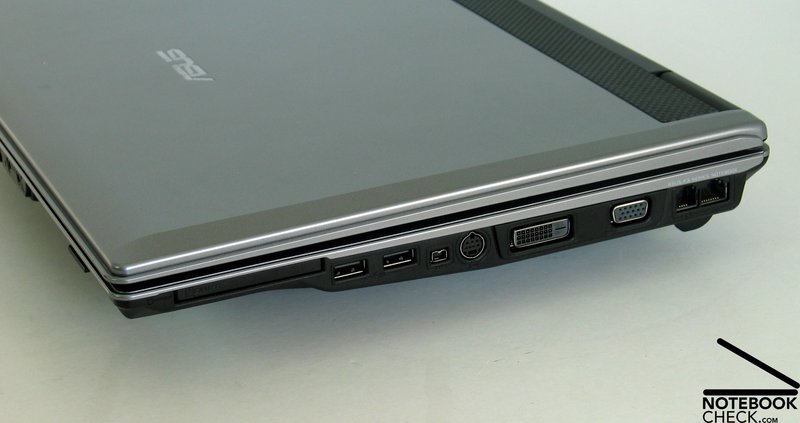
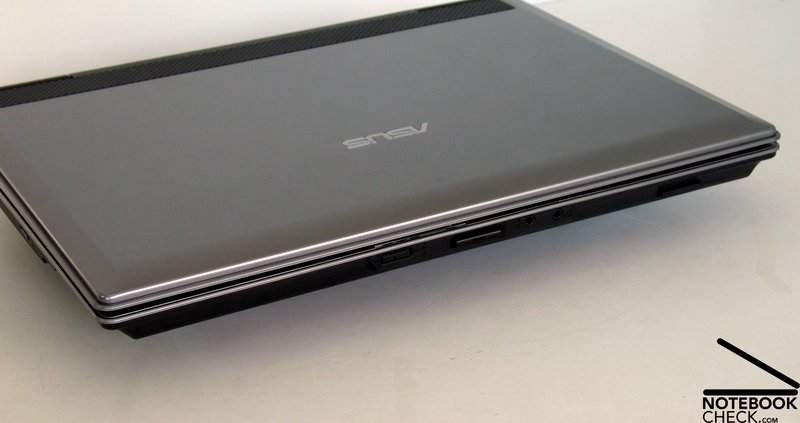
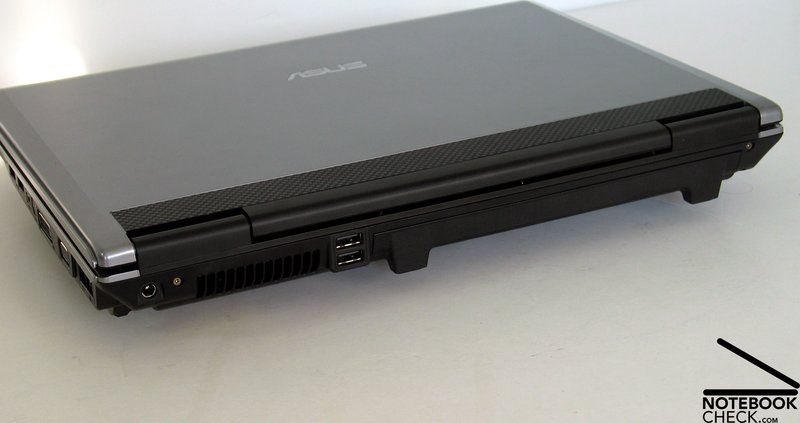
The ports are mainly at the right side of the notebook. At the left side there are only the DVD drive and a Kensington lock. At the relative small front side there are the audio ports and the card reader. At the backside are 2 of a total of 4 USB 2.0 ports.
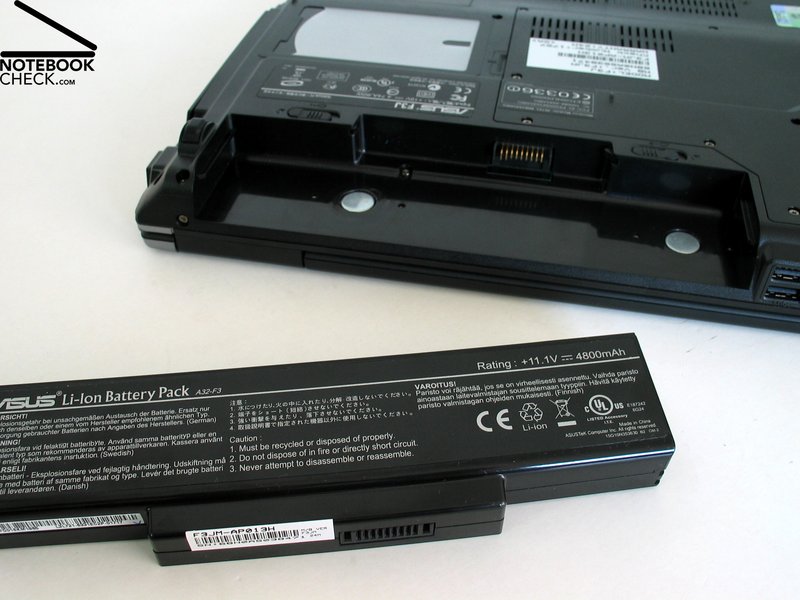
This is because the notebook is equipped with a 4800 mAh battery, which is placed at the back side. There is also a battery of 9 cells and 7200 mAh available, which can protrude at the back side.
At back of the right side there are modem and Lan ports, followed by a VGA port for connecting an external monitor, a DVI port, a S-Video out, a firewire port and two further USB 2.0 ports.
Input Devices
Asus F3Jm's keyboard has the distinction of keys with a finely roughened surface. So they feel like having a velvet and soft surface.
We were personally positively impressed when writing with this keyboard. Even the range of the keys seems to be ideal. It is balanced between feedback and ease.
At the first glance, there is nothing special at the layout. Only the cursor block, which is moved away a little bit, interrupts the linear order of the rest of the keys. Some users might need to accustom to the left Ctrl key.
The touch pad is good in use and is of good precision and response. Even the buttons are optically in the same plane and surprise through good response and pleasant resistance to pressing.

Display
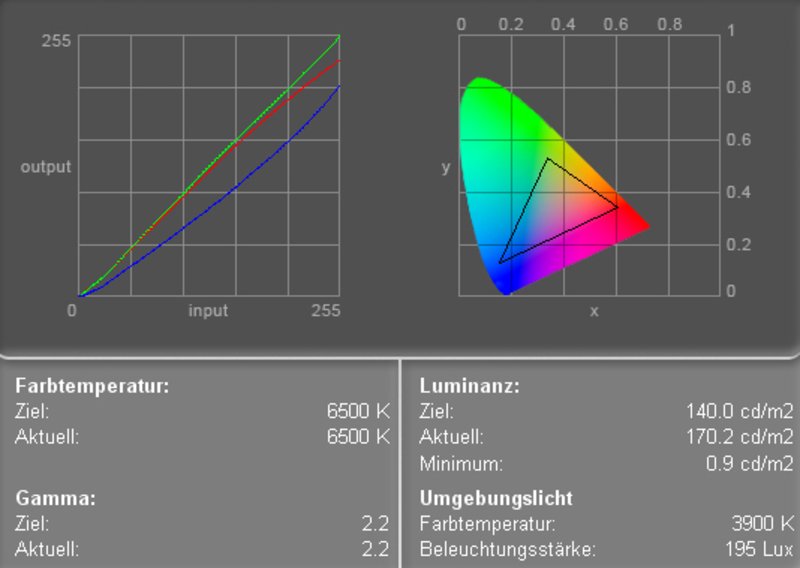
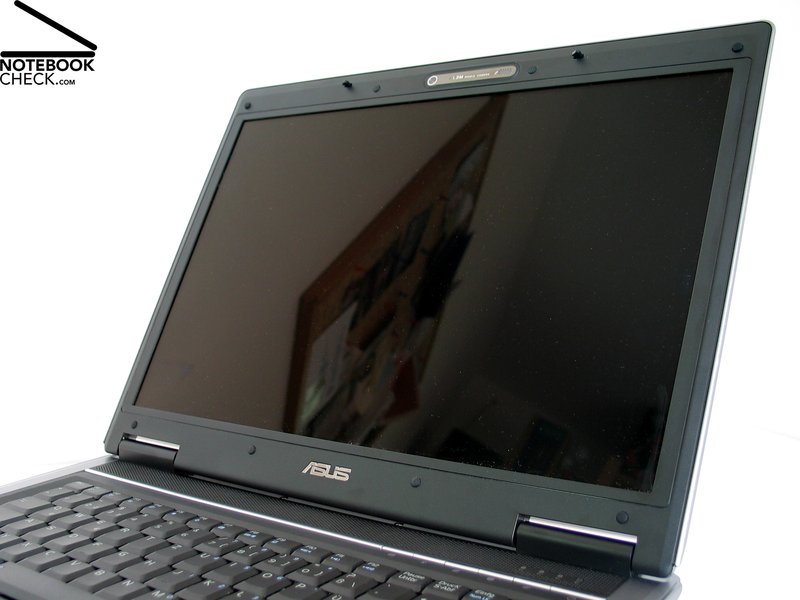
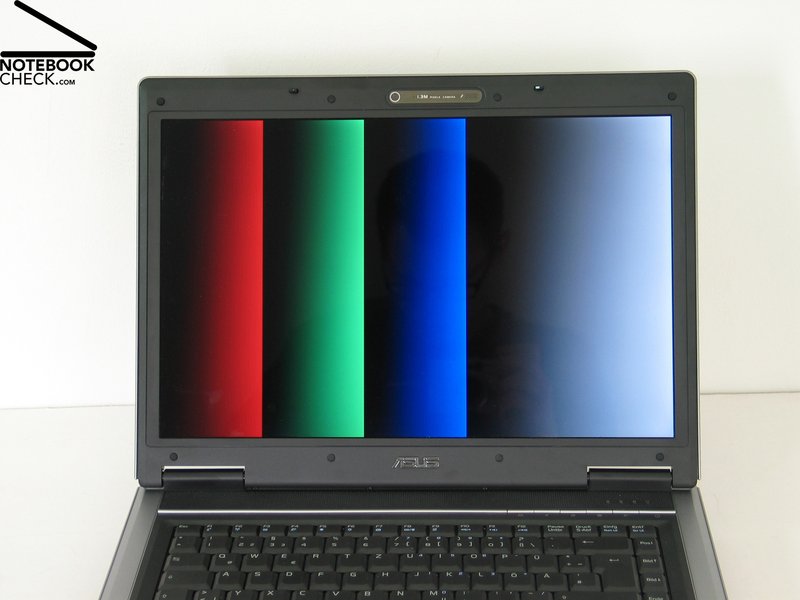
The reflecting 15.4 inch WXGA display comes with a maximum resolution of 1280x800 pixels. The maximum brightness is not only subjectively excellent. We measured a maximum of 178.5 cd/m² and a distribution of illumination of 78.8%.
The diagram shows a clear deviation of the blue colors, which hints a reduced representation of blue tones and therefore a warm coloring, because of the excess of red colors.
The test showed a maximum contrast of 198:1. The notebook reached an average grade 6 of the Pixperan test of legibility.
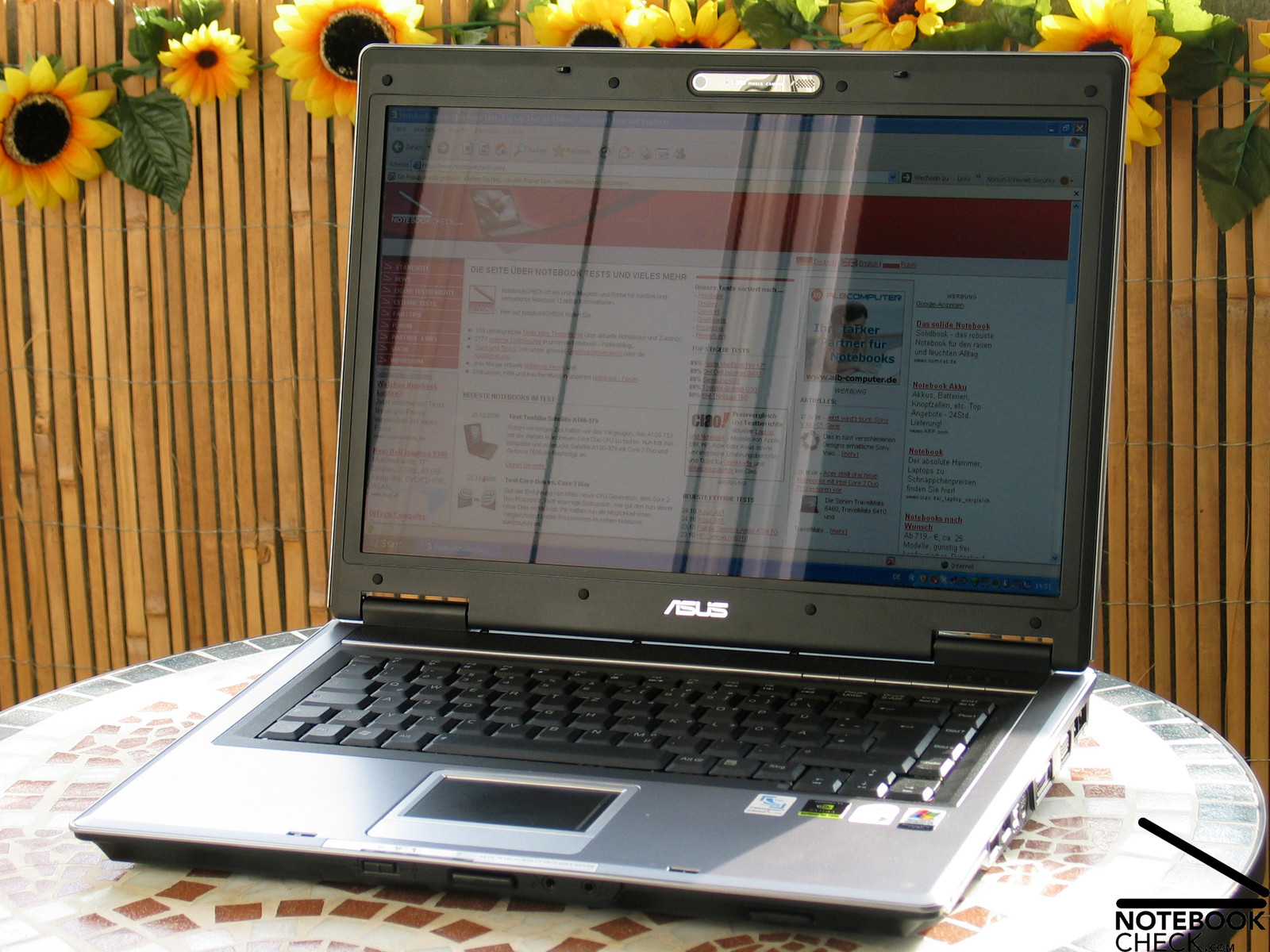
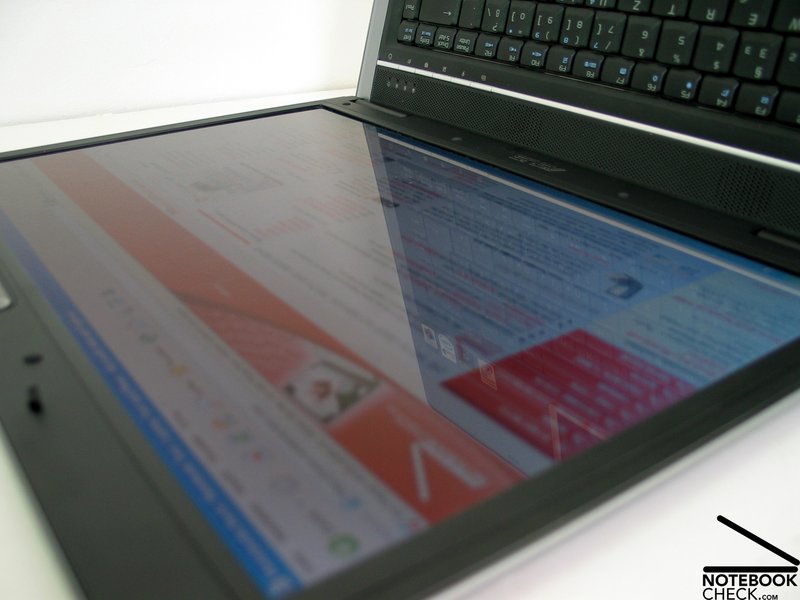
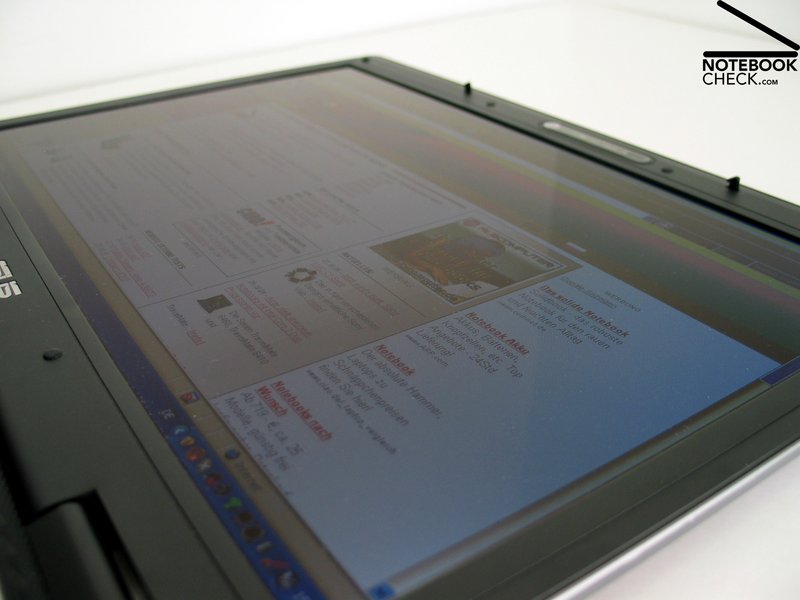
Operation of the notebook outdoors is limited. It's cumbersome to work for a longer duration, because of heavy reflections.
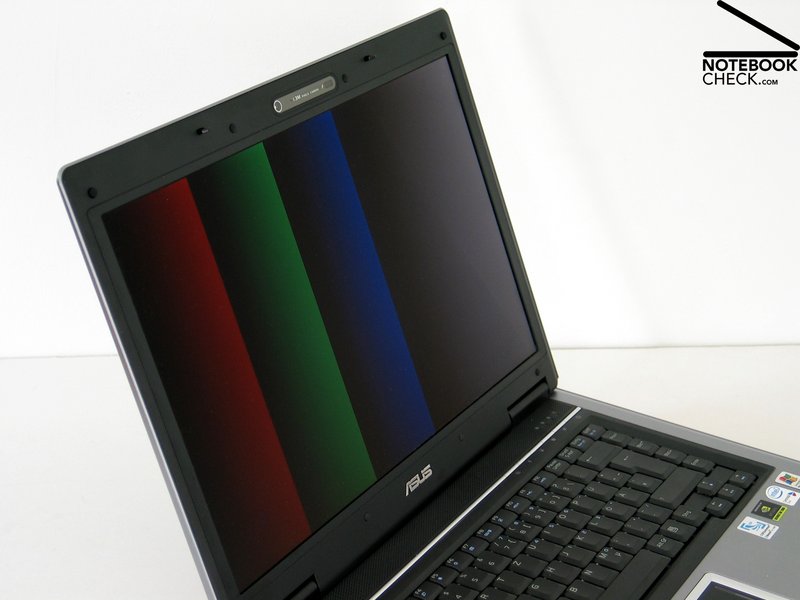
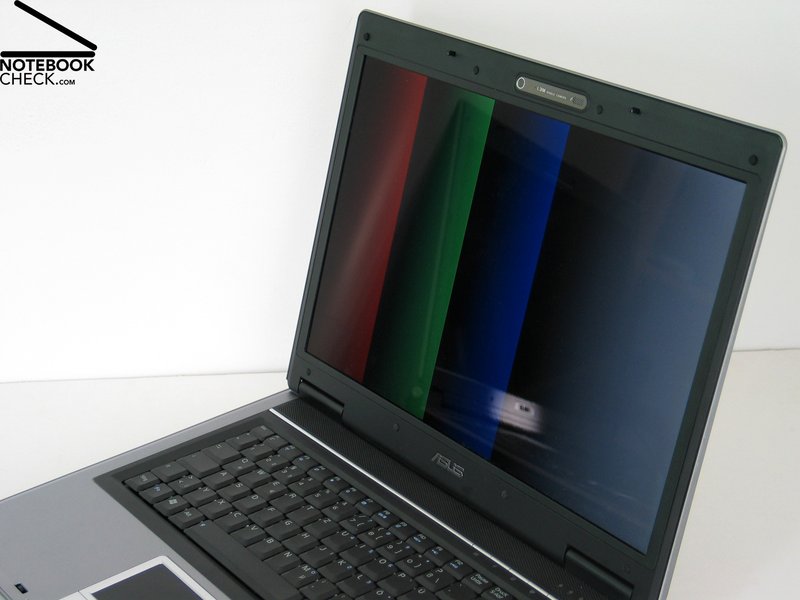
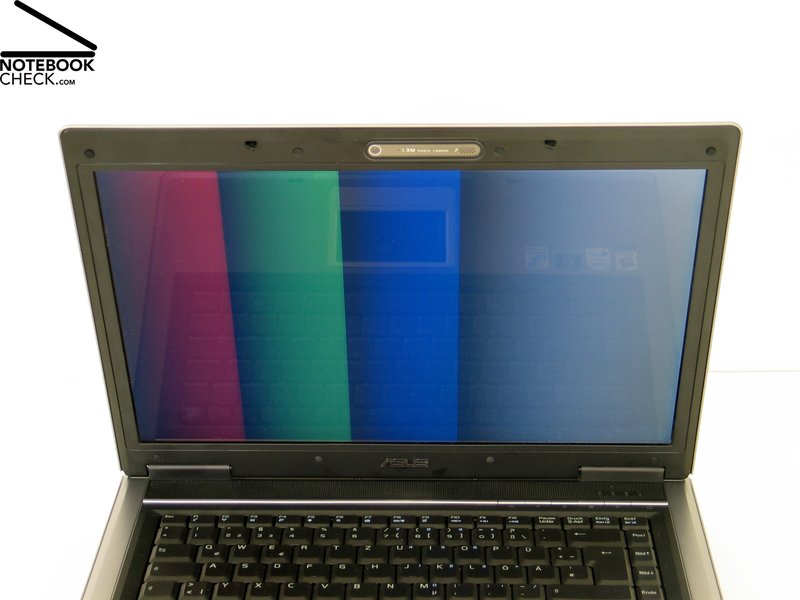
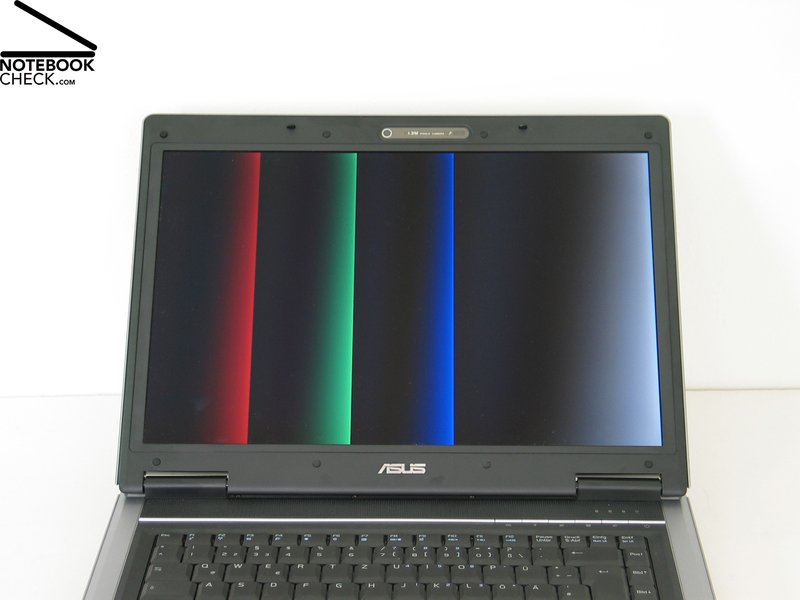
Horizontally, the stability to the vantage point is excellent. Under bad lightening conditions, disturbing reflections can be observed . Even vertically, from the bottom to the top the display is readable. From top to bottom and at smaller angles, the displayed colors are relatively heavily falsified.
| |||||||||||||||||||||||||
Brightness Distribution: 79 %
Contrast: 198:1 (Black: 0.9 cd/m²)

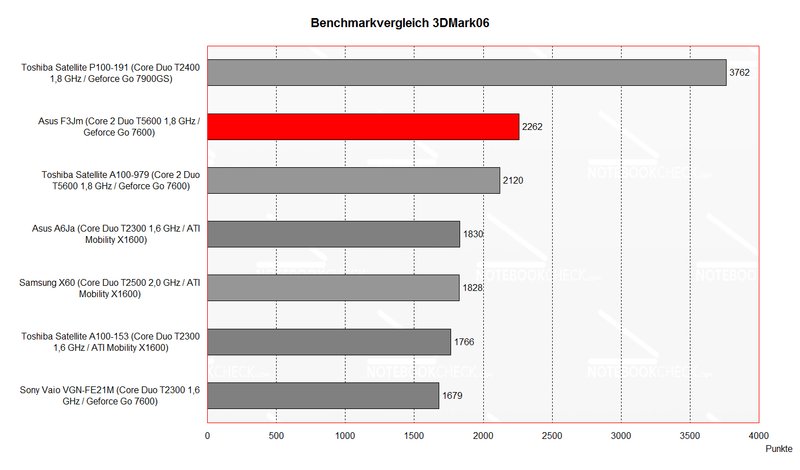
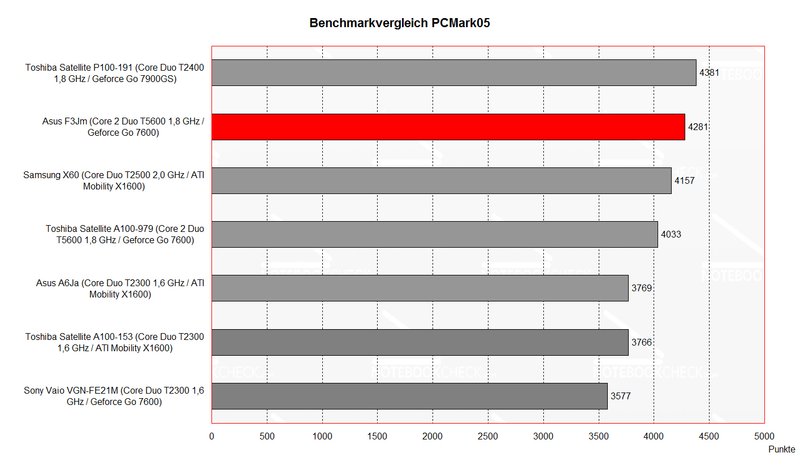
In comparison to other similar equipped notebooks the Asus F3Jm is very good at 3D applications. The reason should be the Nvidia Geforce 7600 video card with 512 MB memory. Also in the fields of office applications the Asus F3Jm is top compared to similar notebooks.
Further information about video cards can be found in our Comparison of mobile video cards. Detailed information to the Core 2 Duo T5600 CPU can be found here.
Please also look at our benchmark list of mobile processors and at our benchmark list of mobile video cards in order to compare the notebook to other configurations.
| 3DMark 2001SE Standard | 19491 points | |
| 3DMark 03 Standard | 8806 points | |
| 3DMark 05 Standard | 3722 points | |
| 3DMark 06 Score Unknown Setting | 2262 points | |
Help | ||
| PCMark 04 Standard | 6107 points | |
| PCMark 05 Standard | 4281 points | |
Help | ||

Emissions
Noise
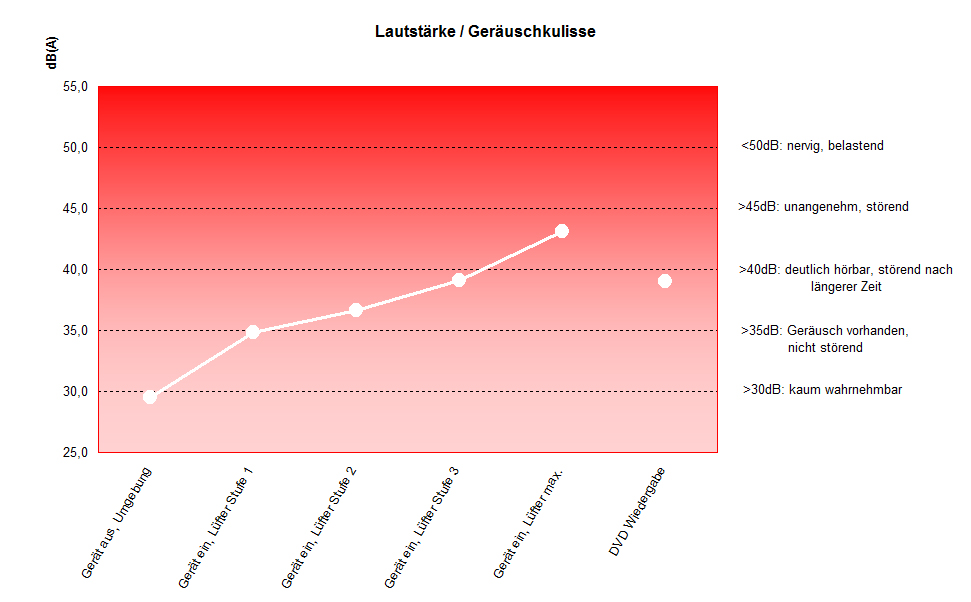
F3Jm is equipped with the Power4Gear Software Tool, which allows to control the needed performance and therewith also the noise.
On the one side the fans run even in idle mode, but the loudness is only about 34.8 dB nicht and does not disturb. If one selects the profile "Quiet Office" the notebook stays rather quiet.
Noise level
| Idle |
| 34.8 / 39.1 / 36.6 dB(A) |
| HDD |
| 34.8 dB(A) |
| DVD |
| 39 / dB(A) |
| Load |
| 0 / 43.1 dB(A) |
 | ||
30 dB silent 40 dB(A) audible 50 dB(A) loud |
||
min:  , med: , med:  , max: , max:  (15 cm distance) (15 cm distance) | ||
Temperature
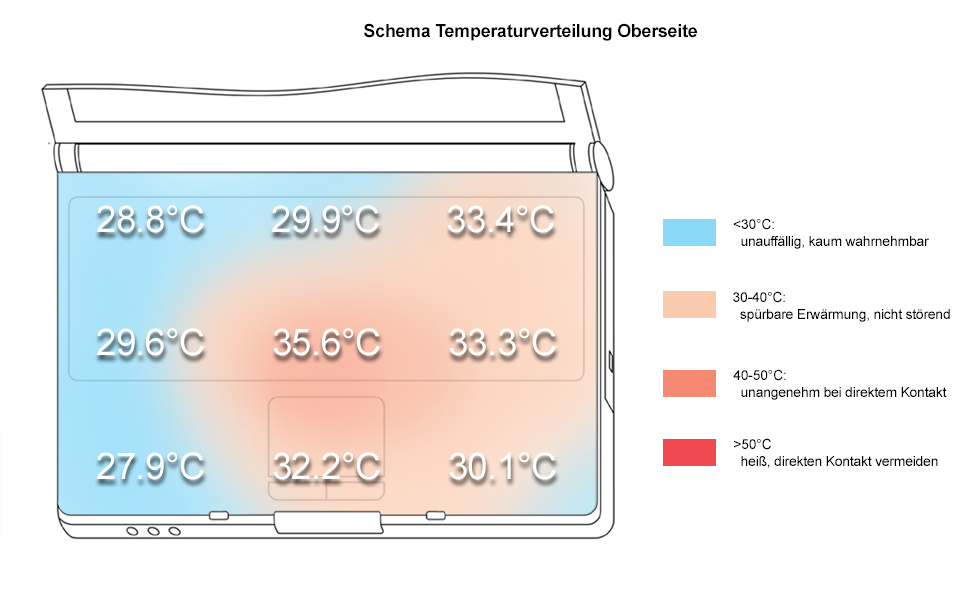
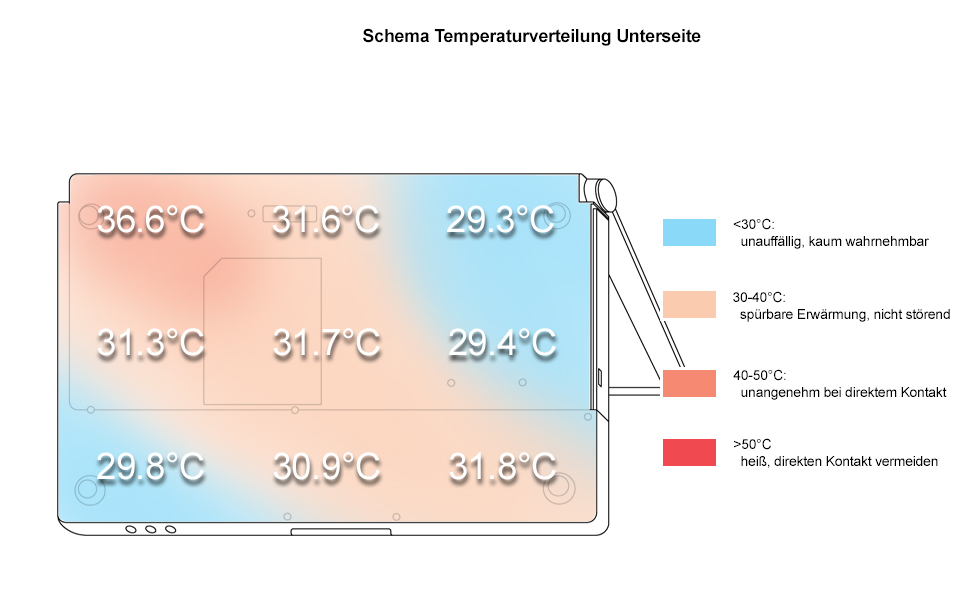
Generally, the Asus F3Jm does not notable warm up, if idle. At the bottom side we could measure a maximum temperature of 36.6°C near the fans. At the top side above the touch pad we measured a hot spot of about 35.6°C.
Upper side
palmwrist: 30.1°C max: 35.6°C avg: 31.2°C hotspot: in the middle, above the touch pad
Bottom side
max: 36.6°C avg: 31.4°C hotspot: near the fans
environment: 22.5
Speakers
The speakers, which are placed above the keyboard, sound loud, but the basses are poor. Until a loudness of about 80-90% the sound of the speakers can be rated positive.
Battery Runtime
The pre-installed „Power4Gear“ Power Management Tools allows controlling the performance and therewith the battery runtime. If the profile "High Performance" is used, the maximum battery runtime is 1h 22 min. The maximum runtime, if the profile „Battery Saver“ is used and with minimal brightness, is above 3 hours. But it must be admitted that working with minimal brightness is very cumbersome.
Energy demand
Without load (Idle), min. brightness, without WLAN: 23.6 Watt
+ max. brightness: 30.1 Watt
+ WLAN: 31.6 Watt
full load (+WLAN, max. brightness): max. 58.3 Watt
Verdict
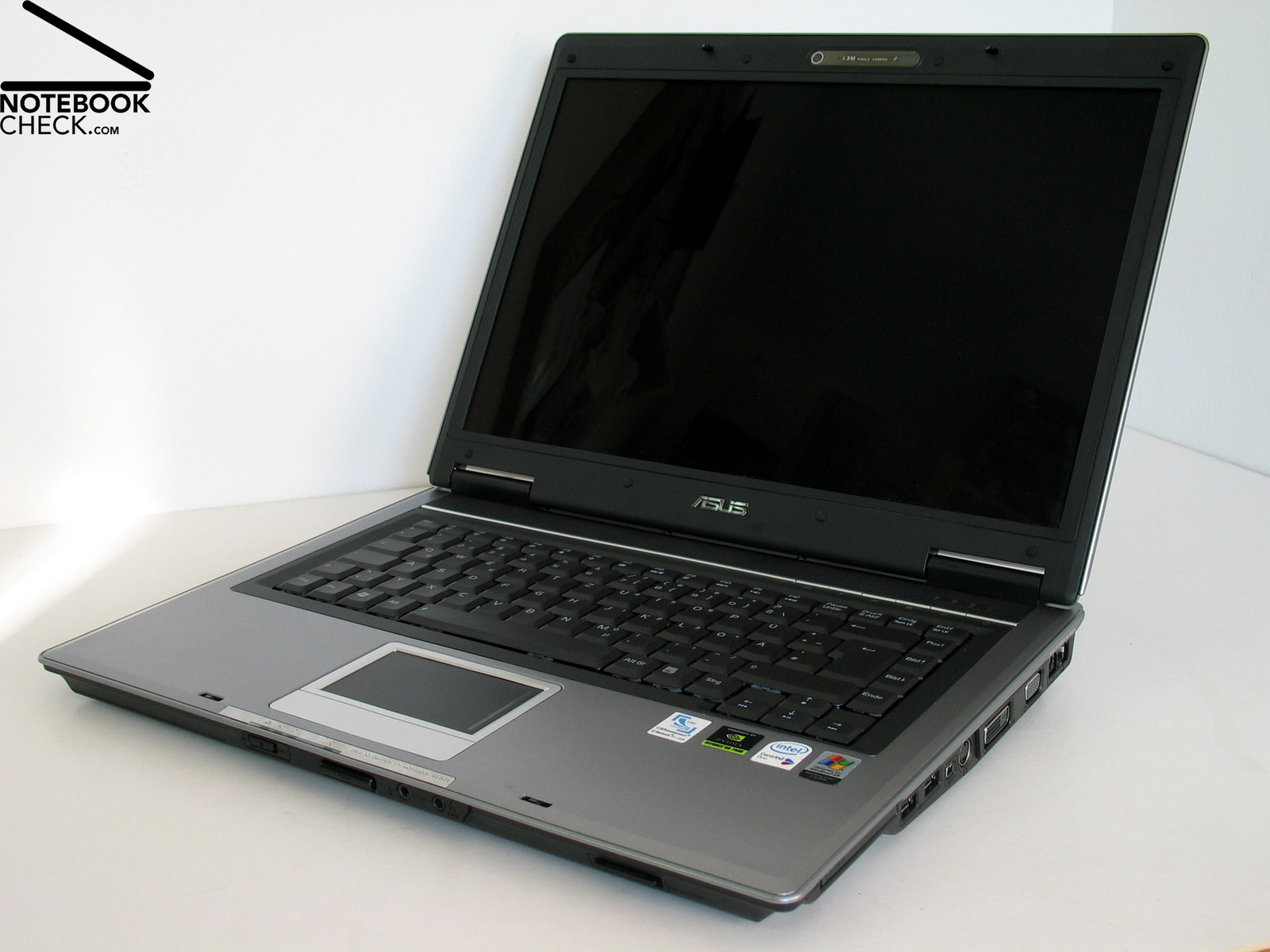
Asus F3Jm has a solid and well manufactured case. Considering the rather slim part at the front side, we were especially surprised by the good flexural rigidity.
Also the quality of the input devices convinced us. The keyboard, as well as the touch pad is good in use and even proper for intensive use.
The bright, but reflecting display rated well by all measurements. The only weakness is the stability to the vertical vantage point. This weakness gets obvious, when looking at the display top - down. Outdoors we could observe a lot of reflections.
The Core 2 Duo processor with 1.8 GHz and the Geforce 7600 with 512MB memory lead to good results for 3D as well as for office applications.
The temperature and noise emissions of the Asus F3Jm are limited, although having a good performance.
Even regarding the battery runtime, the measurements should good values.
The notebook rated well in nearly all tests. In total Asus placed an optimal product, which is able to conform to a variety of different requirements.
 Add as a preferred source on Google