 Deutsch
 Español
 Français
 Italiano
 Nederlands
 Polski
 Português
 Русский
 Türkçe
 Svenska
 Chinese
 Magyar
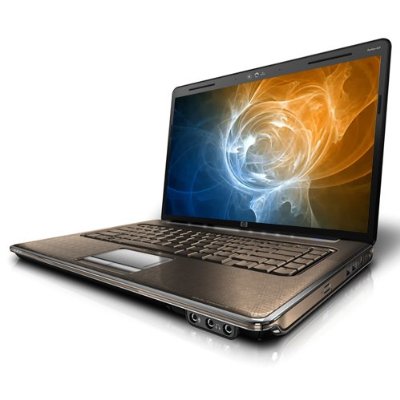
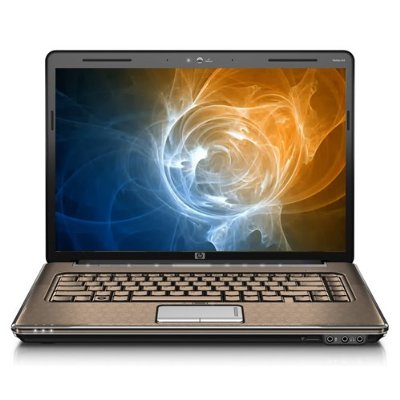
HP Pavilion dv5t
Specifications
Pricecompare
Average of 2 scores (from 2 reviews)
Reviews for the HP Pavilion dv5t
Source: Computer Shopper
 Archive.org version
All in all, the HP Pavilion dv5t is a capable multimedia notebook that delivers good performance in a moderately thin-and-light frame. We wish it had better 3D chops, less bloatware, and some entertainment-centric controls to go with the Blu-ray drive. If you require more graphics muscle, consider spending an extra $100 for the Lenovo IdeaPad Y460, which has a switchable GPU (so you can choose between battery life and graphics performance with the press of a button) and delivers gaming-class 3D power on demand.
Single Review, online available, Long, Date: 07/01/2010
Rating: Total score: 80%
Source: Laptop Mag
Archive.org versionThe 14.5-inch HP Pavilion dv5t (starting at $699; $1,024 as configured) is well suited for people who need a notebook small enough to travel with occasionally, but mostly plan on using their laptop at home. While its fast and beautiful, you cant equip this machine with discrete graphics, and its touchpad can be frustrating. If you dont mind carrying a little more weight, we recommend the $829 Samsung R580 or the $849 Dell Studio 15: they offer smoother touchpads and comparable performance for less money. If you prefer the sleeker design of the dv5t, save yourself some cash and skip the Blu-ray drive.
Single Review, online available, Medium, Date: 06/17/2010
Rating: Total score: 60%
Comment
NVIDIA GeForce 8600M GT: The NVIDIA GeForce 8600M GT is the DirectX 10 capable successor of the GeForce Go 7600 GT GPU for laptops. Depending on the used graphic memory and the clock speed, the performance is between the 7600 GT and 7900 GS video card.
Only some 3D games with very low demands are playable with these cards.
» Further information can be found in our Comparison of Mobile Graphics Cards and the corresponding Benchmark List.
Intel Core 2 Duo: This is the Core Duo and Core Solo successor with a longer pipeline and 5-20% more speed without more power consumption. As an addition to the Core Duo design there exists a fourth decoder, an amplified SSE-unit and an additional arithmetical logical unit (ALU).
The Core 2 Duo for laptops is identical to the desktop Core 2 Duo processors but the notebook-processors work with lower voltages (0.95 to 1188 Volt) and a lower Frontside bus clock (1066 vs 667 MHz). The performance of equally clocked notebooks is 20-25% lower than Desktop PCs because of the lower Frontside bus clock and the slower hard disks.
T9400:
The T9400 is a fast middle class dual core CPU for laptops and basically a Core 2 Duo P9500 with a higher TDP of 35 Watt.
» Further information can be found in our Comparison of Mobile Processsors.
15.40":
15-inch display variants are the standard and are used for more than half of all laptops.
The reason for the popularity of mid-sized displays is that this size is reasonably easy on the eyes, often allows high resolutions and thus offers rich details on the screen, yet does not consume too much power and the devices can still be reasonably compact - simply the standard compromise.
» To find out how fine a display is, see our DPI List.2.8 kg:
With this weight, a laptop is rather heavier than average. Devices in this range shine more with screen size and performance than with mobility.
HP: Founded in 1939, the US company is a major server and printer manufacturer and one of the leading IT companies in the world. Until 2015, the company was called Hewlett-Packard Company. After a split, the computer division was renamed HP Inc.
In 2023, HP had an approximate market share of 22% of global PC sales, making it number 2 after Lenovo.
70%: This rating is poor. More than three quarters of the models are rated better. That is rather not a purchase recommendation. Even if verbal ratings in this area do not sound that bad ("sufficient" or "satisfactory"), they are usually euphemisms that disguise a classification as a below-average laptop.
» Further information can be found in our Notebook Purchase Guide.