 Deutsch
 Español
 Français
 Italiano
 Nederlands
 Polski
 Português
 Русский
 Türkçe
 Svenska
 Chinese
 Magyar
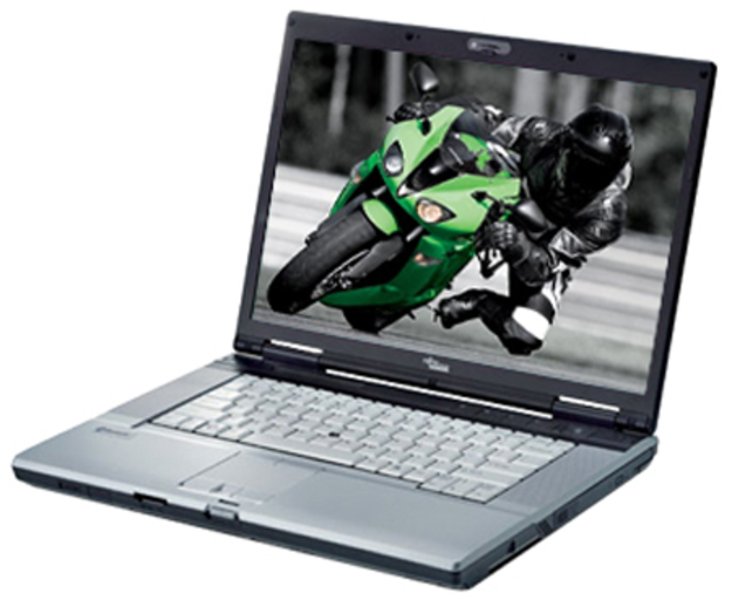
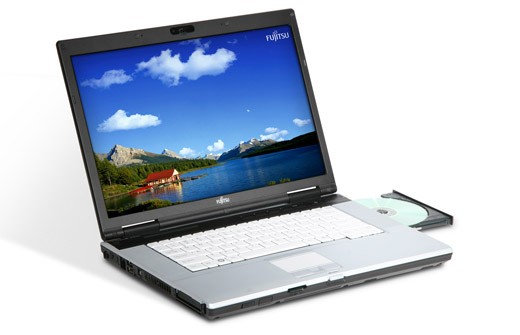
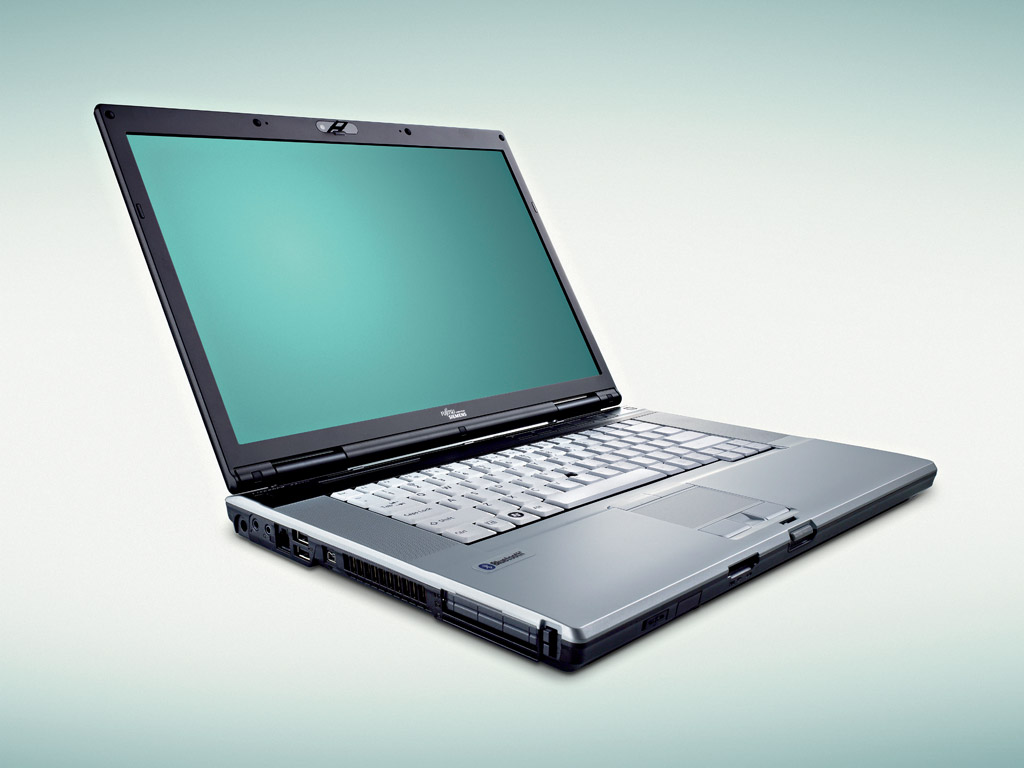
Fujitsu-Siemens LifeBook E8420
Specifications
Pricecompare
Average of 1 scores (from 2 reviews)
Reviews for the Fujitsu-Siemens LifeBook E8420
Source: Comp Reviews
 Archive.org version
Fujitsu's LifeBook E8420 is very clearly targeted at the corporate market and not the consumers. Even with this focus, the system seems to lack a number of features compared to similar corporate systems from the likes of Dell, HP and Lenovo in this price range. It might be nice that it comes with a limited number of software programs and a modular drive bay, but most consumers won't really notice either of these features.
2 von 5, Leistung schlecht
Single Review, online available, Very Short, Date: 11/13/2008
Rating: Total score: 40% performance: 40%
Foreign Reviews
Source: T-Online
 DE→EN Archive.org version
Single Review, online available, Short, Date: 06/18/2009
performance: 80%
Comment
Intel Graphics Media Accelerator (GMA) 4500MHD: Onboard (shared Memory) GPU built in the GM45, GE45 and GS45 chipset (Montevina). Because of two more shaders and a higher core clock, much faster than the old GMA X3100. Still not advisable for gamers (DirectX 10 games not playable or only with very low settings). The integrated video processor is able to help decode HD videos (AVC/VC-2/MPEG2) , e.g., for a fluent Blu-Ray playback with slow CPUs.
Only some 3D games with very low demands are playable with these cards.
» Further information can be found in our Comparison of Mobile Graphics Cards and the corresponding Benchmark List.
Intel Core 2 Duo: This is the Core Duo and Core Solo successor with a longer pipeline and 5-20% more speed without more power consumption. As an addition to the Core Duo design there exists a fourth decoder, an amplified SSE-unit and an additional arithmetical logical unit (ALU).
The Core 2 Duo for laptops is identical to the desktop Core 2 Duo processors but the notebook-processors work with lower voltages (0.95 to 1188 Volt) and a lower Frontside bus clock (1066 vs 667 MHz). The performance of equally clocked notebooks is 20-25% lower than Desktop PCs because of the lower Frontside bus clock and the slower hard disks.
P8600:
Fast but still not overpriced dual core CPU. For most games and multimedia applications sufficient and due to the 25W TDP even for smaller notebooks useable.
» Further information can be found in our Comparison of Mobile Processsors.15.40":
15-inch display variants are the standard and are used for more than half of all laptops.
The reason for the popularity of mid-sized displays is that this size is reasonably easy on the eyes, often allows high resolutions and thus offers rich details on the screen, yet does not consume too much power and the devices can still be reasonably compact - simply the standard compromise.
» To find out how fine a display is, see our DPI List.2.7 kg:
With this weight, a laptop is rather heavier than average. Devices in this range shine more with screen size and performance than with mobility.
Fujitsu-Siemens: Fujitsu, founded 1935, is a Japanese company specializing in semiconductors, air conditioners, computers (supercomputers, personal computers, servers), telecommunications, and services, and is headquartered in Tokyo. Fujitsu employs around 160,000 people and has 500 subsidiary companies. The partnership with Siemens AG was established in 1999 in the form of Fujitsu Siemens Computers (FSC), one of Europe's largest IT hardware suppliers, and owned 50/50 by Fujitsu and Siemens. 2009, this cooperation was terminated, FSC ended to exist. In future, no laptops will be sold with the brand "Fujitsu-Siemens" but only "Fujitsu".
40%: This rating is bad and very rare. There are only a few models that are rated so poorly. If the source is reputable, then a purchase is probably not advisable.
» Further information can be found in our Notebook Purchase Guide.