




Tested: Using a Bluetooth/QR code ticket on Taiwan's THSR bullet train
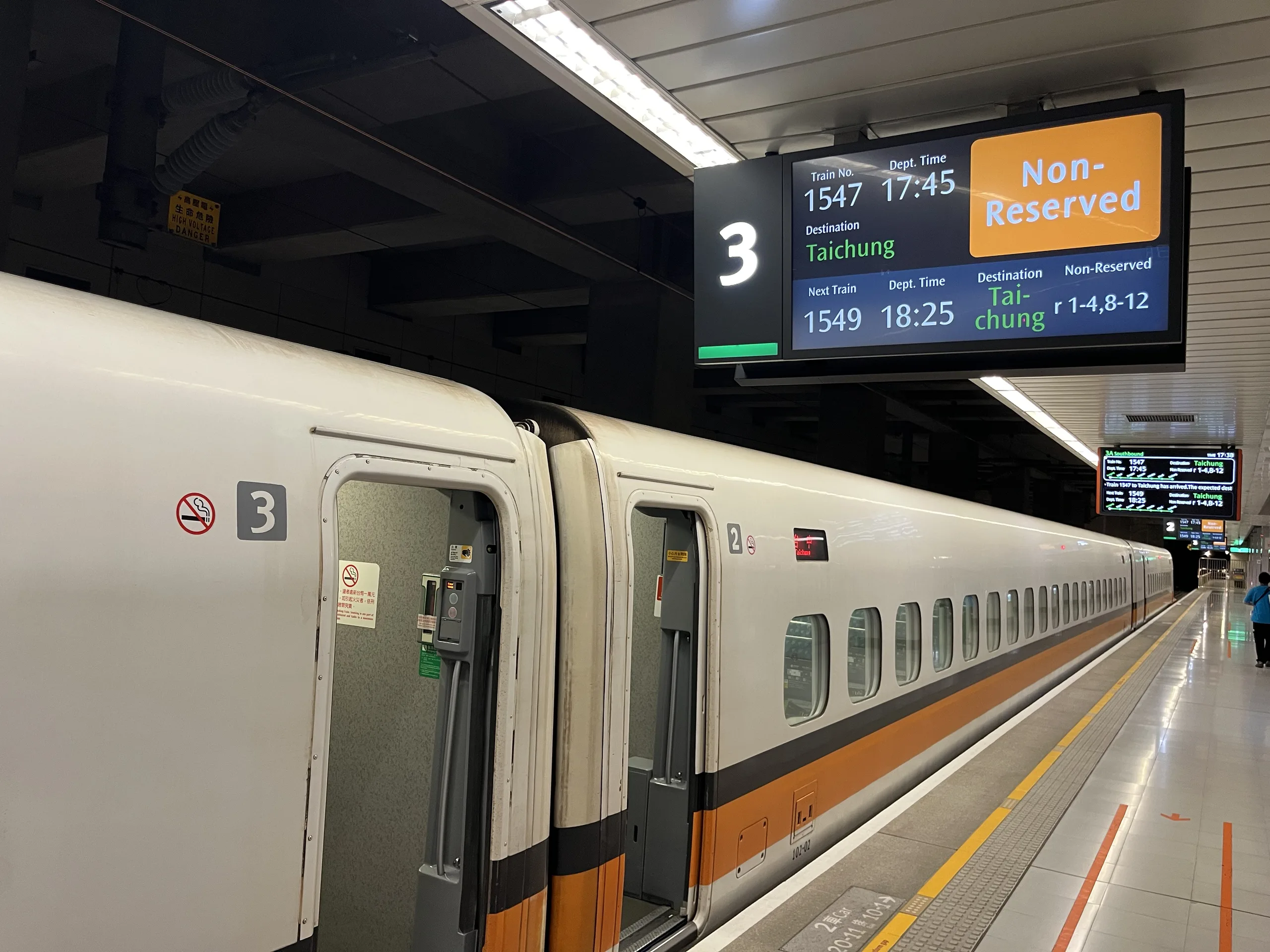
High-speed rail systems are often also used like regional trains. This is especially true of Shinkansen systems, whether in Japan or, as in our case during Computex Taipei, in Taiwan. Access to this option is usually tied to time-consuming ticket purchases and waiting in line, especially for tourists.
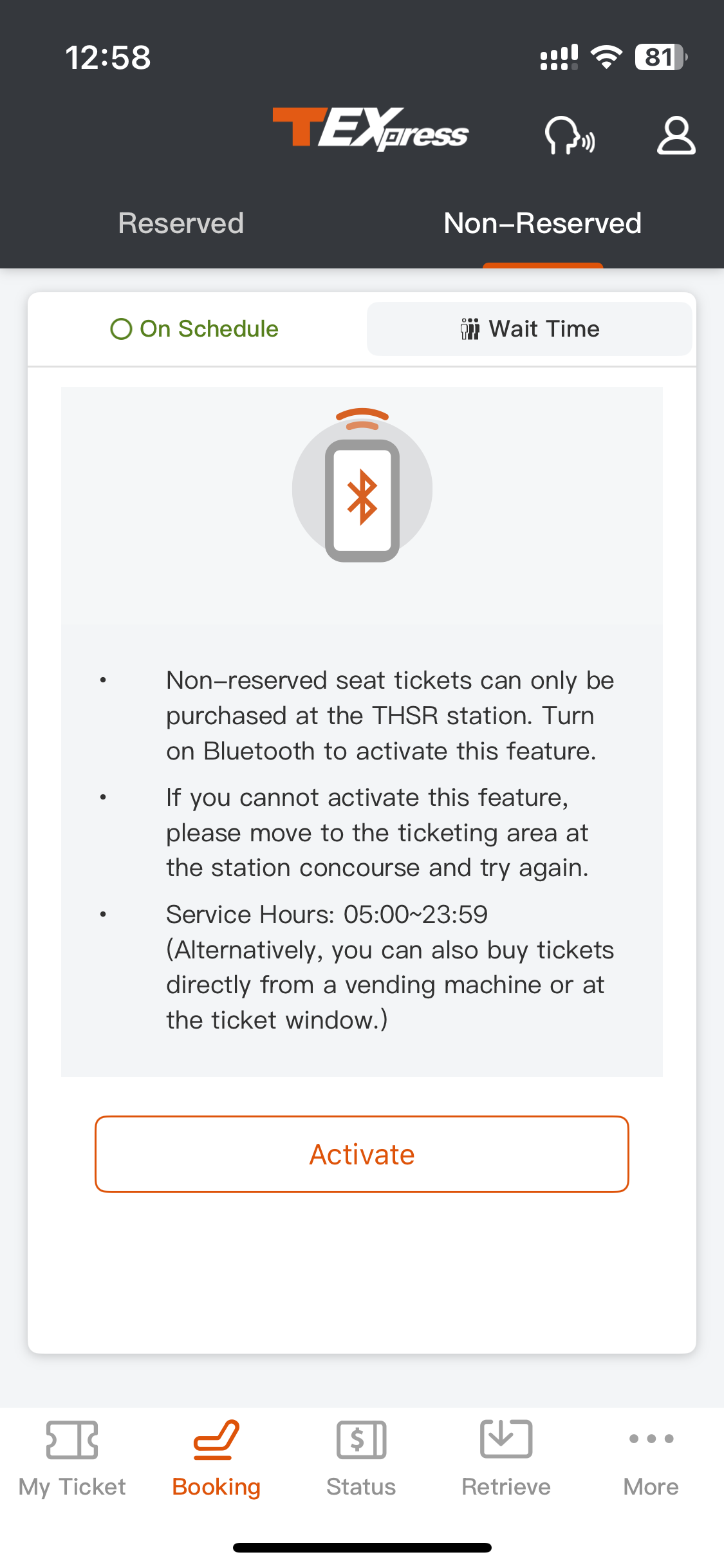
Taiwan High Speed Rail (THSR) handles this somewhat differently. Tourists can also buy spontaneous tickets comparatively quickly and easily in order to ride the Shinkansen-style system. All that is needed is the THSR app and a THSR account, which can be set up without much difficulty. After that, a ticket without a guaranteed seat can be purchased directly in front of the ticket gate, but only there. Similar to Japan's Shinkansen, THSR also offers non-reserved cars, but more on that later.
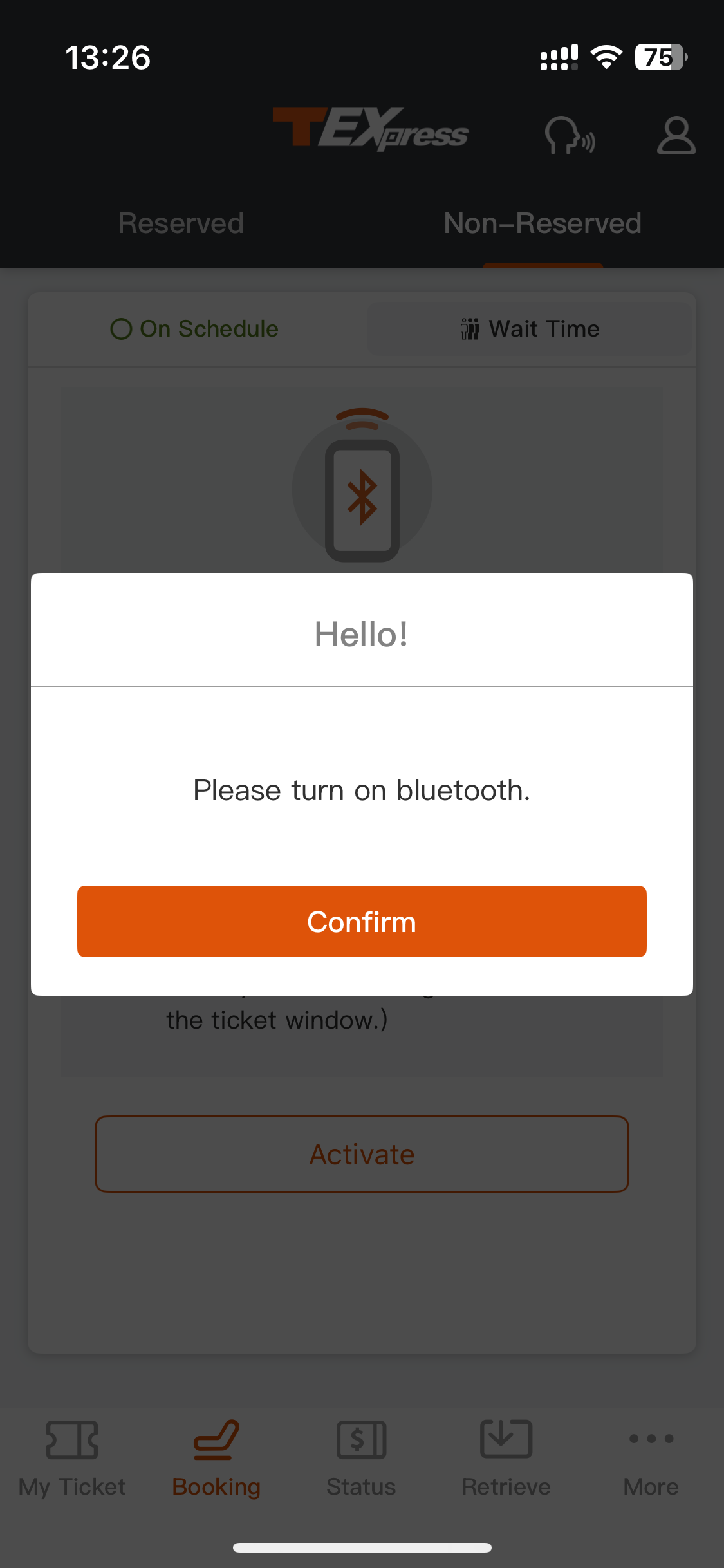
Bluetooth is mandatory for the purchase. The system uses Bluetooth to detect whether the user is near a ticket gate. If that is the case, a destination can be selected and a ticket purchased. Prices are slightly lower than for tickets with seat reservations, see price table. Since we did not have a credit card saved, we simply paid for the ticket with Apple Pay and selected our card. Anyone who does this more often can, with some practice, even complete the process almost while walking toward the ticket gate, since the Bluetooth beacons have a certain range. Internet access is required, of course.
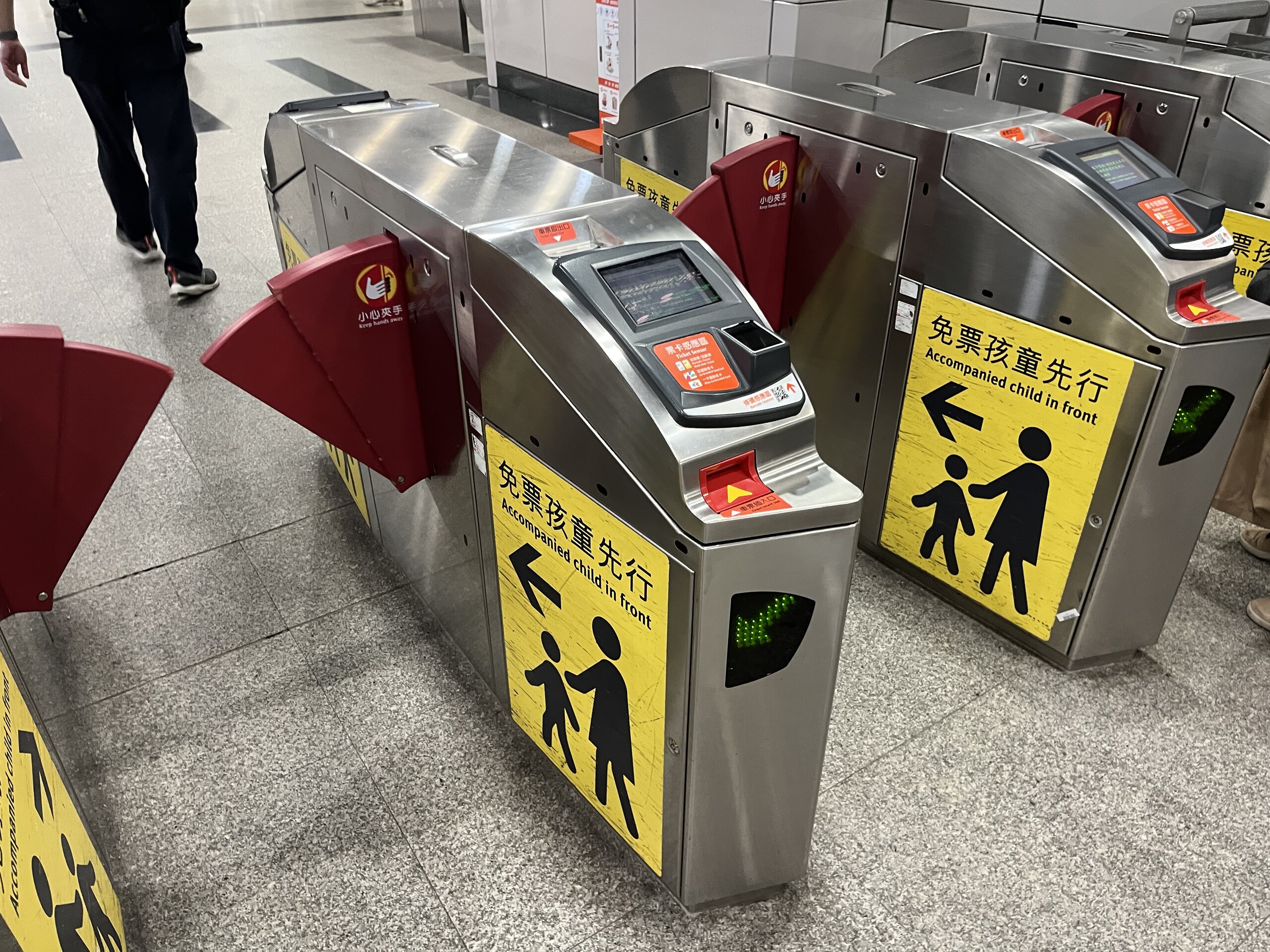
Within seconds, the ticket is then available and can be tapped to show the QR code. In addition to paper tickets and RFID readers, THSR gates also have QR code readers. The reader is comparatively fast, especially when compared with QR code readers on European local transit systems. However, it does not quite match the very fast QR code readers in Japan, such as those used in the new Mobiry Days system in Hiroshima. In practice, this means that in Taiwan, passengers have to slow down slightly when going through the ticket gate to avoid running into the closed barrier.
There is, of course, an easier and faster option. Those with a local EasyCard credit card combo, for example, can ride even more easily by simply tapping the card at the ticket gate. A regular EasyCard is not accepted, however. The situation is similar in Japan, where the EX system is also primarily intended for locals. In some cases, two different RFID cards are read while stacked on top of each other.
THSR regional rail has its own fares
Once through the ticket gate, passengers can go directly to the platform. However, if the train is currently being cleaned, which always happens at the terminal station in Taiwan, passengers have to wait a little. Taiwan High Speed Rail is not a typical local transit system, even though we saw a surprising number of commuting passengers. The tickets are still typical long-distance tickets.
Costs remain manageable. THSR charges 35 TWD, or roughly $1, for the eight-minute ride from Taipei Main Station to Taipei-Nangang. That makes it difficult to compare purchasing power, however. Another comparison works somewhat better, since the inner-city THSR ticket costs about half as much as a Big Mac. Compared with local transit, it is still a noticeable surcharge. A trip only using the Taipei MRT would have cost us just 30 TWD. Since THSR tickets are not integrated into local transit, we had to pay another 20 TWD for the transfer between Nangang and Nangang Exhibition Center, where Computex Taipei takes place. In the end, we paid 55 TWD, or about $2. That is a price quite a few people in the local population are willing to pay.
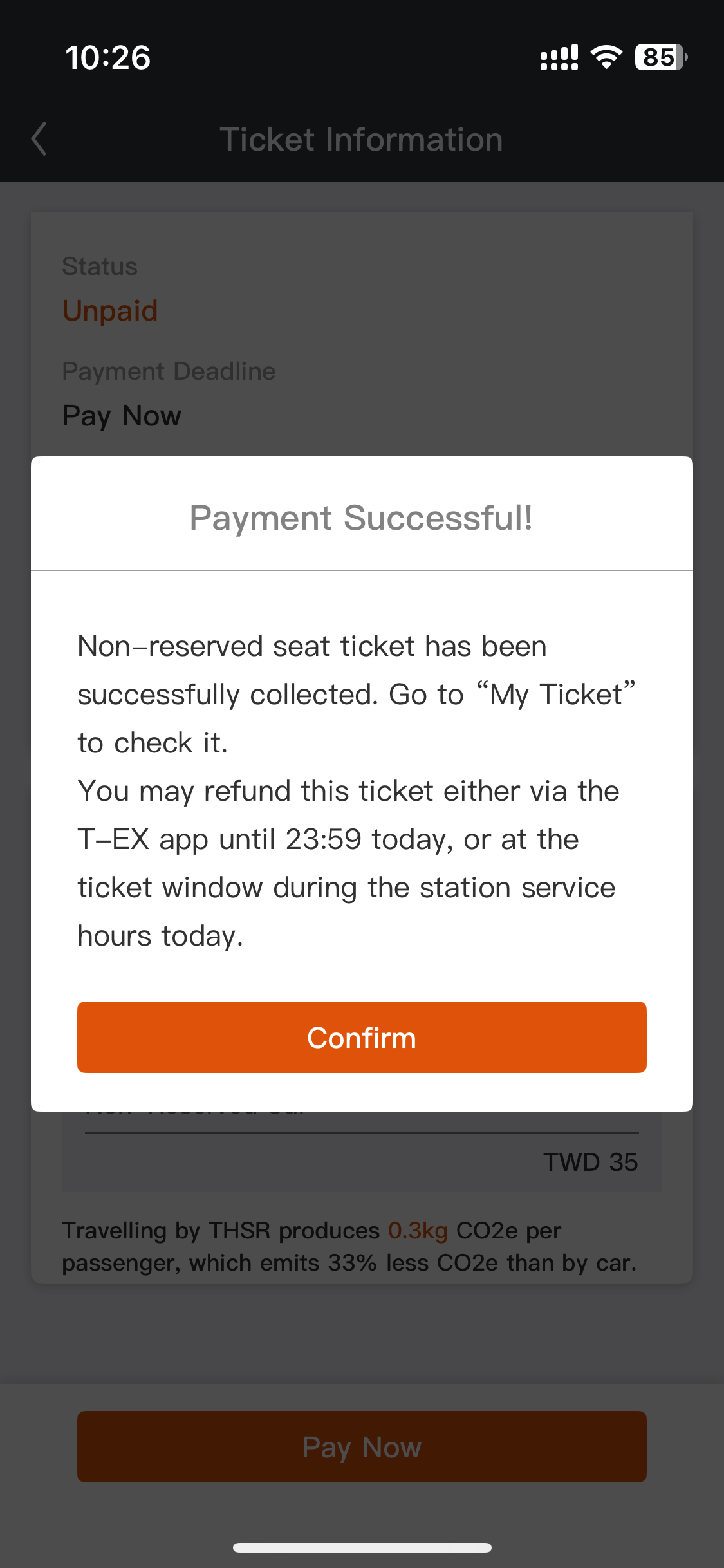
Incidentally, the THSR ticket can even be canceled until the end of the day if it is not used. We did not try this since we always made our train. In any case, the next train can also be used, since the ticket is flexible despite being cheaper.
There are several advantages in return: seats are usually still available on the final segment, and passengers always sit facing the direction of travel. The non-reserved cars 10, 11, and 12 can be used. However, there are differences. Some trains have a stopping pattern similar to S-Bahn or regional rail. For example, there are effectively supplemental trains between Taipei-Nangang and Taichung. These stop practically everywhere, as the saying goes, and on these trains, cars 1 through 4 as well as 8 and 9 are additionally available. These trains are therefore explicitly intended for local travel, even though the trainsets are the same.
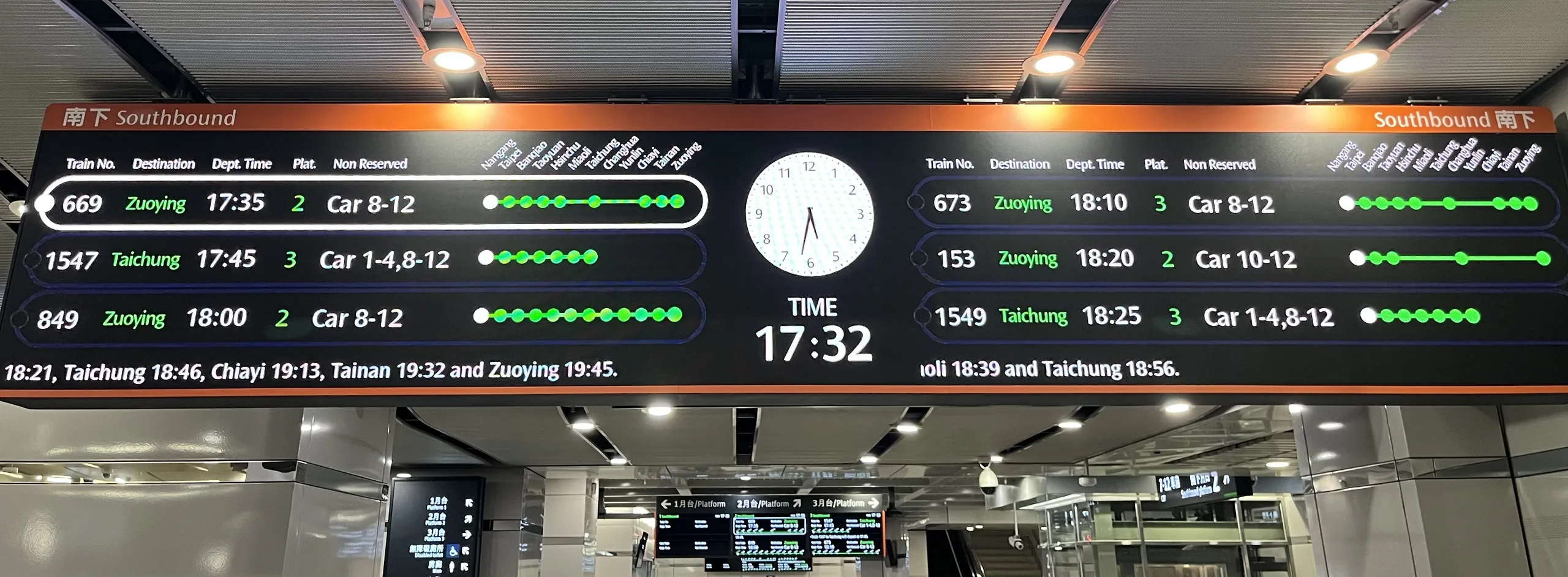
Of course, the distances between stations are longer. But the greater Taipei area still has three stations.
The faster trains do not block these high-speed regional services. As with Japan's Shinkansen, the stations are designed so faster service categories can pass slower ones, and the timetable is coordinated accordingly. Passenger turnover is also comparatively fast on Shinkansen-style systems, even though there are only a few doors. This is also due to step-free boarding, since the platforms in this system are very high. As a result, passengers with suitcases do not block boarding for as long as they do on other express trains.
Other advantages of THSR: Eating is allowed on the trains. That is not permitted on the Taipei MRT. Passengers can even buy drinks from a vending machine on the train. Prices are normal compared with the city. A can of soft drink costs about 25 TWD, roughly 5 TWD more. That is nothing like the surcharges typically found on trains in Europe. However, there is no dining car. Snacks are sold from a cart, and those who want to can even buy a bento box, so lunch is available for about $4. These are also fairly normal prices.
The stations also have the convenience stores typical of East Asia, such as FamilyMart. Quick, fresh food can be bought there and taken directly onto the train. The stores are often even located behind the ticket gates in the waiting area. Thanks to generous seating areas, passengers can decide whether to eat on the train or while waiting at the station.
Cellular service on the trains is excellent, although that is not unusual in Taiwan. THSR also offers Wi-Fi, but we did not try it.
The system is hitting its limits
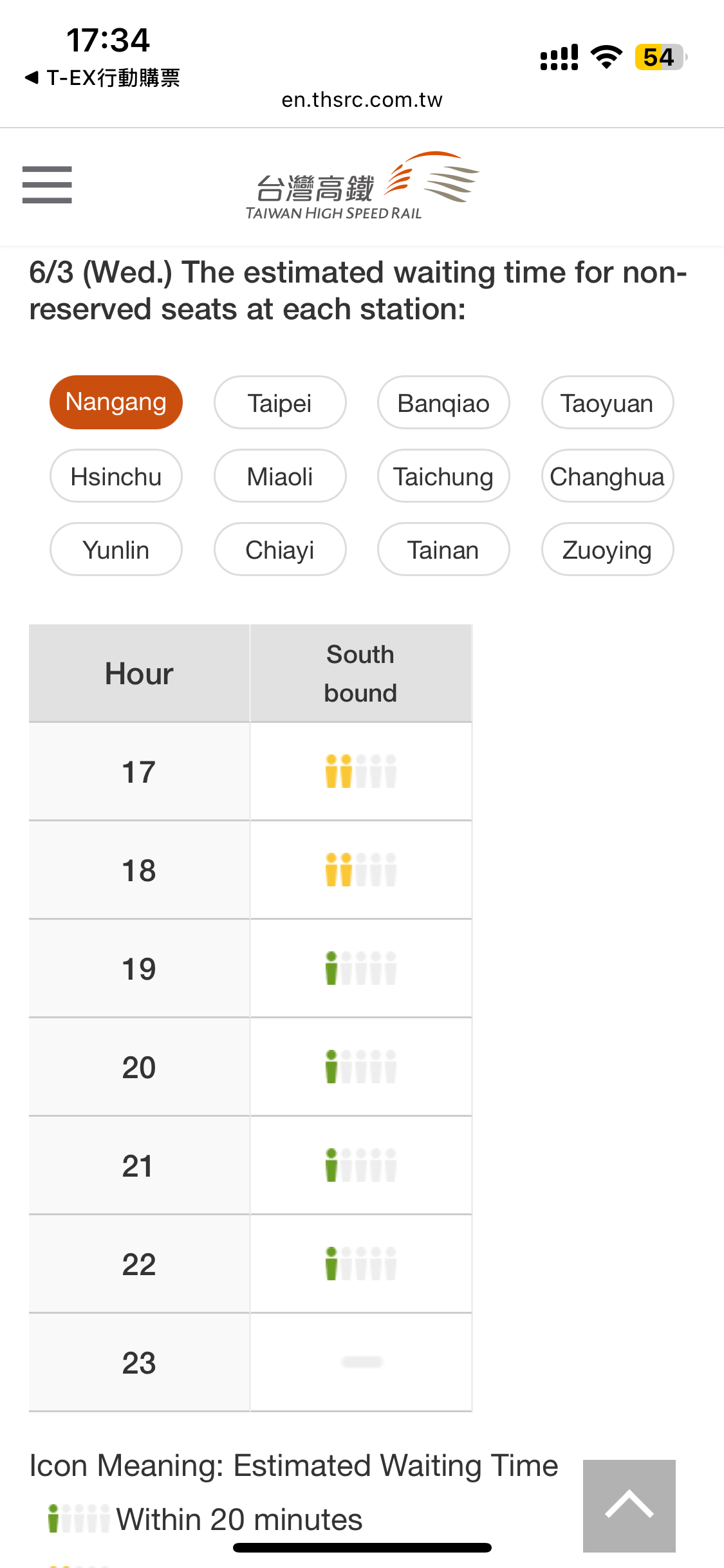
However, THSR is not as easy to use everywhere as it was in our case. Those coming from slightly farther away, such as from Banqiao toward the city center, usually still have a good chance of getting a seat because many passengers get off in Banqiao. From Taoyuan, where the city's main airport is located, it is already more difficult. Standing room is normal there, as we found several times last year. This route is therefore better reserved in advance, although that comes with deadlines. Those who want to travel spontaneously have to stand, which many passengers do.
This shows that Taiwan's high-speed rail project is being overwhelmed by its own success. Trains can already run roughly every 5 to 10 minutes at times, but THSR simply does not have enough trains for that. There are days when everything is sold out, especially during popular holiday periods. That is not surprising, however, since THSR is a very attractive long-distance rail system. The stations are often located outside city centers, but the trains run at high speeds of up to 186 mph.
Japan is expected to deliver new trains soon, but it will likely take another year before the additional capacity enters service. THSR then plans to offer 25% more capacity during rush hour.
Conclusion: THSR with a Bluetooth/QR code ticket is worth it
Even if it can get stressful during rush hour. Taken together, all of this also makes Taiwan's high-speed rail system interesting for local commuting or spontaneous trips. The surcharge is moderate, and the system serves three stations on the important east-west axis through the Taipei metropolitan area. Anyone familiar with the subway system running parallel to it, the often heavily used Bannan Line, will appreciate being able to cover the distance quickly, even while standing.
However, the schedule is designed for long-distance service. There are some larger gaps between trains, so taking the Bannan Line on the Taipei Metro can still make sense in terms of travel time.
Those who want to can also use the TRA on the parallel route, which serves a few more stations. This is the Taiwan Railway, which runs on separate tracks. High-speed rail traffic in Taiwan is separated from other rail traffic. An EasyCard can be used here without any issue, but passengers need to pay attention to the train category.
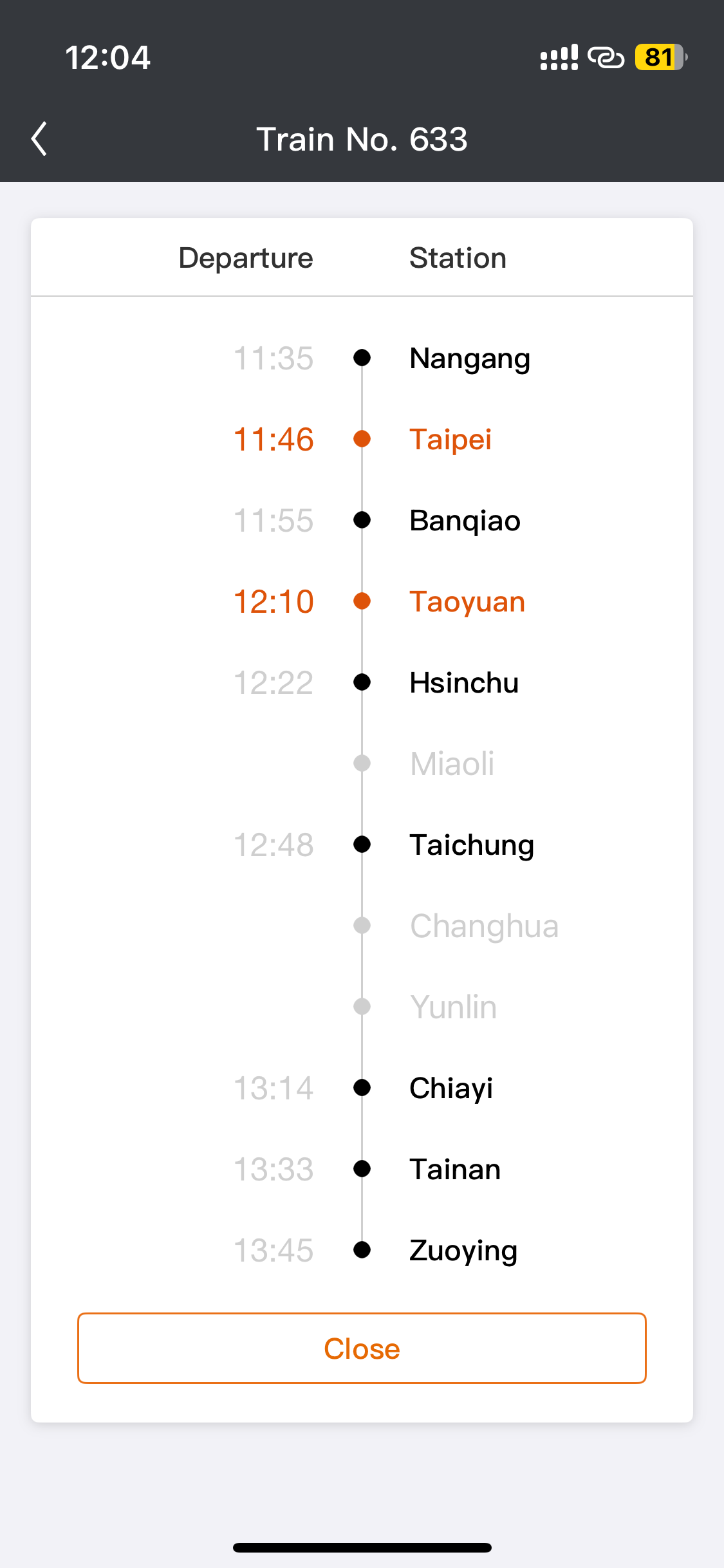
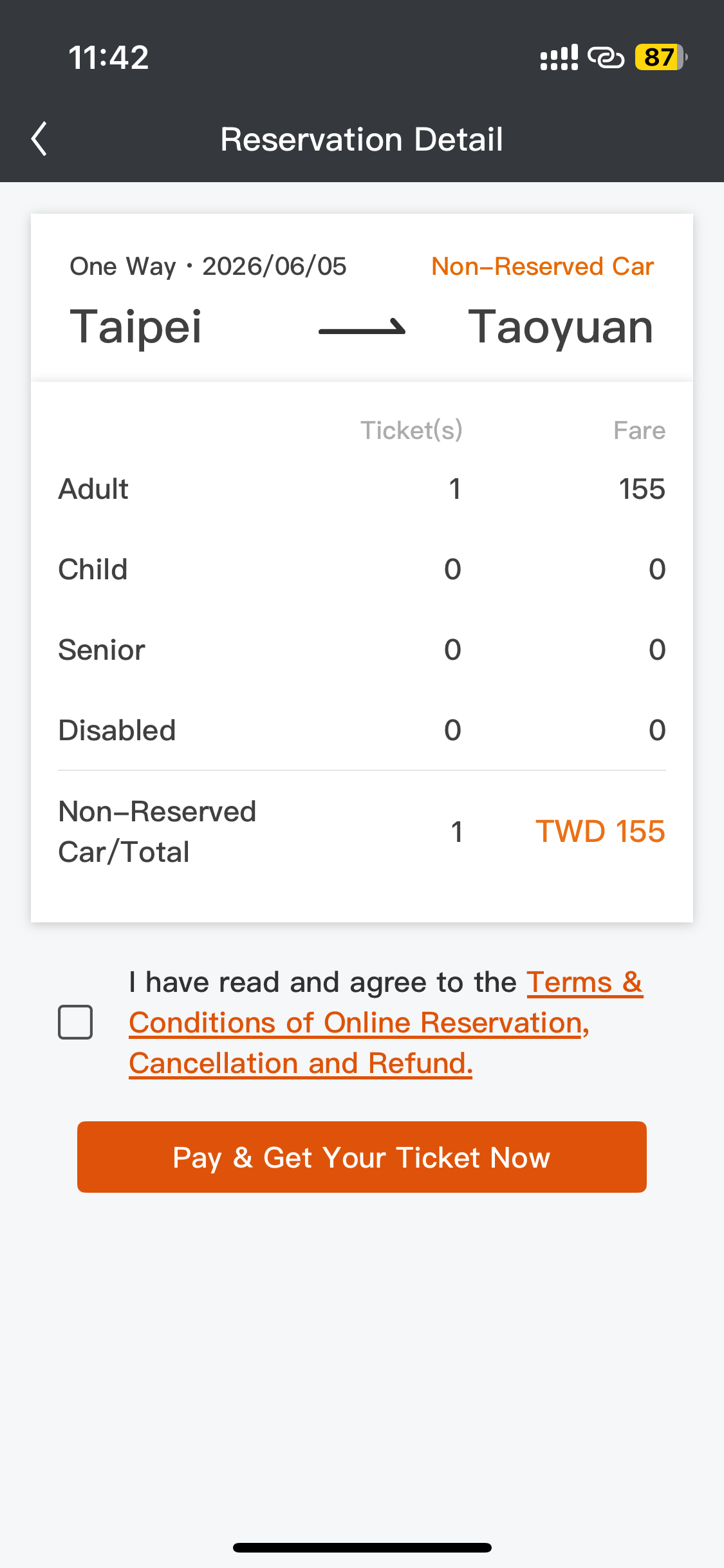
For this test, we rode between Nangang and Taipei Main Station a total of five times. There was also one trip to Taoyuan. Punctuality was 100%, without any statistical tricks. In previous years, we also could not recall any delayed trains. The following screenshots show what this looks like in the app and were taken on different days.
Source(s)
Own research
 Add as a preferred source on Google


