




Why the TGV M has more space than its predecessors and when it will first run
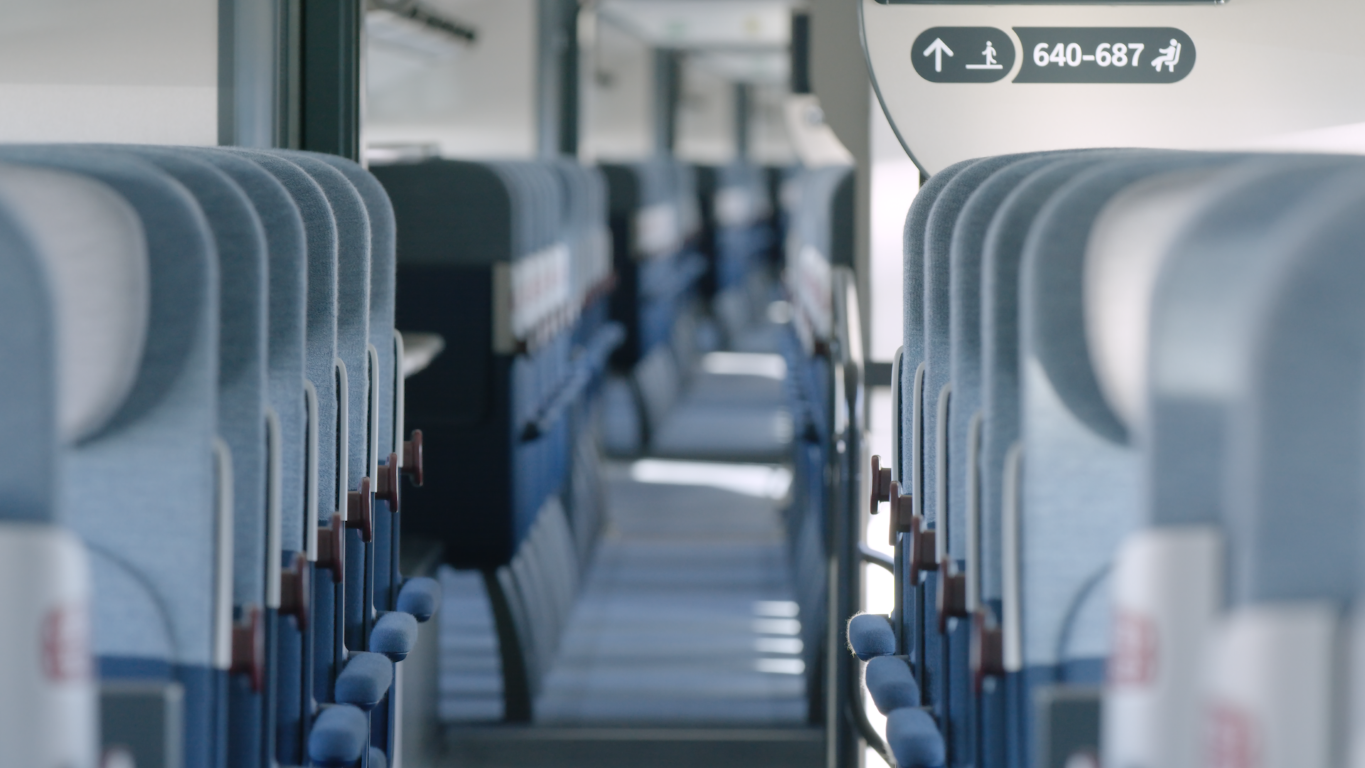
The new TGV M offers significantly more space with only a negligible difference in length compared with the TGV 2N2/Duplex. Still, some may fear even more cramped conditions, since the TGV is not exactly known for its spaciousness, especially in second class. Operator SNCF and manufacturer Alstom have been able to significantly increase seating capacity, from 600 to an impressive 740 seats. And that is on a 656-foot train. However, there is one caveat. This refers to the low-cost configuration. In a two-class configuration with a bar car, older documentation lists 600 seats. It should be noted that older TGVs also differ in seating capacity, sometimes above 600 seats (Low Cost Train Duplex Ouigo) and sometimes below that. The same applies to the TGV M (see the Eurostar variant at the end of the article).
As a TGV Inoui, the TGV M will therefore be equipped with 600 seats, including a bar car and first class, and based on current information, the maximum is 740 seats: "Dans une configuration de rame avec 2 classes et un bar, jusqu’à 600 places seront accessibles, et dans sa configuration maximale, le TGV pourra atteindre 740 places.", as SNCF states in the original (PDF).
But even with 600 seats, the TGV M offers plenty of space. For comparison, ÖBB’s new Railjets have just 532 seats at around 853 feet in length (ÖBB fleet overview as a PDF), which is roughly between the TGV Duplex and Euroduplex configurations, but at 656 feet. The ICE 3 Neo, meanwhile, has only 439 seats as a 656-foot trainset. The latter is also an EMU and has no locomotives or power cars taking up space. The traction equipment is distributed under the train, which is why these trains are classified as EMUs, or Electric Multiple Units.
The TGV M owes part of its enormous capacity to its duplex principle, which is already familiar from some older TGVs. These are double-deck cars arranged between the two power cars on Jacobs bogies. ÖBB also plans to introduce this concept soon. The Railjet double-decker, for example, will increase capacity to 483 seats. At a length of 525 feet, or roughly 3 seats per foot as an EMU, it will then be packed about as densely as the old double-deck TGV. The TGV M also has 3 seats per foot, rising to 3.7 seats per foot in the low-cost variant.
To find out how the TGV M gains this additional space, we asked Alstom. A large part of the increase comes mainly from a redesign of the cars and power cars. Alstom has managed to add an extra car.
More seats: TGV M power cars are shorter
This is possible because the power cars have each been shortened by 13 feet, while the cars are now 3.3 feet shorter. The new layout therefore creates more space that can be used for seats, since the traction technology in the power cars has been made significantly smaller.
General optimizations are also interesting. According to Alstom, technical systems in the predecessor were also housed in the bar car. That took up space, though this was not as obvious to passengers as the space used by the power cars. These systems have now largely been moved into the power cars. This also allows Alstom to offer more flexibility, such as configurations without a bar car that provide only seating. That is likely to be of particular interest for low-cost trains.
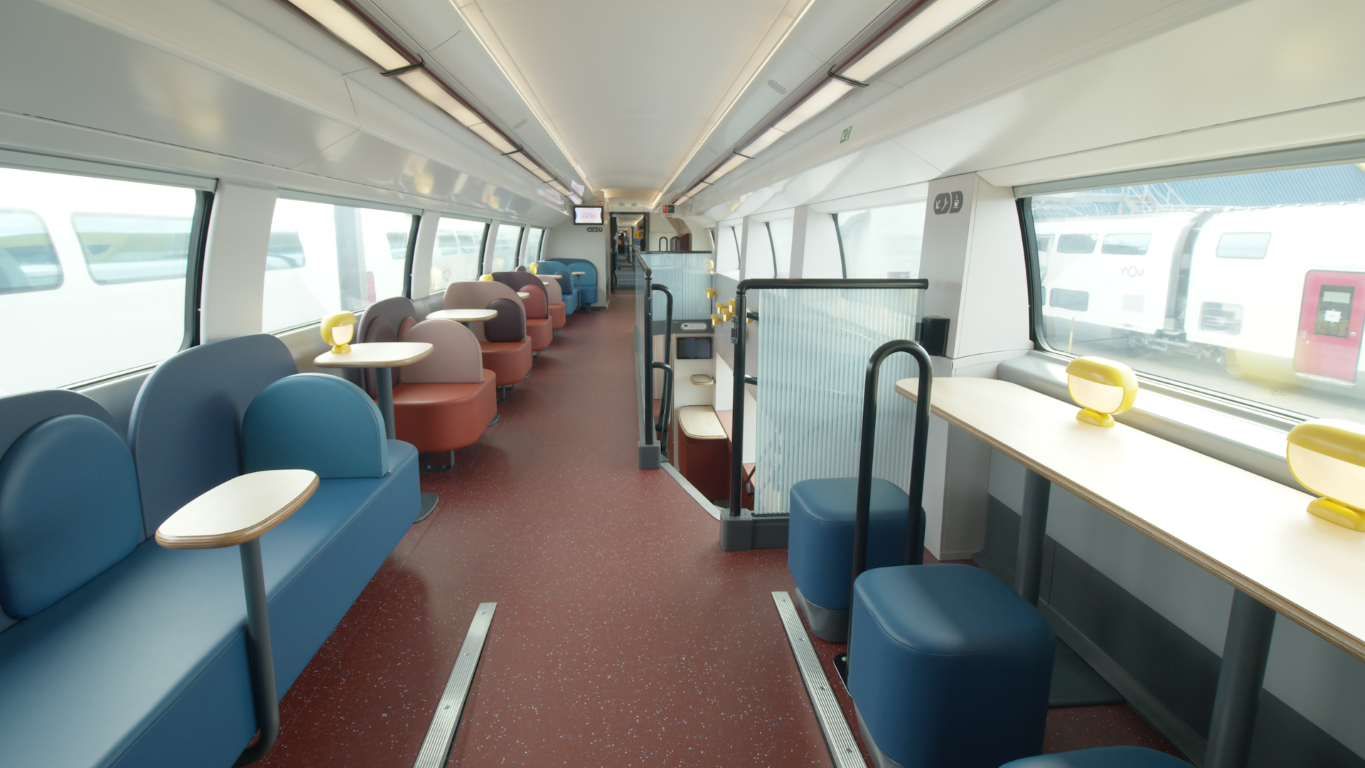
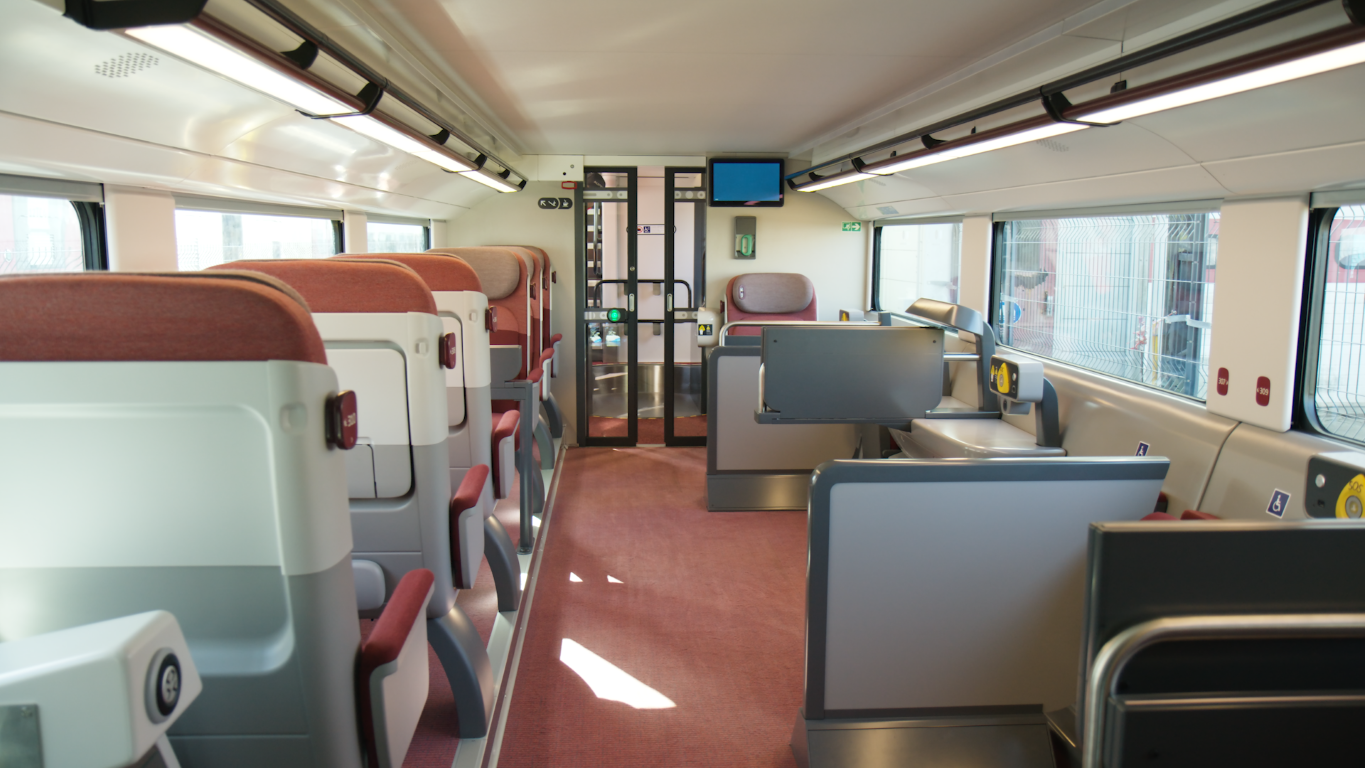
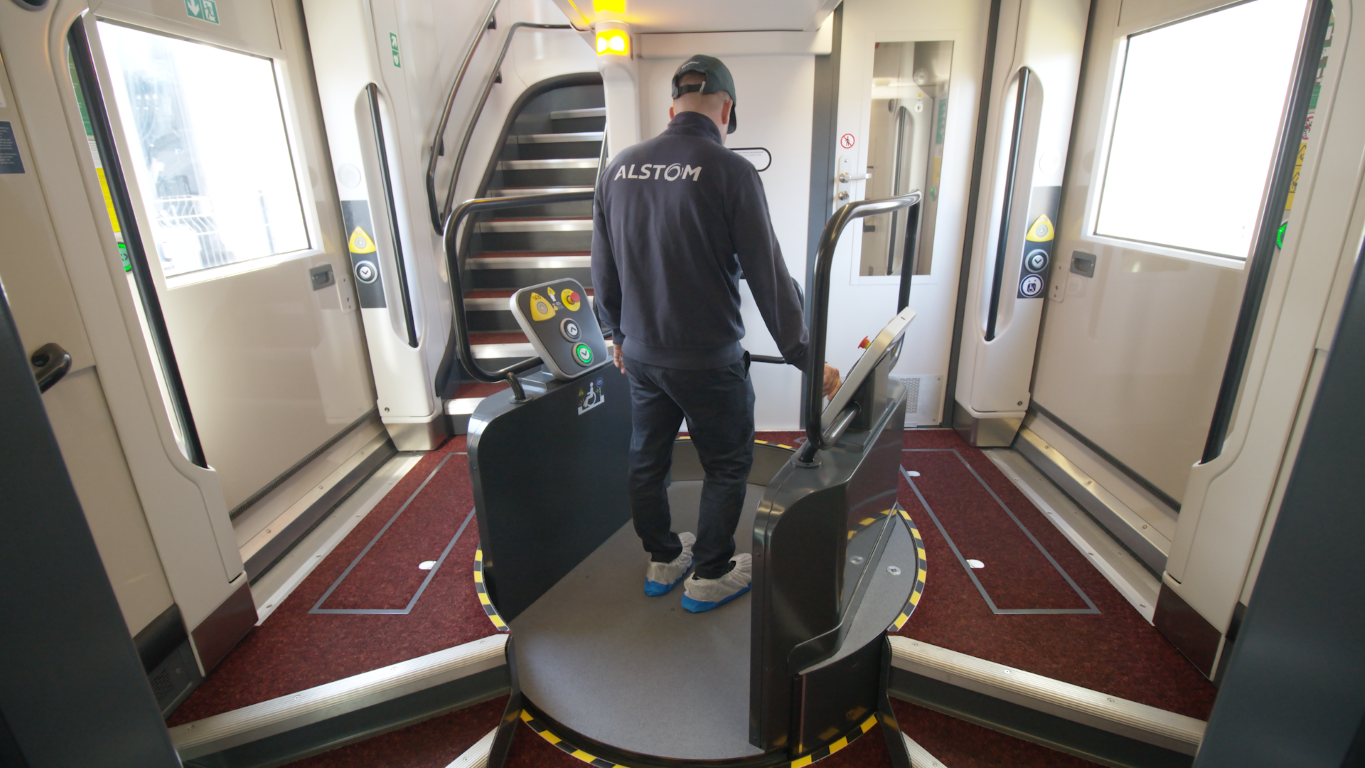
This results overall in the new high-capacity configuration (clarification: this explicitly refers to the low-cost variant with 740 seats), as Alstom calls it. However, Alstom emphasizes that even then, there are no drawbacks in seat comfort compared with the predecessor. Seat pitch has even been increased to 35.6 inches. However, that is negligible, since the predecessor is at 35.4 inches. According to the presentation video embedded below, seat pitch in the regular Inoui configuration is said to have been increased by 2 inches, but we do not know the reference value. Either way, that is significantly more than on airlines. Even premium airlines such as Lufthansa squeeze their economy class passengers into as little as 31 inches. That makes working more difficult.
Seat pitch on Deutsche Bahn trains is similar, by the way. It ranges from 33.9 to 38.2 inches, depending on the series. In this respect, it remains interesting to see how spacious the TGV M will feel. The often dark design can sometimes feel restrictive here, similar to how the lack of sightlines in the ICE 4 affects the sense of space. During our own trips, we found the TGV comparatively cramped in second class for this reason as well. But it is possible to work on the TGV. We also assume that working on a laptop will be comfortable on the TGV M, even if the laptop is somewhat larger. WiFi based on 5G mobile connectivity has already been announced. However, the decisions around the train’s USB equipment are strange.
When will the first TGV M run?
All of this can be tested soon. Alstom and SNCF published a press release on May 29 about approval for the French network. Approval was granted on May 22, and we reported on it one day later. Accordingly, SNCF plans the first commercial trips for the start of the French school year, meaning early September 2026. The train will be introduced in the Inoui variant, as stated in the press release.
Until then, several trains still have to be formally delivered. They have of course long been running test trips on the French network. According to Alstom, almost 621,000 test miles have been completed so far.
The first two TGV M trainsets are scheduled to be delivered in June. Four more are planned to follow by the end of August. SNCF will then have six trains for passenger service. By the end of the year, the fleet is expected to grow to 13 trains, which corresponds to 10 percent of the ordered quantity. With 130 TGV M trains, SNCF is planning a fleet comparable in size to the other generations, many of which were ordered in large numbers.
The Eurostar Celestia has significantly fewer seats
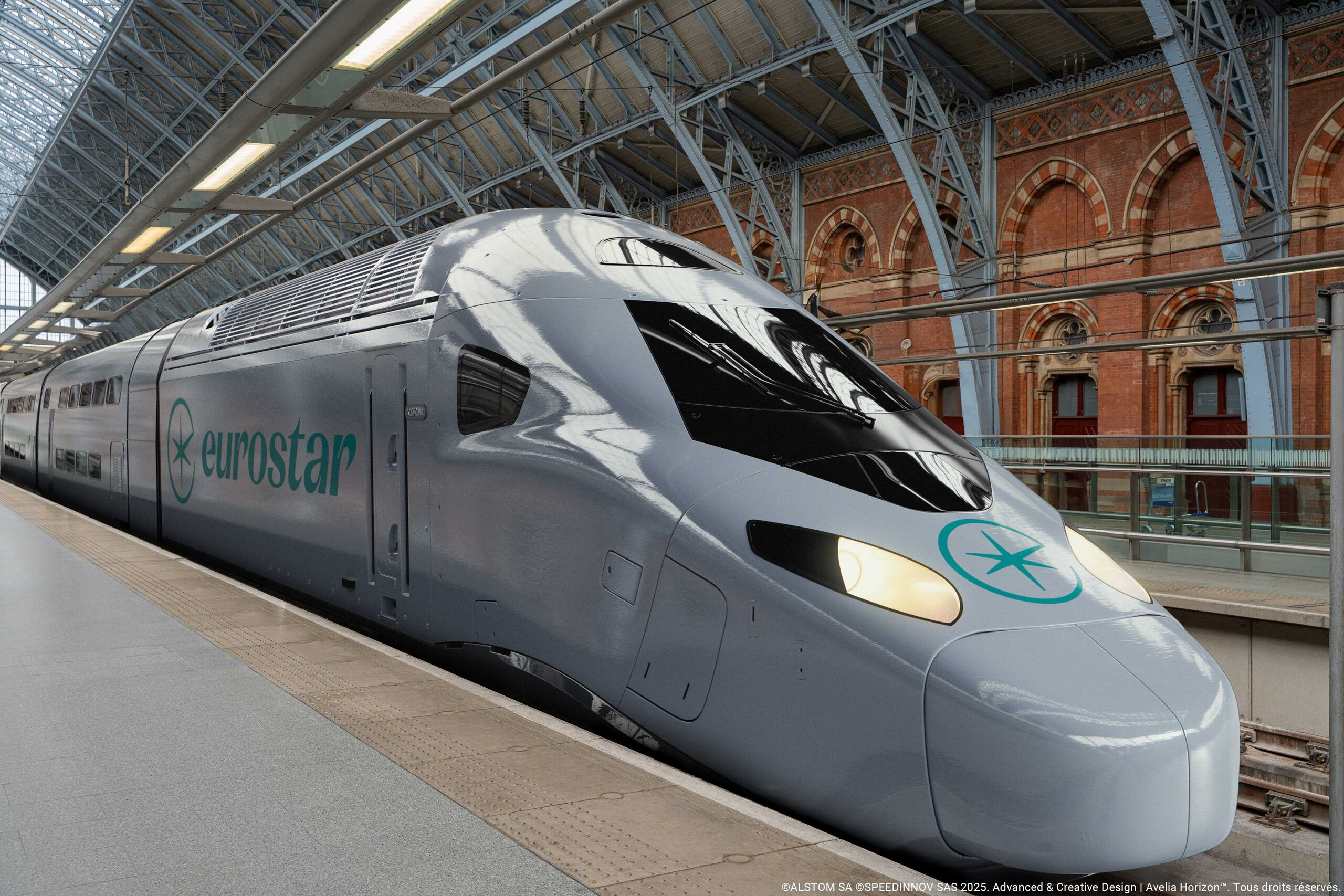
Additional TGV M trains will be used in a different variant. The TGV M is actually called Avelia Horizon by manufacturer Alstom, and SNCF Voyageurs has also ordered new trains for its subsidiary Eurostar. The order book includes 30 units with an option for 20 more. However, it will still be some time before these trains enter service. Delivery is planned for 2031.
The train will then operate under the name Eurostar Celestia and offer significantly fewer seats. At the same time, Eurostar is also promising a significant increase in capacity. The number of seats is expected to rise by 20 percent to around 540 per trainset. Since 656-foot trains are a little short for rush hour in the Channel Tunnel, Eurostar also states that the trains will operate in double traction and then offer 1,080 seats.
The fact that the Eurostar Celestia will offer fewer seats is also because Eurostar, especially under the English Channel, tends to target customers who spend more money. The trains will have a three-class configuration: Standard, Plus and Premier. However, the passenger seating layout is not final yet.
The trains will also technically be able to operate on more rail networks. While the TGV M is limited to 1.5 and 25 kilovolts and supports only French train protection systems plus ETCS, the Eurostar Celestia will be used in more countries and may even connect London with Germany.
However, it is probably still too early for the exact equipment of the Celestia trainsets. There may again be partial fleets, as with Thalys. The Thalys PBKA, for example, can be used particularly flexibly, as Hochgeschwindigkeitszüge.com describes well. These trainsets, which now operate under the Eurostar brand, also need to be replaced gradually. Some of them are already more than 30 years old, and delivery of the Eurostar Celestia will certainly take several years.
Clarification: The 740-seat configuration mentioned in the press release refers to the low-cost configuration marketed as Ouigo. In reality, the train has a capacity of 600 seats. While this is still more than its predecessors, it no longer always corresponds to the promised 20 percent increase, according to Hochgeschwindigkeitszüge.com. We have adjusted and corrected the article accordingly and apologize for the error.
Source(s)
Alstom & own research
 Add as a preferred source on Google


