




Revolut’s illuminated LED crypto Mastercard tested
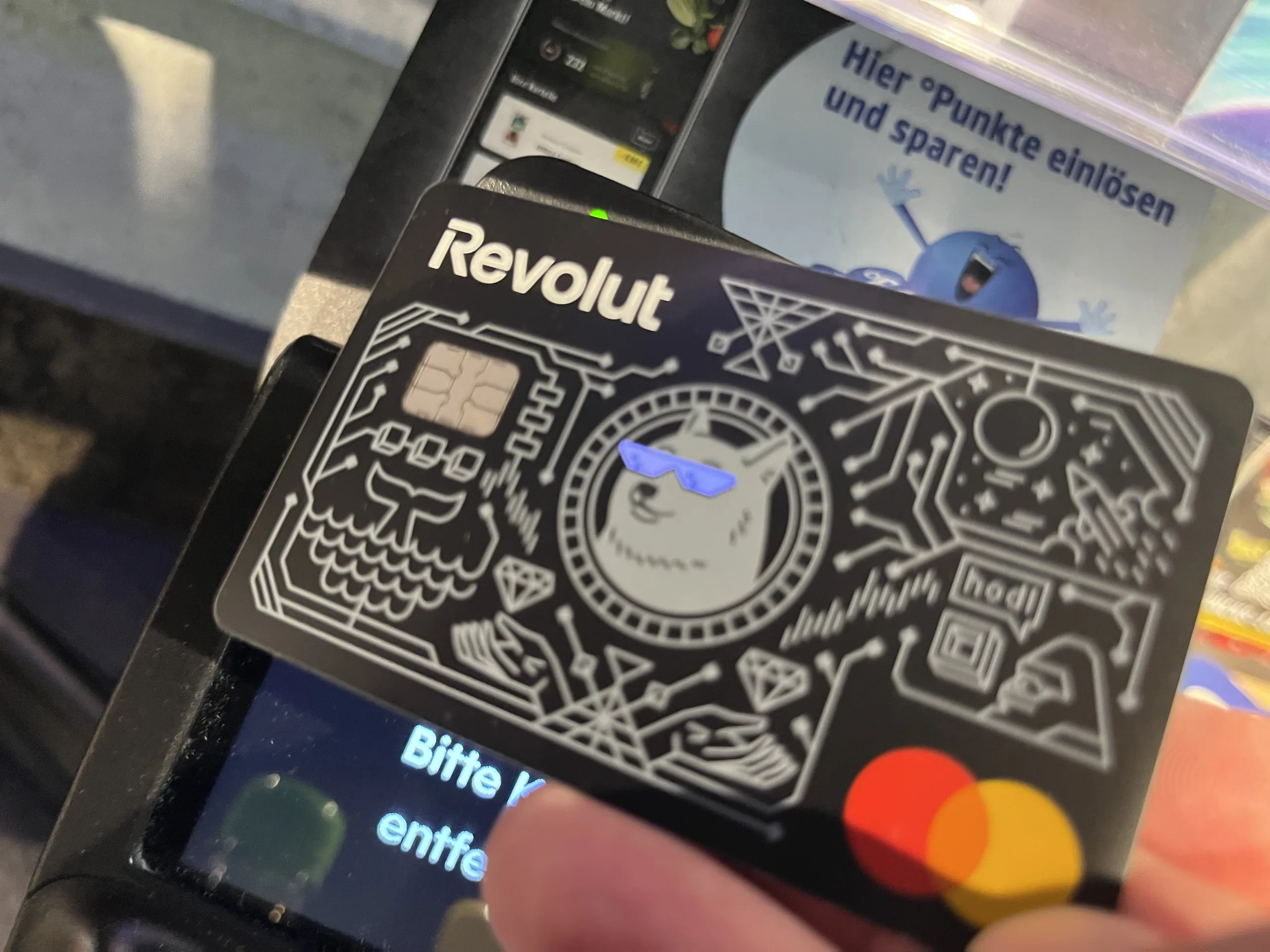
When we happened to learn about Revolut's new Mastercard with built-in LEDs, we decided to order one. Payment cards with special features remain surprisingly rare in German-speaking countries, even though cards with OLED displays and built-in fingerprint readers already exist. The technology allows for quite a bit more.
The card arrived fairly quickly. We ordered it on July 7 and found it in our mailbox on July 11, even though Revolut had estimated that it would arrive no earlier than July 17. We have encountered similarly exaggerated delivery estimates before. Put differently, the surcharge for express shipping is not really worth it.
The LEDs are very dim
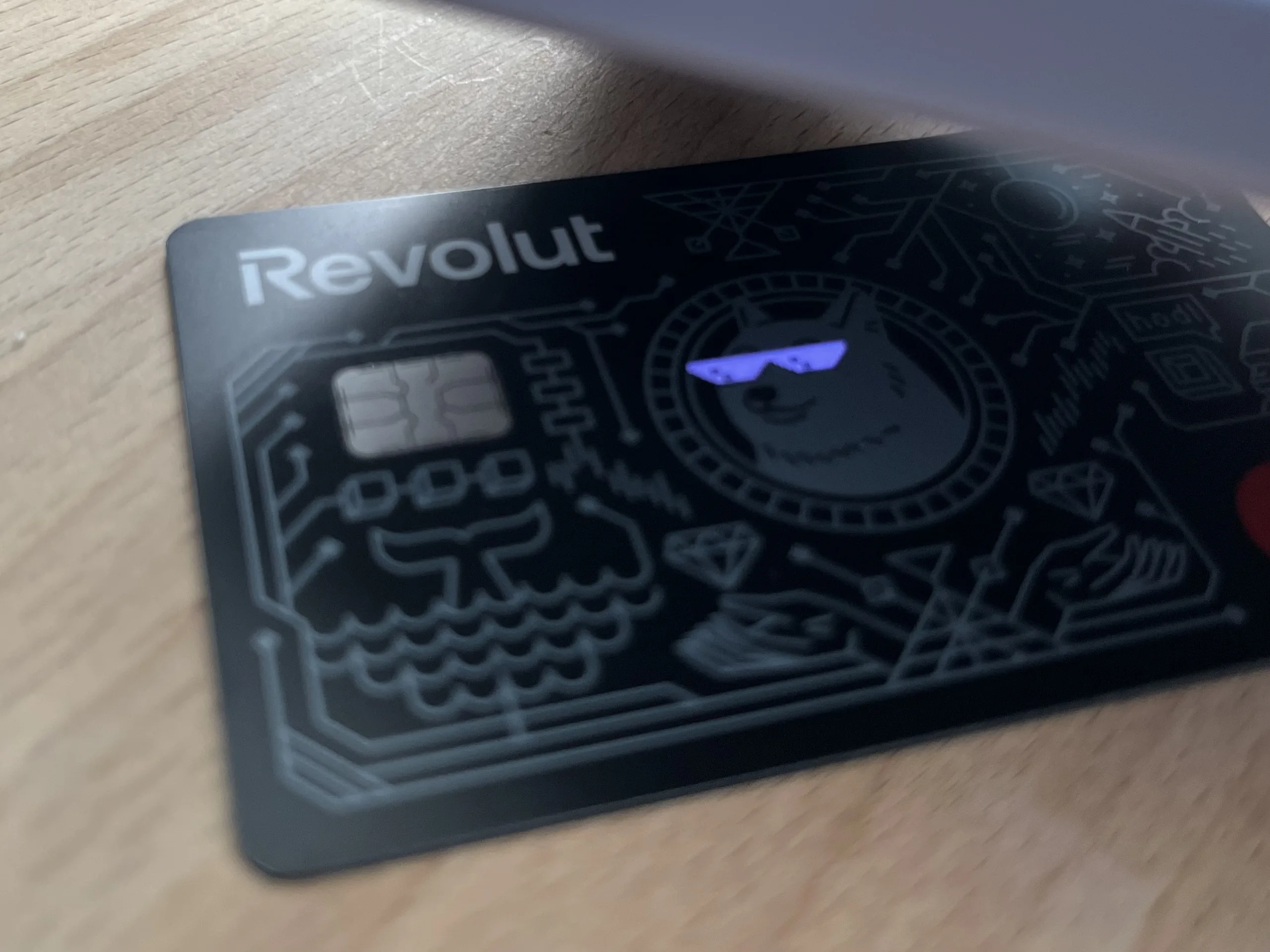
Our first look at the LED eyes was disappointing. They are extremely dim, to the point that we could not see them in sunlight during our initial test. At first, we assumed they only responded during an EMV protocol handshake.
In reality, they also react to RFID or NFC and harvest the energy needed to illuminate. However, no energy is stored. As soon as the card moves out of range, the eyes go dark. Their brightness also visibly depends on the distance, with the eyes becoming dimmer as the card moves farther away.
But what do the LEDs actually do? They simply light up. The eyes provide no indication of what the chip is doing. A distinct flashing pattern to confirm a successful payment would have been useful, for example. As far as we can tell, however, the card contains no logic for controlling the eyes. Whenever it receives a signal, which can also be generated by a smartphone's NFC chip, they simply illuminate.
That is disappointing compared with the more playful payment cards available in East Asia, where considerably more is possible. For comparison, our brief test of an EasyCard shaped like a small Taipei Metro train keychain revealed far more functionality. The miniature train harvests enough energy to trigger a short light and sound sequence. That might be somewhat excessive for a payment card, of course, and sound effects would probably attract too much attention in a supermarket. Still, the LEDs could certainly have done more.
Legacy Mastercard features remain
Interestingly, Revolut has retained some older features on this special edition. The company recently stated that customers can now choose to omit the printed card number for security reasons. Revolut's LED card does not offer this option.
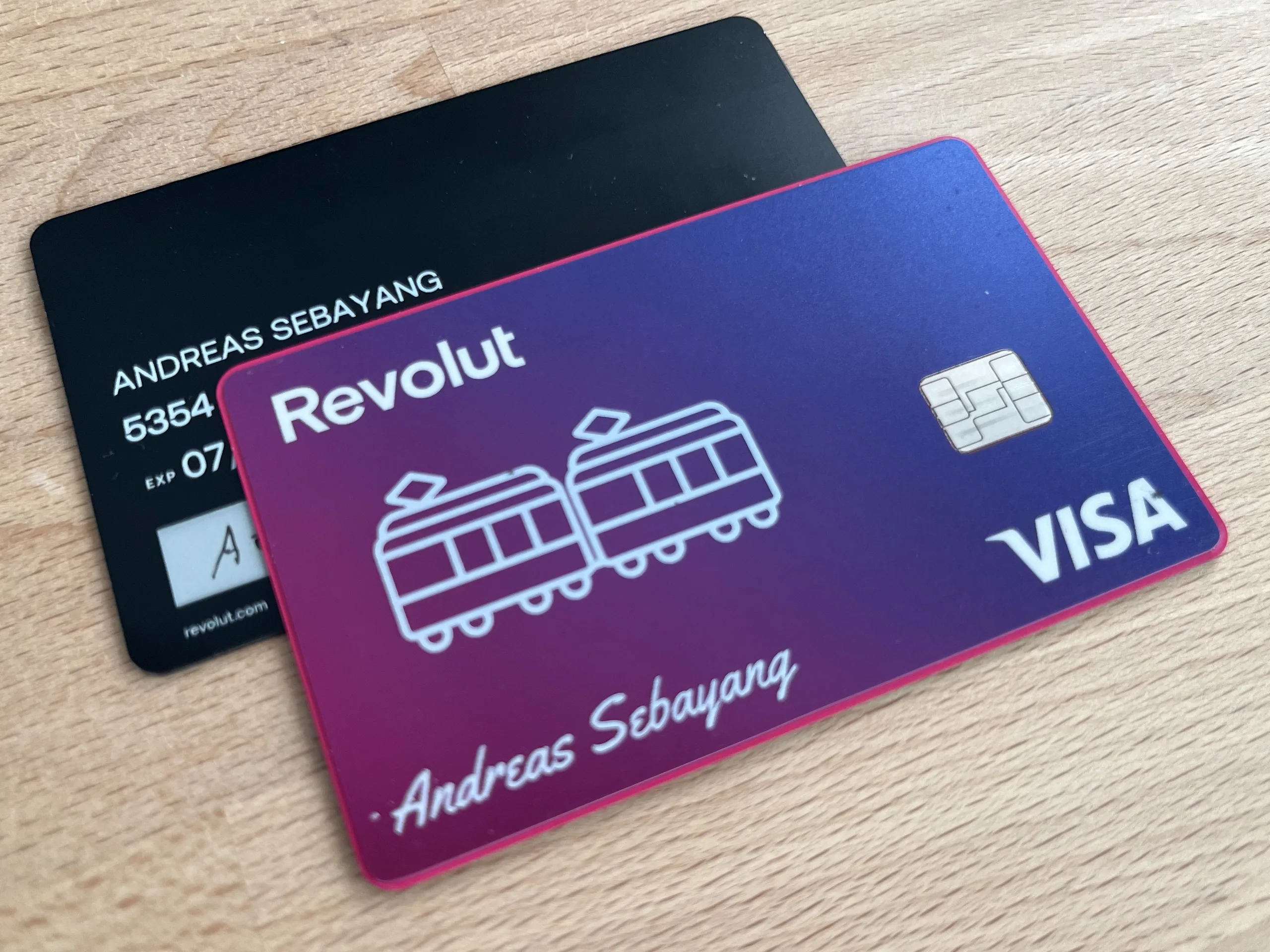
The card also still has a signature panel. While signature panels remain permitted, Mastercard has effectively phased them out, and competitors have already moved on. N26, for example, removed the signature panel from its cards several years ago. This initially caused some problems abroad, but cards without one have since become more common.
Availability of Revolut's LED card
Revolut charges about €30 for the Mastercard. Standard shipping was free with our Plus account. Revolut told us that production is limited to 10,000 units. After placing an order, it is not possible to buy a second card, as the app reports that the limit has been reached.
Conclusion: Is Revolut's LED card worth it? Probably not.
Revolut's card with built-in LED eyes is certainly a fun novelty, but nothing more. The card itself does not feel particularly premium, nor does its LED feature stand out from the gimmicks found on other payment cards. Paying €30 for a couple of LEDs is quite expensive, and the design is ultimately a matter of taste. Some will recognize the crypto reference, even though our card is linked to an account with an IBAN.
On the other hand, Revolut clearly targets card collectors with its countless special editions, and the LED card sits roughly in the middle of the range. The neobank also offers several much more expensive metal cards that we have found too costly so far. Our verdict is therefore that the card may interest fans, while everyone else would be better off spending the money elsewhere.

Source(s)
Own research
Transparency
The selection of devices to be reviewed is made by our editorial team. The test sample was freely purchased by the author at his/her own expense. The lender had no influence on this review, nor did the manufacturer receive a copy of this review before publication. There was no obligation to publish this review. As an independent media company, Notebookcheck is not subjected to the authority of manufacturers, retailers or publishers.
This is how Notebookcheck is testing
Every year, Notebookcheck independently reviews hundreds of laptops and smartphones using standardized procedures to ensure that all results are comparable. We have continuously developed our test methods for around 20 years and set industry standards in the process. In our test labs, high-quality measuring equipment is utilized by experienced technicians and editors. These tests involve a multi-stage validation process. Our complex rating system is based on hundreds of well-founded measurements and benchmarks, which maintains objectivity. Further information on our test methods can be found here.
 Add as a preferred source on Google


