Startup builds AI to “hear” plants’ signals — and hopes to talk back
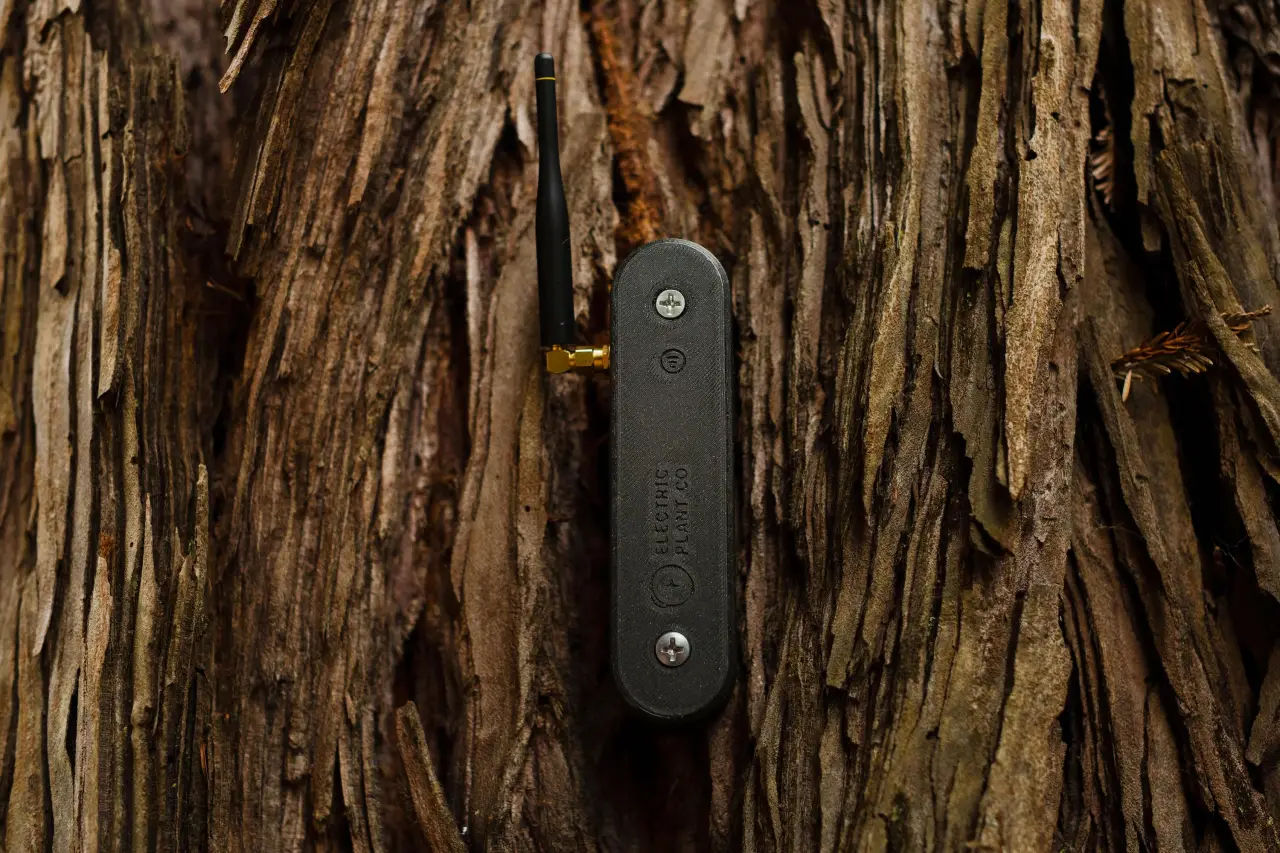
Plants produce subtle electrical signals as they respond to their environment, and startup Electric Plant wants to use them to tell growers what their crops need. The company has spent three years developing Bombadil, a large language model trained to interpret these signals across about 125 plant species. It has now raised $11.2 million in seed funding to bring its sensors and AI model to market.
The startup’s approach is based on the idea that plants’ electrical activity can reveal information about their internal state. Existing tools, including soil probes, handheld spectroscopes, and satellite imagery, can help growers monitor their crops, but Electric Plant co-founder Justin Mast argues that they do not always capture plants’ needs in real time.
Electric Plant’s sensors attach to woody-stemmed plants using stainless steel screws that penetrate the cambium, the layer of living tissue beneath the bark. They detect tiny electrical changes measured in microvolts and transmit the data to a base station over a low-power wireless network. Bombadil then analyzes the readings in the cloud and sends the results to customers.
The resulting information can help growers adjust watering and fertilizer schedules. The sensors cost tens of dollars, according to Mast, compared with thousands of dollars for some existing monitoring tools. He also says that only a couple of sensors per acre are needed for accurate results.
Bombadil currently interprets electrical signals from around 125 species, ranging from ferns and redwoods to tomatoes and dahlias. Mast claims the system can boost yields while reducing water use by 20% or more.
Although the founders hope their technology will eventually let people “speak” to plants, the current focus is on interpreting signals rather than holding a conversation.
We’re listening more than we’re speaking, but listening’s the first step, - Justin Mast.
Mast founded Electric Plant with neuroscientist Lee von Kraus, who has worked with DARPA. The company’s $11.2 million seed round was led by Onto Ventures and Climactic, with participation from Ponderosa, Endeavor Catalyst, Ludlow, Michigan Rise, The Fund, Schox VC, and Dug Song. Electric Plant has not disclosed the identities of its initial customers, but agriculture and forestry are potential applications for the technology.
Source(s)
 Add as a preferred source on Google