




Snapdragon 8 Elite Gen 5 edges past Exynos 2600 in early Galaxy S26 series benchmark comparison

Geekbench scores of the upcoming Galaxy S26 series phones are nothing new, but right before the forthcoming Unpacked event, an interesting comparison has emerged. This comparison, which comes from Greek outlet TechManiacs, pits the Snapdragon 8 Elite Gen 5-powered Galaxy S26 Ultra against the Exynos 2600-equipped S26.
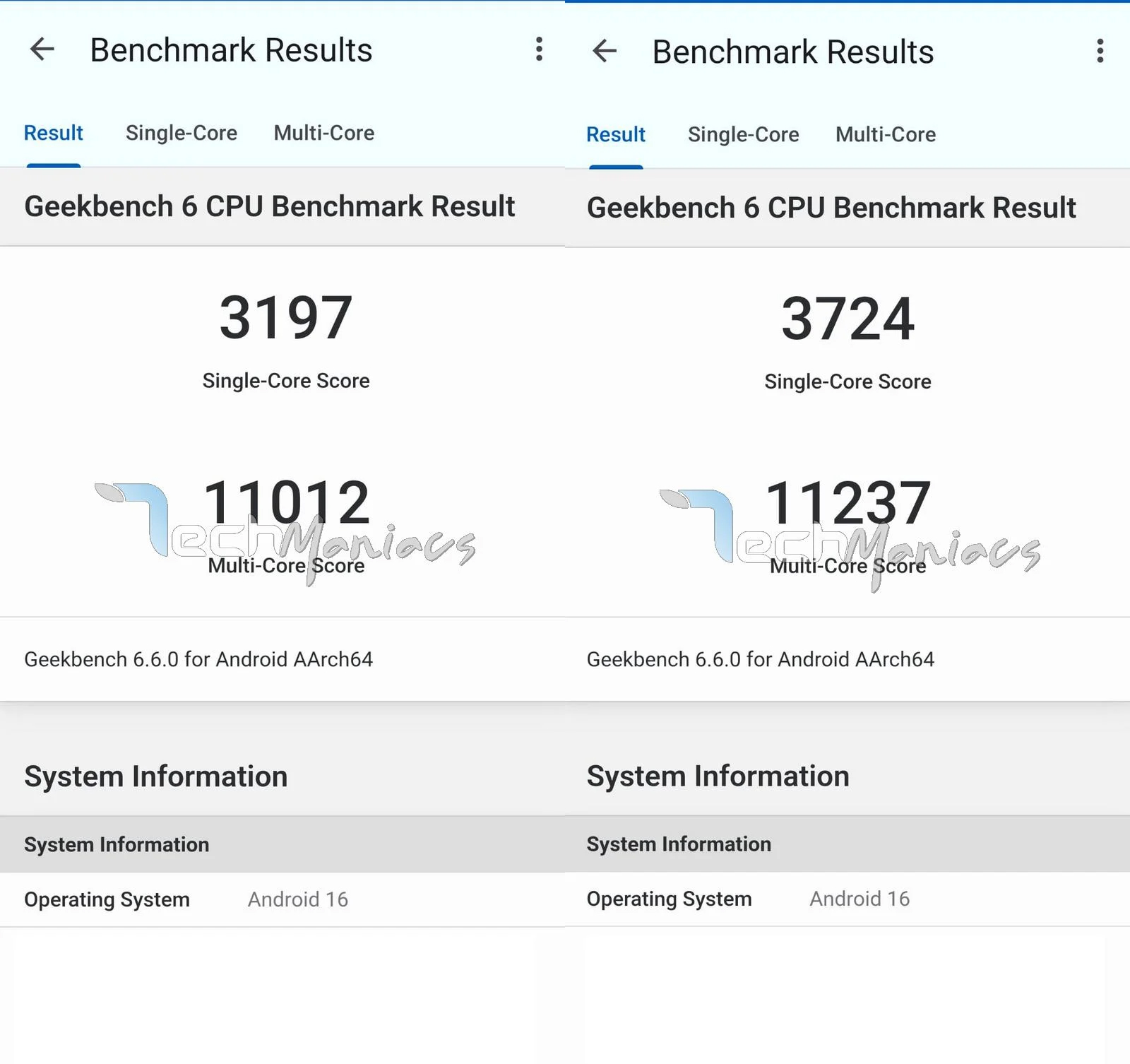
Among the two, the Geekbench benchmark listing for the Galaxy S26 Ultra with the Snapdragon 8 Elite Gen 5 "for Galaxy" shows that the phone achieves 3,724 points in single-core and 11,237 points in multi-core. These scores, especially the single-core one, aren't much different than what previously surfaced benchmark listings revealed.
What's rather interesting is that, when compared to the Galaxy S26 with the Exynos 2600, there's a notable difference in single-core score. As the screenshot shared by TechManiacs shows, the Exynos-powered phone scores 3,197 in single-core and 11,012 in multi-core.
It's worth noting that TechManiacs has hidden the other core details from the benchmark results, making it unclear whether the Samsung Galaxy S26 Ultra being tested has 12GB or 16GB of RAM. For context, the non-Ultra phones of the series are expected to top out at 12GB of RAM.
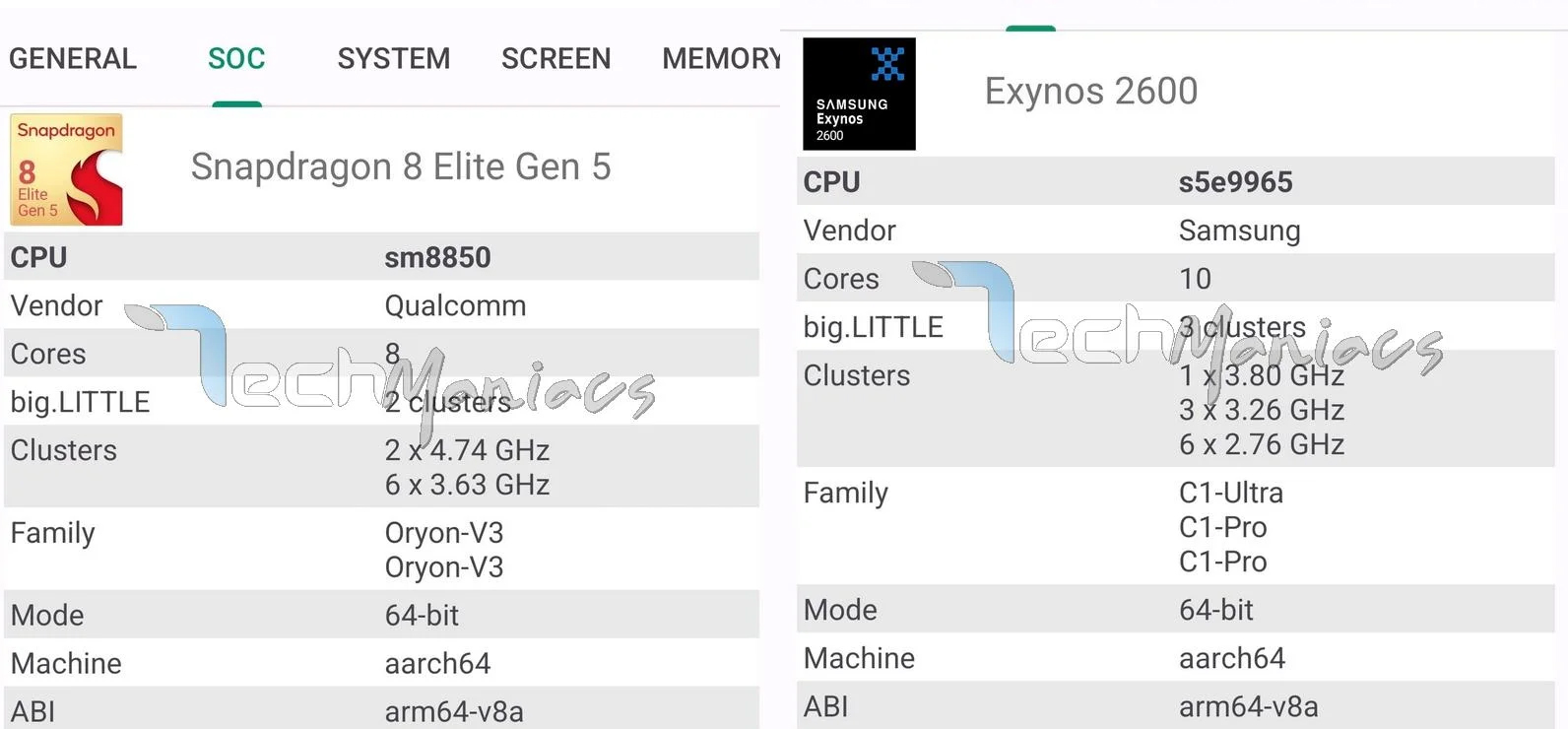
Regardless, based on the shared data, it seems that the overclock on the Snapdragon 8 Elite Gen 5 "for Galaxy" is helping it achieve a higher single-core score. This overclocked variant, as the screenshots show, has the Prime core clocked at 4.74GHz, a modest uplift from 4.61GHz of the regular variant (such as the one found in the OnePlus 15).
The Exynos 2600, in comparison, has the top-end ARM C1-Ultra chip clocked at 3.80GHz. As for the multi-core scores, there isn't much of a difference, but the Snapdragon 8 Elite Gen 5 "for Galaxy" still has around 2% lead.
While the Exynos 2600 trails in single-core performance, the narrow multi-core gap suggests Samsung's deca-core layout and 2nm GAA process may help offset its lower peak clocks under parallel workloads. However, as with any pre-release info, these early scores should be taken with a pinch of salt.
Source(s)
TechManiacs via: GSMArena
 Add as a preferred source on Google


