




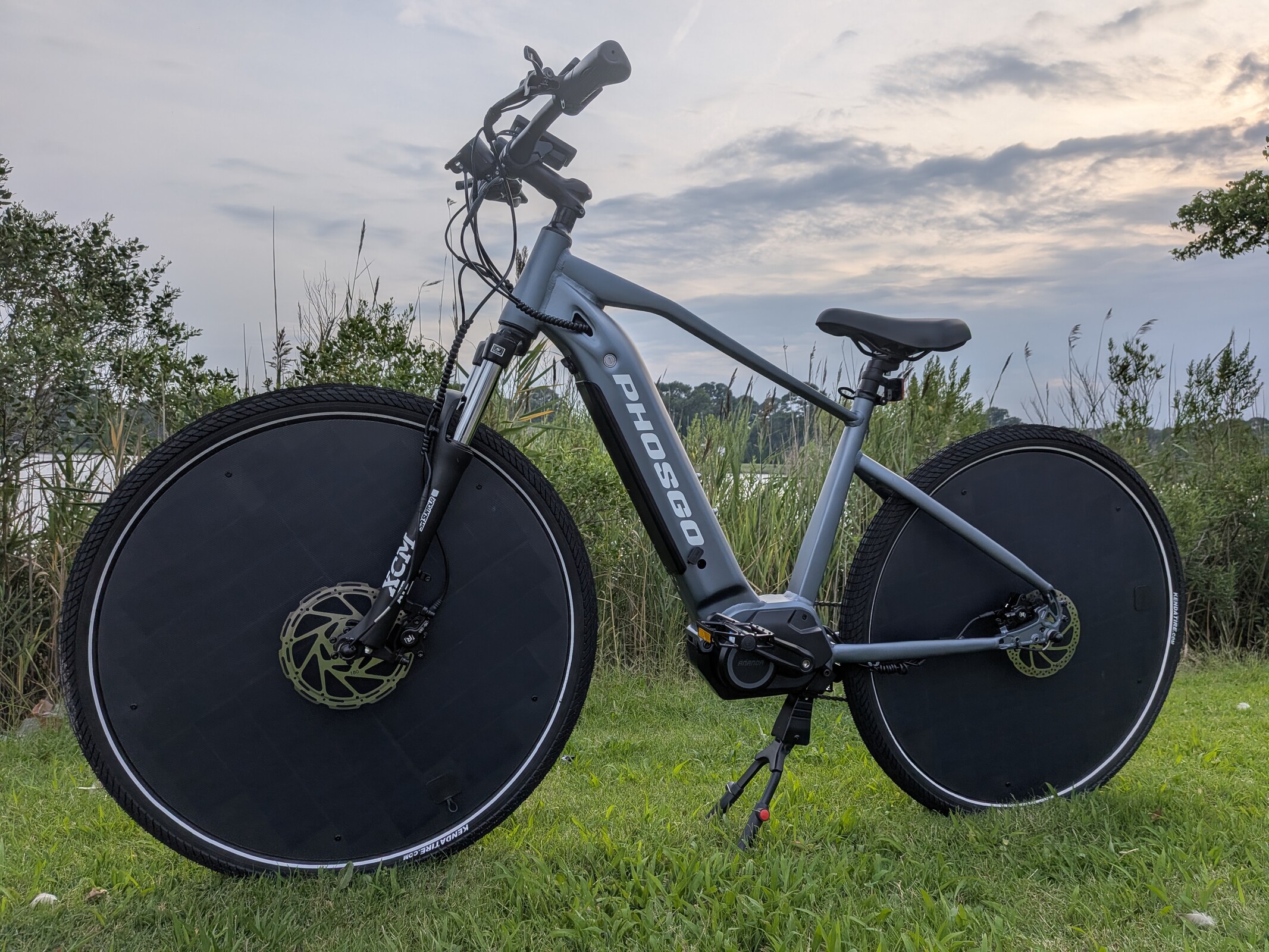
Phosgo Go 5 Ultra Solar E-Bike Review: An ambitious solar e-bike with a few quirks
Battery powered, leg powered, and solar powered!
The Phosgo Go 5 Ultra takes a unique approach to e-bike utility by integrating solar panels directly onto the wheels, aiming to provide riders with a self-charging platform.Stephen Pereyra Published 🇳🇱 🇫🇷 ...
Verdict - Ambitious solar concept in need of refinement
The Phosgo Go 5 Ultra is a welcome experiment in making electric bicycles more self-sufficient. Adding solar panels directly to the wheels offers a novel way to reclaim the standalone nature of a traditional bicycle without requiring bulky external attachments. However, the solid one-piece solar wheels create noticeable drag during turns and catch side winds easily. Pre-production build quality and power drain issues must be addressed before the final retail release. As it stands, the Go 5 Ultra is a solid concept e-bike, and if these issues are addressed, the Go 5 Ultra can set a new utilitarian precedent for e-bikes to come.
Pros
Cons
Price and availability
The Phosgo Go 5 Ultra has an official MSRP of $5,999, though promotional pricing brings the entry point down to $2,199. Pre-orders are going live over on Indiegogo. VIP pre-order deposits are also live on the official Phosgo site.
The Phosgo Go 5 Ultra e-bike is a first-of-its-kind bike that adds solar panels directly onto the wheels, aiming to provide riders with a self-charging platform. Integrated wheel solar panels offer genuine off-grid charging, but wheel drag and overnight battery drain highlight early prototype hurdles.
Specifications
| Specification | Prototype 1 (Tested Unit) | Go 5 Ultra US Production Model | ||
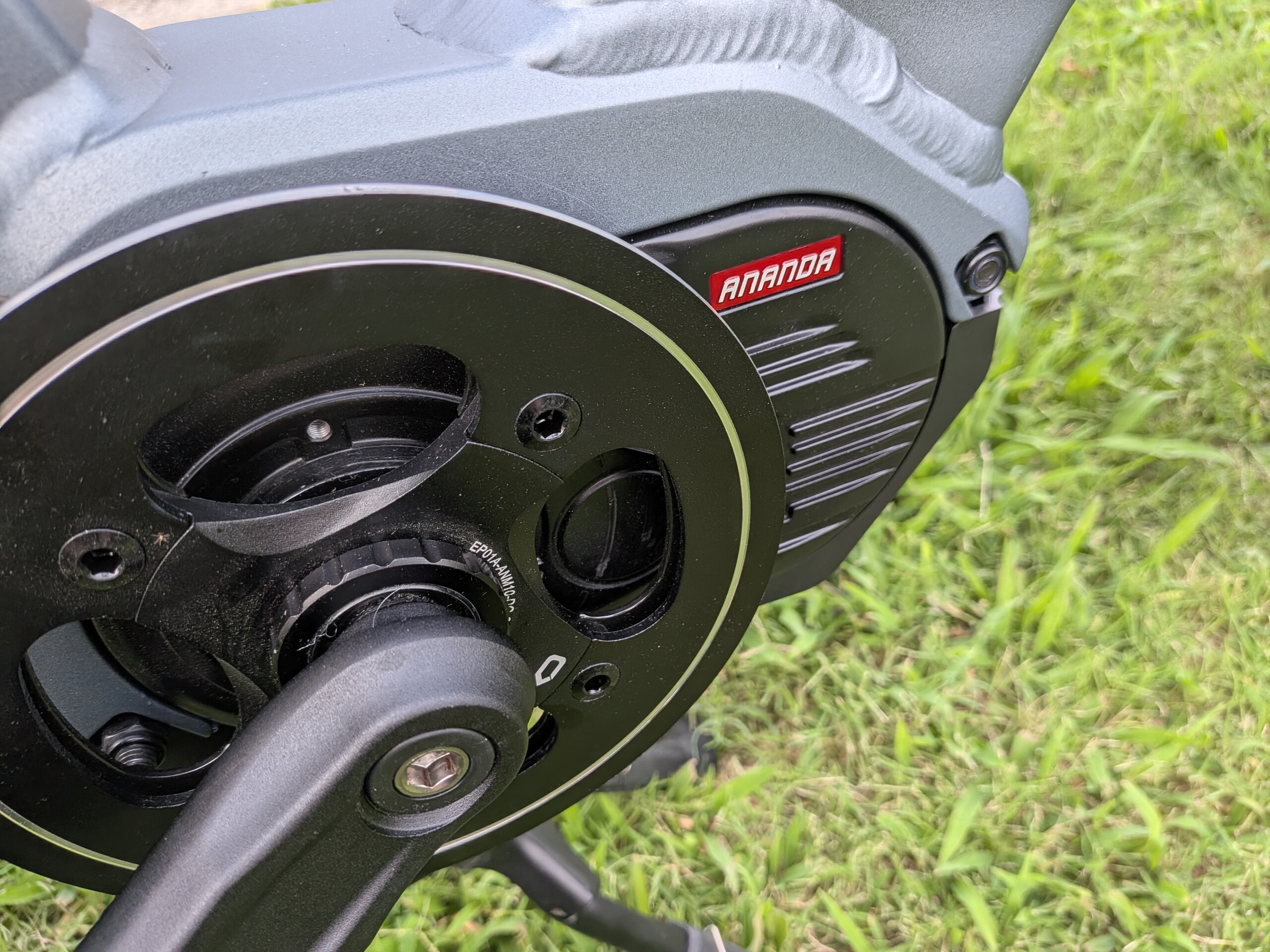
| Motor | Ananda M100 Mid-Drive (500W, 120 N·m) | Bafang M430 Mid-Drive (750W, 150 N·m) | ||
| Battery | Lisen 499 Wh | LG 720 Wh | ||
| Claimed Range | Approx. 60 miles | Approx. 90–120 miles | ||
| Top Speed | 20 mph | 28 mph | ||
| Gears | Shimano 7-Speed | Shimano 8-Speed + WHEELTOP EDS Electronic | ||
| Wheels | Spoked Wheels with Integrated Panels | Spoked Wheels with Integrated Panels | ||
| Display | Oumi M135 3.5" Center Display | Bafang DP C080 1.9" Left-Side Display | ||
| Frame & Tires | Aluminum Frame, 29" × 2.1" Tires | Aluminum Frame, 29" × 2.1" Tires | ||
| Suspension | Front Hydraulic Fork | Front Hydraulic Fork | ||
| Solar System | 200W Integrated Panels w/ MPPT Controller | 200W Integrated Panels w/ MPPT Controller |
Unboxing and assembly
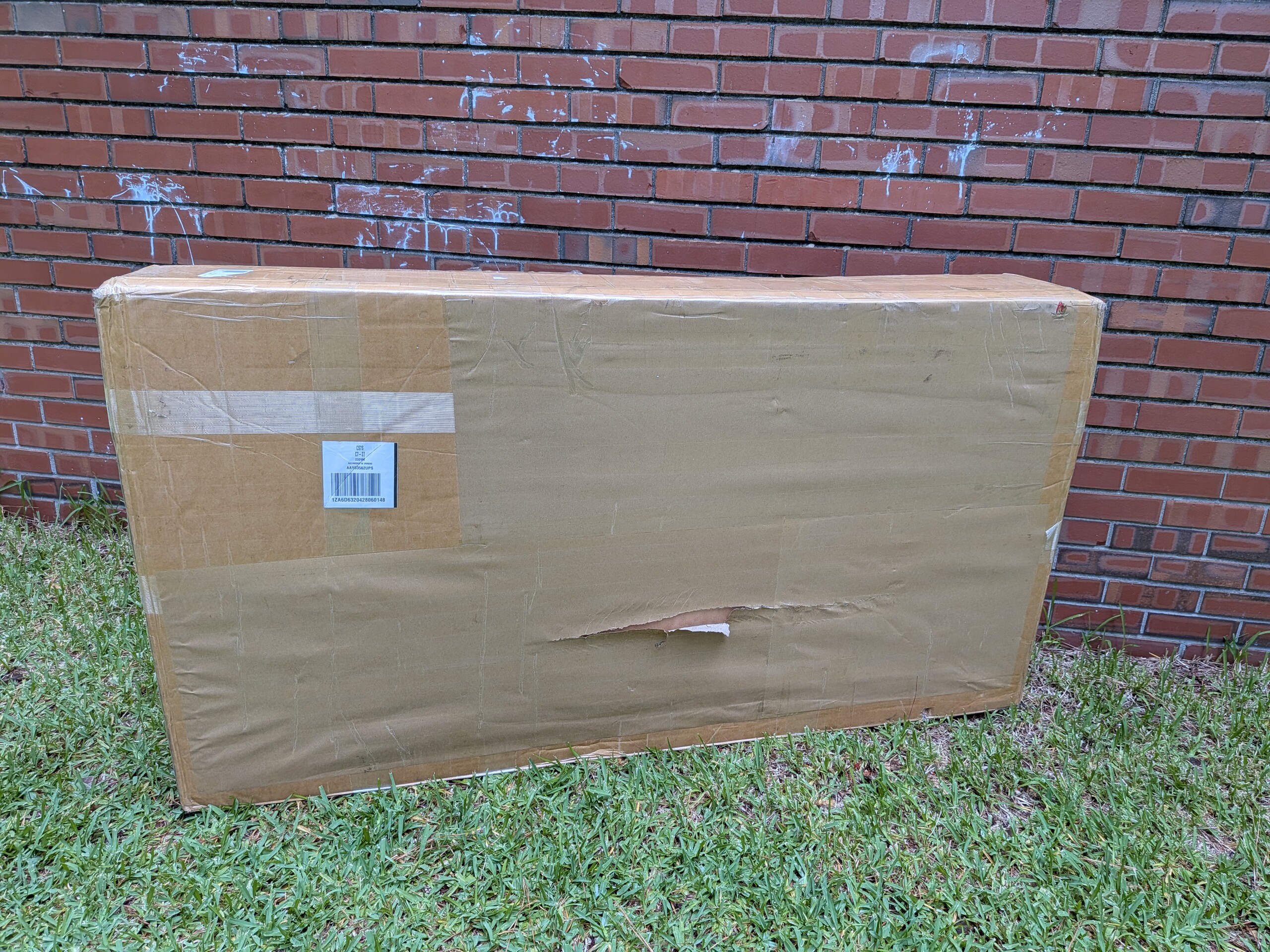
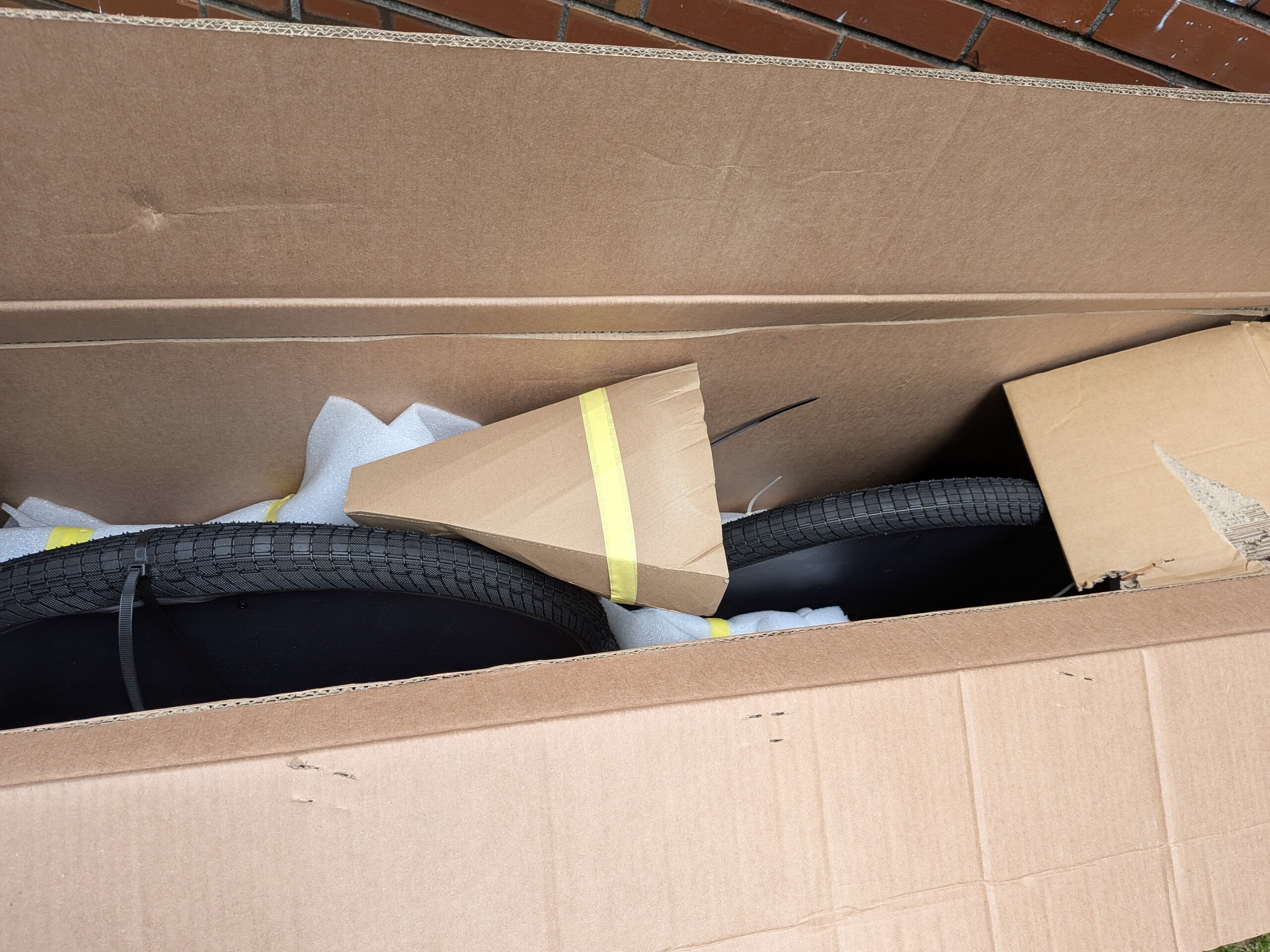
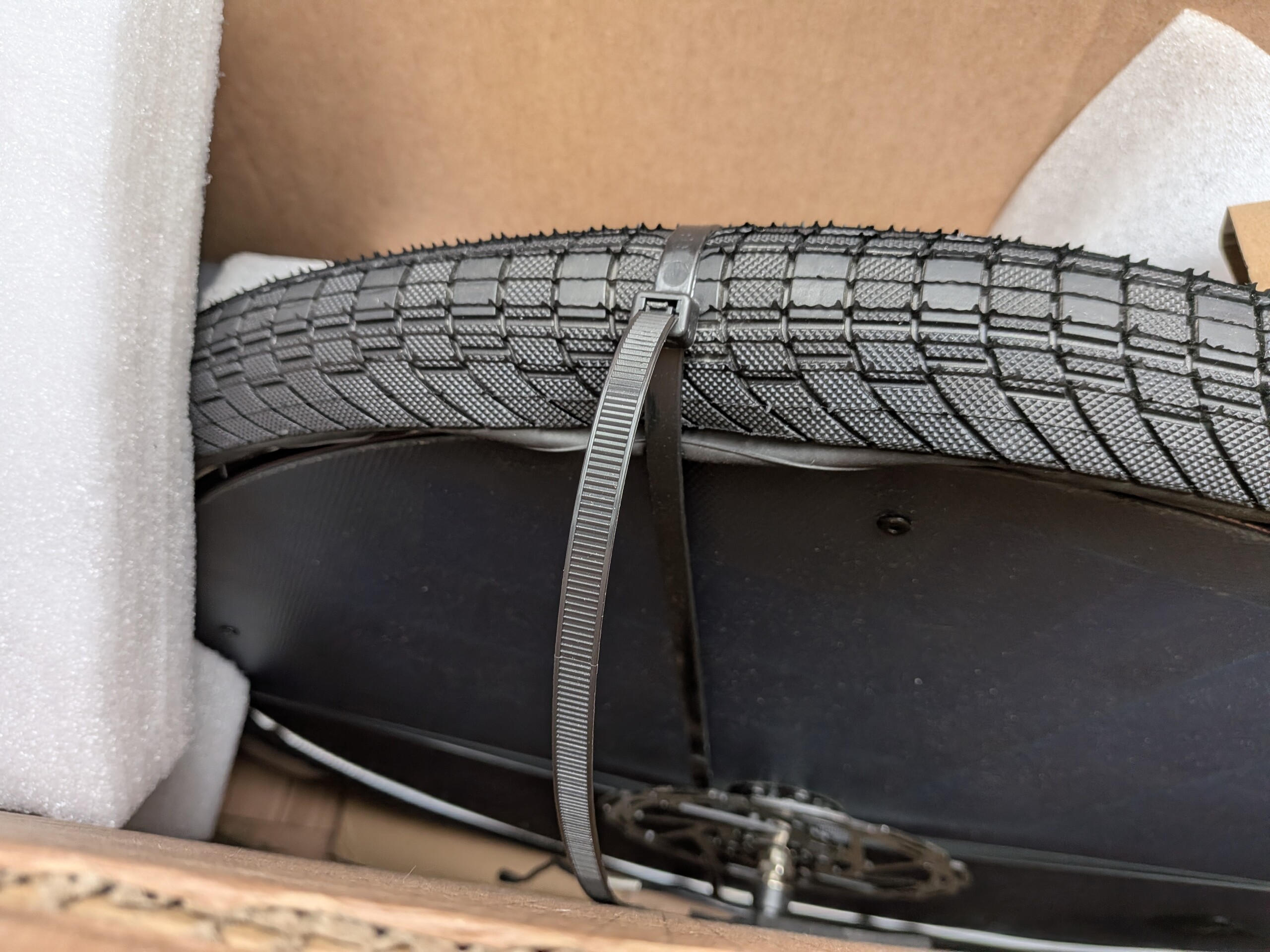
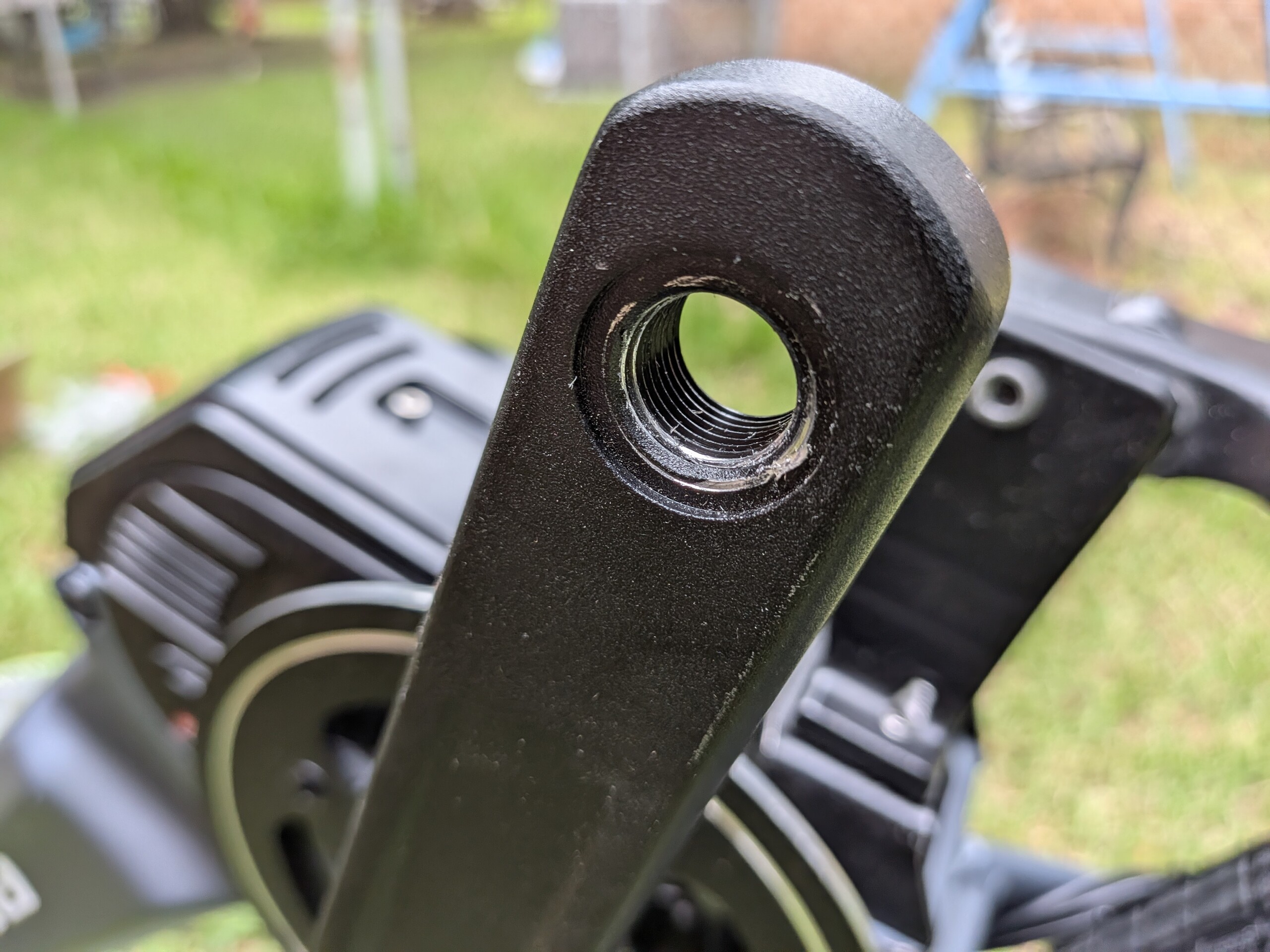
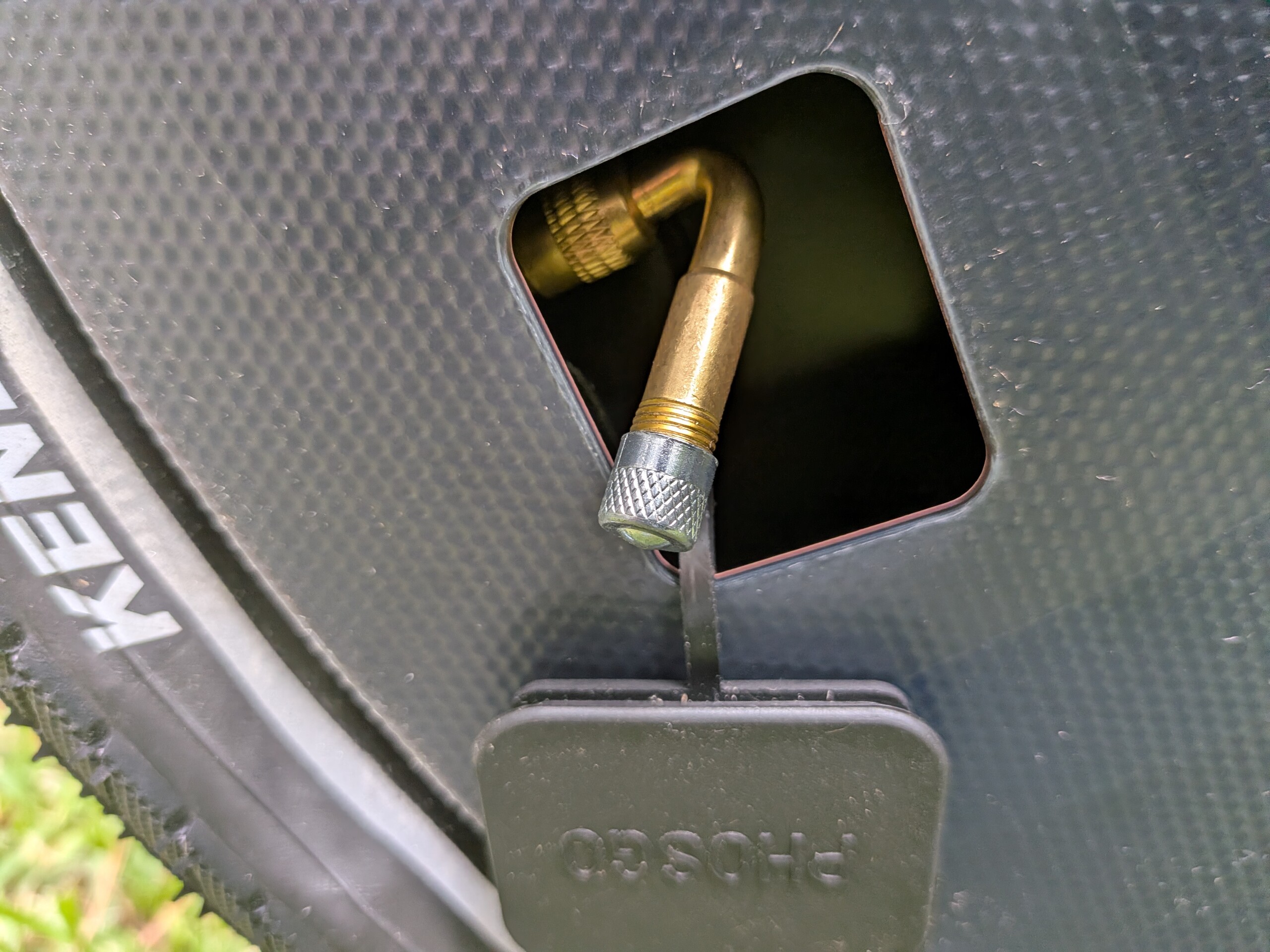
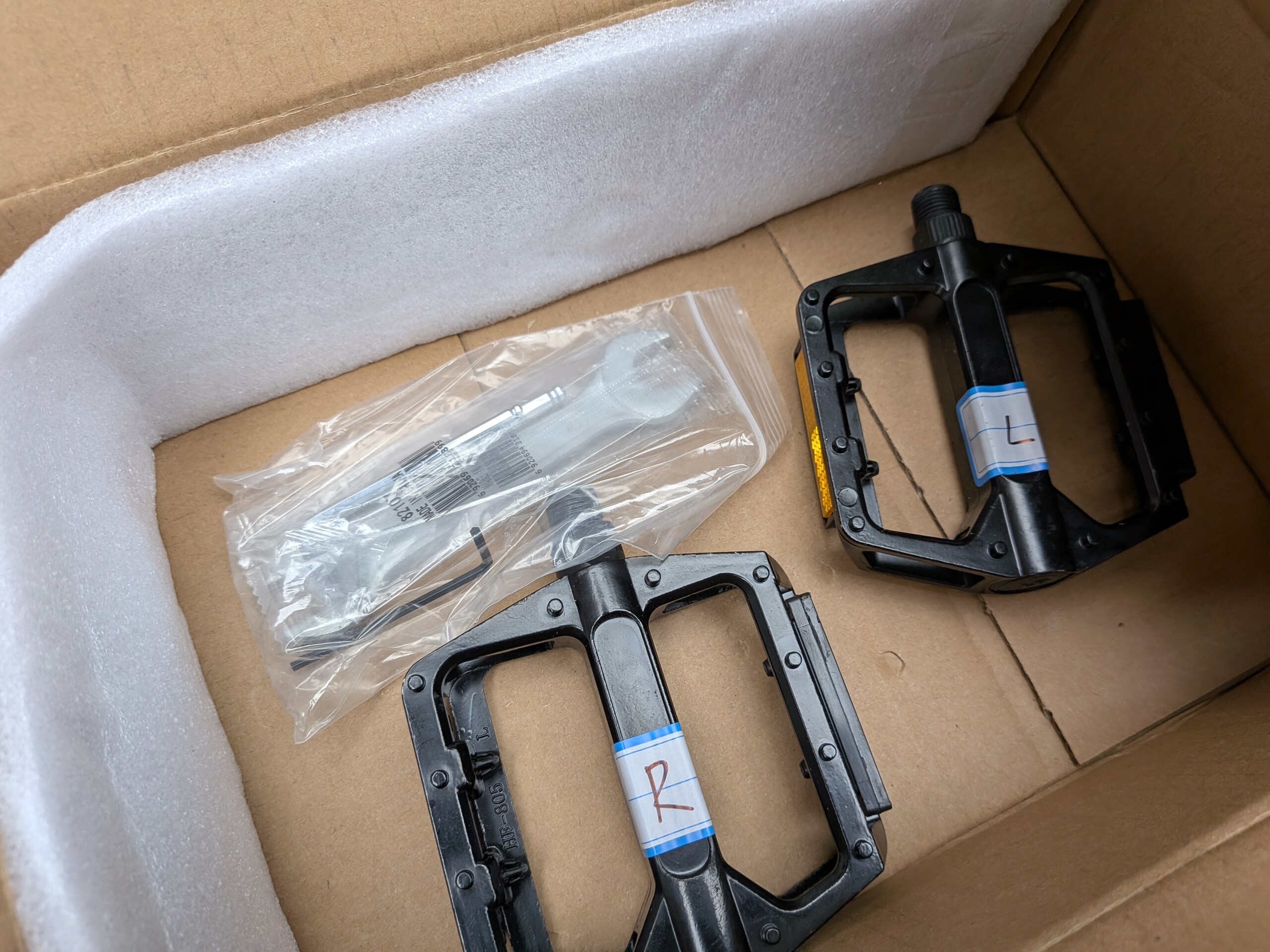
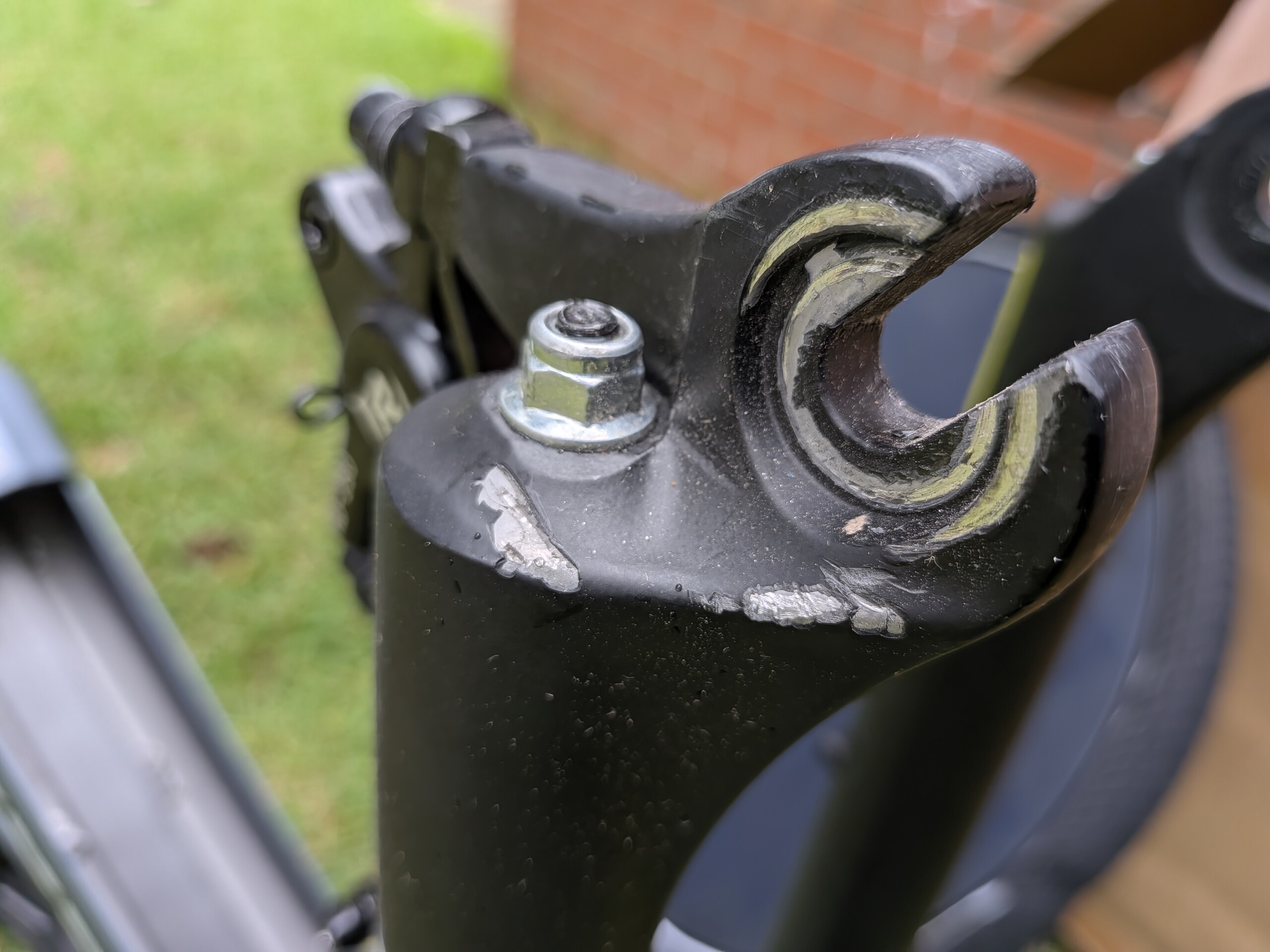
The Phosgo Go 5 Ultra non-retail prototype arrived in basic, non-retail packaging, with the battery shipping separately and arriving one day after the frame. Internal cardboard and foam padding protected the frame well during transit. However, unlike most e-bikes that ship with partially inflated tires to keep the bead seated on the rim, both 29-inch tires arrived completely uninflated. Initial setup revealed a few pre-production quality control issues right out of the box. First, because the valve stems are deeply recessed behind the solar panels, specialized Schrader valve extenders are required to attach a standard bike pump. On the test unit, one extender was not screwed in fully, causing a persistent slow leak that needed to be repaired for the tire to stay inflated. Second, the right pedal threads on the crank arm arrived cross-threaded, appearing to have suffered damage during disassembly. Threading the pedal into place required finagling and is undoubtedly structurally compromised to some extent. Otherwise, assembly remained straightforward using the included tools. From unpacking to final alignment, the build process took approximately an hour and a half.
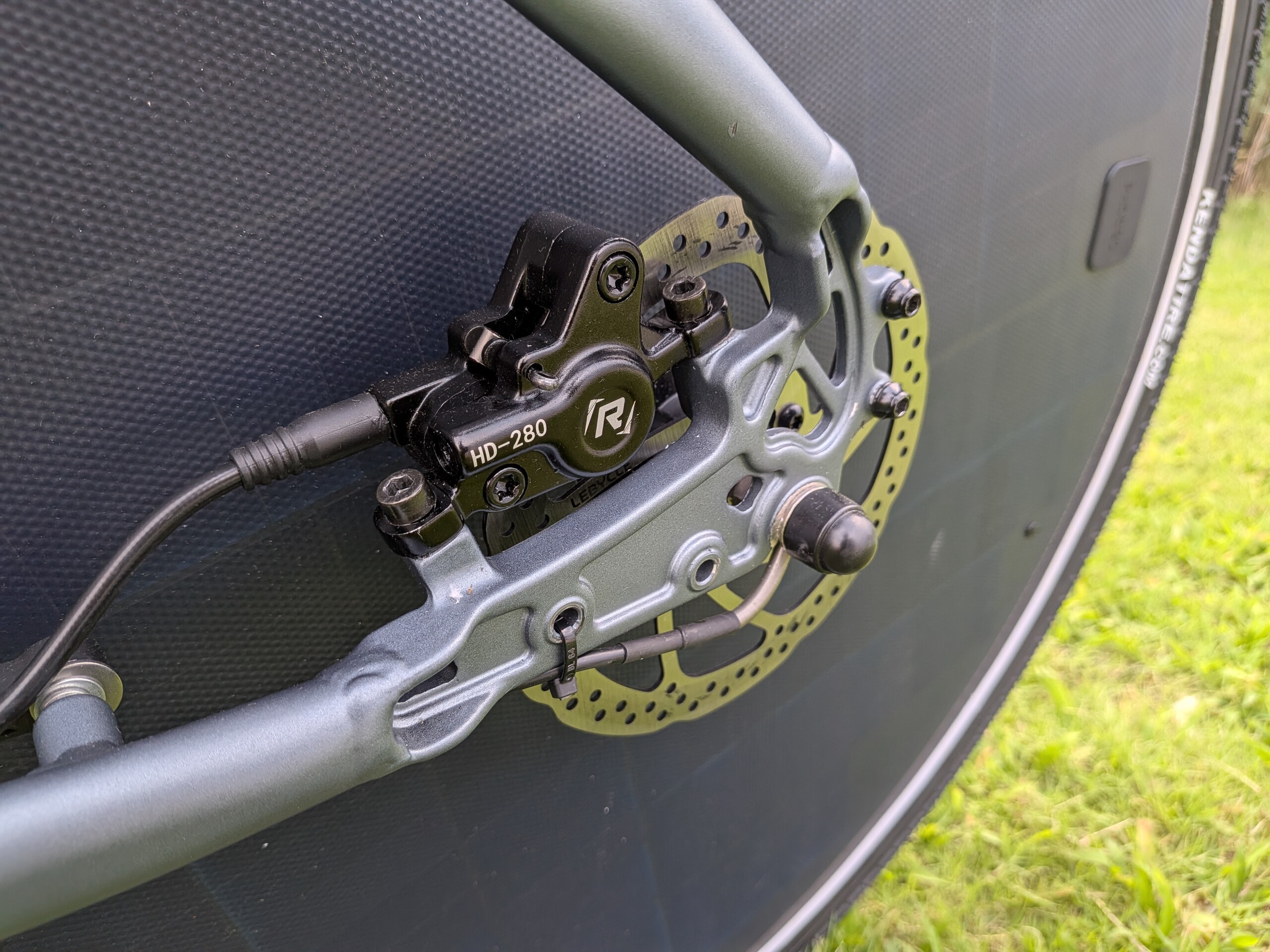
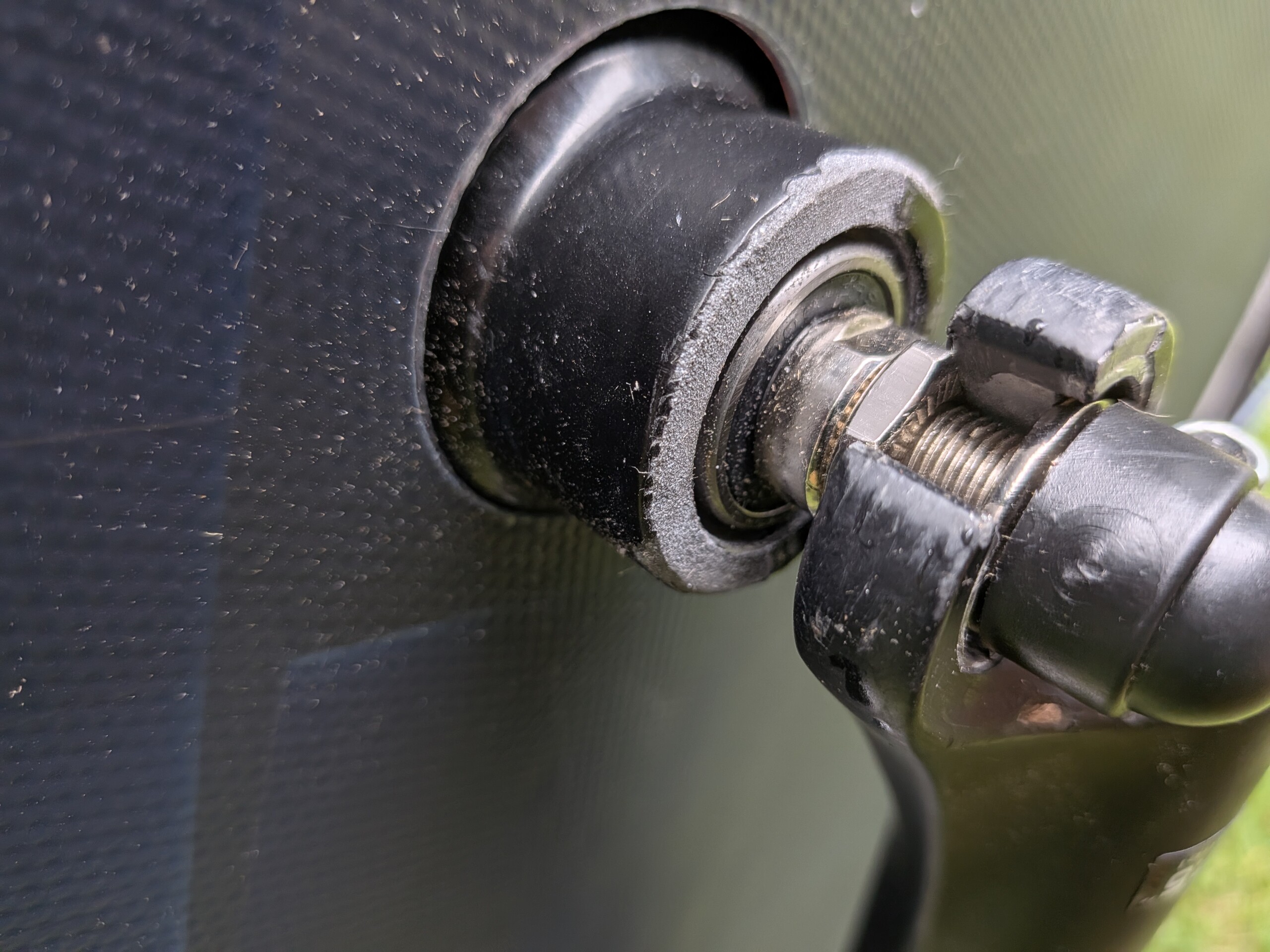
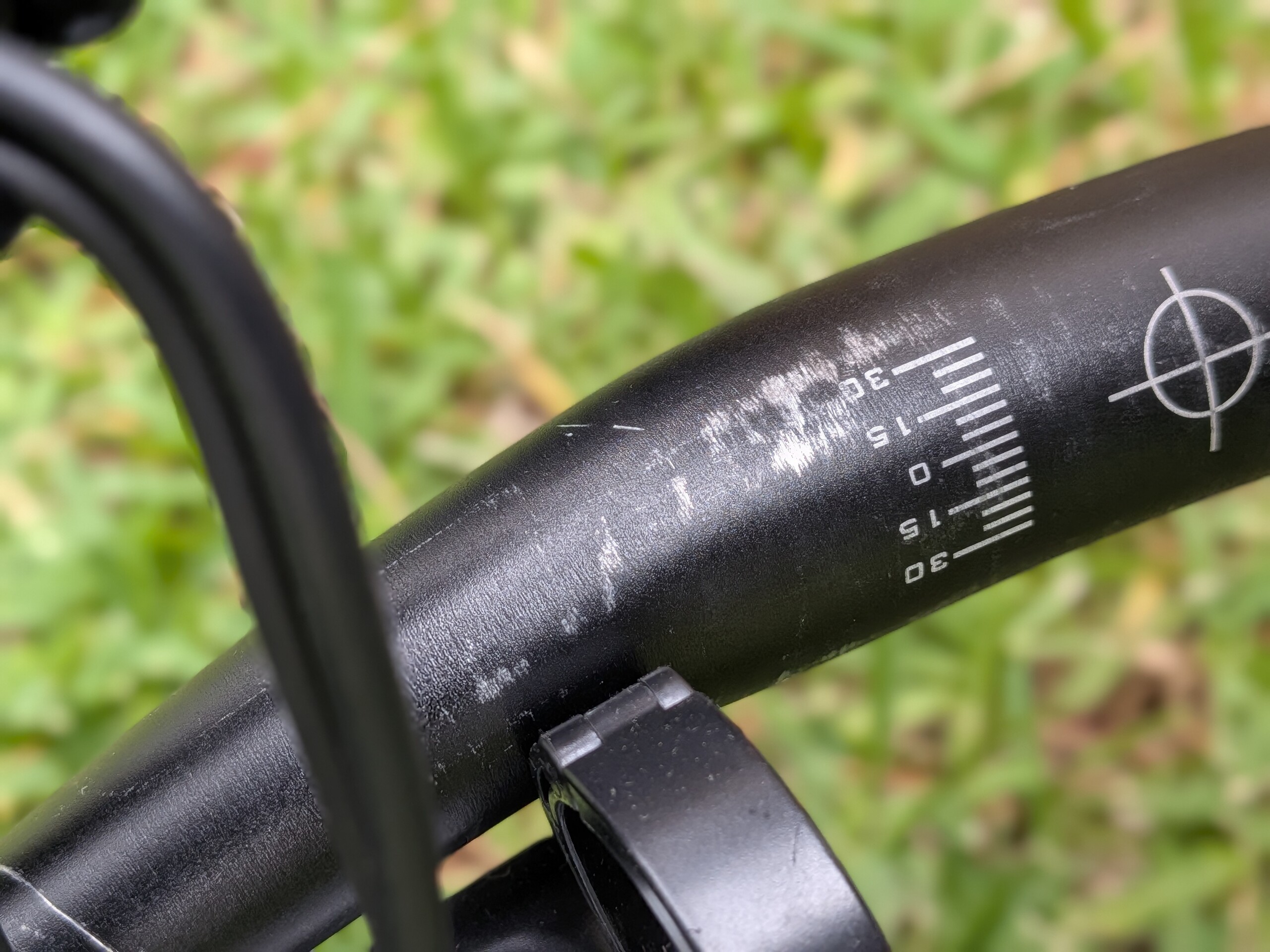
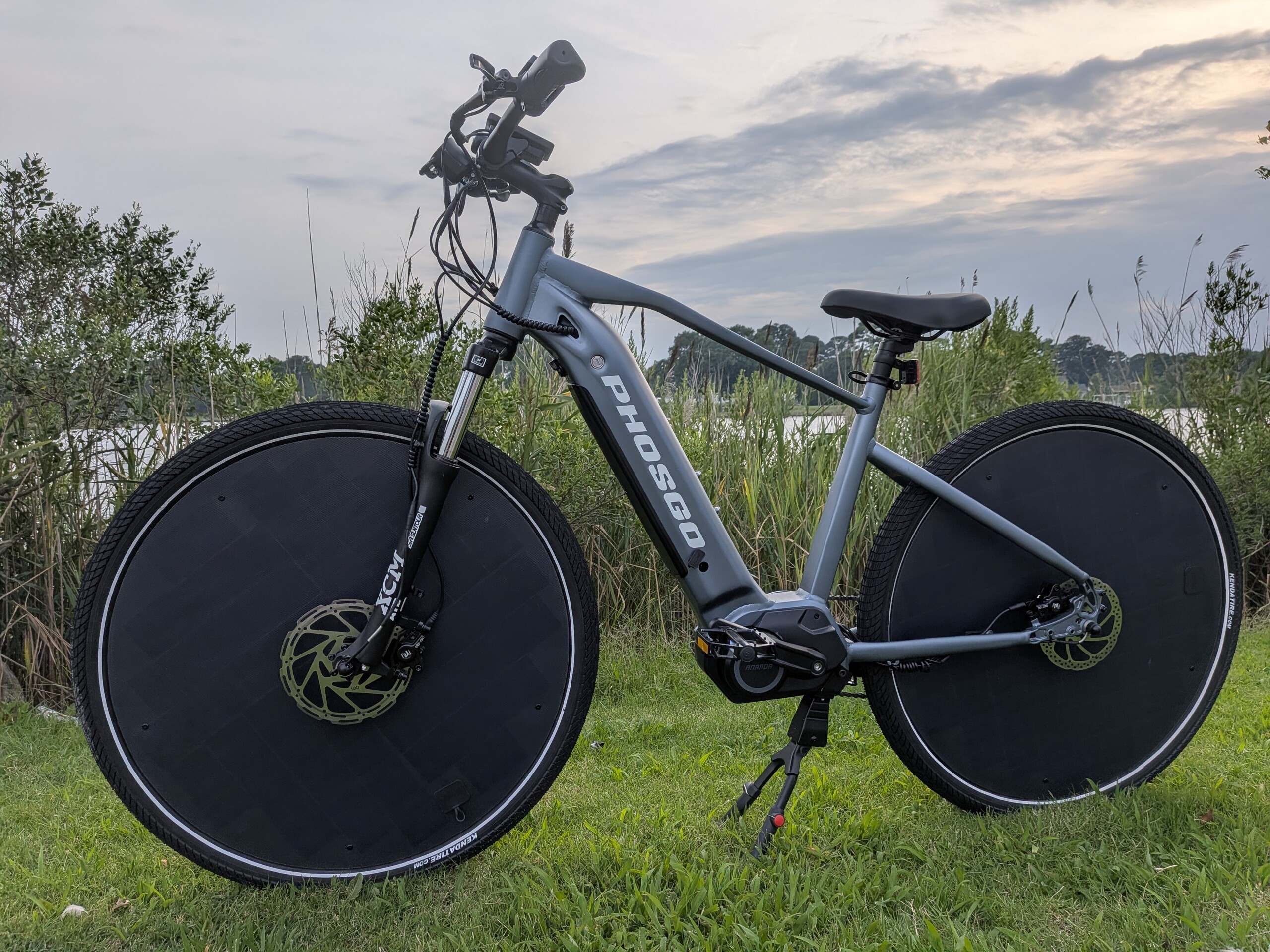
Apart from the specialized wheels, the Phosgo Go 5 Ultra feels solidly mid-range. The aluminum frame, weld finishing, and handlebar controls are simple, functional, and match the expectations of a prototype unit. The solar wheels serve as the main feature of the design, with the panels doubling as solid covers mounted over the front and rear wheels. This gives the bike a distinct visual presence on the road.
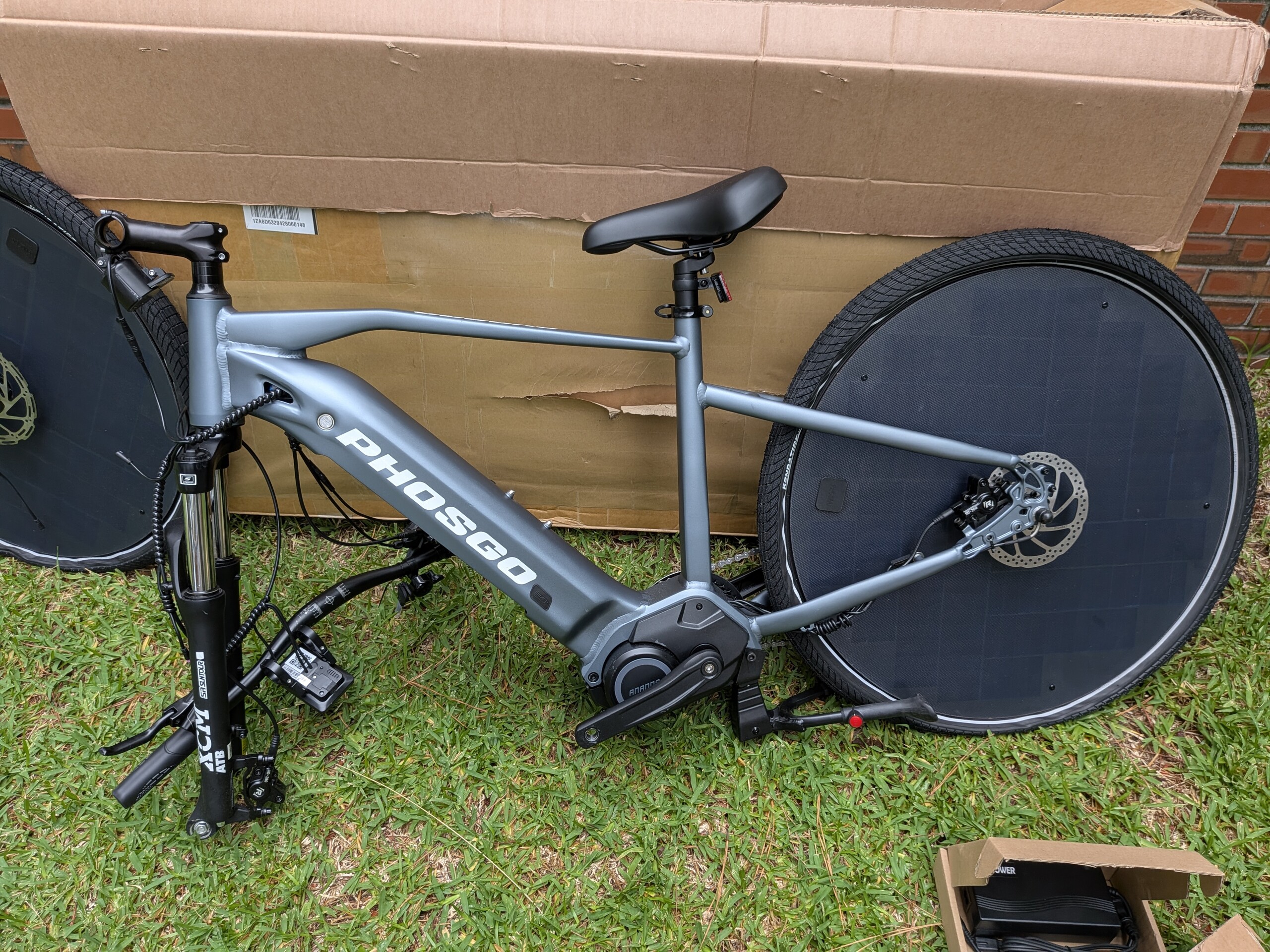
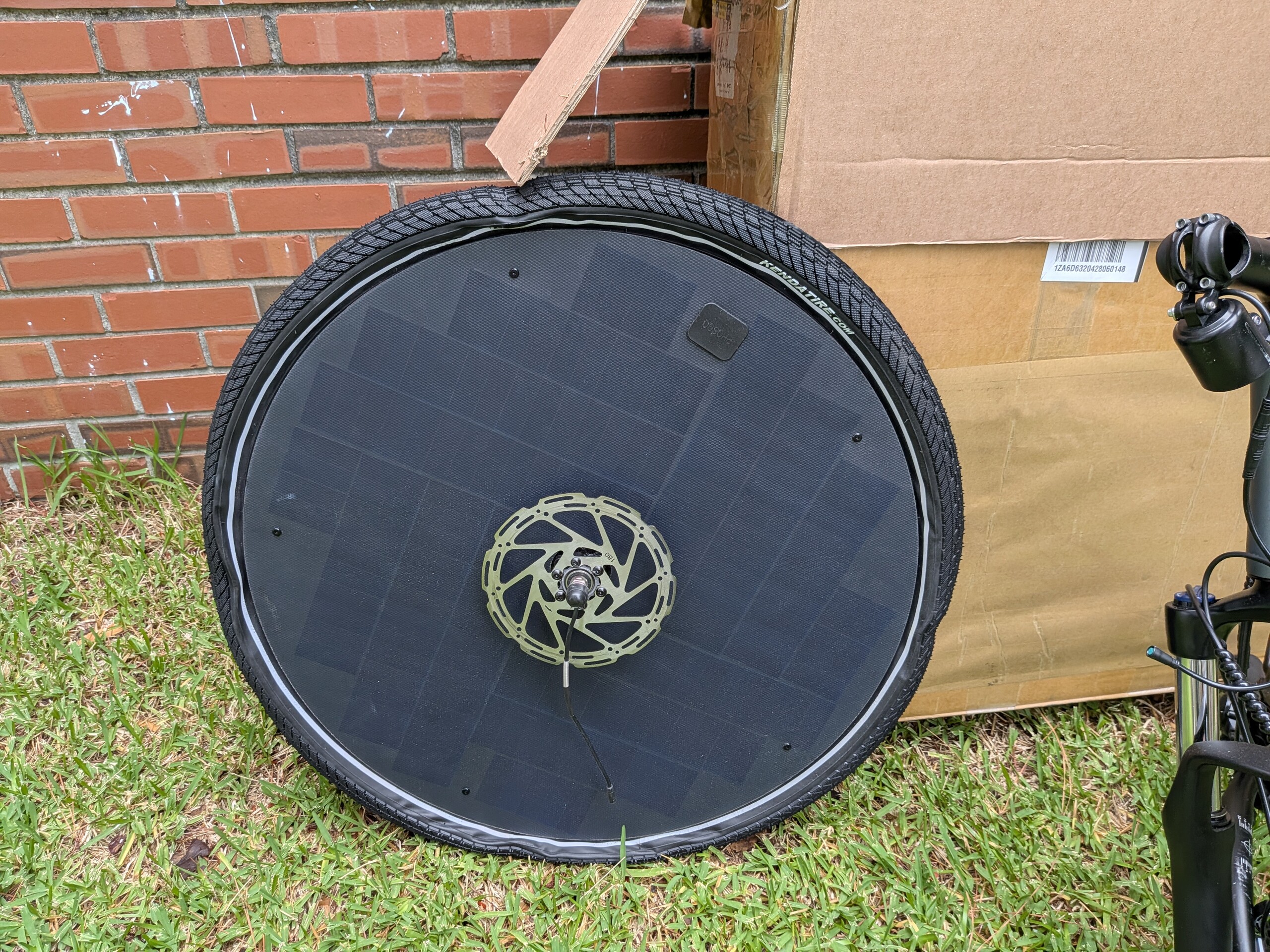
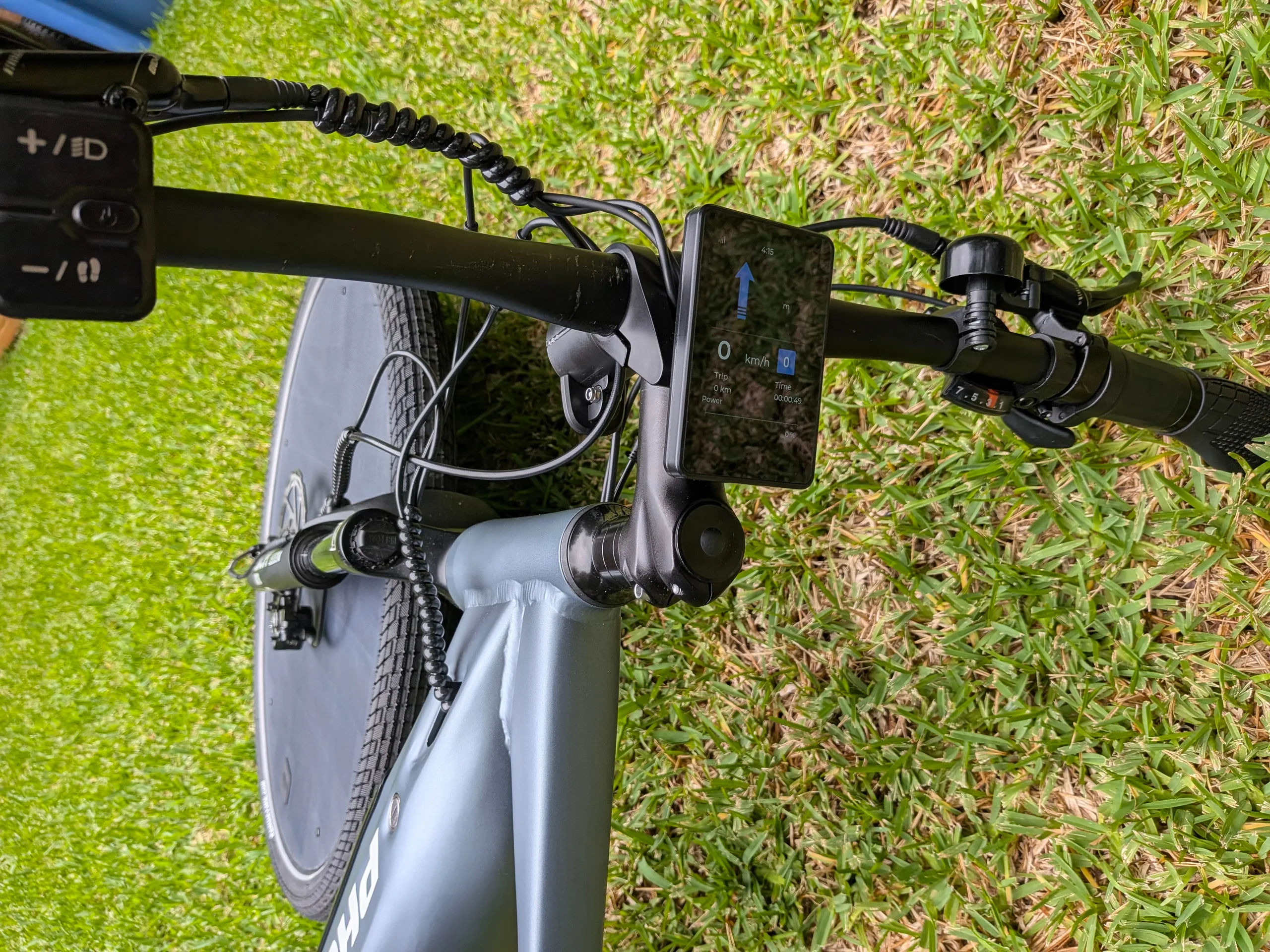
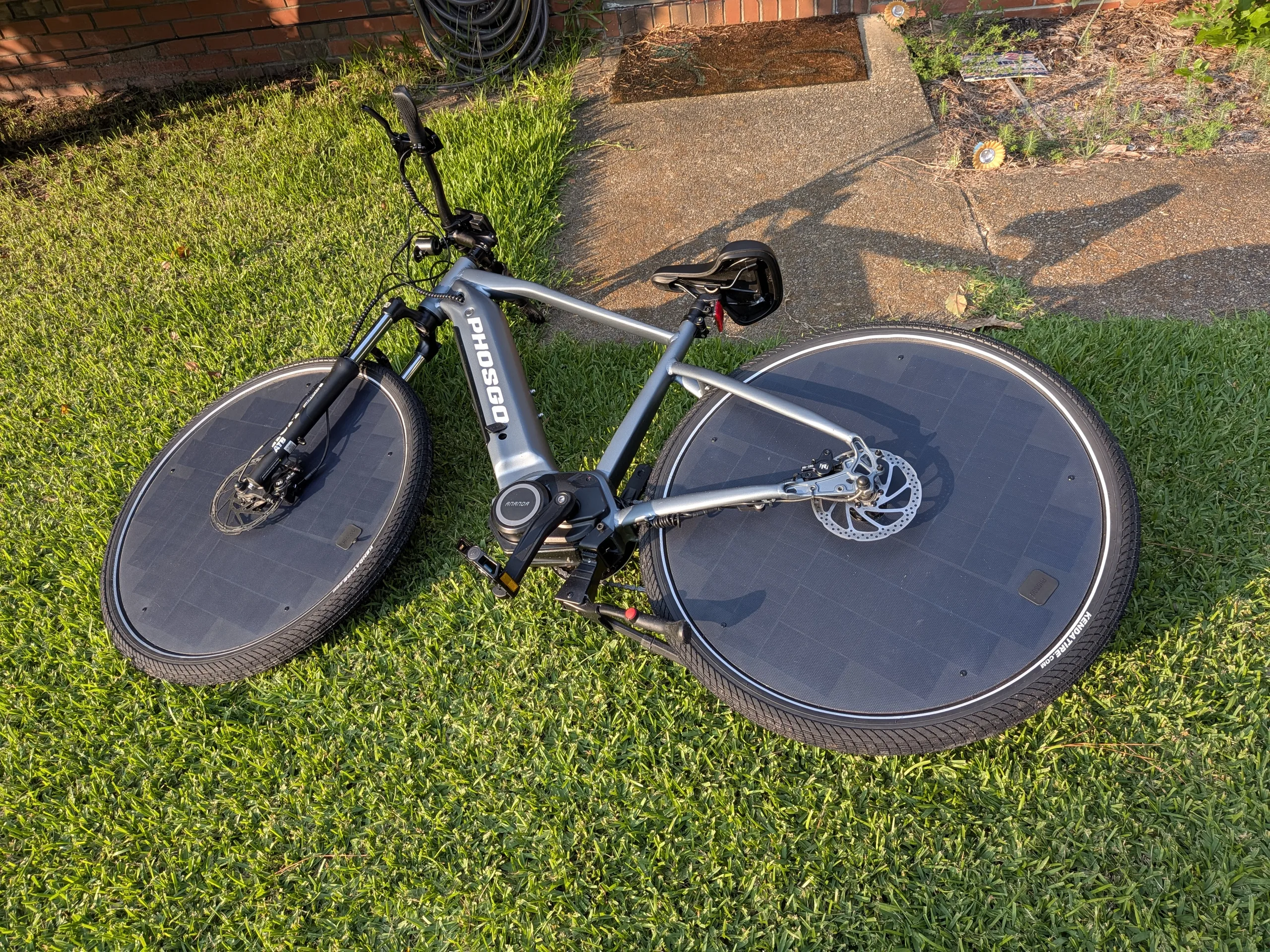
The bike also came with zero charge on the battery, which, despite not being the best for the battery itself, at least allowed us to test how long it would take the solar panels to register a charge. The bike was placed on an open lawn in direct sunlight. After approximately five minutes, the internal solar controller gathered enough power to boot the display and show a 0% battery reading. Direct multimeter testing on the front panel measured an output of 22 volts, aligning with factory specs.
HUD controls on the prototype unit center around a 3.5-inch Oumi M135 display (retail US models will transition to a more compact 1.9-inch Bafang screen on the left handlebar). It displays speed, trip distance, and battery capacity clearly without burying riding data.
Test ride
On smooth roads, the Go 5 Ultra pedals like a standard mid-drive e-bike, though riders will notice a subtle rotational drag when turning the handlebars left or right. Because the bike has mounted solar panels, the increased drag makes low-speed steering feel heavier than on a traditional setup. Crosswinds present a more noticeable handling characteristic. The solid wheel covers act like sails, and during road testing, moderate side gusts created immediate pressure against the front wheel, requiring active steering force to maintain a straight line. While the force is not enough to destabilize the bike completely, maintaining a firm two-handed grip on the handlebars remains essential during windy conditions.
Riding in wet weather highlights an immediate need for full-coverage fenders. During testing in a light rainstorm, the smooth, dish-like shape of the wheel covers collected surface water from the road. As the wheels rotated, they shot a steady stream of water straight up into the rider's face. Without aftermarket or factory fenders, operating this bike on wet pavement proves impractical and a wet affair. Additionally, there was a mysterious squeaking that increased after riding in the rain. It is likely due to this being a prototype review sample, but it should still be noted.
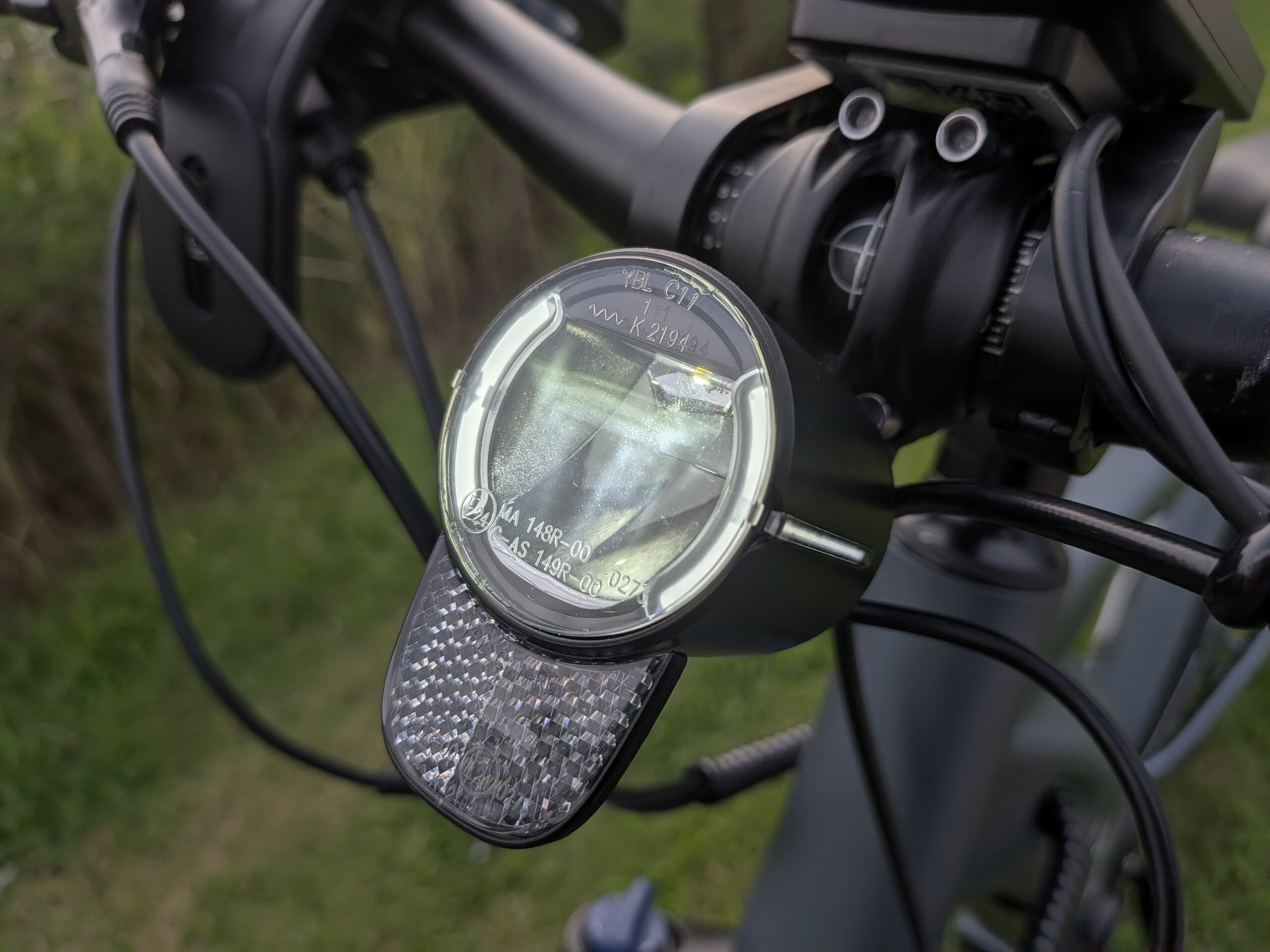
Fortunately, the remaining peripheral hardware performed reliably throughout testing. The display remains clear and legible in direct sunlight, the integrated headlight provides a clean forward beam for night riding, and the hydraulic brakes bring the bike to a nice, controlled stop. Ergonomically, the Go 5 Ultra is exceptionally well-balanced. The frame geometry and saddle position accommodate a 5'5" rider frame with natural reach and comfortable posture, standing out as one of the better ergonomic fits tested in my recent reviews. The upright seating position reduces wrist and lower-back strain during longer commutes.
Battery and solar performance
Unsurprisingly, power management exhibits pre-production limitations on this prototype build. Most notably, the bike suffers from an idle power draw while parked. After reaching a full charge with the dedicated wall charger(which took a little over 3 hours) and sitting powered off overnight, the battery capacity dropped by nearly 5% by the following morning. This standby drain requires immediate attention, hopefully with a firmware update to prevent unnecessary battery depletion during storage.
Under active motor assistance, power consumption remained relatively high. Utilizing the Ananda M100 motor on its highest assist setting burned approximately 5% of the battery every two miles, resulting in a practical range of roughly 40 miles on the 499 Wh prototype battery. Lowering the assist to its minimum setting reduced consumption to roughly 2% every two miles, extending the theoretical range closer to 100 miles. The planned upgrade to a 720 Wh battery on the US production model will be necessary even to come close to the 120-mile range claim.
Regarding solar performance, the integrated wheel panels function as intended, though riders should expect realistic charge rates. In direct sunlight, the system acts as a steady trickle charger while the bike is parked outdoors, gradually adding capacity throughout the day. It functions effectively as a supplemental battery maintainer rather than a main power source for long-term charging. In testing, this also proved to be the case as the panels only charged the bike a minimal 1 percent over the course of 3 hours due to fluctuations in lighting from clouds and the sun moving. For a 200 Watt system, this is functioning well below the estimated charge rate of approximately 5 percent every 8 minutes for a 499 mAh battery. However, like most things solar, the ideal conditions are rarely the case.
Additionally, while the panels are rated for 200 Watts, there will rarely be a time when both sides of the panel will be exposed to enough sunlight to reach maximum power output. This practical observation already cuts the operational wattage by half. So while positioning the bike for better sunlight might be easier with a double-sided panel, a realistic wattage output is somewhere in the double-digit range, which will bring down charging times.
Conclusion
The Phosgo Go 5 Ultra demonstrates that wheel-integrated solar charging is a viable power solution capable of topping off an e-bike battery directly from sunlight. Combined with ergonomic frame geometry and smooth mid-drive motor assistance, it provides a strong foundation for an off-grid commuter. However, the crosswind sensitivity of the solar wheels, the absence of fenders, and the overnight idle power drain indicate that Phosgo has issues to tackle before shipping retail units. Once the standby discharge issues are resolved and the design transitions to production specs, the Go 5 Ultra has the potential to evolve from an experimental prototype into a functional, albeit expensive, daily e-bike, provided riders keep realistic solar panel performance and charging capabilities in mind.
PHOSGO Go 5 Ultra - Ride the sun!
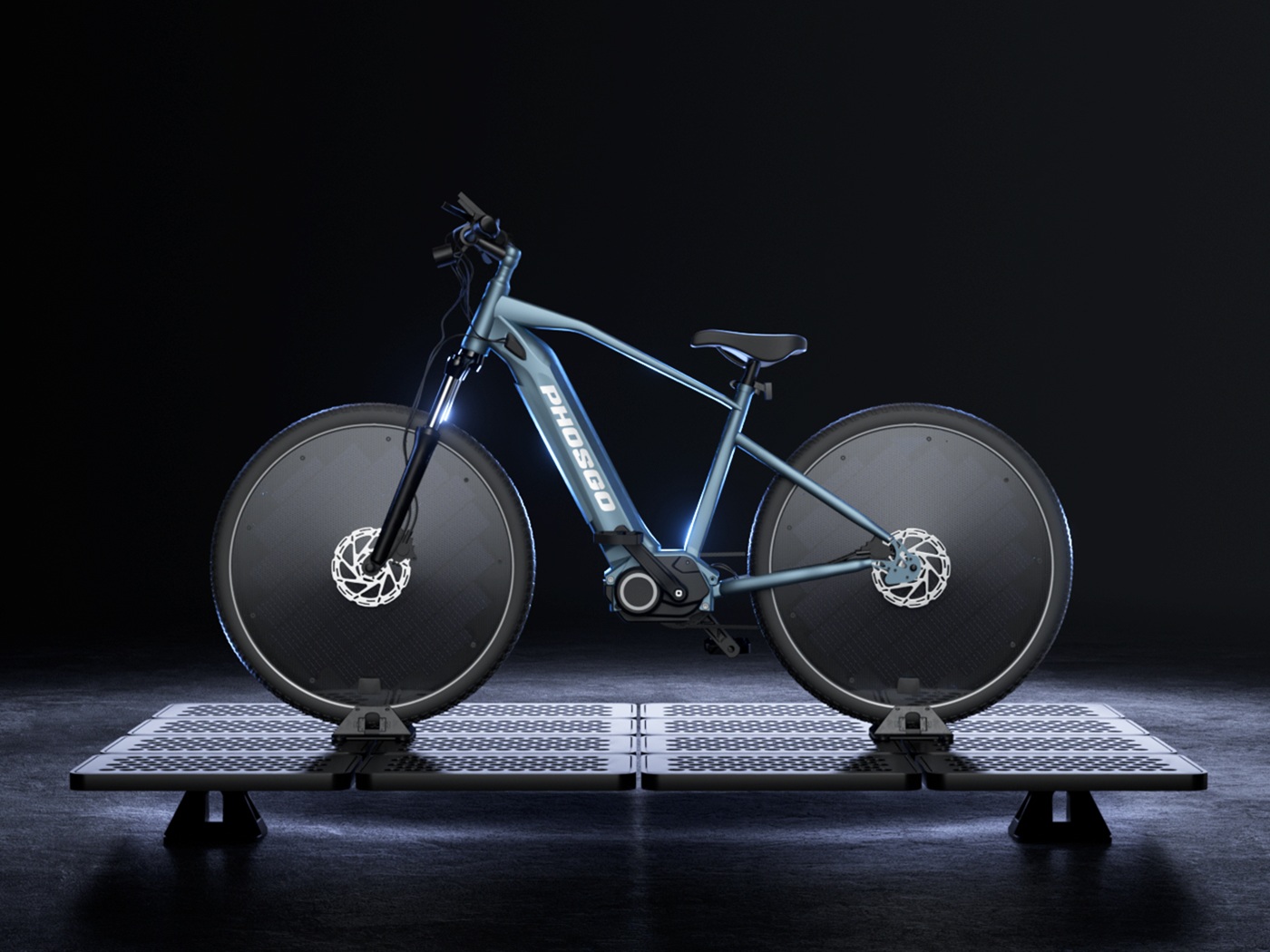
The e-bike market takes a major step toward sustainability with the upcoming PHOSGO Go 5 Ultra. Billed as the world's first solar e-bike, it integrates 200W solar panels directly into the wheels, passively recharging in motion or while parked. For daily commuters, this dual-mode system enables up to a month of plug-free riding. Off-grid enthusiasts can stretch a single charge to 140 miles. Featuring a robust 750W Bafang mid-drive motor and 24/7 smart GPS security, it offers a compelling glimpse into the future of micro-mobility.
The PHOSGO is launching on Indiegogo in August; subscribe to the project and pay the deposit today on Phosgo.com to secure the best price and save up to $1800.
Transparency
The selection of devices to be reviewed is made by our editorial team. The test sample was given to the author by the manufacturer free of charge for the purposes of review. There was no third-party influence on this review, nor did the manufacturer receive a copy of this review before publication. There was no obligation to publish this review. As an independent media company, Notebookcheck is not subjected to the authority of manufacturers, retailers or publishers.
 Add as a preferred source on Google


