




OrcSDR: Why folks no longer need a $650 SDR
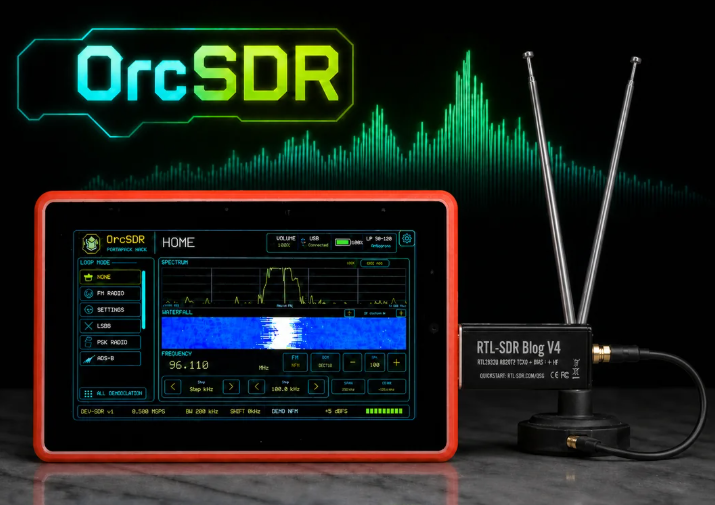
The OrcSDR project centers on the M5Stack Tab5, a battery-powered handheld tablet powered by a dual-core RISC-V ESP32-P4 processor. By plugging an RTL-SDR directly into the Tab5's USB host port, the ESP32 handles the heavy lifting: it processes the raw digital radio stream, demodulates audio, and renders a live, touch-responsive spectrum and waterfall display on a 5-inch color screen without a PC.
For field deployments, OrcSDR bridges the wide pricing gap between inexpensive computer dongles and dedicated $650 commercial digital scanners like the Uniden SDS100. Field technicians, search-and-rescue volunteers, and radio hobbyists gain an all-in-one scanner for quick site surveys and more. For example, the handheld can track overhead aircraft transponders via live ADS-B decoders, verify off-grid Meshtastic and LoRa packet coverage, audit local 2.4 GHz Wi-Fi congestion, and tune into unencrypted P25 digital emergency radio transmissions.
Because the project is distributed as a pre-compiled flash image via the browser-based M5Burner tool, users can deploy the software in minutes without compiling source code. By combining a cheap USB tuner with modern SoCs, OrcSDR proves that practical, pocket-sized RF intelligence tools no longer require expensive commercial hardware or a laptop to get up and running. For those interested in building their own OrcSDR, project details are available at the link below.
Source(s)
 Add as a preferred source on Google


No comments for this article
