




No door threshold can stop this flagship robot vacuum: Roborock Saros 20 review
Climbing Max.
The Saros 20 is the new flagship robot vacuum cleaner 2026 from Roborock. The successor to the Saros 10R comes with a number of improvements, including the ability to overcome obstacles up to 8.8 cm high. How well it vacuums and mops are just some of the criteria in our Roborock Saros 20 test.Marcus Schwarten (translated by DeepL / Marcus Schwarten) Published 🇩🇪 🇫🇷 ...
Roborock Saros 20 test conclusion: No innovation, but various improvements
The new Saros 20 from Roborock doesn't come up with any really exciting innovations. It is more of a moderate further development of the Saros 10R from 2025 with a few improvements. The new model vacuums more powerfully, climbs higher and can also do a few other things better than its predecessor.
One of the impressive features in the test was the climbing function, thanks to which the robot vacuum cleaner can overcome obstacles up to 8.8 cm high, but only in two steps of 4.5 and 4.3 cm. Thanks to the StarSight System 2.0, it is also ultra-flat at less than 8 cm, which benefits cleaning under furniture. The Saros 20's obstacle detection was reliable in the test and its cleaning performance was good.

Overall, Roborock does a lot of things right with its new flagship and leaves a very good impression, without, however, triggering any great enthusiasm with new innovations. If you already have the Saros 10/10R and are satisfied with it, we don't think you need to upgrade. However, if you are looking for a new vacuum and mopping robot with excellent features and focus more on vacuuming and less on mopping, you won't go far wrong with the Roborock Saros 20 - but you can also find exciting alternatives from the competition for the same price.
Pros
Cons
Price and availability
The Roborock Saros 20 is not yet available in the USA. In Europe, the recommended retail price is 1,499 euros, whereby it starts starts with a discount and gift. It is available, for example, from Amazon and directly from Roborock.
The Saros 20X is also available exclusively from MediaMarkt for 1,489 euros RRP (initially also cheaper). We explain the differences below in our Roborock Saros 20 review.
Table of Contents
- Roborock Saros 20 test conclusion: No innovation, but various improvements
- Features: Robot vacuum cleaner overcomes steps up to 8.8 cm high
- Setup and app: Good as usual
- Navigation and obstacle detection: almost perfect
- Cleaning performance: Cleans more thoroughly than many others
- Battery life and power consumption: Average
At the CES 2026, Roborock presented its new flagship vacuum robots from the Saros 20 series alongside various other innovations. This consists of the Saros 20 Sonic with vibrating mop, which is not yet available, and the Saros 20 with two rotating mops tested here. The Saros 20 is therefore the successor to the Saros 10R from last year, while the Saros 20 Sonic is based on the Saros 10 follows on from the Saros 10.
To add to the confusion, Roborock also offers the Saros 20 in different versions: Saros 20 Set and Saros 20X. Our Roborock Saros 20 test reveals how they differ, what new features the flagship model offers and whether it's worth buying.
Data sheet Roborock Saros 20 & comparison with Saros 10R
| Feature/Model | Roborock Saros 20 (2026) | Roborock Saros 10R (2025) |
|---|---|---|
| Navigation | StarSight System 2.0 | StarSight System 2.0 |
| Obstacle detection | StarSight System 2.0 | StarSight System 2.0 |
| Suction power | 36,000 Pa | 20,000 Pa |
| Anti-hair entanglement | yes | yes |
| Extendable/liftable side brush | yes/no | yes/yes |
| Mop technology | 2 mops | 2 mops |
| Extendable/liftable | yes/yes/yes | yes/yes/yes |
| battery | 6.400 mAh | 6,400 mAh |
| Height of the robot | 7.95 cm | 7.98 cm |
| Obstacle clearance | 8.8 cm (4.5 + 4.3 cm) | 4 cm |
| Suction station | yes | yes |
| Mop washing | 100°C | 80°C |
| Mop drying | 55°C | 55°C |
| Detergent | yes | yes |
| Voice assistant | yes | yes |
| Live video | yes | yes |
| Matter | yes | yes |
| Color | Black | Black |
| MSRP | 1,499 euros | 1,449.99 euros |
| available at | Amazon | Amazon |
Features: Robot vacuum cleaner overcomes steps up to 8.8 cm high
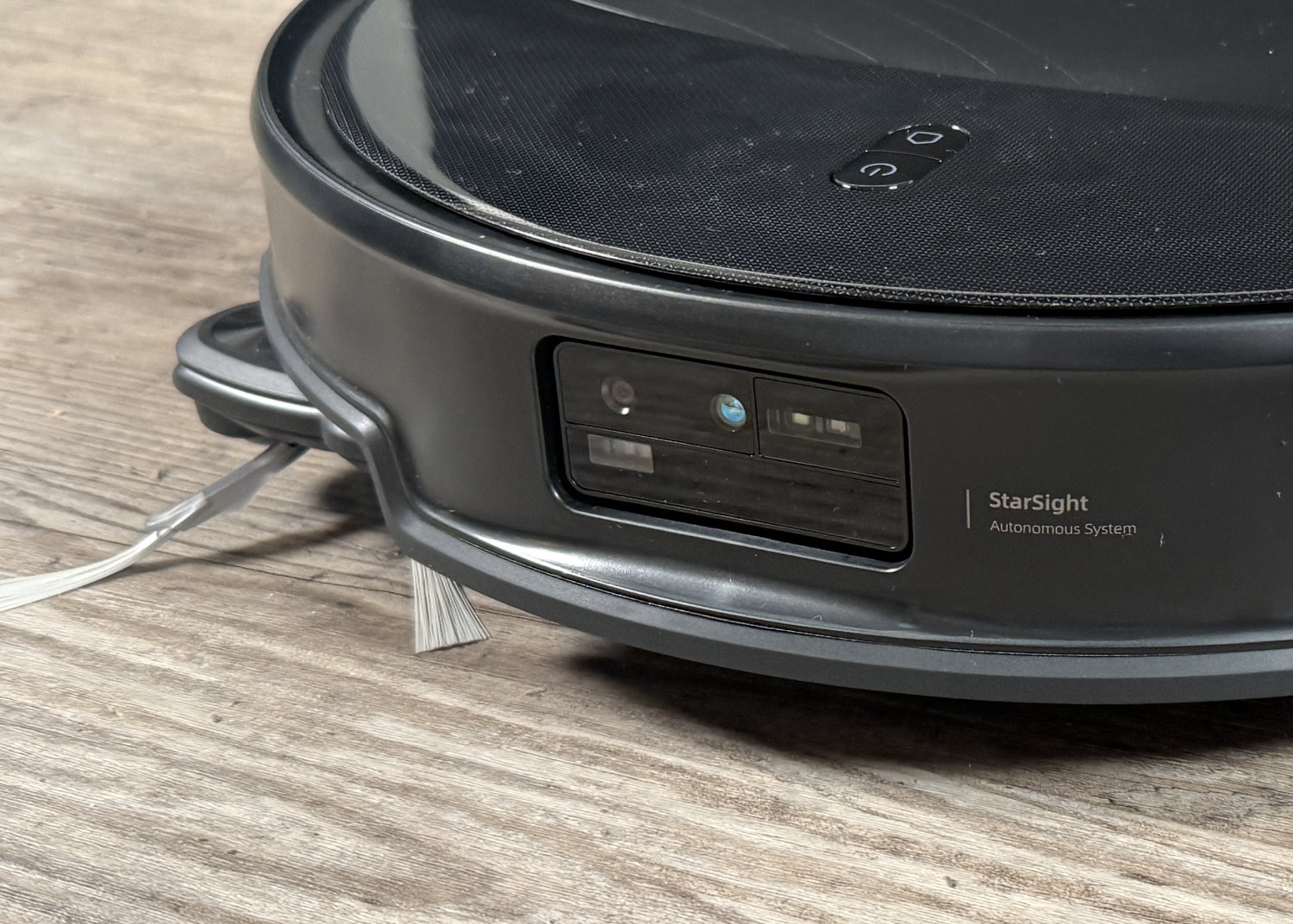
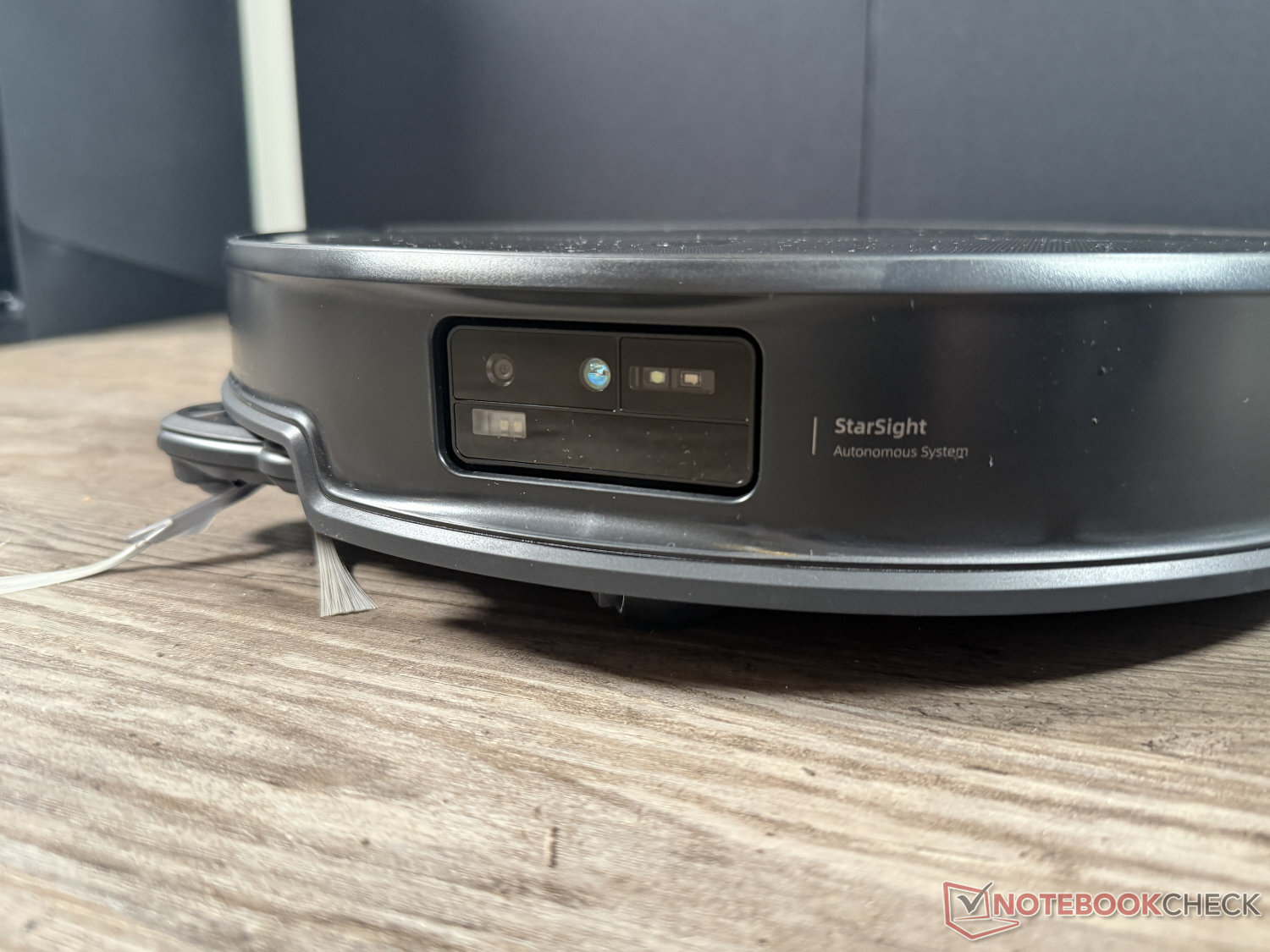
Let's start our Roborock Saros 20 review in a relaxed manner and first take a look at the features of the new model and thus also at the differences to its predecessor Saros 10R. Both rely on the StarSight System 2.0, thanks to which the robot manages completely without a laser tower. This results in an ultra-flat design of just 7.95 mm, which is virtually identical to its predecessor and is generally good for cleaning under furniture.
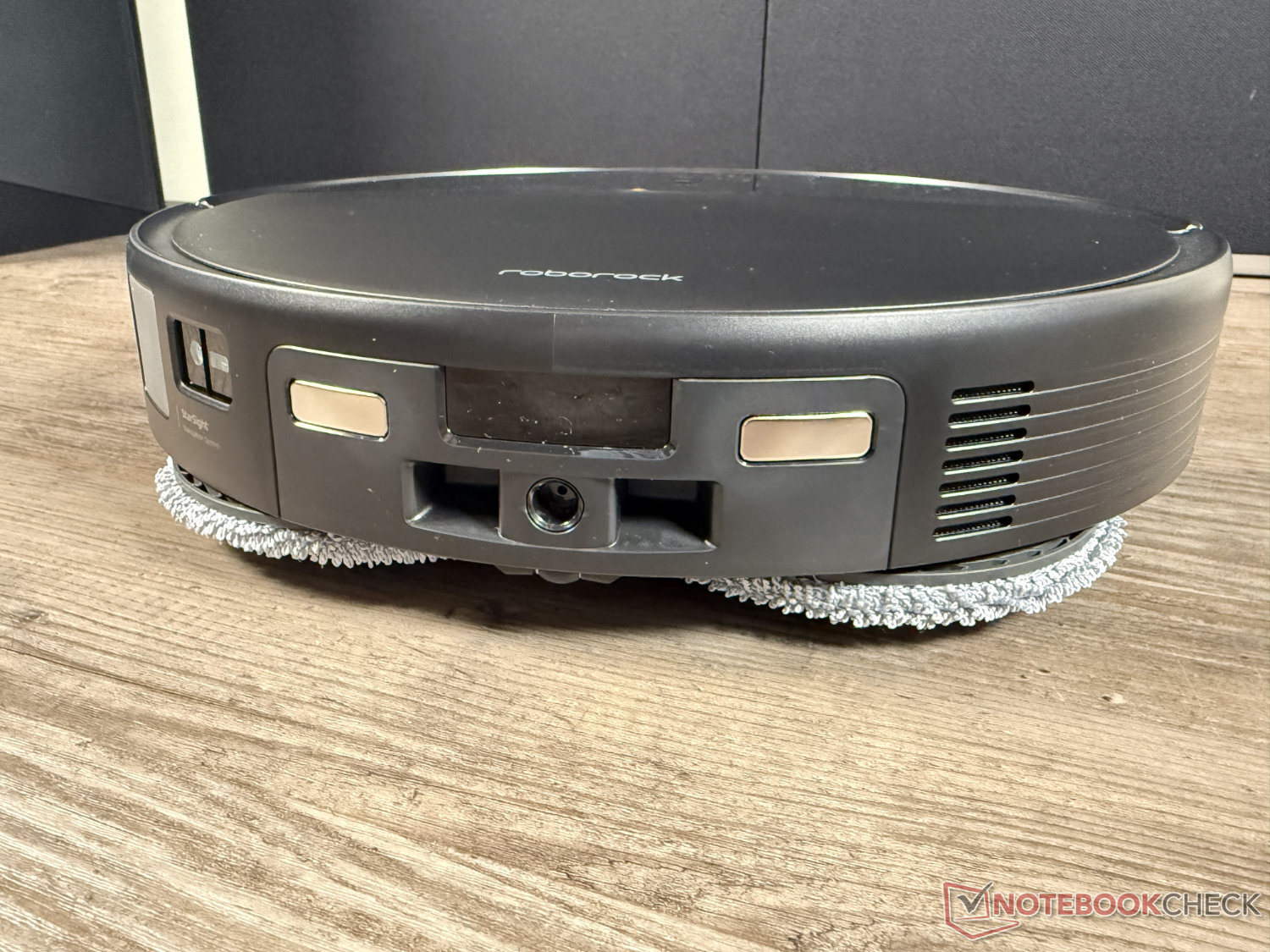
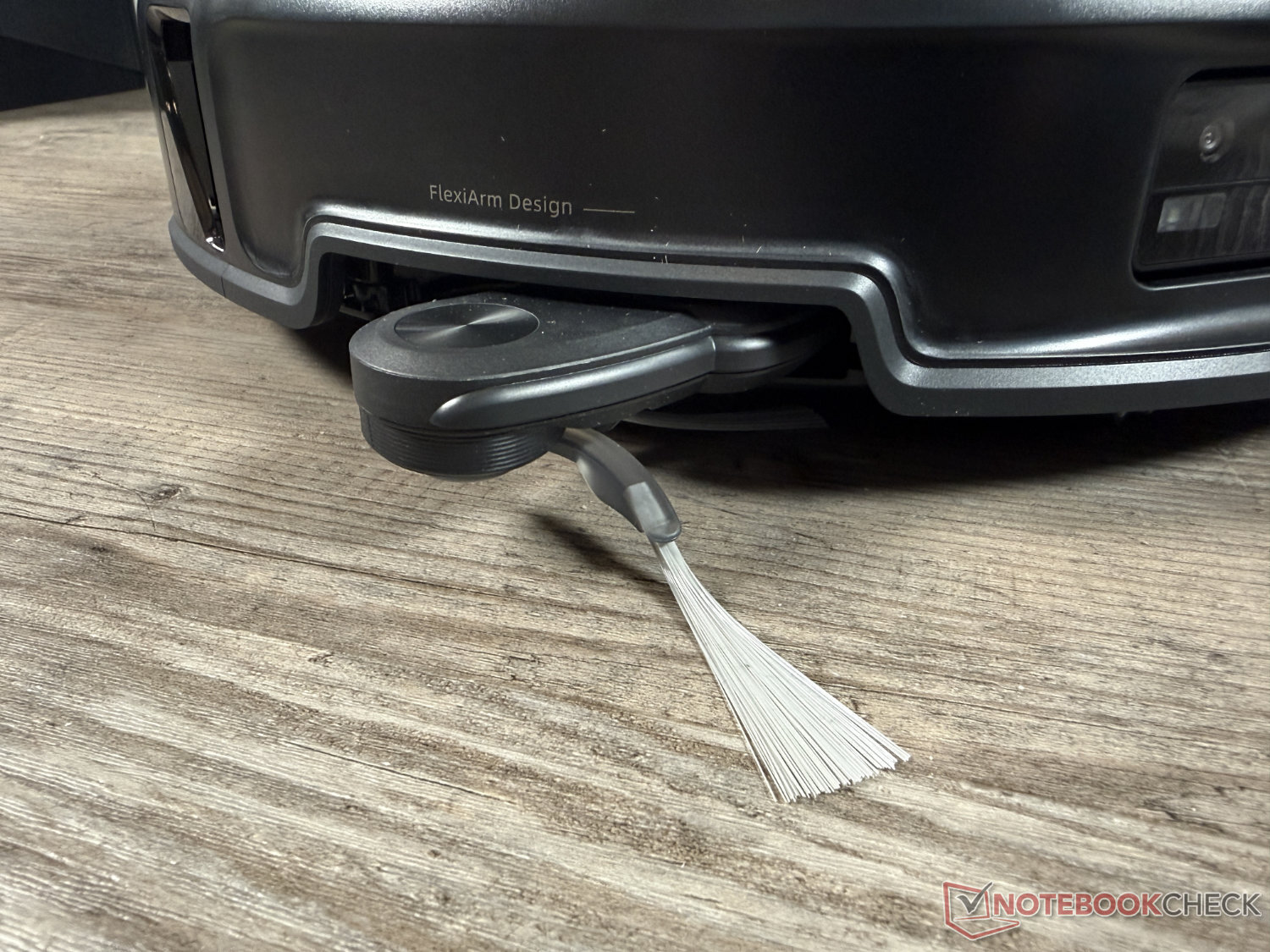
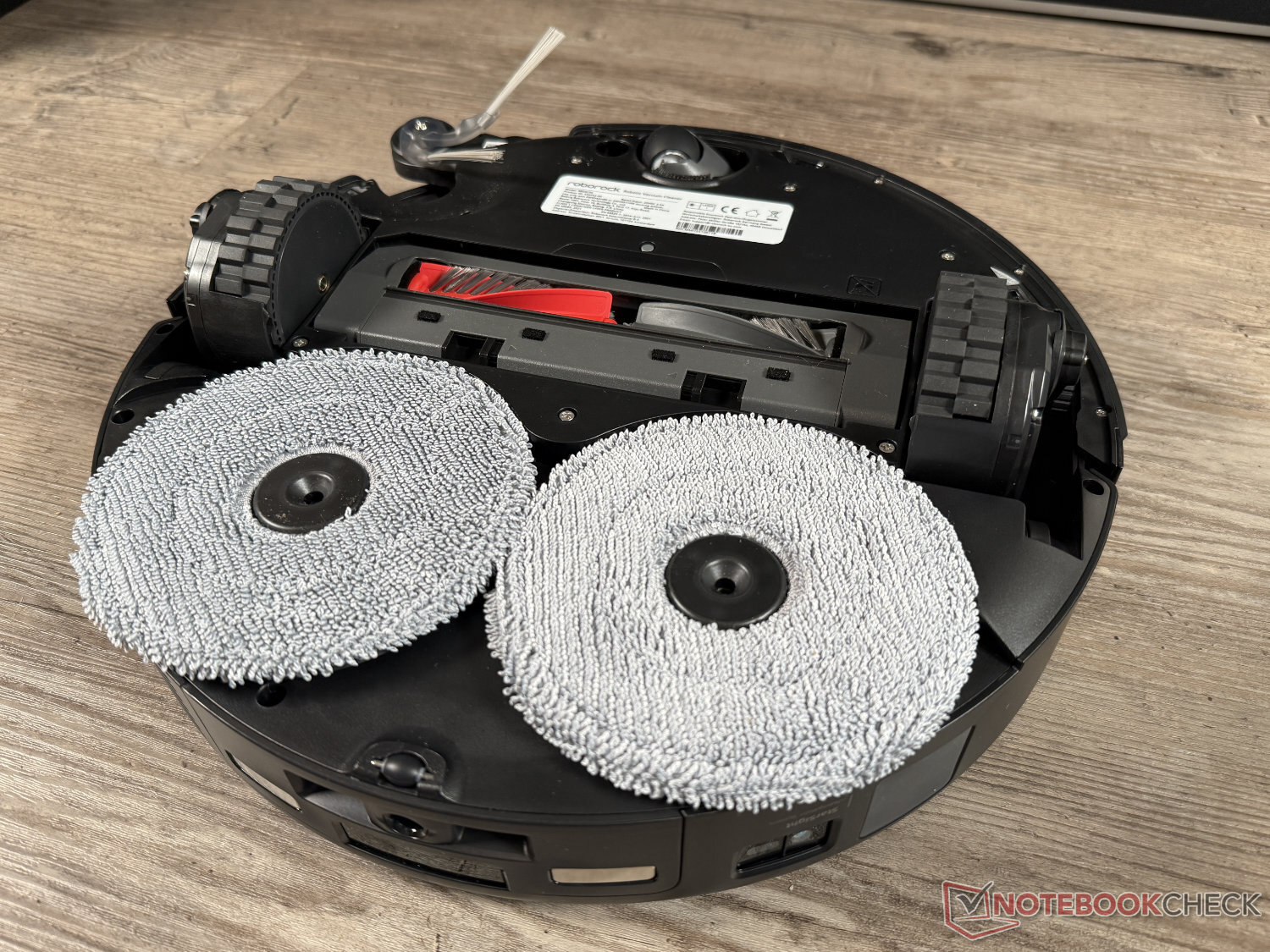
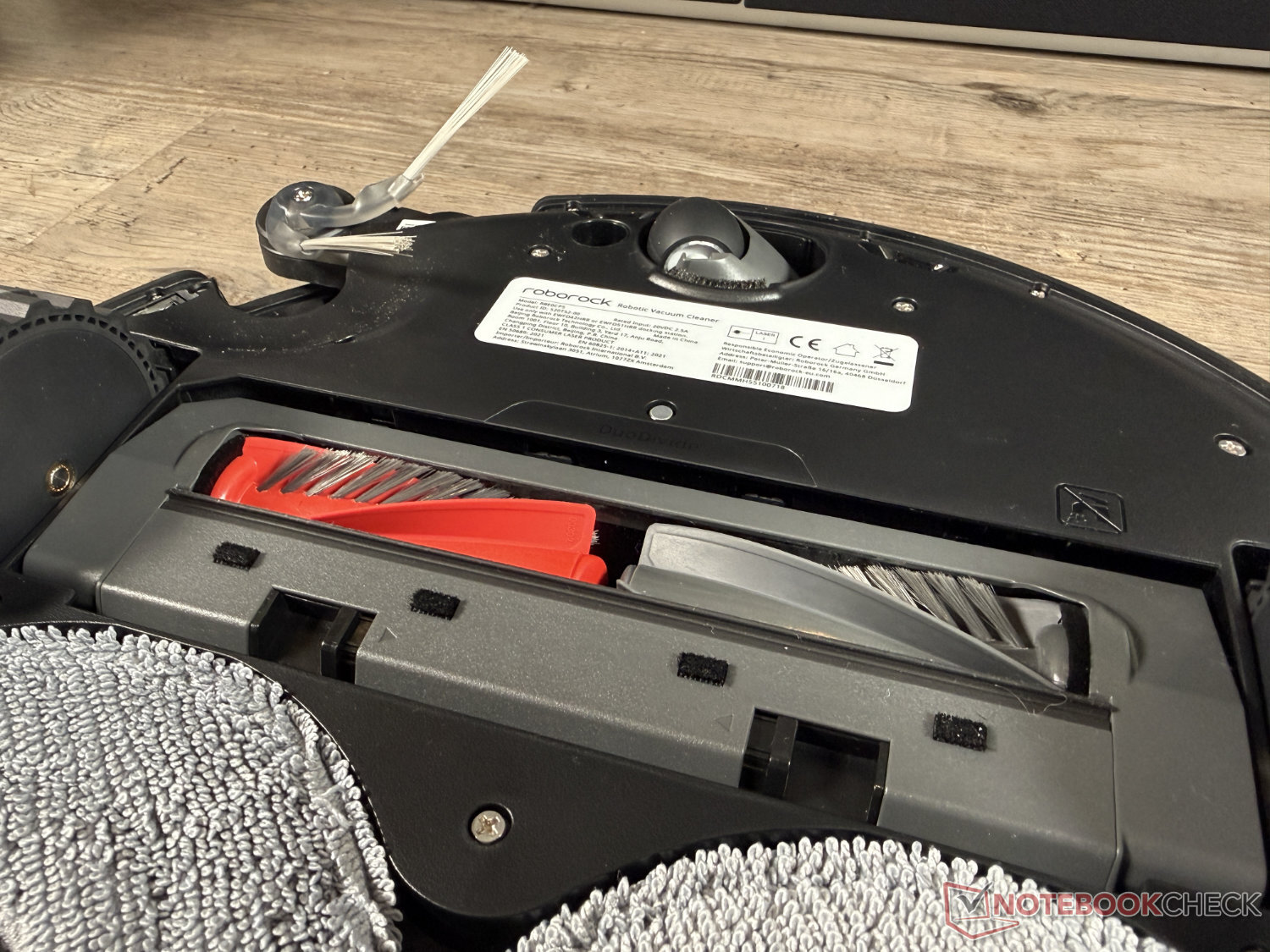

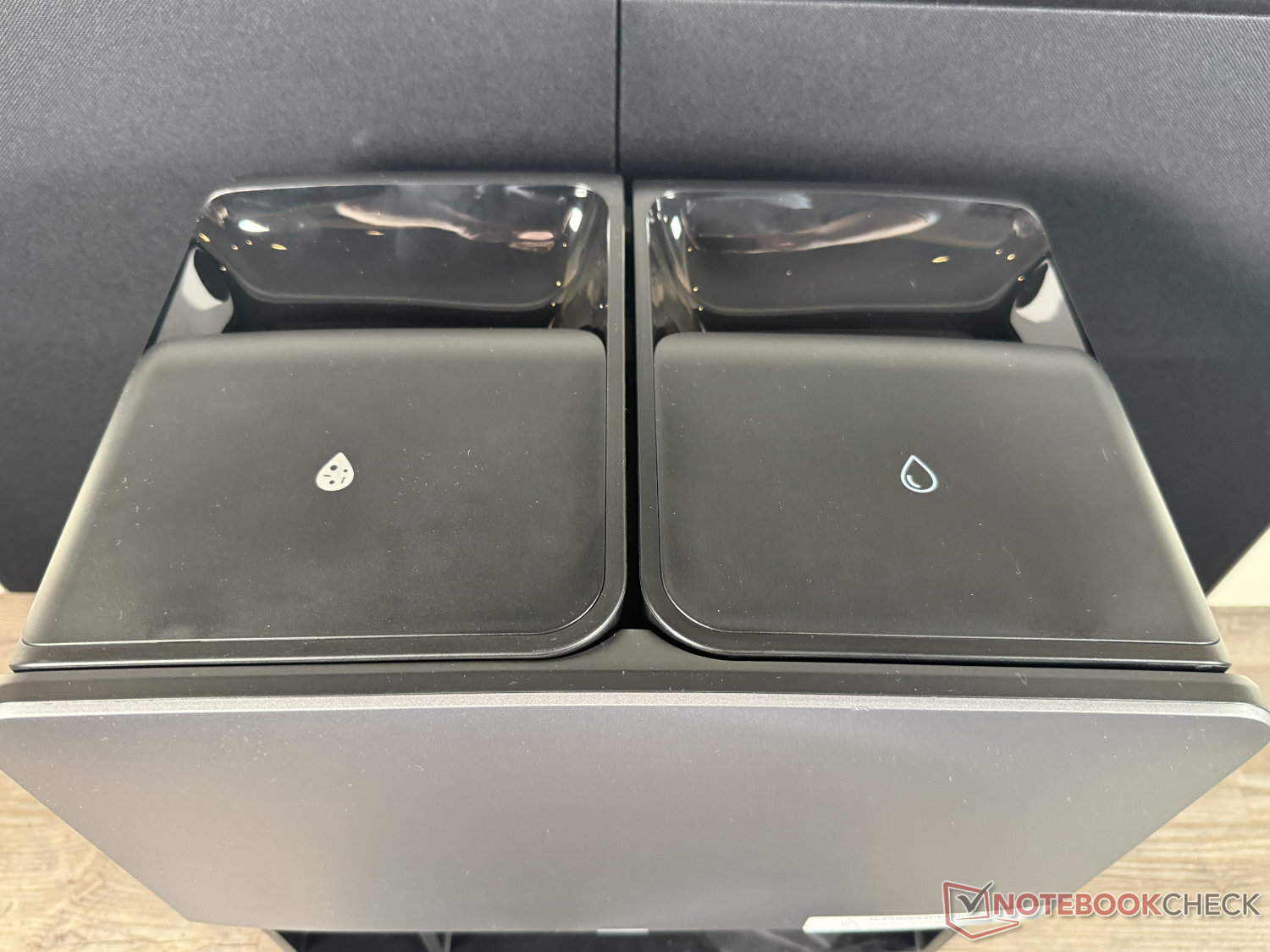
One of the new features of the Saros 20 is the AdaptiLift Chassis 3.0, which more than doubles the climbing ability. While the Saros 10R can climb steps of up to 4 cm, its successor climbs up to 8.8 cm - albeit again split into two steps of 4.5 and 4.3 cm. This should be enough for the vast majority of doorsteps. Anyone with even greater height differences in their home will have to wait on the Roborock Saros Rover.
When cleaning carpets, the new dynamic chassis lift is used, which raises the robot by up to 3 cm for carpets with high pile. The suction power has almost doubled compared to the Saros 10R and is now 36,000 Pa. Once again on board is the Dual Anti-Tangle System with a two-part main brush, which can be lifted, as can the two mops (one can be extended, both can be lowered). However, this no longer applies to the extendable side brush. With DirTect technology, the Roborock Saros 20 uses AI to detect dirt and automatically adapts its cleaning strategy accordingly. How well this works is described further down in this test report.
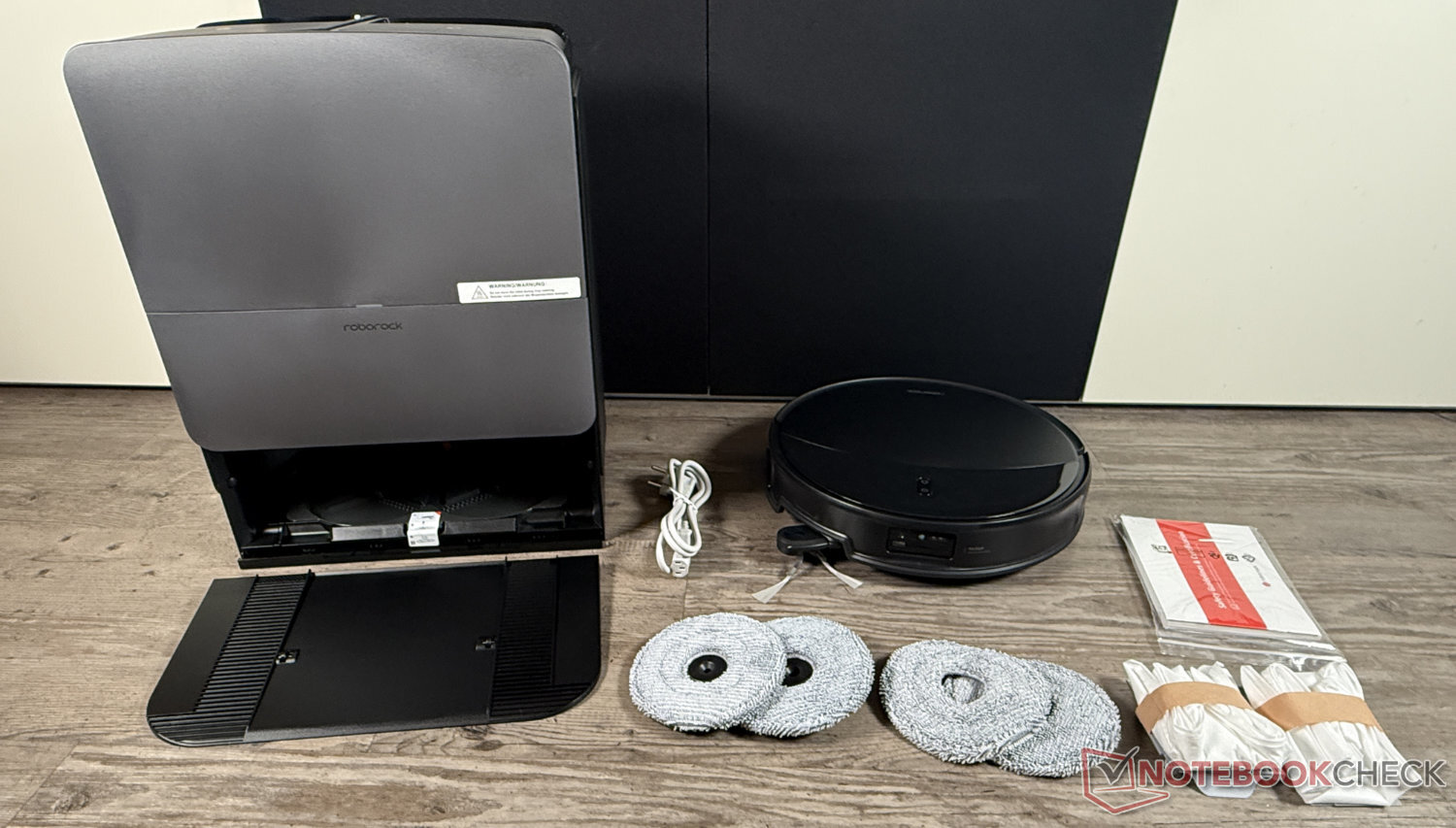
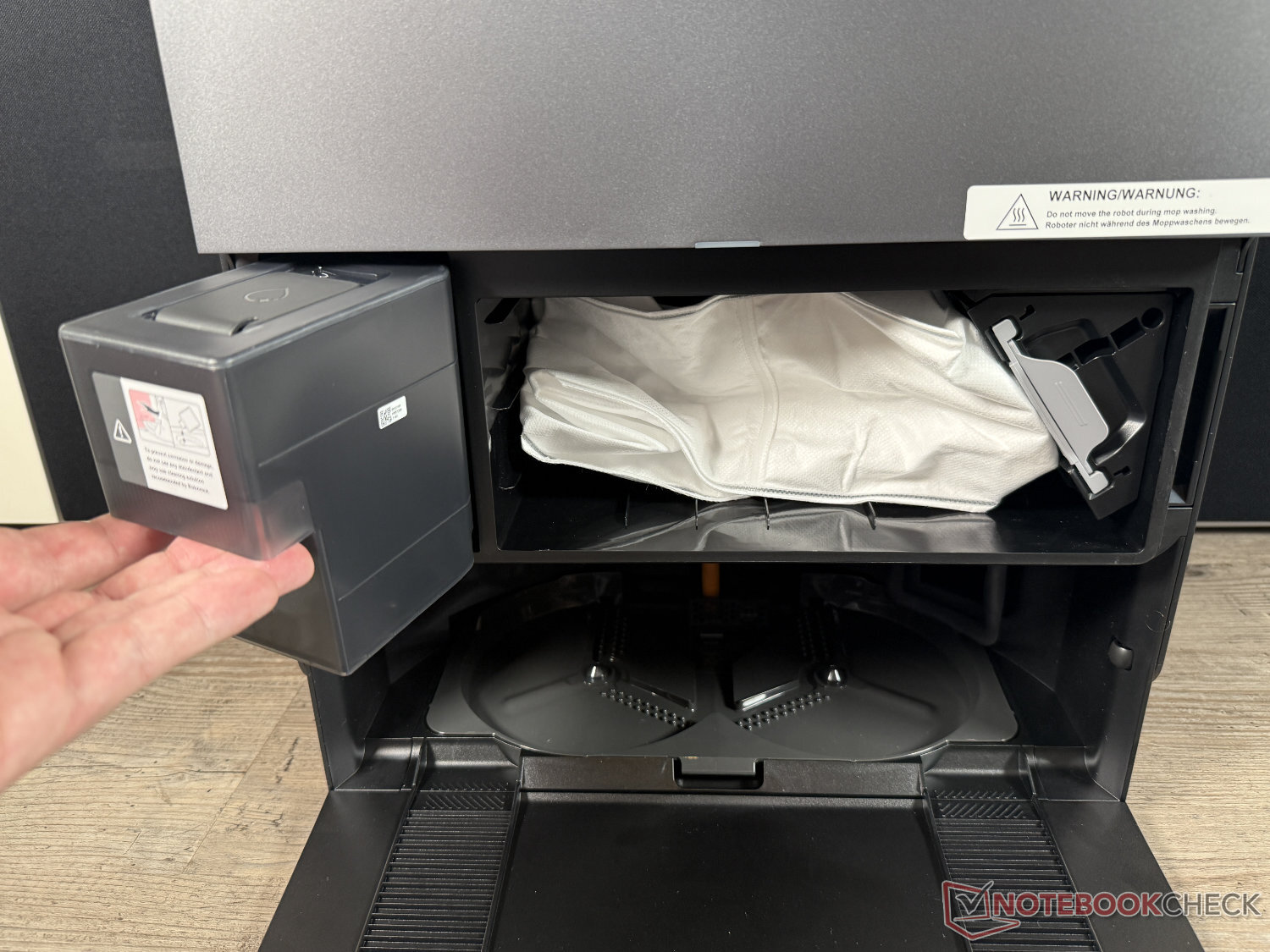
Let's come to the scope of delivery - and thus the differences between the variants of the Saros 20. First of all: these are only in the accessories supplied. The Saros 20 Set comes with two spare mops and another dust bag, but no cleaning agent. The latter is only available with the Roborock Saros 20X in addition to two replacement mops. In addition to a discount, there is also a Accessory pack for free. However, this is only mentioned in passing as it is limited in time.
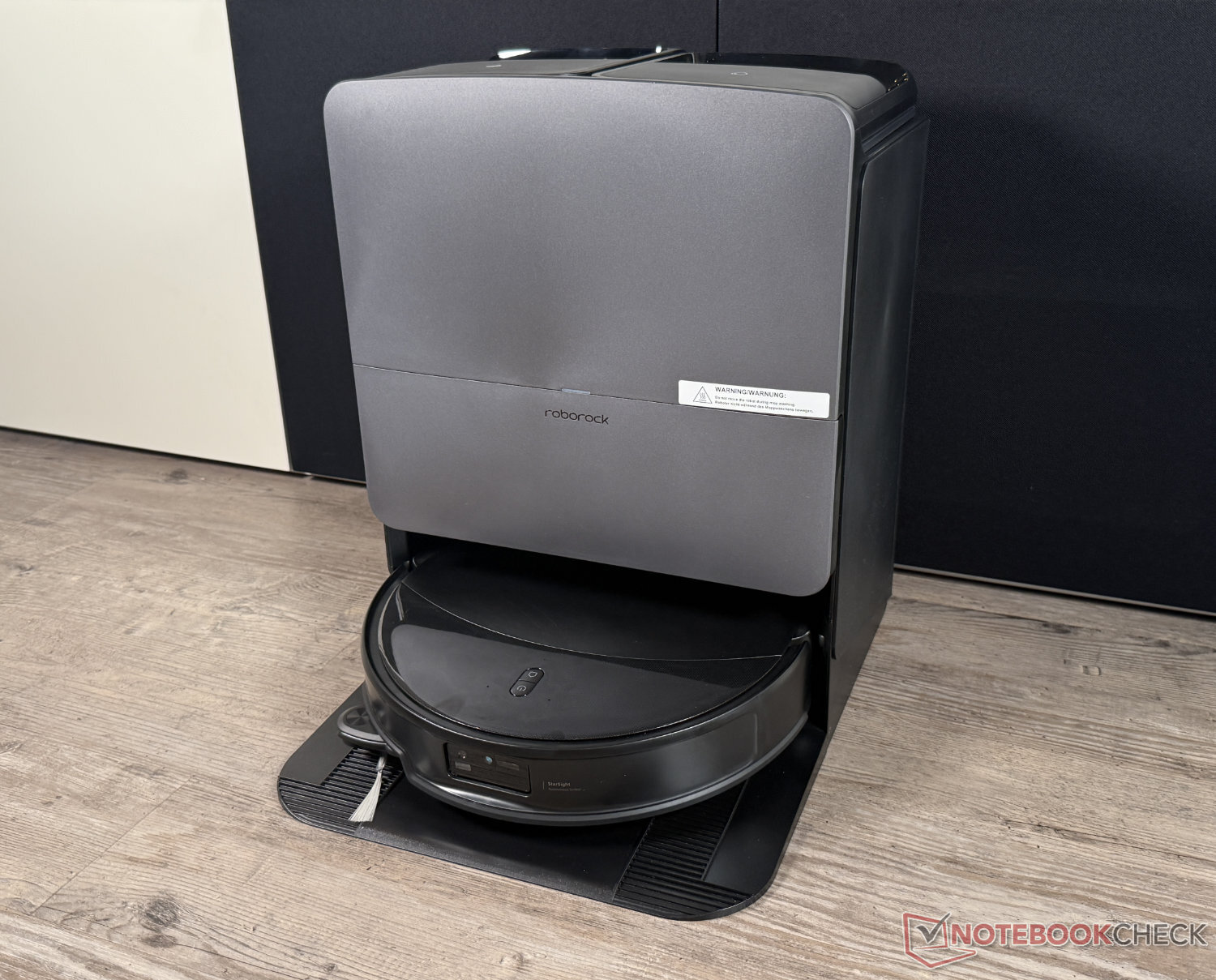
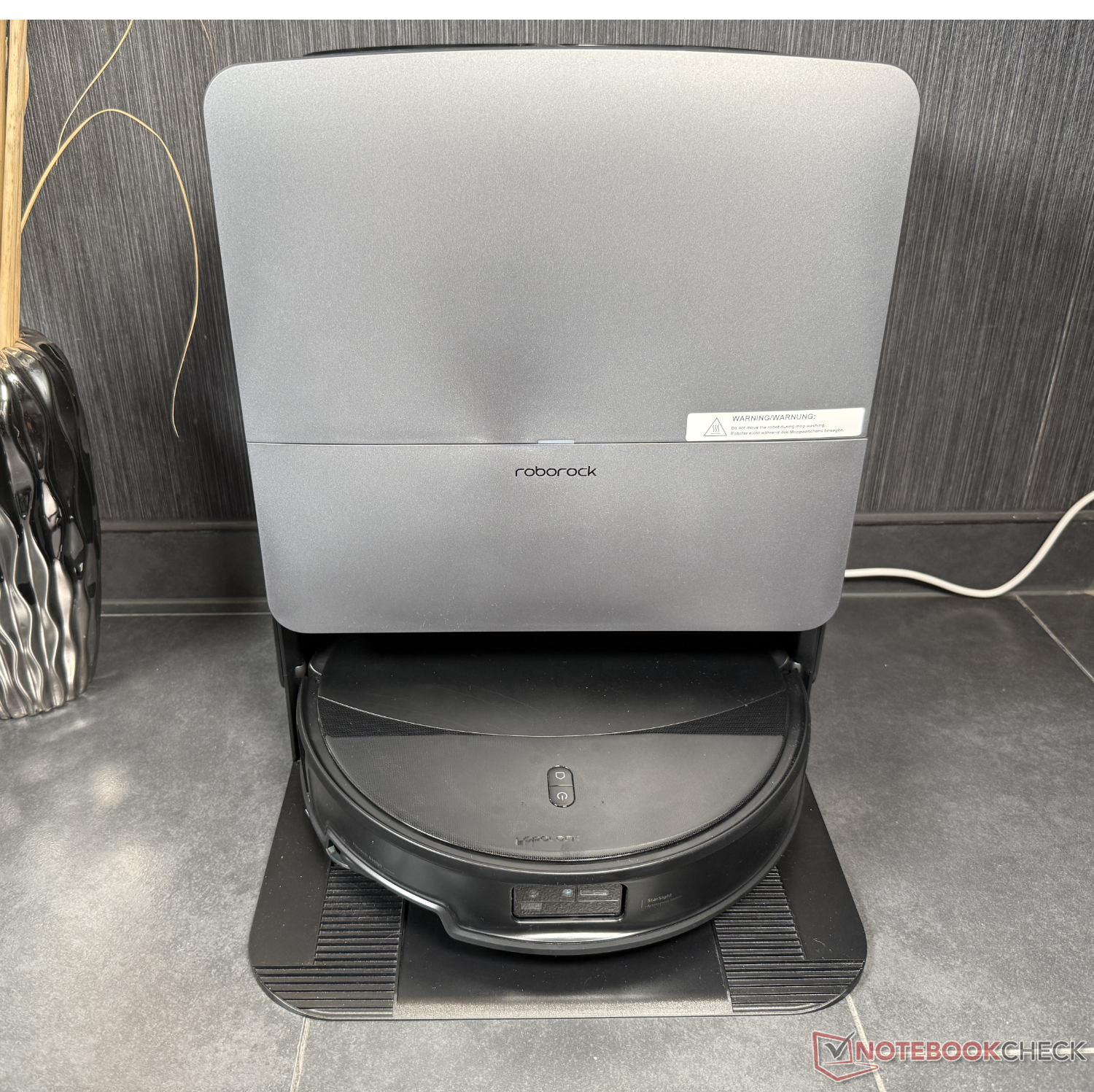
We tested the Saros 20 Set. As no cleaner is included, we did not take this into account in our cleaning tests (despite the option of automatic dosing in the station). Which brings us to the RockDock, the cleaning station of the Saros 20. It has a very similar design to the Saros 10R, but can now clean the mops and itself with 100°C hot water. This is followed by 55°C warm air drying. In addition to the usual self-emptying of the dust container into a dust bag (which is now dried with fresh air), there is also the aforementioned detergent dosage and charging in 2.5 hours.
Setup and app: Good as usual
Only recently we had the Roborock Qrevo Curv 2 Flow ($999.99 on Amazon), and many other Roborock models before that. Each time, the Roborock app made a positive impression with its many features and clarity. This also applies to the Saros 20 test, which is why we don't want to waste too many words at this point.
After the unproblematic set-up, during which the user is taken by the hand, the usual mapping run begins. The automatic room recognition worked well for the most part. Manual reworking such as individual room names or restricted zones is quickly completed. The vacuum and mopping robot was ready for use after a good 10 minutes.
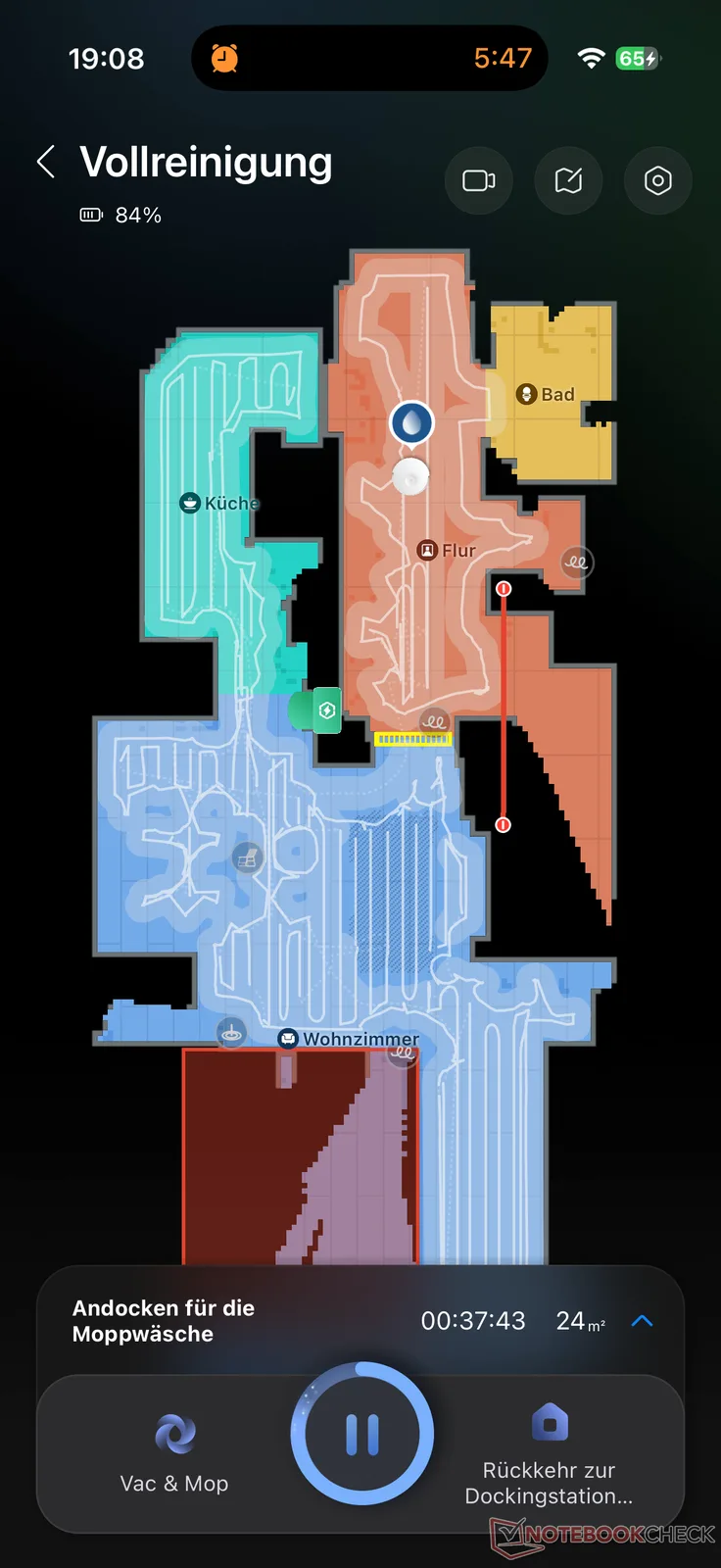
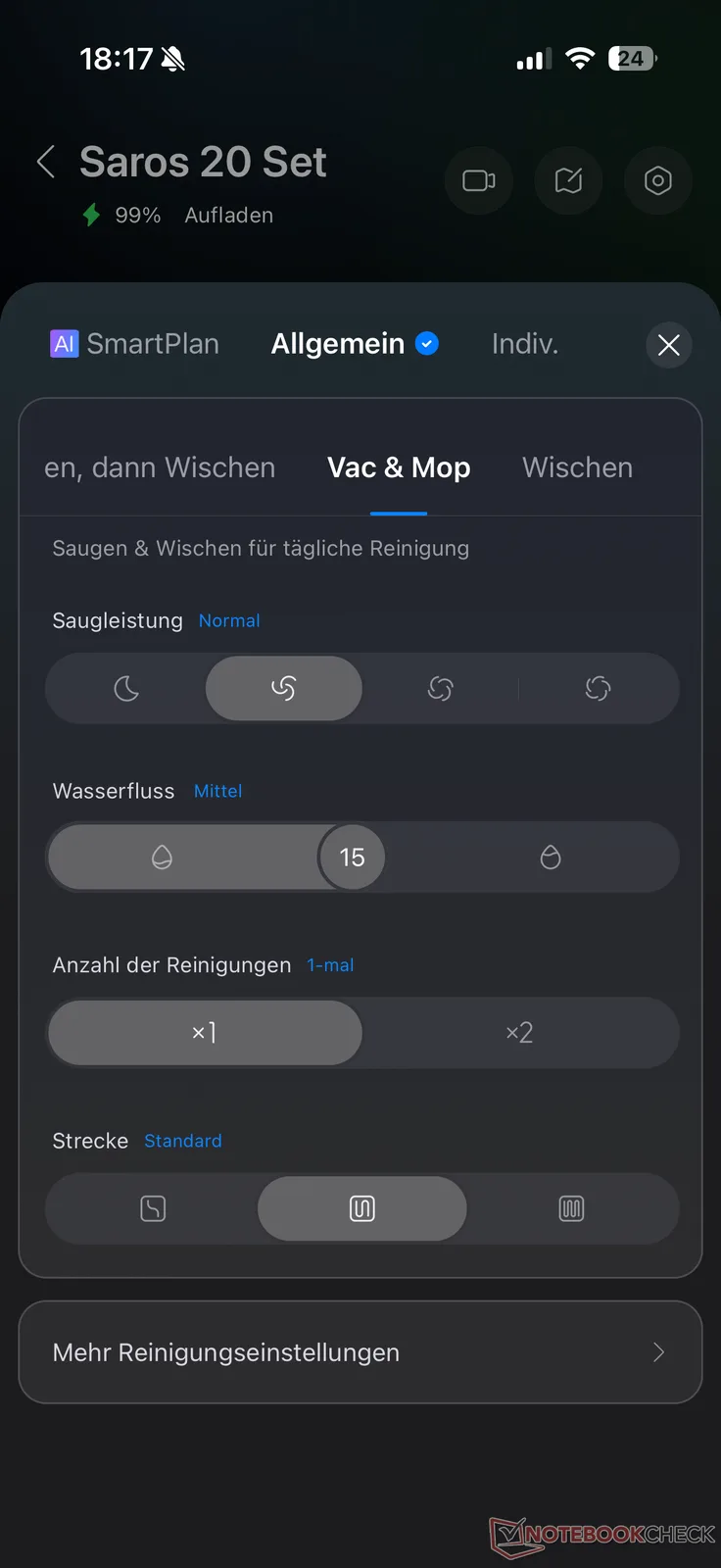
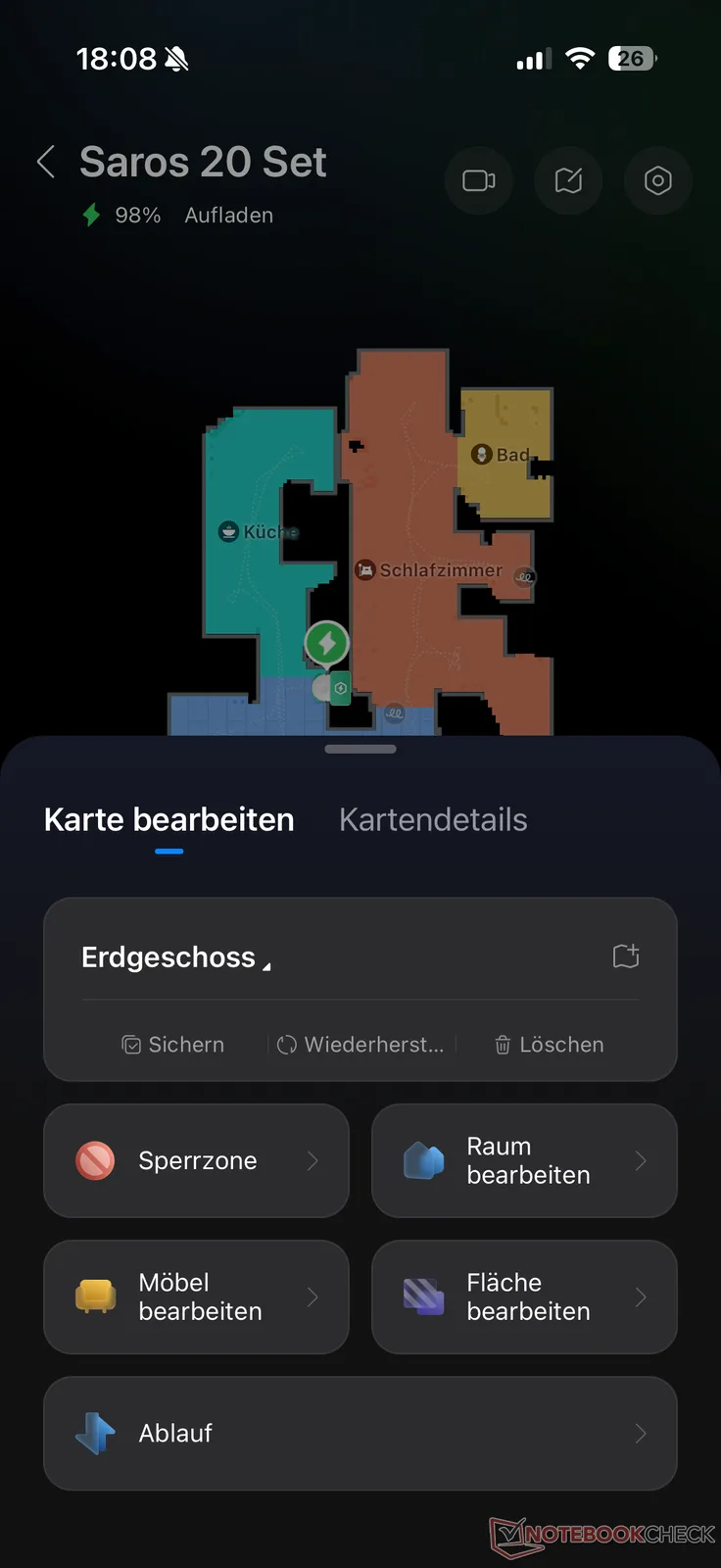
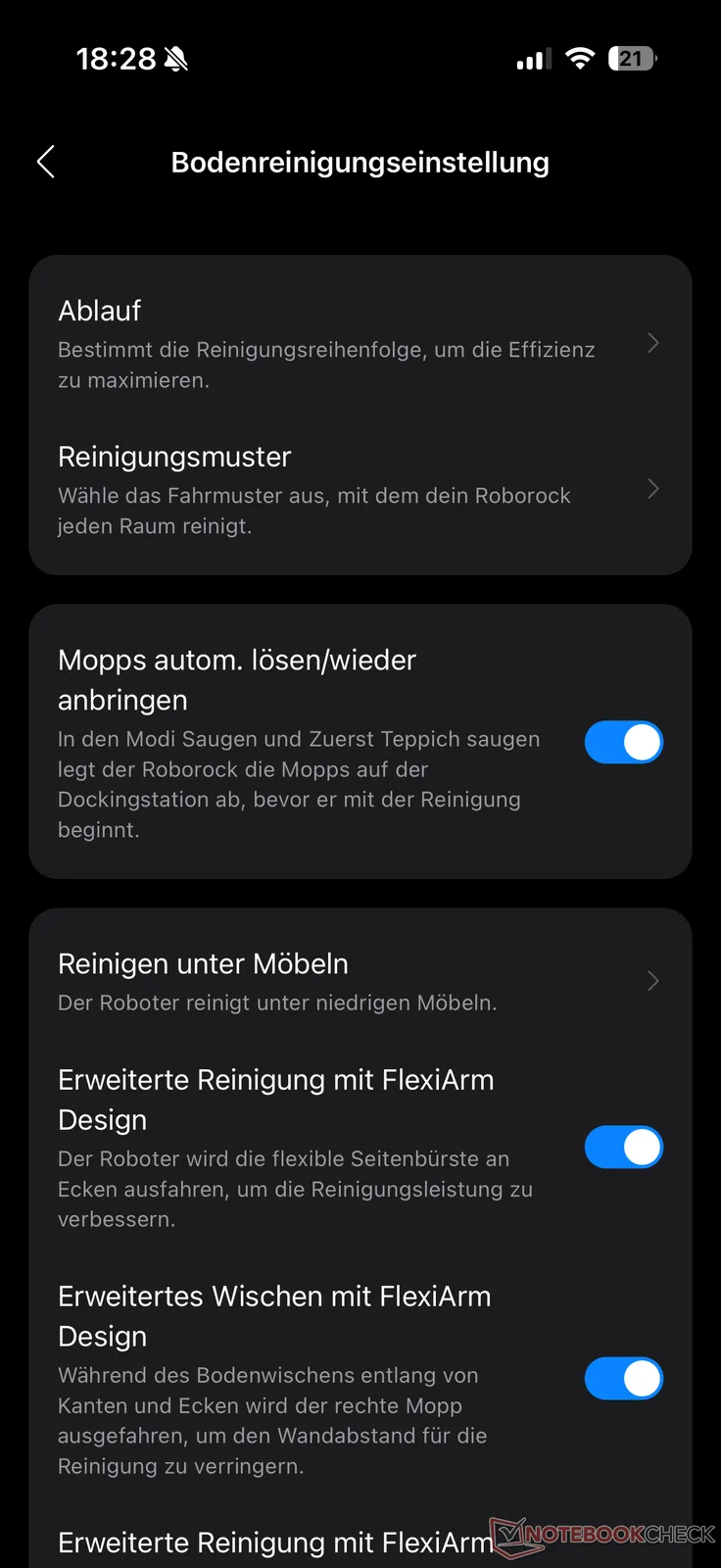
The Roborock app offers four cleaning options for the Saros 20: "Vacuum and mop", "Vacuum first, then mop" and "Vacuum only" and "Mop only". Various options are available for both cleaning modes. For example, the suction power can be adjusted in the usual four stages and the mopping moisture in 30 stages. AI SmartPlan is also available as an alternative to the modes. Here, the robot adapts itself better and better to the conditions, controlled by AI.
The Roborock app is rounded off by numerous settings for general cleaning, the procedure for carpets, the docking station or obstacle avoidance. It also has its own voice assistant Rocky and a live video function (once set up). A small point of criticism: the Saros 20 occasionally felt addressed in everyday conversations, even though the activation word "Hello Rocky" had not even been spoken.
Navigation and obstacle detection: almost perfect
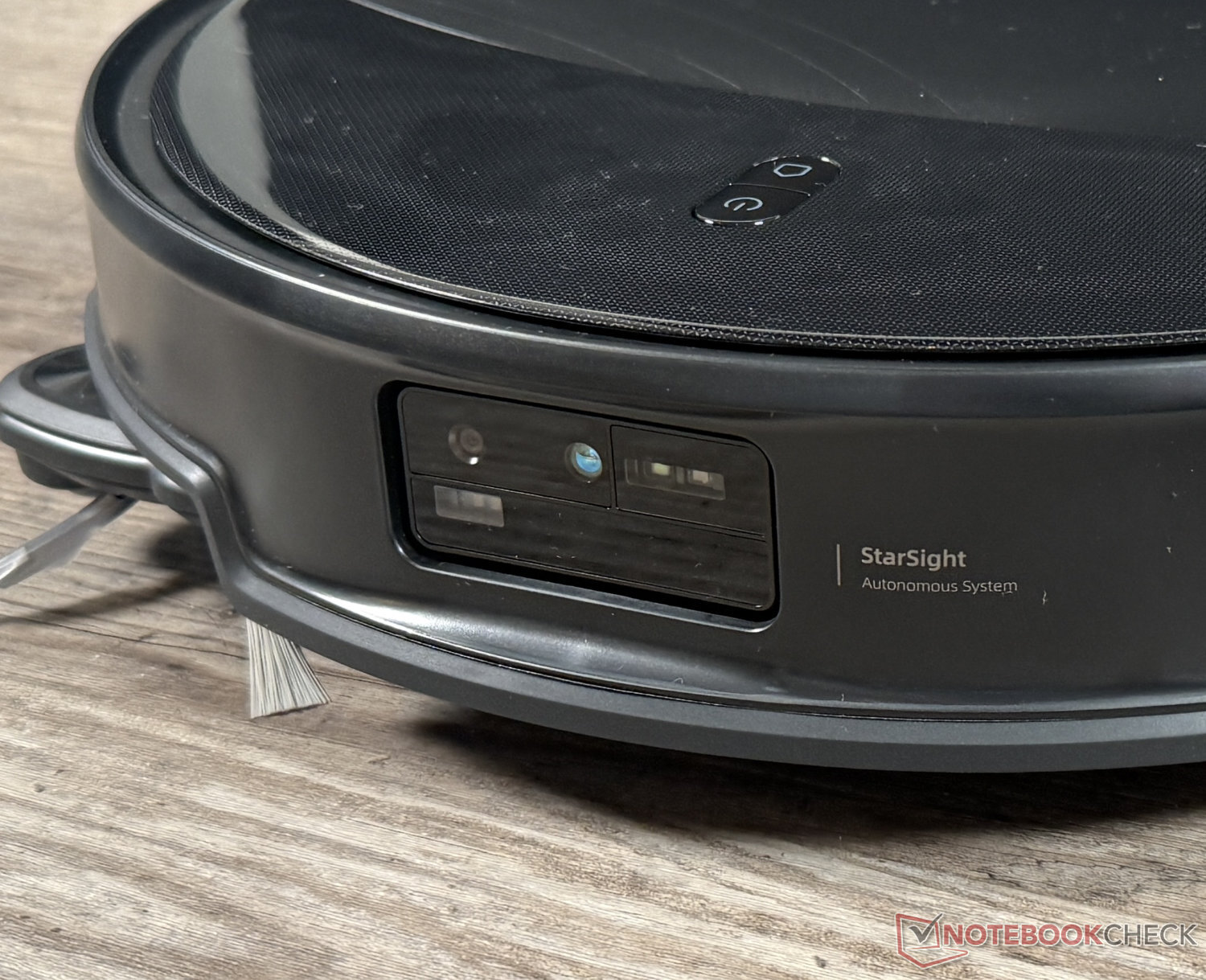
For navigation, Roborock relies on the StarSight System 2.0, which is already used in the Saros 10R a year ago. As there is no laser tower with 360-degree all-round visibility, the robot has to navigate using the sensors in the front and rear.
As a result, it occasionally turns a little to orient itself in the room. Of course, this is somewhat detrimental to the cleaning time, which we will discuss in more detail in our Roborock Saros 20 test. Overall, it performed not quite perfectly, but very well. The route planning was comprehensive in all accessible areas, which is a prerequisite for a good cleaning result.
When navigating through our test environment, the Saros 20 hardly had any "enemy contact". Apart from the occasional light contact with thin, black chair legs, it successfully but closely avoided all furniture and the like.
The Saros 20 also presented a very good, but not entirely flawless result on the small test obstacles. It fell victim to a single shoelace. However, this has already happened to many other test candidates, but is not quite enough to put it on a par with the DJI Romo. All other small obstacles were successfully seen by the sensors in the front, including the 4x2 clamping block at a simple height, which is also often "invisible" for many other robot hoovers.
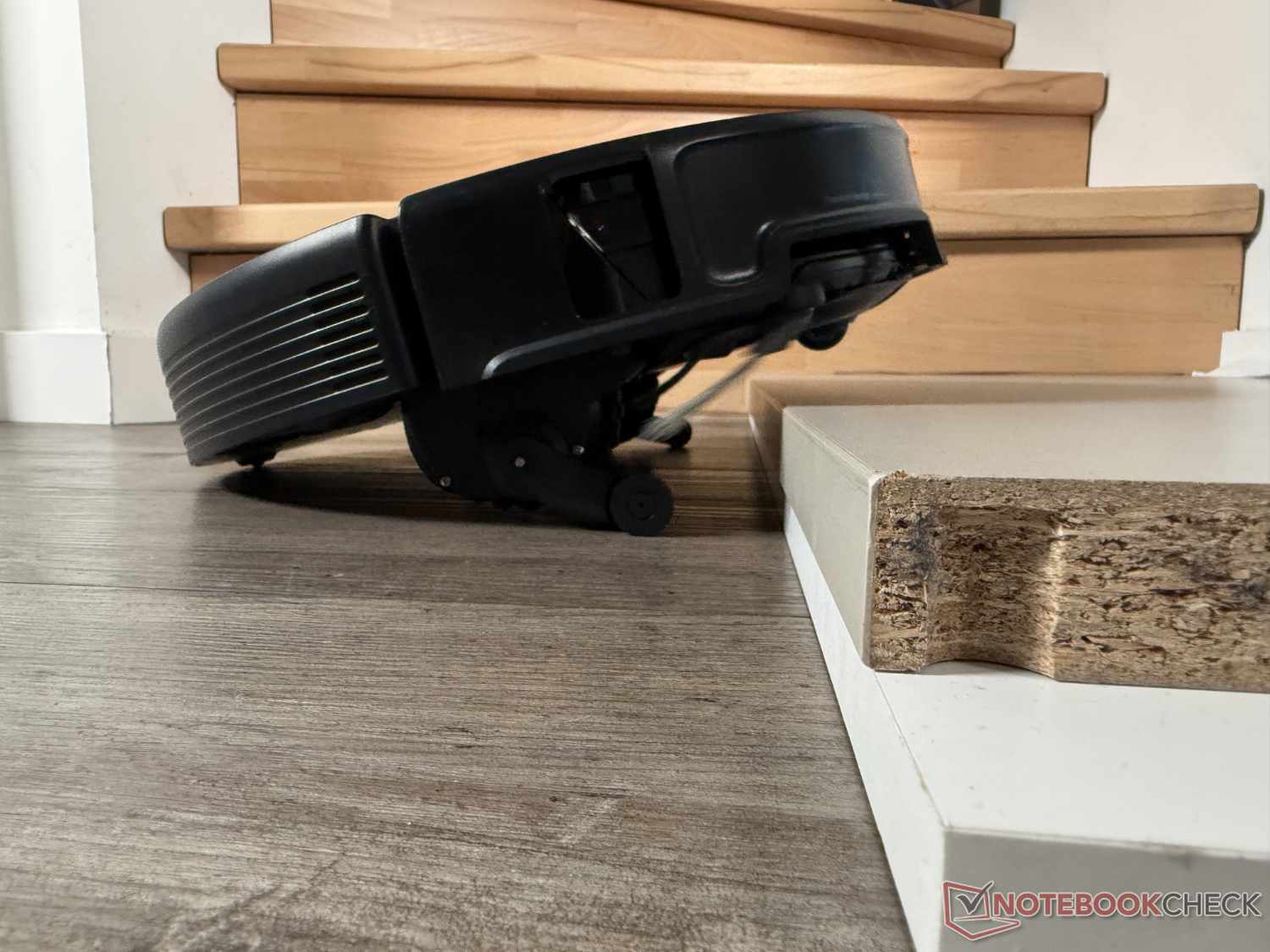
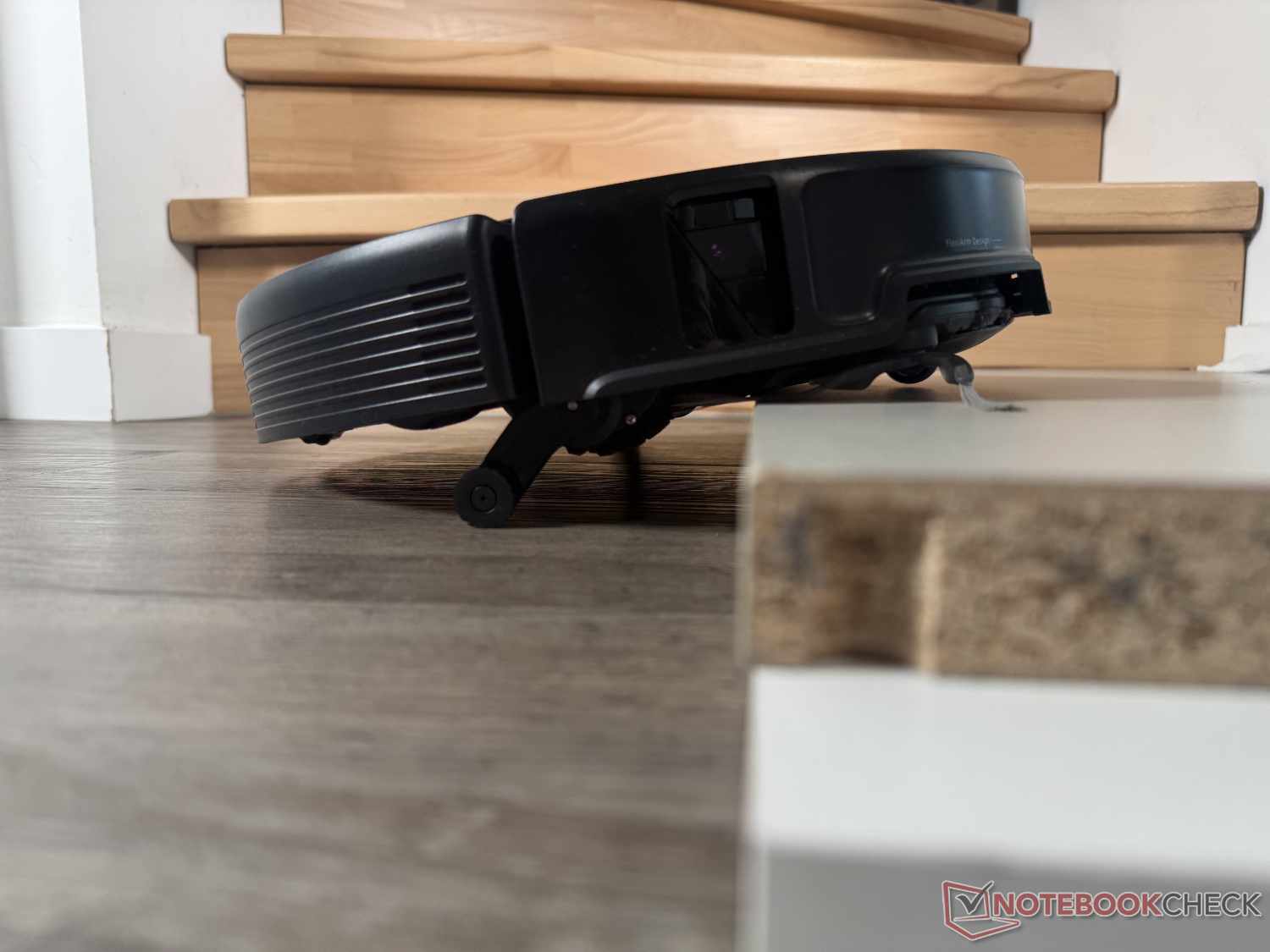
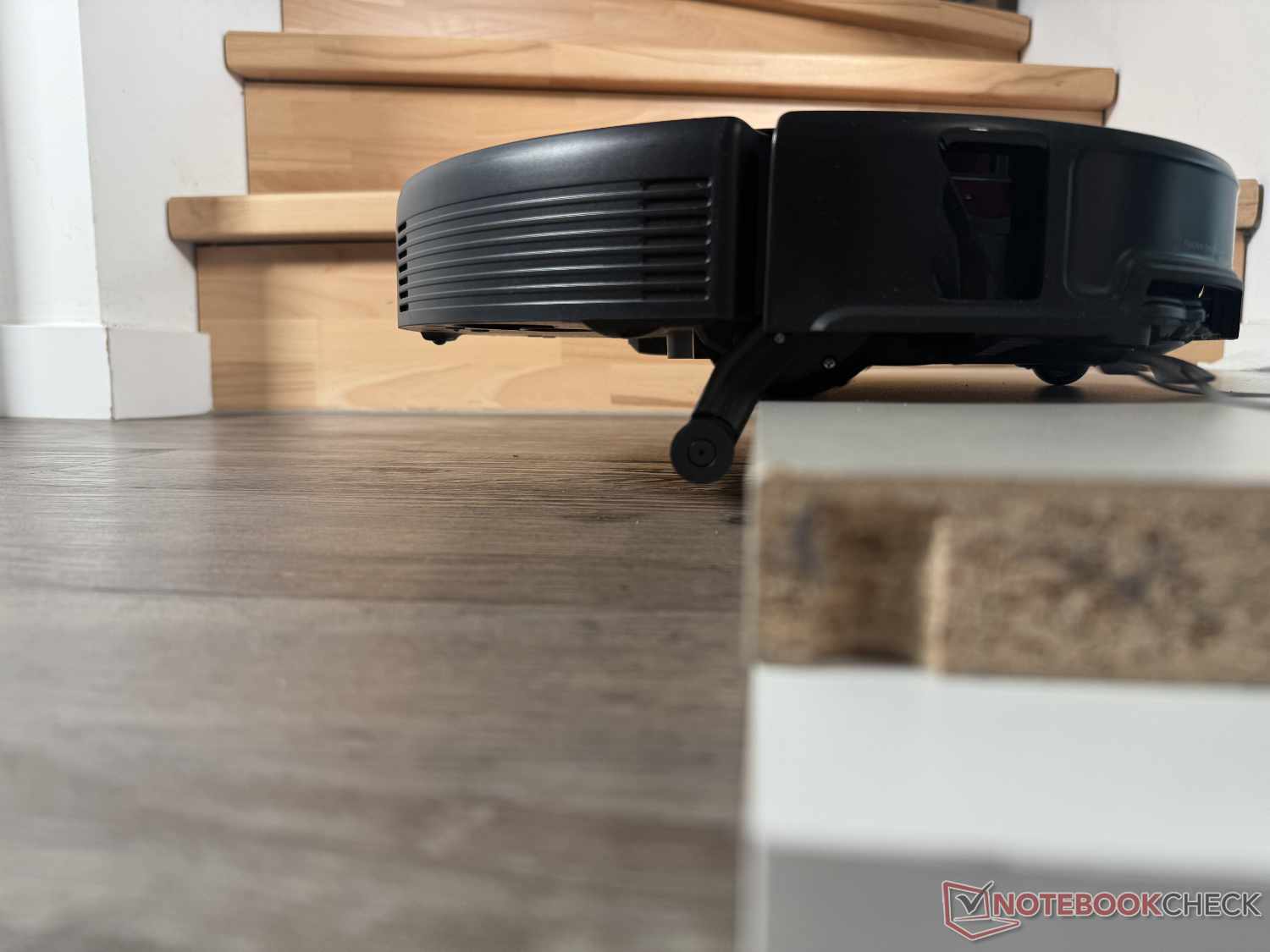
Thanks to its enormous climbing ability of up to 8.8 cm (in two steps), the Roborock Saros 20 can overcome almost any doorstep. In the practical test, it successfully climbed a 4.5 cm high 90-degree ledge, even if it looked a little laborious at times. To do this, it extends its two small auxiliary legs to first jack itself up at the front and then let the back follow.
Cleaning performance: Cleans more thoroughly than many others
At 36,000 Pa, Roborock has raised the suction power to a new level compared to its predecessor. However, it is not the number that is decisive, but what it achieves in practice. On smooth surfaces, the robot vacuum cleaner is beyond reproach, sweeping thoroughly even in corners and under protrusions with its extendable side brush.
It also made a very good impression on one of the test carpets with a medium-length pile. With the automatic increase in suction power on carpets (found in the carpet settings) and the chassis lift, it removed most of the test dirt consisting of fine sand, crumbs and short dog hair. If the carpet depth cleaning (cross pattern) is also activated, only a few small grains of sand remain in the pile. This is an excellent result.
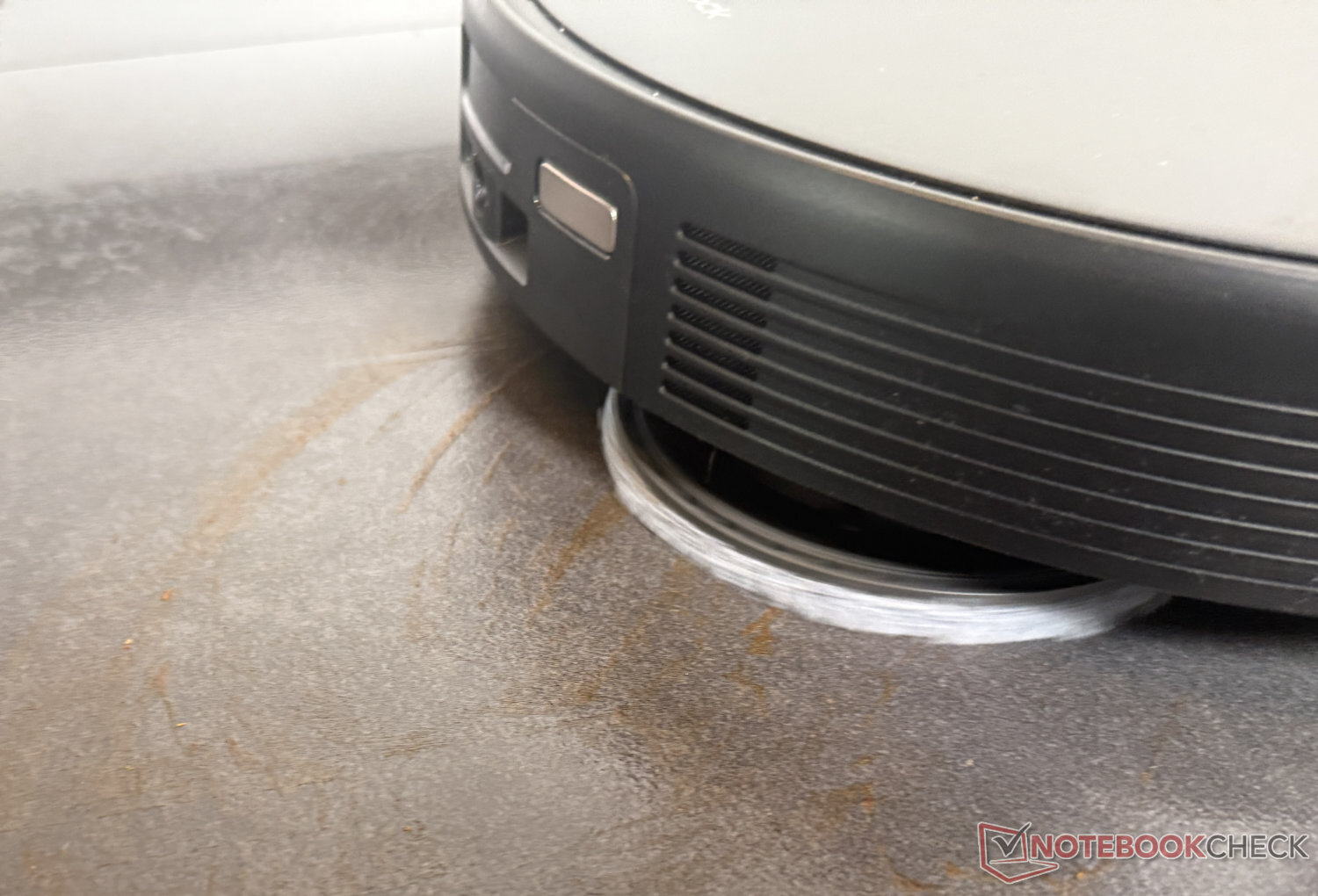
In terms of mopping performance, the Roborock Saros 20 left a more than solid impression in the test. According to our impressions, it mops better than some other robot hoovers with two mops. Among other things, it also removed some dried-on stains that comparable models have struggled with.
However, the test candidate is not on a par with the best robot hoovers with a mop roller, which also prevent cross-contamination by constantly cleaning the roller. With the two mops, the Saros 20 does not manage this quite as well, even though heavy soiling was usually reliably detected by AI in the test. The robot then not only processes the area particularly thoroughly, but also moves to the mop cleaning station.
Battery life and power consumption: Average
For a good comparison, we always let robotic vacuum clean 50 square meters in our test with standard settings (medium suction power and mopping moisture, one-time cleaning with standard route). In our test environment, the Roborock Saros 20 didn't need a particularly quick 1.5 hours to do this. At the end, it returned to the charging station with a battery level of just over 40 percent. This means that an extrapolation of around 70 square meters is possible without recharging, although this of course also depends on the environment.
We then ran the station's standard program (vacuuming, mop washing and drying) as well as the charging process until the Saros 20 waited for its next use after a few hours with a standby consumption of just under 5 W. If the robot cleans the aforementioned 50 square meters once a day with the aforementioned settings, our measurements show a monthly power consumption of around 11 kWh.
The noise level also plays a not insignificant role with a robot vacuum cleaner. This applies, among other things, to the background noise generated by the hot air drying of the mops, which takes several hours. We measured the Saros 20 at around 38 dB (from a distance of 1 m), which is an audible but not particularly loud noise. During short-term mop cleaning, the noise level is up to 60 dB, and when vacuuming for a short time, it is even around 70 dB.
During the cleaning process, the robot sounds a good 60 dB loud in standard suction mode and just under 70 dB at full suction power. This puts the Roborock Saros 20 at a normal level in the test, although the pure driving noises (e.g. when returning to the station) were significantly quieter with the last Dreame vacuum robots.
Transparency
The selection of devices to be reviewed is made by our editorial team. The test sample was given to the author by the manufacturer free of charge for the purposes of review. There was no third-party influence on this review, nor did the manufacturer receive a copy of this review before publication. There was no obligation to publish this review. As an independent media company, Notebookcheck is not subjected to the authority of manufacturers, retailers or publishers.
 Add as a preferred source on Google


