




Monster Hunter Wilds Title Update 4 improves FPS & kills stutter, but at a cost
Two steps forward, one step back—Monster Hunter Wilds has finally received a long-overdue performance update for all platforms, the first of three tailored for PC, and Capcom has successfully removed heavy stutter introduced by streaming High textures. Per Digital Foundry's analysis video released December 20, the free Title Update 4 has also successfully reduced GPU performance demand by roughly 8-9% on Medium and High settings, at least on the 8GB Nvidia GeForce RTX 3070 used for its testing.
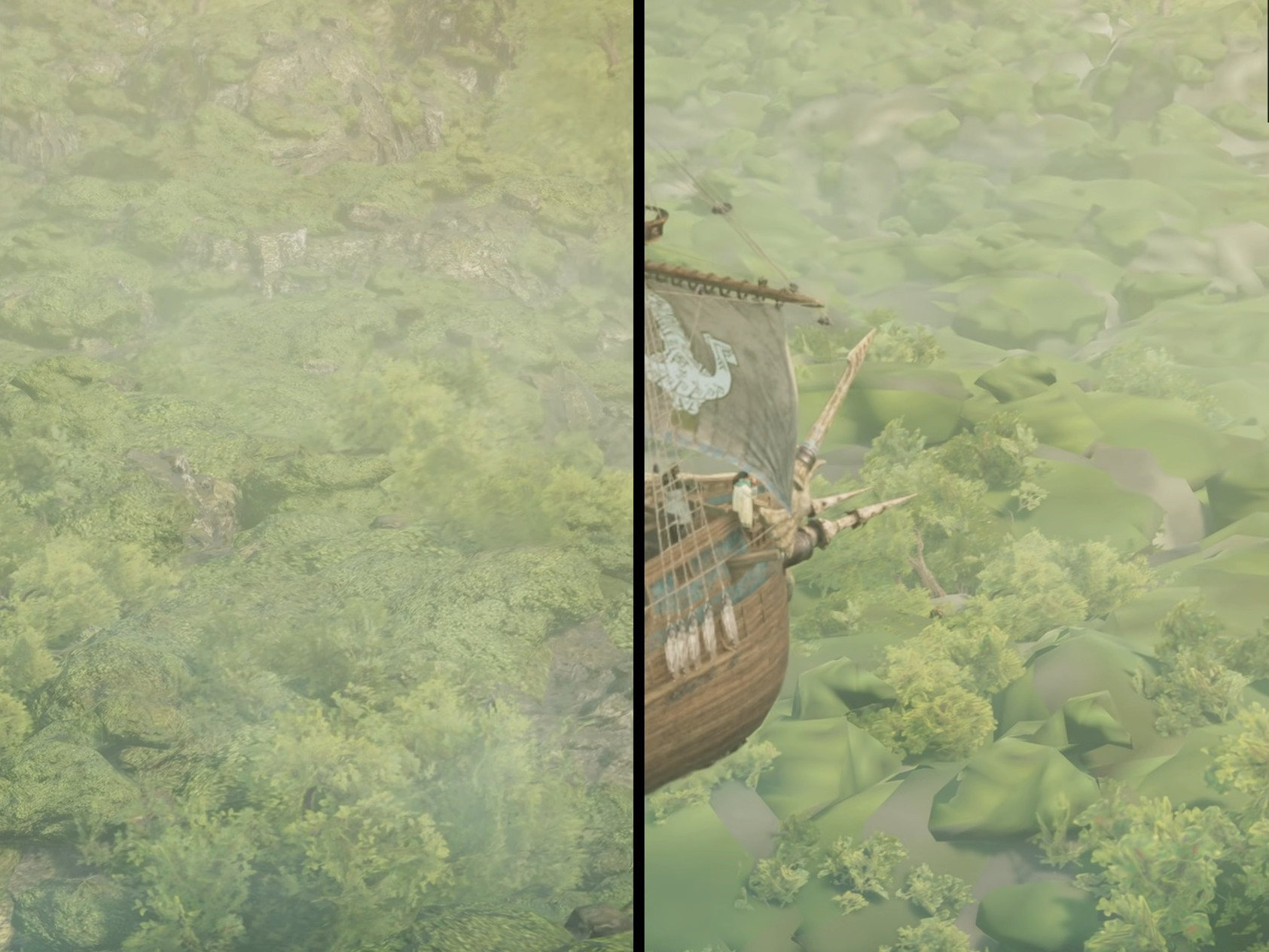
It's difficult to ignore the elephant in the room, though—while texture quality has improved across-the-board on Medium, some textures on High are worse, take longer to load, or don't load at all. Our header image from the Digital Foundry analysis is the most emblematic of the issue, but thankfully the most severe example—usually, the game looks a lot better than this.
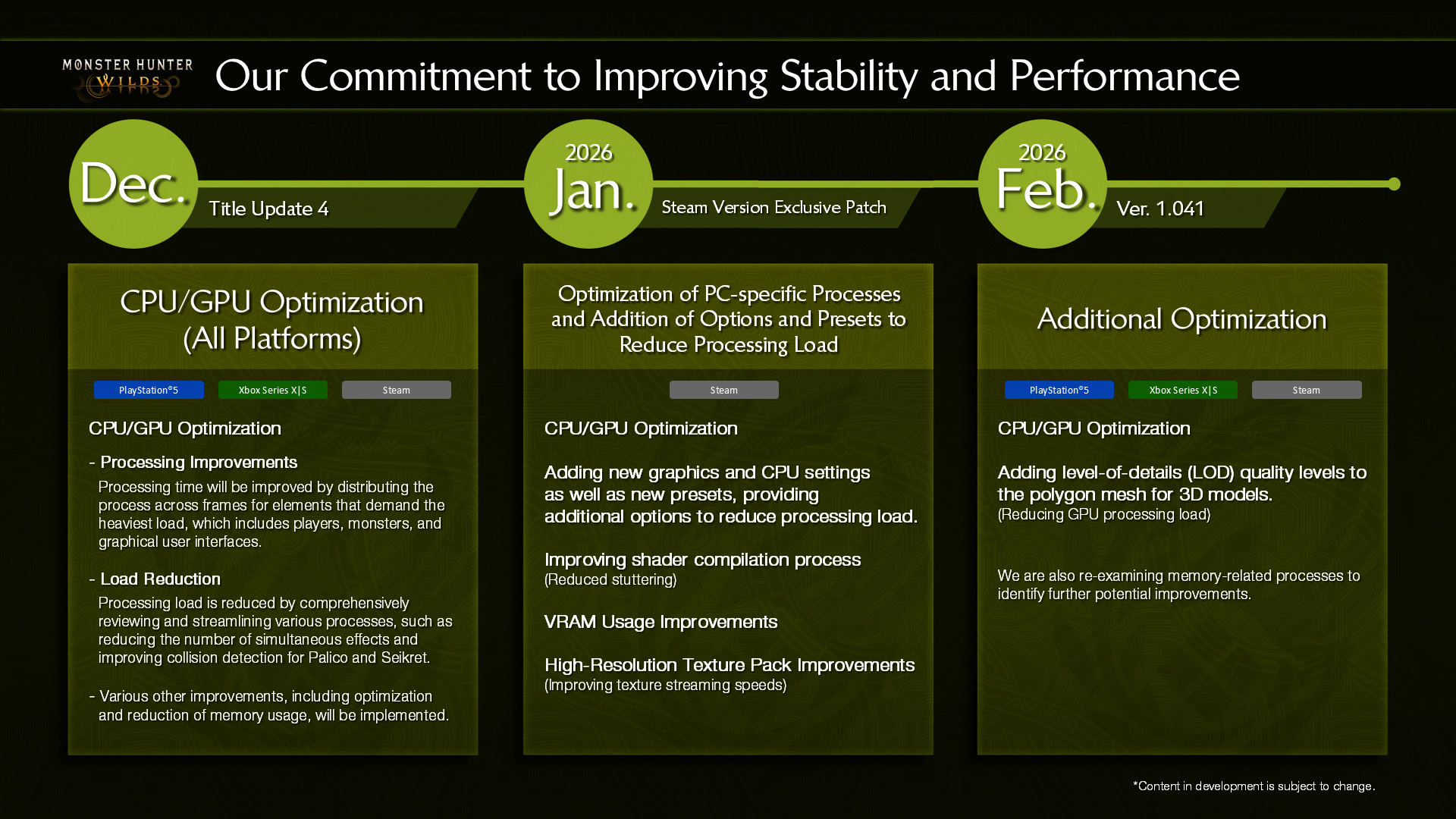
Monster Hunter Wilds Title Update 4 is the first of two cross-platform updates aimed at improving performance in Wilds, and the first of three updates aimed at optimizing the game properly on PC. To Capcom's credit, it seems that the update has done a lot of good work in making the game more playable for PC users. As promised, the planned updates do extend into 2026, and Title Update 4 dropping so soon after the game director pleaded fans for "another chance" is unlikely to be a coincidence. With rebalancing and further optimization of the game in the near future, will Monster Hunter Wilds earn back the affection of the wider Monster Hunter fanbase?
Only time will tell. But in the interim, Digital Foundry's analysis does a fairly good job of breaking down the differences between Title Update 3 and Title Update 4, and it's an all-around great improvement for users of Medium settings. High settings is obviously a visually-mixed bag, but performance stutters on 8GB GPUs finally being alleviated is a huge plus. For players of other RE Engine games, though, the poor performance of Wilds and Dragon's Dogma 2 does raise a lot of questions. Is RE Engine really only suited for games designed on a room-by-room basis like Devil May Cry and Resident Evil, or are there other factors making the engine so difficult to optimize for more open-world titles?
Source(s)
 Add as a preferred source on Google


