




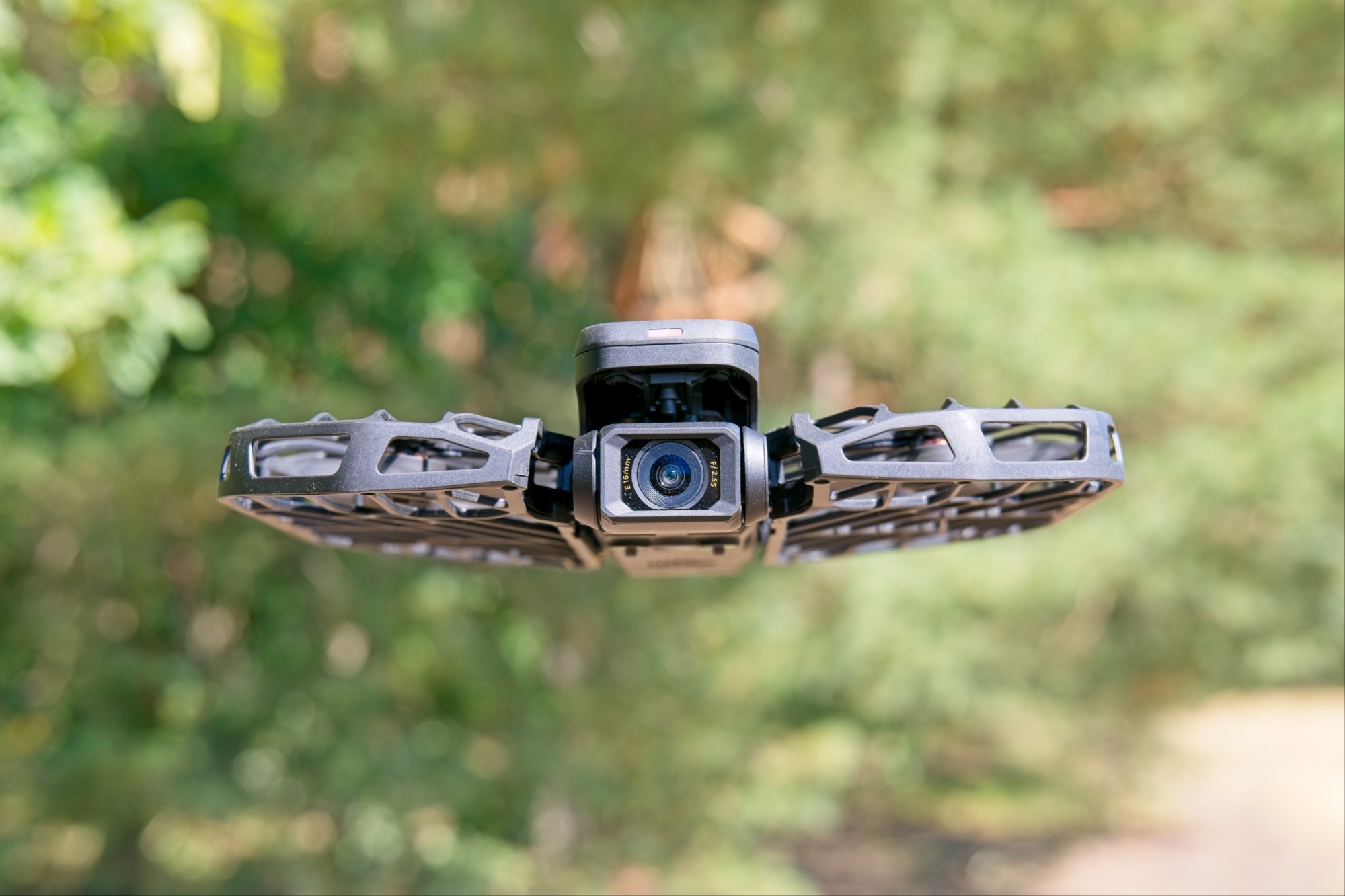
HoverAir X1 Promax: A rugged DJI Neo alternative with 8K and tracking put to the test
Crash-resistant.
The HoverAir X1 Promax is an 8K drone that offers flexible use and functions as a kind of flying action camera. While the drone doesn’t shine in every aspect of our test, it’s still worth recommending for certain user groups.Silvio Werner (translated by Silvio Werner) Published 🇩🇪 🇳🇱 ...
Conclusion: A Rugged Drone with Poor Obstacle Detection
With the HoverAir X1 Promax, the manufacturer aims to offer a flying action camera. At least in testing, the drone proved similarly rugged—though you wouldn’t actually want to push that durability to its limits in a real-world test. The weak obstacle detection system causes collisions even during casual running or relaxed cycling as soon as obstacles such as trees or traffic signs are nearby. Consequently, buyers should—or must—limit themselves to less demanding environments, which, depending on the intended use, could be a deal-breaker.
This is quite frustrating, as the X1 Promax essentially demonstrates that, with better obstacle detection, it could capture impressive footage. The drone is therefore hardly suitable for off-trail running, but it is well-suited to filming bike tours on open trails or skiing. Priced at $699, the X1 Promax is also quite expensive.
The image quality itself is decent. A clear advantage is its flexible usability and the well-designed control system consisting of a Beacon and joysticks. Since their use is optional, the drone can be operated quickly and easily—even without accessories—thanks to its display and hand-launch feature; when folded up, it can even be conveniently carried in a pants pocket.
Pros
Cons
Price and Availability
The base model of the HoverAir X1 Promax is available directly from the manufacturer for $699. The controller bundle we tested is priced at $1,069.

The HoverAir X1 Promax is a drone with 8K recording capabilities, protected rotors, and options for manual control.
Specifications
| Weight | 192.5 grams |
| Dimensions (folded) | 105 x 149 x 34 millimeters |
| Dimensions (unfolded) | 173 x 149 x 39 millimeters |
| Lens | 16 millimeters, F2.25 |
| Recording quality | 8K at up to 30 FPS, 4K at up to 120 FPS |
| Vertical video | up to 4K at 30 FPS |
| Maximum bitrate 160 Mbps | |
| Photo resolution | Up to 48 megapixels |
| FOV | 107° |
| Maximum speed in Auto Follow mode | 42 km/h, 26 mph |
| Wind resistance | 10.7 m/s, Level 5 |
| Storage | Internal 64 gigabytes, microSD card |
| Transmission range | 500 meters via smartphone, 1 kilometer with Beacon (manufacturer’s specification) |
Package Contents and Hardware
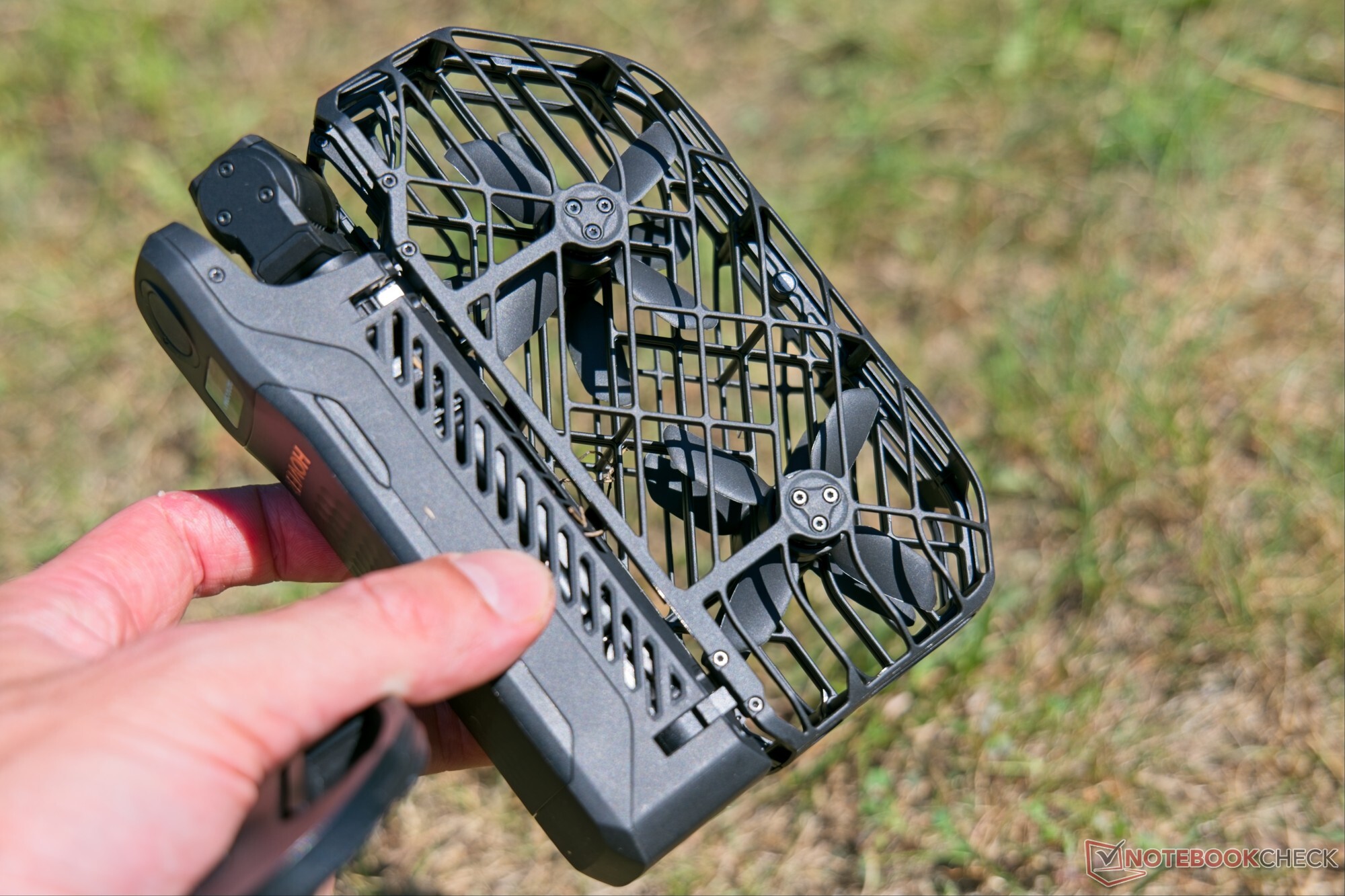
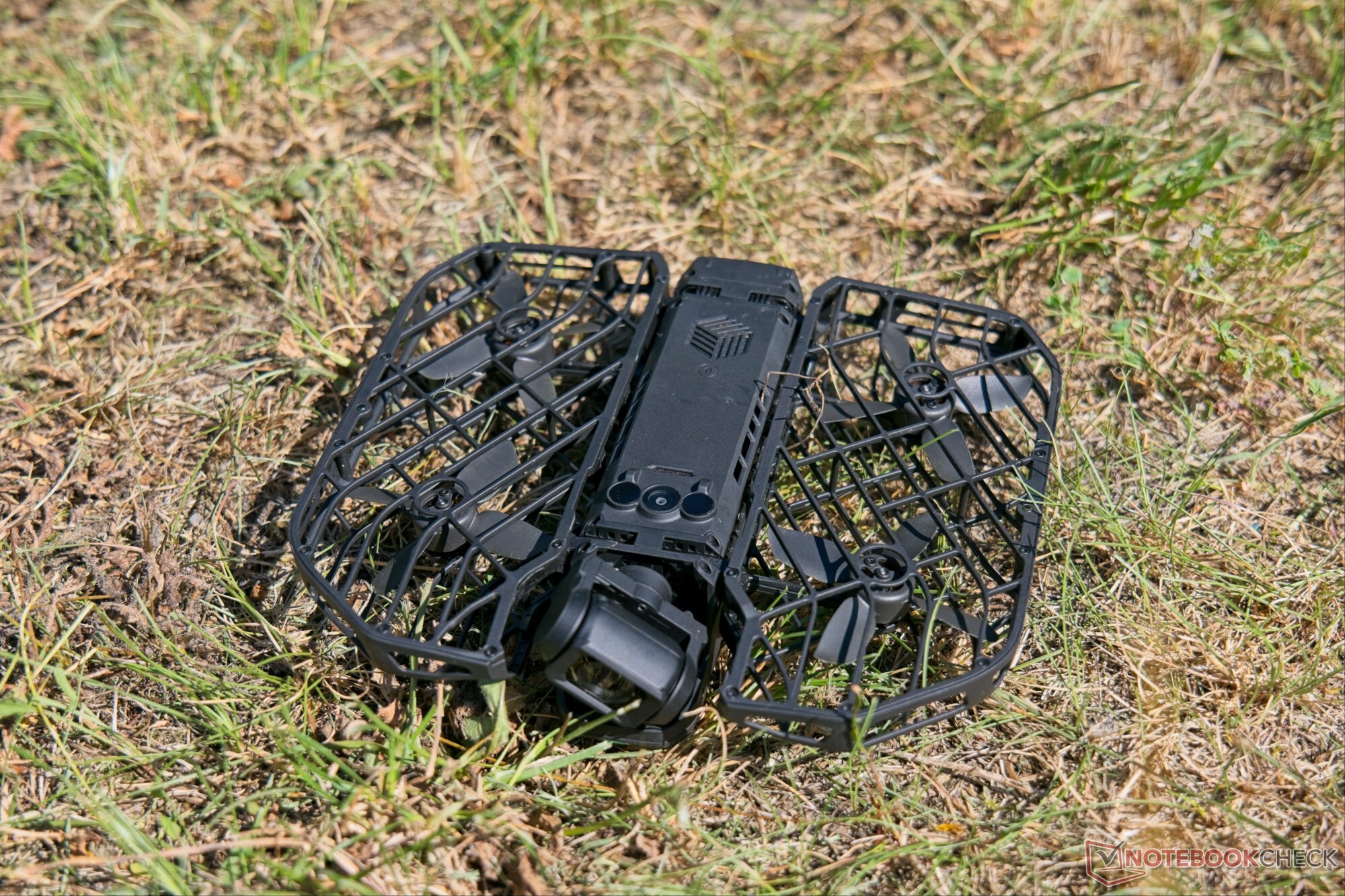
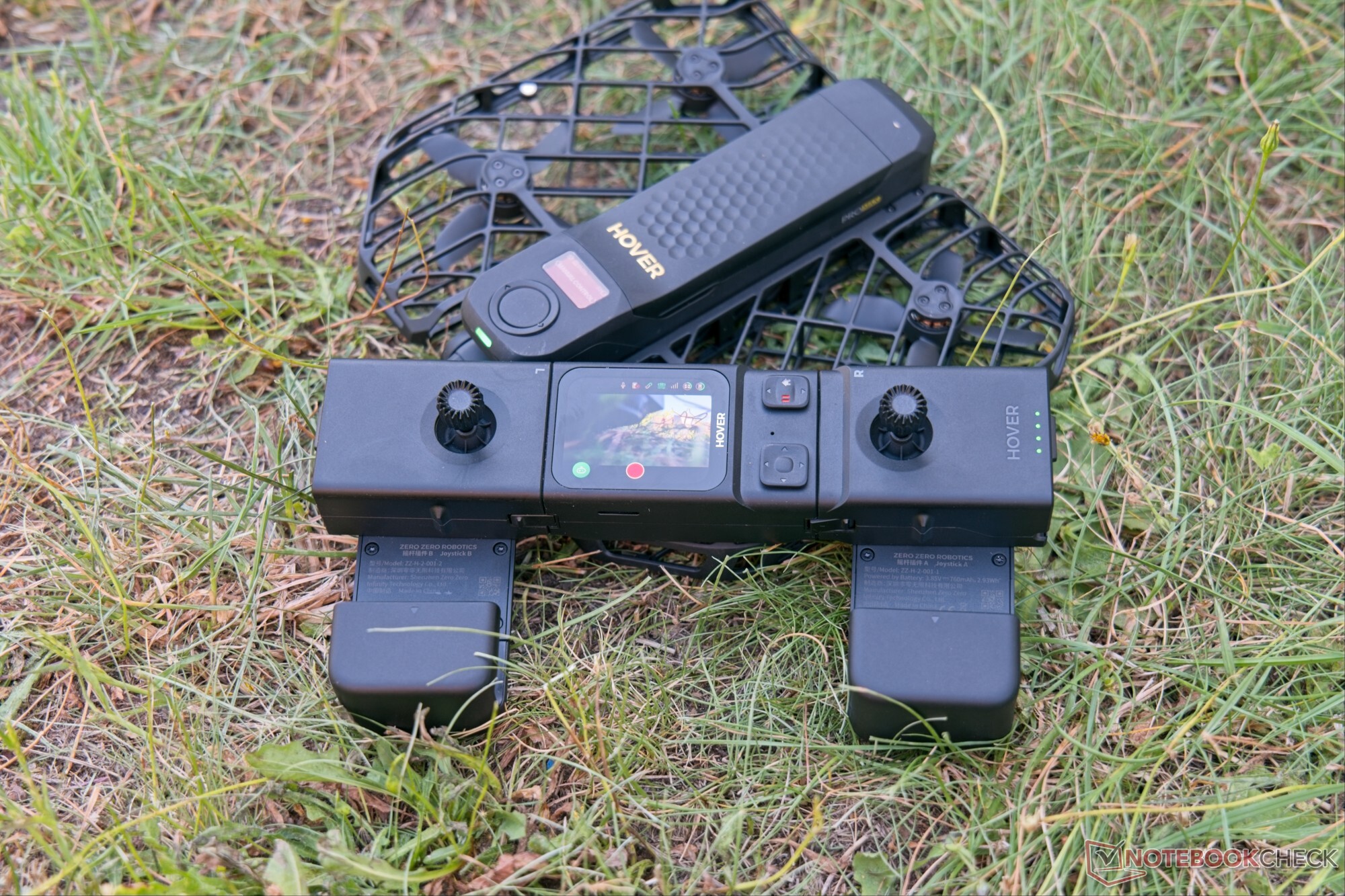
The controller bundle we tested includes the drone itself, two batteries, the charging hub, the Beacon with joysticks, a 65-watt charger, several cables, and separate sturdy cases for the drone and the control accessories. The drone has a foldable design, making it easy to carry even in a slightly larger pants pocket. Integrated magnets reliably hold the housing together when closed.
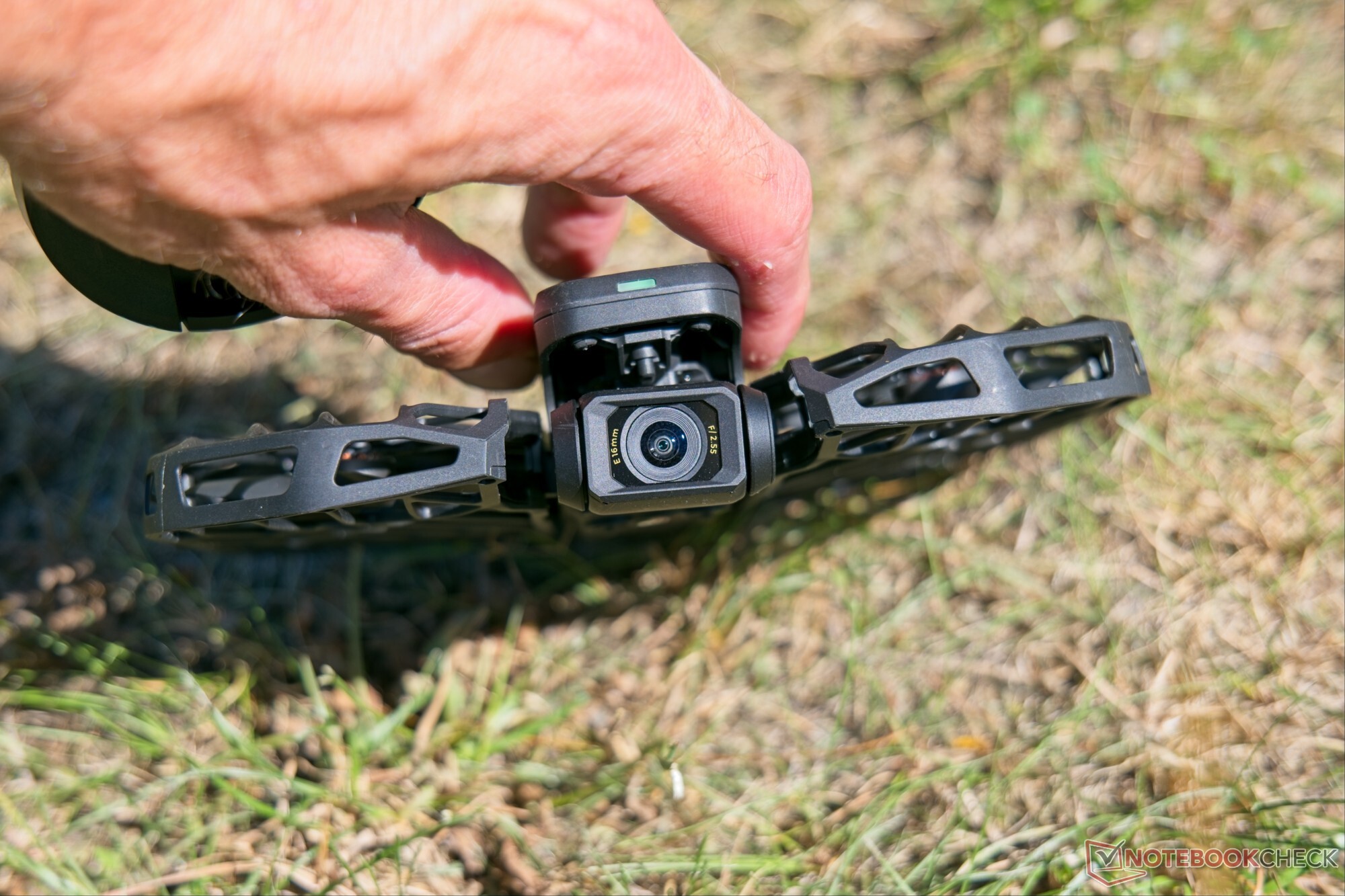
On the front, the camera is mounted on a gimbal; however, it can only tilt and cannot rotate sideways. While this isn’t a problem for recording itself, the combination of a 3-axis gimbal and more powerful obstacle detection that always faces the direction of flight could potentially provide even better flight performance. Nevertheless, the camera system would be much more mechanically exposed on a 3-axis gimbal. Additional sensors are located on the underside and the back. The four compact rotors, which are quite loud during operation, are excellently protected by enclosed cages. HoverAir includes a sample of its Hyper-Elastic material in the package—and indeed, despite a double-digit number of collisions, some of which were quite hard, neither the rotors nor the housing nor the camera sustained any visible damage.
Only once, after an impact, did the battery partially slip out of its mount. On the top is a display for easy mode selection. Charging a battery that has been discharged to 10 percent in the charging hub takes about 40 minutes. The realistic flight time when recording in 4K is about 14 minutes, including a safety reserve of around 15 percent.
With and Without a Smartphone and Controller
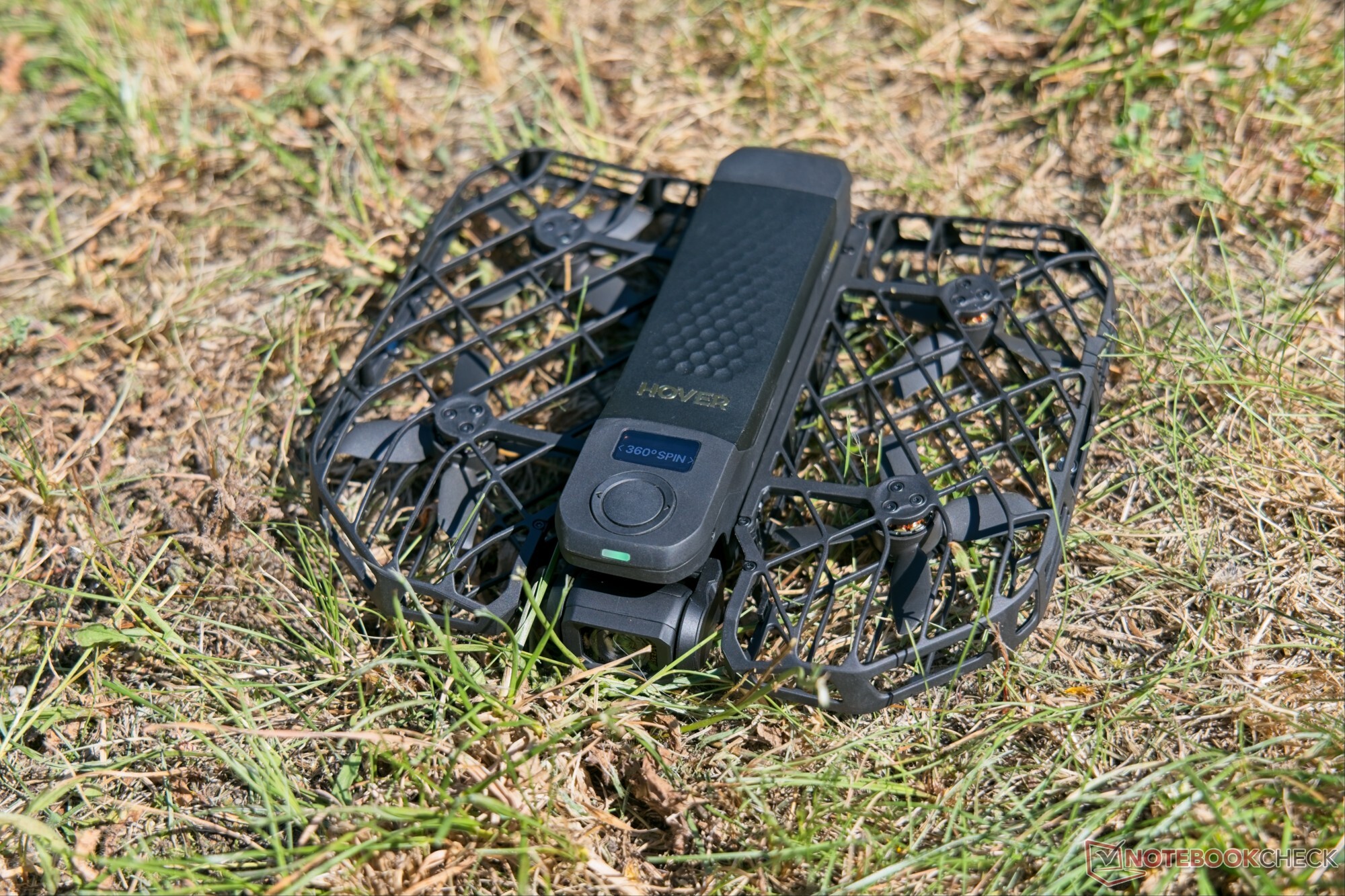
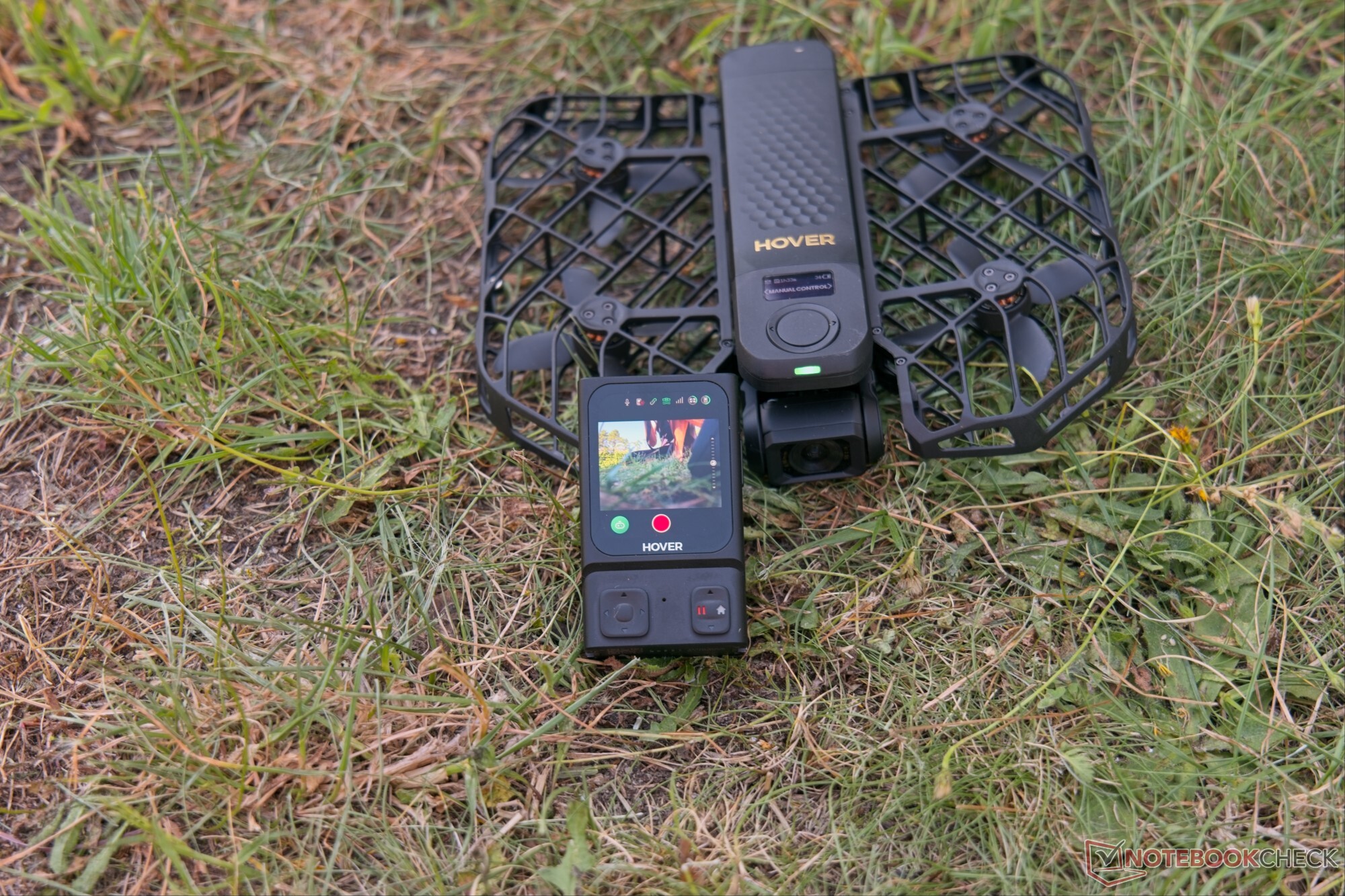
The HoverAir X1 Promax can be operated in various ways. The simplest method is a hand launch: select the mode using the two buttons and the display, then launch. This works quickly and reliably. The accompanying smartphone app allows you to configure the individual operating modes in detail beforehand.
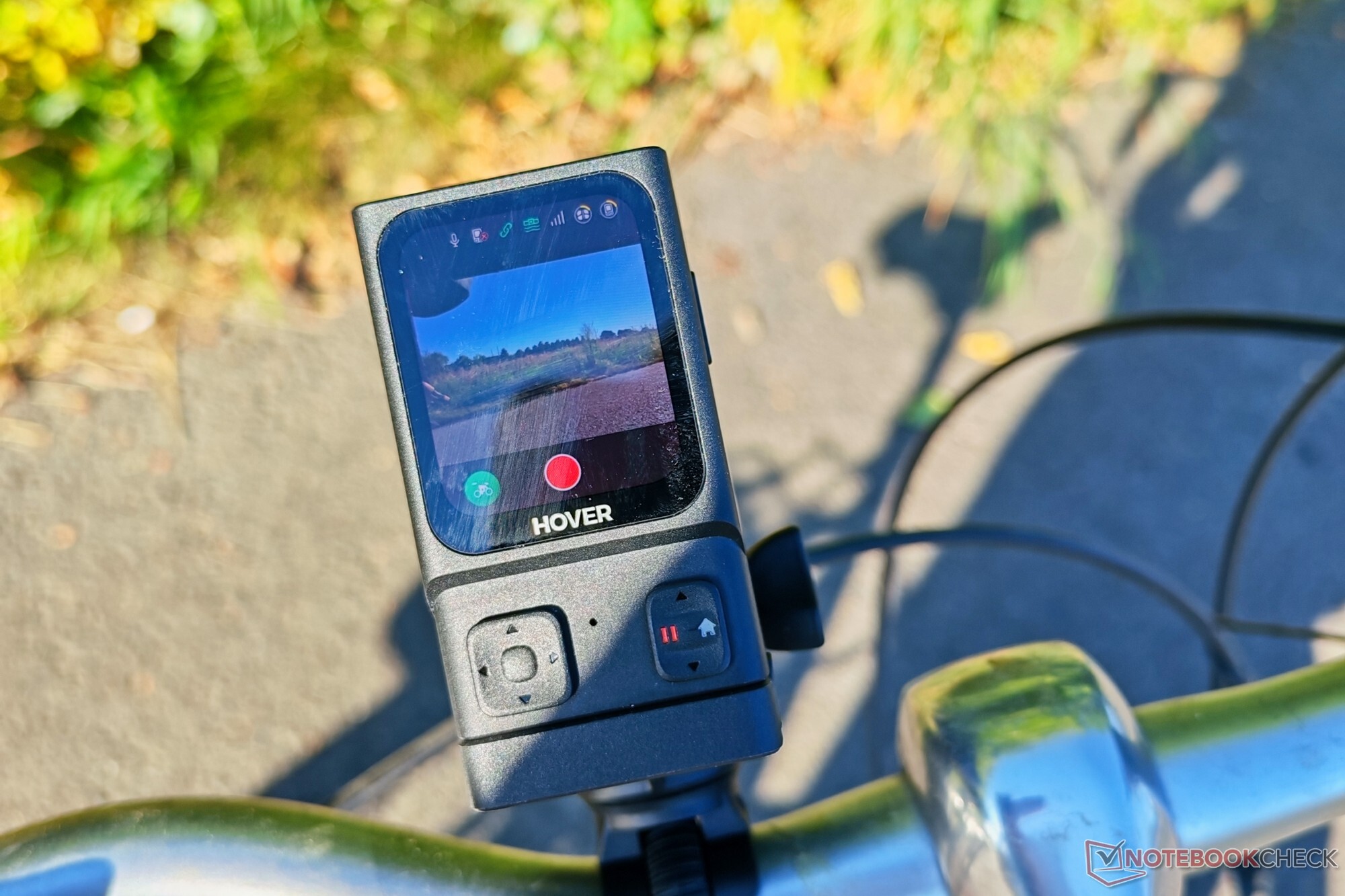
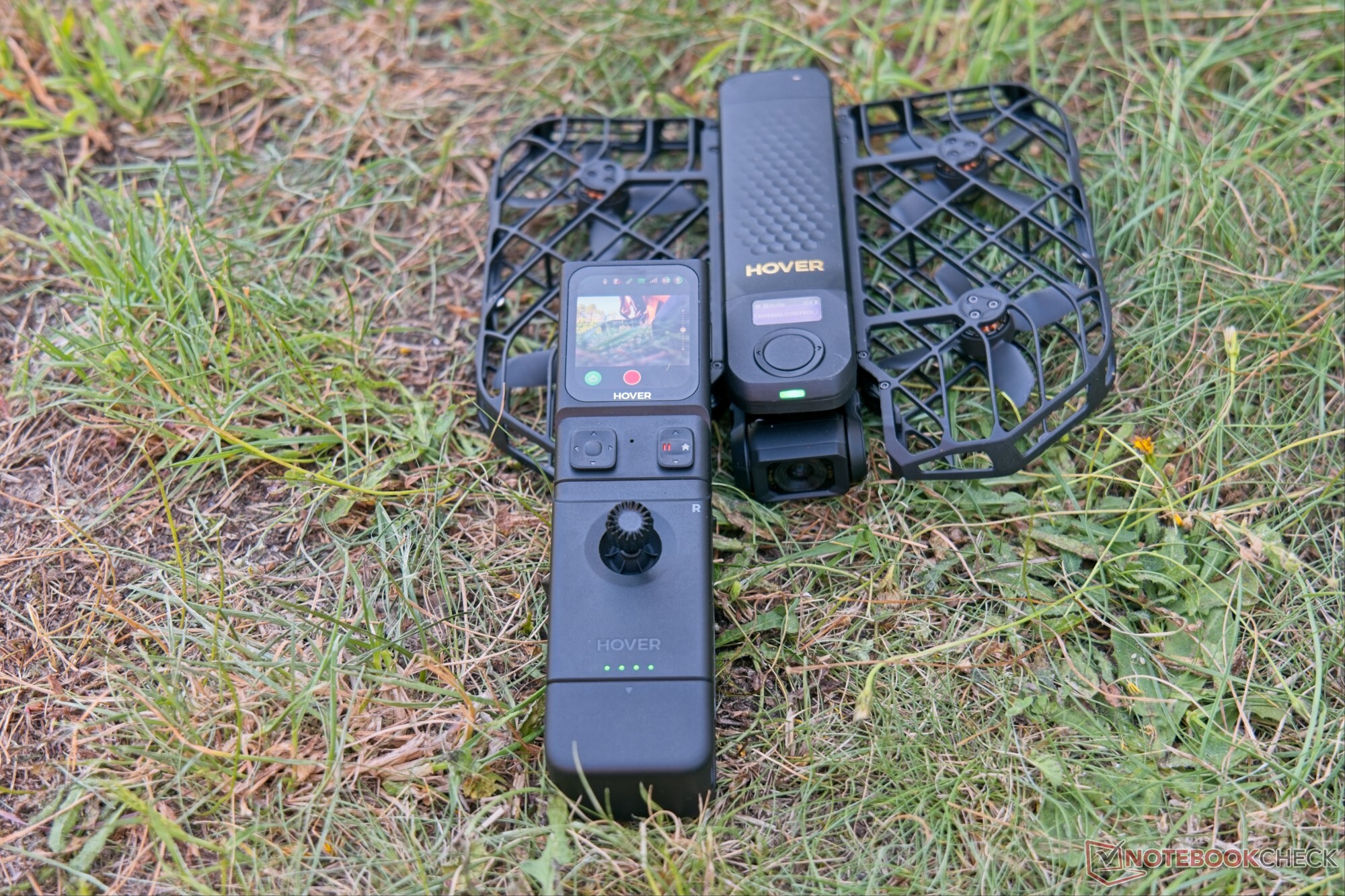
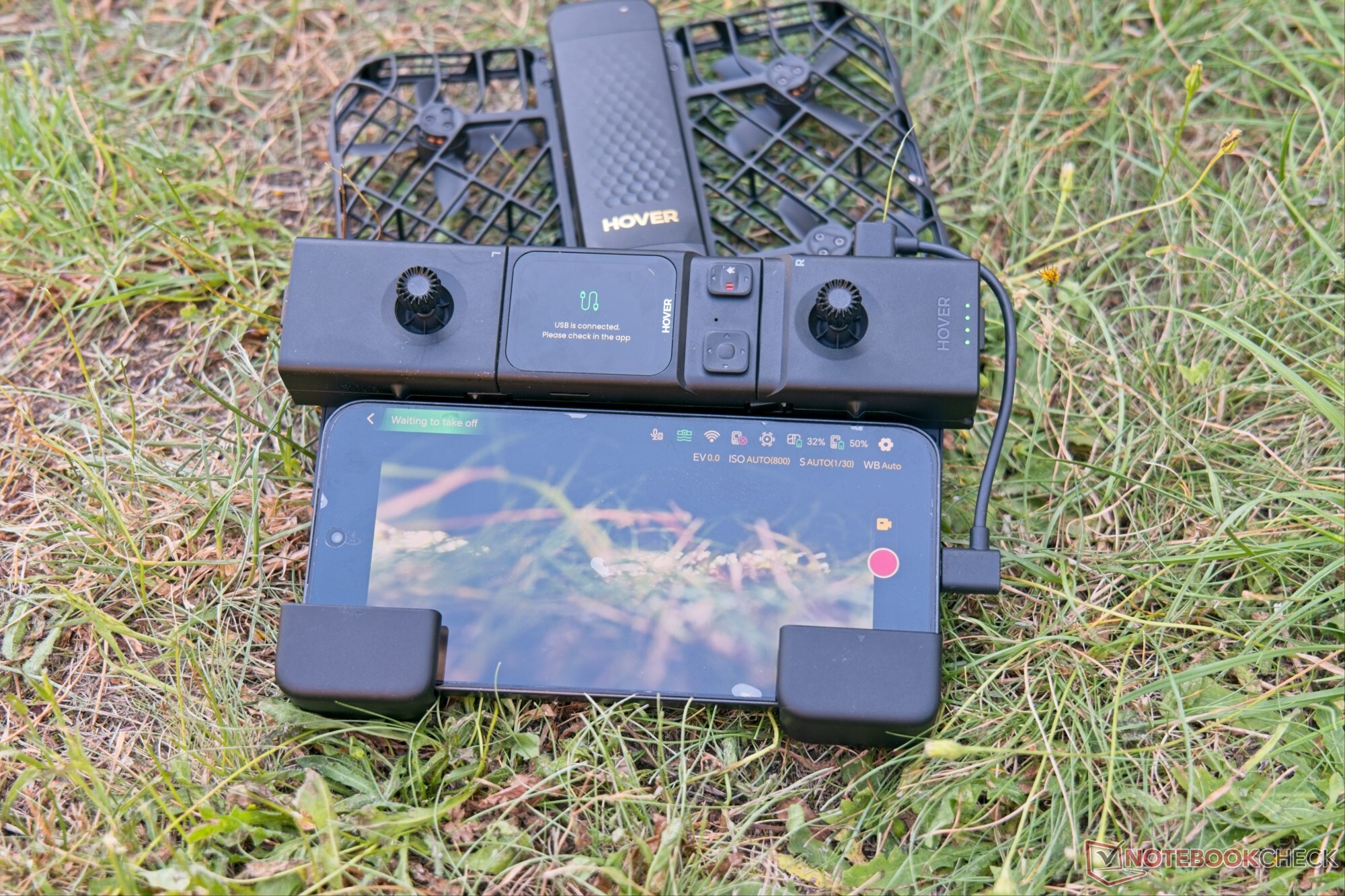
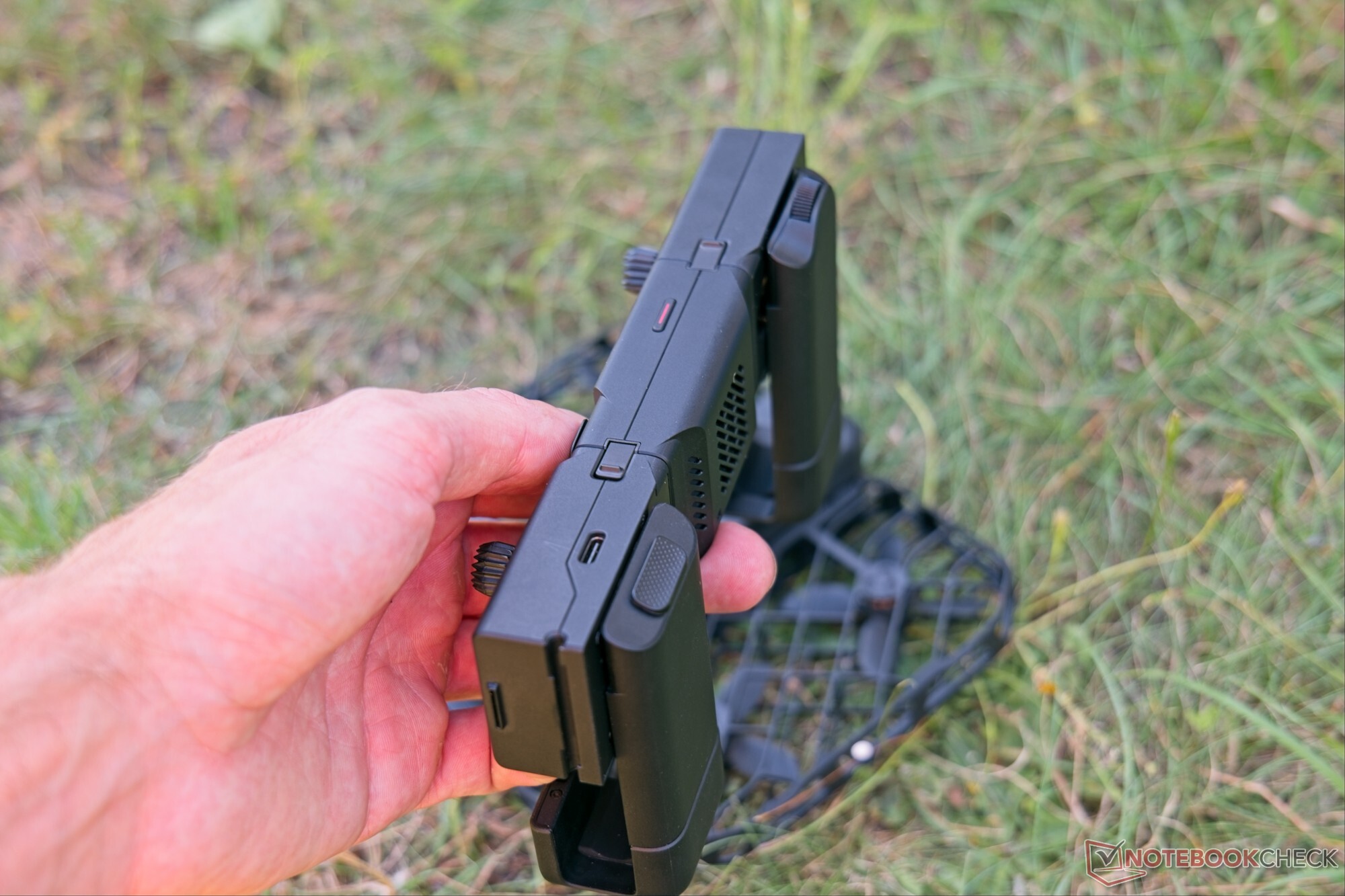
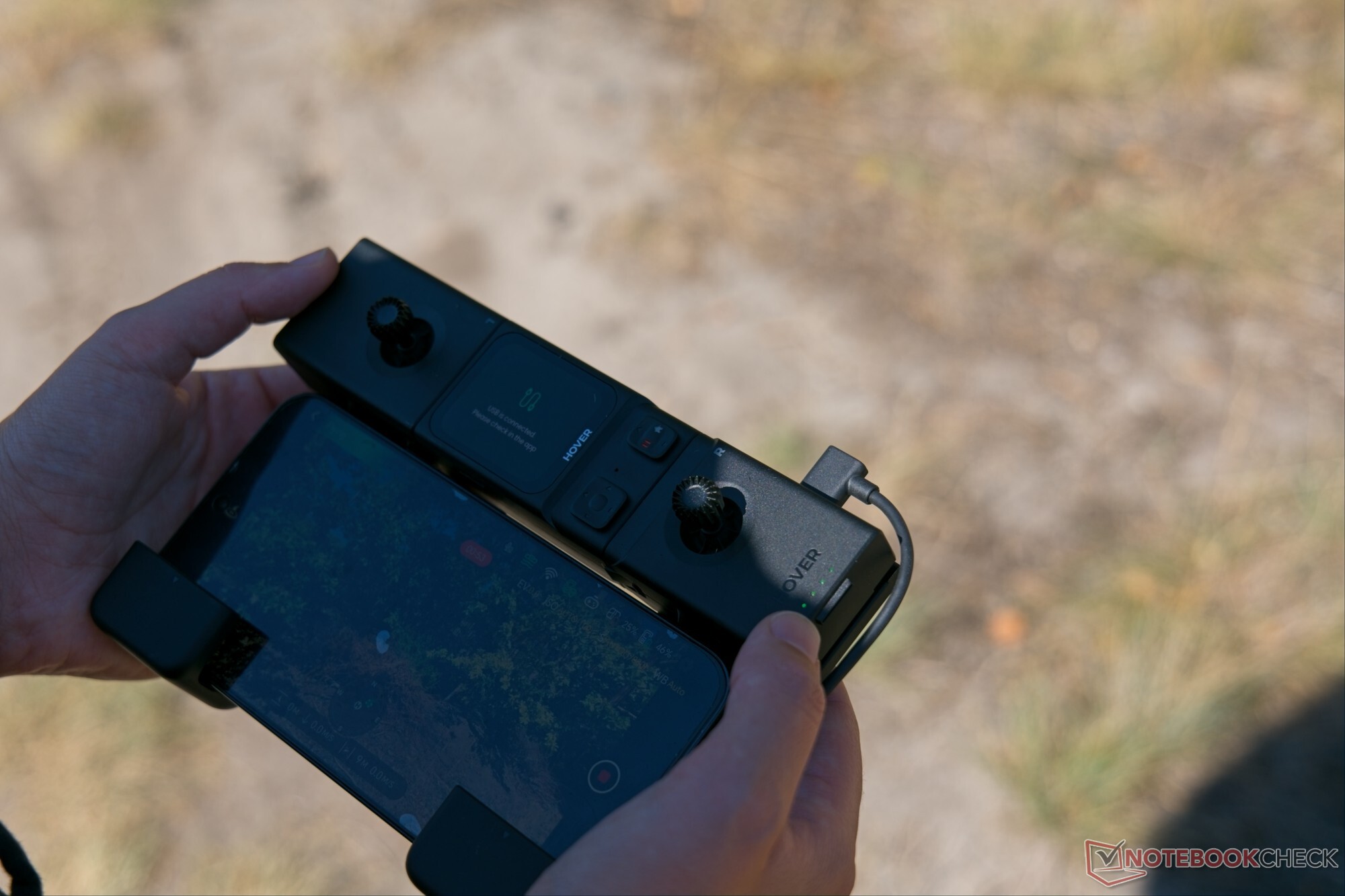
It also supports manual control via a smartphone touchscreen, which works well in practice. Alternatively, the drone can be manually maneuvered using the Beacon in combination with the joysticks. The small display on the Beacon shows the camera’s live feed. If you prefer a larger preview, you can connect a smartphone via a USB cable and mount it directly onto the control unit.
It’s also possible to use just the Beacon without the joysticks. This proved to be very practical while running and cycling. You can adjust the recording settings using the Beacon’s buttons. The Beacon also features a built-in microphone, allowing you to record an audio track directly—for example, during a bike ride. Handy: The Beacon and joysticks are also compatible with the HoverAir Aqua, but they are not waterproof.
Overheating and Collisions
During testing, I encountered two fairly significant issues. First, the camera can overheat, especially when recording 8K video—and by no means only at midsummer temperatures of 35 °C. During testing, the problem occurred even at 25 °C and in direct sunlight. This tends to happen when the drone is stationary or moving only slowly, as the cooling airflow from flight is apparently lacking in these situations. When recording 4K footage, overheating occurred much less frequently. If the drone overheats, it reduces the recording quality.
A much bigger problem, however, is the inadequate obstacle detection. I had already criticized this in the HoverAir Aqua; however, since the HoverAir X1 Promax is not primarily used over open bodies of water, this weakness carries significantly more weight here. As our video footage clearly demonstrates, collisions occur even on simpler routes: even while I was jogging at a relaxed pace, the drone flew into a pile of wood that was clearly visible from a distance (in the YouTube video). During another outing in actual off-road terrain, the HoverAir X1 Promax did produce some impressive footage and initially maneuvered confidently between two trees, but shortly thereafter it suddenly collided with a branch (in the YouTube video). Such incidents occur with obstacle detection enabled and in various flight modes. The HoverAir X1 Promax also collided while I was cycling (in the YouTube video).
Tracking isn’t always optimal either. When taking a faster turn on a bicycle, the drone can lose track of the subject. That said, I’d like to put two aspects into perspective here: It’s by no means the case that you can’t capture usable footage with the HoverAir X1 Promax. Numerous examples on YouTube prove this, and I can fully confirm it. However, I wouldn’t recommend this model for use in dense terrain with many obstacles. Additionally, at least in our test, the drone sustained no damage whatsoever—though this should be viewed as just a single data point for now. Incidentally, after searching for it for quite a while in dense underbrush, I wish HoverAir had opted for a bright, eye-catching color instead of plain black.
Image Quality
The HoverAir X1 Promax captures video at resolutions up to 8K. The overall image quality is decent. The 8K footage, in particular, provides useful headroom for clean cropping during post-production. The resulting footage looks highly detailed and effectively stabilized, though noticeable lens flares stand out in backlit conditions. The camera system, however, handles changing brightness and lighting conditions quite well.
Transparency
The selection of devices to be reviewed is made by our editorial team. The test sample was given to the author by the manufacturer free of charge for the purposes of review. There was no third-party influence on this review, nor did the manufacturer receive a copy of this review before publication. There was no obligation to publish this review. As an independent media company, Notebookcheck is not subjected to the authority of manufacturers, retailers or publishers.
 Add as a preferred source on Google


